生成式AI

Search documents
利多利空交织,日股短期或维持震荡局面
日经中文网· 2026-02-04 03:24
Market Overview - The Nikkei average index significantly rose on February 3, reaching a new historical high since January 14, with an increase of 2065 points (4%) to close at 54720 points, marking the largest gain since the victory of Prime Minister Kishi in the Liberal Democratic Party presidential election in October 2025 [2][4] - The market is experiencing strong expectations for stock price increases, but there remains caution regarding risks, as indicated by the Nikkei average volatility index (VI) reaching 36, the highest level in about two months [5] Investor Sentiment - Investor psychology has improved, driven by the upcoming House of Representatives election on February 8, with a strong historical trend of buying before elections, as 21 out of the last 25 instances since 1952 saw the Nikkei average rise before voting [5] - The expectation that the ruling Liberal Democratic Party will secure a majority in the upcoming election has been particularly highlighted, contributing to a 2% increase in the index as of February 3 [5] External Influences - The rise in overseas stock markets, including a 1% increase in the Dow Jones Industrial Average, has also contributed to the positive sentiment in the Japanese market [5] - Strong performance in the U.S. manufacturing sector, as indicated by the ISM manufacturing index, has reinforced perceptions of a robust U.S. economy [5] Corporate Performance - Approximately 70% of Japanese listed companies reported increased final profits as of January 30, with the proportion of profit-increasing companies reaching the highest level in four years, driven by investments in generative AI [7] - Notable companies like Kyocera and TDK saw their stock prices rise by 12% after raising their earnings forecasts for the fiscal year ending in March 2026 [7] Market Dynamics - There is a notable reduction in short positions by investors who previously bet on stock price corrections, while those who missed the rally are beginning to buy in [7] - However, the price-to-earnings ratio (PER) based on the Nikkei average is approximately 20 times, the highest level in about 13 years excluding the COVID-19 pandemic, indicating potential overvaluation and susceptibility to profit-taking [7] - There is a clear trend of net selling among investors, with many choosing to reduce their holdings during the stock price surge [7]


OpenAI现离职潮
3 6 Ke· 2026-02-04 02:46
Core Insights - OpenAI is shifting its focus from long-term foundational research to accelerating the development of ChatGPT, leading to the departure of several senior employees [1][2] - The company, valued at $500 billion, is adapting to increasing competition from rivals like Google and Anthropic [1] - OpenAI is reallocating resources to enhance its flagship chatbot, ChatGPT, while reducing experimental research funding [1][2] Group 1 - Several employees, including VP of Research Jerry Tworek and model policy researcher Andrea Vallone, have left due to dissatisfaction with the strategic shift [1][2] - Under CEO Sam Altman's leadership, OpenAI is transitioning from a research lab to one of Silicon Valley's largest tech companies, necessitating proof of revenue growth to justify its valuation [1][3] - OpenAI's Chief Researcher Mark Chen asserts that foundational research remains a core focus, with significant resources still allocated to long-term projects [1][3] Group 2 - Researchers not involved in large language model development have faced resource limitations, impacting their ability to validate research hypotheses [2] - Teams working on video and image generation models, such as Sora and DALL-E, feel neglected as resources are prioritized for ChatGPT [2] - The competitive landscape is intense, with companies striving to release the strongest models quarterly, leading to a resource concentration on the most promising directions [2][3] Group 3 - Tworek left OpenAI after seven years, seeking to explore research types that are difficult to pursue within the company, such as continual learning [3] - Vallone joined competitor Anthropic after being assigned a challenging task related to user mental health concerning ChatGPT [3] - Investors remain optimistic, believing OpenAI's true competitive advantage lies in its large user base of ChatGPT [3][4] Group 4 - The focus on whether OpenAI has the strongest model is deemed misguided; the company is converting its technological lead into a platform lock-in effect [4] - The competitive edge has shifted from research capabilities to user behavior, making it harder to disrupt [4]
当科技邂逅小盘
量化藏经阁· 2026-02-04 00:52
Group 1 - The rise of technology is driving a shift in capital markets from traditional industries to technology-focused investments, with the Nasdaq technology index's market cap share increasing from 1.51% in 1990 to 52.20% in 2025 [1][4][6] - Small-cap stocks often lead bull markets, as evidenced by the significant outperformance of small-cap indices like the CSI 1000 and CSI 2000 during previous bull markets, with the CSI 2000 index rising over 100% since the start of the current bull market on September 24, 2024 [1][10][56] - A supportive liquidity environment, characterized by an M2 year-on-year growth rate of 8.5% and a decline in the one-year interbank lending rate from 2.50% to 1.96%, enhances the trading conditions for small-cap assets [1][16][56] Group 2 - The CSI 360 Internet + Big Data 100 Index, launched on August 10, 2015, is a quant strategy index that integrates real-time search data into its construction, selecting the top 100 listed companies based on a composite score of various factors [1][18][57] - The index has a distinct small-cap style, with an average market cap of 5.166 billion and over 65% of its constituents having a market cap below 5 billion since 2020, heavily focusing on the TMT sector with an average weight of 87.69% [1][25][31][57] - The index has demonstrated strong long-term performance, with an annualized return of 28.56%, significantly outperforming the CSI 2000's 12.05%, and a maximum drawdown of 52.48%, which is lower than the CSI 2000's 67.35% [1][37][58] Group 3 - The Dachen CSI 360 Internet + Big Data 100 Fund is the only passive index fund tracking the CSI 360 Internet + Big Data 100 Index, established on February 3, 2016, and has shown a 10-year annualized return of 13.69% [1][42][58] - Since 2019, the fund has achieved an annualized return of 25.35% with a Sharpe ratio of 0.96, making it competitive among similar active quantitative products, while its management fee of 0.80% is lower than the typical 1.20% for active funds [1][50][58] - As of Q4 2025, the fund's size reached 1.728 billion, with shares increasing to 53.8 million, indicating strong growth and market interest [1][44][58]

不分拆判决太轻 美政府将就谷歌搜索反垄断案提起上诉
Feng Huang Wang· 2026-02-03 23:06
Group 1 - The U.S. federal government and most state governments will appeal the ruling on Google's antitrust case, which found Google to be a monopoly in the online search business but did not impose the strictest remedies [1] - The appeal is likely to focus on the judge's decision not to require Google to divest its Chrome browser business or terminate its lucrative default search engine agreement with Apple [1] - Google has also appealed the ruling by Judge Amit Mehta, which determined that Google violated laws to suppress competition in online search and related advertising [1] Group 2 - The ruling is seen as a significant victory for Google while posing a setback for U.S. antitrust enforcement agencies, which have found judges reluctant to intervene in rapidly changing tech markets [2]


腾讯研究院AI速递 20260204
腾讯研究院· 2026-02-03 16:03
Group 1 - OpenAI launched a macOS desktop version of Codex, designed as an "AI agent command center" that supports multi-agent parallel work through a "work tree" mode to isolate code changes for different tasks [1] - The application features asynchronous background operation, a skill system, and scheduled automation tasks, with a built-in sandbox for precise AI permission management; the CEO stated that a complete project was accomplished solely with Codex [1] - OpenAI temporarily doubled rate limits for all paid users for two months and opened Codex access to free users, directly competing with Anthropic and Cursor [1] Group 2 - Zhipu released and open-sourced the GLM-OCR model, achieving a state-of-the-art score of 94.6 on OmniDocBench V1.5 with only 0.9 billion parameters, closely rivaling Gemini-3-Pro [2] - The model specializes in challenging scenarios such as handwriting, complex tables, code documents, and seals, supporting deployment via vLLM, SGLang, and Ollama, with an API price of only 0.2 yuan per million tokens [2] - Technically, it employs a self-developed CogViT visual encoder and introduces multi-token prediction loss into OCR training, enabling batch processing and retrieval-augmented generation [2] Group 3 - Tencent's Hongyuan Technology blog launched, presenting research results from Yao Shunyu's team on CL-bench, revealing that current state-of-the-art models have significant deficiencies in learning from context [3] - Evaluation shows that the average of ten state-of-the-art models only solves 17.2% of tasks, with the best model, GPT-5.1, achieving only 23.7%, and 68.5% of candidate solutions contain fundamental errors [3] - The research indicates that the focus of AI competition will shift from model capability to "who can provide the richest context," with memory mechanisms potentially becoming a core research theme by 2026 [3] Group 4 - xAI officially released the Grok Imagine 1.0 video generation model, supporting text-to-video and image-to-video generation, capable of producing 10 seconds of 720P video per instance with significantly improved audio effects [4] - The model features cinematic-level camera understanding and natural interaction among multiple subjects, ranking first in the Artificial Analysis text-to-video category with optimal latency and cost metrics [4] - During the 30-day testing period, 1.245 billion videos were generated, and the API has been released with free access on the official website [4] Group 5 - Tencent's ima integrated the Hongyuan Image 3.0 model, enabling users to upload photos to generate creative content across multiple scenarios, such as travel images, home decoration effects, and four-panel comics [5][6] - The product can be utilized for entertainment, custom family photos, rapid design draft generation, and medical science popularization illustrations [5][6] Group 6 - Adobe announced the discontinuation of its 25-year-old Animate software, with enterprise customers receiving three years of support and other users only one year, after which access to any files will be lost [7] - Adobe did not provide a suitable replacement, merely suggesting After Effects and Adobe Express as partial alternatives, which has been criticized as inadequate [7] - This move is seen as a signal of Adobe's full pivot towards an AI strategy, raising concerns among users about being forced to use immature technology, reminiscent of Flash's historical impact on multimedia [7] Group 7 - Elon Musk announced that SpaceX has completed the acquisition of xAI, with a combined valuation of $1.25 trillion, making xAI a wholly-owned subsidiary of SpaceX [8] - SpaceX plans to advance the deployment of space data centers, with Musk stating that annual satellite launches could add 100GW of AI computing power, with a long-term goal of reaching 1TW [8] - The merger provides xAI with stable funding support, as it previously burned approximately $1 billion monthly, with SpaceX regarded as Musk's "most successful and stable" enterprise [8] Group 8 - Google utilized Gemini to tackle 700 unresolved mathematical problems, making progress on 13, with 5 being new solutions generated by the model and 8 derived from overlooked literature [9] - The research revealed that 68.5% of candidate solutions contained fundamental errors, with only 6.5% being meaningful correct answers, indicating significant time spent on verification, correction, and literature review [9] - Google acknowledged that these problems could be easily solved by experts in any field, highlighting the true costs of AI-assisted mathematical research and the risks of "subconscious plagiarism" from literature [9] Group 9 - a16z's AI applications team believes that the AI era represents a convergence of all technology cycles, with traditional software transitioning to AI-native, where greenfield opportunities outweigh brownfield ones [10] - Software is "eating" the labor market, but the real value lies not in cost savings but in revenue generation, as seen with Salient, which improved its collection rate by 50% through AI rather than merely reducing costs [10] - Companies with proprietary data are seeing their value multiply, making moats more important than ever in an era where software can be rapidly constructed [10]

大成中证360互联网+大数据100基金投资价值分析:科技与小盘的共振
Guoxin Securities· 2026-02-03 12:52
证券研究报告 | 2026年02月03日 金融工程专题研究 科技与小盘的共振——大成中证 360 互联网+大数据 100 基金 投资价值分析 捕捉小盘科技行情的机会 科技力量的崛起推动资本市场由传统行业向科技集中。美股前十大巨头中科 技板块个股占比显著提升;纳斯达克科技指数成分股市值占比由 1990 年的 1.51%提升至 2025 年的 52.20%,生成式 AI 周期下,英伟达市值一度升至 约 4.5 万亿美元,科技资产已成为全球资本市场核心配置方向之一。 小盘交投活跃,牛市行情的领头羊。市场主线扩散过程中,小盘股往往成为 牛市行情的领头羊。在 A 股历轮牛市中,中证 1000、中证 2000 等小盘指 数涨幅显著领先宽基指数;本轮 2024 年"9·24"行情启动以来,中证 2000 指 数涨幅已超 100%,小盘风格阶段性占优。 宽松流动性为小微盘行情提供支撑。宏观层面,2025 年 12 月 M2 同比增速 升至 8.5%,一年期同业拆借利率由 2024 年末的 2.50%降至 1.96%。利率 中枢下移与风险偏好回升共同改善小盘资产的交易环境。 科技邂逅小盘:中证 360 互联网+大数据 100( ...
分析师分享《如何快速了解一个行业》
Zhong Guo Fa Zhan Wang· 2026-02-03 12:30
中国发展网讯记者张守营报道近日,麦肯锡前分析师肖璟撰写的新书《如何快速了解一个行业》正式出 版。该书面向投资者、金融从业者、创业者及咨询顾问,提供了一套系统的行业研究方法,旨在帮助读 者快速把握行业脉络,作出更明智的决策。 肖璟毕业于香港中文大学,曾在麦肯锡金融机构组工作,也是"很帅的投资客"公众号主创。在书中,他 坦言,自己离开麦肯锡多年后,一直在思考是否存在一个可以覆盖所有行业研究的"全能框架",而这本 书正是他经过多年积累后给出的答案。他同时提醒,书中的框架"不一定适合所有人",鼓励读者结合自 身需求进行运用。 在行研实战篇中,他以近年来备受关注的新能源汽车行业为例,完整展示了如何运用前八章介绍的框架 进行系统分析,帮助读者将理论转化为实际操作能力。 值得关注的是,本书还专章探讨了生成式AI在行业研究中的应用,结合具体案例说明如何借助AI工具 提升信息获取与处理效率,体现出鲜明的时代性与实用性。 肖璟在书中将本书定位为"工具书",并归纳了四种使用方式:作为模板,研究新行业时,可参照书中框 架,系统梳理分析维度;作为地图,书中汇总了各类研究常用资讯源,便于查找数据和事实;作为培训 材料,适合机构内部培训, ...
渣打银行尚明洋:中国经济一直展现强大韧性,超配中国
Zhong Guo Ji Jin Bao· 2026-02-03 12:21
Group 1 - Standard Chartered Bank is increasing the number of wealth management client managers and investment advisors in China to enhance service capabilities and capture opportunities from the current "deposit migration" trend [1][7] - The bank has upgraded its GDP growth forecast for China to 4.6% for 2026, citing the resilience of the Chinese economy despite geopolitical risks [2] - The bank is overweight on Chinese stocks, particularly in the technology sector, and sees strong growth prospects with expected earnings growth of over 10% for the MSCI China Index by 2026 [3][5] Group 2 - The attractiveness of Chinese stocks is attributed to valuation advantages, growth prospects, and low correlation with global assets, making them a viable option for risk hedging [4][6] - China’s R&D expenditure as a percentage of GDP is projected to reach 2.8% by 2025, surpassing the OECD average for the first time, indicating a strong focus on innovation [6] - The bank is focusing on capturing the wealth transfer opportunity in the global wealth management market, which is undergoing transformation due to generative AI and changing client expectations [9][10] Group 3 - Standard Chartered is launching various wealth management products in China, including basic wealth management products, structured products with principal protection, and public fund products [10] - The bank is committed to providing alternative investment products to attract funds from low-yielding deposits, emphasizing risk assessment for different client profiles [10] - The bank is developing comprehensive generative AI applications to enhance operational efficiency and client service, including tools for wealth management advisors [11]
金融工程专题研究:科技与小盘的共振:大成中证360互联网+大数据100基金资价值分析
Guoxin Securities· 2026-02-03 11:56
捕捉小盘科技行情的机会 科技力量的崛起推动资本市场由传统行业向科技集中。美股前十大巨头中科 技板块个股占比显著提升;纳斯达克科技指数成分股市值占比由 1990 年的 1.51%提升至 2025 年的 52.20%,生成式 AI 周期下,英伟达市值一度升至 约 4.5 万亿美元,科技资产已成为全球资本市场核心配置方向之一。 小盘交投活跃,牛市行情的领头羊。市场主线扩散过程中,小盘股往往成为 牛市行情的领头羊。在 A 股历轮牛市中,中证 1000、中证 2000 等小盘指 数涨幅显著领先宽基指数;本轮 2024 年"9·24"行情启动以来,中证 2000 指 数涨幅已超 100%,小盘风格阶段性占优。 宽松流动性为小微盘行情提供支撑。宏观层面,2025 年 12 月 M2 同比增速 升至 8.5%,一年期同业拆借利率由 2024 年末的 2.50%降至 1.96%。利率 中枢下移与风险偏好回升共同改善小盘资产的交易环境。 科技邂逅小盘:中证 360 互联网+大数据 100(930734.CSI)投资价值分析 证券研究报告 | 2026年02月03日 中证 360 互联网+大数据 100 指数(930734.CSI ...
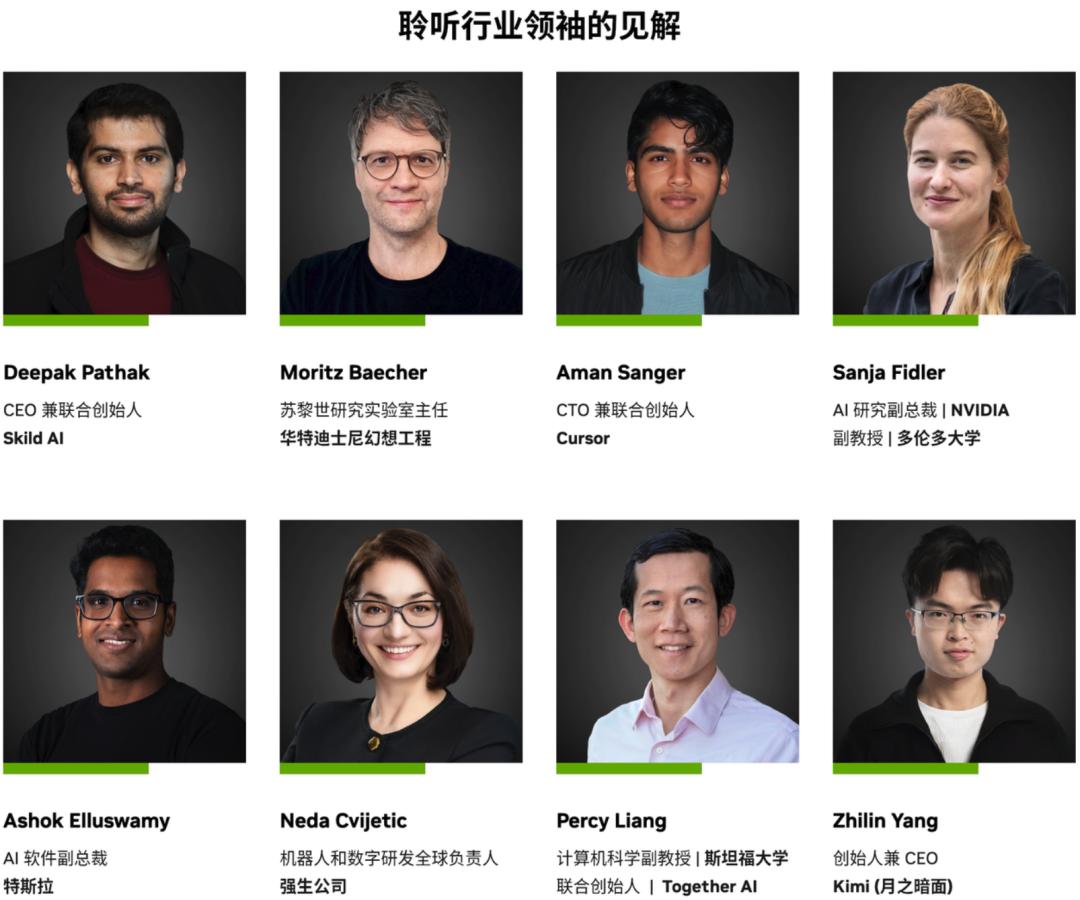
黄仁勋2026大模型座上宾:杨植麟
3 6 Ke· 2026-02-03 11:44
Core Insights - Yang Zhilin, founder and CEO of Moon's Dark Side, has been invited as a keynote speaker at NVIDIA's GTC 2026, marking a significant recognition for him and his Kimi models [1] - The invitation reflects NVIDIA's strategy of identifying emerging trends and endorsing key players in the AI industry [6][7] - Yang's presence at GTC indicates a shift in focus towards the need for advanced reasoning capabilities in AI, moving beyond mere computational power [14] Group 1: Yang Zhilin and Kimi's Journey - Yang Zhilin represents a new pain point in AI development, as the industry seeks to move past the limitations of previous models and explore deeper cognitive capabilities [14] - Kimi faced significant challenges in 2025 due to competition from DeepSeek, which disrupted its business model and led to a decline in user engagement [15][17] - After a period of silence and strategic retreat, Kimi re-emerged with the launch of Kimi K2, showcasing advanced capabilities and reaffirming its position in the market [18][21] Group 2: Market Dynamics and Financial Position - Kimi's recent funding round raised $500 million, bringing its post-money valuation to $4.3 billion, indicating strong investor confidence in its technology and long-term vision [21] - The successful IPOs of competitors in the same sector signal a pivotal moment for AI startups, with Kimi positioned to leverage its cash reserves for continued research and development [21] - Yang Zhilin's focus on technology over marketing has allowed Kimi to regain traction and recognition in the AI community, particularly through its open-source initiatives [21]