稀土出口管制

Search documents
期指:忧虑暂缓,回归基本面
Guo Tai Jun An Qi Huo· 2025-10-13 02:05
Report Investment Rating - No investment rating information is provided in the report. Core View - On October 12, all four major index futures contracts for the current month declined. The trading volume of index futures increased, indicating a rise in investors' trading enthusiasm. The total trading volume of IF, IH, IC, and IM increased by 26,302, 14,217, 14,916, and 19,721 lots respectively. In terms of positions, the total positions of IF, IH, and IM increased by 1,506, 2,170, and 3,851 lots respectively, while the total positions of IC decreased by 8,282 lots [1][2]. Summary by Relevant Catalogs 1. Index Futures Data Tracking - **IF Contracts**: The closing prices of IF2510, IF2511, IF2512, and IF2603 were 4,613.8, 4,600.4, 4,592.2, and 4,571.8 respectively, with declines of 2.08%, 2.19%, 2.18%, and 2.16%. The trading volumes were 43,832, 5,422, 96,227, and 16,669 lots respectively, with increases of 3,683, 734, 17,523, and 4,362 lots. The positions were 51,030, 9,132, 162,971, and 55,448 lots respectively, with changes of -3,181, +1,427, -329, and +3,589 lots [1]. - **IH Contracts**: The closing prices of IH2510, IH2511, IH2512, and IH2603 were 2,976, 2,973.6, 2,975.8, and 2,974 respectively, with declines of 1.55%, 1.61%, 1.60%, and 1.65%. The trading volumes were 20,378, 3,053, 43,708, and 6,794 lots respectively, with increases of 3,496, 1,276, 7,696, and 1,749 lots. The positions were 21,085, 3,090, 67,688, and 13,880 lots respectively, with changes of +13, +793, +840, and +524 lots [1]. - **IC Contracts**: The closing prices of IC2510, IC2511, IC2512, and IC2603 were 7,382, 7,311.2, 7,266, and 7,100.6 respectively, with declines of 1.98%, 2.15%, 2.24%, and 2.36%. The trading volumes were 39,765, 10,064, 99,771, and 20,790 lots respectively, with increases of 1,945, 861, 10,965, and 1,145 lots. The positions were 50,530, 18,841, 140,200, and 50,503 lots respectively, with changes of -6,184, +3,029, -3,614, and -1,513 lots [1]. - **IM Contracts**: The closing prices of IM2510, IM2511, IM2512, and IM2603 were 7,514.2, 7,421.8, 7,340.4, and 7,120 respectively, with declines of 1.37%, 1.56%, 1.71%, and 1.78%. The trading volumes were 53,416, 15,411, 140,881, and 23,742 lots respectively, with changes of +5,073, +5,979, +9,445, and -776 lots. The positions were 70,956, 22,199, 183,267, and 80,505 lots respectively, with changes of -2,937, +6,387, +1,106, and -498 lots [1]. 2. Top 20 Member Positions Changes - **IF Contracts**: For IF2510, long positions decreased by 1,609 lots and short positions decreased by 2,104 lots. For IF2511, the net change in long positions was +920 lots and the net change in short positions was -1,346 lots. For IF2512, long positions decreased by 275 lots and short positions decreased by 2,363 lots. For IF2603, long positions increased by 2,804 lots and short positions increased by 3,121 lots [5]. - **IH Contracts**: For IH2510, long positions increased by 1,058 lots and short positions increased by 68 lots. For IH2512, the net change in long positions was +806 lots and the net change in short positions was +1,227 lots [5]. - **IC Contracts**: For IC2510, long positions decreased by 4,223 lots and short positions decreased by 5,437 lots. For IC2511, long positions increased by 2,334 lots and short positions increased by 2,608 lots. For IC2512, the net change in long positions was -4,290 lots and the net change in short positions was -8,424 lots. For IC2603, long positions decreased by 996 lots and short positions decreased by 1,266 lots [5]. - **IM Contracts**: For IM2510, long positions decreased by 1,446 lots and short positions decreased by 2,579 lots. For IM2511, the net change in long positions was +4,551 lots and the net change in short positions was +2,509 lots [5]. 3. Trend Intensity - The trend intensity of IF and IH is 1, and the trend intensity of IC and IM is also 1. The trend intensity ranges from -2 to 2, with -2 indicating the most bearish and 2 indicating the most bullish [6]. 4. Important Drivers - US stock futures opened higher by more than 1%, with the S&P 500 index futures rising 1.1% and the Nasdaq futures rising 1.4%. Brent crude oil futures rose more than 1% at the beginning of the session, and market concerns about trade issues eased [6]. - The Chinese Ministry of Commerce responded to the US's threat of imposing a 100% tariff on China's rare - earth exports. China is not afraid of a tariff war and urges the US to correct its wrong actions [6]. 5. Market Performance - Affected by factors such as the intensification of the trade war and the continuous US government shutdown, US and European stock markets closed lower. The Dow Jones Industrial Average fell nearly 2%, the S&P 500 index fell more than 2.5%, the Nasdaq fell more than 3.5%, and the German DAX index and the French CAC40 index fell about 1.5%. Crude oil and copper prices dropped, while the US dollar index fell more than 0.5%. US Treasury bonds and gold prices rose [7]. - The A - share market opened low and closed low. The Shanghai Composite Index fell 0.94% to 3,897.03 points, the Shenzhen Component Index fell 2.7%, the ChiNext Index fell 4.55%, the North - bound 50 Index fell 1.24%, the Science and Technology Innovation 50 Index fell 5.61%, the Wind All - A Index fell 1.64%, the Wind A500 Index fell 2.08%, and the CSI A500 Index fell 2.29%. The total trading volume of A - shares was 2.53 trillion yuan, compared with 2.67 trillion yuan the previous day [7].

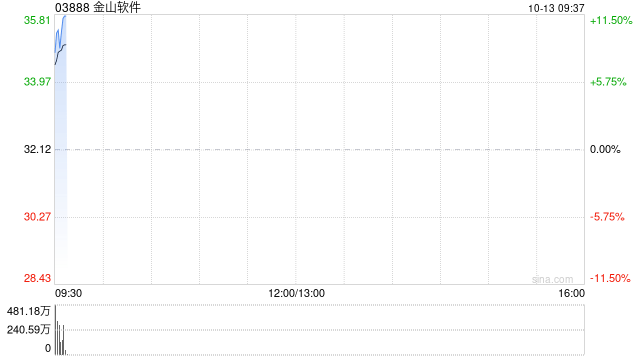
金山软件高开逾9%,金山办公涨超14%!商务部稀土相关物项实施出口管制,公告附件首次采用WPS格式
Ge Long Hui· 2025-10-13 01:43
10月9日,商务部发布2025年第61号公告。对含有中国成分的部分境外稀土相关物项实施出口管制。除 管制规则外,附件采用WPS格式,要求相关申请文件须以中文提交两大细节引发热议。据悉,WPS是 由金山办公自主研发的办公软件。 金山软件早盘高开逾9%,截至发稿,股价上涨9.09%,现报35.04港元,成交额5.02亿港元。 金山办公2024年财报显示,WPS Office全球月度活跃设备数(MAD)已超6.32亿,创历史新高,同比增 长6.22%。其中,WPS Office PC版国内日活跃设备数突破1亿。 ...


中原期货晨会纪要-20251013
Zhong Yuan Qi Huo· 2025-10-13 01:38
Report Summary 1. Industry Investment Rating No industry investment rating is provided in the report. 2. Core Viewpoints - The market is affected by various factors such as Sino - US trade frictions, policy regulations, and supply - demand relationships of different commodities. Sino - US trade issues, especially Trump's tariff threats and China's rare - earth export control, have significantly impacted the global financial market, including stocks and futures [6][14][16]. - For different commodities, their prices are mainly determined by supply - demand fundamentals. For example, in the agricultural products market, new product supply and demand consumption situations affect prices; in the energy - chemical market, production capacity, inventory, and downstream demand play key roles; in the industrial metals market, factors like inventory changes, production capacity, and trade policies are crucial [9][11][13]. - In the stock market, the A - share market is expected to be affected by short - term external shocks but will be supported by domestic policies in the medium - term. The market's core contradiction lies in domestic economic recovery and industrial upgrading [16]. 3. Summaries According to Relevant Catalogs 3.1 Macro - economic News - China's rare - earth export control is not a ban, and the impact on the supply chain is limited. China firmly opposes the US's tariff threats and will take corresponding measures to safeguard its legitimate rights and interests [6]. - US Vice - President Vance signaled a relaxation of Sino - US relations, saying that Trump is willing to have rational negotiations with China [6]. - Issues such as the Dutch government's intervention in Anshi Semiconductor, Binance's technical glitches during cryptocurrency price drops, the rise of international gold prices, and Australia's plan for a key - minerals agreement have attracted market attention [6][7]. 3.2 Morning Meeting Views on Main Varieties 3.2.1 Agricultural Products - Peanuts: On October 10, the peanut futures closed at 7786 yuan/ton, up 0.96%. With sufficient supply and weak demand, short - term attention should be paid to short - selling opportunities at the 7850 - 7950 pressure area [9]. - Sugar: On October 10, the sugar futures closed at 5496 yuan/ton, down 0.38%. With increasing supply from Brazil and the new northern hemisphere harvest season, and some domestic factors, it is expected to maintain range - bound trading in the 5450 - 5550 yuan/ton range [9]. - Corn: On October 10, the corn futures closed at 2125 yuan/ton, down 0.51%. With new grain coming onto the market and weak demand, the price is expected to decline, and a short - selling strategy is recommended [9]. - Pigs: The national average price of live pigs continued to decline, and the market is under pressure due to concentrated supply and weak consumption after the holiday [9]. - Eggs: The spot price of eggs is stable, but with slow inventory digestion and weak demand, short - selling futures and month - spread reverse arbitrage are recommended [9][11]. - Cotton: On October 10, the cotton futures closed at 13325 yuan/ton, up 0.26%. With increasing supply and weak demand, it is expected to maintain bottom - range trading [11]. 3.2.2 Energy and Chemicals - Urea: The domestic urea spot price is weakly stable. With sufficient supply and weak demand, the futures price is expected to be weak in the short - term [11]. - Caustic Soda: The spot price in Shandong is stable, but the futures contract is under pressure due to inventory increases during the holiday. Attention should be paid to the support at the 2400 - point level [11]. - Coking Coal: Supply is generally stable, but downstream procurement is cautious. The double - coking futures are under short - term pressure and are expected to fluctuate weakly [11]. 3.2.3 Industrial Metals - Copper and Aluminum: Due to Sino - US trade frictions and other factors, the prices of copper and aluminum fell on Friday night. Attention should be paid to the callback risk [13]. - Alumina: The supply is in surplus, and the 2601 contract is running weakly. Attention should be paid to factors such as bauxite [13]. - Rebar and Hot - Rolled Coil: The demand is average after the holiday, and the inventory needs to be digested. The steel price is expected to be under pressure and fluctuate weakly in the short - term [13]. - Ferroalloys: The overall black - series rebounded after the holiday, but the double - silicon trend is weak. The fundamentals are weak, and attention should be paid to macro and Sino - US tariff issues [13]. - Lithium Carbonate: The price is in a downward trend. Attention should be paid to the support area of 70000 - 72000 yuan/ton [13][14]. 3.2.4 Options and Finance - Stock Index Options: On October 10, the three major A - share indexes declined. The market is affected by Sino - US trade issues and other factors. For trend investors, they can consider buying bullish call spreads when the market drops significantly; volatility investors can consider buying straddles or wide - straddles after the volatility drops [14]. - Stock Indexes: The short - term volatility of the A - share market has increased. The market is expected to open lower on Monday, and the technology sector will be under pressure. In the long - term, the core contradiction of the A - share market lies in domestic economic recovery and industrial upgrading [14][15][16].
中国三件事China_ Three things in China
2025-11-10 03:34
Summary of Key Points from the Conference Call Industry Overview - **Industry**: Rare Earths and Tourism in China Key Highlights 1. **Rare Earths Export Controls**: - On October 9, the Ministry of Commerce (MOFCOM) of China tightened export controls on rare earths, requiring an export license for items containing 0.1% or more of Chinese rare earths value. This includes processing and refining technologies and auxiliary materials. - Strict enforcement could disrupt global manufacturing supply chains. - President Trump threatened a 100% tariff on Chinese goods in response, indicating escalating trade tensions. - MOFCOM stated that the new policy was a reaction to US restrictions, not a proactive measure, suggesting a strategic move for negotiation leverage ahead of APEC talks [1][1][1]. 2. **Tourism and Consumer Spending**: - During the National Day Golden Week (October 1-8), domestic inter-regional passenger trips rose by 6.2% year-over-year, but retail sales from key retailers and catering companies only increased by 2.7% year-over-year. - Domestic tourism revenue per head was 2.6% below pre-pandemic levels, indicating ongoing weakness in consumption momentum in China. - Historical data suggests that changing household savings behavior is challenging, with income growth being the primary driver of consumption [1][1][1]. 3. **Economic Data Forecast**: - Upcoming data for September is expected to show robust growth in imports and exports, with forecasts of 8.0% year-over-year growth in exports and 4.0% in imports, which are above consensus estimates. - CPI inflation is anticipated to remain muted at -0.2% year-over-year, while PPI inflation is expected to improve from -2.8% to -2.3% year-over-year due to a favorable base effect. - New net bank loans and total social financing (TSF) for September are likely to be below last year's figures, reflecting sluggish private demand and a lack of urgency from the government to increase public spending [1][1][1]. Additional Insights - **Consumer Behavior**: The persistent weakness in consumption suggests that income growth remains crucial for driving consumer spending in China, rather than changes in savings behavior [1][1][1]. - **Trade Relations**: The recent developments in trade relations between the US and China highlight the potential for further negotiations and the impact of tariffs on both economies [1][1][1].
【有色】出口管制全面细化,持续看好稀土板块——稀土行业跟踪报告之五(王招华/张寅帅)
光大证券研究· 2025-10-12 23:08
点击注册小程序 查看完整报告 特别申明: 本订阅号中所涉及的证券研究信息由光大证券研究所编写,仅面向光大证券专业投资者客户,用作新媒体形势下研究 信息和研究观点的沟通交流。非光大证券专业投资者客户,请勿订阅、接收或使用本订阅号中的任何信息。本订阅号 难以设置访问权限,若给您造成不便,敬请谅解。光大证券研究所不会因关注、收到或阅读本订阅号推送内容而视相 关人员为光大证券的客户。 报告摘要 事件: 2025年10月9日,商务部发布三条公告,分别对部分中重稀土及其相关物、部分稀土设备和原辅料相关物以及 稀土相关技术实施出口管制。 对比此前稀土出口管制措施,此次管制范围与纵深全面拓宽 此次商务部公告可以理解为对4月初稀土出口管制的全面补充,具体表现在:1、拓宽管制稀土种类范围:新增 钬、铒、铥、铕、镱;2、新增管制稀土设备:如稀土分离用离心萃取设备、稀土磁材加工设备、晶界扩散设 备;3、新增管制稀土原辅料:如稀土矿浮选药剂、用于稀土生产萃取剂等;4、新增管制稀土技术:主要囊括 稀土全产业链生产技术,明确包含稀土开采、冶炼分离、金属冶炼、磁材制造以及稀土二次资源回收利用。 管控稀土二次资源回收利用,供给端收缩趋势更显 ...

不是doc,也不是pdf!“商务部公告附件改为wps格式”,冲上热搜
Nan Fang Du Shi Bao· 2025-10-12 15:06
Group 1 - The Ministry of Commerce announced new export controls on certain overseas rare earth-related items containing Chinese components, effective immediately for items originating from China and with some provisions starting from December 1 [2] - The new regulations state that military-use exports will generally not be permitted, and applications for exports related to research and production of advanced semiconductor technologies will be subject to case-by-case approval [2] - The announcement also noted a shift in the format of the announcement attachments to .wps, requiring application documents to be submitted in Chinese, which has sparked significant discussion [2] Group 2 - Kingsoft Corporation, the developer of WPS Office, has been a key player in the software industry since its founding in 1988, with a diverse range of business lines including cloud computing and gaming [6] - Kingsoft Office reported a revenue of 2.657 billion yuan for the first half of 2025, representing a year-on-year growth of 10.12%, and a net profit of 747 million yuan, up 3.57% year-on-year [6] - The global monthly active device count for WPS Office reached 651 million, marking an 8.56% year-on-year increase and setting a new historical high [6] Group 3 - As of October 10, Kingsoft Office's stock closed at 297 yuan per share, with a total market capitalization of 137.6 billion yuan [7]

出口管制全面细化,持续看好稀土板块:稀土行业跟踪报告之五
EBSCN· 2025-10-12 09:38
Investment Rating - The report maintains an "Overweight" rating for the rare earth sector, indicating a positive outlook for investment opportunities in this industry [5]. Core Insights - The recent export control measures by the Ministry of Commerce on rare earths have significantly broadened the scope of controlled items, including additional rare earth elements and related technologies, reflecting a strategic tightening of supply [1][3]. - The recovery of rare earths in China has shown a compound annual growth rate (CAGR) of 15.10% from 2020 to 2023, reaching approximately 30,500 tons in 2023, indicating advancements in recycling technology [2][7]. - The strategic value of rare earths is highlighted by international developments, such as the U.S. government's investments in rare earth projects, underscoring the geopolitical importance of these resources [3]. Summary by Sections Export Control Measures - The recent announcements include a comprehensive expansion of export controls on heavy rare earths and related materials, which now encompass additional elements like holmium, erbium, thulium, europium, and ytterbium, as well as various processing equipment and technologies [1][3]. Supply and Demand Dynamics - The tightening of supply due to export controls is expected to enhance the resilience of demand for rare earths, with exports showing signs of recovery in mid-2025 after initial declines [3][13]. - The report notes that the export volume of rare earths and tungsten products has rebounded, with a year-on-year increase of 19.60% in August 2025 for rare earths [3][13]. Industry Growth Potential - New growth opportunities are emerging in sectors such as humanoid robotics and low-altitude flying vehicles, which utilize neodymium-iron-boron magnets, indicating a diversification of demand for rare earth materials [4]. - The report suggests a continued bullish outlook for the rare earth permanent magnet sector, driven by its strategic value and resource scarcity [4]. Key Companies to Watch - The report recommends monitoring companies such as China Rare Earth, Guangxi Chicheng, Northern Rare Earth, Shenghe Resources, and Baotou Steel for their positions in the resource sector, as well as companies like Zhenghai Magnetic Materials and Ningbo Yunsheng in the magnetic materials processing segment [4].
什么是稀土?稀土的独特价值与中国的优势
Sou Hu Cai Jing· 2025-10-12 01:33
Core Insights - Rare earth elements are critical strategic metals essential for national development, particularly in high-tech fields such as semiconductors, new energy, and defense [1] Group 1: Definition and Strategic Value - Rare earth refers to a total of 17 metallic elements in the chemical periodic table, including 15 lanthanides, as well as scandium (Sc) and yttrium (Y). They are typically divided into light rare earths and heavy rare earths, with the latter being scarcer and more strategically valuable [4] - Rare earths are known as "industrial vitamins" due to their excellent magnetic, optical, and electrical properties, making them key materials in high-tech industries such as semiconductors, electric vehicles, wind power, aerospace, and defense [4] Group 2: China's Role in the Global Supply Chain - China is the only country with the capability to produce the entire rare earth industry chain, controlling approximately 90% of global rare earth processing capacity, particularly excelling in heavy rare earth separation technology [4][6] - The recent upgrade in China's export control policy on rare earths includes new regulations on five types of heavy rare earths and extends to rare earth technologies, equipment, and raw materials. It also requires foreign companies using Chinese rare earths or technologies for re-export to obtain Chinese permission [4][7] Group 3: Unique Characteristics and Advantages - Rare earth elements possess a unique 4f electron structure, allowing for significant enhancements in material properties with minimal additions. For instance, neodymium-iron-boron magnets are crucial for high-performance motors and hard disk drives, while terbium and dysprosium stabilize magnets at high temperatures [6] - China's advantages lie not only in its rare earth reserves but also in decades of accumulated, hard-to-replicate smelting and separation technologies, along with a complete industry chain [6] Group 4: Global Regulatory Changes and Challenges - The introduction of China's "foreign direct product rule" indicates that products manufactured abroad containing specific Chinese rare earth elements or utilizing Chinese rare earth technologies will be subject to Chinese export controls. This marks a shift from resource exportation to rule exportation and control over global supply chain pricing [7] - Despite having rare earth resources, countries like the United States and Australia heavily rely on China for heavy rare earth refining and separation, with analyses suggesting that the U.S. may lag behind China in heavy rare earth separation technology by approximately 20 years, making it difficult to establish an independent rare earth supply chain in the short term [7] Group 5: Applications in Semiconductor Industry - Rare earths play multiple critical roles in semiconductor manufacturing, including precision equipment where neodymium-iron-boron magnets are essential for achieving nanometer-level precision in motion, and in stabilizing laser systems with materials like terbium gallium garnet crystals [7] - In the chemical mechanical polishing stage of chip manufacturing, cerium dioxide abrasives are the mainstream choice due to their high selectivity and efficiency. Additionally, rare earth elements such as lanthanum and yttrium are incorporated to optimize the performance of transistor gate dielectrics in advanced processes [7]

中国终于放大招了,对稀土出口进行最大力度管制,西方国家完蛋了
Sou Hu Cai Jing· 2025-10-11 19:37
Core Viewpoint - China has implemented strict controls on rare earth exports, particularly regarding smelting technology, which could significantly impact Western countries' industrial capabilities [1][8]. Group 1: Importance of Rare Earth Elements - Rare earth elements are essential for modern technology and are referred to as "industrial vitamins" [1]. - These elements are crucial for manufacturing high-tech products, including electronic components used in various industries [1][3]. Group 2: Military Applications - Rare earth elements are vital for both civilian and military applications, such as chips, guidance systems, and radar components [3]. - China's abundant rare earth resources enhance its military capabilities, allowing for advanced technologies like the GaN (Gallium Nitride) active phased array radar used in aircraft like the J-10C [3][6]. Group 3: Comparison with Western Technologies - The U.S. military aircraft, such as the F-35, lag behind Chinese counterparts in radar technology due to a lack of access to essential rare earth materials like gallium [5][6]. - Most F-35s are equipped with standard radar systems, while Chinese drones and military aircraft utilize advanced radar technologies, showcasing a significant technological gap [6][8]. Group 4: Global Demand and Supply Dynamics - The current global geopolitical climate has increased demand for rare earth elements, particularly in military applications, as countries ramp up production capabilities [8]. - China's decision to tighten rare earth export controls could severely hinder Western military production, impacting their ability to engage in conflicts [8].