美元贬值

Search documents
人民币狂飙2.46%!美元却“崩了”,全球资本正悄悄转向中国
Sou Hu Cai Jing· 2025-10-03 06:25
Core Viewpoint - The offshore RMB has surpassed the 7.0 mark against the USD, marking a 16-month high and a year-to-date appreciation of 2.46%, while the USD index has seen a decline of over 10% this year, the largest annual drop since 1973. This shift reflects a deep reassessment of international capital towards Chinese assets amid a new phase of US-China competition and a quiet "capital migration revolution" [2]. Exchange Rate Fluctuations: RMB vs. USD - RMB appreciation driven by three engines: - Collapse of USD credibility with US debt exceeding $36 trillion and a fiscal deficit rate of 6.8%, leading to a downgrade of US debt ratings and a sell-off [3]. - Resilience of the Chinese economy with a GDP growth rate of 5.3% in the first half of 2025, significant increases in exports of new energy vehicles and photovoltaic equipment, and a trade surplus of $420 billion [3]. - Precise policy adjustments by the central bank, including dynamic adjustments to foreign exchange reserve requirements and a 120% year-on-year increase in offshore central bank bill issuance [3]. - Four major factors contributing to the USD decline: - Uncontrolled interest rate cuts by the Federal Reserve, with a cumulative reduction of 150 basis points in 2025, leading to a federal funds rate of 3.75% and a decline in the attractiveness of USD assets [3]. - Geopolitical backlash from US tariffs deemed illegal by the WTO, undermining the foundation of USD hegemony [4]. - Impact of digital currencies, with the digital RMB's cross-border payment pilot expanding to 47 countries, resulting in a decrease in the USD's settlement share [5]. - Concerns over "fiscal deficit monetization" as US Treasury bond issuance exceeds $1.2 trillion per month, raising fears of severe inflation [6]. Capital Shift: Global Funds Moving East - Equity markets favoring China: - Northbound capital inflow exceeding 280 billion RMB, with significant investments in AI, robotics, and innovative pharmaceuticals [7]. - The Hang Seng Tech Index rising by 28% this year, with substantial daily net purchases from southbound funds [7]. - Bond market stability: - Continuous six-month increase in foreign holdings of RMB bonds, surpassing 4.8 trillion RMB, with policy financial bond yields reaching 3.2%, widening the yield spread over US bonds to 180 basis points [8]. - Cross-border investment restructuring: - Foreign companies establishing R&D centers in China, with foreign R&D investment share rising to 27% [9]. - Ant Group collaborating with Southeast Asian digital banks to launch a "RMB stablecoin," with daily transaction volumes exceeding 10 billion RMB [9]. Underlying Logic: Paradigm Shift in Global Monetary Order - Shift in credit anchors from "gold-USD" to "industrial chain-RMB," with China's manufacturing value added accounting for 31% of the global total [10]. - Intensifying competition in digital currencies, with the digital RMB cross-border payment system covering 107 countries and processing over 1.2 trillion RMB daily [10]. Future Outlook: From "Currency Wars" to "Civilizational Competition" - Scenarios for 2026-2030: - RMB becoming the third-largest currency in the SDR with a cross-border payment share exceeding 15% [11]. - Potential for a "digital currency swap agreement" between China and the US, enhancing global payment efficiency by 40% [11]. - Risk of a "digital currency cold war," leading to increased trade friction costs by 30% [11].

Gold & silver at Record Highs: Bubble or Bull Run
FX Empire· 2025-10-02 10:21
Core Insights - The gold and silver markets are experiencing significant upward momentum, with gold reaching an all-time high of $3,919 per ounce and silver rising nearly 70% year-to-date as of October 1, 2025 [1][2]. Group 1: Key Drivers for Gold - Gold's price surge is primarily driven by macroeconomic factors, including U.S. inflation data and expectations of interest rate cuts by the Federal Reserve, with a 95% probability of a rate cut in October [4][5]. - The weakening U.S. dollar and political uncertainties, such as the government shutdown, are contributing to increased demand for gold as a safe-haven asset [5]. - Geopolitical tensions, particularly between Russia and NATO, are further supporting gold's safe-haven demand [6]. Group 2: Key Drivers for Silver - Silver's performance is bolstered by strong industrial demand, which constitutes 58% of total global demand, and persistent supply bottlenecks [7]. - The gold-silver ratio remains elevated at around 86, indicating potential for silver to narrow the valuation gap with gold as investors seek more affordable alternatives [7]. - China's commitment to reducing carbon emissions is expected to enhance the adoption of solar technologies, increasing silver demand [7]. Group 3: Signs Supporting a Solid Bull Run - The current rally in precious metals is supported by structural drivers, including the Fed's dovish monetary policy and strong central bank demand for gold, with 95% of central banks planning to increase their gold holdings [8]. - The geopolitical landscape and the U.S. government shutdown are reinforcing the role of precious metals as hedges against currency volatility [8]. Group 4: Factors Suggesting Bubble Risks - Despite strong macroeconomic support, the rapid price increases in gold and silver raise concerns about potential market overheating and speculative participation [9][10]. - The gold-silver ratio being above its long-term average suggests that silver's relative outperformance could overshoot, increasing vulnerability to sentiment shifts [9]. Group 5: Conclusion - The current rally is characterized as a solid bull run driven by macro fundamentals, although there is a risk of short-term corrections due to overbought conditions and sensitivity to monetary policy changes [11]. - Monitoring key economic and political events is essential for understanding the trajectory of precious metals [11].

多家珠宝店节前涨价
2 1 Shi Ji Jing Ji Bao Dao· 2025-09-30 00:01
Core Viewpoint - The price of gold has reached a historical high of $3,800 per ounce, marking a cumulative increase of 45% this year, outperforming all other major asset classes and achieving the largest annual increase since 1979 [1] Price Adjustments by Jewelry Brands - Domestic jewelry brands have raised the prices of gold jewelry, with the price of 24K gold jewelry surpassing 1,100 yuan per gram. Major brands like Chow Tai Fook, Chao Hong Ji, and Chow Sang Sang have initiated price hikes [4] - Chow Tai Fook announced that its gold products will see price increases starting in October, with some popular items potentially rising by 30% to 40%. This marks the second price adjustment for the brand this year, following a previous increase of 10% to 20% in March [4] - Chao Hong Ji has adjusted the prices of its gold jewelry, with price increases ranging from 200 to 500 yuan for items weighing around 1 gram. The adjustments are based on gold market trends and the company's marketing strategies [5] - Chow Sang Sang has also raised prices for its gold jewelry by 100 to 500 yuan, with variations depending on the style [5] - Lao Pu Gold was the first to announce a price increase, set for August 25, 2025, following a previous adjustment in February with a price increase of approximately 5% to 10% [5] - Bao Lan has announced a price adjustment effective September 28, with an average increase exceeding 15%, marking its second price hike this year [6] Market Dynamics and Investment Trends - The recent surge in gold prices has attracted significant global investment, with SPDR increasing its holdings by 18.9 tons on September 19, 6.01 tons on September 22, and 8.87 tons on September 26, bringing total holdings to 1,005.72 tons [8] - Bank of America reported a $5.6 billion inflow into the gold market last week, with a total of $17.6 billion flowing into gold over the past four weeks, setting a record [8] - Despite warnings of gold being in an "overbought" state, Bank of America maintains a bullish outlook on gold prices, indicating expectations for continued increases [8] - Analysts suggest that there are no true substitutes for gold to hedge against U.S. risks, and central banks are expected to continue purchasing gold due to the lack of alternatives to the U.S. dollar [9] - Deutsche Bank has raised its 2026 gold price forecast by $300 to $4,000 per ounce, while Barclays analysts believe gold is not overvalued compared to the dollar and U.S. Treasury bonds [9] - The U.S. dollar has declined by 9.7% since the beginning of 2025, primarily due to concerns over the Federal Reserve's independence and trade war prospects, which has fundamentally increased the value of gold priced in dollars [9] - The current rise in gold prices is attributed to lower yields on dollar-denominated assets due to interest rate cuts, a weaker dollar enhancing gold's appeal, and ongoing geopolitical tensions in the Middle East driving market risk aversion [9]
美元疲软加剧通胀担忧
Sou Hu Cai Jing· 2025-09-29 16:15
Core Insights - The upward pressure on U.S. inflation is attributed not only to tariffs and immigration restrictions but also to the ongoing depreciation of the dollar [1] - The dollar has depreciated by nearly 10% this year, which has been linked to a 0.3% increase in the inflation rate according to the Federal Reserve's economic model [1]
国际金价连涨6周 分析称亚洲市场有望吸引更多资金
Sou Hu Cai Jing· 2025-09-29 14:49
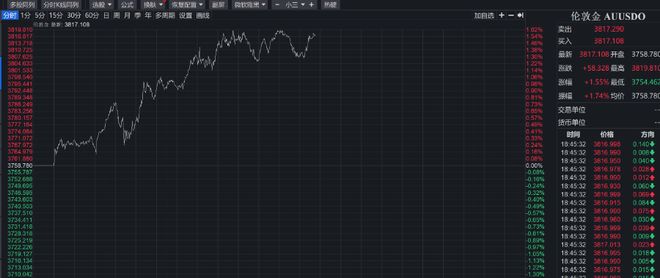
Core Viewpoint - International gold prices have risen for six consecutive weeks, with the London spot gold price surpassing $3,800 per ounce for the first time, indicating a significant shift in global asset allocation strategies [1] Group 1: Gold Market - The New York gold futures also reached a new intraday historical high, reflecting strong demand in the gold market [1] - The rise in gold prices is attributed to a broader trend of international capital diversifying its investments across various asset classes, including digital assets and commodities [1] Group 2: Digital Assets and Emerging Markets - Recent reports indicate that digital asset investment products saw an inflow of $1.9 billion last week, marking two consecutive weeks of positive inflows, with total assets under management reaching a new high of $40.4 billion for the year [1] - Emerging market bond funds have experienced a cumulative net inflow of $45 billion since the beginning of the year, highlighting the growing interest in these markets [1] Group 3: Market Outlook - Industry experts suggest that in the context of potential interest rate cuts by the Federal Reserve and a depreciating dollar, the Asian market is expected to attract more capital inflows [1]
92号汽油逼近7.2元,新一轮调价在即,车主该何时加油?
Sou Hu Cai Jing· 2025-09-28 19:37
Core Viewpoint - The recent surge in oil prices is driven by geopolitical tensions and market dynamics, with expectations of further increases in the near future [1][3][4] Price Adjustments - A new round of oil price adjustments is underway, with an expected increase of 120 yuan per ton, leading to a rise of 0.1 yuan per liter for 92 and 95 gasoline [1][2] - By October 13, the price increase could reach 200 yuan per ton, potentially pushing 92 gasoline prices above 7.2 yuan per liter [2] Market Dynamics - The oil price fluctuations are influenced by ongoing geopolitical tensions, particularly the Russia-Ukraine conflict, which has created supply concerns in the European market [3] - The recent softening of the US dollar due to Federal Reserve policies has attracted speculative investments in the oil market, further driving up prices [3] Consumer Behavior - Consumers face a dilemma on whether to refuel now or wait for potential price drops, with current prices in Shandong around 7.08 yuan per liter [4] - The upcoming holiday season is expected to increase gasoline demand, contributing to the likelihood of price hikes [3][4]
洪灏:美元是今年表现最差的主要货币,还要贬值
Feng Huang Wang Cai Jing· 2025-09-28 04:04
Group 1 - The forum "Phoenix Bay Area Financial Forum 2025" was held in Guangzhou, focusing on the theme "New Pattern, New Path" and gathering global political, business, and academic elites to explore development opportunities [1] - Hong Hao, managing partner of Lianhua Asset Management, expressed the view that a bull market is genuinely on the horizon, stating that "every decade China experiences an epic bull market" [1] - Hong Hao highlighted that the US dollar is the worst-performing major currency this year, indicating a long-term depreciation trend despite a slight rebound [1] Group 2 - The slight appreciation of the Chinese yuan this year is seen as a positive surprise, contrasting with previous years of depreciation that led to capital flowing into the US market [1] - The decline of the US dollar and the appreciation of the yuan have resulted in a better performance of the Chinese stock market, which is now leading globally [1] - There is an ongoing trend of capital returning to the Chinese market, and the upward trend in Chinese asset prices is expected to continue [1]

铜周报:铜价延续上涨趋势-20250928
Dong Ya Qi Huo· 2025-09-28 02:10
1. Report Industry Investment Rating - Not provided in the content 2. Core Views of the Report - The Grasberg copper mine in Indonesia declared force majeure due to a mudslide accident, and the 2026 production target was lowered, increasing the expectation of a global copper mine supply shortage [4]. - The opening of the Fed's interest - rate cut cycle has pushed down the US dollar, and the continuously low global visible inventory has intensified the market's panic - buying sentiment [4]. - Downstream buyers are highly reluctant to buy at high prices. Orders from the home appliance and photovoltaic sectors are weak. The operating rate of copper strip production is only 65.87%, and the pre - holiday inventory replenishment is less than expected [4]. - The opening of the import window has led to an increase in domestic social inventory. Policy adjustments for recycled copper have increased smelting cost pressure, and the demand side has insufficient purchasing power [4]. - The mining accident has driven the strong breakthrough of Shanghai copper futures. The short - term supply - demand contradiction has intensified, supporting the price to run strongly. However, one should be wary of the suppression of demand by high prices and the risk of inventory accumulation [5]. 3. Summary by Related Catalogs 3.1 Copper Futures Market Data (Weekly) - The latest price of Shanghai Copper Main Contract is 82,470 yuan/ton, with a weekly increase of 3.2%. The position is 229,050, and the weekly increase in position is 112,498. The trading volume is 174,625 [6]. - The latest price of Shanghai Copper Index - weighted is 82,451 yuan/ton, with a weekly increase of 3.23%. The position is 546,016, and the weekly increase in position is 66,985. The trading volume is 314,453 [6]. - The latest price of International Copper is 73,190 yuan/ton, with a weekly increase of 3.36%. The position is 2,621, and the weekly decrease in position is 1,877. The trading volume is 5,553 [6]. - The latest price of LME Copper 3 - month is $10,275.5/ton, with a weekly increase of 3.31%. The position is 239,014, and the weekly decrease in position is 38,282. The trading volume is 42,366 [6]. - The latest price of COMEX Copper is $478.85/ton, with a weekly increase of 4.1%. The position is 131,374, and the weekly increase in position is 7,842. The trading volume is 65,306 [6]. 3.2 Copper Spot Market Data (Weekly) - The latest price of Shanghai Non - ferrous 1 Copper is 82,485 yuan/ton, with a weekly increase of 2,495 yuan and a weekly increase rate of 3.12% [10]. - The latest price of Shanghai Wumaomao is 82,510 yuan/ton, with a weekly increase of 2,540 yuan and a weekly increase rate of 3.18% [10]. - The latest price of Guangdong Southern Reserve is 82,590 yuan/ton, with a weekly increase of 2,560 yuan and a weekly increase rate of 3.2% [11]. - The latest price of Yangtze River Non - ferrous is 82,660 yuan/ton, with a weekly increase of 2,550 yuan and a weekly increase rate of 3.18% [11]. - The latest price of Shanghai Non - ferrous premium/discount is - 5 yuan/ton, with a weekly decrease of 75 yuan and a weekly decrease rate of 107.14% [11]. - The latest price of Shanghai Wumaomao premium/discount is - 10 yuan/ton, with a weekly decrease of 60 yuan and a weekly decrease rate of 120% [11]. - The latest price of Guangdong Southern Reserve premium/discount is - 15 yuan/ton, with a weekly decrease of 55 yuan and a weekly decrease rate of 137.5% [11]. - The latest price of Yangtze River Non - ferrous premium/discount is 75 yuan/ton, with a weekly decrease of 50 yuan and a weekly decrease rate of 40% [11]. - The latest price of LME Copper (spot/3 - month) premium/discount is - $31.55/ton, with a weekly increase of $39.54 and a weekly decrease rate of 55.62% [11]. - The latest price of LME Copper (3 - month/15 - month) premium/discount is - $39.98/ton, with a weekly increase of $120.3 and a weekly decrease rate of 75.06% [11]. 3.3 Advanced Copper Data (Weekly) - The latest copper import profit and loss is - 675.54 yuan/ton, with a weekly decrease of 679.42 yuan and a weekly decrease rate of 17,510.82% [12]. - The latest copper concentrate TC is - $40.65/ton, with a weekly increase of $0.75 and a weekly decrease rate of 1.81% [12]. - The latest copper - aluminum ratio is 3.9841, with a weekly increase of 0.1516 and a weekly increase rate of 3.96% [12]. - The latest refined - scrap copper price difference is 3,010.53 yuan/ton, with a weekly increase of 1,258.4 yuan and a weekly increase rate of 71.82% [12]. 3.4 Copper Inventory (Weekly) - The total Shanghai Copper warehouse receipts are 26,557 tons, with a weekly decrease of 5,281 tons and a weekly decrease rate of 16.59% [17]. - The total International Copper warehouse receipts are 8,373 tons, with a weekly increase of 1,878 tons and a weekly increase rate of 28.91% [17]. - The Shanghai Copper inventory is 98,779 tons, with a weekly decrease of 7,035 tons and a weekly decrease rate of 6.65% [17]. - The LME Copper registered warehouse receipts are 133,025 tons, with a weekly decrease of 2,400 tons and a weekly decrease rate of 1.77% [17]. - The LME Copper cancelled warehouse receipts are 11,400 tons, with a weekly decrease of 2,050 tons and a weekly decrease rate of 15.24% [20]. - The LME Copper inventory is 144,425 tons, with a weekly decrease of 4,450 tons and a weekly decrease rate of 2.99% [20]. - The COMEX Copper registered warehouse receipts are 148,567 tons, with a weekly decrease of 942 tons and a weekly decrease rate of 0.63% [20]. - The COMEX Copper unregistered warehouse receipts are 172,489 tons, with a weekly increase of 6,792 tons and a weekly increase rate of 4.1% [20]. - The COMEX Copper inventory is 321,056 tons, with a weekly increase of 5,850 tons and a weekly increase rate of 1.86% [20]. - The copper mine port inventory is 58.3 million tons, with a weekly increase of 0.9 million tons and a weekly increase rate of 1.57% [20]. - The social inventory is 41.82 million tons, with a weekly increase of 0.43 million tons and a weekly increase rate of 1.04% [20]. 3.5 Copper Mid - stream Production (Monthly) - In August 2025, the monthly output of refined copper was 1.301 million tons, a year - on - year increase of 14.8%. The cumulative output was 9.891 million tons, a year - on - year increase of 10.1% [23]. - In August 2025, the monthly output of copper products was 2.222 million tons, a year - on - year increase of 9.8%. The cumulative output was 16.598 million tons, a year - on - year increase of 10.7% [23]. 3.6 Copper Mid - stream Capacity Utilization (Monthly) - In August 2025, the capacity utilization rate of refined copper rods was 63.02%, with a monthly increase of 1.7% and a year - on - year decrease of 2.11%. The total annual capacity is 15.84 million tons [25]. - In August 2025, the capacity utilization rate of scrap copper rods was 24.81%, with a monthly decrease of 1.92% and a year - on - year increase of 4.21%. The total annual capacity is 8.19 million tons [25]. - In August 2025, the capacity utilization rate of copper strips was 64.72%, with a monthly decrease of 1.01% and a year - on - year decrease of 6.98%. The total annual capacity is 3.59 million tons [25]. - In August 2025, the capacity utilization rate of copper bars was 49.86%, with a monthly decrease of 0.59% and a year - on - year decrease of 1.88%. The total annual capacity is 2.2865 million tons [25]. - In August 2025, the capacity utilization rate of copper tubes was 62.55%, with a monthly decrease of 5.33% and a year - on - year increase of 4.21%. The total annual capacity is 2.783 million tons [25]. 3.7 Copper Element Imports (Monthly) - In August 2025, the monthly import volume of copper concentrates was 2.759295 million tons, a year - on - year increase of 7%. The cumulative import volume was 20.07674 million tons, a year - on - year increase of 8% [29]. - In August 2025, the monthly import volume of anode copper was 61,712 tons, a year - on - year decrease of 18%. The cumulative import volume was 528,637 tons, a year - on - year decrease of 13% [29]. - In August 2025, the monthly import volume of cathode copper was 263,049 tons, a year - on - year increase of 5%. The cumulative import volume was 2,206,092 tons, a year - on - year decrease of 5% [29]. - In August 2025, the monthly import volume of scrap copper was 179,360 tons, a year - on - year increase of 6%. The cumulative import volume was 1,514,842 tons, with no year - on - year change [29]. - In August 2025, the monthly import volume of copper products was 430,000 tons, a year - on - year increase of 2.6%. The cumulative import volume was 3,540,000 tons, a year - on - year decrease of 2.1% [29].
美联储降息叠加美元贬值 美元理财收益缩水
Sou Hu Cai Jing· 2025-09-25 16:46
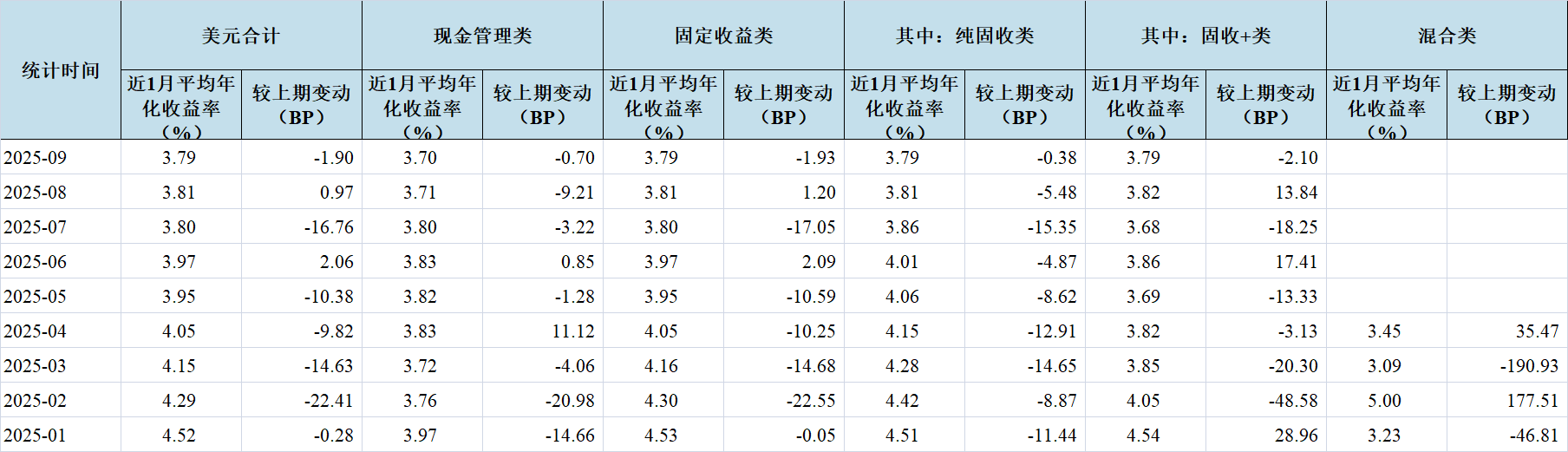
Core Viewpoint - The Federal Reserve has lowered the federal funds rate target range by 25 basis points to 4.00%-4.25%, marking the first rate cut since December 2024, which signals the end of the high-interest rate cycle for the dollar and a downward trend in dollar asset yields [1][4]. Group 1: Impact of Rate Cut - The recent rate cut is seen as a confirmation of the turning point for dollar asset yields, ending a nine-month period of stable policy [4]. - Foreign banks, such as HSBC and DBS, have quickly responded by lowering dollar deposit rates following the Fed's announcement [4]. - Domestic banks have not yet adjusted their rates, but there is an expectation of potential future declines [4][5]. Group 2: Investor Experiences - Many investors have shared experiences of losses from dollar-denominated financial products due to declining exchange rates, despite initially attractive interest rates [2][3]. - The average annualized yield for dollar financial products has dropped significantly from 4.52% in January to 3.79% in September [2][5]. - Investors are increasingly questioning whether investing in dollar financial products is more about earning interest or speculating on exchange rates [3]. Group 3: Risks and Considerations - The decline in dollar asset yields is attributed to both the Fed's rate cuts and the depreciation of the dollar, which has seen a nearly 10% drop in the dollar index this year [2][7]. - Analysts highlight three main risks associated with dollar financial products: exchange rate risk, interest rate risk, and liquidity risk [7]. - Future expectations regarding Fed policy and exchange rate movements remain uncertain, with differing opinions among analysts [7][8].
美联储降息叠加美元贬值,美元理财投资者亏麻了
Di Yi Cai Jing· 2025-09-25 12:41
Group 1 - The Federal Reserve has lowered the federal funds rate target range by 25 basis points to 4.00%-4.25%, marking the first rate cut since December 2024, indicating a shift in the high-interest rate environment for the dollar [1][5] - The dollar has depreciated significantly since the beginning of the year, leading to reduced interest income and principal losses for investors holding dollar-denominated financial products [1][2] - The average annualized yield of dollar financial products has declined from 4.52% in January to 3.79% in September, reflecting a downward trend in dollar asset returns [2][6] Group 2 - Investors are increasingly sharing experiences of losses from dollar financial products, highlighting the risks associated with currency fluctuations and the diminishing returns from these investments [2][4] - The dollar index has dropped nearly 10% year-to-date, with the exchange rate against the yuan falling from 7.35 to 7.12, a depreciation of over 3% [2][4] - The decline in yields is particularly pronounced in fixed-income products, with expectations that yields may fall below 3.5% in the coming months [6][7] Group 3 - The recent rate cut by the Federal Reserve is seen as a confirmation of a turning point for dollar asset yields, with foreign banks quickly adjusting their deposit rates in response [5][6] - Despite the decline in yields, some smaller banks still offer competitive rates, but the overall sentiment is that exchange rate fluctuations will significantly impact actual returns [6][7] - Analysts express differing views on future Federal Reserve policy, with expectations of further rate cuts and a stable dollar-to-yuan exchange rate within the 7.0-7.5 range [8]