
自动驾驶

Search documents
百度发布2025年财报:全年营收1291亿元,归母净利润下降76%
Feng Huang Wang· 2026-02-26 22:45
Core Insights - Baidu's total revenue for 2025 was 129.1 billion RMB, a year-on-year decline of 3%, primarily due to decreased revenue from traditional business segments [1] - The company recorded an operating loss of 5.8 billion RMB for the year, impacted by a core asset impairment loss of 16.2 billion RMB, compared to an operating profit of 21.2 billion RMB in 2024 [1] - After excluding impairment effects, Baidu's non-GAAP net profit for the year reached 18.9 billion RMB [1] Financial Performance - In Q4 2025, Baidu's total revenue was 32.7 billion RMB, reflecting a quarter-on-quarter growth of 5% [1] - The non-GAAP net profit for Q4 was 3.9 billion RMB [1] - The net profit attributable to Baidu for 2025 was 5.6 billion RMB, with a net profit margin of 4%, a significant decrease of 76% compared to 2024's 23.8 billion RMB [1][2] Business Segments - New business segments are increasingly contributing to total revenue, with Q4 AI new business revenue exceeding 11 billion RMB, accounting for 43% of Baidu's general business revenue [2] - For the full year, intelligent cloud infrastructure revenue was approximately 20 billion RMB, a year-on-year increase of 34%, while AI applications generated over 10 billion RMB in revenue [2] - In the autonomous driving sector, the "Luobo Kuaipao" service provided 3.4 million fully unmanned operational orders in Q4, representing a year-on-year growth of over 200% [2] Capital Operations and Shareholder Returns - Baidu's board has authorized a new share repurchase plan with a maximum amount of 5 billion USD, effective until December 31, 2028 [2] - The company has approved a dividend policy for common stock, with the first dividend expected to be distributed by the end of 2026 [2] - Baidu is advancing the spin-off and independent listing process for its chip business, Kunlun [2]

胜科纳米(苏州)股份有限公司2025年度业绩快报公告
Shang Hai Zheng Quan Bao· 2026-02-26 19:04
Core Viewpoint - The company reported a significant increase in revenue for the fiscal year 2025, but net profit experienced a decline, indicating challenges in profitability despite growth in sales [2][3]. Financial Performance and Indicators - The company achieved an operating income of 52,952.73 million RMB, representing a year-on-year growth of 27.51% [2]. - The net profit attributable to the parent company was 6,229.39 million RMB, down 23.27% year-on-year [2]. - The net profit after deducting non-recurring gains and losses was 5,658.60 million RMB, a decrease of 21.97% compared to the previous year [2]. - Basic earnings per share were 0.16 RMB, reflecting a decline of 27.27% year-on-year [2]. - Total assets at the end of the reporting period were 199,038.67 million RMB, an increase of 33.39% from the beginning of the period [2]. - Shareholders' equity attributable to the parent company was 88,845.76 million RMB, up 46.62% from the start of the period [2]. - The net asset value per share attributable to the parent company was 2.20 RMB, an increase of 31.74% [2]. Operational Performance and Financial Condition - The company enhanced its semiconductor testing and analysis capabilities through independent research and development, leading to significant growth in core customer orders [3]. - The operational costs increased due to the depreciation of new testing and analysis equipment and the establishment of a new subsidiary in Beijing, impacting overall gross margin [3]. - Increased R&D investment, particularly in the fifth-generation production line for computing power chips and high-end storage chips, contributed to rising expenses, affecting profit levels [3].
聚焦自动驾驶与具身智能 蔚来芯片子公司获超22亿元首轮融资
Zhong Zheng Wang· 2026-02-26 13:57
Group 1 - NIO's chip subsidiary, Anhui Shenqi Technology Co., Ltd., completed its first round of equity financing, raising over 2.2 billion RMB, with a post-financing valuation nearing 10 billion RMB [1] - The financing attracted several industry capital and leading institutions, including Hefei Guotou, Hefei Haiheng, IDG Capital, and others, which will support Shenqi's ongoing development and promotion of high-end, competitive chip products [1] - Shenqi is the first company in China to develop 5nm automotive-grade chips and has achieved large-scale commercialization [1] Group 2 - The Shenqi NX9031 chip has shipped over 150,000 units since its production began in 2024 and is deployed across all NIO brand models [1] - Following this financing, Shenqi plans to launch high-performance chips for the next generation of intelligent driving and several other chips for different fields [1] - Shenqi's initial orders primarily come from NIO, but the company is actively expanding into emerging businesses such as embodied robotics and agent reasoning, providing comprehensive chip and intelligent hardware solutions for various clients in the AGI era [1]

BIDU(BIDU) - 2025 Q4 - Earnings Call Transcript
2026-02-26 13:32
Financial Data and Key Metrics Changes - Baidu's total revenue for Q4 was CNY 32.7 billion, a 5% increase quarter-over-quarter, while total revenue for the full year 2025 was CNY 129.1 billion, a 3% decrease year-over-year [24][25] - Non-GAAP operating profits expanded 28% sequentially to CNY 2.8 billion in Q4, with non-GAAP operating income for the full year reaching CNY 15.0 billion [23][27] - Net income attributable to Baidu for Q4 was CNY 1.8 billion, with a net margin of 5%, while for the full year, net income was CNY 5.6 billion, with a net margin of 4% [28][29] Business Line Data and Key Metrics Changes - Revenue from Baidu's core AI-powered business exceeded CNY 11 billion in Q4, accounting for 43% of total revenue, indicating strong growth momentum [4][23] - AI Cloud infrastructure revenue grew 34% year-over-year, with subscription-based revenue from AI accelerator infrastructure increasing 143% year-over-year in Q4 [6][39] - Apollo Go delivered 3.4 million fully driverless operational rides in Q4, with total rides increasing by over 200% year-over-year, and cumulative rides surpassing 20 million [18][20] Market Data and Key Metrics Changes - Baidu's AI Cloud revenue reached CNY 30 billion for the full year 2025, driven by strong enterprise adoption and demand for AI computing [23][39] - The company expanded its global footprint for Apollo Go to 26 cities, reinforcing its leadership in autonomous ride-hailing services [20][56] Company Strategy and Development Direction - Baidu is focusing on scaling AI across its businesses, enhancing AI Cloud growth, and expanding robotaxi operations with improved unit economics [5][21] - The proposed spin-off and separate listing of Kunlunxin, Baidu's self-developed AI chips, is aimed at unlocking new opportunities for value creation [8][22] - The establishment of the Personal Super Intelligence Business Group (PSIG) aims to unify Baidu's consumer-facing AI applications, enhancing collaboration and innovation [17][22] Management's Comments on Operating Environment and Future Outlook - Management expressed confidence in sustaining strong growth momentum in AI Cloud and AI applications, driven by accelerating enterprise AI adoption [39][41] - The competitive landscape for AI models is intense, but Baidu believes that applications matter more than models, focusing on delivering value through practical use cases [33][36] - Management highlighted the importance of safety in autonomous driving, stating that Baidu's autonomous ride-hailing service is the safest globally [20][21] Other Important Information - Baidu announced a new $5 billion share repurchase program and adopted a dividend policy for the first time, reflecting a commitment to shareholder value [22][50] - The company reported a positive operating cash flow for two consecutive quarters, generating CNY 3.9 billion across Q3 and Q4 [23][29] Q&A Session Summary Question: How does management view the current competitive landscape for AI models? - Management noted that the market is highly competitive, emphasizing that applications are more important than models, and they are focused on an application-driven approach [33][36] Question: What are the key growth drivers behind Baidu AI Cloud's robust revenue growth? - Management highlighted that AI Cloud revenue reached CNY 30 billion, with strong growth driven by enterprise AI adoption and subscription-based revenue from AI accelerator infrastructure [39][41] Question: When should we expect AI-powered business to exceed 50% of Baidu's general business? - Management indicated that AI-powered business is rapidly increasing and is expected to become the majority of Baidu's general business in the foreseeable future [46] Question: Can management elaborate on the capital allocation framework? - Management discussed recent initiatives including a share repurchase program and the proposed spin-off of Kunlunxin, reflecting a coherent execution framework aimed at creating shareholder value [48][51] Question: What is the strategy for Apollo Go's international expansion? - Management outlined plans to leverage strategic partnerships and emphasized the importance of operational efficiency and safety in scaling Apollo Go's operations globally [56][59]
中国机器人在跳舞,美国机器人在发论文
Xin Lang Cai Jing· 2026-02-26 13:22
Core Viewpoint - The article discusses the contrasting development paths of the robotics industry in China and the United States, highlighting China's focus on hardware and the U.S.'s emphasis on software, suggesting a competitive landscape in the robotics sector. Group 1: Industry Overview - The popularity of robots in China has significantly increased, with various performances showcased during the Spring Festival, while the U.S. robotics industry appears relatively quiet [2][27]. - Despite fewer robots in the U.S., there are numerous robotics companies, including World Labs and Physical Intelligence, focusing on data synthesis and model development [4][29]. - NVIDIA has developed the Isaac platform specifically for humanoid robots, indicating a strong push in software development for robotics in the U.S. [6][31]. Group 2: Hardware vs. Software - China is primarily focused on hardware development, with robots already being utilized in factories, while the U.S. is concentrating on software, producing numerous algorithms and patents [6][31]. - The long-term goal for humanoid robots is versatility, requiring both human-like physical capabilities and advanced software algorithms to understand the physical world [8][33]. - The hardware aspect of robots includes components like joints, which are crucial for complex operations, while the software is essential for understanding physical rules [9][36]. Group 3: Supply Chain Dynamics - The supply chain for robotics in China is heavily influenced by the automotive industry, with many suppliers transitioning to provide components for humanoid robots [16][41]. - Companies like Tesla leverage China's manufacturing capabilities for hardware while maintaining software development in the U.S., creating a symbiotic relationship between the two countries [17][42]. - The integration of automotive technology into robotics is evident, with components like batteries and control systems being shared between electric vehicles and humanoid robots [13][40]. Group 4: Future Outlook - The article suggests that the competitive landscape in robotics may mirror that of the electric vehicle industry, with Chinese companies potentially dominating the humanoid robot market in the future [24][49]. - The rapid advancement in software capabilities in China is narrowing the gap with U.S. companies, indicating a potential shift in competitive dynamics [23][48]. - Elon Musk has expressed concerns about the rising competition from Chinese companies in the humanoid robot sector, indicating a recognition of the shifting landscape [24][49].


百度2025年营收达1291亿元 第四季度AI业务收入占比43%
Zheng Quan Ri Bao Wang· 2026-02-26 13:05
Core Insights - Baidu's total revenue for 2025 reached 129.1 billion yuan, with AI business revenue accounting for 40 billion yuan, indicating a significant shift towards AI as a core business driver [1] - The company reported that AI-related services are expanding rapidly, with AI cloud revenue growing by 34% year-on-year and AI native marketing services increasing by 301% in 2025 [2][3] Group 1: Financial Performance - In Q4 2025, Baidu's total revenue was 32.7 billion yuan, with AI business revenue constituting 43% of general business income [1] - AI cloud's subscription revenue surged by 143% year-on-year in Q4, reflecting strong demand for high-performance computing [1] - AI native marketing services revenue reached 2.7 billion yuan in Q4, marking a 110% year-on-year increase [2] Group 2: User Engagement and Application Growth - Baidu App's monthly active users reached 679 million, while Wenxin Assistant's monthly active users hit 202 million, showcasing strong user engagement [2] - The launch of the Wenxin Assistant during the Spring Festival led to a fourfold increase in active users [2] - Baidu's AI applications generated over 10 billion yuan in revenue for the year, with significant growth in various sectors [2] Group 3: Autonomous Driving and Market Expansion - In Q4 2025, Baidu's autonomous driving service, "Luobo Kuaipao," recorded over 3.4 million rides, a year-on-year increase of over 200% [3] - The service has expanded to 26 cities globally, with a total of over 20 million rides provided [3] - Baidu's autonomous driving technology has accumulated over 300 million kilometers of total driving distance, with over 190 million kilometers being fully autonomous [3] Group 4: Capitalization and Strategic Moves - Baidu's subsidiary Kunlun Chip has submitted a listing application to the Hong Kong Stock Exchange, indicating a strategic move to capitalize on its AI chip business [4] - The company announced a share buyback plan of up to 5 billion USD and plans to declare its first dividend in 2026, enhancing shareholder returns [4] - These initiatives are expected to optimize Baidu's valuation structure and open financing channels for long-term technological investments [5]
从预算案看Robotaxi:香港的“投资未来”样本
Cai Jing Wang· 2026-02-26 12:51
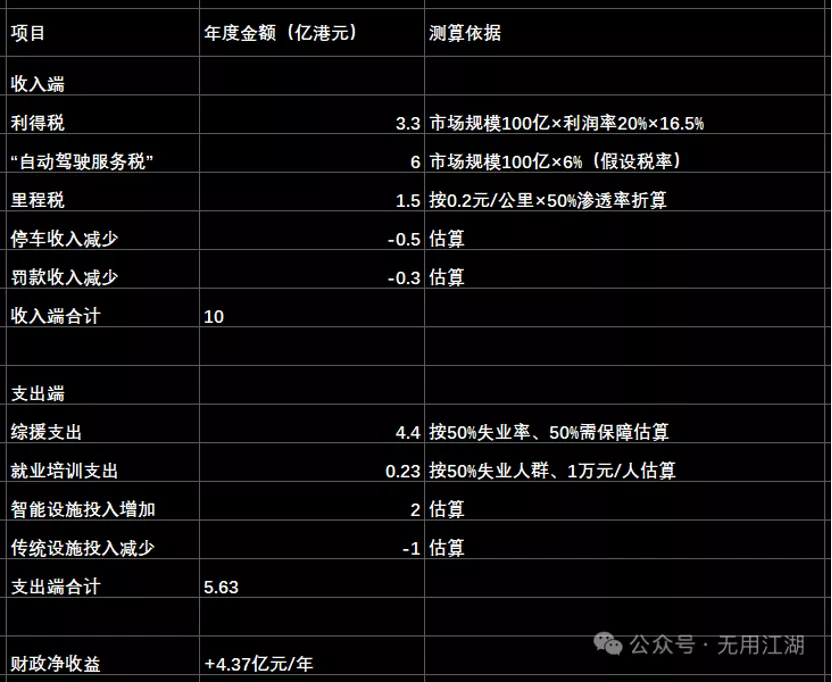
就在刚刚过去的一周,全球自动驾驶赛道迎来密集落子:美国国会众议院表决通过《自动驾驶法案》,首次建立联邦 统一监管框架,为L4级规模化商用扫清制度障碍,立法意图明确剑指"在与中国的技术竞争中巩固领先地位";与此同 时,特斯拉首辆Cybercab在得州工厂正式下线,象征意义与技术野心一并落地。 而在中国香港,百度旗下萝卜快跑获批第五次扩区,连接北大屿山机场岛与东涌市中心及欣澳的跨区测试路线正式贯 通——这是自2024年底取得香港首张自动驾驶先导牌照以来,从机场枢纽向核心社区迈出的关键一步。 当下,我们不讨论技术路线,我们要思考的是:当Robotaxi真正驶入香港的复杂街道,这盘关于城市未来的大棋,香 港该怎么下? 巧合的是,就在昨天,香港特区政府发布了2026/2027年度财政预算案。这份以"创科驱动、金融赋能"为主题的预算 案,为本次讨论提供了全新的参考。 一、香港出租车行业的三重困局 说到可行性,香港出租车行业面临三重困局:没人,没钱,没地。 第一重困局:没人。香港持有效出租车驾驶执照者高达21万人,但活跃司机仅4.6万人。超过16万人持有执照却选 择"不入行"——这不是偶然,而是这个行业对新一代劳动力失去吸 ...
康林松陪同德国总理默茨访华,奔驰深化与Momenta合作
Bei Ke Cai Jing· 2026-02-26 12:04
Group 1 - Mercedes-Benz China and Momenta signed a memorandum of understanding to deepen cooperation in the future mobility sector [1][3] - The new generation Mercedes-Benz S-Class features an intelligent driving assistance system developed in collaboration with Momenta, covering urban, highway, and parking scenarios [3] - The intelligent driving system will be implemented in nine new Mercedes-Benz models launching this year, including the all-electric long-wheelbase GLC SUV and the new S-Class [3] Group 2 - Mercedes-Benz has established a comprehensive R&D network in China, which is the most extensive outside Germany, with the Chinese team playing a crucial role in global R&D [4] - The high-end rear entertainment system in the new S-Class was developed by the Chinese R&D team, focusing on smart connectivity, autonomous driving, software and hardware development, and big data [4]

宁波华翔:公司募投项目中的智能底盘相关项目就是为了抓住自动驾驶这一产品趋势,拓展产品品类
Mei Ri Jing Ji Xin Wen· 2026-02-26 11:58
Core Viewpoint - The company is focusing on developing intelligent chassis projects to align with the trends in autonomous driving, particularly for L3 and above levels [1] Group 1: Company Initiatives - The intelligent chassis projects, including line control braking (EMB), line control steering (SBW), and active suspension, are part of the company's fundraising initiatives [1] - These projects are aimed at expanding the product range and supporting the company's sustainable development [1]

蔚来宣布芯片子公司完成首轮超22亿元融资协议签署,多家行业头部机构参投
Xin Lang Cai Jing· 2026-02-26 11:55
Core Viewpoint - NIO's chip subsidiary, Anhui Shenji Technology Co., Ltd., has completed its first round of equity financing, raising over 2.2 billion RMB, with a post-financing valuation nearing 10 billion RMB, which will support the development of high-end, competitive chip products for NIO's long-term strategies in autonomous driving and embodied intelligence [1][2]. Group 1 - The financing round included participation from several industry capital and leading institutions such as Hefei Guotou, Hefei Haiheng, IDG Capital, Zhongxin Juyuan, and Yuanhe Puhua [1][2]. - Anhui Shenji is the first company in China to develop 5nm automotive-grade chips and achieve large-scale commercialization [1][2]. - The Shenji NX9031 chip offers performance equivalent to four traditional chips, maintaining the top position in the domestic automotive chip market [1][2]. Group 2 - Since its production began in 2024, the company has shipped over 150,000 units of the NX9031 chip, successfully deploying it across all NIO brand models [1][2]. - Following this financing, Shenji plans to launch next-generation high-performance chips for intelligent driving and several other chips for different fields [1][2]. - The initial orders for Shenji's products primarily come from NIO, while the company is actively expanding into emerging businesses such as embodied robotics and agent reasoning, providing comprehensive chip and intelligent hardware solutions for various clients in the AGI era [1][2].