
第二增长曲线

Search documents
白云山涨近5% 上半年归母净利同比减少1.31% 大健康板块表现亮眼
Zhi Tong Cai Jing· 2025-08-18 02:41
Core Viewpoint - Baiyunshan (00874) reported a slight increase in revenue but a decrease in net profit for the first half of 2025, reflecting ongoing challenges in demand, competition, and industry policies [1] Financial Performance - Revenue for the first half of 2025 was approximately 41.835 billion RMB, representing a year-on-year increase of 1.93% [1] - Net profit attributable to shareholders was about 2.516 billion RMB, showing a year-on-year decrease of 1.31% [1] - Basic earnings per share were 1.548 RMB, with a proposed cash dividend of 0.40 RMB per share (tax included) [1] Business Segment Analysis - The health sector saw a revenue increase of 7.42% year-on-year, reaching 7.023 billion RMB [1] - The gross margin for this segment was 44.67%, an increase of 1.69 percentage points compared to the previous year [1] Strategic Initiatives - The company is enhancing its traditional channel coverage for Wanglaoji herbal tea and deepening cooperation with major restaurant platforms [1] - New product marketing initiatives include the launch of original herbal tea, and new flavors such as lychee and yellow peach for low-concentration fruit juice products [1] - The company is accelerating its overseas expansion of health products, introducing the "WALOVI+Wanglaoji" dual-label international can [1]
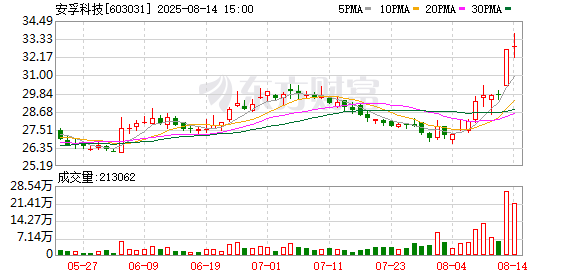
安孚科技迎近百位投资者调研 核心资产南孚电池发展前景备受关注
Xin Hua Cai Jing· 2025-08-15 00:40
Core Viewpoint - Anhui Anfu Battery Technology Co., Ltd. (Anfu Technology) is actively expanding its alkaline battery business overseas and has achieved significant results in the first half of 2025, with total revenue of 2.428 billion yuan, a year-on-year increase of 4.98%, and a net profit of 107 million yuan, up 14.38% year-on-year [2]. Group 1: Business Strategy and Growth - Anfu Technology's management emphasizes the importance of maximizing the value of its core asset, Nanfu Battery, which has been the focus since acquiring control in 2022 [3]. - The company aims to enhance its equity stake in Nanfu Battery through mergers and acquisitions, targeting high-growth potential companies within the industry [2][5]. - The domestic market for Nanfu Battery shows strong growth potential, with a retail market share exceeding 80% and a significant gap in alkaline battery penetration compared to developed countries [3][4]. Group 2: International Expansion - Nanfu Battery currently holds the third-largest global market share in alkaline batteries, but its export share is only about 8% [4]. - Anfu Technology plans to increase production capacity with four new fully automated production lines, expected to add 1 billion units of capacity, supporting future growth in the OEM export market [4]. - The company is also exploring overseas factory setups, partnerships, and acquisitions to accelerate its global expansion [4]. Group 3: Product Diversification - Anfu Technology is diversifying its product offerings beyond alkaline batteries, with sub-brands achieving rapid revenue growth in their respective segments [5]. - The company is focused on building a comprehensive brand strategy that includes "Smart Manufacturing Nanfu," "Technology Nanfu," and "World Nanfu" to enhance its market presence [5]. Group 4: Mergers and Acquisitions - Anfu Technology's recent acquisition of a 31% stake in Anfu Energy has been approved, increasing its equity stake in Nanfu Battery from 26.09% to 42.92% [5]. - The successful completion of this major asset restructuring is expected to significantly improve the company's future operating performance [5][6]. - The company's strong integration capabilities and past successful mergers provide a solid foundation for future growth and value creation [6][8].


东鹏饮料中期业绩大增 食品饮料行业复苏明显
Xin Hua Wang· 2025-08-12 05:49
Core Insights - Dongpeng Beverage reported a strong performance in the first half of 2023, with revenue reaching 5.46 billion yuan, a year-on-year increase of 27.24%, and net profit of 1.108 billion yuan, up 46.84% [1] - The food and beverage industry is experiencing a recovery, with over 60% of the 54 listed companies in the sector reporting profit forecasts, and more than 50% expecting net profit growth [1] - Dongpeng's market position remains strong, with its energy drink sales volume increasing from 36.70% to 40.86% in the Chinese market [1] Financial Performance - In Q2 2023, Dongpeng achieved revenue of 2.969 billion yuan, a 30% year-on-year increase and a 19% quarter-on-quarter increase, with net profit of 611 million yuan, reflecting a 49% year-on-year and 23% quarter-on-quarter growth [1] - The company's core product, Dongpeng Special Drink, sold 1.207 million tons, generating 5.135 billion yuan in revenue, a 24.69% increase, although its revenue share decreased from 96.13% to 94.13% [2] Strategic Developments - Dongpeng is diversifying its product offerings, focusing on energy drinks as the primary growth curve and introducing coffee and electrolyte drinks as a secondary growth curve [2] - Other beverage sales, excluding Dongpeng Special Drink, reached 173,200 tons, with revenue of 320 million yuan, marking a 92.85% increase and an increase in overall revenue share from 3.87% to 5.87% [2] Market Expansion - As of June 2023, Dongpeng's distributor count reached 2,796, and the number of sales outlets grew to 3.3 million, a 32% increase [3] - Revenue growth was observed across major regional markets, with Guangdong's revenue at 1.879 billion yuan (up 14.05%), and significant growth in Southwest and North China regions, with increases of 59.71% and 67.91% respectively [3] - The company's reliance on the Guangdong market is decreasing, with its revenue share in the region dropping to 34.45%, down 4 percentage points from the previous year [3]


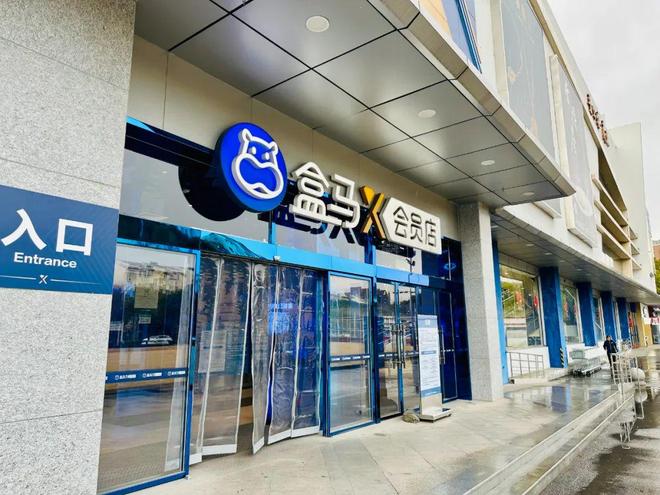
知名会员店将全部关闭!最后一家确认8月底停业,曾对标山姆、Costco
Hua Xia Shi Bao· 2025-08-05 06:42
Core Insights - Hema has completely shut down all its membership stores, marking the end of its attempt to establish a second growth curve that aimed to compete with Costco [4][6] - The closure of Hema X membership stores reflects a strategic shift away from this business model, which was initially launched in October 2020 [5][8] Summary by Sections Business Closure - All Hema X membership stores have ceased operations, with the last store in Shanghai set to close on August 31 [3][4] - The closure follows a series of shutdowns, including three stores on July 31, 2023, and four stores in April 2023 due to business adjustments [3][6] Growth and Expansion - Hema X membership stores were launched as a separate entity from Hema Fresh, with the first store opening in Shanghai in October 2020 [5] - The brand expanded rapidly, with a peak in growth in 2021, opening multiple stores in Beijing and other cities [5][6] - By October 2023, Hema X had opened a total of 10 stores across major cities [5] Strategic Shift - The decision to close all membership stores is part of Hema's broader strategy to focus on its core business models, Hema Fresh and Hema NB [8] - Hema aims to enhance its competitive edge by strengthening its fresh supply chain and instant delivery capabilities [8] - The company is also transitioning some membership benefits to an online platform, upgrading its previous service to "Cloud Enjoy Club" [8]

盒马会员店将全部停业
Di Yi Cai Jing Zi Xun· 2025-08-05 03:21
Core Points - Hema has decided to completely shut down its membership store format, marking the end of its attempt to establish a second growth curve that aimed to compete with Costco [2][5] - The closure of all Hema X membership stores follows a series of shutdowns, with the last remaining store in Shanghai set to close by August 31 [2][3] - Hema X membership stores were launched in October 2020, with rapid expansion occurring in 2021, but ultimately only 10 stores were opened across major cities by October 2023 [3] Summary by Sections - **Business Decision**: Hema has made a strategic decision to eliminate the membership store format, which was initially seen as a potential growth avenue [5] - **Store Closures**: The last operational Hema X membership store will close on August 31, 2023, following the earlier closures of stores in Beijing, Suzhou, and Nanjing [2][4] - **Market Positioning**: Hema X was intended to target middle-class and high-end consumers, with membership fees set at 258 yuan for gold members and 658 yuan for diamond members, aiming to compete directly with Costco and Sam's Club [5]
张坤变了!这是在悄然颠覆自己吗?
Sou Hu Cai Jing· 2025-08-03 04:07
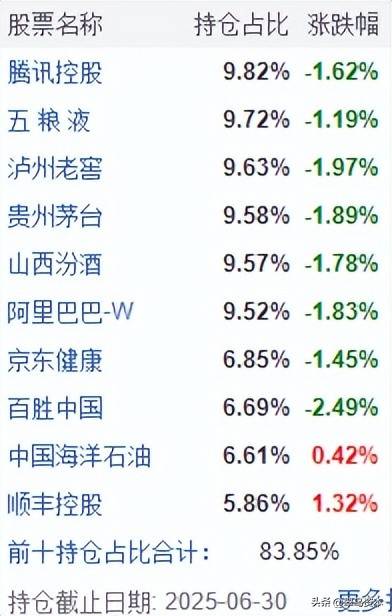
Group 1 - Zhang Kun has made significant adjustments to his investment strategy, moving from a heavy reliance on Kweichow Moutai to a more balanced allocation that includes Wuliangye and Luzhou Laojiao as top holdings [1][2][7] - The top ten holdings now account for 83.85% of the portfolio, indicating a concentrated investment approach while diversifying within the liquor sector [1] - The shift in focus suggests a reevaluation of Moutai's investment value and market elasticity, reflecting a potential downtrend in its attractiveness as an investment [2][4] Group 2 - New investments in companies like SF Express and Yum China indicate a broader strategy that encompasses macroeconomic recovery signals and consumer confidence [3][4] - The inclusion of JD Health marks a departure from previous investment interests, suggesting a search for new growth opportunities beyond traditional sectors [4][7] - The adjustments in the portfolio reflect a proactive approach to risk management and a desire to establish a "second growth curve" for the fund [4][7]
销售额同比下降 房企寻找第二增长曲线
Zheng Quan Shi Bao Wang· 2025-07-31 11:44
Group 1 - The core viewpoint of the articles indicates a significant decline in sales performance among China's top 100 real estate companies, with a year-on-year decrease of 13.3% in the first seven months of 2023, and a more pronounced drop of 18.2% in July alone [1][2] - The total sales revenue for the top 100 real estate companies reached 2,073.01 billion yuan in the first seven months of 2023, with the average sales revenue for the top 10 companies being 101.03 billion yuan, down 13.6% year-on-year [1] - The shift in the real estate industry is evident as companies are moving away from high turnover and high leverage models towards sustainable operations and long-term value, with a notable growth in commercial operations, long-term rentals, and property management [1][2] Group 2 - Longfor Group has seen its operational business become a significant source of revenue, achieving operational income of 14.15 billion yuan in the first half of the year, indicating a continuous growth trend [2] - The operational business is expected to contribute around 30% of total income and 50% of profits for real estate companies in the coming years, marking a crucial direction for developing new business models [2] - The real estate market is anticipated to face continued pressure in sales, but potential policy support could help mitigate the decline, with a focus on effective implementation of existing policies [2]
海底捞的跨界图鉴:火锅局头开始玩转副业
Xi Niu Cai Jing· 2025-07-29 07:45
Core Viewpoint - Haidilao is actively expanding its business lines to seek new growth opportunities amid increasing competition in the hot pot market, which has seen a decline in net store openings [2][3][4]. Group 1: Business Expansion - Haidilao has launched a new self-service hot pot concept called "Juhighao Self-Service Hot Pot" in cities like Changsha, Ningbo, and Nanjing, priced at 59.9 yuan per person, attracting significant consumer interest despite long wait times [2]. - The company has been diversifying its offerings since 2024, introducing new brands in various categories such as spicy hot pot, clay pot dishes, grilled fish, and baking, indicating a strategic move to explore multiple revenue streams [2][4]. - The hot pot market is becoming increasingly competitive, with new brands emerging and traditional restaurant giants entering the space, leading to a challenging environment for established players like Haidilao [3][4]. Group 2: Market Challenges - The hot pot industry has experienced a net decrease of 29,676 stores over the past year, highlighting a trend where the number of closures exceeds openings, which poses a significant challenge for all brands, including Haidilao [3]. - Despite achieving a service volume of 414 million and an average of 303,000 service visits per store in 2024, Haidilao's revenue growth has slowed, with a reported revenue of 42.75 billion yuan, a mere 3.1% increase year-on-year, compared to much higher growth rates in previous years [4][3]. Group 3: Diversification Strategy - Haidilao's diversification strategy includes launching a baking brand "Schwasua," which has seen initial success but faces challenges in maintaining consumer interest and differentiation in a crowded market [5][7]. - The company is also transforming its hot pot restaurants into nightlife venues, offering a broader range of services and products, such as DJ performances and themed food items, to attract a different customer base [5][6]. - The "Red Pomegranate Plan" aims to develop multiple brands and ecosystems with minimal costs, allowing Haidilao to experiment and adapt its offerings based on market feedback [7][9]. Group 4: Future Outlook - While the expansion into new business lines is intended to alleviate growth anxiety, the effectiveness of these initiatives in driving significant revenue growth remains uncertain and will require time to evaluate [8][9]. - The dual nature of expanding into new lines presents both opportunities and challenges, particularly concerning supply chain and operational costs, which could impact the overall success of these ventures [8][9].

连锁美容院美丽田园努力找寻第二增长曲线
Sou Hu Cai Jing· 2025-07-28 00:14
Core Viewpoint - The company, Meili Tianyuan, is actively expanding its business through acquisitions, reporting significant revenue and profit growth in the first half of 2025, with a year-on-year revenue increase of at least 27% and a net profit increase of at least 35% [1][3]. Group 1: Financial Performance - Meili Tianyuan's revenue for the first half of 2025 is projected to reach a new high, potentially approaching 3 billion yuan for the full year [1]. - The company's revenue growth is attributed to its "Double Beauty + Double Health" business model, which has increased the proportion of high-margin business revenue [1][3]. - The company has maintained a dual strategy of "internal growth + external expansion," leading to increased scale and market share [1][3]. Group 2: Business Model and Strategy - The "Double Beauty + Double Health" model focuses on acquiring customers through beauty services and smart beauty maintenance, then offering medical beauty and sub-health medical services, with gross margins exceeding 50% for the latter [1][3]. - Following the acquisition of Nai Rui Er in 2024, the company has expanded its store count to over 554, with Nai Rui Er providing differentiated services such as acupuncture and traditional Chinese medicine [3][6]. - The company is actively working on converting beauty service customers to medical beauty and health services, with 24.9% of beauty and health members having consumed medical beauty or sub-health services by 2024 [8]. Group 3: Market Trends and Challenges - The overall growth rate of the beauty industry is showing signs of fatigue, prompting Meili Tianyuan to invest more in higher-margin medical beauty and health management services [6]. - The beauty industry remains highly fragmented, with the top five companies holding only 0.7% market share, indicating significant room for consolidation [10]. - The industry is trending towards specialization and segmentation, with emerging vertical brands focusing on specific technologies potentially threatening traditional large-scale beauty institutions [10]. Group 4: Operational Management - To ensure service quality across its expanding franchise network, Meili Tianyuan implements a "one-year contract" system for franchisees, with regular evaluations and quality control measures [11]. - The company faces challenges in maintaining consistent service quality across its franchise locations, as the nature of offline beauty services emphasizes service quality over product offerings [11].

冯仑:关于非洲房地产考察的几点思考
Hu Xiu· 2025-07-24 10:14
Group 1: Real Estate Insights - The trip to Africa provided a new perspective on the real estate industry, emphasizing the importance of understanding different economic stages rather than applying a uniform standard across markets [3][4] - There is a notable opportunity in developing limited high-quality residential properties tailored to local market needs, especially during the early stages of urbanization [4][5] - The effectiveness of real estate ventures in Africa is heavily influenced by land tenure systems, with issues such as unclear property rights and complex approval processes posing significant challenges [5][6] - Successful real estate development requires patience and a long-term investment approach, as demonstrated by historical examples of property appreciation over decades [7][9] - The current economic environment in Africa presents opportunities for high-quality projects, but developers must avoid overexpansion and the pitfalls of replicating models from other markets [4][9] Group 2: Entrepreneurship in Africa - Entrepreneurship in Africa is characterized by a grassroots spirit, where success is often achieved through perseverance and local adaptation rather than reliance on external resources [10][11] - Many successful African entrepreneurs have backgrounds in state-owned enterprises, which provided them with essential skills and local connections before transitioning to private ventures [12] - A solid professional background is crucial for entrepreneurs, as demonstrated by those in the construction sector who possess relevant technical expertise [12][13] Group 3: Economic and Institutional Context - The economic development of Africa is significantly influenced by historical and ongoing institutional choices, with many countries oscillating between socialist and market-oriented policies [15][16] - Despite some improvements in urban development, Africa's economic growth remains slow compared to regions like China and Southeast Asia, with many countries still in the early stages of industrialization [17][18] - Current industrial activities in Africa often mirror those from 30 years ago in China, indicating a phase of economic development that is more about catching up than innovating [18][19] - The potential for traditional industries to find new growth opportunities in Africa is significant, although the continent is unlikely to become the fastest-growing region in the global economy in the near future [20][21]