
通胀预期

Search documents
12月美联储议息会议点评:降息符合预期,购债操作重启
China Post Securities· 2025-12-12 08:48
证券研究报告:宏观报告 研究所 分析师:李起 SAC 登记编号:S1340524110001 Email:liqi2@cnpsec.com 研究助理:高晓洁 SAC 登记编号:S1340124020001 Email:gaoxiaojie@cnpsec.com 近期研究报告 《中共中央经济工作会议精神学习:符 合预期,整体定调更具针对性》 - 2025.12.12 宏观观点 降息符合预期,购债操作重启——12 月美联储议息 会议点评 ⚫ 核心观点: 联邦公开市场委员会(FOMC)在本周会议上决定将联邦基金利率 目标区间下调 25 个基点至 3.5%-3.75%,符合市场预期。本次决议出 现三票反对票,除了美联储理事米兰依然坚持主张应降息 50 个基点 外,堪萨斯城联储主席施密德、芝加哥联储主席古尔斯比均认为本月 不应降息。会议声明中修改了两处措辞,包括加入了"在考虑额外调 整的范围和时机时"委员会将密切关注新数据;以及"委员会认为, 准备金余额已降至充足水平,并将根据需要持续购买短期国债"。 不同于此前市场普遍预期的鹰派降息,本次会议整体基调略偏鸽 派。首先,美联储宣布启动以准备金管理为目的的国债购买操作,首 ...
瑞郎下探三月低位央行成核心推手
Jin Tou Wang· 2025-12-12 02:39
技术面显示短线超卖风险。从技术形态来看,美元兑瑞郎近期呈现清晰的下行趋势,过去3个交易日累 计下跌近1%,汇价在0.8000心理关口遭遇强劲抛压后加速下行。指标方面,RSI指标已回落至22.79附 近,进入传统超卖区域,暗示短期内可能存在技术性反弹需求;但MACD指标快慢线均运行于零轴下 方,显示空头动能仍占据主导地位,反弹能否持续仍需基本面因素配合。目前汇价正测试0.7960一线支 撑,若该位置失守,可能进一步下探前期低位;若能获得支撑,短期或迎来阶段性回调。 后续市场焦点方面,投资者需重点关注两大央行的政策动向:瑞士央行官员后续讲话若提及汇市干预或 政策调整细节,可能引发瑞郎大幅波动;而美联储官员表态及美国核心经济数据,将进一步明晰其宽松 政策节奏,直接影响美元走势。此外,全球风险情绪变化也不容忽视,作为传统避险货币,瑞郎在市场 恐慌情绪升温时可能获得额外买盘支撑,从而压制美元兑瑞郎汇率。 通胀与经济数据勾勒政策背景。从物价形势来看,瑞士通胀水平持续低迷,11月消费者物价指数(CPI) 同比涨幅降至0%,较8月的0.2%进一步回落,主要受酒店住宿、房租及服装等领域价格下行拖累。基于 此,瑞士央行下调了中期 ...
国际金融市场早知道:12月12日
Xin Hua Cai Jing· 2025-12-12 00:46
【资讯导读】 ·美国9月贸易逆差环比下降 ·美国上周初请失业金人数激增4.4万人 ·瑞士央行将利率维持在零水平 ·多家研究机构下调德国经济增长预期 ·OPEC对2026年全球石油供需的预测保持稳定 【市场资讯】 ·美国商务部11日发布的数据显示,美国9月商品和服务贸易逆差金额为528亿美元,小于8月修订后的 593亿美元,环比下降10.96%。 ·美国上周初请失业金人数激增4.4万人,达到23.6万人,这一增幅为2020年3月以来最高。 ·马斯克10日暗示,他旗下的太空探索技术公司(SpaceX)可能首次公开募股(IPO)。 ·瑞士央行连续第二次维持利率在0%不变,符合市场预期。与此同时,瑞士央行下调了未来两年的通胀 预期,但重申重返负利率门槛极高。 ·德国多家重要经济研究机构11日分别发布的冬季预测报告显示,受对美国出口明显下滑等因素影响, 2025年德国经济预计仅增长0.1%,较秋季预测的0.2%增幅再度下调。 ·石油输出国组织(OPEC)对2026年全球石油供需的预测保持稳定,认为世界市场将保持平衡,这与普 遍预测的供应过剩相悖。 ·日本央行内部人士透露,尽管日本10年期国债收益率飙升至1.97%的18 ...
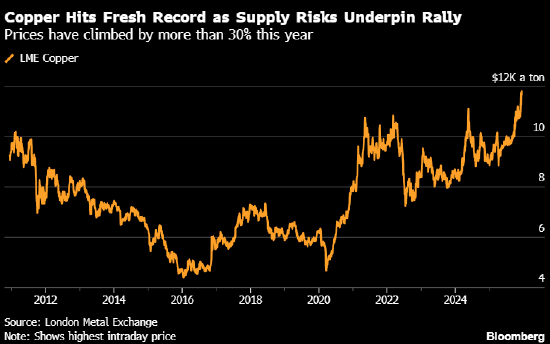
铜价创历史新高 受到美联储降息以及上调经济增长预期提振
Xin Lang Cai Jing· 2025-12-11 19:00
Group 1 - The Federal Reserve lowered interest rates and raised its economic growth forecast for the U.S., leading to a surge in copper prices to a new record high, with most other base metals also rising [1][4] - Copper prices in the London market increased by 3% to $11,906 per ton, surpassing the previous high set on Monday [1][4] - The Federal Reserve's statement indicated increased uncertainty regarding future rate cuts as it seeks to balance growth support and inflation control [1][4] Group 2 - The London Metal Exchange reported a 2.7% increase in copper prices, closing at $11,872 per ton, with all metals except nickel showing gains [3][6] - Tin prices surged by 4.4% to $41,751 per ton, marking the highest level since April 2022, while zinc prices rose by 3.9% [3][6]

瑞士央行连续两次维持利率不变 重申必要时可重启负利率政策
Xin Hua Cai Jing· 2025-12-11 14:02
Core Viewpoint - The Swiss National Bank (SNB) has maintained its key policy interest rate at 0% for the second consecutive time, indicating a willingness to consider further rate cuts if persistent price declines pose a deflation threat [1] Group 1: Monetary Policy - The SNB stated it will continue to monitor the situation and adjust monetary policy as necessary to ensure price stability [1] - The decision follows a cautious stance after a six-quarter cycle of rate cuts that ended in September [1] - The annual Consumer Price Index (CPI) in Switzerland reached the lower limit of the SNB's target range of 0% to 2% in November [1] Group 2: Inflation Expectations - The SNB has revised its inflation expectations for 2026 down from 0.5% to 0.3% and for 2027 from 0.7% to 0.6% based on the current 0% interest rate assumption [1] - The central bank emphasized that medium-term inflation pressures have "changed little" since the September meeting and will not overly rely on single-month inflation readings for policy decisions [1] Group 3: Global Monetary Policy Context - The SNB's decision comes in the context of diverging global monetary policies, following the Federal Reserve's recent rate cut due to labor market concerns, while indicating a potential pause in future rate changes due to stagnant inflation progress [1] - The European Central Bank is expected to maintain its rates unchanged until 2026, as its inflation levels have stabilized around the 2% target [1] Group 4: Negative Interest Rate Considerations - The SNB Chairman, Martin Schlegel, noted that the threshold for lowering rates into negative territory is higher than for cutting rates in a positive interest rate environment, considering potential impacts on savers, bank profits, and pension funds [2] - Switzerland previously implemented a negative interest rate policy from January 2015 to September 2022, lasting over seven years [2]
Fed remains sensitive to downside risks to employment, says JPMorgan's Kelsey Berro
Youtube· 2025-12-11 12:14
Group 1 - The market reaction to the Fed's commentary was influenced by prior positioning, with expectations for a more hawkish stance than what was delivered [2][3] - The Federal Reserve aims to achieve a neutral policy rate, with estimates ranging from 2.75% to 3.75%, indicating uncertainty in the exact target [3][4] - The Fed remains data-dependent, with upcoming payroll and CPI reports expected to impact their decision-making [5][6] Group 2 - Since the Fed began cutting rates over a year ago, the 10-year Treasury yield has increased, highlighting a dislocation in market expectations [8][10] - Treasury yields have generally been lower year-to-date, with the U.S. performing well among developed markets [9] - The persistence of high real yields, despite rate cuts, suggests market confidence in structural growth and productivity improvements [11][12]
刚刚宣布,0利率!
中国基金报· 2025-12-11 10:15
【导读】瑞士央行宣布维持"0利率",符合市场预期 中国基金报记者 晨曦 大家好,继续关注海外央行消息! 12月11日,瑞士央行宣布维持政策利率在0%不变,符合市场预期。 瑞士国家银行(SNB)将政策利率维持在0%不变。瑞士央行仍准备在必要时积极干预外汇市场。 消息公布后,瑞士法郎小幅走强,美元兑瑞士法郎汇率下跌0.15%,处于11月中旬以来低位。 瑞士央行在声明中指出,近几个月的通胀略低于预期。中期来看,通胀压力与上一次货币政策评估几乎保持不变。自上次货币政策评估以 来,通胀率略有下降,从8月的0.2%降至11月的0%。这一下降主要得益于酒店业、租金及服装等领域价格涨幅的放缓。 国内经济方面,瑞士央行表示,瑞士GDP在第三季度收缩,主要受制药行业拖累,其他制造业和服务业增加值小幅增长。由于整体经济发 展疲软,近几个月失业率进一步上升。 得益于美国关税下调及全球经济形势略有好转,瑞士经济前景略有改善。瑞士央行预计2025年GDP增速略低于1.5%,2026年增速约为 1%。在此环境下,失业率可能继续小幅上升。 基于0%的利率假设,瑞士央行将2026年通胀预期从0.5%下调至0.3%,将2027年通胀预期从0.7 ...

年内涨超112%!白银成年内最牛期货,法巴银行看涨至100美元|大宗风云
Hua Xia Shi Bao· 2025-12-11 09:52
Group 1: Silver Market Performance - New York silver futures have shown a strong upward trend, reaching a peak of $63.25 per ounce, with a current price of $62.355, marking a 2.17% increase from the previous trading day and an overall increase of over 112% this year [2] - The rise in silver prices is significantly higher than gold's approximately 60% increase this year, with platinum and palladium also lagging behind at 84.30% and 64.26% respectively [2] - The surge in silver prices is attributed to the Federal Reserve's monetary policy decisions and a critical supply-side contraction [2] Group 2: Investment Dynamics - The silver market has seen a diversification of participants, including both individual and institutional investors, with a notable increase in retail investor activity since July [3] - The current gold-silver ratio stands at 68.22, indicating that silver is rising faster than gold, suggesting a market correction of previously overvalued ratios [4] - The industrial demand for silver, particularly from the photovoltaic sector, is expected to drive continued growth in silver prices, while supply constraints persist [9] Group 3: Federal Reserve's Monetary Policy - The Federal Reserve has lowered interest rates by 25 basis points, with the federal funds rate now between 3.50% and 3.75%, and announced a liquidity injection plan of $40-60 billion over the next 30 days [6] - There is significant internal disagreement within the Federal Reserve regarding future interest rate policies, with some members advocating for substantial rate cuts while others support maintaining current rates [7][8] - The Fed's recent decisions have contributed to a decrease in the dollar index and a drop in 10-year Treasury yields, which in turn lowers the holding costs for gold and silver [6] Group 4: Supply and Demand Outlook - The World Silver Association projects a supply-demand gap of over 6,000 tons for silver in 2025, driven by industrial demand, particularly in the photovoltaic sector [9] - The silver market is expected to experience a fifth consecutive year of annual deficits due to limited production capacity and rising industrial and investment demand [9] - The iShares Silver Trust has seen significant inflows, indicating strong investor interest and providing further support for silver prices [9] Group 5: Future Price Predictions - Analysts predict that silver prices could reach $100 by the end of next year, driven by strong demand from cultural, festive, and industrial sectors, alongside ongoing supply constraints [11] - The overall market sentiment remains optimistic about silver's performance, with expectations of continued price increases due to the dual expansion of U.S. fiscal and monetary policies [10]

美股小幅上涨,关注本周FOMC会议
Xin Lang Cai Jing· 2025-12-11 09:09
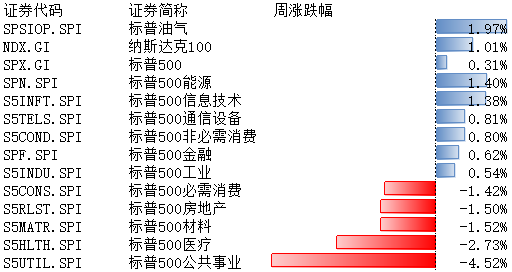
Macroeconomic Overview - The US PCE price index for September remained high, with a year-on-year increase of 2.8%, matching expectations and higher than the previous value of 2.7% [1] - The month-on-month PCE price index for September increased by 0.3%, consistent with expectations and the previous value [1] - The core PCE price index for September rose by 2.8% year-on-year, in line with expectations but lower than the previous value of 2.9% [1] - The month-on-month core PCE price index for September increased by 0.2%, matching expectations and the previous value [1] - Personal consumption expenditures in September rose by 0.3% month-on-month, in line with expectations but lower than the previous value of 0.5% [1] - Actual personal consumption expenditures for September showed no growth, falling short of the expected 0.1% and the previous value of 0.2% [1] Employment and Consumer Confidence - The US manufacturing sector continued to contract in November, while the service sector accelerated its expansion [1] - The ISM manufacturing index for November recorded 48.2, below the expected 49 and the previous value of 48.7 [1] - The ISM services index for November recorded 52.6, exceeding the expected 52 and the previous value of 52.4 [1] - The ADP employment report for November showed a decrease of 32,000 jobs, significantly below the expected decrease of 10,000 and the previous decrease of 42,000 [1] - Consumer confidence improved significantly in December, with the Michigan University consumer confidence index initial value at 52.3, better than the expected 52 and the previous value of 51 [2][1] - The one-year inflation expectation from Michigan University for December was 4.1%, lower than both the expected and previous value of 4.5% [2] - The five-year inflation expectation from Michigan University for December was 3.2%, lower than both the expected and previous value of 3.4% [2] Market Performance - The S&P Oil & Gas index rose by 1.97% over the week from December 1 to 5, while the Nasdaq 100 index increased by 1.01% and the S&P 500 index rose by 0.31% [3][16] - Among the 11 sectors covered by the S&P 500, 6 sectors saw gains, with the S&P 500 Energy sector leading at 1.40%, while the S&P 500 Utilities sector lagged with a decline of 4.52% [3][16] - The market is observing stable expectations for interest rate cuts in December, following disappointing employment data [16]
美联储如期降息25基点,启动“技术性扩表”
Hua Tai Qi Huo· 2025-12-11 02:48
FICC日报 | 2025-12-11 美联储如期降息25基点,启动"技术性扩表" 市场分析 国内政策预期升温。11月14日国务院常务会议,研究深入实施"两重"建设有关工作,部署增强消费品供需适配性进 一步促进消费政策措施。11月24日,国家发展改革委价格司组织召开价格无序竞争成本认定工作座谈会。11月28 日,工信部组织召开动力和储能电池行业制造业企业座谈会,强调认真落实党中央关于综合整治"内卷式"竞争的 决策部署,加快推出针对性政策举措,依法依规治理动力和储能电池产业非理性竞争。数据方面,中国10月出口 (以美元计价)同比下降1.1%,前值增8.3%,进出口数据受工作日天数减少以及节前抢出口影响,前期的"抢出口" 和"抢进口"有待消化,同时10月投资、消费和工业的增速也出现不同程度放缓,国内经济基础有待夯实。中国11 月官方制造业PMI环比回升至49.2,高技术制造业PMI连续10个月位于临界点50以上,受高基数影响非制造业PMI 小幅回落。中国11月外贸增速大幅回升,以美元计价出口同比转增5.9%,进口同比增1.9%;稀土出口环比增长26.5%, 大豆进口环比降14.5%。中共中央政治局会议明确指出,明 ...
