即时零售

Search documents
顺丰同城午前涨超5% 元旦期间同城配送日均单量同比增长55%
Zhi Tong Cai Jing· 2026-01-09 03:48
Group 1 - The core viewpoint of the article highlights that SF Express City (顺丰同城) has seen a significant increase in its daily delivery volume during the New Year holiday, with a year-on-year growth of 55% [1] - The company reported that beverage orders doubled year-on-year, while fast food orders increased by over 90% [1] - Categories such as supermarkets, beauty products, and electronics also experienced high double-digit growth in order volume compared to the previous year [1] Group 2 - Huachuang Securities released a research report indicating that the instant delivery industry is in a high growth phase, with the company positioned as a leading independent third-party delivery service [1] - The report emphasizes that the company's competitive strength is continuously enhancing, benefiting from significant internal and external synergies [1] - The company is expected to demonstrate higher growth potential in the new journey of instant retail and home delivery [1]
阿里巴巴涨超4%,誓要淘宝闪购达到市场绝对第一!港股互联网ETF(513770)上涨1.5%,近4日吸金5.66亿元
Xin Lang Cai Jing· 2026-01-09 01:49
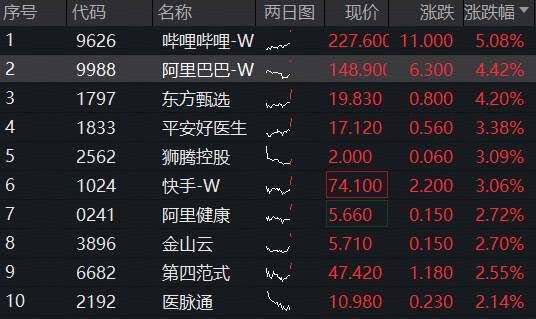
Group 1 - The Hong Kong stock market opened higher on January 9, with major tech stocks showing strength, including Bilibili-W up over 5%, Alibaba-W up over 4%, Kuaishou-W up over 3%, and Xiaomi Group-W also rising [1][8] - Meituan-W declined over 1%, while Tencent Holdings saw a slight decrease [1][8] - The Hong Kong Internet ETF (513770) opened strong, rising by 1.5%, and has seen a net inflow of 566 million yuan over the past four days [2][10] Group 2 - Alibaba-W announced significant progress in its Taobao Flash Sales, with plans to increase investment to achieve market leadership [3][10] - Forecasts indicate that the instant retail market in China will exceed 1 trillion yuan by 2026 and reach 2 trillion yuan by 2030 [3][10] - AI advancements at Alibaba's Gaode Map include the launch of new features and the development of a "full-real" digital asset pool, positioning it as a potential hub in the AI era [4][11] Group 3 - The Hang Seng Technology Index is expected to see an EPS growth rate of 34% by 2026, driven by AI technology enhancing core business efficiency [4][11] - The top ten weighted stocks in the Hong Kong Internet ETF include Alibaba-W, Tencent Holdings, and Xiaomi Group-W, collectively accounting for over 78% of the ETF [4][11] - The Hong Kong 30 ETF (520560) is highlighted as a long-term investment tool, combining high-growth tech stocks with stable dividend-paying companies [5][12]


价格失守、库存高企 白酒如何翻盘
Sou Hu Cai Jing· 2026-01-09 01:21
Core Insights - The Chinese liquor industry is facing significant challenges, including oversupply, high inventory levels, and price declines, leading to a shift from "volume and price increase" to "price stabilization" strategies for survival [2][4][12] Group 1: Market Conditions - The white liquor market in 2025 is characterized by dual pressures of "price stabilization" and "inventory reduction," making it difficult for companies to navigate [2][3] - Major brands like Moutai and Wuliangye have seen significant price drops, with Moutai's price falling from over 2500 yuan to below 2000 yuan per bottle [4] - Inventory levels among 20 listed liquor companies reached 168.39 billion yuan, an increase of 19.29 billion yuan year-on-year, indicating a persistent upward trend in stock levels [4] Group 2: Industry Strategies - Companies are moving away from traditional inventory pressure tactics and are instead focusing on inventory reduction while balancing market prices [5][6] - A "price protection" strategy has emerged, with companies like Wuliangye reducing contract volumes by 0%-50% to stabilize prices [6] - The industry is implementing strict measures against counterfeit products and pricing chaos, with Wuliangye reporting 268 counterfeit bottles identified in a consumer service initiative [6][7] Group 3: Future Outlook - The focus for 2026 will be on channel profitability, with companies emphasizing the need for distributors to earn profits rather than relying solely on price margins [8][9] - Companies are exploring new markets through youth-oriented products and innovative retail strategies, aiming to adapt to changing consumer preferences [10][11] - The industry is expected to see gradual improvements in supply and demand dynamics, with analysts predicting a recovery in sales and pricing in the medium term [11][12]



跨界卷王“最浓烟火气” 机器人“最能舞出圈” 潮玩教父“最拿捏情绪”
Nan Fang Du Shi Bao· 2026-01-08 23:12
Core Insights - The business landscape in 2025 is characterized by significant transformations driven by AI, e-commerce, and local services, with major companies like JD.com, Alibaba, and Pop Mart leading the charge [3][4][7] - Key figures in the industry are recognized for their innovative approaches and impactful strategies, earning them accolades such as "most impactful" and "most daring" [3][7][10] Group 1: JD.com and Liu Qiangdong - Liu Qiangdong made a strong public return in 2025, taking on the role of "Chief Experience Officer" and engaging directly with consumers through various initiatives [5][6] - His actions, including cooking live and delivering food, aimed to enhance JD.com's local service offerings and reshape the company's image as more relatable and community-focused [5][6] - JD.com also committed to providing full social insurance for its delivery riders, emphasizing sustainable employee welfare over mere competition on subsidies [6] Group 2: Alibaba and Jiang Fan - Jiang Fan returned to lead Alibaba's e-commerce division, focusing on integrating various business segments under a unified platform to enhance operational efficiency [7][8] - His strategy included the launch of Taobao Flash Purchase, which significantly boosted user engagement and was projected to generate substantial transaction growth in the coming years [8] Group 3: Pop Mart and Wang Ning - Wang Ning, founder of Pop Mart, successfully transformed emotional value into a profitable business model, with the LABUBU IP becoming a top-tier brand [9] - Despite market concerns about sustainability, Pop Mart remains a leading player in the collectible toy industry, with plans to further explore long-term value creation [9] Group 4: AI and Yan Junjie - Yan Junjie, founder of MiniMax, is recognized for his foresight in AI development, having started his venture before the AI boom [15][16] - MiniMax focuses on efficient resource use and innovative algorithms, with a young workforce that emphasizes agility and high performance [16] Group 5: GPU Industry and Zhang Jianzhong - Zhang Jianzhong's company, Moore Threads, successfully launched on the STAR Market, becoming a significant player in the domestic GPU sector [17][18] - The company achieved a remarkable IPO process, with a high stock price and low lottery rate, indicating strong market interest and potential for growth [18][19]



目标直指绝对第一:阿里为淘宝闪购按下份额扩张“加速键”
华尔街见闻· 2026-01-08 13:09
一次 " 力出一孔 " 的战略下注 此次闭门会释放的信号异常清晰 —— 市场份额第一, 成为淘宝闪购内部 绝对目标 。 而 阿里此次将目标锁定在 "市场份额第一",并非激进冒险,而是 一种 理性商业 考量 下 的 必然 选择。 在即时零售赛道的激烈角逐中, 阿里巴巴 终于亮出了最明确的底牌。 在 FY26Q3财报前瞻 交流中 ,阿里首次将淘宝闪购 2026年的核心目标直白定调为—— 市场份额增长 ,终极目标是拿下即时零售市场的 "绝对第一" 。 这一表态几乎没有留下 模糊地带 ,也彻底打消了市场此前关于阿里是否会对闪购业务 "战略性收缩"的疑虑。 这一决策 有着充分的行业背景 。商务部研究院在《即时零售行业发展报告( 2025)》中预计, 2026年我国即时零售市场规模将突破1万亿元,2030年 有望达到2万亿元,"十五五"期间年均增速达12.6% 。 即时零售,已从零售体系中的补充形态,演变为确定性最强的新增长引擎之一。 更重要的是,行业格局正处于 被重塑的关键阶段。淘宝闪购在此时选择全面加码,意味着阿里在即时零售领域的战略定位已经发生转变: 从 " 参与竞争 ",升级为"必须赢得竞争" 。 围绕万亿级市场 ...

阿里业绩前瞻:淘宝闪购2026年首要目标是份额增长 继续加大投入
Zheng Quan Ri Bao Wang· 2026-01-08 11:18
Core Insights - Alibaba's Taobao Flash Purchase has made significant progress in the latest quarter, with a clear investment strategy aimed at achieving market leadership by 2026 [1] - The growth momentum of Taobao Flash Purchase continues to be strong, with improvements in order structure and an increase in high-value customer transactions [2] Group 1: Growth Performance - In the December quarter, Taobao Flash Purchase's GMV share continued to grow, with an average order value (AOV) also on the rise, indicating a stable order share and improved order structure [2] - The platform achieved a peak daily order volume of 120 million in August, with monthly active buyers surpassing 300 million, rapidly climbing to a leading market position [2] - The focus for the next phase will be on high-value user engagement and retail category development, with new services enhancing overall user experience [2] Group 2: Non-Food Retail Acceleration - Taobao Flash Purchase's non-food retail business is accelerating, showing significant growth in collaboration with Hema and Tmall Supermarket [4] - After integrating with Taobao Flash Purchase, Hema's daily order volume exceeded 2 million, with a year-on-year growth of over 70% [4] - The platform is creating a unique experience by integrating Tmall's brand offerings, Hema's community coverage, and Tmall Supermarket's logistics network into a "30-minute delivery" model [4] Group 3: Loss Reduction and Investment Confidence - Taobao Flash Purchase's fourth-quarter losses are projected at 20 billion, with a faster reduction in losses compared to competitors, boosting confidence in sustainable investment [5] - Efficiency improvements are driven by user structure optimization, order structure optimization, and fulfillment cost optimization [5] - Alibaba plans to continue increasing investments in Taobao Flash Purchase to achieve market leadership, with a focus on high-value users and non-food retail [5]
即时零售竞争新焦点:盒马超盒算双线扩张vs小象前置仓优势博弈
Sou Hu Cai Jing· 2026-01-08 10:13
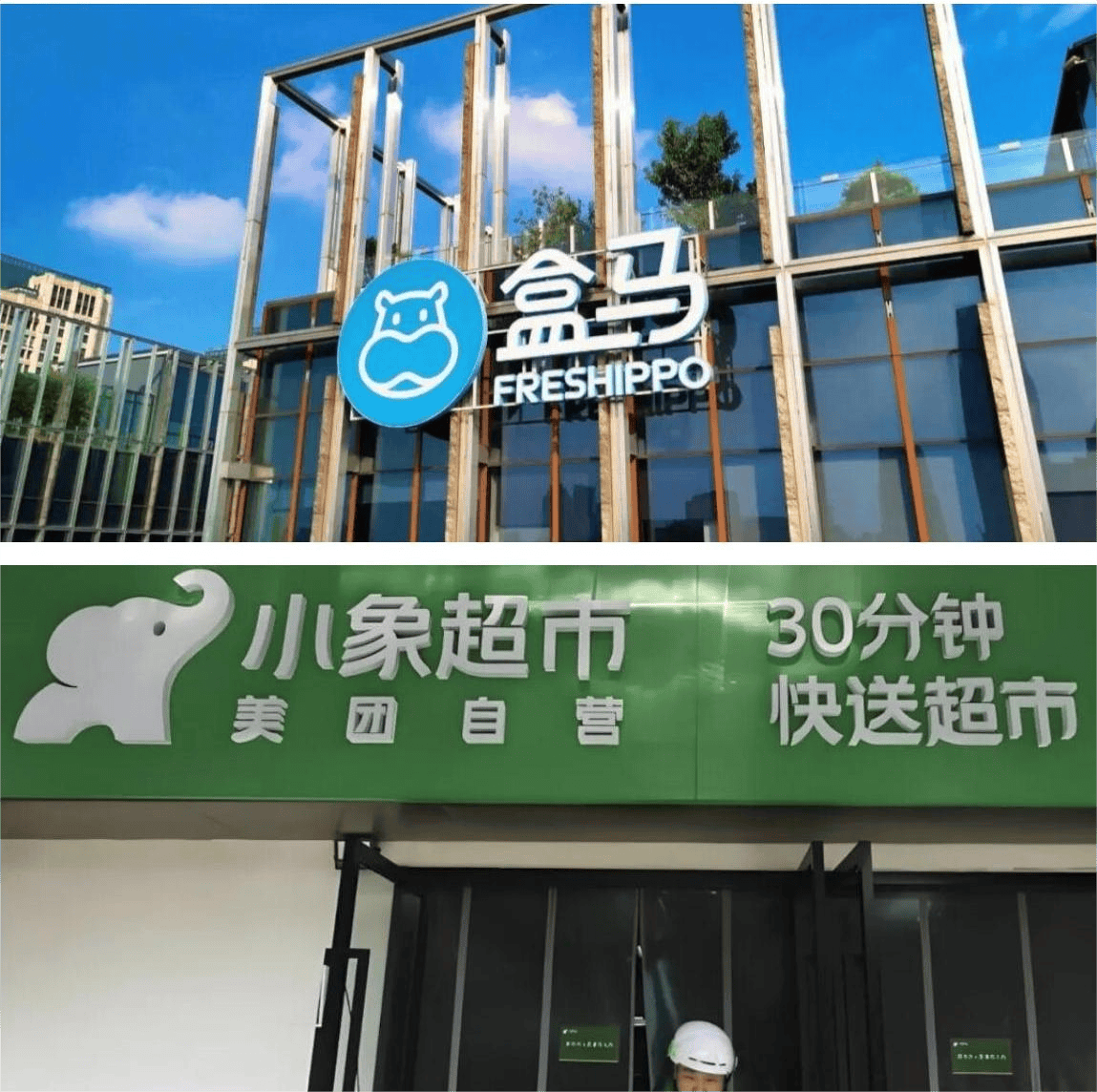
Group 1 - The core competition in the instant retail sector is intensifying, with major players like Hema and Xiaoxiang Supermarket engaging in a battle for market share across various channels, from community corners to high-end supermarkets [1][3] - Hema is facing operational challenges due to increased online orders and delivery delays, exacerbated by a shortage of manpower and inventory issues, particularly in popular products [3][6] - To address these challenges, Hema plans to implement a dual expansion strategy of "Super Box Calculation Stores + Front Warehouses" in key markets like Beijing, focusing on high-frequency essential products to differentiate itself from Xiaoxiang Supermarket [3][6] Group 2 - Xiaoxiang Supermarket has established a strong competitive advantage through a high-density front warehouse network and effective online-offline collaboration, allowing for significant market penetration [3][6] - Both companies are leveraging their mini-programs as critical competitive tools, with Hema's program helping to manage traffic and orders, while Xiaoxiang's program optimizes delivery scheduling [3][6] - The competition is shifting towards self-owned brands, with both Hema and Xiaoxiang Supermarket adapting their strategies to include self-branded products to enhance market presence and profitability [5][8] Group 3 - The growth of pure online models is facing limitations, highlighting the importance of offline store presence for brand recognition and customer engagement [6][8] - Hema's organizational coordination capabilities are currently lagging behind Xiaoxiang Supermarket, impacting its competitiveness in nationwide operations [6][8] - The future competitive landscape in the instant retail sector remains uncertain, with self-owned brands and offline stores becoming key elements in the ongoing battle [8]
京东健康与凯基信诚达成深度合作 全网首发新药新舒沐 和凯沐沐
Zhi Tong Cai Jing· 2026-01-08 07:46
Core Viewpoint - JD Health has formed a deep collaboration with local innovative pharmaceutical company Kaiji Xincheng Biopharmaceutical Technology Co., Ltd. to support the clinical cure of chronic hepatitis B patients in China through integrated resources in medical services and instant retail [1][2]. Group 1: Product Launch and Features - JD Health and Kaiji Xincheng have launched the first-class innovative drug, Mesylate Prefofovir Tablets (brand name: Xinshumu), which targets chronic hepatitis B treatment using HepDirectTM liver-targeting technology [1]. - The drug has received significant support from national major new drug creation technology projects during the "12th Five-Year" and "13th Five-Year" plans, demonstrating its efficacy in delivering active ingredients directly to the liver, enhancing effectiveness while reducing toxicity [1]. - Phase III clinical trial results indicate that the drug shows stronger and more durable viral suppression compared to the control group, with a significantly higher proportion of patients achieving HBsAg levels below 1000 IU/mL (P<0.05) [1]. Group 2: Nutritional Supplement - The Zinc-Selenium Multivitamin Soft Gel Capsules (brand name: Kaimumu) are designed for liver nutrition and suitable for individuals needing supplementation of zinc, selenium, and various vitamins [2]. - This product contains nine vitamins and two minerals, scientifically proportioned and packaged in soybean lecithin capsules for better absorption, with a recommended dosage of two capsules daily [2]. Group 3: Service Integration and Strategy - JD Health will leverage its ecosystem of "online consultation + pharmaceutical retail + instant delivery" to provide a comprehensive service loop, ensuring rapid dissemination of the new drugs to patients [2]. - The collaboration aims to optimize the overall patient service experience and enhance the efficiency and quality of the pharmaceutical supply chain, promoting a win-win development [2]. - JD Health is committed to providing high-quality pharmaceutical health products and services, enhancing the accessibility of innovative drugs to a broader patient population [2][3]. Group 4: Future Outlook - JD Health's value effect as the "first station for new special drug launches" continues to expand, facilitating access to cutting-edge innovative drugs through integrated online and offline channels [3]. - The company plans to collaborate with global pharmaceutical partners to improve the accessibility of new special drugs, contributing to the "Healthy China 2030" strategic goals [3].

阿里业绩前瞻:2026淘宝闪购继续保持大力度投入
财联社· 2026-01-08 06:03
Core Viewpoint - Alibaba's Taobao Flash Purchase has made significant progress in the latest quarter, with a clear investment strategy aimed at achieving market leadership by 2026 [1][6]. Group 1: Growth Momentum - In the December quarter, Taobao Flash Purchase's GMV share continued to grow, with average order value (AOV) also increasing and order structure improving, indicating a shift towards higher-value orders [2][4]. - The platform reached a peak of 120 million daily orders in August, with monthly active buyers surpassing 300 million, solidifying its market position [2][4]. - Alibaba's CEO emphasized a focus on high-value user engagement and retail category development in the next phase [2]. Group 2: Non-Food Retail Acceleration - Taobao Flash Purchase's non-food retail business is accelerating, showing strong growth in collaboration with Hema and Tmall Supermarket [4][5]. - Hema's daily order volume exceeded 2 million after integrating with Taobao Flash Purchase, reflecting over 70% year-on-year growth [4]. - Tmall Supermarket upgraded its model to "near-field flash purchase + three deliveries a day," achieving rapid delivery for key products [4]. Group 3: Structural Advantages - Taobao Flash Purchase is positioned as a "near-field touchpoint" within Alibaba's consumer ecosystem, integrating Tmall's brand supply, Hema's community coverage, and the logistics network of Tmall Supermarket [5]. - This unique model creates a "discount + fast delivery" experience that is difficult for traditional delivery platforms to replicate [5]. Group 4: Loss Reduction and Investment Confidence - Taobao Flash Purchase's losses in the fourth quarter are projected at 20 billion, with a faster reduction in losses compared to competitors [6]. - Efficiency improvements are driven by user structure optimization, order structure optimization, and fulfillment cost optimization [6]. - Alibaba plans to continue investing in Taobao Flash Purchase to achieve market leadership, with a focus on high-value users and non-food retail [6].

相中微盟私域流量 淘宝闪购猛攻即时零售
Bei Jing Shang Bao· 2026-01-07 15:39
Core Insights - Taobao Flash Sale has formed a strategic partnership with Weimob to enhance capabilities in instant retail, digital marketing, and technological innovation [1][3] - The collaboration aims to integrate resources and share merchant assets, addressing current gaps in both companies' offerings [3][5] Group 1: Partnership Details - Weimob's merchants can efficiently access the Taobao Flash Sale platform, enabling integrated local retail operations [3] - Weimob reported 59,000 merchants using its SaaS products, with 1,227 brands utilizing its smart retail solutions, generating an average order income of 179 yuan per user [3][4] - The partnership allows Taobao Flash Sale to tap into Weimob's private traffic, particularly from mid-tier merchants, enhancing competition against Meituan [3][4] Group 2: Business Impact - Weimob's SaaS revenue declined by 6.1% year-on-year to 286 million yuan due to external macroeconomic factors, prompting a need for enhanced customer acquisition strategies [4] - The collaboration is expected to improve Weimob's SaaS coverage and subscription revenue while providing Taobao Flash Sale with better merchant operational capabilities [6][8] - Both companies aim to create a unified membership ecosystem and explore AI and data operations, optimizing group buying strategies and inventory management [6][8] Group 3: Market Dynamics - The partnership reflects a broader trend in the e-commerce sector, where companies are shifting focus from price competition to digital upgrades and collaborative operations [8] - The instant retail industry is transitioning from extensive growth to refined operations, emphasizing customer experience and long-term value [8] - The collaboration is seen as a significant upgrade in customer management capabilities, crucial for gaining a competitive edge in local retail [8]