
物理AI

Search documents
深圳机器人“军团”亮相CES,智能硬件为何“赢麻了”?
Nan Fang Du Shi Bao· 2026-01-08 09:58
Core Insights - The 2026 CES highlights Shenzhen's dominance in the tech industry, with over 400 companies from the region representing a third of Chinese exhibitors and nearly 10% of global participants, showcasing a wide array of smart hardware products [4][20] - The focus of this year's CES has shifted from the capabilities of AI to its practical applications in daily life and industry processes, marking a transition from software-driven AI to "physical AI" that integrates into tangible products [5][20] Industry Trends - The emergence of "physical AI" signifies a shift in AI's value from mere communication to actionable capabilities, with products designed to be tangible and experiential, integrating AI into everyday devices [5][11] - Shenzhen's robust supply chain and engineering capabilities have been revitalized by the proliferation of AI models, allowing for rapid product iteration and development in hardware [4][15] Product Innovations - Notable products showcased include TCL's AI-integrated displays and the first consumer-grade AR glasses with independent communication capabilities, reflecting the trend of AI becoming embedded in various consumer electronics [6][10] - Innovations in robotics, such as the TORA-ONE humanoid robot and the DM-EXton2 data collection system, demonstrate advancements in tactile sensing and data acquisition, essential for the evolution of intelligent hardware [12][14] Competitive Landscape - Shenzhen's smart hardware sector is experiencing collective growth rather than isolated successes, driven by a comprehensive industrial network that supports rapid prototyping and production [15][16] - The ability to translate technology into user-friendly experiences is becoming crucial for global market appeal, as companies focus on addressing specific consumer needs rather than merely showcasing technical prowess [16][20] Future Challenges - The next phase for Shenzhen's smart hardware industry involves overcoming challenges related to core components and technologies, transitioning from hardware products to integrated system services, and enhancing global operational capabilities [19][20] - Establishing a sustainable competitive advantage will require ongoing investment in key technologies and a shift towards creating long-term brand loyalty through service-oriented business models [19][20]


小鹏汽车发布四款新车 2026年将规模量产人形机器人和飞行汽车
Zhi Tong Cai Jing· 2026-01-08 09:43
Core Viewpoint - XPeng Motors held its 2026 global product launch event on January 8, introducing four new models, including the 2026 XPeng P7+, G7 Super Extended Range, and upgraded versions of the 2026 G6 and G9 [1] Group 1: New Product Launch - The 2026 XPeng P7+ will be launched in Brussels, Belgium on January 9, and the XPeng manufacturing base will be open to the public [1] - All four new vehicles will feature XPeng's second-generation VLA (Vision-Language-Action) large model, which is the industry's first physical world model achieving L4-level initial capabilities [1] Group 2: Future Plans - In 2026, XPeng plans to implement physical AI and scale production, including the operation of Robotaxi (autonomous taxis), humanoid robots, and flying cars [1] Group 3: 2025 Performance Review - In 2025, XPeng achieved cumulative global deliveries of 429,000 units, a year-on-year increase of 126%, with overseas markets contributing 45,000 units, up 96%, ranking first among new force brands in 10 overseas countries from January to November [1] - XPeng is positioned in the top tier of global new energy brand sales, with nine global R&D centers and three localized production projects overseas [1] - The global charging network of XPeng covers 31 countries and regions, with over 2.66 million charging piles connected [1]
美股异动丨小鹏汽车盘前涨近2%,发布四款新车,均搭载第二代VLA大模型
Ge Long Hui· 2026-01-08 09:35
Core Insights - Xiaopeng Motors (XPEV.US) saw a pre-market increase of nearly 2%, reaching $20.27 per share [1] Group 1: New Product Launch - Xiaopeng Motors held its 2026 global product launch event, introducing four new vehicles: the new Xiaopeng G6 electric version, the new Xiaopeng G9 electric version, the Xiaopeng G7 range-extended version, and the Xiaopeng P7+ in both electric and range-extended versions [1] - The CEO of Xiaopeng Motors, He Xiaopeng, announced that all four new models will feature the company's second-generation VLA (Vision-Language-Action) large model, which is the industry's first physical world large model capable of achieving L4 level initial capabilities [1] Group 2: Future Developments - Xiaopeng Motors is set to implement physical AI and scale production this year, which includes the operation of Robotaxi services, mass production of humanoid robots, and flying cars [1]
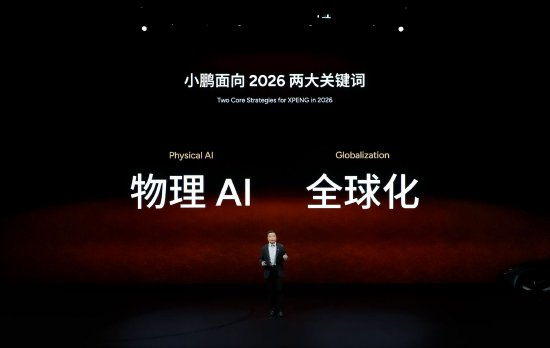
何小鹏:2026年小鹏将迎来物理AI的落地与量产
Xin Lang Cai Jing· 2026-01-08 07:28
新浪科技讯 1月8日下午消息,2026小鹏全球新品发布会举行,小鹏汽车董事长、CEO何小鹏发表演 讲。 责任编辑:宋雅芳 新浪科技讯 1月8日下午消息,2026小鹏全球新品发布会举行,小鹏汽车董事长、CEO何小鹏发表演 讲。 何小鹏表示,小鹏面向2026两大关键词是物理AI和全球化。2026年,小鹏将迎来物理AI的落地与规模 量产,正式开启从"技术探索"向"实践应用"的关键跨越。 何小鹏透露,2026年第一季度第二代 VLA量产上车,此外2026年还会开启Robotaxi运营,人形机器人和 飞行汽车也会规模量产。 责任编辑:宋雅芳 何小鹏表示,小鹏面向2026两大关键词是物理AI和全球化。2026年,小鹏将迎来物理AI的落地与规模 量产,正式开启从"技术探索"向"实践应用"的关键跨越。 何小鹏透露,2026年第一季度第二代 VLA量产上车,此外2026年还会开启Robotaxi运营,人形机器人和 飞行汽车也会规模量产。 ...

四大芯片巨头掌门人罕见同台发声
2 1 Shi Ji Jing Ji Bao Dao· 2026-01-08 05:57
Core Insights - The CES 2026 highlighted the significant advancements in AI technology, particularly in the context of increasing computational power and the emergence of new applications across various sectors [1][2][8] - Chinese companies are playing an increasingly vital role in the global tech landscape, showcasing innovative AI hardware and solutions that attract considerable attention at international events [1][4][9] Group 1: AI and Computational Power - NVIDIA's CEO Jensen Huang emphasized the arrival of the "ChatGPT moment," indicating that machines are beginning to understand and act in the real world, with autonomous taxis being one of the first applications to benefit [2] - Huang introduced the new Rubin architecture, which includes a comprehensive stack solution with six core components, addressing the exponential growth in AI computational demands, projected to increase tenfold annually [2] - AMD's CEO Lisa Su noted that the computational power is transitioning from Zetta to Yotta Scale, with AI model training floating-point computation power increasing fourfold each year and inference token consumption rising by 100 times over the past two years [2] Group 2: Emerging AI Applications - Qualcomm's CEO Cristiano Amon highlighted the potential of next-generation personal AI devices, predicting a market size of 100 million units in the coming years, driven by edge AI and situational awareness capabilities [3] - The CES showcased a variety of AI-native products, with a notable increase in the capabilities of robots, moving beyond simple demonstrations to more complex functionalities [4][6] - The development of humanoid robots is progressing towards commercialization, with companies achieving significant advancements in motion control and operational precision, indicating a clear path for deployment in sectors like manufacturing and logistics [6][7] Group 3: Chinese Companies and Global Impact - Chinese firms are increasingly recognized as key players in the global tech ecosystem, leveraging their supply chain and R&D capabilities to drive innovation and efficiency [1][8][9] - The ability of Chinese companies to rapidly iterate on products, with a typical development cycle of about one year compared to two to three years for European counterparts, is enhancing their competitive edge [8][9] - The CES 2026 served as a platform for showcasing how AI technologies are set to permeate everyday life, with a focus on transforming concepts into tangible value through collaborative global efforts [9]


四大芯片巨头掌门人罕见同台发声
21世纪经济报道· 2026-01-08 05:49
Core Insights - The CES 2026 highlighted the significant role of chip giants like NVIDIA, Intel, AMD, and Qualcomm in the AI era, emphasizing the need for hundreds of times more computing power and the expansion of AI applications from cloud to edge [2] - Chinese manufacturers showcased their advancements in AI hardware, gaining international attention and marking China's evolution into a key player in global tech innovation [2][9] - The rapid evolution of foundational computing infrastructure is crucial for the development of AI large models, with chip leaders stressing the accelerating demand for computing power and new application opportunities [2][4] Group 1: AI and Computing Power - NVIDIA's CEO Jensen Huang announced the arrival of the "ChatGPT moment" in AI, highlighting the capabilities of machines to understand and act in the real world, with autonomous taxis being a primary application [3] - Huang introduced the new Rubin architecture, which includes a comprehensive stack solution with multiple core components to address the exponential growth in AI computing demands [4] - AMD's CEO Lisa Su noted that AI model training requires floating-point computing power to grow fourfold annually, with inference token consumption increasing by 100 times over the past two years [4] Group 2: Emerging AI Applications - Qualcomm's CEO Cristiano Amon emphasized the potential of next-generation personal AI devices, predicting a market size of 100 million units in the coming years, driven by edge AI and situational awareness capabilities [5] - The integration of edge data is seen as critical for providing personalized services, with Amon predicting that those who can leverage edge data will lead in the AI competition [5] Group 3: Robotics and Automation - Chinese companies showcased advanced robots at CES 2026, demonstrating improved capabilities compared to previous years, indicating a shift from simple demonstrations to more complex functionalities [6][7] - The development of humanoid robots is progressing towards commercialization, with companies achieving significant advancements in motion control and operational precision [7][9] - The demand for robotics is increasing due to global aging populations and rising labor costs, with exoskeleton robots gaining traction in various markets [7][9] Group 4: Supply Chain and Innovation - Chinese manufacturers are leveraging their supply chain advantages to accelerate product iterations, achieving faster development cycles compared to European counterparts [9][10] - The efficiency of China's industrial chain is enabling rapid technological breakthroughs and cost optimizations, distinguishing "Chinese manufacturing" from "Chinese innovation" [10] - The CES 2026 served as a platform for showcasing how AI is set to permeate everyday life, with a focus on transforming concepts into tangible value through collaborative efforts across the industry [10]
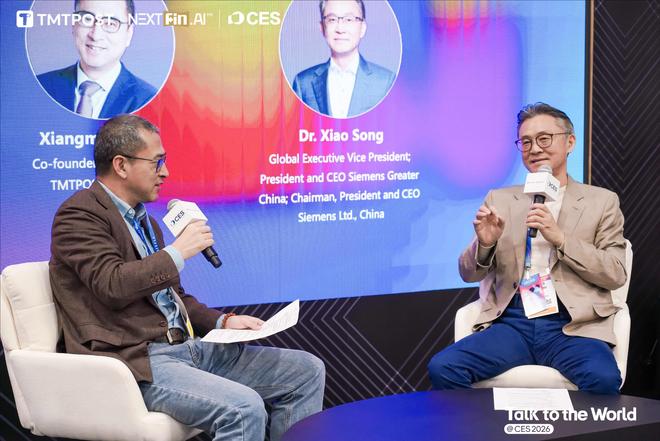
对话西门子中国董事长肖松:重塑产业新范式,AI的真正价值将在工业端充分释放|CES 2026
Tai Mei Ti A P P· 2026-01-08 05:24
Core Insights - The role of AI is evolving from mere model competition to practical applications in various industries, focusing on "last mile" implementations, with consumer AI targeting individual users and industrial AI emphasizing reliability and foundational skills [1][3] - Industrial AI is seen as a significant value driver, but it is still in its early stages, with increasing customer acceptance and potential for China to lead in application [3][4] - Siemens is recognized as a key partner in the industrial AI space, leveraging its extensive industry knowledge and data to drive transformation [6][11] Group 1: AI Evolution and Industrial Applications - AI is transitioning to become a true collaborative entity, focusing on practical applications rather than just model performance [1] - The true value of AI is expected to be realized in the industrial sector, with current applications still in the early stages of development [3][4] - Siemens emphasizes the importance of digital twin technology, which allows for the creation of virtual models that can enhance production efficiency and quality [5][9] Group 2: Siemens' Strategic Positioning - Siemens plans to invest €1 billion over the next three years to expand its industrial AI ecosystem, focusing on creating foundational models and collaborating with partners [6][14] - The company aims to leverage its historical expertise and high-quality data to lead the industrial AI revolution, addressing complex industry needs [6][11] - Siemens' digital twin composer is a significant innovation that integrates real-time data with virtual models, enhancing operational efficiency [5][9] Group 3: Market Trends and Future Outlook - The industrial AI market is characterized by its complexity and the need for tailored applications across different sectors, with Siemens advocating for a focus on application rather than just model parameters [14][15] - The company believes that AI will not replace human expertise but will enhance it, allowing experienced workers to define and make decisions rather than just operate [4][23] - The future of AI in industrial applications is expected to see incremental breakthroughs rather than radical changes, with a focus on quality improvement and cost reduction [24][27]
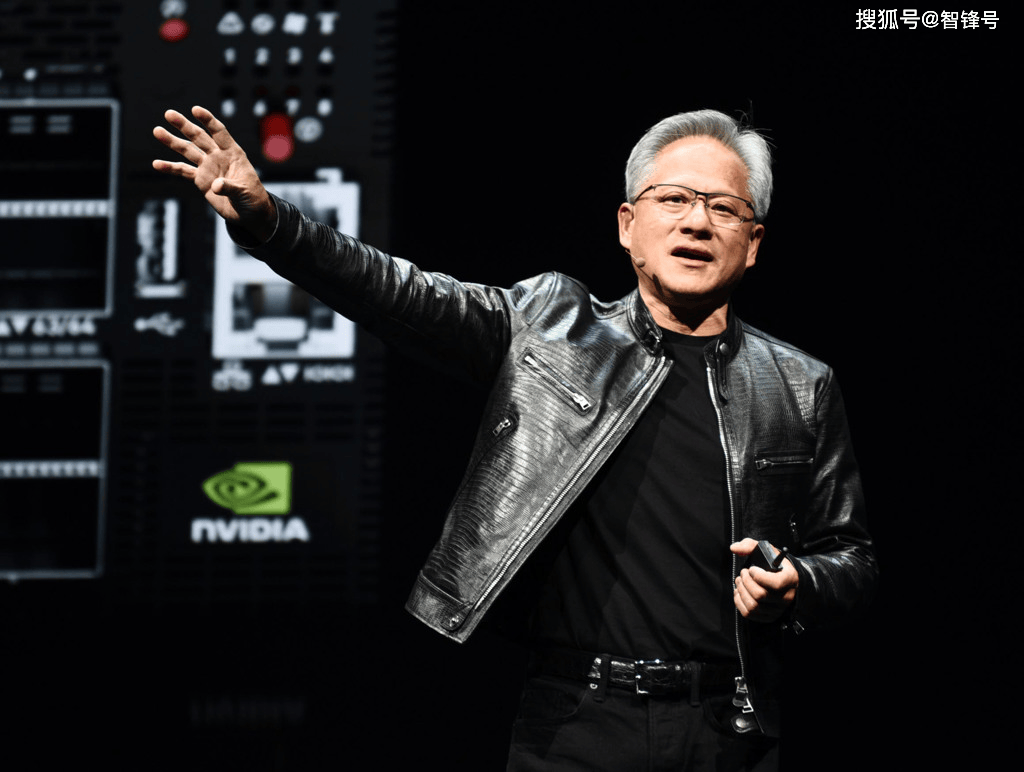
重点总结!英伟达CEO黄仁勋在美国2026CES演讲核心
Sou Hu Cai Jing· 2026-01-08 04:29
Group 1 - The entire computer industry is undergoing a complete reinvention, moving away from outdated IT architectures [3] - The definition of programming is changing; it is now about training software rather than writing code [3] - The "ChatGPT moment" for physical AI is approaching, indicating a significant shift in the physical world similar to that in the digital realm [4] Group 2 - Companies must advance the state-of-the-art in computation every year to remain competitive, as traditional progress is no longer sufficient [4] - AI is entering an era of reasoning, evolving from merely providing quick answers to engaging in deep thinking [6] - The Cosmos model transforms computation into data, breaking the previous limitations of data scarcity [6] Group 3 - The future enterprise user interface will be driven by AI agents rather than traditional tools like Excel [7] - Billions of AI agents will assist in job functions, creating a competitive landscape where individuals will have multiple AI assistants [7] - Aggressive co-design between hardware and software is essential to meet the growing demand for computational power [8] Group 4 - Vehicles are evolving from mere driving to understanding the world, indicating a shift from automation to autonomy in all mobile devices [10]
华泰证券今日早参-20260108
HTSC· 2026-01-08 03:17
Group 1: Technology Sector Insights - At CES 2026, AMD and Intel presented their AI strategies, with AMD's stock dropping approximately 3% and Intel's rising about 2% due to differing product announcements [2] - Nvidia's CEO highlighted the Rubin platform, which includes six core chips, and emphasized the transition from Physical AI to Agentic AI, with expected shipments in the second half of 2026 [3] - The focus for AI investments in 2026 is shifting towards real-time response capabilities and the penetration of AI in various verticals such as industrial and medical applications [2][3] Group 2: Pharmaceutical Sector Insights - The Hong Kong innovative drug sector is expected to recover due to improved liquidity and multiple catalysts, with a focus on the upcoming JPM conference and data disclosure peaks [5] - The decline in innovative drug valuations in late 2025 was primarily due to liquidity issues, which are anticipated to improve in early 2026 [5] Group 3: Consumer Electronics Insights - The CES 2026 showcased a rapid shift of AI and robotics technologies towards consumer hardware, indicating significant product launches in smart home applications [6] - The event is viewed as a critical observation point for AI applications in consumer markets, suggesting investment opportunities in tech consumer companies [6] Group 4: Industrial Equipment Insights - The valve industry is experiencing growth driven by demand from high-growth sectors like energy and new energy, with a notable shift towards domestic production capabilities [8] - The combination of demand growth, technological upgrades, and accelerated localization is reshaping the competitive landscape of the valve industry [8] Group 5: Chemical Sector Insights - Xinhengcheng is recognized as a leading player in the global nutrition and flavor industry, with a focus on emerging demands and a strong technological foundation [10] - The company is expected to enter a new growth cycle, driven by increased market share in methionine and flavor products, alongside advancements in biomanufacturing [10] Group 6: Circular Economy Insights - Wanwu Xinxing is positioned as a leader in the second-hand circular economy, integrating the entire 3C recycling industry chain to enhance efficiency and cost barriers [11] - The company aims to evolve from a service provider to a brand, leveraging retail and compliance refurbishment to increase profit margins [11] Group 7: Financial Sector Insights - GF Securities plans to raise over HKD 6 billion through H-share placement and zero-interest convertible bonds to strengthen its capital base for international expansion [12][13] - Successful fundraising is expected to enhance the company's operational performance and industry ranking [13] Group 8: Electric Vehicle Insights - Yadea Holdings anticipates a significant profit increase for 2025, driven by rising sales of electric two-wheelers and product optimization [14] - The company is expected to maintain its leadership position in the two-wheeler market while expanding into mid-to-high-end and overseas markets [14] Group 9: Semiconductor Sector Insights - Huahong Semiconductor is set to acquire a majority stake in Huali Micro, which is expected to significantly enhance its earnings and liquidity [15] - The acquisition is projected to increase the company's net profit from CNY 380 million to CNY 960 million, marking a 151% growth [15]
英伟达J
2026-01-08 02:07
Summary of Key Points from NVIDIA's Conference Call Industry and Company Overview - The conference call discusses NVIDIA's position in the computing industry, highlighting three major transformations: the shift from CPU to GPU for accelerated computing, the rise of generative AI applications, and the emergence of foundational AI models, which are driving industry growth and alleviating spending bubbles [1][6]. Core Insights and Arguments - **Next-Generation Products**: NVIDIA's next-generation product, Vera Rubin, has completed tape-out and includes six chips designed for large-scale data center infrastructure, significantly reducing energy consumption and increasing throughput [1][3]. - **Physical AI Opportunities**: Physical AI is identified as a major opportunity following agent AI, with open-source models being crucial. NVIDIA is involved in robotics, visualization technologies, and automotive applications, including a partnership with Mercedes for high-end autonomous vehicles [1][4]. - **Market Demand**: There is strong market demand for AI and accelerated computing, with NVIDIA optimistic about supply chain conditions due to preemptive procurement to meet future needs. Orders for Blackwell and Vera Rubin are projected to total approximately $500 billion by 2026 [1][5]. - **Network Business Growth**: NVIDIA's network business is focused on attachment rates, with 90% of customers purchasing network products alongside other offerings. The Spectrum X series has achieved annualized revenue of $12-13 billion, with the new Spectrum 6 platform achieving throughput of 102 terabits per second [1][9]. Additional Important Content - **China Market Potential**: The U.S. government has approved the sale of the H200 to China, with potential revenue demand estimated at $75 billion for the year, highlighting the importance of the Chinese market for NVIDIA's growth [2][10][11]. - **Concerns Over AI Bubble**: The transition from CPU to GPU architectures and the adoption of generative AI are seen as factors that will mitigate concerns over an AI spending bubble [6]. - **Future Revenue Projections**: By 2030, investments in accelerated computing and AI solutions are expected to reach $3-4 trillion, driven by exponential growth in demand for computational power [7]. - **Supply Chain and Production Capacity**: NVIDIA is confident in its supply chain capabilities, with ongoing discussions about expanding capacity to meet increasing demand, particularly as the Rubin platform is set to launch [4][5]. - **Strategic Partnerships**: NVIDIA's non-exclusive licensing agreement with Groq is aimed at enhancing its capabilities in low-latency inference, aligning with its strategic goals [11]. This summary encapsulates the key points discussed in the conference call, providing insights into NVIDIA's strategic direction, market opportunities, and industry dynamics.