
美联储政策

Search documents
“美联储传声筒”:美联储最青睐的通胀指标或将基本持平
Jin Shi Shu Ju· 2025-11-26 00:25
Group 1 - The core point of the articles highlights that despite rising energy and food costs in September, the Producer Price Index (PPI) data indicates that the inflation measure preferred by the Federal Reserve may remain stable compared to recent months [1][2] - The PPI increased by 0.3% month-over-month in September, aligning with economists' expectations, following a 0.1% decrease in August [1] - The core PPI, excluding food and energy, rose by 2.6% year-over-year, marking the mildest increase since July 2024 [1] Group 2 - Citigroup economists estimate that the core Personal Consumption Expenditures (PCE) index, excluding volatile food and energy prices, is expected to rise by 0.19% month-over-month in September, slightly lower than the core Consumer Price Index (CPI) increase of 0.23% [2] - Omar Sharif, an inflation forecaster, predicts that if the core PCE rises by 0.2% month-over-month, the year-over-year increase will drop from 2.9% in August to 2.8% in September [2] Group 3 - The official PCE inflation report is scheduled for release on December 5, which will provide the latest official inflation data for policymakers ahead of the Federal Reserve's meeting on December 9-10 [3] - There is a division among Federal Reserve officials regarding the approach to interest rates, with options including a third consecutive 25 basis point cut or maintaining rates to address persistent inflation [3]
美联储理事米兰:对生活成本上升感到担忧,但美联储政策需着眼未来。
Sou Hu Cai Jing· 2025-11-25 13:19
Core Viewpoint - The Federal Reserve Governor, Michelle Bowman, expresses concern over rising living costs but emphasizes that the Fed's policies should focus on future economic conditions [1] Group 1 - The Federal Reserve is monitoring the impact of increased living costs on the economy [1] - Future-oriented policy decisions are crucial for the Federal Reserve to address economic challenges [1]
机构:金价继续在地缘政治不确定性中寻找潜在支撑
Sou Hu Cai Jing· 2025-11-25 12:22
来源:格隆汇APP 格隆汇11月25日|Kudotrade的分析师Konstantinos Chrysikos表示,尽管美联储的下一步政策行动存在更 广泛的不确定性,但地缘政治紧张局势仍在支撑金价。他表示:"主导地缘政治背景的仍是中东的不稳 定和东欧重新出现的紧张局势。虽然外交渠道仍在探索俄乌潜在协议的轮廓,但仍难以取得有意义的进 展。"与此同时,Chrysikos表示,投资需求也显现出韧性,亚洲强劲需求推动黄金ETF资金持续流入。 随着美联储临近年内最后一次政策会议,投资者正密切关注延迟发布的美国经济数据,这些数据有望更 清晰地揭示劳动力市场趋势和通胀压力。 ...
GTC泽汇:黄金短线波动加剧与潜在回调布局期
Sou Hu Cai Jing· 2025-11-25 11:47
Core Viewpoint - Gold prices are currently fluctuating around $4,100 per ounce, showing strong resilience despite a potential downward adjustment in the coming months [1][3] Market Sentiment and Economic Indicators - Short-term market sentiment is influenced by Federal Reserve policy, with a 79% probability of a rate cut next month, although opinions among research institutions vary [3] - Inflation trends and holiday consumer spending are key variables affecting market expectations, with holiday shopping projected to reach $1 trillion, reflecting a year-on-year growth of 3.7% to 4.2% [3] Structural Risks and Long-term Outlook - Increased investment demand has led to concerns about market volatility due to new entrants lacking experience in a complete gold bear market [4] - Historical patterns indicate that gold price adjustments can be sharper and deeper than expected, with potential for significant short-term fluctuations if crowded trades are unwound [4] - Despite potential short-term corrections, the long-term outlook for gold remains solid, with a 15% price adjustment still maintaining key support levels [4]

美联储政策失灵?K型经济下,2026年降息能否救美国?
Sou Hu Cai Jing· 2025-11-25 10:56
Economic Overview - The U.S. economy is on a "K-shaped" trajectory, where the wealthy are thriving while ordinary families struggle financially [1][4] - The Federal Reserve's aggressive interest rate hikes, reaching 5.5%, have exacerbated this divide, acting as a "double-edged sword" [3][4] Consumer Behavior - Credit card delinquency rates have surged to a 15-year high, with bad debt ratios exceeding 9.5%, indicating financial strain among lower-income households [4] - Ordinary families are forced to make difficult financial choices, such as switching from premium brands to cheaper alternatives [1][4] Corporate Landscape - Large tech companies are investing heavily in AI, with Nvidia's graphics card orders extending three years into the future, showcasing a stark contrast to the struggles of small and medium enterprises [4] - High interest rates are crippling small businesses, hindering their ability to invest in equipment and hire talent [4] Federal Reserve's Dilemma - The Federal Reserve faces a challenging situation, balancing the need to lower interest rates to prevent a wave of defaults while fearing inflation resurgence [5] - Any potential interest rate cuts may provide temporary relief for consumers but could further inflate asset bubbles for the wealthy [5] Policy Implications - A more equitable tax system and improved social safety nets are suggested as necessary reforms to address the underlying issues of wealth inequality [7] - The current economic policies are leading to a scenario where recovery benefits a select few, while the majority continue to struggle [9]

AI泡沫、美联储、房地产
2025-11-25 01:19
AI 投资:当前 AI 投资尚未达到泡沫程度,需求端金融、地产等行业应用 增加,2025 年一、二季度 AI 相关投资分别贡献接近一半和四分之一的 经济增长,科技产业对整体经济贡献比例接近 60%。 美股市场:预计 2026 年标普 500 指数将升至 7,600~7,800 点,得益 于盈利增长和美联储可能采取的扩表措施,尤其购买短债而非长债,将 进一步利好市场。长期投资价值依然存在,不应因短期波动而放弃。 美联储政策:市场对美联储 12 月降息预期分歧大,但认为美联储有必 要且可以在 12 月降息,以应对当前经济融资成本偏高的问题。预计 2026 年新任美联储主席上任后,市场关注点将转移。 中国市场:近期波动受美股、美联储降息预期及 AI 泡沫担忧影响,内需 基本面弱势显现,房地产行业疲软。信用周期从四季度开始转弱,如果 没有政策加力对冲,大概率会走向震荡和放缓。 美元流动性:美国回购市场融资压力增大,美元流动性紧张成为全球市 场核心驱动变量。预计未来几个季度内,美联储将不得不重启扩表,以 稳定系统内的不稳定状态,对风险资产边际利好。 Q&A AI 泡沫、美联储、房地产 20251124 摘要 近期美股和 ...
11月24日金价,大家提前做好准备,明后两天,金价很可能大变盘
Sou Hu Cai Jing· 2025-11-24 16:26
Core Viewpoint - The recent divergence between international and domestic gold prices indicates underlying market dynamics, with key events expected to influence gold prices in the near future [1][3][5]. Group 1: International Gold Market Dynamics - International spot gold is trading around $4063.94 per ounce, showing a slight decline of 0.35% from the previous day [1]. - Global central banks have increased their gold holdings by 166 tons, maintaining a historically high level of purchases despite a slowdown in growth [3]. - The Federal Reserve's monetary policy, particularly the upcoming inflation and employment data, will be crucial in determining future gold price movements [5][6]. Group 2: Domestic Gold Market Trends - Domestic gold prices, such as the T D price at 932.03 yuan per gram, have risen by 0.49%, contrasting with the international market [1]. - The demand for physical gold in China is supported by seasonal factors, including wedding seasons and asset preservation needs [10]. - The relationship between domestic and international gold prices is asymmetric, with domestic prices showing less volatility in response to international price changes [10]. Group 3: Geopolitical Influences - The geopolitical situation in the Middle East, particularly the U.S.-Saudi defense agreements, adds uncertainty to gold prices, potentially driving investors towards safe-haven assets like gold [8]. - Historical precedents show that geopolitical tensions can lead to significant increases in gold prices, as seen during the Russia-Ukraine conflict [8]. Group 4: Investment Strategies and Tools - Various investment tools are available for gold investors, including gold ETFs, T D trading, and futures contracts, each with different risk profiles and liquidity [12]. - The performance of gold mining stocks is closely tied to gold prices, but they exhibit greater volatility compared to physical gold [14]. Group 5: Economic Indicators and Predictions - Economic forecasts suggest a potential slowdown in global growth, with central banks increasing gold reserves as a hedge against economic uncertainty [12][18]. - Predictions for gold prices in 2025 vary widely among investment banks, reflecting differing assessments of Federal Reserve policies and geopolitical risks [27].
美元走势平稳,美联储前景不确定
Sou Hu Cai Jing· 2025-11-24 07:42
Core Viewpoint - The stability of the US dollar is influenced by uncertainty regarding the Federal Reserve's potential interest rate cut in December, with recent comments from officials indicating a divide in decision-making [1] Economic Data - Recent US economic data, including the delayed September non-farm payroll report, did not provide clear signals for the interest rate path, showing a higher-than-expected increase in employment but an unexpected rise in the unemployment rate [1] - The complete employment data for October will not be available due to a recent government shutdown, adding to the uncertainty [1] Market Indicators - The DXY dollar index remained flat at 100.192, reflecting the current stability of the dollar amidst the mixed economic signals [1]
11.24黄金反弹130美金洗盘 面临突破
Sou Hu Cai Jing· 2025-11-24 07:01
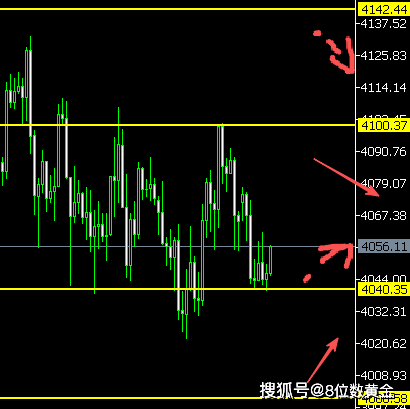
Group 1 - The core viewpoint is that gold prices experienced significant volatility, with a notable drop of $130, followed by a rebound, indicating a phase of consolidation and competition between bulls and bears [1][3]. - Gold's recent trading range has been identified between 4040 and 4100, with potential resistance at 4142 and support at 4000 [3][4]. - The market is currently in a phase of adjustment, with expectations of further fluctuations as it tests key support and resistance levels [3][4]. Group 2 - The Federal Reserve's hawkish stance continues to impact market expectations, with December rate cuts becoming uncertain, contributing to a stronger dollar and subsequent gold price corrections [4][5]. - Recent employment data showed a significant increase in jobs, but also highlighted a rise in unemployment claims, indicating a mixed labor market that could affect gold prices [4][5]. - Upcoming economic indicators, including the PPI and the Fed's Beige Book, are expected to influence market sentiment and Fed policy expectations, which are crucial for gold investment strategies [5]. Group 3 - The gold investment strategy emphasizes the importance of accurately determining entry and exit points, which requires extensive practical experience and market understanding [5]. - The team claims a high accuracy rate of 85% or more in gold trading, focusing on minimizing risks while maximizing profit opportunities [5].
【UNforex财经事件】美联储沟通出现温差 市场偏向观望 黄金围绕4050徘徊
Sou Hu Cai Jing· 2025-11-24 04:45
亚洲早盘时段,金价一度尝试突破至4075美元,但上方缺乏持续买盘支持,随后逐步走低,最终在4045 美元附近获得支撑。盘面表现说明:即便降息预期有所升温,市场在关键数据公布前仍不愿意提前建立 多头;部分偏鹰言论对金价上行仍具压制;同时,美元在高位整理,使黄金短线反弹空间受到限制。 美元指数继续在强势区域内整理。尽管威廉姆斯的温和表态短线削弱了美元的上行动能,但大部分官员 的基调仍偏稳甚至略偏鹰,为美元提供支撑。整体结构并未明显改变,市场依旧将方向性的判断交给即 将公布的美国数据。欧元和英镑等主要货币对对美元表现偏被动,延续承压走势。 由于此前政府停摆影响数据发布时间,此次PPI和零售销售的参考价值被进一步放大。市场预期:PPI环 比+0.3%,零售销售环比+0.4%。若通胀数据强于预期,或重新压制降息讨论、推升美元,对黄金构成 压力;若数据偏弱,则有望强化黄金在4045上方的企稳走势,并为其重新冲击4075—4100区间创造条 件。 周一亚洲交易时段整体延续偏谨慎氛围。近期多位美联储官员在讲话中强调目前的政策设置仍然适合现 阶段经济,使美元保持一定韧性;与此同时,纽约联储主席威廉姆斯略显温和的发言又推动市场重 ...