即时零售

Search documents
看上微盟私域流量 淘宝闪购要下哪盘棋
Bei Jing Shang Bao· 2026-01-07 13:24
Core Insights - Taobao Flash Sale has formed a strategic partnership with Weimob to enhance capabilities in instant retail, digital marketing, and technological innovation [1] - The collaboration aims to integrate resources and improve operational efficiency for merchants, allowing Weimob's merchants to access Taobao Flash Sale's platform [2] Group 1: Partnership Details - Weimob's merchants can efficiently connect to Taobao Flash Sale, enabling integrated local retail operations [2] - Weimob has 59,000 merchants using its SaaS products, covering various sectors, with 1,227 brand merchants utilizing its smart retail solutions [2] - The partnership allows Taobao Flash Sale to tap into Weimob's private traffic, particularly in non-food service sectors, enhancing competition with Meituan [2] Group 2: Business Impact - Weimob can leverage Taobao Flash Sale's traffic to enhance its SaaS service acquisition capabilities, despite a 6.1% year-on-year decline in its smart retail revenue [3] - The collaboration opens new opportunities for merchants to access both public and private traffic, potentially increasing sales and customer engagement [4] - Weimob's integration with Taobao Flash Sale can provide operational services to enhance the latter's instant retail ecosystem [5] Group 3: Market Trends - The e-commerce sector is shifting from extensive growth to refined operations, focusing on high-value user engagement and customer lifetime value [8] - The partnership reflects a broader trend in the industry where companies are prioritizing digital upgrades and collaborative operations to enhance customer acquisition and retention [8] - The competition landscape is evolving, with a shift from price-based strategies to value-driven approaches that emphasize digital transformation and integrated service offerings [6][8]

微盟集团与阿里旗下淘宝闪购达成合作
Xin Lang Cai Jing· 2026-01-07 07:30
Core Viewpoint - Weimob Group has announced a strategic partnership with Alibaba's local life service platform, Taobao Flash Purchase, to enhance local retail digitalization through collaboration in instant retail, digital marketing, and technological innovation [1][4]. Group 1: Strategic Focus Areas - The partnership focuses on three main areas to build a new ecosystem for local life instant retail: - Merchant interconnection and co-construction of the instant retail ecosystem, enabling Weimob merchants to efficiently access the Taobao Flash Purchase platform for integrated "home delivery and in-store" operations [2][5]. - Establishing a one-stop marketing upgrade through public-private cooperation and member integration, creating a comprehensive marketing system that connects Taobao Flash Purchase's public traffic with Weimob's private domain capabilities [2][5]. - Innovation and co-creation in enterprise-level customer expansion, AI, and data operations, exploring multi-scenario integrated operation models to unlock data potential and develop smart business tools and industry solutions [2][5]. Group 2: Historical Context and Future Prospects - This collaboration signifies an upgrade in the "ecological co-construction" between Weimob and Alibaba, leveraging Weimob's established sales channels and marketing services to create integrated solutions for local retail [3][6]. - Weimob aims to drive its clients onto the Taobao Flash Purchase platform, enhancing operational success and attracting high-quality new industry clients, which will contribute to revenue growth from Weimob's subscription solutions [3][6]. - The long-standing cooperation between Weimob and Alibaba includes deep collaborations in DingTalk ecosystem and digital capabilities integration with Alipay, with Weimob becoming one of the first to receive the "Alipay Advertising Elite Partner Agent Certification" by 2025 [7].
2025钱流向了哪?就藏在这十个消费关键词里
Sou Hu Cai Jing· 2026-01-07 04:47
Group 1 - The core viewpoint is that Chinese consumers are shifting from valuing simple affordability and high-end premiums to paying for tangible "value" [3] - The consumer mindset in China is characterized by ten key themes that reflect the emotional and practical needs of consumers [4] Group 2 - Emotional value is becoming a significant factor in purchasing decisions, with products like Labubu toys representing a desire for dopamine rather than just functionality [5] - By 2025, consumption is expected to transition from "functional attributes" to "emotional attributes," allowing products that provide emotional value to command higher prices [6] Group 3 - The focus is shifting from price-performance ratio to quality-price ratio, with consumers seeking "good products at low prices" rather than simply the cheapest options [9] - Brands like Luckin Coffee and Leifeng are successfully competing against established players by offering high-quality products at significantly lower prices [9] Group 4 - The demand for safety is increasing, with consumers purchasing gold as a reliable asset in uncertain times, reflecting a need for tangible security [11] - Health-conscious consumption is evolving from general wellness to more targeted, precise health products that cater to specific needs [12] Group 5 - AI is becoming integrated into everyday consumer products, transforming from a mere software concept to practical applications in various consumer scenarios [15] - Companies that can effectively incorporate AI into their products are likely to create the next big hit in the market [15] Group 6 - The emphasis on extreme experiences is growing, with companies like Pang Donglai and Hema redefining shopping as enjoyable experiences rather than mere transactions [16] - Businesses that prioritize customer experience and emotional connection are more likely to retain consumer loyalty [16] Group 7 - Instant retail is becoming a battleground for major players like JD, Meituan, and Taobao, who are investing heavily to dominate the "last mile" delivery [18] - The competition is focused on breaking down the barriers between online and offline shopping, making rapid delivery a standard expectation [19] Group 8 - Transparency in product ingredients is increasingly demanded by consumers, who are becoming more discerning about what they purchase [20] - Brands that fail to be transparent risk losing consumer trust and market share [21] Group 9 - Localization is key for brands looking to succeed in China, with a shift from imitating international brands to understanding and catering to local preferences [23] - The future of the Chinese consumer market is characterized by a "local dominance" era, where brands that resonate with local culture and needs will thrive [25] Group 10 - The collective themes indicate a consciousness awakening among Chinese consumers, who seek recognition and satisfaction of their emotional and practical needs [26] - Understanding these evolving consumer preferences is crucial for predicting future market trends [26]


微盟战略合作淘宝闪购
Bei Jing Shang Bao· 2026-01-07 02:57
Core Insights - Weimob Group has entered into a strategic partnership with Alibaba's local life service platform, Taobao Flash Purchase, focusing on instant retail, digital marketing, and technological innovation [1] Group 1: Strategic Collaboration - The collaboration aims to integrate systems and coordinate business operations, enabling Weimob merchants to efficiently access the Taobao Flash Purchase platform [1] - This partnership is expected to facilitate a unified operation for local retail, enhancing both "home delivery" and "in-store" services [1] Group 2: Marketing and Ecosystem Development - Weimob and Taobao Flash Purchase will jointly build a comprehensive full-link marketing system, combining Taobao Flash Purchase's public traffic with Weimob's private domain capabilities [1] - The collaboration will also focus on connecting the entire membership ecosystem, allowing for interconnectivity of marketing products [1] Group 3: Business Expansion and Innovation - Both companies will explore joint efforts in enterprise-level customer expansion, artificial intelligence, and data operations [1]
顺丰同城元旦同城配送单量同比增长55%
Bei Jing Shang Bao· 2026-01-07 01:44
Core Insights - The demand for holiday travel and home leisure consumption has surged, leading to increased reliance on instant delivery services during the New Year holiday period [1][2] - SF Express's same-city delivery service reported a 55% year-on-year increase in average daily orders during the New Year holiday, with significant growth in beverage and fast food orders [1] - The company has introduced new content for holiday services, collaborating with Dunhuang Academy to design themed IP for the New Year [1] Delivery Performance - During the New Year holiday, the average daily beverage orders doubled year-on-year, while fast food orders increased by over 90% [1] - Various categories, including supermarkets, beauty products, and electronics, experienced high double-digit growth in order volume compared to the previous year [1] - On December 31, the order volume for SF Express's C-end business doubled compared to regular days, with significant increases in the delivery of flowers and important business documents [2] Service Enhancements - SF Express has implemented specialized solutions for the safe delivery of fragile items like flowers and cakes, including custom protective packaging and standardized delivery protocols [2] - The company has also catered to various customer needs during the holiday, such as emergency purchases, equipment rentals, and luggage delivery, enhancing the travel experience [1]
高端、次高端率先发力 元旦酒业市场勾勒2026年“双轨复苏”路线图
Bei Jing Shang Bao· 2026-01-06 12:29
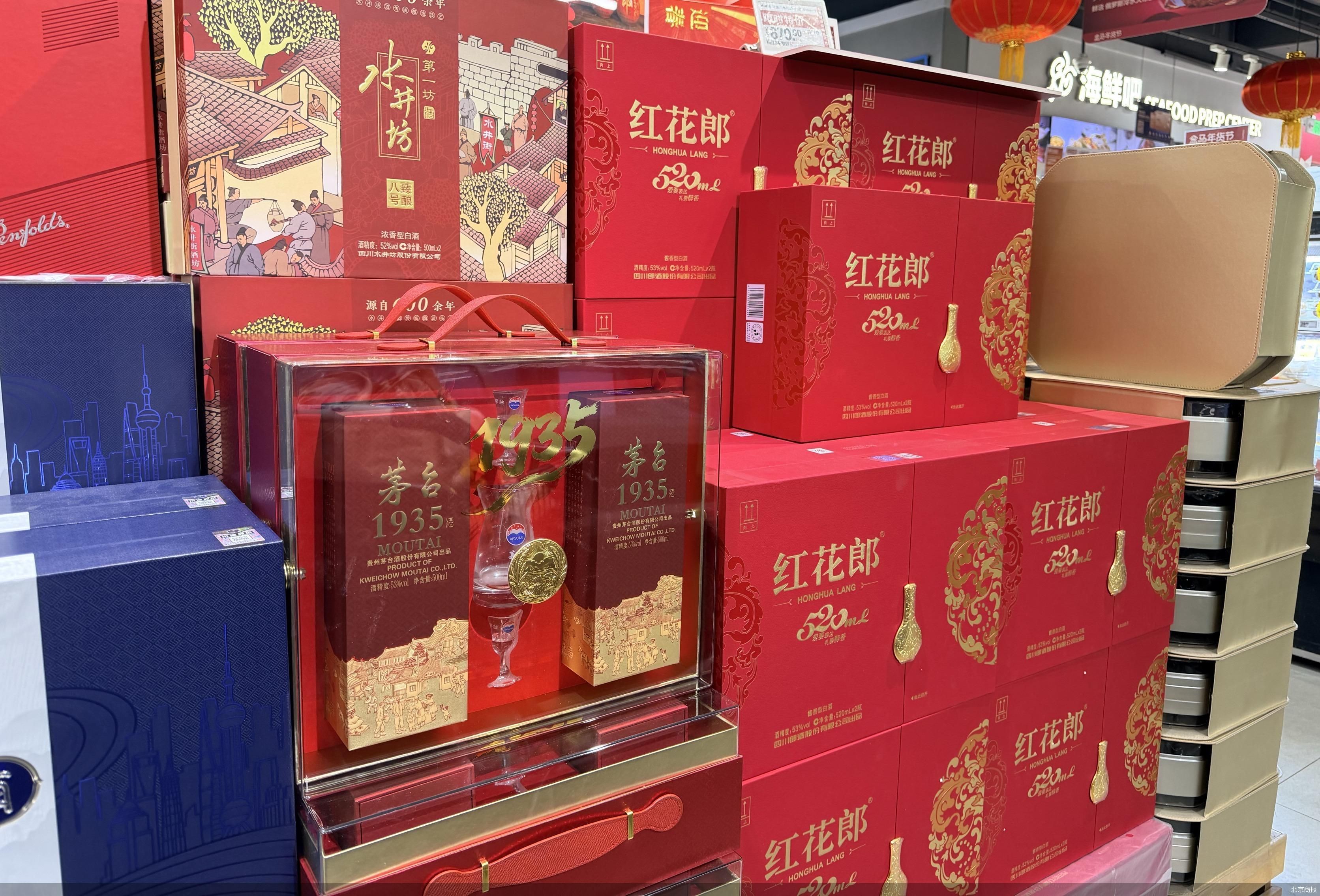
Core Viewpoint - The Chinese liquor market is showing signs of recovery in 2026, particularly in the high-end and mid-range segments, driven by gifting and banquet demands during the New Year holiday season [1][4][8] Group 1: Market Trends - High-end liquor products, such as Wuliangye and Moutai, are prominently featured in supermarkets and liquor stores, indicating a shift in consumer preferences [4][6] - The price range of 300-500 RMB for mid-range products has become a sales powerhouse during the New Year, reflecting a dual demand from gifting and banquet markets [1][6] - Online channels are also witnessing strong sales of high-end liquor, with significant sales figures reported during live-streaming events [7] Group 2: Consumer Behavior - The liquor market is experiencing a transformation in consumer behavior, with a shift from excessive packaging to more rational consumption patterns [8] - The banquet market remains crucial for liquor sales, with a significant portion of consumption still tied to traditional gifting and business events [9] - The dual recovery in the market reflects both consumer rationality and the maturation of the market, with high-end products stabilizing and mid-range products gaining traction [8][10] Group 3: Future Opportunities - The liquor industry is expected to face a new normal characterized by rational consumption, channel flattening, and intensified competition [10] - Companies need to focus on niche markets and immediate retail channels to capture growth opportunities [10] - The instant retail market is projected to grow significantly, with estimates suggesting a market size of 720 billion RMB by 2025, indicating a competitive landscape for liquor companies [11]


华西证券可选消费投资策略
HUAXI Securities· 2026-01-06 12:26
Group 1: Macro View on Consumer Discretionary - China's service consumption has significant growth potential compared to developed countries, with the consumer spending to GDP ratio projected at 39.93% in 2024, significantly lower than the US (67.93%) and Japan (55.50%) [5][6] - Since 2000, China's savings as a percentage of GDP have remained higher than those of developed nations, indicating a conservative consumer spending habit [5] Group 2: Industry Insights - The US consumer structure has shifted from goods to services, with entertainment and dining services experiencing substantial growth. By 2024, the market sizes for entertainment services and dining services are expected to reach $777 billion and $14.29 billion, respectively, reflecting growth rates of 149.47% and 186.81% since 2004 [12] - The trend of emotional consumption is rising, with 56.3% of youth willing to spend for emotional value, indicating a shift towards experiences and personal satisfaction in consumer behavior [42] Group 3: Recent Policy Interpretations - The implementation plan by the Ministry of Industry and Information Technology aims to enhance the adaptability of consumer goods supply and demand, focusing on new technologies and flexible manufacturing to meet diverse consumer needs [60][62] - Policies are being introduced to promote tourism and the silver economy, with the silver economy projected to reach approximately 2 trillion yuan in 2024, highlighting the growth potential in high-quality and premium services for the elderly [47][49] Group 4: Industry Outlook - The emotional consumption trend is expected to continue, with sectors like trendy toys, fashion jewelry, and health foods benefiting from this shift [42] - The AI application in commercial settings is accelerating, with various companies integrating AI into their operations to enhance customer experience and operational efficiency [51] - Quality supermarkets are projected to perform well, with significant sales growth expected for major players like Walmart and local brands, indicating a strong demand for quality retail experiences [53][56]
微盟集团(02013.HK):与淘宝闪购订战略合作 共建即时零售生态
Ge Long Hui· 2026-01-06 10:30
Core Viewpoint - Weimob Group (02013.HK) has announced a strategic partnership with Alibaba's local life service platform, Taobao Flash Purchase, to explore multi-dimensional business cooperation in various sectors [1] Group 1: Partnership Details - Weimob's subsidiary, Shanghai Weimob Enterprise Development Co., Ltd., has signed a strategic cooperation agreement with Taobao Flash Purchase's entity, Shanghai Lazars Information Technology Co., Ltd. [1] - The collaboration will focus on several areas, including merchant interconnection as solution providers, co-building an instant retail ecosystem, and one-stop marketing upgrades through public-private partnerships and member integration [1] Group 2: Business Objectives - The partnership aims to leverage Weimob's established sales channels, excellent marketing service operations, and solid customer base, combined with Taobao Flash Purchase's technical, operational, and marketing support [1] - The goal is to create an integrated solution for local retail, facilitating Weimob's clients to operate on the Taobao Flash Purchase platform and achieve operational success [1] - Additionally, the partnership seeks to attract high-quality new industry clients to enhance subscription solution revenue growth and expand Weimob's merchant solution offerings [1]
顺丰同城:元旦假期同城配送日均单量增长55% 饮品单量同比翻倍
Zheng Quan Shi Bao Wang· 2026-01-06 07:34
Core Insights - The consumption market experienced a strong start during the New Year holiday, driven by the popularity of instant retail and delivery services [1][2] - The third-party delivery platform, SF Express City, reported a 55% year-on-year increase in daily delivery volume during the holiday, with significant growth in various categories [1] Group 1: Delivery Performance - Daily delivery volume for SF Express City increased by 55% year-on-year during the New Year holiday, with beverage orders doubling and fast food orders increasing by over 90% [1] - On December 31, the day before New Year, the C-end business volume for SF Express City doubled compared to the previous day, with document and certificate orders experiencing multiple-fold growth and flower orders increasing by over 110% [1] Group 2: Category Growth - Instant retail saw substantial growth across various categories, including supermarkets, beauty products, and electronics, with all categories achieving double-digit year-on-year growth [2] - The demand for beverages and takeout remained high during the holiday, with SF Express City partnering with major brands like McDonald's, KFC, and Luckin Coffee to ensure stable delivery performance [1][2] Group 3: Consumer Trends - The New Year holiday saw a surge in ceremonial consumption and business demand, particularly for flowers and cakes, which are traditional items for celebrations [2] - High-end gift categories, including jewelry and clothing, also saw significant increases in delivery volume during this period [2]
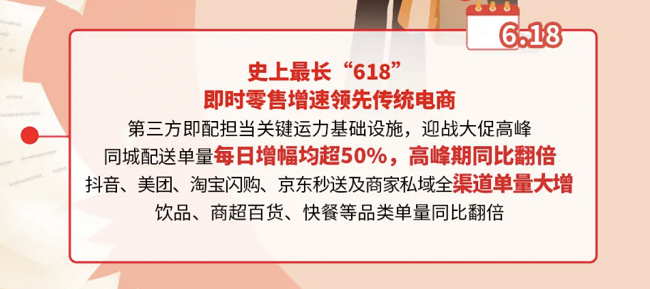
我国即时零售规模将破万亿大关,顺丰同城晒出年度答卷
Yang Zi Wan Bao Wang· 2026-01-06 06:14
Core Insights - The report from the Ministry of Commerce Research Institute indicates that China's instant retail market is expected to exceed 1 trillion yuan by 2026, highlighting the simultaneous growth of both food and non-food segments in instant retail [1] - The competition in the food delivery sector has significantly boosted demand for beverages and fast food, while also revitalizing non-food sales [2] - SF Express's instant retail division has shown remarkable growth, with substantial increases in delivery volumes during peak shopping periods, indicating a shift towards a new phase of efficiency and quality in instant retail [1][4] Group 1: Market Growth and Trends - The instant retail market is experiencing a dual growth trend in both food and non-food categories, driven by rising consumer habits and the saturation of traditional e-commerce [1] - SF Express reported over 170% growth in supermarket and department store orders during key holiday periods, with beverage orders also exceeding 100% growth [1] - The company has established partnerships with various brands and retailers to enhance its supply chain capabilities, providing integrated solutions for instant delivery [4] Group 2: Consumer and Business Services - SF Express has expanded its consumer services, with a threefold increase in revenue from its "exclusive delivery" service in the first half of 2025, catering to high-value and time-sensitive deliveries [5] - The company has developed specialized delivery solutions for fragile items like flowers and cakes, achieving a ninefold increase in flower orders on specific promotional days [2] - SF Express is also exploring new service areas in the "culture and tourism + instant delivery" sector, enhancing consumer experiences during travel [5] Group 3: Operational Efficiency and Technology - The company has implemented a third-party delivery model to alleviate resource waste and reduce marginal costs, significantly increasing delivery volumes during peak shopping events [6] - SF Express has integrated AI technologies and autonomous vehicles into its logistics operations, with over 800 autonomous vehicles deployed across 105 cities [6] - The company reported a 55% year-on-year increase in active merchant accounts, reaching 850,000, and a 105% increase in tea beverage delivery revenue [6][7] Group 4: Financial Performance - In the first half of 2025, SF Express achieved a revenue of 10.236 billion yuan, marking its first half-year revenue surpassing 10 billion yuan, with net profit doubling year-on-year [7][9] - The company is expected to maintain its growth momentum in the second half of the year, aiming for a strong overall performance for the year [7]