避险资产
Search documents
中国银行A股股价创新高;现货黄金站上4100美元/盎司 | 金融早参
Mei Ri Jing Ji Xin Wen· 2025-11-19 23:24
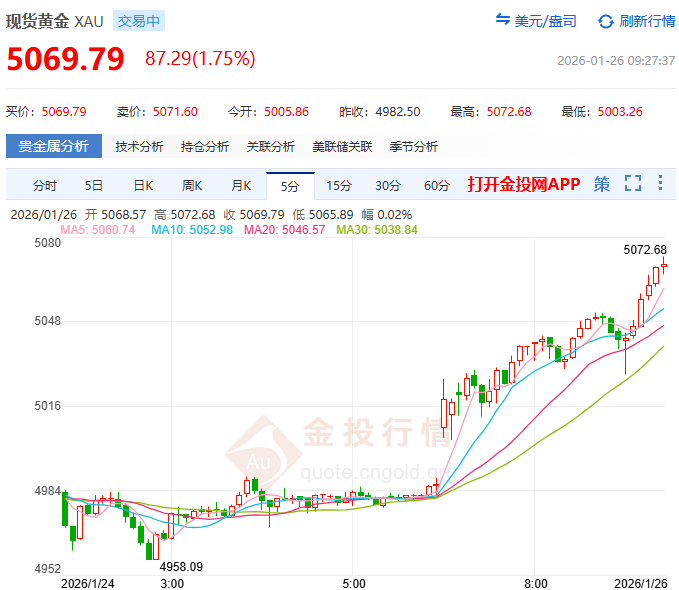
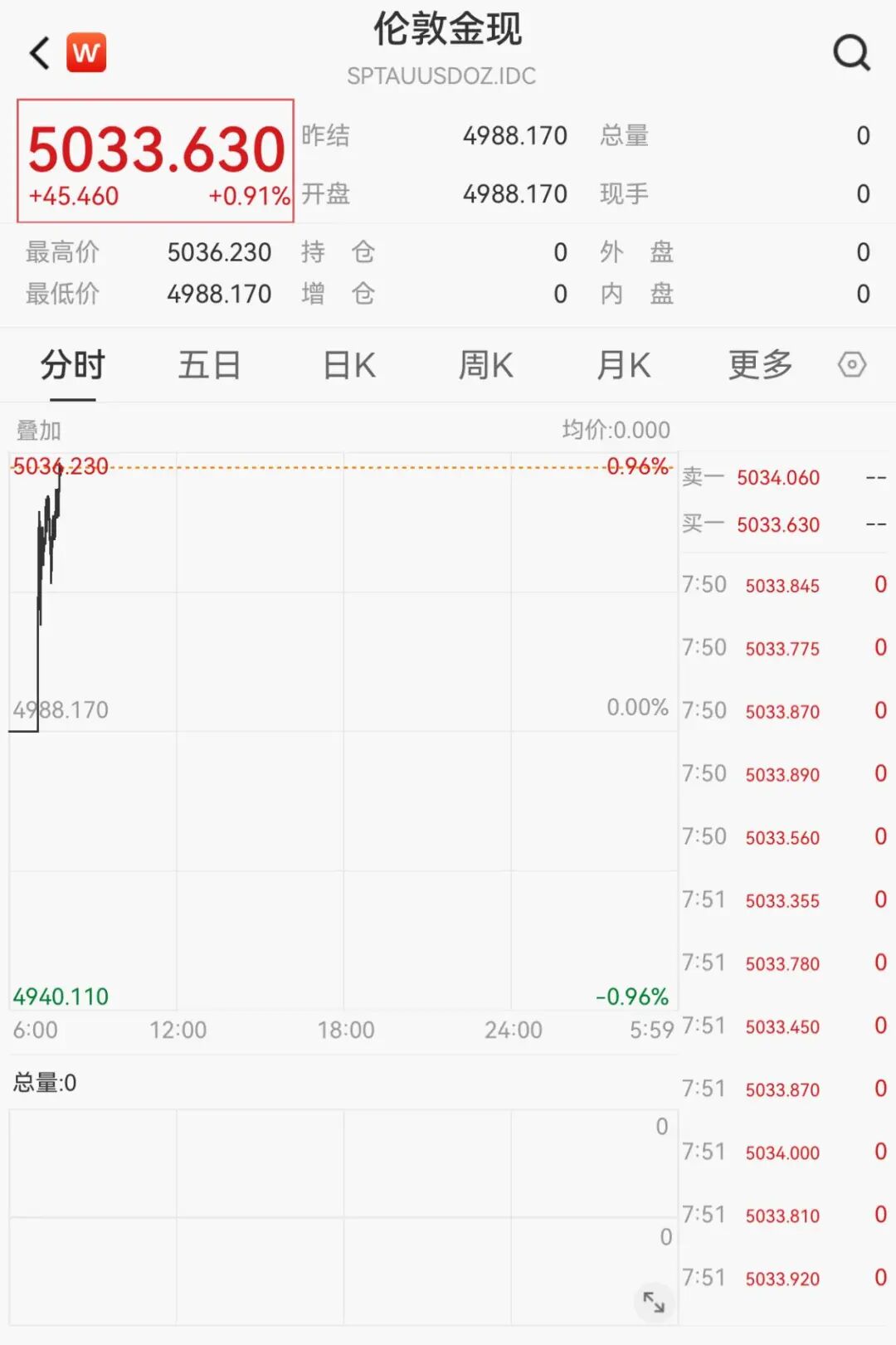
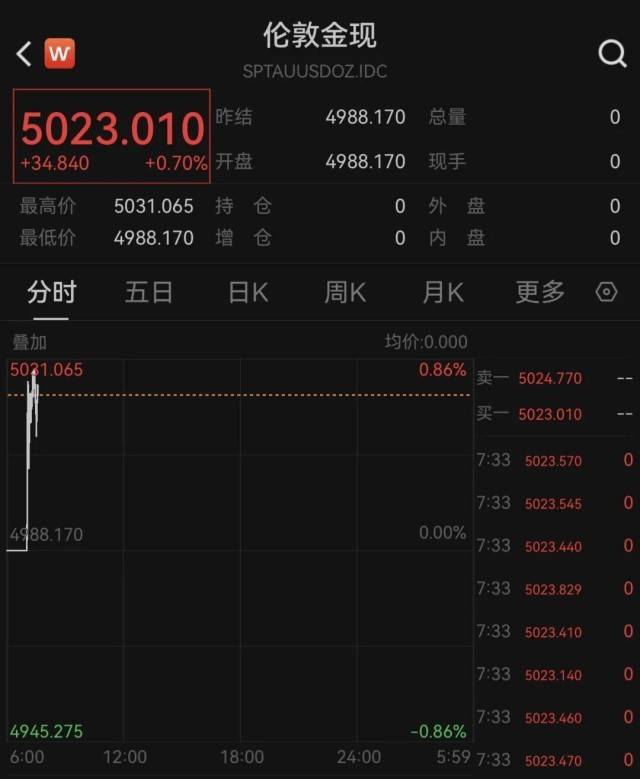
Group 1: Central Bank Operations - The central bank conducted a 310.5 billion yuan 7-day reverse repurchase operation, with a bid amount and winning amount of 310.5 billion yuan, maintaining an operation rate of 1.40% [1] Group 2: Banking Sector Performance - A-shares in the banking sector experienced fluctuations but generally rose, with China Bank's stock price increasing over 2% to reach a new high, alongside significant gains from other banks such as Everbright Bank and CITIC Bank [2] - The rise in bank stock prices reflects positive market expectations for future growth in the financial industry, likely driven by economic recovery expectations and policy support [2] Group 3: Insurance Sector Performance - The insurance sector in A-shares continued to rise, with China Life and China Property & Casualty Insurance both increasing over 3%, along with other major insurers [3] - The notable growth in the insurance sector indicates investor optimism, potentially influenced by market perceptions of economic stability and increased risk management awareness among individuals [3] Group 4: Gold Market Trends - Spot gold prices reached 4,100 USD per ounce, reflecting a 0.85% increase during the day [4] - The rise in gold prices indicates a sustained preference for safe-haven assets, driven by increasing geopolitical risks and inflation pressures, showcasing gold's appeal as a traditional safe-haven investment [4]
The Bull and Bear Cases for Gold, Silver Prices in November 2025
Yahoo Finance· 2025-11-19 20:00
Economic Context - Major economies such as the U.S., China, India, and the European Union are experiencing significant budget deficits and increased borrowing in bond markets, raising concerns about a potential global credit crisis and contagion [1] - The U.S. and China are showing signs of slowing growth, leading to easing monetary policies, which is expected to boost demand for gold and silver [3] Central Bank Activity - Global central banks are increasing their gold reserves, with China adding an estimated 15 tons in September, contributing to a total of 64 tons purchased globally, more than tripling from the previous month [2] - Central bank purchases have been a key driver of gold's bull run over the past three years, although the exact figures are often under-reported by countries [2] Market Sentiment - Elevated risk aversion is evident in global stock markets, with the CBOE Volatility Index ($VIX) surpassing 24, indicating increased safe-haven buying of gold and silver [4] - The current geopolitical climate has seen a reduction in tensions, which may negatively impact the demand for safe-haven metals [12] Price Projections - The silver market is projected to target $60.00, with current prices above $50.00, while gold is targeting a record high of $4,398.00 per ounce, with a potential to reach $5,000.00 next year [9][10] - The bull runs for gold and silver are noted to be long-standing, with gold's bull run lasting 10 years and silver's 5.5 years, indicating a cyclical nature that may lead to a downturn [12]
突发,大涨!
中国基金报· 2025-11-19 14:56
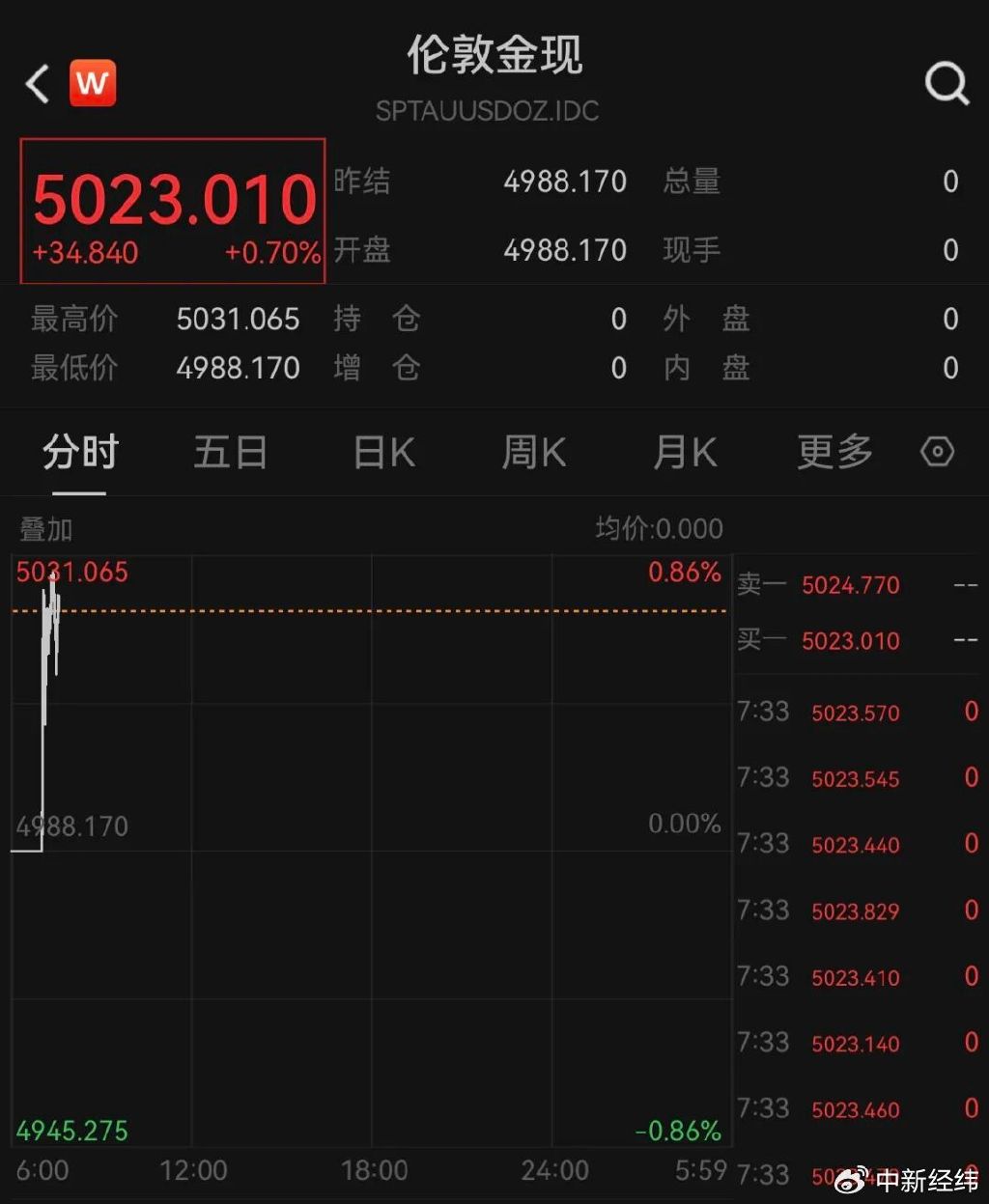
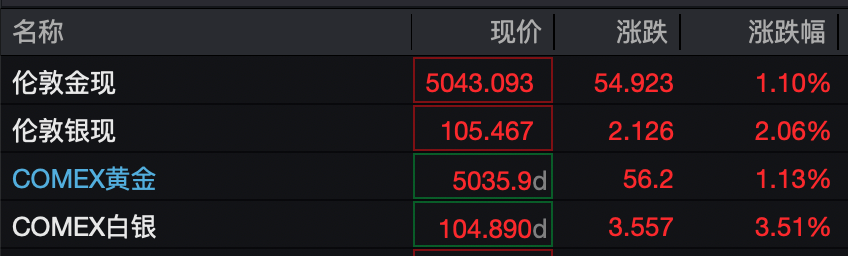
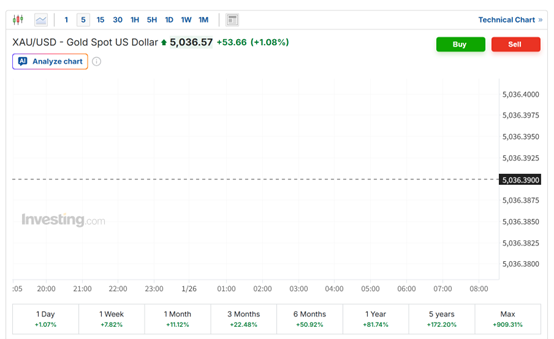
Group 1 - The current spot gold price has surged to approximately 4116.15 USD/oz, reflecting a daily increase of 1.2% after previously dipping to 3997 USD/oz [2][4] - Recent market pressures on gold prices were influenced by a weakening of dovish expectations from the Federal Reserve, with prices touching 3997 USD/oz on November 18 [3] - The trend of capital inflow into gold as a safe-haven asset continues, as indicated by the statement from the Bank of Indonesia's governor [5] Group 2 - Market participants are awaiting the release of the Federal Reserve's meeting minutes, which will provide insights into policymakers' views on future interest rate paths [6]
成交缩量下的亮点:黄金、水产、锂矿,谁才是下一个主线?
Sou Hu Cai Jing· 2025-11-19 07:45
Market Overview - The A-share market exhibited a typical differentiation pattern with the Shanghai Composite Index slightly up by 0.18% to 3946.74 points, while the Shenzhen Component remained flat at 13080.09 points, and the ChiNext Index rose by 0.25% to 3076.85 points, indicating overall stability in index performance [1] - The STAR 50 Index fell by 0.97%, highlighting ongoing adjustment pressures in the growth sector [1] - Total trading volume across both markets reached 1.73 trillion yuan, a decrease of 200.2 billion yuan from the previous period, suggesting a cooling market sentiment as investors remain cautious amid uncertainties [1] Sector Performance - The non-ferrous metals sector led the gains with a 2.39% increase, followed by oil and petrochemicals and banks, which rose by 1.67% and 0.92% respectively, driven by stabilizing international commodity prices and increasing expectations for domestic growth policies [1] - The oil and petrochemical sector particularly benefited from global energy supply-demand restructuring and domestic refining profit recovery, making it a preferred choice for both risk aversion and returns [1] - Conversely, the real estate, media, and comprehensive sectors saw significant declines, with the comprehensive sector dropping by 3.08% and 14 stocks hitting the daily limit down, reflecting a rational correction in the market away from previously overheated themes [1] Thematic Indices - The aquatic products index surged by 9.52%, the gold selection index rose by 5.72%, and the nuclear wastewater index increased by 5.69%, indicating a strong performance of niche concepts driven by policy and real-world resonance [2] - The rise in aquatic and nuclear wastewater indices is attributed to heightened concerns over marine ecological safety due to tensions in Sino-Japanese relations, leading to a revaluation of related sectors [2] - The strength in gold reflects global risk aversion sentiments, influenced by fluctuating expectations of Federal Reserve interest rate cuts and ongoing geopolitical risks, positioning gold as a "safe haven" for funds [2] Future Outlook - The market is transitioning from being driven by emotions to being driven by logic, with resource, consumer, and military sectors showing resilience in the short term due to their risk-averse characteristics [3] - In the medium term, attention should be paid to the implementation pace of the 14th Five-Year Plan, particularly focusing on three main lines: technological self-reliance, domestic demand expansion, and green transformation [3] - The AI sector is expected to evolve from speculative hype to practical applications, with real opportunities lying in companies that can translate technology into tangible commercial value [3]
黄金反常暴涨!美联储降息凉了不跌反涨,现在抄底还是再等等?
Sou Hu Cai Jing· 2025-11-18 10:48
Core Viewpoint - The recent fluctuations in gold prices are influenced by mixed signals from the Federal Reserve regarding interest rate policies and underlying market liquidity expectations [1][3][10]. Group 1: Federal Reserve's Influence - The initial drop in gold prices was due to the Federal Reserve's officials expressing skepticism about a potential interest rate cut in December, leading to a decline of over 2% [1][3]. - There is a division among Federal Reserve officials regarding interest rate cuts, with some opposing a December cut while others remain non-committal, which has created uncertainty in the market [7][8]. - Recent comments from the Federal Reserve Vice Chairman indicated that more data is needed to support a rate cut, which has alleviated immediate market fears [7][8]. Group 2: Market Liquidity Expectations - Barclays Bank predicts that the Federal Reserve may begin purchasing government bonds as early as February next year to manage market reserves, which supports long-term liquidity expectations [10]. - The stability of the Bloomberg Dollar Spot Index has not negatively impacted gold prices, suggesting that the dollar's performance is not currently a significant factor for gold [13]. Group 3: Economic Indicators and Consumer Sentiment - The University of Michigan's consumer sentiment index for November was reported at 60.2, below the expected 62.0, indicating a decline in consumer confidence which may drive investment into gold as a safe haven [15]. - Industrial demand for gold is also increasing due to its applications in electronic components and renewable energy equipment, providing a steady support for gold prices [15]. Group 4: Investment Strategy for Ordinary Investors - Investors should closely monitor the Federal Reserve's December monetary policy meeting, focusing on officials' statements and key economic data, particularly inflation and employment figures [19]. - Geopolitical tensions, such as those in the Middle East, can act as catalysts for gold price increases due to heightened uncertainty [19]. - Long-term investment logic should not be overlooked, as global economic easing and rising industrial demand for gold could provide significant upward potential for gold prices [19][22].
加仓!持续加仓
中国基金报· 2025-11-18 06:50
Core Viewpoint - The stock ETF market has shown resilience by attracting over 10 billion yuan in net inflows for two consecutive trading days, despite the overall market decline below 4000 points [2][4]. Group 1: Market Performance - As of November 17, the Shanghai Composite Index closed at 3972.03 points, down 0.46%, with total trading volume shrinking to 1.93 trillion yuan [4]. - The total scale of all stock ETFs (including cross-border ETFs) reached 4.39 trillion yuan, with a net inflow of 109.80 billion yuan on the same day [4][6]. Group 2: ETF Inflows - The leading categories for net inflows were industry themes and Hong Kong stock ETFs, with inflows of 38.7 billion yuan and 32.88 billion yuan, respectively [6]. - Major fund companies like E Fund and Huaxia Fund reported significant inflows, with E Fund's ETFs reaching a scale of 8160.6 billion yuan and a net inflow of 17.7 billion yuan [6][7]. Group 3: Specific ETF Performance - The top-performing ETFs on November 17 included the CSI 300 ETF with a net inflow of 16.58 billion yuan and the SSE 50 ETF with 11.6 billion yuan [10]. - The Southern Innovation ETF saw a net inflow of 9 billion yuan, driven by interest in AI-related sectors [11]. Group 4: Gold ETFs - Gold ETFs also attracted significant investment, with the Huaan Gold ETF receiving 7.6 billion yuan in net inflows, reflecting a trend towards safe-haven assets [11]. - The Guangfa Shanghai Gold ETF has shown a year-to-date increase of 49.71%, indicating strong demand for gold as a hedge against economic uncertainty [11][12]. Group 5: Outflows from Certain ETFs - Recent profit-taking has led to net outflows from cyclical ETFs such as chemical, coal, and non-ferrous metal ETFs, indicating a shift in investor sentiment [14].
IC外汇平台:高盛表示金价有望在2026年底达到4900美元
Sou Hu Cai Jing· 2025-11-18 04:08
高盛分析师莉娜・托马斯团队测算显示,9月全球央行合计净购金量达64吨,较8月的21吨实现逾三倍增长,环比激增 204.8%,这一强劲势头有望延续至11月。 现货金价在10月突破每盎司4380美元的历史峰值,即便近期出现回调,截至最新统计仍稳定在4068美元/盎司水平,年内累计 涨幅高达55%,远超全球主要资产平均收益率。 全球经济复苏不均衡引发的增长预期分化、地缘政治冲突导致的风险溢价上升、黄金ETF资金的持续流入,以及市场对美联储 宽松周期的提前定价。黄金与美元资产的负相关性持续强化,2025年美元指数较年初下跌7.8%,而黄金储备在全球央行外汇 资产中的占比已升至18.3%,形成鲜明的反向联动。 高盛集团最新发布的专项报告显示,在季节性购金需求淡季落幕之后,各国央行的黄金增持行动再度进入加速通道。 高盛预测,2024年第四季度至2026年期间,全球央行月均净购金量将稳定在80吨左右。高盛重申2026年底金价将攀升至每盎司 4900美元的目标位,如果私人投资需求持续升温,这一目标存在上修空间。 全球央行连续三年购金超千吨,2025年前三季度累计购金634吨,这一规模已占据全球黄金年产量的三分之一以上。高盛指 ...
美股三大指数收跌,多数中概股下跌,逸仙电商跌近21%,小鹏跌10%
2 1 Shi Ji Jing Ji Bao Dao· 2025-11-17 23:49
Core Points - The U.S. stock market experienced a significant decline, with the Dow Jones dropping over 500 points, marking a decrease of approximately 1.2% [1] - The S&P 500 index has fallen over 2% in November, ending a six-month streak of gains, and is down more than 3% from its historical peak [1] - The Nasdaq index has also retreated over 5% from its record high [1] Group 1: Major Tech Stocks - Most large tech stocks saw declines, with Micron Technology down nearly 2%, Nvidia and Apple dropping over 1.8%, and Meta down 1.2% [2] - Tesla was an exception, rising by 1.1%, while Google saw a notable increase, initially rising 6% to reach a historical high before closing with a gain of just over 3% [2] - Berkshire Hathaway, led by Warren Buffett, established a position in Google during the third quarter [2] Group 2: Chinese Concept Stocks - The Nasdaq Golden Dragon China Index fell by 1.21%, with notable declines in several Chinese concept stocks: Yatsen E-commerce down nearly 21%, Manbang down over 11%, and XPeng down over 10% [2] - Other Chinese stocks like Li Auto and NIO also experienced declines, while Alibaba saw a gain of 2.5% [2] Group 3: Commodities and Cryptocurrencies - The FTSE China A50 index futures fell by 0.52%, and precious metals, including gold and silver, saw significant declines, with gold dropping nearly 2% to a low of $4006.80 per ounce [3] - Bitcoin experienced a sharp decline, falling below $92,000, while Ethereum also dropped below $3,000, leading to over 160,000 liquidations worth $851 million in the past 24 hours [3] - The tightening liquidity of the U.S. dollar and changing Federal Reserve policy expectations are cited as key factors impacting high-volatility assets like cryptocurrencies [3][4]
道指大跌超500点,多数中概股下跌,逸仙电商跌近21%,小鹏跌10%,比特币跌破92000美元
2 1 Shi Ji Jing Ji Bao Dao· 2025-11-17 23:17
Market Overview - On November 18, US stock indices collectively declined, with the Dow Jones falling over 500 points, a decrease of approximately 1.2% [1] - The S&P 500 index has dropped over 2% since November, ending a six-month streak of gains, and is down more than 3% from its historical peak [1] - The tech-heavy Nasdaq has fallen over 5% from its record high [1] Stock Performance - Major tech stocks mostly declined, with Micron Technology down nearly 2%, Nvidia and Apple down over 1.8%, and Meta down 1.2%. Tesla, however, rose by 1.1% [2] - Google was a notable exception, initially rising 6% to reach a new all-time high before closing with a gain of just over 3%. Berkshire Hathaway reportedly built a position in Google during Q3 [2] - The Nasdaq China Golden Dragon Index fell by 1.21%, with significant declines in several Chinese stocks, including Yatsen Global down nearly 21% and XPeng down over 10% [2] Commodity Market - Precious metals and base metals experienced widespread declines, with spot gold dropping nearly 2% to a low of $4006.80 per ounce before closing around $4045 [4] - LME aluminum, nickel, and lead all fell over 1% [4] - The CME FedWatch Tool indicates a reduced probability of a 25 basis point rate cut by the Federal Reserve in December, now at 42.9% [4] Cryptocurrency Market - Cryptocurrencies faced significant declines, with Bitcoin dropping below $92,000 and Ethereum also falling below $3,000 [4][5] - Over the past 24 hours, more than 160,000 traders were liquidated, with a total liquidation amount of $851 million [5] - The recent drop in Bitcoin prices is attributed to tightening dollar liquidity and changing Federal Reserve policy expectations, leading to increased selling pressure on high-volatility assets [5][6] Risk Assets - An unusual phenomenon observed is the simultaneous decline of risk assets like Bitcoin and traditional safe-haven assets like gold, which raises concerns [6]
风险资产与避险资产齐跌,比特币与黄金共同拉响流动性警报
2 1 Shi Ji Jing Ji Bao Dao· 2025-11-17 13:17
Core Viewpoint - Bitcoin has experienced significant volatility, reaching a peak of $126,251 on October 6, only to drop below $94,000 by November 17, erasing all gains for the year due to tightening dollar liquidity and changing market conditions [1][2][3] Market Dynamics - The recent decline in Bitcoin's price is attributed to a combination of macro liquidity tightening, decreased market risk appetite, and cyclical factors within the cryptocurrency industry [2][3] - The uncertainty surrounding U.S. fiscal and monetary policy has led to a cautious trading environment, affecting both risk and safe-haven assets [3][4] Institutional Involvement - Institutional investors have been a key support for Bitcoin's price, but recent outflows indicate a potential shift as macro liquidity tightens and political uncertainties rise [5][6] - The reliance on institutional capital highlights the fragility of Bitcoin's narrative as a hedge against inflation, especially given its high volatility compared to traditional assets like gold [6][7] Regulatory Environment - The evolving regulatory landscape and the diminishing expectations of supportive policies from the Trump administration have contributed to market participants' cautious outlook [3][4] - The need for a robust regulatory framework and the maturation of ETF channels are seen as essential for Bitcoin's long-term viability [6][7] Correlation with Other Assets - The simultaneous decline of Bitcoin and gold suggests a breakdown of traditional safe-haven logic, driven by liquidity constraints and a strong dollar [8][9] - The current market environment indicates a deeper liquidity pressure test, where all asset classes are experiencing increased correlation and simultaneous declines [10]