
民生保障

Search documents
第二十届四中全会公报简评:如何理解四中全会公报?
Yin He Zheng Quan· 2025-10-23 13:03
Report Summary 1. Industry Investment Rating No industry investment rating is provided in the report. 2. Core Viewpoints - The 4th Plenary Session of the 20th CPC Central Committee affirmed the work of the Political Bureau of the CPC Central Committee since the 3rd Plenary Session of the 20th CPC Central Committee and highly evaluated the major achievements of China's development during the 14th Five - Year Plan period. It also pointed out the risks and challenges in the 15th Five - Year Plan period, emphasizing that China's long - term positive fundamentals remain unchanged [1]. - Policies are set to prioritize the development of the real economy, with a higher priority on building a modern industrial system. Technological development leading to new quality productivity is crucial, and expanding domestic demand and developing new demands are strategic priorities. The meeting mentioned real estate in the livelihood section for the first time and continued to emphasize the active and prudent resolution of local government debt risks [2]. - The overall statement of the meeting met expectations. After the festival, the yield of the 10 - year bond declined and fluctuated around 1.8 - 1.85%. Historically, the bond market yield tends to fluctuate downward in the short - term after the meeting. Attention should be paid to Sino - US trade frictions, macro - data in Q4, and the possibility of reserve requirement ratio cuts and interest rate cuts. Also, the possible implementation of the new public fund fee regulations needs to be monitored [2]. 3. Summary by Related Directory 3.1前期回顾和当下形势判断 - The meeting affirmed the work of the Political Bureau since the 3rd Plenary Session of the 20th CPC Central Committee and highly evaluated the achievements in the 14th Five - Year Plan period. It noted that the 15th Five - Year Plan period will face risks and challenges, but China's economic fundamentals are stable, with many advantages, strong resilience, and great potential. The long - term positive trend remains unchanged, and the advantages of the socialist system, large - scale market, complete industrial system, and rich talent resources are more prominent [1]. 3.2各个方向政策如何定调 - **Real Economy and Industrial System**: Prioritize the development of the real economy and raise the priority of building a modern industrial system [2]. - **Technology**: Technology development leading to new quality productivity is of utmost importance [2]. - **Domestic Demand**: Expand domestic demand and develop new demands as strategic priorities [2]. - **Real Estate and Debt**: The meeting mentioned real estate in the livelihood section for the first time and continued to emphasize the active and prudent resolution of local government debt risks [2]. 3.3债市影响几何 - The overall statement of the meeting met expectations. The yield of the 10 - year bond declined after the festival and fluctuated around 1.8 - 1.85%. Historically, the bond market yield tends to fluctuate downward in the short - term after the meeting. Attention should be paid to Sino - US trade frictions, macro - data in Q4, and the possibility of reserve requirement ratio cuts and interest rate cuts. Also, the possible implementation of the new public fund fee regulations needs to be monitored [2].
四中全会强调:坚决实现全年经济社会发展目标
第一财经· 2025-10-23 09:40
Core Viewpoint - The article emphasizes the importance of achieving the annual economic and social development goals set by the Chinese Communist Party, focusing on stabilizing employment, businesses, markets, and expectations to maintain the economic foundation and promote recovery momentum [1] Group 1: Economic Stability Measures - The meeting highlighted the need for macro policies to continue to exert force and to be adjusted as necessary, ensuring the implementation of enterprise support policies and special actions to boost consumption [1] - It is crucial to safeguard the "three guarantees" at the grassroots level and to actively and prudently resolve local government debt risks [1] Group 2: Employment and Social Welfare - The meeting stressed the importance of ensuring livelihood security through multiple channels, enhancing job stability for key groups, and increasing efforts to rectify wage arrears [1] - There is a focus on improving basic public services and addressing urgent issues faced by the public, particularly in disaster recovery and ensuring warmth for affected populations during winter [1] Group 3: Safety and Stability - The meeting underscored the necessity of ensuring safety in production and maintaining stability, with a strong emphasis on accountability for safety production and strict enforcement of regulatory systems to prevent major accidents [1] - It also called for comprehensive supervision of food and drug safety, conflict resolution, and the legal crackdown on various crimes, alongside effective public opinion guidance to mitigate ideological risks [1]


大国五年丨“十四五”,改变你我生活
Xin Hua She· 2025-10-23 01:54
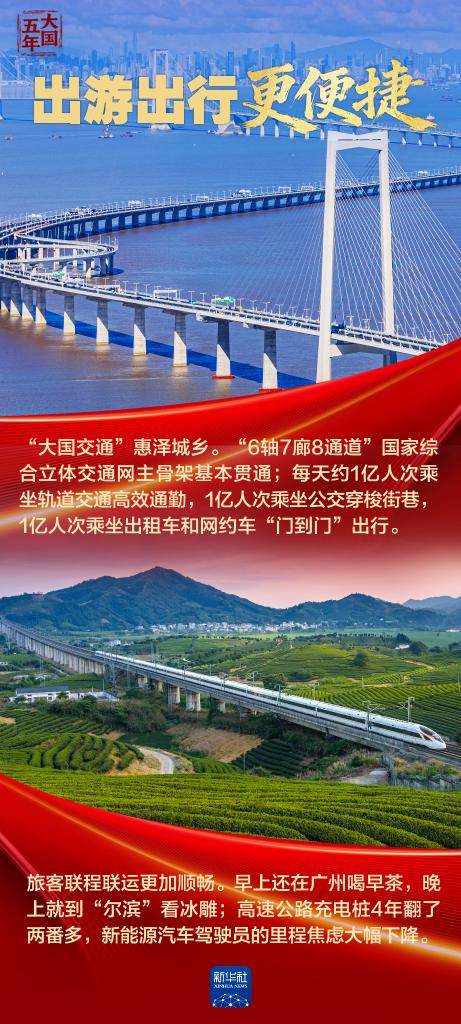
Core Points - The article emphasizes the achievements made during the "14th Five-Year Plan" period, highlighting improvements in the quality of life for the Chinese population, including better transportation, healthcare, and environmental conditions [1][2]. Group 1: Infrastructure and Services - A total of 5,510 "quarter-hour" convenient living circles have been established, serving over 125 million residents [7]. - Over 95% of administrative villages now have direct access to express delivery services, enhancing logistics from farms to consumers [7]. - The national number of regional medical centers has reached 125, benefiting over 400 million people through cross-province medical billing [11]. Group 2: Economic Growth and Consumption - The consumer market remains the second largest globally, with service consumption growing rapidly; residents' service expenditure reached 46.1% [9]. - The grain production has achieved a continuous increase for 21 years, with the national grain output expected to exceed 1.4 trillion jin in 2024 [22]. Group 3: Education and Talent Development - Basic education has achieved balance in 2,895 counties, with preschool enrollment rates at 92% and higher education enrollment rates at 60.8% [15]. - Higher education institutions have produced 55 million graduates, with vocational education supplying over 70% of new high-skilled talent for modern industries [17]. Group 4: Environmental Improvements - By 2024, PM2.5 concentration in cities is projected to drop to 29.3 micrograms per cubic meter, with good air quality days reaching 87.2% [19]. - Approximately 2,000 high-emission vehicles have been eliminated during the "14th Five-Year Plan," contributing to environmental protection efforts [21]. Group 5: Cultural and Community Development - There are 3,248 public libraries and nearly 44,000 community cultural institutions, with public cultural services increasingly accessible online [27]. - The number of television users has surpassed 1 billion, and online video users have reached 1.09 billion, indicating a vibrant cultural landscape [28].
牢记嘱托答好民生“幸福卷”
Shan Xi Ri Bao· 2025-10-23 00:22
Group 1: Employment and Economic Development - Employment is the foundation of people's livelihood, and promoting employment for college graduates is a top priority in Shaanxi [2] - Since the beginning of the 14th Five-Year Plan, Shaanxi has implemented multiple policies to enhance employment services and create job opportunities, resulting in 163.26 million new urban jobs from 2022 to August 2023 [4] - The "Han Zhong Rattan Weaving Master" labor brand has been recognized, leading to nearly 4 million rural laborers finding employment or starting businesses [3] Group 2: Elderly and Child Care Services - Shaanxi has developed a flexible and diverse elderly meal service system, allowing seniors to enjoy convenient dining options in their communities [6] - The establishment of community childcare centers addresses the needs of working parents, providing peace of mind and convenience [9] - The province has focused on building a comprehensive service network for the elderly and children, ensuring accessible and quality care [7][9] Group 3: Healthcare and Social Security - The family mutual aid policy for medical insurance allows for the use of family members' insurance balances, enhancing the convenience and affordability of healthcare [10] - As of September 2023, Shaanxi has achieved a basic medical insurance coverage of 36.92 million people, including 8.93 million in employee insurance and 27.99 million in resident insurance [12] - The province has established a data-sharing mechanism among multiple departments to include vulnerable groups in the basic pension insurance coverage [12] Group 4: Education and Infrastructure - Shaanxi has made significant improvements in educational infrastructure, promoting integrated urban-rural education and implementing policies to reduce burdens on students [11] - The province continues to strengthen basic, inclusive, and safety-net social services, ensuring a solid foundation for people's livelihoods [11]
服务百姓温暖过冬!各地多举措应对降温 保障供热平稳与“菜篮子”供应
Yang Shi Wang· 2025-10-22 08:12
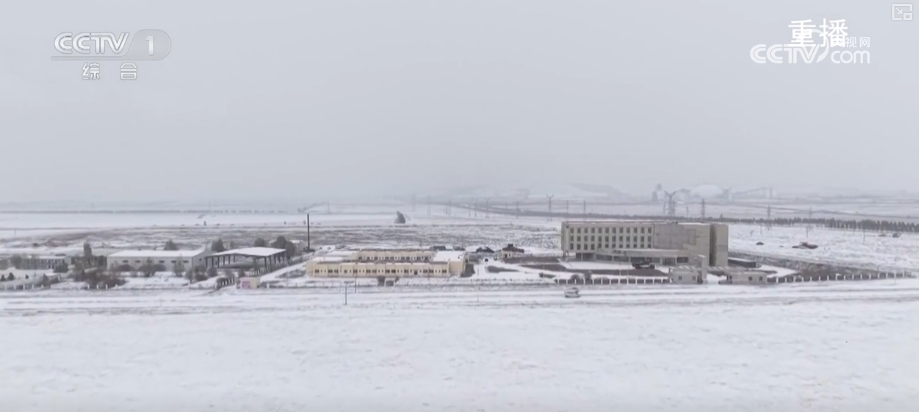
Group 1 - Inner Mongolia's Chen Barhuqi has initiated coal supply distribution to ensure warmth for over 14,000 households, with the program running until December 30 [4] - Gansu province has started heating earlier than usual, with nine cities commencing heating services 12 days ahead of last year, and new electronic balancing valves installed to improve temperature regulation [6] - In Henan's Shijiazhuang, over 1,300 acres of celery are being harvested to mitigate the impact of cold weather, with daily fresh harvests exceeding 200,000 pounds [8]
湖北前三季度GDP增长6% 保持大省领先中部领跑态势
Chang Jiang Ri Bao· 2025-10-22 07:06
Economic Overview - Hubei Province achieved a GDP of 44,875.62 billion yuan in the first three quarters, with a year-on-year growth of 6.0% at constant prices [1] - The GDP growth rate accelerated by 0.2 and 0.3 percentage points compared to the previous year and the same period last year, respectively, and is 0.8 percentage points higher than the national average [1] Industry Performance - The primary industry added value was 3,855.36 billion yuan, growing by 3.2%, while the secondary industry increased by 5.9% to 17,072.96 billion yuan, and the tertiary industry grew by 6.5% to 23,947.30 billion yuan [1] - Industrial output for large-scale enterprises increased by 7.7%, with high-tech manufacturing leading the growth at 13.5%, contributing 26.7% to the overall industrial growth [2] - Key products such as lithium batteries, new energy vehicles, and smartphones saw production increases of 42.8%, 24.0%, and 20.0%, respectively [2] Service Sector - The service sector's added value grew by 6.5%, with significant contributions from transportation, warehousing, and postal services (10.1%), wholesale and retail (5.7%), accommodation and catering (4.1%), and finance (5.1%) [2] Investment and Consumption - Fixed asset investment rose by 6.5%, with manufacturing investment showing a notable increase of 12.5% [2] - The total retail sales of consumer goods reached 19,533.95 billion yuan, growing by 5.2%, with rapid sales growth in home appliances and furniture related to the old-for-new policy [2] - The total import and export volume was 6,176.9 billion yuan, marking a growth of 25.3%, with exports increasing by 30.8% [2] Employment and Income - The employment situation remained stable, with 816,100 new urban jobs created [2] - The per capita disposable income for residents was 28,036 yuan, reflecting a year-on-year growth of 5.3%, while the income gap between urban and rural residents continued to narrow [2] Future Outlook - The overall economic performance in the first three quarters indicates steady progress, with a focus on maintaining stability while pursuing growth [3] - The province aims to continue promoting stable growth, risk prevention, and livelihood protection to achieve sustainable and healthy economic development [3]
国家账本里的民生温度
Jing Ji Ri Bao· 2025-10-21 22:00
Group 1 - The core focus of the articles is on the significant increase in fiscal investment in people's livelihoods, with over 70% of national public budget expenditure directed towards this area, amounting to nearly 100 trillion yuan since the start of the 14th Five-Year Plan [1][3] - The number of participants in basic pension insurance has exceeded 1.07 billion, and those in basic medical insurance has reached 1.327 billion, indicating a solid foundation for improving citizens' well-being [1] - The scale of balanced transfer payments has increased from 1.9 trillion yuan in 2021 to 2.7 trillion yuan by 2025, reflecting ongoing efforts to address development disparities [1] Group 2 - The government emphasizes the importance of economic growth as a foundation for improving livelihoods, with China's economic growth rate remaining among the highest globally [2] - There is a recognition of the need for continuous improvement in social services, particularly in aging communities and the supply of elderly care services, due to the increasing aging population [2] - The introduction of policies such as the "Investment in People" initiative in the government work report highlights a proactive approach to addressing urgent public needs and enhancing overall happiness and security [3]
前三季度关键数据出炉 读懂中国经济“秋季报”背后的信心和底气
Yang Shi Wang· 2025-10-21 04:20
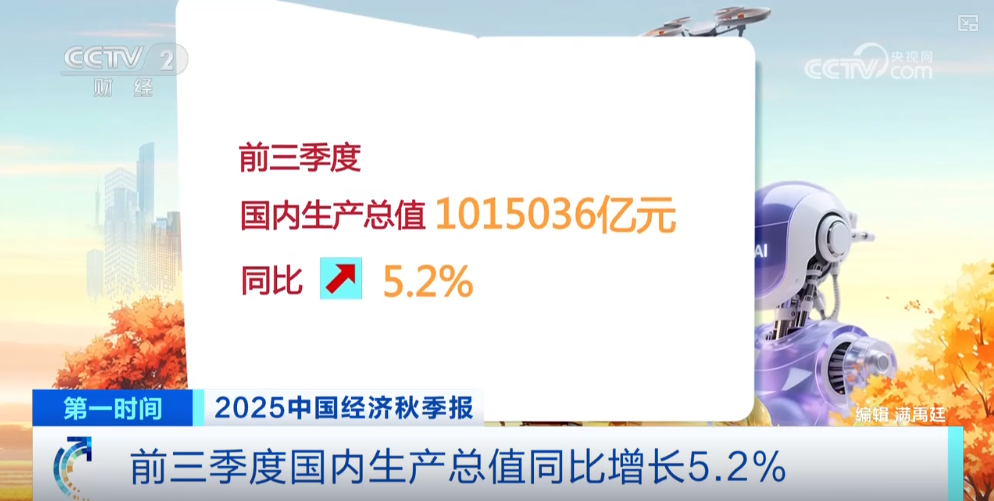
Economic Growth - China's GDP for the first three quarters of the year reached 10,150.36 billion yuan, with a year-on-year growth of 5.2%, accelerating by 0.4 percentage points compared to the same period last year [3] - The economic increment amounted to 396.79 billion yuan, with an increase of 136.8 billion yuan year-on-year [3] Industrial Performance - The industrial added value above designated size grew by 6.2% year-on-year, with the manufacturing sector increasing by 6.8% [3] - The proportion of added value from equipment manufacturing and high-tech manufacturing reached 35.9% and 16.7%, respectively [5] Consumer Market - The total retail sales of consumer goods reached 3,658.77 billion yuan, reflecting a year-on-year growth of 4.5%, with service retail sales growing by 5.2% [3][16] - Final consumption expenditure contributed 53.5% to economic growth, indicating that consumption remains the main engine of economic growth [5] Investment Trends - Manufacturing investment grew by 4.0% year-on-year in the first three quarters [3] - Investment in the automotive manufacturing sector maintained double-digit growth, driven by policies promoting the replacement of old vehicles [6][9] Employment and Prices - The urban survey unemployment rate remained stable compared to the first half of the year [3] - Core CPI inflation has expanded for five consecutive months, reflecting the effectiveness of policies aimed at expanding domestic demand and promoting consumption [3] International Trade - The total value of goods trade reached 3.361 trillion yuan, with a year-on-year growth of 4% [3] - The resilience of China's foreign trade has been highlighted, with a focus on upgrading export structures and expanding market reach [16] Technological Innovation - High-tech manufacturing added value grew by 9.6% year-on-year, with significant increases in the production of industrial and service robots [8][9] - The integration of technology and industry has led to a transformation of innovative potential into economic momentum, with substantial growth in renewable energy products [9][10] Energy Consumption - The total electricity consumption in the third quarter exceeded 1 trillion kilowatt-hours, with industrial electricity consumption showing rapid growth [12] - In Jiangsu, electricity consumption in advanced manufacturing increased significantly, particularly in the photovoltaic equipment sector [12]
“十五五”规划前瞻:改革篇+民生篇
2025-10-19 15:58
Summary of Key Points from the Conference Call Industry or Company Involved - The discussion revolves around the "Fifteen Five" planning period in China, focusing on national policies regarding state-owned enterprises, private economy, and social welfare. Core Points and Arguments 1. **State-Owned Enterprises (SOEs) Reform** - The reform will categorize SOEs into commercial and public service types, clarifying the responsibilities of shareholders, boards, and management - Market-oriented operational mechanisms will be promoted, with a focus on innovation and increased R&D investment - A multi-faceted incentive system will be developed to attract top talent and enhance accountability [1][2][3] 2. **Private Economy Optimization** - The institutional environment will be improved to create a market-oriented, legal, and international business environment - Measures will include enhancing the modern market system and promoting financial services for technology innovation [2][3] 3. **National Unified Market Construction** - Strengthening regulatory frameworks and ensuring fair market supervision will be prioritized - A unified standard and regulatory system will be established, promoting data standardization and interconnectivity [1][3] 4. **Macroeconomic Policy Coordination** - Differentiated regulation will be implemented, granting greater operational autonomy to enterprises in competitive sectors while maintaining necessary controls in strategic or high-risk areas [1][3] 5. **Financial and Tax System Reforms** - The financial system will be modernized, focusing on risk prevention and international cooperation - Tax reforms will include simplifying VAT rates and expanding the scope of comprehensive income taxation [2][3] 6. **Social Welfare and Livelihood Policies** - Emphasis on enhancing the quality of life for citizens, with a focus on multi-level elderly care services and reducing family upbringing costs - Policies will include childcare subsidies and free preschool education to address challenges in childcare accessibility [4][8] 7. **Progress and Challenges in Social Policies** - Significant progress has been made in social welfare indicators, with some targets met ahead of schedule - However, challenges remain, particularly in achieving the target for childcare services, indicating a supply-demand imbalance [5][6] 8. **Consumer Potential and Social Security Issues** - Key issues include the negative wealth effect from real estate market adjustments and structural pressures in the job market - Disparities in public service access and bureaucratic inefficiencies in social assistance processes are also highlighted [7] 9. **Response to Aging Population and Low Birth Rates** - Policies will focus on developing community-based elderly care and reducing childcare costs - The government aims to enhance the availability of childcare services and improve the quality of elderly care [8][11] 10. **Opportunities in Capital Markets** - The capital market is expected to see new opportunities in sectors addressing aging and low birth rates, such as health care and childcare services - There will be increased demand for smart elderly care solutions and community services tailored to the elderly [11] Other Important but Possibly Overlooked Content - The historical context of social policy development in China shows a shift from reactive measures to proactive strategies aimed at economic and social development - The integration of social policies with economic strategies reflects a comprehensive approach to governance and development [4][5]
“置顶”百姓关切 落实“投资于人”
Zhong Guo Qing Nian Bao· 2025-10-17 22:38
Core Perspective - The "14th Five-Year Plan" emphasizes the importance of people's livelihoods, with a clear focus on improving the well-being of citizens through various initiatives and projects [1][2]. Group 1: Financial Commitment to Livelihood - Over the "14th Five-Year" period, fiscal investment in the livelihood sector accounted for over 70% of the national general public budget expenditure, totaling nearly 10 trillion yuan [2]. - Specific allocations include 2.05 trillion yuan for education, 1.96 trillion yuan for social security and employment, 1.06 trillion yuan for health care, and 400 billion yuan for housing security [2]. Group 2: Social Policies and Support Systems - The plan includes the establishment of a layered and categorized social assistance system to enhance support for vulnerable groups, ensuring timely help for those in need [4]. - Policies aim to improve the low-income guarantee system and transition to a comprehensive assistance model that combines material support with services [4]. Group 3: Achievements in Livelihood Improvement - Significant progress has been made in areas such as cross-province medical settlement, education, and housing, with approximately 7.8 million affordable housing units under construction from 2021 to 2024 [3]. - Employment strategies have effectively targeted key groups like college graduates and migrant workers, helping them secure jobs [3]. Group 4: Addressing Urban-Rural Disparities - Initiatives have been implemented to bridge the urban-rural development gap, providing rural children with nutritional support and ensuring access to quality education [5]. - The tangible improvements in rural areas reflect a commitment to shared development and enhancing the quality of life for all citizens [5]. Group 5: Ongoing Challenges and Future Directions - Despite progress, there remain unresolved issues in the livelihood sector that require continuous attention and innovative solutions [6]. - The focus for the upcoming "15th Five-Year Plan" will be on maintaining a people-centered approach, ensuring that the needs and aspirations of the populace are prioritized [6].