量化宽松

Search documents
9月央行各项工具净投放9268亿元 专家:预计四季度降准、降息等工具仍有操作空间
Sou Hu Cai Jing· 2025-10-13 04:50
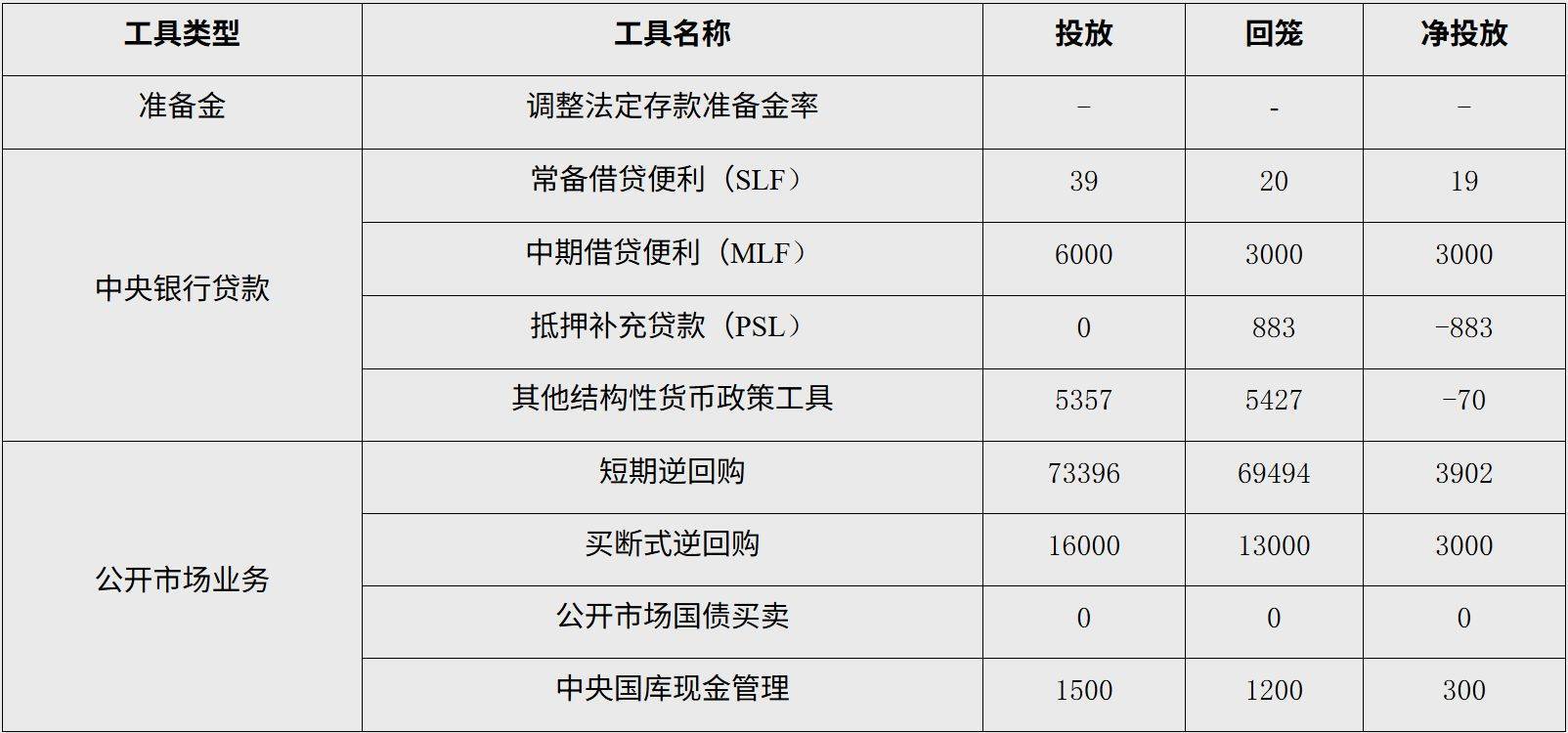
Core Viewpoint - The People's Bank of China (PBOC) has significantly increased liquidity net injection in September, amounting to 926.8 billion yuan, indicating a potential for further monetary easing in the fourth quarter, including possible reserve requirement ratio (RRR) cuts and interest rate reductions [1][4]. Group 1: Monetary Policy Tools - In September, the PBOC's liquidity injection included 19 million yuan from the Standing Lending Facility (SLF), 300 billion yuan from the Medium-term Lending Facility (MLF), and 3.9 trillion yuan from short-term reverse repos, while there was no activity in government bond transactions [3][4]. - The MLF and reverse repos can serve as substitutes for government bond transactions, reducing the necessity for the PBOC to inject liquidity through bond purchases [3][4]. - The PBOC's toolbox remains rich, with significant room for both quantity-based tools like RRR cuts and price-based tools like interest rate cuts [3][4]. Group 2: Economic Context and Future Outlook - The current macroeconomic environment is characterized by weak recovery, necessitating a continuation of a moderately loose monetary policy to address external shocks and domestic demand deficiencies [4][9]. - The introduction of 500 billion yuan in new policy financial tools is expected to be a crucial pathway for stimulating investment, with a projected leverage effect that could lead to an additional investment scale of approximately 1 trillion to 1.7 trillion yuan [4][7]. - The PBOC's approach to government bond transactions differs fundamentally from quantitative easing (QE) practices in developed economies, focusing on liquidity management rather than a large-scale, one-sided purchase of bonds [6][7]. Group 3: Market Reactions and Indicators - The market liquidity remains ample, with funding rates stabilizing around policy rates, and the PBOC is expected to maintain a balance between financial stability and economic development [3][8]. - Observations of market interest rates should focus on the weighted average of key rates rather than individual transaction rates, as fiscal factors can influence liquidity conditions [8][9]. - The anticipated gradual recovery of prices will require coordinated efforts across various sectors, with expectations for the 10-year government bond yield to trend down to around 1.6% amid ongoing economic adjustments [9].

陶冬:高市受挫,但机会仍在
Di Yi Cai Jing· 2025-10-13 03:30
Group 1 - The article discusses the political turmoil in Japan following the election of high-profile politician Takashi Hayashi as the new leader of the ruling Liberal Democratic Party, which has implications for the stability of the government and potential coalition formations [1][2] - The potential paths for the future Japanese Prime Minister include forming a coalition with opposition parties or facing early elections, with the current low public support for the ruling party making early elections unlikely [2][3] - Hayashi's political strength is questioned due to her lack of a solid political base, despite having the support of influential party elders, which complicates her ability to form a stable government [2][3] Group 2 - The article highlights the significant rise in gold prices, surpassing $4000 per ounce, driven by investor anxiety over debt and the Federal Reserve's credit issues, with a notable increase of over 20% in the past two months [3][4] - Central banks have become major buyers of gold, indicating a lack of confidence in fiat currencies, contrasting with previous years when they sold off gold due to perceived lack of returns [4][5] - The article suggests that despite recent tightening of credit by central banks, the era of credit expansion is far from over, with ongoing deficit spending likely to keep gold prices rising in the long term [5][6]
特朗普骂鲍威尔 “白痴”!选美联储新主席,不问负债表紧盯降息
Sou Hu Cai Jing· 2025-10-12 09:20
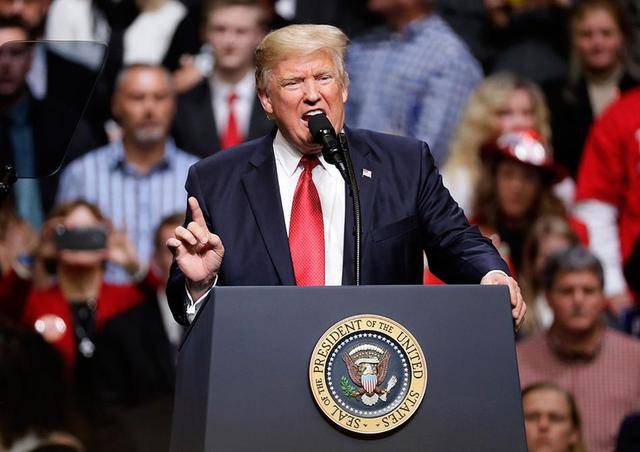
Core Viewpoint - The article discusses former President Trump's criticism of Federal Reserve Chairman Jerome Powell and his push for a new chairman who will lower interest rates to 1%, highlighting the tension between political influence and the independence of the Federal Reserve [1][11]. Group 1: Trump's Influence on the Federal Reserve - Trump has openly criticized Powell, calling him an "idiot" for not lowering interest rates from 4%-4.25% to his desired 1% [1]. - The selection of a new chairman is driven by Trump's desire for someone who will comply with his demand for lower interest rates, rather than focusing on economic qualifications [1][11]. - The independence of the Federal Reserve is at risk due to Trump's interference and the pressure he places on the selection process [1][11]. Group 2: Selection Process for New Chairman - The selection process involves discussions with 11 candidates, where the primary question revolves around their willingness to reduce interest rates significantly [3]. - Candidates are also questioned about their approach to handling U.S. Treasury bonds purchased during previous financial crises [3]. - The selection is complicated by the need to find a candidate who aligns with both Trump's desire for lower rates and the criticism of the Federal Reserve's past policies [5][7]. Group 3: Economic Implications - Trump's insistence on lowering interest rates is aimed at improving economic data for political gain, disregarding potential long-term consequences [7][12]. - The article suggests that while lower interest rates may benefit wealthier individuals through asset appreciation, they could exacerbate difficulties for lower-income individuals due to rising inflation [12]. - The credibility of the Federal Reserve may suffer as a result of this political maneuvering, raising concerns about its future effectiveness [12].
美国疫情严重时,还到处暴乱打砸烧,为什么当时道琼斯指数却不跌反涨?
Sou Hu Cai Jing· 2025-10-11 16:45
Group 1 - The core viewpoint is that the recent rebound in the US stock market indicates a disconnection between market bottom and valuation bottom, signaling the end of panic-driven volatility [1] - After a panic-driven decline, the bubble in the US stock market has been largely deflated, bringing it closer to its true valuation, with the market previously dropping below 18,000 points and bubbles estimated to be over 35% at peak [1] - As long as the economic fundamentals do not suffer severe shocks, a rebound in the US stock market is highly likely [1] Group 2 - The Federal Reserve's extensive stimulus plans have contributed to the rebound in the US stock market, with interest rates lowered to 0 and a $700 billion quantitative easing program initiated [3] - Although the loose monetary policy has had little impact on the economy in the face of the pandemic, the release of liquidity has clearly aided the stock market's recovery [3] - The bottom of the capital market and the valuation bottom do not necessarily align, making the rebound in the US stock market under strong stimulus measures a normal occurrence, though there remains a risk of continued volatility due to potential economic downturns [3]
当美联储遇上量化交易:一场不对称战争
Sou Hu Cai Jing· 2025-10-11 10:08
Core Insights - The recent list of candidates for the Federal Reserve Chair reveals complex implications for global monetary policy, with potential shifts in liquidity management and market dynamics [2][7]. Group 1: Federal Reserve Candidates - Current Vice Chair Bowman represents policy continuity, while Waller is a traditional monetary policy expert, and Reed from BlackRock carries Wall Street influence [2]. - The nomination of economic advisor Hassett indicates unprecedented political influence over the Federal Reserve [2][7]. - Historical transitions in Federal Reserve leadership have consistently led to significant changes in monetary policy, highlighting the importance of candidate perspectives on quantitative easing [7]. Group 2: Market Dynamics - The current market rally is primarily liquidity-driven, with a significant disparity between index performance and individual stock movements, leading to a phenomenon termed "double slap" market [2][3]. - Over 40% of stocks have underperformed the index despite the Shanghai Composite Index rising by over 700 points since April 2025, indicating a disconnect between broader market trends and individual stock performance [2][3]. - Institutional investment patterns reveal that while some stocks show strong rebounds, the absence of institutional support can lead to a lack of sustained momentum [5]. Group 3: Investment Strategies - Investors are advised to focus on data-driven analysis rather than traditional technical indicators, as the market operates on complex liquidity dynamics [7][8]. - Establishing a robust data radar to track capital flows is essential for navigating market noise and identifying genuine trends [7]. - Acknowledging the critical role of liquidity in both U.S. and domestic markets is vital for investment decision-making, as liquidity ultimately dictates market movements [7][8].
美联储主席遴选进入关键阶段 五人短名单进入最终评估阶段(附候选人观点)
Sou Hu Cai Jing· 2025-10-11 02:28
Core Viewpoint - The U.S. Treasury Secretary has narrowed down the list of candidates for the Federal Reserve Chair from 11 to 5, with the final selection expected to be nominated by President Trump as early as January 2026 [1][3]. Candidate Profiles - **Michelle Bowman**: Current Vice Chair for Supervision at the Federal Reserve, familiar with regulatory affairs [2]. - **Christopher Waller**: Current Fed Governor, known for hawkish monetary policy views and strong academic background [2]. - **Kevin Hassett**: Director of the National Economic Council, former White House economic advisor with a Republican background [2]. - **Kevin Warsh**: Former Fed Governor (2006-2011), criticized quantitative easing, previously an executive at Morgan Stanley [2]. - **Rick Rieder**: Chief Investment Officer of Fixed Income at BlackRock, a Wall Street veteran with significant market influence but no prior Fed experience [2]. Selection Process - Secretary Becerra will lead a new round of interviews for the five candidates, with the process expected to conclude after Thanksgiving due to upcoming international engagements [3]. - A streamlined recommendation list will be submitted to President Trump after the interviews, with the final decision resting with him [3]. Candidate Standards - Becerra prefers candidates with experience in economics, monetary policy, banking regulation, and management, who are open to new ideas regarding Fed operations and monetary policy [4]. - No candidate currently stands out as a clear favorite, but Rieder has made a strong impression due to his extensive experience in fixed income markets [4]. Candidate Views on Monetary Policy - **Michelle Bowman**: Advocates for a proactive monetary policy approach, suggesting that the Fed should act decisively in response to economic conditions, with a preference for a gradual adjustment of interest rates [5][6]. - **Christopher Waller**: Supports interest rate cuts but emphasizes caution in policy actions due to mixed economic signals [8][9]. - **Kevin Hassett**: Stresses the importance of Fed independence from political influence while supporting a comprehensive review of the Fed's mission and policies [10][11]. - **Kevin Warsh**: Calls for a complete overhaul of the Fed to restore its credibility, criticizing current leadership for failing to maintain appropriate interest rates [13][14]. - **Rick Rieder**: Believes there is room for about 100 basis points of rate cuts and questions the diminishing impact of tariffs on inflation [17][18].

美联储官员释放谨慎宽松信号 主席候选名单缩减至五人
智通财经网· 2025-10-10 23:33
财政部高级官员透露,最终入围的五人包括:现任美联储监管副主席米歇尔·鲍曼、理事克里斯托弗·沃 勒、白宫国家经济委员会主任凯文·哈西特、前美联储理事凯文·沃什,以及贝莱德全球固定收益首席投 资官里克·里德。其中,里德虽未在美联储任职,却以对债券市场的深刻见解和媒体曝光度赢得青睐。 贝森特近期公开批评美联储"臃肿低效",主张重新评估其政策框架与职能边界。他希望新任主席能推动 央行"瘦身",减少对量化宽松等非常规工具的依赖。 据财政部消息人士透露,第二轮面试预计在感恩节后展开,最终提名最早可能于2026年1月提交。现任 主席鲍威尔的任期将于明年5月到期。 在9月的政策会议上,美联储自2024年12月以来首次下调基准利率25个基点,并在点阵图中暗示年内或 再降两次。沃勒表示,他对这一节奏感到满意,但反对更大幅度的调整。他的新任同僚、由特朗普总统 任命的理事米兰,则主张一次性降息50个基点,并希望到年底累计降息1.25个百分点。 据悉,沃勒目前也是五位美联储主席候选人之一。美国财政部长贝森特近期与沃勒进行了长时间会面, 并将在完成第二轮面试后向特朗普递交最终候选名单。贝森特在挑选人选时,强调候选人需对货币政策 保持开放 ...
五选一!美联储主席人选终极名单曝光,一匹“黑马”跑出
Jin Shi Shu Ju· 2025-10-10 12:14
Core Viewpoint - The U.S. Treasury Secretary Mnuchin has narrowed down the list of candidates for the Federal Reserve Chair from 11 to 5, with a potential nomination as early as January, although it may not necessarily be for the Chair position [1] Candidate Selection Process - The remaining candidates include current Fed officials Vice Chair for Supervision Randal Quarles and Governor Christopher Waller, National Economic Council Director Kevin Hassett, former Fed Governor Kevin Warsh, and BlackRock's Chief Investment Officer for Fixed Income Rick Rieder [1] - The Treasury plans to conduct another round of interviews with these five candidates in the coming weeks and months, led by Mnuchin, along with two senior Treasury officials and two senior White House officials [1] - The interview process may extend beyond Thanksgiving due to Mnuchin's commitments to the World Bank/IMF meetings and a subsequent trip to Asia with President Trump [1] Importance of the Nomination - The new Fed Chair will be crucial as the current Chair Jerome Powell's term ends in May, but he still has two years left on his Board seat [1] - The seat previously held by former Fed Governor Kugar is currently occupied by Milan, which will end in January, allowing the new Chair to be nominated to a full 14-year term [1] Selection Criteria - Mnuchin is looking for a candidate who is open to new ideas regarding the Fed's operations and monetary policy, with experience in economics, monetary policy, bank regulation, and management [2] Criticism of the Federal Reserve - Mnuchin has recently criticized the Fed, calling for a review of its policies, structure, and mission, indicating a preference for a candidate willing to reduce the Fed's size and limit the use of certain tools, particularly quantitative easing [3] - Currently, no candidate is in the lead, but Rieder has made a strong impression on Mnuchin, being a well-known figure on Wall Street with extensive analysis of fixed income markets and the Fed [3] - Rieder is noted as the only candidate among the five who has never worked at the Fed, which could be seen as a positive factor [3]
为炒房减税1.7万亿,2年降息13次,曾全民炒房的美国为啥没了动静
Sou Hu Cai Jing· 2025-10-10 09:30
Core Viewpoint - The recent bankruptcy of Tricolor, a subprime auto loan company, has raised alarms on Wall Street, reminiscent of the subprime mortgage crisis from 15 years ago [1][4][38]. Group 1: Company Impact - Tricolor's bankruptcy affects approximately 25,000 creditors and is expected to result in losses of at least $200 million for major investment banks like JPMorgan and Barclays [3][44]. - The company had liabilities estimated between $1 billion and $10 billion and was involved in questionable practices, such as applying for multiple loans on the same asset, prompting a federal investigation [41][51]. Group 2: Industry Context - The current auto loan market is significantly smaller than the mortgage market, being only one-eighth the size, and has not experienced the same level of high-leverage speculation as seen in the past [45][47]. - However, there are concerns about the growing demand for subprime auto loans, leading some lenders to adopt lax lending standards, which could indicate that Tricolor's bankruptcy is just the tip of the iceberg [49][51]. Group 3: Economic Implications - The situation is compounded by the tightening of immigration policies under the Trump administration, which has negatively impacted Tricolor's primary customer base of undocumented immigrants, thereby increasing business risks [51][53]. - The Federal Reserve's current monetary policy, which includes lowering interest rates amidst high inflation, mirrors the conditions leading up to the 2007 crisis, raising concerns about potential future financial instability [53][55].



和中财办原副主任尹艳林聊了两小时:反内卷、房价、股市、“十五五”和改革
Jing Ji Guan Cha Wang· 2025-10-10 08:58
Economic Policy and Market Stability - The core issue in the current Chinese economy is insufficient demand, necessitating new incremental policies to stimulate growth [3][16] - Real estate should be a breakthrough point for these policies, as it has a stronger driving effect compared to the capital market [3][26] - The "9.24" policy aimed to stabilize the real estate market, but its effects are becoming localized rather than comprehensive [18][26] Reform Initiatives - Three key areas for reform include income distribution reform, fiscal and tax system reform, and investment system reform [5][44] - Income distribution reform should focus on adjusting personal income tax rates and lowering social security contribution rates to increase disposable income [35][36] - The fiscal system needs to clarify the relationship between central and local governments to enhance local financial autonomy [44] Real Estate Market Dynamics - The real estate market is transitioning from a phase of "demand overheating" to "demand insufficiency," requiring a shift in policy tools from suppressing price increases to supporting price growth [19][20] - Current housing policies are more focused on restrictions rather than support, which could reinforce negative price expectations [20][27] - The market's financial attributes should not be overlooked, as real estate remains a crucial asset for households [21][22] Investment and Consumption - A new round of large-scale investment plans is necessary to stimulate the economy, particularly in real estate, which can drive both investment and consumption [17][26] - Urbanization is still a significant driver of economic growth, with potential for further development in cities [28][29] - The relationship between investment and consumption needs to be improved, with a focus on stabilizing the real estate market to enhance consumer confidence [17][26] Market Competition and "Involution" - The concept of "involution" is being misapplied across various industries, and not all sectors require a response to it [6][7] - Legal frameworks should guide market competition to avoid administrative overreach that could stifle innovation and competition [9][10] - The focus should be on maintaining healthy market competition rather than imposing blanket restrictions that could harm smaller enterprises [9][10] Future Economic Growth - The potential for GDP growth during the "15th Five-Year Plan" period is projected to exceed 5% if demand issues are addressed [30][31] - The upcoming period is seen as critical for foundational development and comprehensive efforts to achieve modernization goals [31][44]