
物理AI

Search documents
小鹏汽车─W(09868.HK):强势产品周期开启战略转型“物理AI”公司
Ge Long Hui· 2026-01-06 20:32
Group 1 - The company achieved a record high in total deliveries and gross margin in Q3 2025, with total revenue reaching 20.38 billion yuan, a year-on-year increase of 101.8%, and a significant reduction in net loss to 380 million yuan. Total delivery volume reached 116,007 units, a year-on-year increase of 149.3%, and the gross margin exceeded 20% for the first time, reaching 20.1% [1] - The company has launched a "dual power" strategy to address user range anxiety, introducing the first range-extended model, the X9 EREV, which features a 63.3 kWh battery and a conversion rate exceeding 3.6 kWh/L, achieving a pure electric range of 452 km. Additional range-extended versions of key models such as G6, G7, and P7i are expected to be launched in Q1 2026, along with four new models including two SUVs on the MONA platform [1] - The company is expected to enter a strong product cycle with the launch of range-extended and new models, leading to a continuous increase in vehicle sales [1] Group 2 - The company is transitioning to a "physical AI" company, showcasing its commitment and specific path at the 2025 Technology Day. The core technology, VLA 2.0, is a second-generation visual-language-action model that enhances reasoning efficiency by 12 times and improves average takeover mileage in complex scenarios by 13 times. This model is planned for full deployment on Ultra models in Q1 2026 and is expected to extend to robotics and other embodied intelligence fields [2] - The company announced the launch of China's first fully self-developed front-mounted mass-produced Robotaxi, with plans to introduce three models in 2026 and begin trial operations in H2 2026. Despite a gap in operational experience compared to industry leaders, the innovative "fully shared + private" business model may allow the company to secure a position in the billion-level mobility market [2] - The humanoid robot IRON is set to achieve mass production by the end of 2026, with initial trials in commercial scenarios such as guiding and shopping. The AI technology developed for the humanoid robot will also benefit the autonomous driving sector, creating a positive feedback loop [2] Group 3 - Revenue forecasts for the company from 2025 to 2027 are projected to be 75.8 billion, 132.1 billion, and 166.3 billion yuan, with year-on-year growth rates of 85.4%, 74.3%, and 25.9%, respectively. The net profit attributable to the parent company is expected to be -1.55 billion, 2 billion, and 6.13 billion yuan [3]
CES见证从算力奔向应用 英伟达:AI进入兑现阶段
Xin Lang Cai Jing· 2026-01-06 17:29
Core Insights - The 2026 Consumer Electronics Show (CES) is a significant market sentiment catalyst, especially for the tech sector, with a focus on AI commercialization and sustainable revenue models [1] - NVIDIA's presence at CES is not just about new product launches but emphasizes the pathways for AI business models to materialize [1] Group 1: AI Commercialization - The demand for AI chips remains strong, but investor interest is shifting from concerns about computing power shortages to the timing and methods of AI revenue generation [1] - Companies are increasingly looking for AI systems that are deployable, controllable, and sustainable rather than just the most powerful models [2] - Lenovo and NVIDIA's collaboration on hybrid AI solutions is a key observation point at CES, focusing on providing a complete package for enterprises [2][3] Group 2: NVIDIA's Business Model Transition - NVIDIA's strategy is evolving from merely selling GPUs to offering comprehensive solutions that include hardware, software, and support, which could stabilize revenue streams [3] - The focus for investors is shifting towards the clarity of product forms, real application scenarios, and transparent pricing models [3] - If these aspects are addressed at CES, NVIDIA's data center business may transition from being driven by computing supply to being driven by enterprise AI applications, potentially leading to a revaluation of its business [3] Group 3: RTX Series Evolution - The RTX series, traditionally tied to gaming cycles, is expected to evolve as AI capabilities become standard features in new PCs, shifting demand from gaming to productivity [4][5] - If RTX becomes a default capability in PCs, it could lead to structural changes in sales patterns and valuation for NVIDIA [6] Group 4: Physical AI and Omniverse - NVIDIA's physical AI initiatives, while significant, have been slow to commercialize, with potential applications in robotics, autonomous vehicles, and industrial automation [7] - The launch of the Alpamayo platform at CES aims to enhance the reasoning capabilities of autonomous vehicles, marking a step towards practical applications of physical AI [7][8] - Investors are looking for real-world use cases and clear business models for physical AI, which could signal a shift towards scalable commercial applications [8][9] Group 5: Overall Market Sentiment - The overarching theme at CES 2026 is the transition from discussions about AI capabilities to embedding AI into products, processes, and revenue models [9] - The focus will likely shift from whether demand is overheated to which business lines can deliver sustainable results post-CES [9]

黄仁勋在2026CES上的发言,创新和增量在哪里?|0106
Hu Xiu· 2026-01-06 16:24
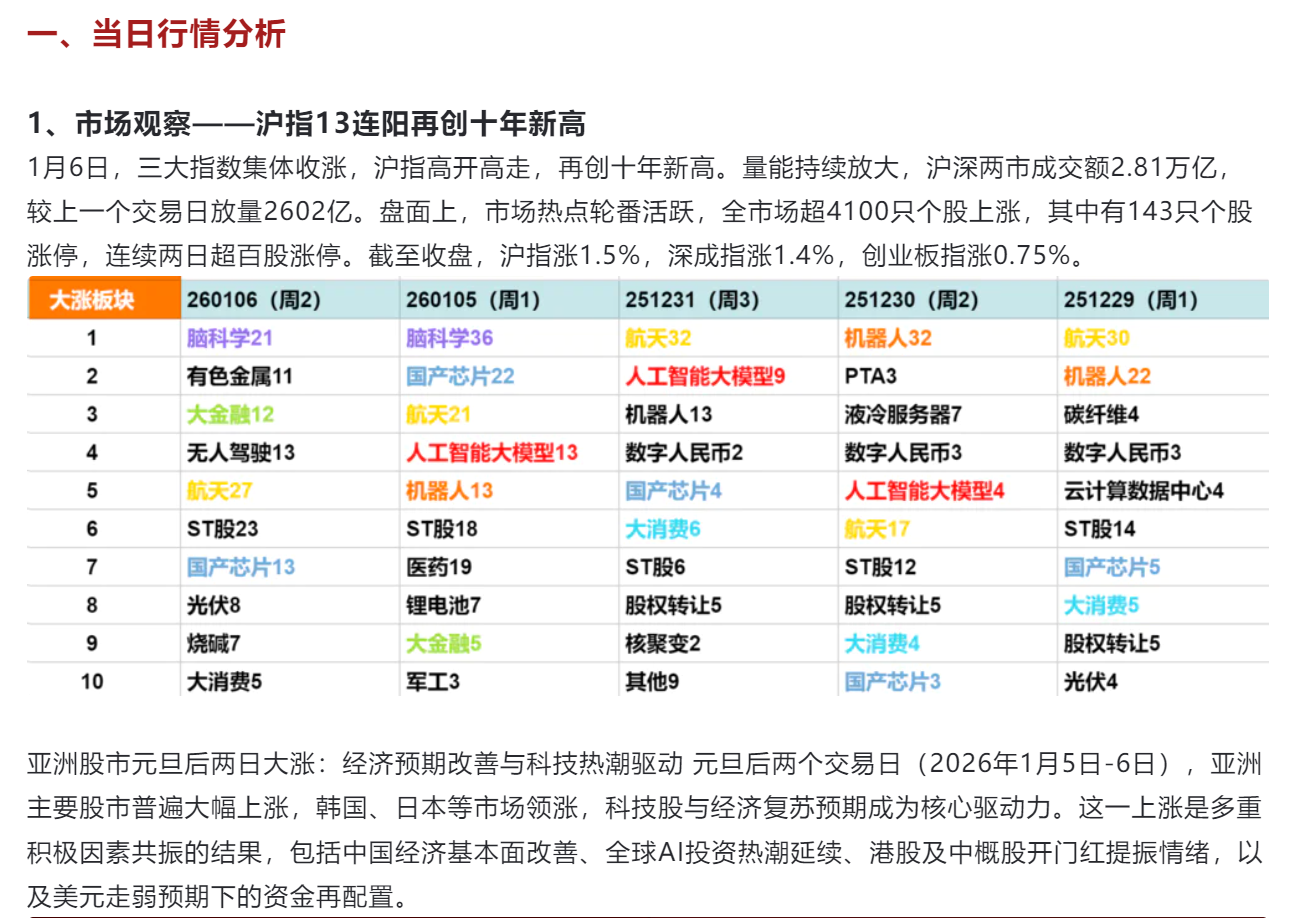
Market Overview - The Shanghai Composite Index achieved a 13-day consecutive rise, reaching a ten-year high on January 6, with a closing increase of 1.5% [1] - The total trading volume in the Shanghai and Shenzhen markets was 260.2 billion, indicating a significant increase in market activity [1] - Over 4,100 stocks in the market rose, with more than 100 stocks hitting the daily limit for two consecutive days [1] Sector Performance - Major sectors that saw significant gains included brain science, non-ferrous metals, and large financial institutions, with respective increases of 21, 11, and 12 stocks [2] - The technology sector, particularly AI and robotics, continued to drive market enthusiasm, with notable performances from companies like Samsung Electronics and TSMC [4][5] Global Market Trends - Asian stock markets experienced substantial gains post-New Year, driven by improved economic expectations and a surge in technology stocks [2] - The KOSPI index in South Korea rose by 5.65%, while Japan's Nikkei 225 increased by 4.33%, reflecting a broader regional trend of recovery [5] Investment Shifts - A significant amount of fixed-term deposits, approximately 32 trillion yuan, is set to mature in 2026, leading to a "deposit migration" phenomenon as investors seek higher returns [6] - Insurance products, particularly dividend insurance, are becoming attractive alternatives for low-risk investors, contributing to a surge in the insurance sector's stock prices [6] Policy Developments - A new policy encouraging large state-owned insurance companies to increase their investments in A-shares is expected to inject thousands of billions into the stock market annually [7] - This policy aims to channel a portion of new insurance premiums into the stock market, providing a crucial source of incremental capital [7] Technological Innovations - At CES 2026, advancements in AI and robotics were highlighted, including the introduction of a household humanoid robot named Neo, which signifies a new era in home automation [8] - The launch of a mass-producible all-solid-state battery by Donut Lab was announced, showcasing significant improvements in energy density and charging speed compared to traditional lithium-ion batteries [10] AI Developments - NVIDIA's CEO Huang Renxun announced breakthroughs in AI technology, emphasizing the transition from digital intelligence to physical AI, supported by new hardware architectures and memory storage solutions [11][12] - The introduction of the Rubin GPU, which significantly enhances processing capabilities and reduces inference costs, marks a pivotal advancement in AI computing [13][20] Industry Applications - The emergence of GPU-native databases is transforming data processing in AI applications, allowing for more efficient handling of high-concurrency requests [26][28] - Companies like Demingli are focusing on full-stack self-research capabilities, enhancing their competitive edge in the storage market through proprietary technology [30][33] Aerospace and Navigation - The company Hezhong Shizhuang is actively participating in the commercial aerospace sector, leveraging its high-precision positioning technology for rocket recovery and satellite applications [34][36] - Their self-developed chips and systems are crucial for providing real-time precise positioning in complex environments, enhancing the reliability of aerospace operations [36]

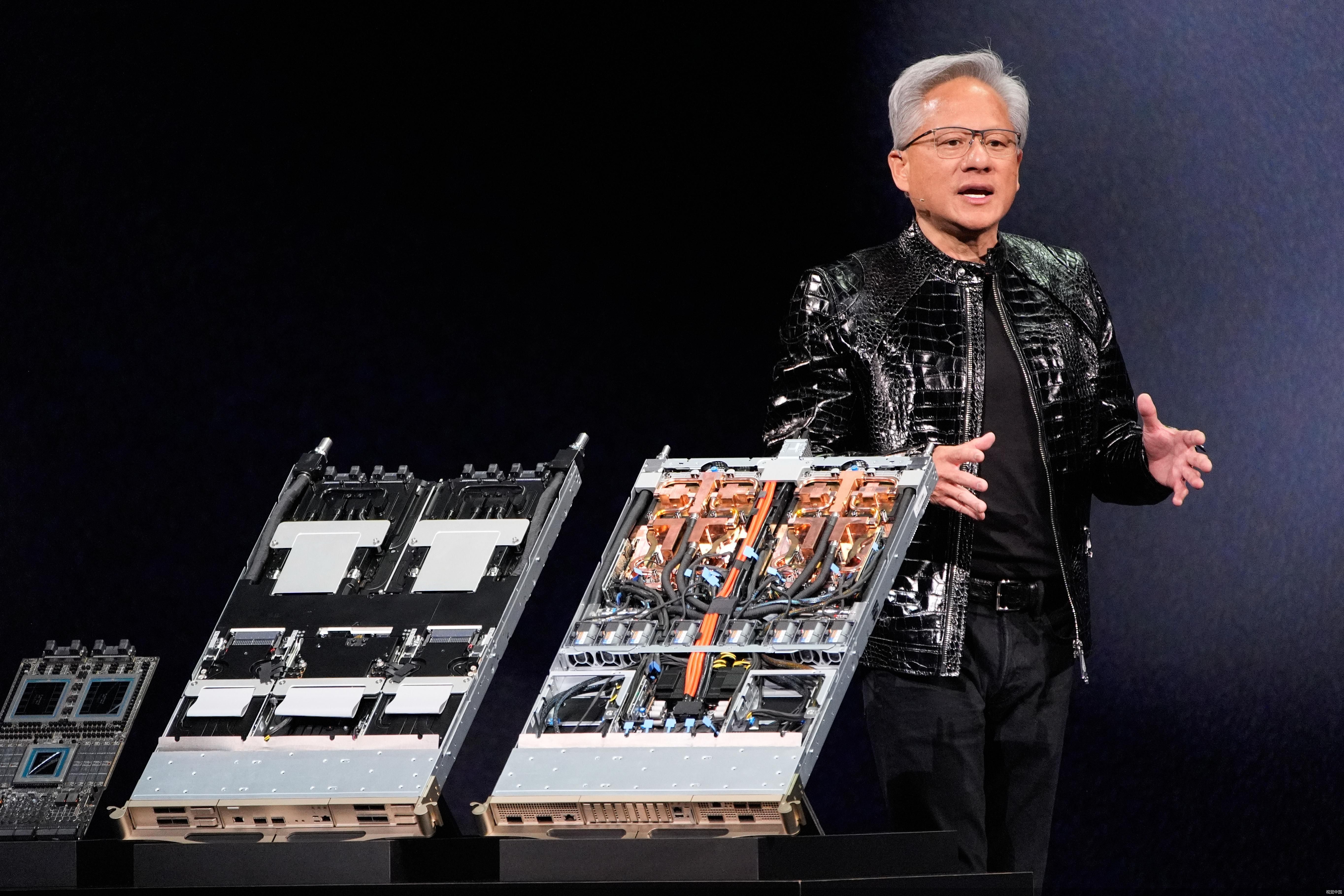
物理AI迎“ChatGPT时刻”!黄仁勋开源“超级大脑”扩大机器人朋友圈
Jin Rong Jie· 2026-01-06 14:40
Core Insights - The "ChatGPT moment" for Physical AI has arrived, marking a significant shift of AI technology from virtual screens to the physical world, leading to a transformative phase in the robotics industry [1][2] Group 1: Physical AI Development - Huang emphasized the four stages of AI evolution: Perception, Generation, Agentic, and Physical AI, with the latter enabling models to understand real-world physical laws [2] - The introduction of three core open-source models aims to lower the development barrier for Physical AI, creating a closed-loop technology from environmental cognition to action execution [2][4] - The NVIDIA Cosmos Transfer 2.5 and Cosmos Predict 2.5 models can generate synthetic data that adheres to physical laws, providing a safe virtual testing environment for developers [2] Group 2: Cognitive Reasoning and Robotics - The NVIDIA Cosmos Reason 2 visual language model enhances machines' human-like visual reasoning and decision-making capabilities [3] - The NVIDIA Isaac GR00T N1.6 model achieves a 40% increase in task success rates and reduces training time from three months to 36 hours, improving data efficiency by 60 times [3] Group 3: Open-source Ecosystem - NVIDIA's collaboration with Hugging Face integrates GR00T models and Isaac Lab-Arena into the LeRobot open-source library, connecting 2 million NVIDIA developers with 13 million Hugging Face AI builders [5] - NVIDIA has contributed 650 open-source models and 250 datasets to Hugging Face, leading in resource download volume within the open-source community [5] Group 4: Hardware Upgrades - The new Jetson T4000 module, based on the Blackwell architecture, offers a fourfold performance increase over its predecessor, while the Jetson Thor robot computer is becoming a focal point for industry collaboration [6] - The IGX Thor platform is set to launch, catering to various computational needs in industrial edge scenarios [6] Group 5: Industry Collaboration and Applications - A diverse range of robots, including humanoid, wheeled, and surgical assistance robots, showcased the cross-domain adaptability of Physical AI technology [7] - Major industry players like Franka Robotics and Mercedes-Benz are leveraging NVIDIA's technology to enhance robot training and develop AI-driven products for smart transportation [7]

CES 2026开幕前夕 芯片巨头密集上新品、提出千倍AI性能提升目标
Zheng Quan Shi Bao Wang· 2026-01-06 14:36
Group 1: Nvidia's Innovations - Nvidia launched the Rubin platform, consisting of six new chips, focusing on physical AI and large-scale AI factory construction, targeting autonomous driving and robotics [1][2] - The Rubin platform offers 50 Petaflops of NVFP4 inference performance, with a 5x increase in inference performance and a 3.5x increase in training performance compared to the previous Blackwell platform [2] - The cost of generating tokens on the Rubin platform is reduced to about one-tenth of the previous generation, enhancing efficiency [2] Group 2: AMD's AI Performance Goals - AMD's CEO, Dr. Lisa Su, announced the new MI455X GPU, which offers a 10x performance improvement over the MI355X, with a target of 1000x AI performance increase over four years [4] - AMD predicts global computing infrastructure demand will grow from 1 ZettaFLOPS in 2022 to over 100 ZettaFLOPS by 2025, with future capabilities reaching YottaFLOPS levels [4] - The Ryzen AI 400 series processors were introduced, featuring up to 60 TOPS of NPU performance, emphasizing AI as a default capability in PCs [4] Group 3: Intel's New Offerings - Intel introduced the Core Ultra 3 series processors, the first consumer-grade products based on Intel's 18A process, featuring up to 16 CPU cores and 50 TOPS of NPU performance [5] - The flagship model of the Core Ultra 3 series offers a 60% improvement in multi-threaded performance [5] - Initial consumer laptops with the Core Ultra 3 processors will be available for pre-order starting January 6, 2026, with shipments expected in the second quarter of 2026 [5]
英伟达CES亮出新牌
Bei Jing Shang Bao· 2026-01-06 14:33
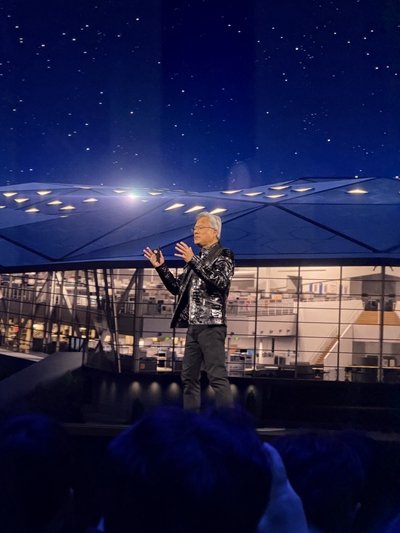
Core Insights - The 2026 CES marks a shift from traditional hardware competition to a focus on "AI embodiment," with NVIDIA unveiling its next-generation AI chip platform "Rubin" ahead of schedule [1][5][8] - NVIDIA's CEO Jensen Huang emphasized the urgent need for AI computing power, stating that Rubin represents a significant advancement in AI training and inference capabilities [5][6] Group 1: NVIDIA's Rubin Platform - The Rubin platform integrates six chips, including the NVIDIA Vera CPU and Rubin GPU, designed for enhanced performance across computing, networking, storage, and security [5][6] - Compared to the previous Blackwell architecture, Rubin accelerates AI training performance by 3.5 times and operational performance by 5 times, while reducing inference token costs by up to 10 times [6][7] - Major cloud providers and model companies, including AWS, Microsoft, and Google, are among the first adopters of the Rubin platform [7] Group 2: AI Evolution and Physical AI - Huang outlined a four-step evolution of AI: Perception, Generation, Agentic, and Physical AI, emphasizing the need for AI to understand physical world principles [9][10] - The focus on Physical AI aims to extend AI capabilities from data centers to real-world applications, such as robotics and autonomous driving [9][11] - The CES event highlighted that AI is no longer just about model parameters but is now integrated into hardware and real-world scenarios [10][11] Group 3: Future Trends in AI - The industry is expected to see trends such as model miniaturization, multi-modal interactions, and subscription-based AI services, indicating a shift in how AI will be deployed and monetized [11]
算力到应用的转折点?英伟达:AI进入兑现阶段
Di Yi Cai Jing· 2026-01-06 13:21
Core Viewpoint - The CES 2026 is a pivotal moment for Nvidia, marking the potential real-world application of enterprise AI, shifting focus from computational power to sustainable revenue generation from AI applications [1][12]. Group 1: Enterprise AI and Business Models - The demand for AI chips remains strong, but investor interest is shifting towards how AI can translate into sustainable revenue rather than just computational power availability [1]. - Companies are increasingly looking for AI systems that are deployable, controllable, and sustainable, rather than just the most powerful AI models [4]. - Nvidia's collaboration with Lenovo to showcase enterprise AI solutions at CES is seen as a significant development, focusing on hybrid AI that combines hardware and software for immediate deployment [4][5]. Group 2: Product and Revenue Clarity - Investors are now more interested in tangible product forms, real application scenarios, and clear pricing models rather than conceptual demonstrations [5]. - If Nvidia can provide clear answers regarding product forms and customer applications at CES, it may transition its data center business from being driven by computational supply to being driven by enterprise AI applications [5]. Group 3: RTX Series and Market Dynamics - The RTX series, traditionally tied to gaming cycles, is evolving as AI applications gain traction, potentially becoming a standard feature in new PCs rather than just a gaming upgrade [6][8]. - The shift in RTX's role could lead to structural changes in its sales patterns, supporting Nvidia's revenue and valuation in the long term [8]. Group 4: Physical AI and Commercialization - Nvidia's focus on Physical AI, which aims to enable AI systems to interact with the real world, is seen as a significant but slow-developing business line [9]. - The introduction of the Alpamayo platform for autonomous vehicles at CES indicates a move towards practical applications of Physical AI, with a focus on real-world reasoning capabilities [9][10]. - Investors are looking for concrete use cases and clear business models for Physical AI, which could signal a shift from a technology platform to scalable commercial applications [10][12].
AI的新纪元是与物理世界的结合,2025年度回顾
3 6 Ke· 2026-01-06 12:42
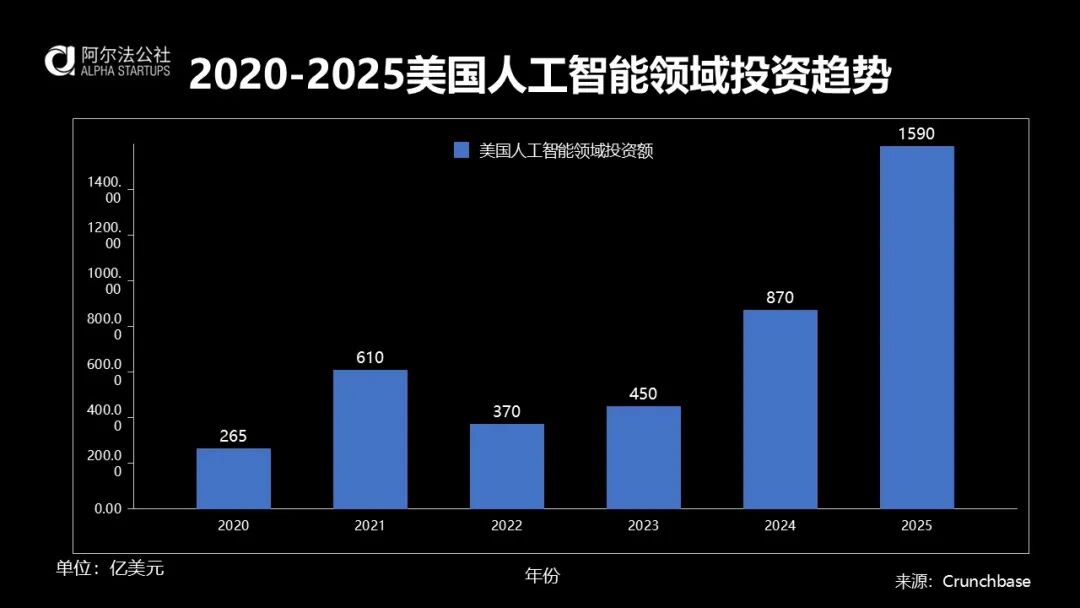
Core Insights - The current AI products are limited to screens, and there is a push towards physical AI that interacts directly with the physical world, moving beyond screen dependency [1] - The investment landscape in the AI sector is rapidly evolving, with significant growth in physical AI, particularly in the areas of robotics and wearable devices [2][3] - The digital economy contributes only 15% to global GDP, indicating a vast potential for AI applications in physical industries [3] Investment Trends - In 2024, the total venture capital investment in AI in the US reached $87 billion, and by December 15, 2025, it is projected to reach $159 billion [2] - The physical AI sector saw notable investments, with robotics startups raising $6.4 billion in 2024 and over $10.3 billion in 2025, marking a 60.9% year-over-year increase [2] - Major funding rounds include Figure's $1 billion financing, FieldAI's $314 million, and Oura Ring's $900 million, with valuations reaching $39 billion, $2 billion, and $11 billion respectively [2] Company Highlights - **Figure**: Raised $1 billion in 2025, achieving a post-money valuation of $39 billion, focusing on a vertically integrated strategy for robotics [4][6] - **Physical Intelligence**: Secured $600 million in B-round funding, with a valuation of $5.6 billion, and released a foundational model enabling robots to operate in new environments without prior training [7] - **Skild AI**: Raised $135 million in B-round funding, with a valuation of $4.4 billion, focusing on developing a universal foundational model for robotics [10][11] - **Oura**: Dominates the smart ring market with over 80% share, having sold 5.5 million units and achieving a valuation of $11 billion [24][25] Systemic Gaps in Physical AI - There is a lack of native operating systems for smart wearable devices, which hinders the development of AI-native hardware [45] - The industry faces a shortage of raw data necessary for developing robust AI models, despite the initial validation of scaling laws in embodied intelligence [45] - The need for breakthroughs in world models is critical, as existing data on human actions is insufficient for training comprehensive models [45] Advantages for Chinese AI Hardware Startups - Chinese AI hardware entrepreneurs benefit from a strong manufacturing ecosystem, large market scale, and supportive government policies that prioritize embodied AI as a strategic focus [46]
躁动变暴动
Datayes· 2026-01-06 11:39
Market Overview - The A-share market has shown strong performance with over 100 stocks hitting the daily limit up for two consecutive trading days, indicating a robust bullish sentiment [1] - On January 6, the Shanghai Composite Index rose by 1.50%, the Shenzhen Component by 1.40%, and the ChiNext Index by 0.75%, with total market turnover reaching 28,325.64 billion yuan, an increase of 2,650.79 billion yuan from the previous day [13] Tesla Financing Options - Tesla announced a new financing plan for its Model 3/Y/Y L vehicles, offering a 7-year low-interest option with down payments starting at 79,900 yuan and monthly payments as low as 1,918 yuan for Model 3/Y [3] Sector Performance - The non-bank financial sector saw the largest net inflow of funds, followed by electronics, non-ferrous metals, defense, and computer sectors [27] - The brain-computer interface sector is gaining traction, with significant investments, including a 2 billion yuan financing round for Strong Brain Technology, making it the second-largest financing in the field after Neuralink [16] Price Trends - Prices for tungsten concentrate surged to 464,000 yuan per ton, while APT prices returned to 680,000 yuan per ton, and lithium carbonate prices increased by 7,900 yuan per ton to 132,250 yuan per ton [17] - The lithium battery copper foil market has seen price increases, indicating a positive shift in supply-demand dynamics [17] Regulatory Developments - The People's Bank of China is set to continue implementing a moderately loose monetary policy, utilizing various tools to maintain liquidity and support capital markets [12] Investment Insights - The current market sentiment reflects a "slow bull" trend, with low implied volatility suggesting that speculative funds have not yet entered the market in large numbers, indicating a stable upward trajectory [6] - However, there are concerns about potential overheating in the market, as the relative strength index (RSI) for the Shanghai Composite Index has entered the technical overbought zone [7] Notable Stocks - Stocks such as BOE Technology Group, TCL Technology, and Visionox are highlighted for their leadership in the LCD and OLED panel markets, with significant market capitalizations [19]

黄仁勋点赞三款中国大模型,英伟达押宝物理AI
Guan Cha Zhe Wang· 2026-01-06 11:22
Core Insights - The CES 2026 showcased NVIDIA's strategic focus on next-generation computing platforms and advancements in physical AI, marking the first time in five years that NVIDIA did not release a new GPU at the event [2][3]. Group 1: Open Source Ecosystem - NVIDIA's CEO highlighted the significant investment of approximately $10 trillion in computing resources over the past decade, emphasizing a shift in software paradigms rather than just hardware upgrades [3]. - The presentation acknowledged the rapid development of Chinese open-source models, specifically naming Kimi K2, DeepSeek V3.2, and Qwen, which are leading the open-source ecosystem alongside OpenAI's GPT-OSS [5]. - Despite being approximately six months behind the top models, the open-source models are expected to see new iterations every six months, attracting interest from startups, giants, and researchers alike [5]. Group 2: Next-Generation Computing Platform - NVIDIA introduced the Vera Rubin computing platform, designed to accelerate AI training speeds and facilitate the development of next-generation models [7]. - The platform features a complete redesign of six chips, including Vera CPU and Rubin GPU, with the Rubin GPU achieving a performance of 50 PFLOPS, five times that of its predecessor [7][8]. - The engineering design of Vera Rubin simplifies assembly, reducing the number of cables from 43 to just six liquid cooling pipes, allowing for quicker setup times [8]. Group 3: Advancements in Physical AI - NVIDIA's CEO announced the launch of the Alpamayo open-source AI model aimed at enhancing autonomous driving capabilities, addressing complex driving scenarios through a new reasoning model [10][11]. - The Alpamayo series incorporates a "thinking chain" reasoning model, improving decision-making processes in autonomous vehicles and enhancing user trust in the technology [11]. - The first vehicles utilizing NVIDIA's technology are expected to hit the roads in the U.S. in Q1, Europe in Q2, and Asia later in the year, with interest from companies like Jaguar Land Rover and Uber [11]. Group 4: Robotics Development - NVIDIA unveiled two new open-source models for robotics, NVIDIA Cosmos and GR00T, along with a performance evaluation tool, Isaac Lab-Arena, aimed at simplifying robot training processes [12]. - The collaboration with Hugging Face integrates NVIDIA's Isaac open-source models into the LeRobot project, accelerating the development of the open-source robotics community [12]. - Companies such as Boston Dynamics and Caterpillar are developing new robots and autonomous devices based on NVIDIA's technology, indicating a significant advancement in the robotics sector [13].
