AGI

Search documents
2025AI盘点:10大“暴论”
3 6 Ke· 2025-12-26 00:52
Group 1 - The concept of "Vibe Coding" has emerged, suggesting a new programming approach that emphasizes feeling and embracing exponential growth, leading to a broader trend of "Vibe Everything" in AI [2] - There is a divide in perception regarding "Vibe," with some viewing it as a refreshing product philosophy while others criticize it as a superficial trend that obscures the true essence of AI products [2] - The term "Vibe" reflects a strong narrative appeal, resonating with the desire for transformative change in the AI landscape, indicating its continued relevance in the future [2] Group 2 - The humanoid robot sector is experiencing a valuation surge despite discussions about a potential bubble, with significant capital inflow and a shift towards more conservative funding strategies among companies [6] - The focus on "scene" applications for humanoid robots has intensified, with education and performance being the most viable commercial scenarios, while the pursuit of commercial viability may not be the primary goal for the sector [6] Group 3 - The phrase "Prompt Engineering is Dead" has gained traction, suggesting a shift towards "Context Engineering," which encompasses a broader range of information and tools necessary for AI tasks [8][9] - Context Engineering is seen as a significant advancement, attracting investment and fostering the development of various AI tools, indicating a potential shift in the industry narrative [9] Group 4 - Huang Renxun's assertion that "China will win the AI race" highlights the competitive landscape between China and the U.S., emphasizing China's advantages in developer scale, market size, and infrastructure [12][13] - Huang's comments may also serve as a strategic move to influence U.S. policy regarding AI, aiming to maintain Nvidia's leadership position in the global market [12] Group 5 - Elon Musk and Satya Nadella predict the disappearance of traditional smartphones and apps, suggesting a transition to intelligent agents that could replace conventional software applications [15][16] - The emergence of new devices like the "Doubao phone" indicates a shift in how technology is being approached, with a focus on user interface and system control [16] Group 6 - Sam Altman's response to skepticism about OpenAI reflects a broader divide in opinions regarding the AI bubble, with concerns about the company's ability to deliver on its ambitious revenue projections [19][20] - OpenAI's projected revenue growth and the potential economic implications of AI's impact on employment and inflation are critical factors in assessing the sustainability of the AI market [21] Group 7 - The U.S. faces a potential electricity shortage that could impact AI infrastructure, with projections indicating a significant power gap by 2028 if supply does not keep pace with demand [23][24] - Major tech companies are exploring nuclear energy as a solution to their power needs, highlighting the intersection of AI development and energy infrastructure challenges [24] Group 8 - The debate surrounding the limitations of large language models (LLMs) continues, with experts arguing that scaling may not yield significant advancements and calling for a return to foundational research [27][28] - Despite criticisms, the push for larger models persists, indicating ongoing investment and interest in scaling within the AI community [28] Group 9 - The term "Slop" has been designated as the word of the year, representing the proliferation of low-quality AI-generated content, which poses challenges for content ecosystems [31][32] - The rise of AI-generated adult content is projected to grow significantly, raising questions about the implications for traditional content creation and quality standards [32]


保时捷中国回应“郑州中原保时捷中心疑似跑路”;深蓝董事长回应和小鹏对比丨汽车交通日报
创业邦· 2025-12-25 10:10
1.【保时捷中国回应"郑州中原保时捷中心疑似跑路":正与警方和相关部门在现场核查事实】针 对"郑州中原保时捷中心疑闭店'跑路'"一事,保时捷中国回应记者称,对于此次事件给各位车主及消 费者带来的困扰与担忧致以最诚挚的歉意,将积极推动事件妥善处理,将消费者合法权益放在首 位。"我们高度关注保时捷授权经销商郑州中原保时捷中心出现经营异常情况,目前与警方和相关部 门正在现场核查事实。"近日,多位网友反映,郑州中原保时捷中心"人去楼空",涉及金额从数万元 至数十万元不等。(财联社) 2.【深蓝董事长回应和小鹏对比】近日,有网友在社交平台发布自己在小鹏M03与深蓝L06之间的深 度对比试驾体验,并最终选择深蓝L06,由此引发了关于智能辅助驾驶新能源购车选择的讨论。对 此,深蓝汽车董事长邓承浩回应称,感谢用户对深蓝的认可,小鹏是可敬的友商,未来将继续专注于 以安全为基石的智能辅助驾驶研发。据悉,此前长安汽车在重庆被授予首块L3级自动驾驶专用正式号 牌"渝AD0001Z",并于12月23日正式上路通行。(和讯网) 欢迎加入 睿兽分析会员 ,解锁 AI、汽车、智能制造 等相关 行业日报、图谱和报告 等。 3.【阿维塔回应南极 ...

字节AI1080天闪电逆袭:从后知后觉到AGI全面发力
2 1 Shi Ji Jing Ji Bao Dao· 2025-12-25 03:56
站在2025年的岁末回望,字节已全面投入人工智能领域将近三年。 字节跳动用三年完成AI战略转型,从初期落后到构建全栈能力。 2023年初,当GPT-4如海啸般席卷全球科技界,字节内部却弥漫着浓浓的焦虑——在生成式AI这场决定未来十年格局的竞赛中,他们似乎已经落后。彼 时,公司尚无统一的大模型战略,多个业务线各自为战,AI Lab早已从"前沿探索"转向"技术中台",研究重心倾斜于推荐优化,技术积累与时代浪潮之间 出现了一道危险的裂隙。 然而,三年之后的今天,字节不仅补上了课,更以惊人的执行力构建起覆盖基础模型、应用产品、开发者生态乃至硬件终端的全栈AI能力。 从仓促组队到全面拥抱AGI,从承认落后到局部领跑,字节用一场自上而下的组织革命与技术重构,完成了一次堪称教科书式的战略转身。 截至2025年12月,火山引擎披露已有超50万家企业接入字节AI相关能力;豆包作为核心产品,用户规模与商业化进程持续提速,成为国内AI原生应用赛 道的标杆之一。 这些成绩背后,是一场始于危机、成于决断的AI闪电战。 仓促组队,直面落后 字节并非没有AI基因,但在生成式AI赛道确实错失了先机。 尽管字节以算法驱动内容分发起家,其AI技 ...

马斯克回应特斯拉FSD“像人类一样”驾驶
Jin Rong Jie· 2025-12-25 02:14
Core Viewpoint - Elon Musk responded to a user praising Tesla's Full Self-Driving (FSD) experience, highlighting that Tesla vehicles can perceive and understand the world like humans, a capability not yet matched by other cars in the market [1] Group 1: Tesla's FSD Technology - Tesla's FSD is described as having the ability to interpret the environment similarly to human perception, which is a significant advancement in automotive AI [1] - Musk emphasized that the technology involves compressing photon input and associating it with actuator output, mirroring human cognitive processes [1] Group 2: Implications for AI Development - Musk suggested that the advancements in automotive AI are a pathway towards Artificial General Intelligence (AGI), indicating a broader vision for AI applications beyond just driving [1]

Dwarkesh最新播客:AI 进展年终总结
3 6 Ke· 2025-12-24 23:15
Core Insights - Dwarkesh's podcast features prominent AI figures Ilya Sutskever and Andrej Karpathy, indicating his significant standing in the AI community [1] - The article summarizes Dwarkesh's views on AI advancements, particularly regarding the timeline for achieving AGI [1] Group 1: AI Development and AGI Timeline - The focus on "mid-training" using reinforcement learning is seen as evidence that AGI is still far off, as it suggests models lack strong generalization capabilities [3][16] - The idea of pre-trained skills is questioned, as human labor's value lies in the ability to flexibly acquire new skills without heavy training costs [4][24] - AI's economic diffusion lag is viewed as an excuse for insufficient capabilities, rather than a natural delay in technology adoption [27][28] Group 2: AI Capabilities and Limitations - AI models currently lack the ability to fully automate even simple tasks, indicating a significant gap in their capabilities compared to human workers [25][30] - The adjustment of standards for AI capabilities is acknowledged as reasonable, reflecting a deeper understanding of intelligence and labor complexity [31] - The scaling laws observed in pre-training do not necessarily apply to reinforcement learning, with some studies suggesting a need for a million-fold increase in computational power to achieve similar advancements [10][33] Group 3: Future of AI and Continuous Learning - Continuous learning is anticipated to be a major driver of model capability enhancement post-AGI, with expectations for preliminary features to emerge within a year [13][40] - Achieving human-level continuous learning may take an additional 5 to 10 years, indicating that breakthroughs will not lead to immediate dominance in the field [14][41] - The potential for an explosion in intelligence once models reach human-level capabilities is highlighted, emphasizing the importance of ongoing learning and adaptation [36] Group 4: Economic Implications and Workforce Integration - The integration of AI labor into enterprises is expected to be easier than hiring human workers, as AI can be replicated without the complexities of human recruitment [29] - The current revenue gap between AI models and human knowledge workers underscores the distance AI still has to cover in terms of capability [30] - The article suggests that if AI models truly reached AGI levels, their economic impact would be profound, with businesses willing to invest significantly in AI labor [29]
「数字AGI」已死?亚马逊内部重组,撕掉纯算法派最后的遮羞布
3 6 Ke· 2025-12-24 11:17
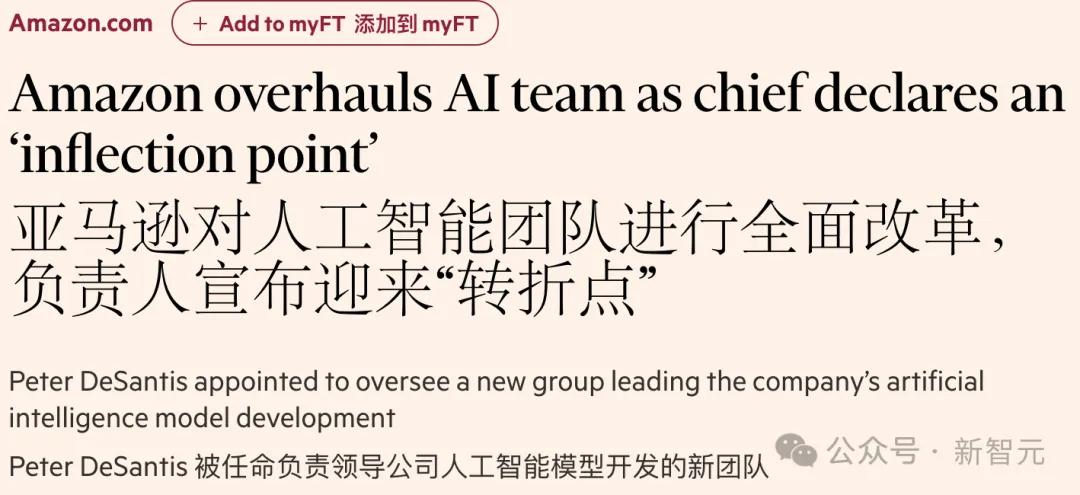
Core Insights - Amazon is redefining AGI by integrating its Nova large model team, in-house chip division, and quantum computing research into a unified system, marking the beginning of a physical entity era for AGI [1][3] - The appointment of Pieter Abbeel, a key figure in robotics and reinforcement learning, signifies a shift towards creating AGI that interacts with the physical world rather than just existing as a software model [5][6] Group 1: Organizational Changes - Amazon's CEO Andy Jassy announced a rare organizational restructuring to consolidate teams focused on AGI, chips, and quantum computing [1] - Peter DeSantis, known for his engineering delivery capabilities, will oversee this integration, indicating a long-term engineering investment in AGI [4][5] Group 2: Strategic Vision - Amazon views AGI as a physical entity with chips as its foundation and algorithms as its essence, moving beyond traditional software models [3][10] - The integration aims to optimize the Nova model's code on in-house chips, allowing for significant cost advantages compared to competitors [5][10] Group 3: Competitive Landscape - Amazon's approach contrasts with competitors like Microsoft and OpenAI, who focus on cloud-based intelligence, and Google, which struggles with internal organization [11][13] - Amazon's extensive network of over 750,000 industrial robots provides a continuous source of real-world data, enhancing its AGI development capabilities [11][13] Group 4: Future of AGI - The collaboration between Abbeel and DeSantis signals a transition from an experimental phase of AI to an industrial era, where AGI will require a full-stack integration of hardware and software [14] - The future of AGI will be dominated by companies that can achieve a "full-loop" integration of computing power, intelligence, and physical interaction, establishing a new competitive landscape [14][15]

豆包手机后思考:AGI会在中国率先跑出来吗?
3 6 Ke· 2025-12-24 09:40
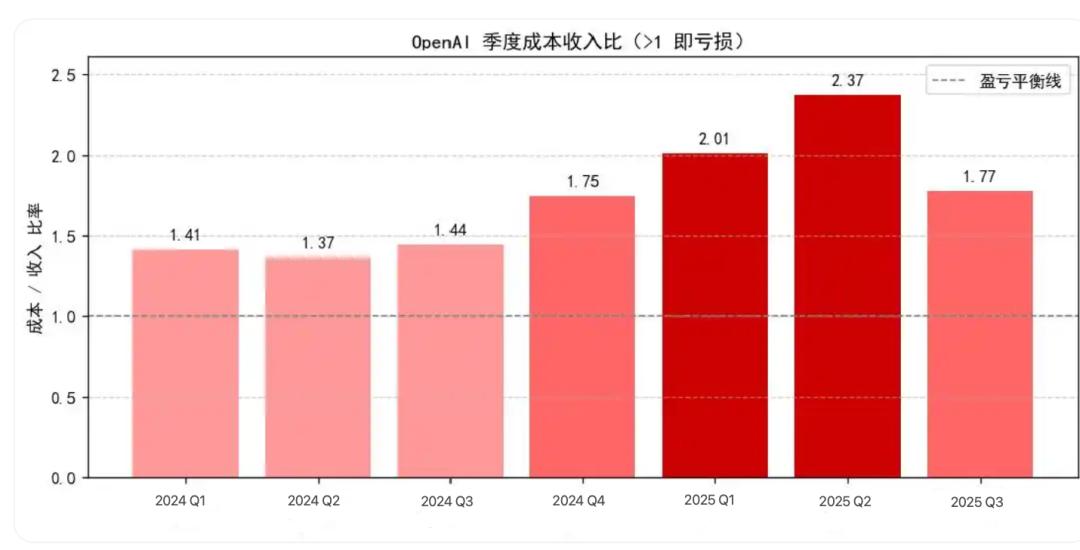
Core Insights - The article discusses the rapid advancement of AI technology in the Chinese market, particularly focusing on the launch of the Nubia M153, which integrates AI assistants with system-level execution capabilities, allowing AI to perform tasks autonomously rather than just providing suggestions [1][2][3] - The emergence of AI agents signifies a shift from AI being merely a thinking entity to one that can take action, raising questions about the readiness of existing digital ecosystems to accommodate such capabilities [2][3][4] - The Chinese market is positioned as a unique testing ground for AI agents due to its high application density, user acceptance, and a more unified governance system, potentially allowing it to lead in this technological transformation [3][18][23] AI Value Consensus: Transition from "Thinking" to "Action" - "Thinking" AI is reaching a ceiling, as evidenced by OpenAI's financial struggles, where costs are outpacing revenue significantly [4][6] - The cost structure of AI models is becoming unsustainable, with increasing computational demands not matched by revenue growth, indicating a need for AI to evolve towards actionable capabilities [6][7] - The focus is shifting towards AI's ability to act, as the next value point lies in its capacity to execute tasks rather than just process information [6][7] The Role of Mobile Devices in AI Action - Mobile devices are central to the AI action landscape, with Chinese users averaging 6.2 hours of smartphone use daily, performing over 120 digital actions [8] - The operating systems of mobile devices inherently possess the necessary permissions and infrastructure for AI to execute actions, making them ideal platforms for testing AI's commercial value [8][11] Competition for AI Execution Rights - Three main players are vying for control over AI execution capabilities: model service providers (e.g., Alibaba, Baidu, Tencent), terminal manufacturers (e.g., OPPO, Xiaomi), and native AI companies like Doubao [9][10][12] - Model service providers leverage their existing application ecosystems to integrate AI capabilities, while terminal manufacturers focus on system-level integration to expand AI's operational scope [10][11] - Native AI companies are taking a more aggressive approach by directly targeting system-level action entry points, although they face significant resistance from existing application ecosystems [12][13] Structural Challenges and Industry Transformation - The introduction of AI agents raises fundamental questions about operational permissions, commercial models, and accountability mechanisms, as traditional frameworks may not apply [14][15] - The current digital ecosystem is primarily designed for human users, which poses challenges for AI's operational integration, highlighting a need for infrastructure that supports AI actions [14][15] - As various stakeholders begin to adapt to the need for AI to operate autonomously, the industry is undergoing a structural transformation that could redefine value distribution and operational frameworks [17][18] China's Market as a Testing Ground for AI Agents - The rapid evolution of AI models and their capabilities is creating a competitive landscape, with significant advancements in model performance observed in recent years [21][22] - China's market conditions, including high service density and user acceptance of automation, provide a conducive environment for AI agents to thrive, contrasting with more fragmented markets like the U.S. [22][23] - The successful implementation of AI agents in China could lead to the development of a new operational system for AI that could be scaled globally, moving beyond mere model parameters to a comprehensive framework for AI action [23][24]
“AI六小龙”迎来一场残酷的生存竞赛
Guan Cha Zhe Wang· 2025-12-24 01:01
Core Insights - The Chinese AI industry is undergoing a fierce competition, with predictions that by 2028, the number of foundational large models in China will be fewer than 10, ideally around 5 [1][3] - The "hundred model war" is characterized by a lack of coherence, with over 300 models currently in existence, but only a handful are expected to keep pace with international innovations [3] - Two prominent companies, Zhipu and MiniMax, are simultaneously preparing for IPOs, marking a significant moment for the future of the Chinese AI industry [3][4] Company Strategies - Zhipu, founded in 2019, is perceived as a "national team" in the large model sector, having raised over 16 billion RMB in funding, with a focus on government and large enterprise clients [4][5] - MiniMax, established in 2022, has adopted a more traditional internet company approach, securing significant VC funding and focusing on consumer products, with a projected revenue of approximately 70 million USD in 2024 [5][6] - Zhipu's revenue model is heavily reliant on project-based deliveries, with 82% of its income coming from private deployments, while MiniMax has achieved a more product-driven revenue structure [5][6] Financial Performance - Zhipu maintains a gross margin of around 50%, indicating strong pricing power, but faces challenges in scalability due to its project-based model [6] - MiniMax's financial trajectory shows improvement, with a gross margin expected to rise from -24.7% in 2023 to 23.3% by 2025, driven by consumer product sales [6][18] - Both companies are under pressure to control costs and improve commercial efficiency, especially as competition intensifies [18][20] Market Dynamics - The primary market narrative for large models appears to be shifting, with a saturation of funding and a need for companies to secure stable financing channels [8][9] - The competitive landscape is evolving, with a clear division between companies that continue to invest in foundational model development and those that are pivoting to more niche markets [15][16] - The emergence of DeepSeek as a cost-effective alternative is reshaping the industry, forcing companies to reassess their unique value propositions [18][20] Future Outlook - The upcoming IPOs of Zhipu and MiniMax signal a critical juncture for the industry, as they seek to establish competitive barriers and secure funding in a challenging environment [7][21] - The success of these companies will depend on their ability to adapt to market demands and maintain technological advantages amid increasing competition [20][22] - The landscape for AI companies is expected to continue evolving, with a focus on commercial viability and operational efficiency becoming paramount [21][24]
智谱、MiniMax争当大模型第一股 这些“坑”必须要注意
2 1 Shi Ji Jing Ji Bao Dao· 2025-12-24 00:43
巨头加持 vs 巨额研发 在资本层面,两家公司都堪称"巨头收割机"。 国内顶尖大模型独角兽智谱与MiniMax开启IPO巅峰对决,三天内相继递交招股书。这场大模型"第一 股"之争,究竟是AGI造富还是资本碎钞机?一文拆解两大公司的招股书,帮你厘清招股书里这些你可 能会忽略的"坑"。 To B 垂直深耕 vs To C 全球收割 智谱与MiniMax同属"中国AI六小龙"的明星企业,虽然同处AGI赛道,但两家公司在基因、战略及商业 化路径上却展现出截然不同的图景。 智谱成立于2019年,其核心团队有着极为深厚的清华大学背景。智谱构建了全面的MaaS平台,业务方 向有强烈的B端属性,2024年其收入的84.5%来自本地化部署,主要服务于金融、能源、政务等对数据 隐私要求极高的机构客户。智谱通过"开源基座+商业定制"的模式,迅速在政企市场建立护城河,2024 年成为中国最大的独立大模型厂商。 2021年成立的MiniMax走出了一条截然不同的"产品主义"道路,创始人闫俊杰曾任商汤科技副总裁。 MiniMax旗下拥有星野(Talkie)、海螺AI等爆款产品,在全球范围内吸引了超2亿用户。其中,Talkie 作为全球公 ...
2025最大AI赢家的凡尔赛年度总结,哈萨比斯Jeff Dean联手执笔
量子位· 2025-12-24 00:42
Core Insights - The article emphasizes that 2025 marks a significant year for AI advancements, particularly in reasoning, collaboration, and scientific discovery, led by Google [1][3][9] Group 1: AI Development and Integration - Google has made substantial progress in reasoning, multi-modal understanding, model efficiency, and generative capabilities, significantly enhancing model performance [15][4] - The Gemini series, particularly Gemini 3 Pro, has set new standards in multi-modal reasoning and achieved top scores in various benchmark tests, including a 23.4% record in MathArena Apex [18][19] - AI has been deeply integrated into Google's core products, transforming from a tool to a practical asset for users [5][10][23] Group 2: Generative Media and Creative Tools - 2025 is highlighted as a transformative year for generative media, with AI providing unprecedented capabilities for video, image, audio, and virtual world generation [24][25] - Google has collaborated with creative professionals to develop tools like Flow and Music AI Sandbox, enhancing creative workflows [25][21] Group 3: Scientific and Mathematical Advancements - AI has significantly contributed to advancements in life sciences, health, natural sciences, and mathematics, empowering researchers with new tools and resources [27][28] - The AI system AlphaFold, which addresses protein folding, has been widely adopted by researchers globally, marking a milestone in scientific research [28] Group 4: Quantum Computing and Physical World Research - Google has made notable advancements in quantum computing and energy-efficient technologies, including the launch of a new TPU designed for the reasoning era [33][32] - The company has also made strides in robotics and visual understanding, integrating AI agents into both physical and virtual environments [33] Group 5: Addressing Global Challenges - Google's AI-driven scientific progress is being applied to tackle critical global challenges, including climate resilience, public health, and education [36][38] - The company has developed advanced forecasting models that enhance decision-making in various sectors, including weather prediction [36] Group 6: Responsibility and Safety - Google emphasizes the importance of combining research breakthroughs with responsibility and safety, continuously improving tools and frameworks to mitigate risks [42][43] - The Gemini 3 model is noted as the safest model to date, undergoing comprehensive safety assessments [44] Group 7: Collaboration and Open Ecosystem - Google advocates for cross-sector collaboration to responsibly advance AI, establishing partnerships with leading AI labs and educational institutions [46][45] - The company aims to continue promoting cutting-edge technology safely and responsibly for the benefit of humanity [47]