
减油增化

Search documents
石化化工行业迎利好!7部门联合发布重磅文件,“反内卷”有序推进
Hua Xia Shi Bao· 2025-10-01 07:44
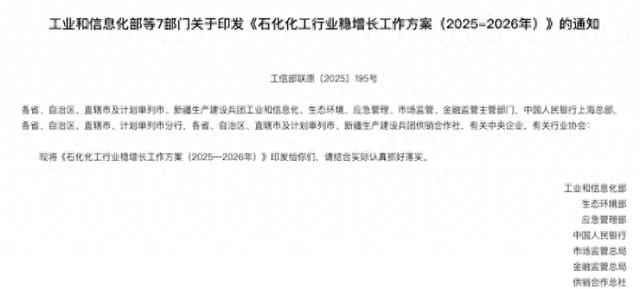
Core Viewpoint - The petrochemical industry in China is set to experience an average annual growth of over 5% in value added from 2025 to 2026, as outlined in the recently released "Petrochemical Industry Stabilization Growth Work Plan (2025-2026)" by multiple government departments [2][3]. Group 1: Industry Challenges and Responses - The petrochemical industry faces intensified competition in the basic organic raw materials market, slowing domestic demand growth, and increased external uncertainties [3]. - The plan emphasizes strict control over new refining capacity and aims to manage the pace of new capacity for ethylene and paraxylene, while supporting the renovation of outdated facilities and the "reduce oil and increase chemicals" initiative [3][4]. Group 2: Focus on High-End Supply - There is a notable shortage in high-end chemical new materials and fine chemicals, necessitating improvements in the supply of key products and raw materials [4][5]. - The plan identifies electronic chemicals, high-end polyolefins, and specialty rubbers as key areas for technological innovation and effective supply enhancement [5]. Group 3: Emerging Market Opportunities - The demand for materials in emerging fields is robust, with applications in sectors such as electric vehicle battery materials, carbon fiber composites, and specialty engineering plastics [5][6]. - PEEK, a high-performance polymer, is highlighted for its potential to replace metals in various applications, including humanoid robots, due to its superior strength-to-weight ratio and durability [6]. Group 4: Industry Structural Optimization - Recent high-level meetings have focused on preventing "involution" or excessive competition within the industry, leading to a more optimized supply-demand structure [7][8]. - The chemical industry is witnessing a shift from a focus on expansion to optimizing existing capacities and pursuing high-quality growth, which is expected to create better investment opportunities [9].

吉林石化新建120万吨/年乙烯装置一次开车成功
Zhong Guo Chan Ye Jing Ji Xin Xi Wang· 2025-09-08 01:09
Core Insights - The successful commissioning of the new 1.2 million tons/year ethylene plant at Jilin Petrochemical marks a significant upgrade in the company's refining and chemical capabilities, increasing its total ethylene production capacity to 1.9 million tons/year, placing it among the leaders in the country [1][5] Group 1: Project Overview - The new ethylene facility was constructed with a total investment of 4.177 billion yuan, covering an area of 119,000 square meters, and features a high domestic equipment localization rate of 96% [1][2] - The plant is expected to produce 1.2 million tons of polymer-grade ethylene and 587,000 tons of polymer-grade propylene annually, along with over 20 by-products, supporting downstream production of polyethylene, acrylonitrile, and ABS [2][5] Group 2: Construction and Management - The construction process utilized a "modular construction + digital delivery" approach, achieving significant milestones such as the installation of large equipment under extreme weather conditions, setting industry records for installation speed [3][4] - A structured management system was implemented, including a "3+1+3" framework to enhance decision-making and resource allocation, ensuring effective project execution [3][4] Group 3: Operational Strategy - The operational strategy emphasized unified command and local management, with a focus on steady progress and compliance, ensuring the plant operates efficiently and sustainably [4][5] - The project has successfully demonstrated a new model for traditional refining enterprises, focusing on reducing oil dependency while enhancing chemical production capabilities, thus laying a solid foundation for the company's future growth [5]
炼化行业或迎反内卷政策前瞻
Tong Hui Qi Huo· 2025-09-05 11:16
Report Industry Investment Rating No relevant content provided. Core Viewpoints of the Report - China's "anti-involution" policies since July 2025 aim to address cut - throat competition, guide industrial upgrading, and promote high - quality development, impacting multiple futures market sectors [2]. - The "anti-involution" policy in the refining and chemical industry will have a structural and gradual impact on crude oil supply and demand, accelerating the clearance of inefficient capacity in the short term and promoting high - quality development and product structure optimization in the long term [10]. Summary by Related Catalogs Impact on Different Market Sectors - **New Energy Sector**: The policy significantly boosted the new energy sector, with polysilicon futures leading the rally, rising 64.42% from July 1 to September 1, and lithium carbonate showing a rise of 20.93% during the same period [3]. - **Black - Series Varieties**: The impact on black - series varieties was differentiated. Coking coal rose 30.51%, coke 11.70%, and rebar only 3.28% from July 1 to September 1 [3]. - **Chemical Industry**: The "anti - involution" policy in the chemical industry is deepening from system construction to special rectification. Glass rose 6.76%, while PVC was almost flat [4]. Current Situation of the Refining and Chemical Industry - The refining and chemical industry faces severe over - capacity, with a capacity utilization rate of less than 80% and an over - capacity of about 60 million tons. The industry's operating income profit margin has been declining [5]. - Refinery operating rates are low, indicating weak demand. In March 2025, the overall capacity utilization rate was only 70.3%, and Shandong's local refinery operating rate hit a 23 - month low in July [6]. - China's crude oil processing volume is on a downward trend, with different scenarios forecasted by Zhuochuang Information in 2025 [6]. Content of the Upcoming Reform Plan - The plan includes shutting down small refineries with an annual capacity of less than 2 million tons, which could potentially reduce crude oil processing demand by about 30 million tons/year (about 603,000 barrels/day) [5]. - It aims to upgrade about 40% of petrochemical facilities that have been in use for over 20 years through multi - dimensional evaluations [7]. - It encourages the industry to shift from producing bulk chemicals to special fine chemicals for high - tech fields [7]. Long - term Impact on the Refining and Chemical Industry - The policy will drive the industry towards large - scale, integration, and high - end transformation, increasing the proportion of high - value - added chemical products and changing the quality and structure of crude oil demand [7]. - The "oil - reduction and chemical - increase" trend may lead to a shortage of naphtha supply, driving the popularity of alternative raw materials and increasing import dependence on high - value - added chemicals [8]. Impact on the Global Crude Oil Market - China's adjustment of refining policies may slow down or even decrease its crude oil import growth rate, leading to an adjustment in international crude oil trade flows [9]. - The policy may reduce the demand for high - sulfur heavy crude oil and benefit the low - sulfur light crude oil market [9]. - Although China's potential demand reduction will intensify the global supply - demand surplus, the final trend of global oil prices depends on OPEC+ policies, the global macro - economy, and geopolitical events [9].
中油工程(600339):公司营收同比增长12.18%,现金流情况大幅改善
Guoxin Securities· 2025-09-01 11:35
Investment Rating - The report assigns an "Outperform" rating to the company [6] Core Insights - The company achieved a revenue of 36.287 billion yuan in the first half of 2025, representing a year-on-year growth of 12.18%, while the net profit attributable to shareholders decreased by 10.87% to 470 million yuan [1][11] - The company has a diversified business structure, with core segments including oil and gas field surface engineering, oil and gas storage and transportation engineering, and refining and chemical engineering, which accounted for 36.59%, 25.69%, and 30.27% of revenue respectively in 2024 [2][23] - The company has signed new contracts worth 73.401 billion yuan in the first half of 2025, with a backlog of approximately 170 billion yuan, ensuring a stable development outlook [3] - The company is focusing on emerging businesses and has seen a significant increase in new contracts in this area, which accounted for 28.06% of total new contracts in the first half of 2025 [55] Summary by Sections Financial Performance - The company reported a significant improvement in cash flow, with operating cash flow net amount improving from -7.052 billion yuan in the previous year to -1.533 billion yuan [1][20] - The company’s revenue is projected to grow to 89.992 billion yuan in 2025, with net profit expected to reach 733 million yuan [4][5] Business Segments - The company’s core business segments are oil and gas field surface engineering, oil and gas storage and transportation engineering, and refining and chemical engineering, which are expected to continue driving revenue growth [2][23] - Emerging business areas are rapidly expanding, contributing to the company's strategic shift towards new energy and materials [53][54] Market Position and Strategy - The company has established a strong presence in both domestic and international markets, with a focus on optimizing its project portfolio and enhancing risk management [3][59] - The company is actively pursuing new contracts in emerging sectors, including renewable energy and advanced materials, to diversify its revenue streams [55][58]

【智库研报】控量 改造 油转化——石化“反内卷”进行时
Zhong Guo Hua Gong Bao· 2025-08-30 01:45
Group 1 - The Ministry of Industry and Information Technology and other departments have initiated a nationwide assessment of outdated petrochemical production facilities, focusing on those that have been in operation for over 20 years [2][10] - The assessment aims to establish a comprehensive database and prepare for the upcoming elimination and renovation of outdated facilities, which is part of a broader effort to address supply surplus and enhance industry standards [2][5][10] - The petrochemical industry is currently facing significant supply surplus issues, with refining capacity exceeding 1 billion tons per year and utilization rates dropping to around 70% [6][9] Group 2 - The supply-side structural reform has entered its 2.0 phase, building on the initial reforms that began in 2015, which successfully addressed overcapacity in the steel and coal industries [3][5] - The current state of the petrochemical industry reflects a systemic overcapacity, with many products experiencing price declines and widespread losses among companies [5][8] - The government has set a target to reduce crude oil processing capacity to below 1 billion tons by the end of 2025, focusing on eliminating inefficient production capacities [9][11] Group 3 - The assessment of outdated facilities is expected to lead to targeted measures for upgrading or closing down inefficient plants, particularly those with capacities below 300 million tons [11] - The industry is encouraged to adopt new technologies and business models to transition towards greener and more efficient operations, with support from government policies [11][12] - A shift from oil-based products to specialty chemicals is emphasized, aiming for a balanced ratio of crude oil used for refining and chemical production [12][13]


每天少赚近1.6亿元,“三桶油”上半年业绩为何集体失速?
Sou Hu Cai Jing· 2025-08-29 02:47
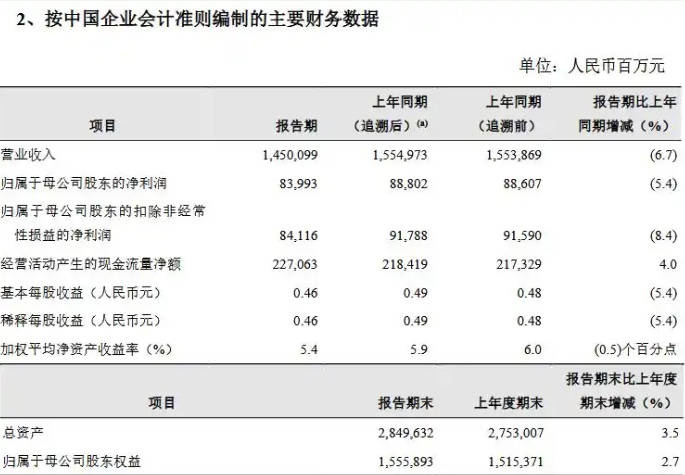
Core Viewpoint - The financial reports of China's three major oil companies, known as "Three Barrels of Oil," show a synchronized decline in overall performance for the first half of 2025, raising concerns in the industry [1][2]. Financial Performance Summary - China National Petroleum Corporation (CNPC) reported a net profit of 84.01 billion yuan, down 5.4% year-on-year [2][3]. - China Petroleum & Chemical Corporation (Sinopec) achieved a net profit of 21.48 billion yuan, a significant drop of 39.8% compared to the previous year [2][3]. - China National Offshore Oil Corporation (CNOOC) recorded a net profit of 69.53 billion yuan, down 13% year-on-year [2][3]. - The total profit of the three companies decreased by 29.05 billion yuan compared to the same period last year, averaging a loss of approximately 1.6 billion yuan per day [1]. Revenue and Price Trends - CNPC's revenue for the first half of 2025 was 1,450.99 billion yuan, a decrease of 6.7% year-on-year, with a Brent crude oil average price of $71.87 per barrel, down 14.5% from $84.06 per barrel in the previous year [2][3]. - Sinopec's revenue was 1,409.05 billion yuan, down 10.6% year-on-year, with basic earnings per share dropping by 40.2% [2][3]. - CNOOC's revenue was 207.61 billion yuan, reflecting an 8% decline year-on-year [2][3]. Sales Volume and Pricing Impact - In the first half of 2025, half of CNPC's eight major export products saw a decline in sales volume, particularly in polypropylene, gasoline, and diesel [4]. - The average selling prices of key products, including crude oil and diesel, fell by 12.3% and 9.4%, respectively [4]. - Sinopec attributed its profit decline to falling crude oil and product prices, leading to reduced inventory profits and lower domestic gasoline and diesel sales [4]. Industry Trends and Future Outlook - The oil and gas extraction and refining sectors are experiencing a "triple decline" in revenue, profit, and import-export volume, indicating increased industry differentiation [5]. - The overall petrochemical industry reported a revenue of 77.7 trillion yuan, down 2.6% year-on-year, with a continued trend of "increased volume, decreased price" in imports and exports [6]. - The total production and consumption of refined oil products have declined for the first time, influenced by the rise of new energy vehicles and liquefied natural gas [8]. - Companies are accelerating the development of non-oil businesses, with Sinopec reporting a 17% increase in non-oil business profits [8][9]. - Looking ahead, CNPC anticipates continued downward pressure on international oil prices due to a relaxed supply-demand balance in the market [8].


海外产能出清,炼化行业前景展望
2025-08-26 15:02
Summary of Conference Call Records Industry Overview - The conference call discusses the **refining and petrochemical industry** in China and globally, focusing on capacity reduction and structural optimization due to domestic policies and international market dynamics [1][3][4]. Key Points and Arguments 1. **Domestic Policies**: China is implementing anti-involution policies aimed at controlling total capacity and optimizing structure, encouraging a shift from oil to chemical production [1][3][6]. 2. **Global Capacity Reduction**: The global petrochemical industry is undergoing significant capacity reductions, particularly in Japan, South Korea, and Europe, to address cyclical downturns and environmental pressures [1][5][12]. 3. **Upcoming Standards**: By August 30, local governments are expected to complete inspections of enterprises and facilities, leading to the release of elimination standards by the Ministry of Industry and Information Technology [1][7]. 4. **Capacity Elimination Criteria**: Refining facilities with capacities below 2 million tons and ethylene facilities below 500,000 tons, particularly those over 20 years old, are likely to be targeted for elimination [1][7][8]. 5. **Impact on Industry Players**: The elimination of small-scale facilities will benefit integrated large state-owned enterprises and coastal private refining companies, promoting energy conservation and carbon reduction technologies [1][10][19]. 6. **Profitability Concerns**: The refining industry is currently experiencing its lowest profitability in nearly two decades, influenced by domestic policies and international market conditions [2][3]. 7. **Market Dynamics**: The European petrochemical sector faces rising costs, weak demand, and competition from Chinese firms, leading to a gradual exit from the market, with the U.S., Middle East, and China expected to fill the void [4][12][14]. 8. **Future Measures**: The government plans to implement strict project approvals, accelerate the elimination of old facilities, and promote high-end material research and industry self-regulation [6][9]. 9. **Integration and Upgrading**: New refining projects must exceed 10 million tons in capacity, while older facilities will need technological upgrades to meet energy efficiency and carbon reduction goals [8][10][21]. 10. **Global Supply Chain Effects**: The closure of facilities in Europe and Asia will create supply-demand mismatches, potentially increasing prices for ethylene and related products [17][18]. Additional Important Content - **Investment Opportunities**: The shift towards larger, integrated facilities presents opportunities for companies involved in energy conservation technologies and digital manufacturing processes [10][19]. - **Market Competition**: As European firms exit, Chinese companies are positioned to enhance their international competitiveness, particularly in fine chemicals and high-end polymers [14][18]. - **Long-term Trends**: The refining and petrochemical sectors will need to adapt to global market conditions, with a focus on integrating operations and enhancing efficiency to remain competitive [25][26][27]. This summary encapsulates the critical insights from the conference call, highlighting the current state and future outlook of the refining and petrochemical industry amidst evolving market dynamics and regulatory frameworks.
镇海股份: 镇海石化工程股份有限公司2025年半年度报告
Zheng Quan Zhi Xing· 2025-08-21 16:35
Core Viewpoint - The report highlights the financial performance and operational challenges faced by Zhenhai Petrochemical Engineering Co., Ltd. in the first half of 2025, indicating a decline in revenue and profit due to various market pressures and strategic shifts in the petrochemical industry [1][2]. Company Overview and Financial Indicators - Zhenhai Petrochemical Engineering Co., Ltd. reported a total revenue of approximately 170.60 million yuan, a decrease of 14.76% compared to the same period last year [2]. - The total profit for the period was approximately 29.05 million yuan, down 31.67% year-on-year [2]. - The net profit attributable to shareholders was approximately 25.96 million yuan, reflecting a 30.42% decline compared to the previous year [2]. - The company's total assets decreased by 5.21% to approximately 1.31 billion yuan, while net assets decreased by 2.12% to approximately 1.01 billion yuan [2]. Industry Position and Business Model - The company specializes in the petrochemical engineering sector, providing comprehensive services from project planning to operational support, with a focus on EPC (Engineering, Procurement, and Construction) contracts [3][4]. - Zhenhai Petrochemical competes with major state-owned enterprises in the industry, leveraging its expertise in environmental protection and technology upgrades to differentiate itself [5][6]. - The company has established a strong brand image and technical capabilities, which are critical for maintaining its competitive edge in the market [6][7]. Market Dynamics and Performance Drivers - The performance of the company is closely tied to market demand in the petrochemical sector, which is influenced by the overall economic conditions and the industry's cyclical nature [7][8]. - The transition of the petrochemical industry from "scale expansion" to "quality improvement" is reshaping market demand and creating opportunities for companies that can innovate and adapt [8][9]. - The company's revenue is primarily driven by its engineering services, which are essential during periods of high demand in the petrochemical sector [7][8]. Strategic Initiatives and Future Outlook - The company is focusing on enhancing its service offerings in high-value sectors such as fine chemicals and new materials, aiming to create a second growth curve [17][18]. - Zhenhai Petrochemical is actively pursuing strategic partnerships and collaborations to drive innovation and improve operational efficiency [15][16]. - The company plans to leverage digital transformation and advanced technologies to enhance its service capabilities and respond to the evolving market landscape [20].

上半年石化行业经济运行基本平稳
Zhong Guo Chan Ye Jing Ji Xin Xi Wang· 2025-08-21 00:23
Core Insights - The petrochemical industry in China experienced a stable economic performance in the first half of the year, with a total revenue of 7.77 trillion yuan, a year-on-year decrease of 2.6% [1] Group 1: Economic Performance - Crude oil production, import, processing, and consumption all saw year-on-year growth, marking a turnaround from last year's declines [1] - Major chemical products' production and consumption both achieved "double growth," indicating stable market demand for petrochemical products and chemical materials [1] - The chemical sector outperformed the oil and gas extraction and refining sectors, with revenue and import-export values increasing, while profits decreased [1] Group 2: Trade Dynamics - The import and export dynamics showed a "volume increase, price decrease" trend, with total import-export value, import value, and trade deficit all declining year-on-year, while export value slightly increased by 0.4% [1] Group 3: Product Trends - Both production and consumption of refined oil experienced a "double decline," attributed to the impact of new energy vehicles on gasoline markets and liquefied natural gas heavy trucks on diesel consumption [2] - The production rate of refined oil dropped to 55.3%, down from 59.7% in the previous year, reflecting the industry's structural adjustments and transition towards "reducing oil and increasing chemicals" [2] Group 4: Price Trends - Prices for crude oil and major petrochemical products continued to decline, influenced by ongoing geopolitical conflicts and economic uncertainties [2] Group 5: Future Outlook - The industry aims to prioritize quality improvement and efficiency enhancement, focusing on cost reduction, potential exploration, and optimization [2] - There is a push for accelerating the high-end and green transformation of the petrochemical industry, alongside efforts to manage "involutionary" competition and ensure the orderly exit of outdated capacities [2]
石化和炼油行业反内卷,对化工行业影响几何?
2025-08-20 14:49
Summary of Key Points from the Conference Call Industry Overview - The petrochemical industry is facing challenges such as declining product prices, intense competition, and anti-dumping lawsuits, prompting the government to implement measures for capacity assessment, elimination of redundant facilities, and technological upgrades to promote energy conservation and carbon reduction [1][2][3] Core Insights and Arguments - The petrochemical industry's profits have been declining, with total revenue projected at 14.6 trillion yuan in 2024, but profits falling below 1 trillion yuan, continuing a downward trend of 8.8% in 2025 [2][25] - A capacity warning report identified 14 high-risk products, including refining, propylene, and PVC, and 10 products with relatively high risk, such as soda ash and ethylene glycol, indicating structural overcapacity issues [3][4] - Private enterprises are better positioned for transformation in the petrochemical sector due to advanced technology and willingness to invest in energy-saving modifications, while state-owned enterprises face greater pressure to upgrade outdated facilities [5][10] - New capacity additions before the carbon peak include an increase of 40 million tons in primary refining capacity, which is aligned with advanced technology and will not lead to overcapacity [6][10] - The development of the petrochemical industry chain relies heavily on policy guidance and downstream market demand, with emerging markets like pharmaceuticals and renewable energy driving growth in biodegradable materials and photovoltaic materials [10][12] Additional Important Content - The petrochemical industry is experiencing structural overcapacity, particularly in low-end bulk products, while mid-to-high-end products remain scarce and reliant on imports [7][8] - The need for upgrading old facilities is critical, especially in traditional refining and caustic soda plants, many of which are over 20 years old [9] - The government is encouraging the elimination of outdated capacity and extending the industrial chain into new materials, with a focus on market-driven development rather than strict regulatory measures [17][27] - The petrochemical sector's future planning must balance specific development directions with market demand to avoid misleading the market and causing overcapacity [18] - The overall profitability of the petrochemical industry is under pressure, with a reported profit decline of 2.3% in the first half of the year and an 8.8% decline the previous year [25] Conclusion - The petrochemical industry is at a critical juncture, facing both challenges and opportunities for transformation. The emphasis on technological upgrades, market responsiveness, and policy support will be essential for navigating the current landscape and achieving sustainable growth.