
品牌授权

Search documents
国民女装第一股,靠直播起死回生?
3 6 Ke· 2025-08-04 11:17
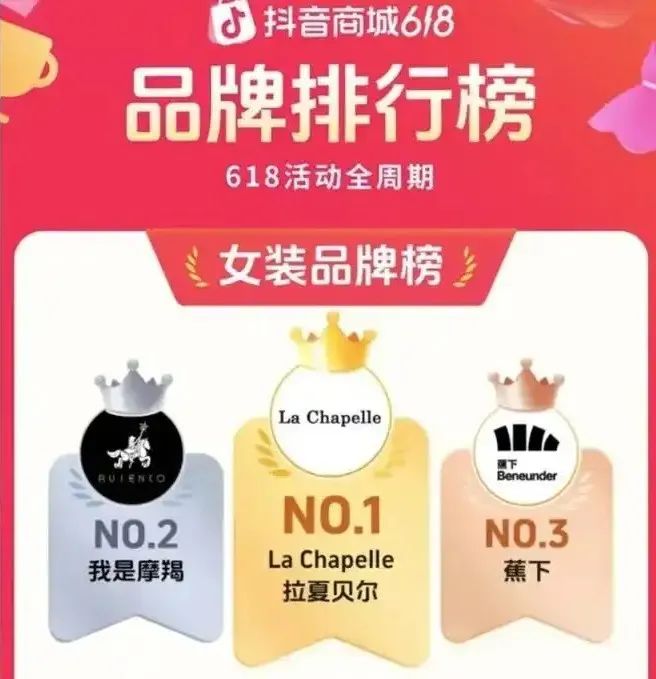
今年618 ,抖音女装品牌榜出现了一个老国货女装品牌:拉夏贝尔。 作为曾经的"国民女装第一股",拉夏贝尔命运跌宕起伏:同时在港交所和A股上市,却因连续6年亏损退市,经破产重整后重回大众视野,还在抖音销售 额破亿、登上女装榜一。 服装行业低迷,亏损和退市的品牌并不少,拉夏贝尔却能重回市场,它是如何逆风翻盘的? 01 老牌国货登顶抖音女装榜 拉夏贝尔的"起死回生",离不开分销网络的广泛布局。 因此,可以看到,除了抖音,淘宝、京东和拼多多等电商平台也有不少拉夏贝尔的关联店铺。 先来看看其在抖音上的布局—— 据第三方平台数据显示,今年抖音618大促期间,拉夏贝尔销售额破亿,其中直播带货贡献了近半业绩(46.31%),商品卡销售占比 41.87%,视频推广 则占 11.82%。 通过与4749名带货达人的合作,打造了 4.4 万场带货直播,实现了可观的销售声量。 价格策略方面,拉夏贝尔的平均客单价在100-150元之间,低于品牌数年前几百元的服饰定价,这与受众人群匹配度高,大促期间拉夏贝尔的消费者画像 为31-40岁的女性,主要位于三四线城市,这类人群比较关注性价比,习惯直播购物。 此外,拉夏贝尔关联的抖音店铺多达35 ...

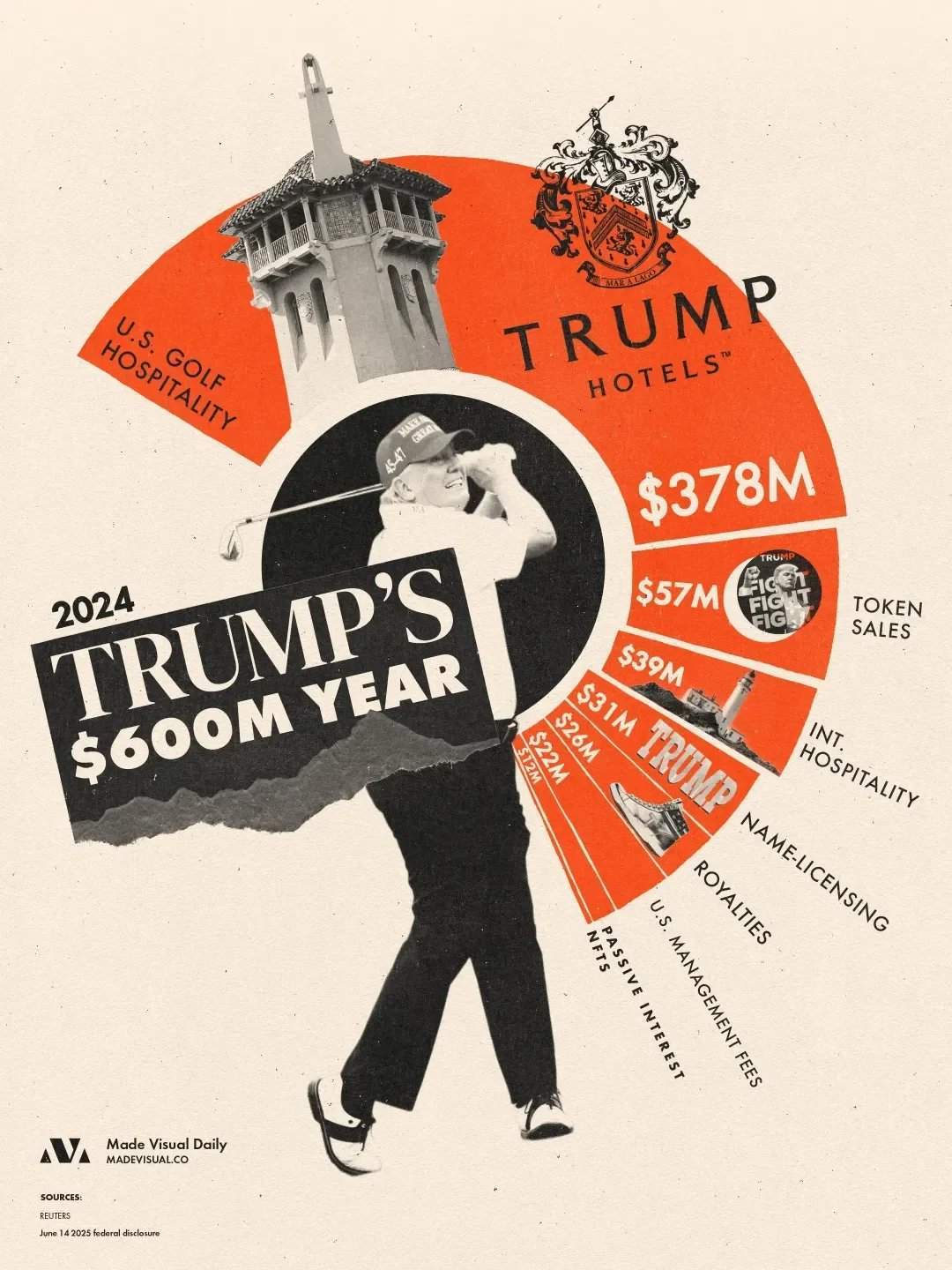
拆解特朗普6亿美元年收入:美国高尔夫球场和酒店业务3.78亿美元贡献超六成!名下资产总值至少达16亿美元
Ge Long Hui· 2025-08-04 07:00
Group 1 - The core point of the article is that President Trump's declared income for 2024 is at least $600 million, with total assets valued at a minimum of $1.6 billion, primarily driven by traditional hotel assets and additional income from token sales and franchising [1][3] Group 2 - The golf courses and hotel business generated a significant revenue share of $378 million, surpassing all other business segments [3] - Token sales from the World Liberty Financial platform contributed $57.3 million, excluding earnings from the $TRUMP meme coin, which was estimated to be worth $320 million earlier this year [3] - Revenue from brand licensing and publications, including Trump-branded watches, sneakers, and the Greenwood-endorsed Bible, amounted to at least $26 million [3]
国内外买地的少林寺,为啥那么有钱?
3 6 Ke· 2025-07-30 03:02
Core Insights - Shaolin Temple has transformed from a traditional religious site into a significant commercial entity, with annual revenues exceeding 1 billion RMB [2][3][4] - The temple's commercial success is attributed to strategic branding and marketing initiatives led by Abbot Shi Yongxin, who recognized the commercial potential of the "Shaolin" brand [5][7][13] Group 1: Revenue Generation - Shaolin Temple attracts over 4.5 million visitors annually, generating ticket sales starting at 300 million RMB, with additional revenues from martial arts experiences and global performances [3][4] - The Shaolin Monk Troupe conducts over 200 performances worldwide each year, with total annual revenue reaching approximately 720 million RMB, of which 65% comes from overseas shows [17][19] - The temple has diversified its revenue streams through various products, including traditional medicine and food items, achieving sales of 60 million RMB for its "Shaolin Active Ointment" alone [18][19] Group 2: Branding and Marketing Strategy - The temple has registered over 700 trademarks across 45 categories, including martial arts training and food products, establishing a robust brand presence [7][23] - Shaolin Temple was an early adopter of digital marketing, launching one of the first temple websites in China in 1997, which significantly increased its visibility and revenue from overseas performances [9][12] - The temple has leveraged social media platforms, amassing over 20 million followers across various accounts, generating substantial advertising revenue and promoting its products [19][23] Group 3: Capital Operations - Shaolin Temple has engaged in real estate investments, including a notable acquisition of commercial land in Zhengzhou, indicating a strategic move into property development [20][22] - The temple's capital management is facilitated through the "Henan Shaolin Intangible Asset Management Company," which plays a crucial role in its commercial operations [22][24] - The temple has established cultural centers in over 50 countries, operating on a membership basis, which not only generates stable income but also promotes the Shaolin brand internationally [23][24] Group 4: Controversies and Challenges - The temple faces criticism regarding the commercialization of religious practices, particularly concerning high-priced offerings like the "Supreme Blessing Plaque" [26][28] - There are ongoing concerns about financial transparency and the management of funds, with allegations of unclear financial practices and potential conflicts of interest involving Abbot Shi Yongxin [29][30] - The juxtaposition of commercial success and religious integrity has led to public scrutiny, questioning the temple's adherence to its spiritual mission amidst its business ventures [24][31]
一罐饮料,撑起两国首富,也带来一场9年之争
36氪· 2025-07-19 12:17
Core Viewpoint - The article discusses the ongoing legal and business disputes between Thai Red Bull and its Chinese counterpart, highlighting the challenges and market dynamics in the energy drink sector over the past nine years [3][58][81]. Group 1: Company Background - The Chuchai family, owners of Red Bull Group, topped the Forbes 2025 Thailand Rich List with a wealth of $44.5 billion (approximately 319.2 billion RMB) [3][6]. - Red Bull sold 13 billion cans in the past year, generating $12.9 billion in revenue, making it the leader in the global energy drink market [7][8]. - The brand's success is attributed to its strong performance in the energy drink sector and effective marketing strategies [7][30]. Group 2: Market Entry and Growth - Red Bull was introduced to China in 1995 after overcoming regulatory hurdles related to its ingredients [55][56]. - By 2012, Red Bull's sales in China exceeded 10 billion RMB, capturing over 80% of the functional beverage market [56]. - The brand's marketing slogans became widely recognized, contributing to its popularity [56]. Group 3: Legal Disputes - Following the death of founder Xu Shubiao in 2012, disputes arose over brand rights and profit-sharing, leading to over 60 lawsuits with claims amounting to hundreds of billions [59][63]. - The conflict has persisted for nine years, significantly impacting both companies and the brand's market position [64][81]. Group 4: Market Competition - During the ongoing disputes, competitors like Dongpeng Group's Dongpeng Special Drink have emerged, surpassing Red Bull in market share since 2021, reaching 47.9% in 2024 [74][75]. - Other brands such as "Alien" from Yuanqi Forest and "Scream" from Nongfu Spring are also gaining market share, indicating a shift in the energy drink landscape [77][79]. - The article suggests that Red Bull's internal conflicts may hinder its ability to capitalize on market opportunities [80].
跟小米鏖战数年,2800亿世界巨头业绩腰斩,沦为“贴牌大王”?
Sou Hu Cai Jing· 2025-07-17 01:58
Core Viewpoint - Philips has undergone significant business restructuring, selling off various non-core assets while focusing on its medical health segment, which has become its primary revenue driver [3][4][19]. Business Restructuring - Over the past two decades, Philips has primarily engaged in divestitures, selling its computer monitor business in 2004, mobile phone business in 2006, and various other consumer electronics and home appliance segments [7][19]. - The company has strategically offloaded its lighting business, which was split into two independent companies, and has licensed its water purification and home appliance products to other firms [7][9]. Financial Performance - In 2024, Philips reported annual revenue of €18 billion (approximately ¥151.6 billion), with an adjusted EBITA margin of 11.5%, reflecting a slight year-on-year increase of 0.9% [4]. - The company's financial struggles began in 2001, leading to a record net loss of €2.6 billion (approximately ¥21.9 billion), prompting a shift towards divesting non-core assets [9][15]. Focus on Medical Health - Philips has pivoted towards the medical health sector, which accounted for 48.9% of its total revenue in 2024, with diagnostic and treatment services generating €8.8 billion [19]. - The company has invested nearly €5 billion in acquiring medical-related companies between 2002 and 2003, significantly increasing the medical division's contribution to overall sales [17]. Ongoing Simplification - Despite establishing a strong foothold in medical health, Philips continues to streamline its operations by exiting markets such as the U.S. respiratory market and selling off various service segments [21]. - The company aims to avoid the pitfalls of its previous expansive approach by focusing on specialization and building technological barriers in its core medical business [21].

宾利中国发文打假!有人冒充总部发布低价销售方案
第一财经· 2025-07-08 13:02
Core Viewpoint - Bentley Pin Hui (Xiamen) Supply Chain Management Co., Ltd. has issued a statement regarding unauthorized low-price sales schemes using the Bentley brand name, which disrupts market order and harms the brand's reputation [1][2]. Company Overview - Bentley Pin Hui is the only official authorized operator for the Bentley brand in mainland China, responsible for brand authorization, product development, and sales promotion [1][2]. - The company was established in July 2024 with a registered capital of 1 million RMB, focusing on supply chain management services and other related activities [2]. Brand Licensing and Management - Bentley Pin Hui has been authorized to operate a range of non-automotive products under the Bentley brand, including fragrance gift boxes, diamond watches, tea sets, and Bluetooth earphones [2]. - The licensing model allows the brand owner to avoid building production lines, as partners handle product development, production, and sales, while the brand owner receives licensing fees [3]. Market Challenges - The complexity of brand licensing management leads to a high risk of counterfeiting, as seen in Bentley Pin Hui's previous actions against unauthorized sellers on e-commerce platforms [4].

消失的国民女鞋,突然卖到第一
盐财经· 2025-06-30 09:42
Core Viewpoint - Daphne, once on the brink of bankruptcy, has made a remarkable comeback by focusing on online sales and adapting to market trends, achieving significant revenue growth and profitability in recent years [5][8][37]. Financial Performance - In 2024, Daphne reported a revenue of 322.3 million RMB, a 23% increase from 262.6 million RMB in 2023 [6][8]. - The profit attributable to shareholders reached 106.6 million RMB, marking a 71% year-on-year growth [6][8]. - Operating profit increased by 43% to 96.6 million RMB, with an operating margin of 30% [6][8]. - Cash and cash equivalents rose by 30% to 476.2 million RMB, indicating improved liquidity [6][8]. Market Position and Strategy - Daphne has become a leading brand in the online women's shoe market, ranking first in sales on Douyin since February 2023 [5][8]. - The brand has shifted from a traditional retail model to a "light asset" model, focusing on e-commerce and brand licensing [30][37]. - The introduction of the sub-brand Daphne.Lab targets younger consumers and expands the price range, with products priced up to 1,000 RMB [18][49]. Product Development and Consumer Engagement - Daphne has significantly reduced its product launch cycle, now comparable to fast fashion brands like H&M and ZARA [12][20]. - The brand's successful online strategy includes a robust promotional matrix and the establishment of 152 self-broadcast accounts for live selling [17][18]. - The company has diversified its revenue streams, with licensing fees contributing 39.4% of total revenue in 2024 [21][35]. Challenges and Future Outlook - Despite recent successes, Daphne faces challenges in maintaining brand identity and consumer loyalty, as it relies heavily on brand licensing and low-cost alternatives [41][45]. - The company plans to open one or two physical stores for its sub-brand in first-tier cities to enhance brand presence and consumer experience [49][50]. - The long-term sustainability of Daphne's business model remains uncertain, as it must balance online and offline strategies to meet consumer needs [45][48].

南极电商难撕“吊牌之王”标签 2025年Q1延续陷入亏损
Xin Lang Zheng Quan· 2025-06-27 07:23
Core Viewpoint - The article highlights the operational risks faced by Nanji E-commerce, which stem from its over-reliance on a light-asset brand licensing model that has led to declining brand value, revenue instability, and ineffective transformation strategies [1][4]. Group 1: Brand Licensing and Quality Issues - The core crisis of Nanji E-commerce arises from the self-destructive nature of its business model, where rapid expansion through brand licensing has turned into a "poison" that erodes brand vitality [2]. - The lack of quality control has resulted in a high complaint rate for the Nanji brand, with subpar products flooding the market, leading to a decline in consumer trust [2]. - The depreciation of brand value has weakened the foundation of the business model, forcing a reduction in monetization rates as sales decline [2]. Group 2: Revenue Structure and Transformation Challenges - Nanji E-commerce's revenue structure is heavily reliant on mobile internet business, exposing it to significant risks if internet traffic growth plateaus or platform policies tighten [3]. - Attempts to transform into new consumer brands have revealed multiple contradictions, such as shrinking R&D investments juxtaposed with high advertising budgets [3]. - The management changes have led to strategic inconsistencies, complicating the company's efforts to balance low-end licensing cash flow with high-end market ambitions [3]. Group 3: Valuation and Market Concerns - The risks faced by Nanji E-commerce illustrate a textbook case of a light-asset model transitioning from expansion to self-harm, with a deteriorating moat due to poor governance [4]. - The company's high valuation, supported by a single revenue structure, has been exposed as unsustainable amid industry changes [4]. - The article emphasizes the need for Nanji E-commerce to reconstruct its product core, balance its business ecosystem, and rebuild brand credibility to navigate through market challenges [4].

颖通控股(06883)6月18日至6月23日招股 预计6月26日上市
智通财经网· 2025-06-17 23:02
Core Viewpoint - The company, Ying Tong Holdings, is set to launch an IPO from June 18 to June 23, 2025, offering 333 million shares with a price range of HKD 2.80 to HKD 3.38 per share, aiming to raise approximately HKD 950 million for various growth initiatives [1][4] Group 1: Company Overview - Ying Tong Holdings is the largest fragrance group in China (including Hong Kong and Macau) excluding brand owners, with a significant focus on sales and distribution of third-party branded products [1] - The company has a diverse product portfolio that includes fragrances, cosmetics, skincare, personal care products, eyewear, and home fragrances, leveraging its extensive operational history and expertise in the fragrance industry [1][2] Group 2: Sales and Distribution Network - The company operates a comprehensive sales and distribution network across over 400 cities in China, with more than 100 directly operated offline points of sale (POS) and over 8,000 POS operated by retail customers [2] - The company utilizes both offline and online sales channels, including major e-commerce platforms and social media, to enhance consumer experience and meet diverse consumer needs [2] Group 3: Brand Partnerships - The company has established long-term partnerships with numerous brand licensors looking to enter or expand in the Chinese market, distributing products for 72 external brands, including high-end names like Hermès and Chopard [3] - The company holds exclusive or sub-licensing rights for 61 of these brands, which strengthens its competitive advantage and reflects brand licensors' trust in the company [3] Group 4: Use of IPO Proceeds - Assuming a mid-point offer price of HKD 3.09 per share, the estimated net proceeds from the global offering will be approximately HKD 950 million, allocated as follows: 15% for developing proprietary brands, 55% for expanding direct sales channels, 10% for digital transformation, 10% for enhancing brand reputation, and 10% for working capital [4]
欧圣电气(301187):空气动力设备龙头,拓品类打开新空间
CMS· 2025-06-13 11:44
Investment Rating - The report gives a "Strong Buy" rating for the company, marking its first coverage [5]. Core Views - The company, Ousheng Electric, is a leading player in the air power equipment sector, focusing on air compressors and expanding into pneumatic tools and cleaning devices. The company has established a strong presence in the U.S. market over the past 15 years and is transitioning from an OEM to a solution provider [4][14]. - Revenue growth is expected to rebound significantly in 2024, with a projected increase of 45%, reaching 1.8 billion RMB, driven by new product categories and a recovery in inventory levels in the U.S. tool industry [4][27]. - The company has a robust competitive edge through established relationships with major retailers like Walmart and Lowe's, and it is enhancing its product offerings with high-margin products [4][51]. Summary by Sections Company Overview - Ousheng Electric specializes in air power equipment, including air compressors and wet/dry vacuum cleaners, and is also venturing into smart care robots. The company has developed core technologies since its establishment in 2009 and has seen significant growth in sales to major U.S. retailers since 2015 [4][14][19]. Revenue Performance - The company experienced a doubling of revenue before 2021, reaching 1.3 billion RMB. However, revenue stagnated in 2022-2023 due to high inventory levels in the U.S. tool industry. A recovery is anticipated in 2024, with revenue expected to grow by 45% [4][27]. Profitability Analysis - The gross margin is projected to recover from 2022 to 2024, primarily due to a shift towards higher-margin products and a decrease in raw material costs. The gross margins for vacuum cleaners and air compressors are approximately 40% and 25%, respectively, with net profit margins expected to rise from 8.8% in 2021 to 14% in 2024 [4][30]. Market Position and Competitive Advantage - Ousheng Electric is a leader in the North American air compressor market, with a strong focus on pneumatic tools. The company benefits from established relationships with major retailers and a commitment to R&D, with a research expense ratio of around 5% [4][51]. Product Categories and Growth Potential - The company has seen rapid growth in its wet/dry vacuum cleaner segment, with a significant portion of sales coming from brand authorization agreements. The revenue from this segment is expected to exceed 900 million RMB in 2024, accounting for over half of total revenue [4][27]. - The service robot segment is also poised for growth, with the market for elderly care robots in China projected to grow at a CAGR of around 15% over the next five years [4][30]. Future Outlook - The company anticipates continued revenue growth of 41%, 27%, and 27% for the years 2025 to 2027, respectively, with net profits expected to reach 346 million RMB in 2025 [4][5].