投贷联动

Search documents
天津滨海农商银行创新“投贷联动”模式 助力破解科创企业融资难题
2 1 Shi Ji Jing Ji Bao Dao· 2025-12-15 06:29
科创贷产品是天津滨海农商银行聚焦科技型企业融资需求推出的专属产品,支持科技型企业以信用、知 识产权质押、科创积分、投贷联动等模式开展融资,在授信额度的核定上,可采取销售收入定额和风险 投资定额两种方式,为科技型企业提供更为多元化的融资选择。该产品自上线以来,今年已累计为47户 科技型企业投放贷款3.28亿元,以实打实的金融支持,助力一批科创企业从"新苗"长成"大树"、从技术 突破迈向市场拓展。 下一步,天津滨海农商银行将深入贯彻落实党的二十届四中全会精神,锚定"科技自立自强"目标,深化 金融产品创新,沿着人工智能、量子计算、6G通信等行业的研究,让资金更快更精准地直达企业需 求。全力护航科创企业从小到大、从强到优,为天津高质量发展提供更多金融动力。 党的二十届四中全会提出"加快高水平科技自立自强,引领发展新质生产力"。针对轻资产高科技企 业"有技术缺资金"的成长困境,天津滨海农商银行积极创新,探索投贷联动的金融服务新模式,将企业 技术价值转化为可量化的信用资产,让金融"活水"精准滴灌科技创新一线。近期,天津滨海农商银行与 天津某投资管理公司达成投贷联动合作意向,以投贷联动模式为天津某航空航天企业发放1000万 ...
靶向赋能 精准滴灌 普惠金融助力经济高质量发展的吉林实践
Jin Rong Shi Bao· 2025-12-10 02:13
Core Viewpoint - The financial institutions in Jilin Province are leveraging inclusive finance to support key sectors such as agriculture, small and micro enterprises, and technology innovation, leading to significant economic development in the region [1]. Group 1: Financial Support for Biopharmaceuticals - Changchun Zhuoyi Biological Co., Ltd. has benefited from sufficient credit support from the Bank of China, enabling the company to invest in technology and expand production capacity [2]. - The Bank of China has actively engaged with technology companies, providing tailored financial products and services, which has led to successful project approvals and funding for various enterprises [3]. Group 2: Support for Technology Enterprises - The Bank of China has established a specialized service team to assist a pharmaceutical company with a large-scale headquarters project, resulting in the approval of significant credit lines [3]. - Qiushi Spectrum Technology Co., Ltd. has received early-stage support from CITIC Bank, which included a 5 million yuan credit line to facilitate research and development, later increased to 80 million yuan as the company grew [4]. Group 3: Financing Solutions for Automotive Industry - The automotive industry in Changchun faces challenges in financing for small and micro enterprises due to their asset size and lack of traditional collateral [6][7]. - Ping An Bank has introduced a "whitelist scenario loan" scheme that transforms the identity value of core enterprises in the supply chain into financing guarantees, allowing small enterprises to secure loans based on their relationships and order data [8]. Group 4: Agricultural Financing Initiatives - The Bank of China has implemented a green approval channel to expedite loan processing for agricultural enterprises, significantly enhancing their operational capabilities [11]. - Jilin Rural Commercial Bank has developed digital inclusive financial products to support farmers, achieving a loan balance of 208.4 billion yuan for agricultural loans [13]. Group 5: Support for Specialty Industries - Postal Savings Bank has focused on financing for specialty industries in Jilin, providing nearly 15 billion yuan in loans to support local agricultural sectors [14]. - Industrial and Commercial Bank of China has launched various loan products to support grain and important agricultural products, enhancing financial supply for stable production [14].

专访田轩:金融如何服务新质生产力
Jing Ji Guan Cha Wang· 2025-12-08 09:45
Group 1 - The concept of "new quality productivity" is defined as an advanced productivity driven by technological breakthroughs, innovative allocation of production factors, and deep industrial transformation, aiming to enhance total factor productivity through qualitative changes in labor, materials, and objects [2] - The cultivation and growth of new quality productivity require a financial system to provide systematic support, emphasizing the need for precise matching and efficient allocation of financial resources at every stage [2] Group 2 - Financial institutions should transition from being mere fund providers to becoming value co-creation ecosystem builders, deeply engaging in the incubation and integration of industrial innovation chains [3][4] - The traditional financial model focuses on collateral assessment and financial metrics, while the new model for empowering new quality productivity necessitates a proactive value judgment based on technological evolution and industrial transformation trends [4] Group 3 - The structural mismatch between traditional financial risk aversion and the characteristics of technology companies, which often have high R&D and low fixed assets, leads to difficulties in financing [5] - An example is provided of an AI chip design startup with 12 core patents and annual revenue of 120 million yuan, which was denied a loan due to lack of tangible assets, ultimately securing funding through a financial asset investment company [5] Group 4 - The challenges faced by the financial system include a mismatch between the financial structure and the evolving needs of the real economy, particularly in supporting technological innovation and industrial upgrades [9] - Reforms should focus on enhancing the efficiency of financial resource allocation, optimizing credit structures, and promoting the development of multi-tiered capital markets to better meet the financing needs of specialized and innovative enterprises [10] Group 5 - Local governments have expanded government investment funds to support innovation, but there is a need to balance the safety of fiscal funds with investment risks [11] - Recommendations include defining the functions of government investment funds, adopting a market-oriented approach, and enhancing post-investment management to improve efficiency and reduce risks [11]


从“看资产”到“押未来”——南京银行镇江分行“投贷联动”破题科技企业融资难
Jiang Nan Shi Bao· 2025-12-08 03:24
Group 1 - The core concept of the "Investment-Loan Linkage" model is to provide not just funding but also deep empowerment for technology companies, exemplified by the experience of Botent Robotics, which views its banking partner as a collaborator in innovation rather than just a financial provider [1][2] - Botent Robotics has established stable partnerships with over 400 leading domestic and international companies, applying its products across various industries including food, daily chemicals, electronics, automotive, and new energy [1] - The "Investment-Loan Linkage" service from Nanjing Bank has alleviated immediate funding needs for Botent Robotics and integrated it into a "Science and Technology Enterprise Ecosystem," offering industry connections and policy insights [1][2] Group 2 - The "Investment-Loan Linkage" model is a comprehensive financial solution tailored for technology enterprises, focusing on long-term value rather than short-term financial performance, allowing companies to concentrate on research and market exploration [2] - Nanjing Bank's initiative aims to shift the focus from traditional asset-based evaluations to knowledge-based assessments, recognizing that many tech companies' most valuable assets are talent, technology, and intellectual property [3] - The model combines bank credit and equity investment functions, collaborating with government parks, venture capital institutions, and industry funds to provide a comprehensive financing solution for technology companies at various development stages [3] Group 3 - A local medical technology company exemplifies the effectiveness of the "Investment-Loan Linkage" model, having received critical product testing reports that serve as a "pass" for clinical application, despite initially lacking mature products or revenue [4] - Nanjing Bank's assessment process for this company relied on "soft information" such as team background, technological barriers, and market prospects rather than traditional hard assets, leading to a supportive financing solution [4] - Since the launch of the "Investment-Loan Linkage" service in Zhenjiang, Nanjing Bank has hosted 52 events, served over 650 technology enterprises, and disbursed nearly 13 billion yuan in technology loans, effectively broadening financing channels for innovation-driven companies [4] Group 4 - Nanjing Bank aims to continue its mission of being a close partner to technology enterprises, focusing on innovative financial services to support the cultivation of new productive forces and contribute to high-quality local economic development [5]

广发银行南京分行协同中国人寿资产公司召开综合金融座谈会
Jiang Nan Shi Bao· 2025-12-08 02:43
李鹏总经理在致辞中指出,作为中国人寿集团旗下专业的资产管理平台,中国人寿资产公司始终秉 承"服务国家战略、支持实体经济"的使命,充分发挥保险资金长期、稳定、规模大的独特优势,致力于 通过创新投资推动产业与资本深度融合,表示将与广发银行南京分行在江苏这片发展热土上深入耕耘, 以"耐心资本"的信念,积极助力江苏的产业升级、科技创新与经济发展。 座谈会上,中国人寿资产公司的投资经理围绕保险资金投资及优秀案例进行专题宣讲和分享,并就如何 加强与产业投资、政府基金合作开展交流。来自江苏省内的扬州产控集团、扬州国金集团等产业投资机 构以及徐州产发基金、无锡创投、盐城创投、南京金鱼嘴创投、淮安淮上英才创投、扬州龙川控股等政 府基金管理人围绕S基金接续投资、并购基金、产业基金以及重点项目投资等开展了项目现场对接和深 入交流。 本次座谈会是广发银行南京分行与中国人寿资产公司深化投贷联动,服务江苏经济高质量发展的具体实 践。广发银行南京分行将以此次活动为契机,发挥科技金融、综合金融优势,带动更多优质金融资源落 地江苏,持续强化对科技创新、产业升级及重大项目的精准支持,全面提升金融服务质效,做好金 融"五篇大文章",为"强富美高" ...

金融活水润科创
Zheng Quan Ri Bao Zhi Sheng· 2025-12-07 15:33
Core Insights - The meeting held by the People's Bank of China and the Ministry of Science and Technology signals a shift towards systematic and comprehensive financial services for technology-driven enterprises, moving away from fragmented support [1] Group 1: Customized Financial Solutions - Banks are implementing tailored services for technology companies at different growth stages, focusing on "one enterprise, one policy" to meet diverse funding needs [2] - For early-stage tech firms lacking collateral, banks are introducing specialized credit products and risk-sharing mechanisms, exemplified by Qilu Bank's "Lian Tou Yi Dai" which provided a 10 million yuan credit loan to a startup based on equity investment as a credit endorsement [2] - For growth-stage companies, banks are innovating financial models like "investment-loan linkage" to support large-scale R&D funding, as seen with CITIC Bank's customized financial solutions for a rapidly growing tech firm [3] - Mature companies seeking technological upgrades are receiving low-cost funding through policies like technology innovation and renovation loans, illustrated by the 480 million yuan loan approved for Zhejiang Huilong New Materials [4] Group 2: Enhancing Financial Support Mechanisms - Banks are advised to optimize differentiated financial support strategies, focusing on high-growth, high-risk startups by collaborating with government funds and venture capital [5] - For growth-stage firms, establishing a market-oriented technology evaluation system to quantify soft assets like intellectual property into hard credit is recommended [5] - Mature leading companies should receive integrated services combining commercial and investment banking to facilitate mergers, acquisitions, and supply chain finance [5] Group 3: Collaborative Financing Services - The banking sector is addressing core pain points in financing for tech firms by building collaborative service systems that enhance financing connections and information sharing [6] - Utilizing big data technology, banks are creating intelligent matching mechanisms to convert innovation metrics into quantifiable credit references, improving loan approval efficiency [7] - A standardized patent value assessment system is being developed to convert intellectual property into financing assets, expanding the scale of intellectual property pledge loans [7] Group 4: Strategic Recommendations for Banks - Establishing regular "government-bank-enterprise" platforms to connect with government departments and identify high-potential projects is crucial [8] - Promoting cross-department data sharing to convert core information into financial credit certificates will enhance operational efficiency [8] - Innovating risk-sharing mechanisms through collaboration with government guarantee systems and insurance institutions can systematically reduce credit risks [8]
从信贷支持到生态赋能:广东银行业科技金融的万亿级探索
2 1 Shi Ji Jing Ji Bao Dao· 2025-12-04 22:40
Core Viewpoint - The banking industry in Guangdong plays a crucial role in supporting technological innovation, with significant growth in technology-related loans over the past five years, reflecting the effectiveness of banking services in this sector [1][3][10]. Group 1: Financial Landscape and Growth - Guangdong has approximately 15,700 banking institutions, leading the nation in key financial metrics [1]. - As of September this year, the number of technology-related enterprises and related industry loan accounts reached 505,500, with a total balance of 5.9 trillion yuan, marking a 12.49% increase from the previous year [1]. - Loans specifically for technology enterprises reached 3.15 trillion yuan, with a 15.83% increase year-on-year [1]. Group 2: Policy Framework - The "Fourteen Five" plan emphasizes creating a "willing to lend" ecosystem for technology enterprises, addressing the inherent conflicts between high-risk, asset-light characteristics of these enterprises and the cautious nature of commercial banks [2][3]. - The "Science and Technology Finance Integration Implementation Opinions" (referred to as "Science and Technology Finance Fifteen Articles") introduced last year aims to enhance credit scale, improve assessment mechanisms, and establish risk-sharing systems [3]. Group 3: Risk Mitigation and Support Mechanisms - The introduction of the "Guangdong Province Science and Technology Credit Risk Compensation Management Measures" established a risk-sharing mechanism, allowing for up to 90% compensation for qualifying projects [3][4]. - The implementation of an innovation scoring system for enterprises helps banks assess innovation capabilities, facilitating better resource allocation [4]. Group 4: Service Capability Enhancement - Guangdong banks have established over 200 specialized branches focused on technology finance, enhancing their service capabilities for technology enterprises [5]. - A new evaluation mechanism for technology branches aims to improve service quality and efficiency over the next two years [6]. Group 5: Collaborative Ecosystem Development - The People's Bank of China in Guangdong is promoting a new five-party collaborative service model, integrating equity investment, banking, guarantees, insurance, and financial leasing to provide comprehensive support for technology enterprises [7]. Group 6: Expansion of Investment Opportunities - The expansion of AIC (Asset Investment Company) equity investment trials in Guangdong is seen as a key breakthrough for banks to enhance their technology financial services [8][9]. - Recent announcements from banks like CITIC and China Merchants Bank indicate a commitment to developing equity investment capabilities and enhancing collaboration with technology enterprises [9]. Group 7: Future Outlook - As the "Fifteen Five" period approaches, the banking sector in Guangdong is expected to further strengthen its capacity to support technological innovation, contributing to a virtuous cycle of technology, industry, and finance [10].
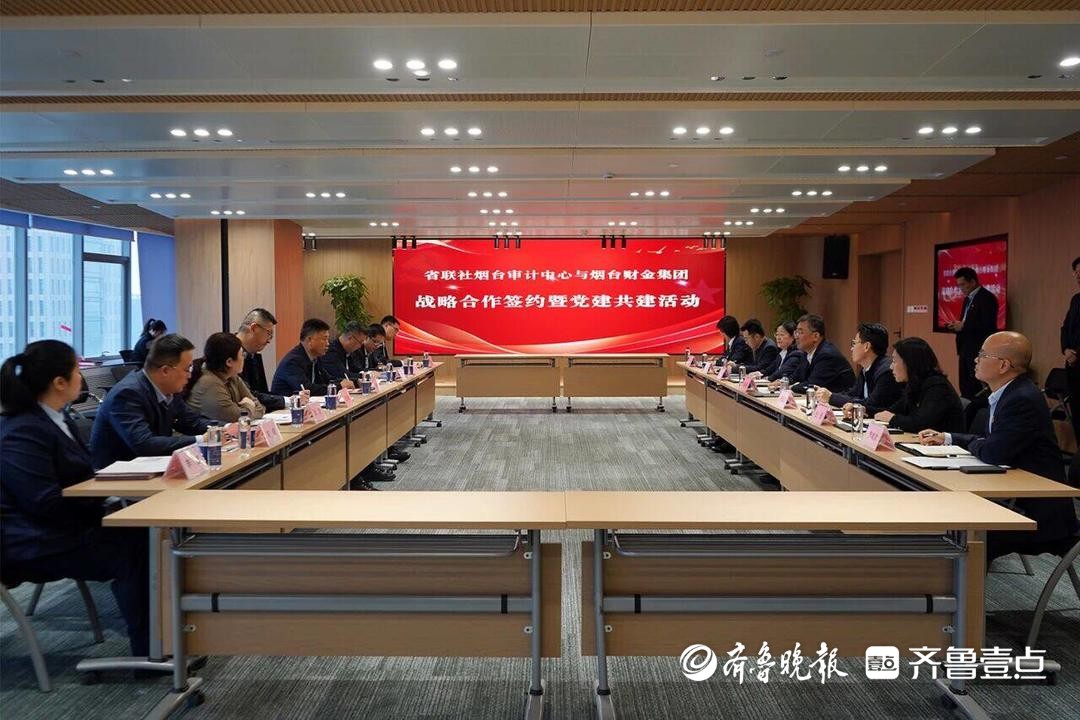
烟台财金集团与省联社烟台审计中心签约战略合作
Qi Lu Wan Bao· 2025-12-03 13:02
Core Insights - The strategic cooperation and party-building agreement between Yantai Audit Center of Shandong Rural Credit Cooperative Union and Yantai Financial Group aims to leverage party leadership to enhance the integration of party-building and business operations, ultimately benefiting the regional economy and promoting high-quality industrial development [1][6]. Group 1 - The signing ceremony was attended by key leaders from both organizations, including Li Yingbo, the Secretary and Director of the Audit Center, and Tian Xurun, the Secretary and Chairman of the Financial Group, highlighting the importance of this collaboration [1][6]. - Prior to the signing, the Audit Center delegation visited the Yantai Financial Group's cultural exhibition hall to understand its development history, business layout, and strategic planning, indicating a thorough preparation for the partnership [3]. - The two parties engaged in in-depth discussions on cooperation directions such as investment-loan linkage and financial service innovation, expressing a mutual desire to deepen collaboration for regional financial development [3][7]. Group 2 - The signing of the strategic cooperation agreement and party-building agreement marks the beginning of a new chapter in deep collaboration aimed at serving the real economy and optimizing the financial ecosystem [6][7]. - This partnership is seen as a practical implementation of corporate social responsibility and a strategic choice for sharing local financial strength and state-owned capital resources, emphasizing the importance of synergy and mutual promotion of business [7]. - Moving forward, both parties plan to utilize their respective strengths and resources under the guidance of party leadership to enhance collaborative innovation and explore new ways to serve the real economy [7].
银行系千亿资金涌向科创赛道,多地拼抢AIC扩围先机
Sou Hu Cai Jing· 2025-12-03 11:56
Core Insights - The establishment of bank-affiliated Asset Investment Companies (AICs) is aimed at addressing the issues of "lack of long-term capital" and "insufficient resources" in the industry, directing financial capital towards technology enterprises to support innovation and new industry development [1][8] Group 1: AIC Establishment and Operations - The recent opening of 招银投资 (Zhaoyin Investment) by 招商银行 (China Merchants Bank) marks a significant step in the acceleration of AICs, with a registered capital of 150 billion yuan [3][4] - Other banks, such as 兴业银行 (Industrial Bank) and 中信银行 (CITIC Bank), have also established their AICs, with registered capitals of 100 billion yuan each [4][3] - AICs are expected to play a crucial role in the technology finance market, providing stable capital support for technology enterprises [2][8] Group 2: Business Models and Funding Sources - 招银投资's business models include debt-to-equity swaps, equity-for-debt exchanges, asset management product issuance, and private equity fund establishment [3][4] - Funding sources for AICs include registered capital, targeted reserve requirement funds from the People's Bank of China, interbank borrowing, and issuance of private asset management products [3][4] Group 3: Market Dynamics and Trends - The AIC market is evolving from being dominated by state-owned banks to a more diversified landscape with the entry of joint-stock banks, which is expected to reshape competition [10] - AICs are increasingly seen as a new force in supporting technology enterprises, with significant capital being mobilized across various regions [7][8] - The investment focus of AICs is primarily on sectors such as semiconductors, new energy, biomedicine, intelligent manufacturing, and artificial intelligence [7][8] Group 4: Challenges and Future Outlook - The AIC model in China is still in its early stages and faces challenges such as immature market investment mechanisms, limited exit channels, and the need for improved research and risk management capabilities [12] - There is a growing emphasis on integrating "patient capital" with traditional banking capabilities to better serve technology innovation [10][12]
注册资本150亿元!“零售之王”大动作!
证券时报· 2025-12-02 15:35
Core Viewpoint - The establishment of China Merchants Bank's wholly-owned subsidiary, China Merchants Financial Asset Investment Co., Ltd. (referred to as "China Merchants Investment"), marks a significant development in the financial asset investment sector, with a registered capital of 15 billion yuan, the highest initial capital among joint-stock bank AICs at inception [1][3][10]. Group 1: Company Overview - China Merchants Investment was officially launched on December 2, 2023, in Shenzhen, following its approval for establishment in July and operational approval in late November [1][3]. - The company aims to leverage opportunities from national policies, technological innovation, and capital market development, positioning itself as a leader in the financial asset investment industry [3][10]. Group 2: Strategic Goals - The company intends to enhance its mission by focusing on technological self-reliance and innovation, targeting emerging and future industries [3][10]. - It aims to become a top-tier investment institution by improving its research, investment management, risk management, technological, and innovative capabilities [3][10]. - China Merchants Investment will adhere to value investing principles, promoting long-term capital and creating a new ecosystem of investment and lending [3][10]. - The company plans to strengthen collaboration with its parent bank and the China Merchants Group to maximize synergies [3][10]. - It seeks to expand its investment network, attracting more long-term and quality capital into the technology innovation sector [3][10]. Group 3: Business Focus - China Merchants Investment will concentrate on market-oriented debt-to-equity swap operations and participate in pilot equity investment projects under regulatory guidance, aiming to empower technological innovation [3][10]. - The company is committed to providing comprehensive financial support throughout the lifecycle of its clients, reducing corporate leverage, and facilitating enterprise transformation and upgrading [3][10]. Group 4: Industry Context - The expansion of AICs is seen as beneficial for supplementing long-term and patient capital, particularly for supporting technology-driven enterprises [6][10]. - The regulatory environment is evolving, with recent policies expanding the scope of AIC equity investment trials to more cities, indicating a growing trend in the financial sector [10]. - Analysts suggest that AICs could become crucial for banks to engage in technology finance and equity markets, especially as traditional lending margins shrink [10].