
数字化变革

Search documents
一颗山核桃的“发展活力”
Hang Zhou Ri Bao· 2025-10-24 03:01
Core Viewpoint - The integration of technology and financial support has transformed the walnut industry in Lin'an, enhancing production efficiency and product quality, thus contributing to rural revitalization [2] Group 1: Industry Transformation - The walnut industry in Lin'an has shifted from a reliance on manual labor to a more technology-driven approach, utilizing harvesting machines, drones, and automated production lines [2] - Financial backing from Hangzhou Rongdan Group has provided over 110 million yuan in guarantees to more than 30 walnut processing companies, facilitating a transition from high yield to high quality and value [2][5] - The industry previously faced challenges such as reliance on manual labor, low standardization, and significant fluctuations in production and quality [2][5] Group 2: Financial Solutions - Hangzhou Rongdan Group has developed a "precise drip irrigation" financial plan tailored to the specific needs of enterprises, addressing issues like raw material purchase funding shortages and insufficient investment in technological upgrades [3][5] - The group has implemented measures such as expedited approval processes for urgent funding needs during harvest season and reduced interest rates for significant technological investments [5] Group 3: Case Studies - Zhejiang Junhui Food Technology Co., Ltd. has benefited from nearly 10 million yuan in guarantee support, allowing it to secure raw materials and enhance production capacity from under 10,000 tons to 30,000 tons annually [5] - The industry leader, Yao Sheng Ji, has adopted digital transformation, improving sorting efficiency by over 15% and reducing costs by 10% through the introduction of automated processes supported by a 20 million yuan loan [6] - The market recognition and added value of the "Lin'an Walnut" regional public brand have been steadily increasing, with companies shifting from OEM to building their own brands and developing differentiated products [6]


校企携手育英才——工银瑞信投教基地走进中国政法大学开展《SQL基础入门》之表与视图课程
Xin Lang Ji Jin· 2025-10-16 09:21
Core Insights - The article emphasizes the importance of integrating investor education into national education as part of the public fund industry's mission for inclusive finance [1][2] - The event at China University of Political Science and Law focused on teaching SQL basics, aiming to enhance students' understanding of financial digitalization and professional skills [1] - The teaching approach included practical applications of financial data management, making abstract concepts more accessible to students [1] Group 1 - The event was part of a series aimed at promoting high-quality development in public funds, with a specific focus on financial technology and investor protection [2] - The course was designed to create a strong foundation in both theoretical knowledge and practical skills, aligning with the digital transformation needs of the financial industry [2] - The interactive nature of the class encouraged students to engage actively, leading to a better understanding of the application value of digital technology in finance [1] Group 2 - The initiative aims to cultivate a new generation of professionals who are well-versed in both finance and technology, contributing to the broader goal of integrating investor education into the national curriculum [2] - Future plans include enhancing the curriculum with more targeted and practical course content to meet the evolving demands of the financial sector [2]
风华高科以系统重构驱动智能制造,推动数字化变革
Jing Ji Wang· 2025-10-11 08:19
Core Insights - The company is implementing a digital transformation strategy centered around the FAITH management philosophy to enhance high-level manufacturing capabilities and achieve high-quality development [1] Group 1: Digital Transformation Initiatives - The company is building an integrated system comprising MES, ERP, WMS, and WCS to shift data from static storage to dynamic empowerment, significantly improving efficiency across various operations [2][3] - The MES system, set to be fully operational by 2025, aims to achieve dual improvements in quality and efficiency by automating key equipment operations and establishing a quality control loop, enhancing manual inspection efficiency by approximately 20% [2] - The ERP platform focuses on optimizing resource management through centralized sales, procurement, and payment processes, resulting in a 9.7-fold increase in BOM efficiency and a 12.4-fold increase in process route efficiency [2] Group 2: Logistics and Delivery Enhancements - The company is progressively establishing WMS systems across product units to improve logistics and delivery, ensuring effective shipment control in product substitution scenarios [3] - The WCS system is being developed to facilitate intelligent warehousing operations, including automated inventory checks, laying the groundwork for a fully automated logistics system [3] Group 3: Intelligent Manufacturing and System Integration - The digital transformation strategy follows a three-step approach: automation, digitalization, and intelligence, focusing on deep system collaboration and smart factory development [5] - The integration of APS, ERP, MES, and WMS systems will create a closed-loop management process that enhances order response speed and overall operational efficiency [5] - The company is adopting a "demonstration-led, comprehensive promotion" strategy to scale up intelligent manufacturing, identifying nine smart manufacturing scenarios for replication [5] Group 4: Technology and Quality Control - The company is leveraging intelligent technology to integrate business scenarios, ensuring the transition from technology implementation to value realization [6] - RPA digital robots are being utilized to enhance decision-making by automating data analysis across production, inventory, and sales, while the SCADA system is being developed to improve data collection and monitoring [6] - The establishment of a unified data platform through SCADA and MES integration will enable real-time quality parameter monitoring and proactive quality management, reinforcing product quality assurance [6]

在白沟,这里有北方商埠的流量密码
Jing Ji Guan Cha Wang· 2025-10-08 22:57
Core Insights - Bai Gou has transformed from a traditional market to a digital trade hub, producing nearly 50 billion yuan in bag output annually and serving 199 countries and regions globally [1][6] - The local economy is supported by a robust logistics network and a vibrant e-commerce ecosystem, with over 40,000 e-commerce entities and nearly 80,000 employees involved in the bag industry [6][11] Historical Context - Bai Gou's commercial roots date back to its historical significance as a water and land port, thriving during the Song and Liao dynasties as a hub for border trade [2] - The evolution of Bai Gou's market from street stalls in the 1980s to modern enterprises reflects a significant transformation in its commercial landscape [5] Industry Development - Bai Gou has become one of China's largest bag production and sales bases, with a complete industrial chain supporting its growth [6] - The local bag industry benefits from a flexible supply chain and a quick response to market changes, allowing for rapid design-to-production cycles [7] E-commerce and Digital Transformation - The rise of e-commerce has led to a shift from traditional sales to online platforms, with Bai Gou's e-commerce industry recognized as an innovative case for development [8][11] - A complete ecosystem for live-streaming e-commerce has emerged, with various associations and parks supporting the growth of this sector [9] Cross-border E-commerce - Cross-border e-commerce is identified as a new growth point, with Bai Gou's bag exports reaching 199 countries and regions, supported by a new cross-border e-commerce industrial park [11] - The local government provides financial support and training to facilitate the transition of traditional merchants to digital platforms [12] Consumer Experience and Tourism - Bai Gou is evolving from a wholesale destination to a comprehensive consumer experience center, integrating various business functions and enhancing tourism [14][15] - The introduction of experiential consumption is reshaping the local commercial ecosystem, attracting visitors for both shopping and leisure [16][18] Future Prospects - Bai Gou's digital infrastructure is being developed as a key driver for future growth, with real-time data analytics guiding production decisions [19] - Ongoing infrastructure projects, such as the R1 line rapid transit, will further integrate Bai Gou into the Beijing-Tianjin-Hebei economic region, enhancing its logistical capabilities [20]
十月行记|在白沟,这里有北方商埠的流量密码
Jing Ji Guan Cha Bao· 2025-10-08 02:23
Core Insights - The article highlights the transformation of Baigou into a global hub for luggage production and e-commerce, showcasing its historical significance and modern commercial evolution [1][2][5][19]. Group 1: Historical Context - Baigou has a rich commercial history, originally serving as a vital water and land port, facilitating trade since the Song and Liao dynasties [2]. - The town's commercial legacy continues to thrive, with local residents sharing stories of market changes and adaptations over generations [4][3]. Group 2: Economic Impact - Baigou's annual luggage production value reaches nearly 50 billion yuan, with products exported to 199 countries and regions, and an average of 1.2 million express deliveries daily [1][6]. - The town hosts over 40,000 e-commerce entities and employs nearly 80,000 people, forming a complete luggage industry chain [6]. Group 3: E-commerce Development - The rise of e-commerce has significantly impacted Baigou, with traditional markets adapting to online sales, including live streaming and micro-businesses [8][9]. - Baigou's e-commerce ecosystem has developed a complete closed loop, including various industry associations and specialized e-commerce parks [9][12]. Group 4: Supply Chain and Production - The success of Baigou's luggage industry is attributed to its flexible supply chain and quick market responsiveness, allowing rapid design-to-production cycles [7][14]. - Local businesses have shifted to a model of small-batch production, enabling quick adjustments based on market feedback [14]. Group 5: Future Prospects - Baigou is evolving into a comprehensive consumption experience center, integrating shopping, cultural tourism, and business services [15][16]. - The town is enhancing its digital infrastructure, with plans for a new rapid transit line to improve connectivity with the Beijing-Tianjin-Hebei region [21][20]. - The local government supports e-commerce development through funding and training initiatives, fostering a conducive environment for traditional merchants to transition to digital platforms [12].
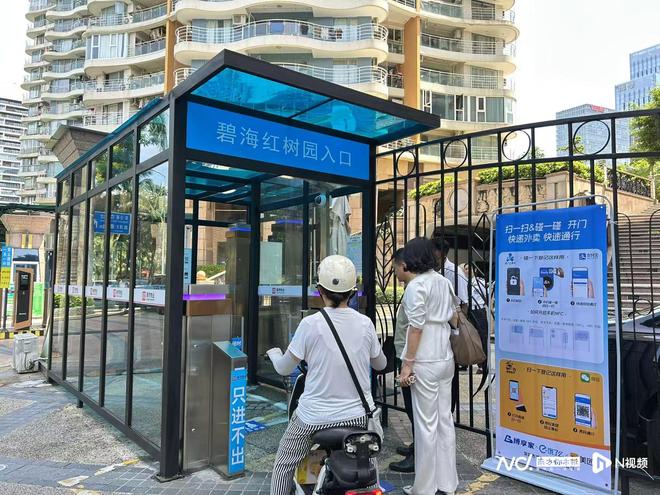
从“人防”到“技防”,全市首台AI门岗机器人落地福田这里
Nan Fang Du Shi Bao· 2025-09-20 03:00
Core Insights - The introduction of the "AI Gatekeeper Robot" in the Bihai Hongshu Garden community represents a significant shift from human-based security to technology-based security, enhancing both safety and convenience for residents [1][4][5] - The system integrates advanced technologies such as artificial intelligence, IoT, and cloud computing, allowing for multiple authentication methods including facial recognition, card swiping, and QR code scanning [1][4] Group 1: Technology Implementation - The "AI Gatekeeper Robot" improves security levels while providing a seamless entry experience for residents, as demonstrated by the quick facial recognition process [4] - The system can detect tailgating attempts and alerts the management center, ensuring that unauthorized individuals cannot gain access [4] - The integration with food delivery platforms like Meituan and Ele.me allows for real-time verification of delivery orders, enhancing security and convenience for residents [4][5] Group 2: Industry Transformation - The digital access system is a model for the broader digital transformation in the housing and construction sector in Futian District, aligning with the Ministry of Housing's requirements for safe, comfortable, green, and smart housing [5][6] - The Futian District Housing and Construction Bureau is actively exploring full-chain digital transformation across various sectors, including construction sites and property management, to drive productivity changes in the industry [6] - The use of advanced technologies such as DeepSeek, large language models, and intelligent decision engines is aimed at creating efficient digital employees that can handle numerous engineering review tasks [5][6]

海尔智家20250918
2025-09-18 14:41
Summary of Haier Smart Home Conference Call Company Overview - **Company**: Haier Smart Home - **Date**: September 18, 2025 Key Points Industry Performance - **Overseas Business Growth**: Haier's overseas business showed steady growth, with emerging markets like South Asia, Southeast Asia, and the Middle East and Africa achieving double-digit growth. The U.S. market experienced low single-digit growth, aligning with the company's plans for high single-digit to double-digit growth overall [2][3] Financial Impact of Subsidy Policies - **Subsidy Policy Changes**: The impact of national subsidy policy adjustments on Haier was limited. Despite some regions suspending subsidies, the refrigerator and washing machine categories maintained low single-digit growth, while the air conditioning category benefited from high temperatures, exceeding 15% growth [2][4] Market Expansion Strategies - **HVAC Market Expansion**: Haier is actively expanding its HVAC market in Europe and the U.S., with European HVAC business growing over 20% in the first half of the year and the U.S. market achieving double-digit growth. The company plans to strengthen its overseas HVAC market presence and seek acquisition opportunities [2][8] Digital Transformation - **Operational Efficiency**: Haier is enhancing operational efficiency through digital transformation, including creating popular products, reducing SKU numbers, increasing the self-manufacturing ratio of core components, and advancing digital inventory management, which effectively lowered sales and management expense ratios [2][13] Product Innovation - **New Product Launches**: Haier continues to drive product innovation, such as launching the "Lazy Wash" series of washing machines aimed at younger consumers and promoting embedded technology in refrigerators to meet consumer demands and maintain market competitiveness [2][14][15] Sales Performance Trends - **Sales Trends**: Since the third quarter, domestic and overseas sales have maintained the overall trend from the first half of the year, with domestic revenue growth reaching high single-digit to double-digit levels, and air conditioning continuing to grow over 15% [3][5] Future Outlook - **Revenue and Profit Growth Goals**: Haier aims to maintain high single-digit revenue growth and double-digit profit growth for the upcoming years, with a commitment to a dividend payout ratio of no less than 50% for 2025 and 2026 [4][20][21] Market Share Strategy - **Air Conditioning Market Share**: Haier plans to enhance its air conditioning market share through strategies such as creating popular products, improving online retail capabilities, and utilizing digital inventory management. The company has seen a nearly one percentage point increase in overall market share compared to last year [12] Supply Chain Management - **Local Production Strategy**: Approximately 60% of Haier's revenue in the U.S. comes from local production, with plans to build a new washing machine factory by 2027 to further reduce tariff impacts [4][18] Competitive Landscape - **Response to Competitors**: Haier views the high-end appliance rental business launched by Samsung and LG in Southeast Asia as not yet mainstream and does not plan to compete directly in this segment for the time being [10] Capital Expenditure Plans - **Investment Plans**: Haier's capital expenditure budget for the coming years is set at 8 to 10 billion RMB, focusing on global capacity expansion projects, including new factories in Thailand and the U.S. [20] Market Entry in Brazil - **Brazil Market Strategy**: Haier currently has no specific progress in the Brazilian market but plans to negotiate with local partners for potential breakthroughs in the second half of 2025 [19]

深度分销救了销量,却落入了“低人效”陷阱
3 6 Ke· 2025-09-15 04:26
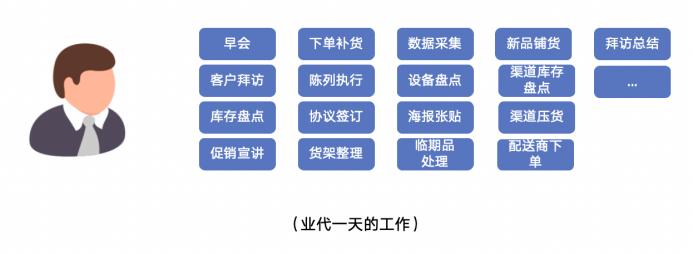
Core Viewpoint - The fast-moving consumer goods (FMCG) industry is trapped in a "low labor efficiency" dilemma due to its deep distribution model, which requires extensive manpower and repetitive tasks to manage sales across various channels and markets [1][2][20]. Group 1: Characteristics of Deep Distribution Model - The deep distribution model is characterized by multi-level coverage from urban to rural markets, necessitating a large sales force [1]. - Collaboration between manufacturers and distributors is essential for effective sales operations, requiring significant communication and coordination [1]. - The FMCG sector has a dense network of sales points, leading to high product turnover and frequent restocking needs [1]. - Impulse buying behavior in FMCG necessitates substantial investment in point-of-sale marketing to drive product sales [1]. Group 2: Challenges in Labor Efficiency - The complexity and repetitiveness of tasks faced by sales personnel contribute to low labor efficiency, with performance often measured solely by sales outcomes [2][3]. - The phrase "thousands of lines above, one needle below" illustrates the overwhelming nature of tasks assigned to sales staff, leading to confusion and inefficiency [2]. - Despite numerous tasks completed, the lack of effective performance metrics results in a persistent issue of low labor productivity in the industry [2]. Group 3: Digital Transformation for Efficiency Improvement - The formula for labor efficiency is defined as output per individual, highlighting the need for improved conversion of labor costs into business benefits [3]. - Digital transformation initiatives focus on enhancing collaboration efficiency and individual task efficiency through the implementation of digital systems like SFA and DMS [4][5][6]. - The digital transformation aims to streamline processes and reduce the time spent on individual tasks, thereby improving overall productivity [5][6]. Group 4: Industry Development Stages - The FMCG industry can be divided into three stages: rapid growth, slowing growth, and intensified competition, each with distinct challenges and technological advancements [11][13][14][16]. - In the rapid growth phase, digital management processes were established to enhance efficiency and reduce paperwork [13]. - The slowing growth phase saw the introduction of AI technologies to improve sales personnel efficiency and motivation through refined performance management [14]. - The current phase of intensified competition emphasizes the need for data-driven management and the application of generative AI to enhance labor efficiency [16][17][19]. Group 5: Future Directions - Future labor efficiency management will likely focus on quality terminal operations and data-driven task management, reducing reliance on subjective experience [19]. - The role of AI in task assignment and management is expected to increase, leading to a more streamlined and efficient sales process [19].
阿玛尼,低调奢华会沦为“奢侈品”吗?
3 6 Ke· 2025-09-08 00:23
Core Insights - The passing of Giorgio Armani marks the end of an era, raising questions about the future direction of the Armani brand and its strategic choices between consumer engagement and maintaining its low-key luxury ethos [2][3][10] Company Overview - Giorgio Armani, who passed away at the age of 91, was a transformative figure in fashion, establishing a brand valued at $12.1 billion and embedding the philosophy of "low-key luxury" into global fashion [2][3] - The Armani Group reported a 5% decline in consolidated net income for the fiscal year 2024, amounting to €2.3 billion, with EBITDA down 24% to €398 million, primarily due to a slowdown in luxury consumption in China [3][4] Market Trends - The global luxury goods market is projected to see a decline in consumer spending, with an estimated market size of €1.48 trillion in 2024, reflecting a year-on-year decrease of 1%-3% [4] - The number of global luxury consumers is expected to shrink from 400 million in 2022 to 350 million by the end of 2024, indicating a loss of approximately 50 million customers [4][10] Leadership Transition - Armani's succession plan involves a governance framework established over a decade ago, distributing control among trusted family members and partners, with a prohibition on major corporate actions for five years to maintain brand stability [5][10] - Key successors include family members who hold significant roles within the company, as well as long-time partner Pantaleo Dell'Orco, who has been a crucial support since the brand's inception [5][10] Industry Challenges - The luxury sector is undergoing structural adjustments, with a projected organic growth decline of 1% by Q2 2025, influenced by a weakening tourism market [6] - The Chinese luxury market, once a growth engine, is facing significant challenges, with a projected 17% decline in sales in 2024, and a notable shift towards overseas luxury purchases [7][10] Strategic Considerations - The future success of the Armani Group hinges on balancing heritage with innovation, as the new governance principles emphasize cautious acquisition strategies and the need for digital transformation [11] - The brand must also address sustainability and transparency demands from younger consumers, which are critical for maintaining relevance in the evolving luxury market [11]
从券商9月金股行业唯一推荐,洞见海尔智家大转型逻辑
Jin Tou Wang· 2025-09-05 02:06
Core Viewpoint - The article highlights Haier Smart Home as the only recommended company in the home appliance sector by various securities firms, emphasizing its differentiated competitive advantage through digital transformation and a focus on smart home strategies amid challenges in the industry [1] Group 1: Policy Dividend Decline - The home appliance industry faces common challenges due to the expected decline of policy subsidies, which previously stimulated market growth [2] - Haier Smart Home has embraced AI and developed a Uhome model to enhance its ability to create popular products, achieving significant growth for its brands, with increases of over 15% for Leader, 18% for Haier, and over 20% for Casarte [2] Group 2: Demand Structure Upgrade - The shift from standardized product consumption to personalized value consumption necessitates a digital transformation to meet diverse consumer needs [3] - Haier Smart Home's digital transformation encompasses the entire value chain, improving operational efficiency and reducing costs, with design costs down by 5.98% and manufacturing costs reduced by over 8% [3][4] Group 3: Global Competition Intensification - The international trade environment poses challenges for Chinese home appliance exports, making global branding essential for survival and growth [6] - Haier Smart Home has achieved 11.66% growth in overseas markets through diversified global strategies and localized operations, demonstrating its competitive edge in the global market [6]