
衰退

Search documents
每日投行/机构观点梳理(2025-10-21)
Jin Shi Shu Ju· 2025-10-21 10:14
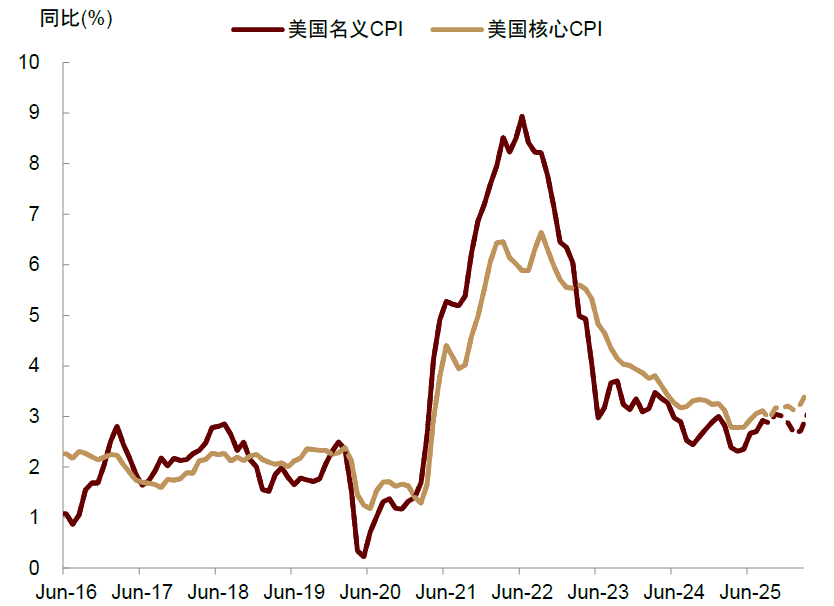
Group 1 - Morgan Stanley suggests shorting the dollar in a "blonde girl" environment where US stocks rise while Treasury losses are controlled [1] - Bank of America warns that tightening credit conditions may trigger passive selling, indicating potential bear market signals for the stock market [1] - Goldman Sachs expects a 0.3% month-on-month increase in both overall and core CPI for September, maintaining core inflation around 3.1% [2] Group 2 - Societe Generale indicates that a mild recession in the US could lead to a weaker dollar due to potential rate cuts [3] - UBS believes that the Bank of Japan is likely to raise interest rates in the coming months, supported by rising long-term inflation expectations [4] - Citigroup does not anticipate that the new Japanese Prime Minister will pressure the Bank of Japan to avoid rate hikes, given the current economic context [5] Group 3 - Goldman Sachs predicts Brent crude oil prices will drop to $52 per barrel by Q4 next year, citing inventory increases and refining margins [8] - Singapore Bank notes that investors may still be keen to increase gold allocations during price pullbacks, raising their 12-month gold price forecast to $4,600 per ounce [9] - Canadian banks forecast record corporate earnings for Q3, supporting the Toronto stock market's upward trend [10] Group 4 - Huachuang Securities reports a recovery in fund allocations to credit bonds, suggesting opportunities in 4-5 year maturities [11] - Galaxy Securities highlights a market style shift benefiting the food and beverage index, with a focus on new consumption trends [12] - CITIC Securities observes a divergence in economic data for September, with production remaining resilient while demand indicators decline [13] Group 5 - CITIC Securities notes that recent adjustments to Hainan's duty-free shopping policy could boost sales, enhancing consumer experience and increasing foot traffic [14] - CITIC Securities also reports advancements in solid-state battery technology, which may accelerate the commercialization process [15]
外媒:美国的灾难才刚开始,一个致命错误,代价太大了
Sou Hu Cai Jing· 2025-10-15 12:43
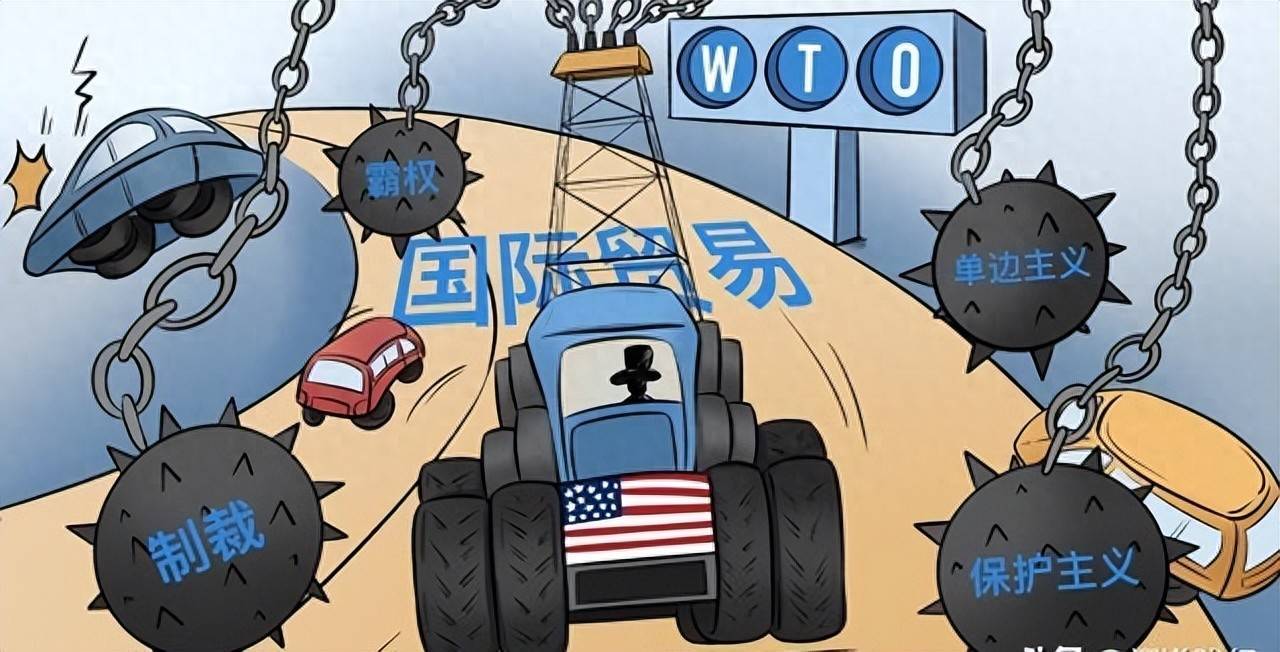
Group 1 - Midwestern farmers are facing a crisis as the loss of a major Chinese buyer has led to a surplus of soybeans and corn, causing prices to plummet [1] - A report from Yale indicates that tariffs and foreign retaliation could reduce U.S. GDP growth by 0.5 percentage points and increase unemployment by 0.2 percentage points by 2025 [1] - Nomura Securities predicts that U.S. GDP growth in 2025 will only be 0.8%, which is worse than the aftermath of the 2009 financial crisis [1] Group 2 - Goldman Sachs raised the probability of recession from 35% to 45%, while JPMorgan forecasts a recession in the second half of the year [3] - The Federal Reserve's efforts to control inflation are being undermined by tariffs, leading to increased import costs that consumers must bear [3] - Major retailers like Walmart and Delta Airlines have publicly complained about rising costs due to tariffs, which are affecting profit expectations [3] Group 3 - The European Union imposed tariffs on $26 billion worth of U.S. goods, with Canada retaliating with a 25% tariff on automobiles, disrupting supply chains [6] - Canada and Mexico have united in their response, causing significant disruptions in U.S. automotive production [6] - The U.S. Commerce Secretary downplayed recession concerns, suggesting that short-term pain is necessary for long-term benefits [6] Group 4 - In April, China announced a 34% tariff on all U.S. imports, which was later reduced to 10% for a limited time, causing significant distress among American farmers [8] - U.S. farmers are experiencing a drastic decline in business, with many unable to sell their crops and facing financial difficulties [8] - The tariffs intended to curb Chinese manufacturing have instead harmed American producers [8] Group 5 - Gold prices have surged by 50% since the beginning of the year, with predictions of reaching $4,900 by the end of the year [10] - A court ruling deemed many of Trump's tariffs illegal, which could have significant implications for the economy [10] - Yale's data indicates that tariffs are negatively impacting GDP and increasing unemployment concerns, with a 40% drop in orders observed in September [10] Group 6 - The U.S. national debt has reached $36 trillion, with annual interest payments of $1.2 trillion and a fiscal deficit of $1.83 trillion [12] - Tariff revenue has only amounted to $6.8 billion by the end of May, insufficient to cover the growing fiscal gap [12] - The OECD has downgraded U.S. growth forecasts to 1.8%, which is considered optimistic given the current economic climate [12]

中金:10月仍是中美流动性共振窗口期 AH股性价比配置更好
Zhi Tong Cai Jing· 2025-10-10 08:55
Core Viewpoint - The Federal Reserve has restarted interest rate cuts in September, entering a new phase of dollar easing, prioritizing "stabilizing growth" over "controlling inflation" due to rising unemployment risks and political pressure from Trump, with expectations of 3-4 consecutive rate cuts [1][2]. Group 1: Federal Reserve Rate Cut Phases - The Fed's rate cut cycle is expected to transition through three phases: a fast pace in 2025 Q4, a slowdown in 2026 H1, and a renewed acceleration in 2026 H2 [2][3]. - The first phase will see rapid cuts due to low inflation levels and urgent employment risks, while the second phase will involve a balance between growth and inflation risks, potentially halting balance sheet reductions [2]. - The third phase anticipates a more dovish Fed chair under Trump's administration, leading to accelerated rate cuts as inflationary pressures from tariffs diminish [2]. Group 2: Economic Outlook and Indicators - The U.S. economy is currently trending towards stagflation or recession, with stagflation being more likely, but a future recovery is expected due to the Fed's easing policies [4]. - Historical analysis shows that it typically takes an average of 12 months from the start of a rate cut cycle to reach a growth upturn, suggesting that a turning point may be near [4][5]. - A database of 16 core economic indicators has been developed to track turning points, with consumer and employment data being critical for predicting economic recovery [5][6]. Group 3: Market Implications - October is projected to be a liquidity resonance window, favoring a loose trading environment for various asset classes, including stocks and gold [6][7]. - The Chinese stock market is expected to perform well, with a recommendation to overweight A-shares and Hong Kong stocks, particularly in the tech sector [8]. - The U.S. stock market may underperform relative to non-U.S. markets during the dollar down cycle, with a cautionary note on the potential for increased volatility in the stock market [8][9]. Group 4: Asset Allocation Recommendations - The recommendation is to maintain a high risk appetite in October, with a focus on Chinese equities and a balanced allocation to U.S. bonds and stocks [7][10]. - Investors are advised to monitor policy changes closely in October and November, adjusting asset allocations as necessary based on liquidity conditions [10].
中金:预期9-10月中美流动性环境延续共振 继续超配A股、港股、黄金
智通财经网· 2025-10-10 00:33
Core Viewpoint - The report from CICC anticipates that the liquidity environment between China and the U.S. will continue to resonate from September to October, with the dollar in a downward cycle, benefiting various asset classes including stocks, bonds, gold, and commodities [1][28]. Group 1: Market Outlook - October is expected to remain a favorable macroeconomic period, similar to September, suggesting a high risk appetite and an overweight position in Chinese stocks [1][28]. - The dynamic price-to-earnings ratio of the CSI 300 index is close to historical averages, indicating potential for further expansion compared to previous bull market peaks [1][28]. - A-shares and Hong Kong stocks offer better relative value compared to U.S. stocks due to the easing macro liquidity environment and the diminished independence and credibility of the U.S. dollar [1][35]. Group 2: Federal Reserve's Interest Rate Outlook - The Federal Reserve's interest rate cut cycle is expected to switch between "fast-slow-fast" phases, with the first phase starting in Q4 2025 characterized by rapid rate cuts due to rising inflation and employment risks [4][28]. - The second phase in H1 2026 will see a slowdown in rate cuts as inflation continues to rise, requiring a balance between growth and inflation risks [4][28]. - The third phase in H2 2026 may see accelerated rate cuts again, particularly if a more dovish Fed chair is appointed, and tariff impacts on inflation diminish [4][28]. Group 3: Economic Indicators and Asset Allocation - The U.S. economy is currently trending towards stagflation or recession, with stagflation being more likely, but the Fed's reintroduction of easing measures may eventually lead to growth recovery [8][28]. - Key economic indicators should be monitored to predict turning points in the economy, with a focus on consumption and employment data as leading indicators [16][21]. - The report suggests maintaining a focus on A-shares and Hong Kong stocks, while also being cautious of potential volatility in the market due to previous significant price increases [28][30]. Group 4: Gold and Other Assets - Despite a rapid increase in gold prices since the beginning of the year, the report advises to downplay short-term trading value and focus on long-term allocation opportunities, suggesting to accumulate on dips [1][35]. - The report highlights that during the dollar's down cycle, gold, commodities, and non-U.S. stocks tend to outperform U.S. stocks [5][35]. - The recommendation is to maintain an overweight position in gold due to the ongoing macro liquidity easing, despite short-term risks of price corrections [1][35].
“Buy the facts”: Will FED's Shift Support the US Dollar?
FX Empire· 2025-09-22 07:57
Group 1 - The US dollar has corrected higher despite dovish signals, indicating a market reaction to profit-taking by short sellers [1] - The market is anticipating new narratives and drivers for price action as the likelihood of three interest rate declines in 2025 is already priced in [1][4] - The US labor market shows signs of cooling, but GDP growth data for Q3 is not yet available, making recession predictions difficult [2] Group 2 - The 10-2 spread remains above zero, indicating a balanced situation, while the US manufacturing PMI has been below 50 since February, signaling weakness [3] - Despite weak signals, US stocks have performed steadily, with indices reaching new all-time highs alongside Gold [3] - The upcoming PCE index publication on September 25th is crucial for assessing inflation and interest rate stability [4] Group 3 - The official beginning of the interest rate decline cycle in the US may lead to speculation around selling the US dollar coming to an end [5] - Stronger-than-expected inflation data could lead to a rebound in EUR/USD and other USD-related pairs, while failure to break resistance may indicate Euro weakness against the dollar [5]
天风固收谭逸鸣:2025年9月美联储议息会议点评—“风险管理降息”背后的谨慎
Sou Hu Cai Jing· 2025-09-18 23:58
Core Viewpoint - The September FOMC meeting highlighted the risks of employment slowdown and raised the expectation for interest rate cuts in 2025, indicating a cautious but dovish stance from the Federal Reserve [1][2][3]. Economic Predictions - The FOMC's statement emphasized the risks of employment decline, removing the phrase "labor market remains robust" and adding concerns about "slowing job growth" and "increased risks to employment" [2]. - Economic forecasts were improved, with GDP projections for 2025, 2026, and 2027 raised, while the unemployment rate for 2026 and 2027 was slightly lowered. The core PCE forecast for 2026 was also increased [2]. Interest Rate Projections - The dot plot indicated an increase in the expected number of rate cuts in 2025 from 2 to 3, with further divergence in future expectations among FOMC members [2]. - The FOMC members anticipate 2 more cuts this year, 1 cut in 2026, and 2 cuts in 2027, reflecting increasing internal disagreement [2]. Powell's Statements - Chairman Powell described the rate cut as a "risk management cut," indicating no need for a significant reduction at this time and emphasizing that future decisions will depend on data [3]. - Powell noted that while the unemployment rate remains low, it has begun to rise, attributing the slowdown in job growth to factors such as reduced immigration and declining labor force participation, as well as potential impacts from AI [3]. Market Reactions - Following the FOMC announcement, U.S. Treasury yields rose, and stock markets showed mixed results, with gold prices declining. The market reacted to Powell's cautious tone regarding future rate cuts and the balance between employment and inflation targets [4]. - CME data indicated increased market confidence in two more rate cuts this year, although expectations for cuts in 2026 were pushed back [4]. Future Rate Cut Scenarios - Three potential scenarios for future rate cuts were outlined: 1. **Soft Landing Scenario**: The U.S. economy achieves a soft landing without major recession or stagflation, with two more cuts this year and three in 2025, influenced by political pressures [5][6]. 2. **Recession Scenario**: A significant economic downturn occurs, leading to a sharp rise in unemployment or a stock market crash, prompting the Fed to implement substantial cuts [5]. 3. **High Inflation Scenario**: A historic high inflation or stagflation situation forces the Fed to prioritize inflation control, maintaining high rates for an extended period [6]. - The soft landing scenario is considered the base case with the highest probability, while the recession and high inflation scenarios are viewed as less likely at this time [6].
2025年9月美联储议息会议点评:“风险管理降息”背后的谨慎
Tianfeng Securities· 2025-09-18 04:16
Group 1 - The Federal Reserve's September FOMC meeting resulted in a 25 basis point cut to the federal funds target rate, marking the first rate cut of the year, with expectations for two more cuts in 2025 [1][8] - The FOMC statement highlighted the risks of slowing employment growth, removing previous language indicating a solid labor market, and introducing concerns about downside risks to employment [1][8] - Economic projections were adjusted, with GDP forecasts for 2025, 2026, and 2027 being raised, while unemployment rates for 2026 and 2027 were slightly lowered [9][10] Group 2 - Chairman Powell described the rate cut as a "risk management cut," indicating that there was no need for a significant reduction in rates and that future rate paths remain uncertain [2][13] - Powell noted that while the unemployment rate is still low, it has begun to rise, and employment growth is slowing due to factors such as reduced immigration and declining labor force participation [2][13] - Inflation expectations were adjusted, with Powell suggesting that the impact of tariffs on inflation is likely to be temporary, although there are still concerns about persistent inflation risks [2][13] Group 3 - Market reactions included a rise in U.S. Treasury yields and mixed performance in the stock market, reflecting the cautious tone of Powell regarding future rate cuts [3][14] - Following the FOMC announcement, market confidence in two additional rate cuts this year increased, with the probability of the federal funds rate reaching a range of 3.5%-3.75% by year-end rising to 79.9% [15][16] Group 4 - Three potential scenarios for future rate cuts were outlined: 1. Soft landing scenario, predicting two more cuts this year and three in 2026, with a stable economic outlook [4][19] 2. Recession scenario, where significant economic deterioration could lead to a larger cut of 50 basis points [4][19] 3. High inflation scenario, where persistent high inflation would necessitate maintaining higher rates for a longer period [4][19] - The soft landing scenario is considered the most likely, while the probabilities for recession and high inflation scenarios are viewed as lower [20]
9.16黄金最新行情走势分析及操作建议
Sou Hu Cai Jing· 2025-09-15 16:00
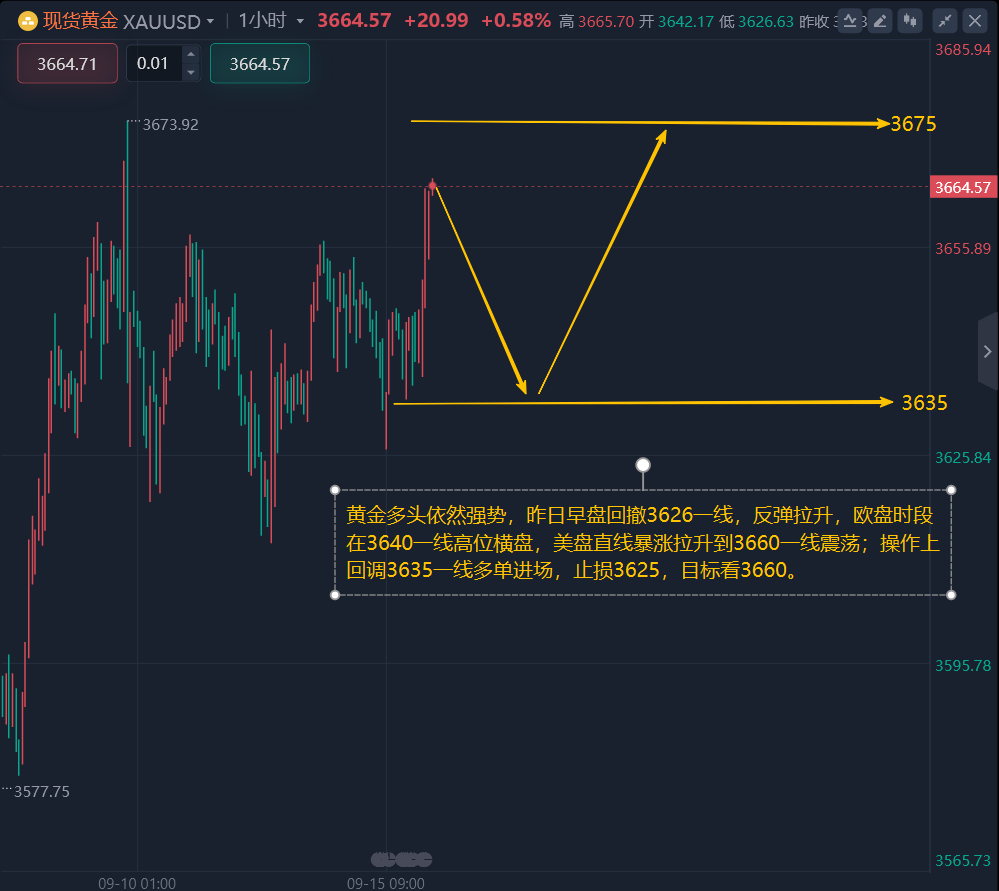
Core Viewpoint - Gold is positioned favorably between "stagflation" and "recession," with high CPI confirming persistent inflation and rising initial jobless claims reinforcing expectations for interest rate cuts [1] Group 1: Market Conditions - The combination of weak growth, loose policy, and sticky inflation is historically beneficial for gold [1] - Global central banks are continuing to de-dollarize, and frequent geopolitical conflicts are contributing to a favorable outlook for gold prices [1] Group 2: Price Movements - Gold has maintained a strong position above the 5-day moving average, with expectations for a potential breakout to new historical highs if it remains above this level [1] - Recent trading saw gold rebound from 3626, with a target range of 3620-3660, indicating a bullish sentiment [3] Group 3: Technical Analysis - Technical indicators show a bullish trend, with a golden cross on the 2-hour moving average and gold prices breaking through the upper Bollinger band [4] - Key support levels are identified at 3625-33, with a strong bullish stance maintained as long as prices stay above 3600 [4]
'Fast Money' traders talk all three major indices hitting new record highs after CPI report
Youtube· 2025-09-11 21:49
Market Overview - The market has experienced significant gains, with the S&P up nearly 10% and the NASDAQ up almost 12% following a V-shaped recovery [1] - Small-cap stocks have outperformed larger tech stocks, indicating a shift in market dynamics [3] Inflation and Economic Indicators - Recent jobless claims data has been surprising, with a noted increase in claims, marking the worst figures in four years [8] - Current inflation readings suggest that inflation remains a concern, particularly for consumers facing rising prices in essential goods and services [5][6] - The CPI data indicates persistent inflation, especially in services, which is described as "sticky" [3] Federal Reserve and Monetary Policy - The market appears to be pricing in more aggressive actions from the Federal Reserve than what may actually occur, raising concerns about potential overvaluation [4][5] - There is speculation that a rate-cutting cycle could provide a tailwind for the stock market, particularly if it leads to lower mortgage rates and subsequently lower CPI [7][9] - The Fed's current stance may inadvertently contribute to higher prices, as maintaining rates could be enforcing inflationary pressures [10] Consumer Impact - The cumulative effect of inflation is impacting consumers, particularly in essential areas such as groceries, gasoline, and utilities [5][6] - A weakening job market combined with rising inflation presents a challenging environment for consumers, potentially leading to recessionary conditions if trends continue [8]
多空决战的时刻到了?美银:鲍威尔的讲话或“引爆”美股
Jin Shi Shu Ju· 2025-08-22 03:02
Group 1 - Growth stocks in the US have experienced a sell-off, indicating market tension ahead of Federal Reserve Chairman Powell's speech at Jackson Hole [1] - Analysts from Bank of America suggest that small-cap stocks may see significant volatility following Powell's comments on monetary policy, with the Russell 2000 index being a key focus [1] - A dovish speech from Powell could trigger a rebound in small-cap stocks, while a more hawkish stance may lead to short-term declines as the market adjusts its rate cut pricing [1] Group 2 - There is uncertainty regarding whether the US economy is heading towards a recession, with differing opinions from economic experts [2] - Small-cap stocks are particularly sensitive to interest rates and refinancing risks, and their performance may be positively impacted by rate cuts if macroeconomic data remains stable [2] - The fate of small-cap companies largely depends on Powell's upcoming speech, highlighting the importance of his comments for market sentiment [2]