逆向思维

Search documents
重阳裘国根最新分享:深刻理解并运用这三种思维,将对我们的投资生涯有莫大助益……
聪明投资者· 2025-06-25 08:17
Core Viewpoints - The article emphasizes three universal principles from "Security Analysis" that transcend time: equity thinking, contrarian thinking, and risk thinking [1][19][20] Group 1: Equity Thinking - Investment is a game based on value, requiring a perspective from the owner's viewpoint, which is termed equity thinking [9][10] - Equity thinking serves as the foundation for long-termism, as only owners are willing to grow with the company [12][19] Group 2: Contrarian Thinking - The article discusses the human tendency of herd behavior, particularly in the stock market, which distorts investment actions [13][14] - Recognizing the cyclical nature of market emotions allows rational investors to question popular consensus and act contrary to the crowd [14][19] Group 3: Risk Thinking - The financial world is filled with "black swan" events that can have devastating impacts, highlighting the asymmetrical nature of financial risks [15][18] - Investment strategies must possess "traversability," meaning they should avoid irreversible actions that could lead to total loss [16][19]

市场波动是机遇的另一种形态
天天基金网· 2025-06-23 11:05
Core Viewpoint - The article emphasizes the importance of investing in resilient companies that can adapt to market fluctuations rather than attempting to predict policy changes or market movements [1][6]. Group 1: Market Reactions and Investment Strategies - Since the introduction of the reciprocal tariff policy in April, global markets have experienced significant volatility, with the S&P 500 index dropping approximately 20% from its peak before recovering most of the losses, resulting in positive returns year-to-date [1]. - Investment experts like Chris Davis and Bill Miller advocate for a long-term investment approach, focusing on companies with strong adaptability to navigate market fluctuations [2][3]. Group 2: Characteristics of Great Companies - Great companies that can weather economic cycles typically exhibit three key traits: 1. A management team with a genuine long-term vision, as exemplified by Amazon's Jeff Bezos, who fostered a culture of continuous innovation [3]. 2. Strong adaptability to changing environments, allowing companies to adjust proactively rather than reactively, which is a significant advantage of stocks over bonds [4]. 3. Valuation based on free cash flow, with a focus on future growth potential rather than just current earnings, to avoid "value traps" [5]. Group 3: Investor Psychology and Cash Risks - Investors often face psychological challenges during market downturns, where fear can lead to poor decision-making. Effective communication from investment advisors can help clients maintain a long-term perspective [5]. - The article highlights the risk of holding cash, noting that the purchasing power of the dollar has decreased by 89% since the author's birth, suggesting that cash may not be a safe haven but rather a hidden risk [6].


投资中的逆向思维:人多的地方不要去|投资小知识
银行螺丝钉· 2025-06-20 13:08
Core Viewpoint - The article emphasizes the importance of strategic asset allocation for families to optimize their wealth management and investment returns [1] Group 1: Industry Insights - The current market environment presents both challenges and opportunities for investors, particularly in the context of rising interest rates and inflation [1] - Diversification across various asset classes is highlighted as a key strategy to mitigate risks and enhance returns [1] Group 2: Company Analysis - Specific companies within the financial services sector are noted for their innovative approaches to asset management, which could provide competitive advantages [1] - The article discusses the performance metrics of leading firms, indicating a trend of increased assets under management (AUM) and revenue growth [1]

【寻访金长江之十年十人】景林资产高云程:投资经理最重要的能力是理性和相信常识
券商中国· 2025-06-17 02:00
Core Viewpoint - The article emphasizes the importance of rationality and common sense as the most critical abilities for investment managers, which help avoid significant pitfalls and maintain a long-term perspective in investment decisions [3][10]. Company Overview - Jinglin Asset Management, established in 2012, is one of the early and leading private fund managers in China, focusing on value investment and bottom-up fundamental research across A-shares, Hong Kong stocks, and U.S. equities [9]. Investment Philosophy - Jinglin adheres to a bottom-up investment strategy, assessing companies' long-term value with a focus on their competitive advantages, management teams, and corporate governance [6][14]. - The firm believes that truly long-term companies with pricing power and economic moats are extremely rare and should be held onto when identified [7][15]. Market Environment and Macro Research - Investment decisions should be made based on objective assessments of the macro environment, which cannot be changed by personal desires; instead, investors should adapt to existing conditions [5][12]. - The firm has shifted its focus to Chinese companies due to their lower valuations, despite macroeconomic pressures, indicating a strategic response to market conditions [20]. Research and Team Structure - Jinglin employs a unique model where fund managers share a common research platform, leading to consistent long-term performance across different managers [13]. - The firm emphasizes deep, comprehensive research, including extensive 360-degree evaluations of potential investments, involving various stakeholders [14]. International Expansion - Over the years, Jinglin has evolved from focusing solely on Chinese companies to researching industries in Asia and the U.S., enhancing its investment capabilities [17]. - Building a team capable of understanding overseas markets is crucial, as it involves grasping different business models and market dynamics [18][19]. Future Outlook - The private equity industry in China is expected to undergo consolidation, with a focus on quality over quantity, leading to the emergence of a few trusted firms over time [24]. - The Hong Kong market is anticipated to remain active, with increasing participation from international investors, which could provide better opportunities for Chinese companies [21].
“股神”徐翔是一个怎么样的人?
Sou Hu Cai Jing· 2025-05-31 11:24
Group 1 - The article discusses the controversial yet significant figure of Xu Xiang, known for his unique investment style and long-term high returns, leaving a legendary mark in the investment community [2] - Xu Xiang's early life was characterized by hard work and a strong dedication to studying finance, which laid the foundation for his future success in the securities industry [5][6] - His investment firm, Zexi, was known for its aggressive trading style and strict performance standards, focusing on absolute returns while also considering relative performance [12][13] Group 2 - Xu Xiang's work ethic was highlighted by his dedication to studying the stock market for over 12 hours a day, demonstrating an intense focus that contributed to his investment success [8][9] - The firm Zexi employed a rigorous assessment method for its researchers, emphasizing the importance of stock recommendations that would yield immediate gains and maintaining strict stop-loss measures [13][14] - The article illustrates the concept of contrarian thinking in investing, where Xu Xiang often went against prevailing market sentiments, leading to successful outcomes [14][18] Group 3 - The case of Chongqing Brewery is presented as a classic example of Xu Xiang's investment strategy, where he capitalized on market misjudgments despite negative news, showcasing the psychological aspects of stock trading [17][18] - The narrative emphasizes the importance of resilience in the face of market volatility, as demonstrated by Zexi's ability to recover from significant losses due to unforeseen events [19]

一查吓一跳,李嘉诚资产大揭秘:英国才是他的“金库”
Sou Hu Cai Jing· 2025-05-30 01:27
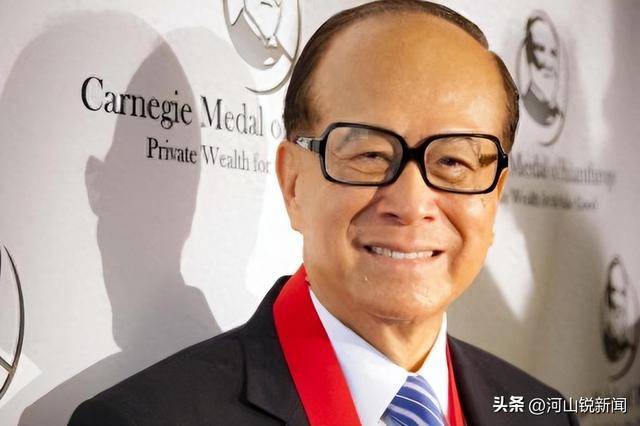
Group 1: Overview of Li Ka-shing's Business Empire - Li Ka-shing has maintained his status as Hong Kong's richest person for 21 consecutive years, building a vast business empire that spans across continents, particularly in the UK where he controls significant portions of essential services [1] - His overseas investments, especially in the UK, include controlling 30% of the electricity supply, 25% of gas services, and 7% of drinking water resources, showcasing a strategic approach to wealth accumulation [1][5] Group 2: Strategic Investments and Acquisitions - In 1986, during a global oil crisis, Li Ka-shing made a bold move by acquiring 52% of Husky Energy for 3.2 billion HKD, later increasing his stake to 95% and transforming the company into a major player in the energy sector [3] - His UK investments began in 1991 with the acquisition of the Thames River Dock, leading to the control of nearly one-third of the UK's container throughput by acquiring major ports and gas networks [5] - Li's acquisition of NGN gas network in 2005 for 557 million GBP now provides gas services to 25% of the UK population, while his 2010 purchase of National Grid's gas business for 11 billion GBP further solidified his influence in the energy sector [5] Group 3: Business Philosophy and Risk Management - Li Ka-shing's business philosophy emphasizes seizing opportunities during crises, as demonstrated by his land acquisitions during the 1967 Hong Kong riots, which later appreciated significantly [9] - His approach to risk management includes diversifying into stable sectors like electricity and water services, ensuring his asset portfolio remains resilient against economic fluctuations [12] - The narrative of Li's success reflects a long-term investment strategy, focusing on industries with slow but steady growth, allowing for compounding returns over time [14] Group 4: Controversies and Globalization - Li Ka-shing has faced scrutiny for his asset divestments in China, reportedly selling over 200 billion HKD worth of properties since 2013, while reallocating investments towards European infrastructure projects [11] - Despite criticisms of monopolizing the UK economy, his business practices illustrate a broader trend of globalization in capital allocation, where investments are directed towards regions with higher returns [11][16]
当基金亏损成为常态:放任不管的代价与人性博弈
Sou Hu Cai Jing· 2025-05-16 08:49
Core Insights - The article discusses the challenges faced by retail investors in the current financial market, particularly regarding the impact of fund losses on their investments and psychological well-being [2][3][4] Group 1: Fund Performance and Investor Behavior - Many retail investors are experiencing significant losses in their funds, leading to a "lying flat" mentality, which masks a deeper financial erosion [2] - A hypothetical investment of 100,000 yuan in a stock fund that loses 30% would leave the investor with only 70,000 yuan, while management fees continue to accrue [2] - Investors face a dilemma when considering redemption, as they incur fees of 0.5%-1.5%, and delaying redemption can lead to even greater losses [2][3] Group 2: Opportunity Costs and Market Timing - Being trapped in underperforming funds results in missed opportunities, such as the potential gains from AI-related ETFs that surged over 40% while traditional energy funds fell by 15% [3] - Historical data shows that 80% of stock market gains occur within just 20% of trading days, emphasizing the risk of missing out during market rebounds [3] - Behavioral finance indicates that when losses exceed 20%, a significant portion of investors may adopt a "ostrich mentality," avoiding market information and delaying decision-making [3] Group 3: Credit Impact and Legal Rights - Continuous losses can negatively affect investors' credit records, impacting their ability to secure loans or credit [3][4] - Investors have the right to take action against fund managers for negligence, as evidenced by a case where a quant fund was penalized for improper trading practices [4] - Strategies such as dollar-cost averaging and rebalancing can help mitigate risks during market fluctuations, allowing investors to navigate through volatile periods [4]

每次都是朋友圈涨停,做好投资到底需要几步?
天天基金网· 2025-05-14 11:34
以下文章来源于巴蜀养基场 ,作者九思基哥 为什么听起来很简单的投资,做好却很难? 投资说起来很简单,讲来讲去就是"低买高卖"、"价值投资"、"长线/逆向思维"、"资产配置"; 投资操作起来也很简单,开一个股票账户,或者是下载一个app,马上就能操作; 投资信息获取也很简单,互联网、自媒体、各种软件已经让信息是秒达; 投资赚钱似乎也很简单,到处都是资产翻了几倍的账户,处处都是股神。 巴蜀养基场 . 做好的理财经理教育,成为公募基金财富管理领域赋能的领先品牌,目前已服务280+金融机构和 100,000+理财经理。提供降费降佣背景下的行业各项解决方案(咨询、辅导、培训、基金产品测评、营 销策划等服务)基哥 18608036474(V信同号) 前天"中美关税政策调整"一出,朋友圈都是云涨停。 我一朋友刚刚减仓100万,当天晚上给我电话说有点着急了,错失了大涨; 结果昨天走势大跌眼镜,甚至都没有高开太多。昨晚该朋友又给我电话,昨天减仓了,实在是看不 懂这游戏。 PART. 0 1 但是做好投资的人很少,做好自己的投资也很难,为什么呢? 1.投资是跟人性对抗 参与投资的是人,人都是有情绪的,都是会出现"恐慌、焦虑、贪婪 ...

巴菲特泼冷水:投资成功不靠聪明脑瓜,靠啥?
Sou Hu Cai Jing· 2025-05-03 15:38
Group 1 - The core message emphasizes that emotional stability is more important for investment success than high intelligence, as highlighted by Warren Buffett's insights [1][3] - A study shows that investors with an IQ above 140 have a 15% lower long-term return compared to those with an IQ of 120, primarily due to overconfidence [3] - Buffett's approach during market downturns, such as the 2020 pandemic, illustrates his ability to remain calm and make informed decisions based on intrinsic value rather than panic [3] Group 2 - Emotional stability is characterized by the ability to withstand market fluctuations, as demonstrated by Buffett's long-term holding of Coca-Cola despite multiple downturns [3] - Buffett dedicates significant time to reading financial reports and news, focusing 70% of his energy on understanding potential mistakes, which is crucial for maintaining emotional stability [3] - Practical tips for ordinary investors to cultivate emotional stability include setting a cooling-off period before making purchases, limiting the frequency of account checks, and employing contrarian thinking [4]
为自己定出极高的时薪,让市场高攀不起
3 6 Ke· 2025-04-29 04:11
Core Insights - The article emphasizes the importance of reverse thinking in achieving success, particularly in entrepreneurship and personal development [6][10][14] - It discusses the concept of setting high personal value and pricing oneself accordingly, which can lead to innovative breakthroughs and better market positioning [9][23] - The narrative suggests that traditional paths of career advancement may not be effective, advocating for a mindset shift towards becoming the desired outcome before achieving it [16][20][22] Group 1: Reverse Thinking - Reverse thinking is defined as the mindset of declaring one's goals and aligning actions towards them, rather than following conventional paths [6][14] - The article highlights that successful individuals often possess the ability to think in reverse, which allows them to set ambitious goals and achieve them [10][15] - The author reflects on the limitations of conventional thinking, suggesting that it often leads to mediocrity and a lack of fulfillment [12][18] Group 2: Value and Pricing - The article argues that setting a high personal price can drive innovation and differentiate oneself in the market [9][23] - It discusses the importance of focusing on value creation rather than merely competing on price, which can lead to better financial outcomes [18][23] - The narrative illustrates that high-value offerings attract clients who are willing to pay, regardless of economic conditions [23] Group 3: Mindset Shift - The article advocates for a shift in mindset from a scarcity mentality to one of abundance, where individuals envision themselves in their desired roles and act accordingly [16][20] - It emphasizes that achieving significant goals requires a departure from traditional methods and a focus on becoming the person who can achieve those goals [21][22] - The author concludes that a change in thinking and approach can lead to a transformation in personal and professional outcomes [22][23]