
长期价值投资

Search documents
2026年大佬们的“作业”,可以直接抄了
天天基金网· 2026-01-09 09:28
Group 1 - The core sentiment among investors for 2026 is a mix of eagerness to enter hot sectors like AI and humanoid robots while being cautious of valuation bubbles in certain segments [1] - The article emphasizes the importance of professional investor insights during market uncertainty, suggesting that this is the best time to reference expert opinions [1] - Key sectors identified for investment opportunities include technology, commercial aerospace, and non-ferrous metals, with a focus on long-term value investing and index product allocation [5][6] Group 2 - There is a strong consensus (over 90%) among market participants regarding positive outlooks, but there is a need to manage positions carefully due to potential market volatility [5] - The article highlights a divergence in views on overseas markets, with some experts optimistic about opportunities in U.S. tech stocks post-Fed rate hikes, while others express concerns about U.S. economic recession risks and high valuations [5][6] - The discussion includes the importance of balanced asset allocation, particularly in fixed income and equity markets, as well as the potential for recovery in low-valued Hong Kong stocks [4][6]


公募自购升温 去年交易金额大增51.8%,锚定长期价值投资
2 1 Shi Ji Jing Ji Bao Dao· 2026-01-08 23:36
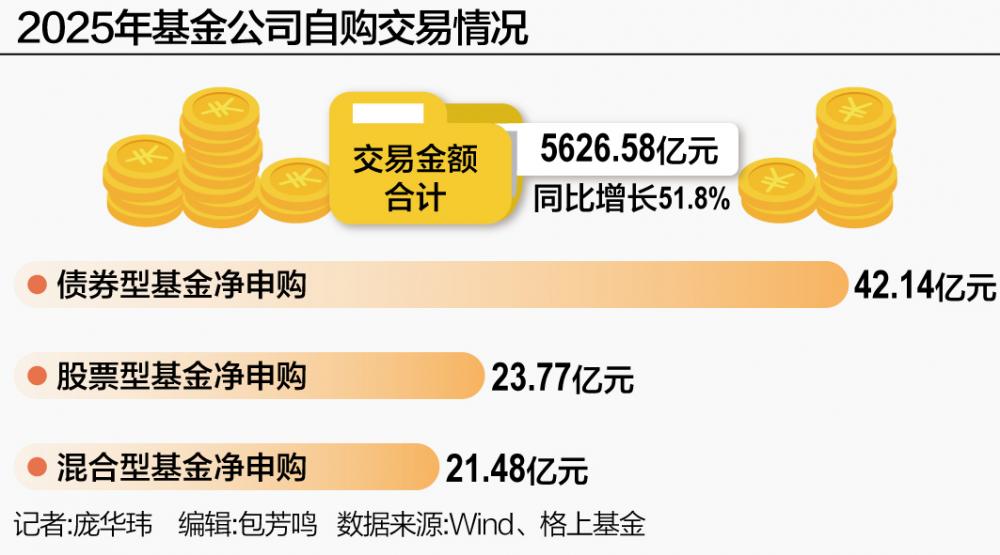
Core Viewpoint - In 2025, the public fund industry demonstrated strong confidence in the market through a large-scale "self-investment" initiative, indicating optimism for future market performance [1][11]. Group 1: Self-Investment Scale and Structure Changes - The total self-purchase transaction amount by fund companies reached 562.658 billion yuan in 2025, a significant increase of 51.8% compared to 370.651 billion yuan in 2024 [2][4][16]. - Non-monetary fund net subscriptions amounted to 9.339 billion yuan, a staggering increase of 130% year-on-year, while monetary funds faced nearly 200 billion yuan in net redemptions [2][12]. - Among non-monetary funds, bond funds led with a net subscription of 4.214 billion yuan, while stock and mixed funds saw net subscriptions of 2.377 billion yuan and 2.148 billion yuan, respectively, marking a reversal from net redemptions in 2024 [5][17]. Group 2: Focus on Index Funds - Index funds have become a key focus for self-purchases by public fund institutions, with passive index bond funds, passive index funds, and enhanced index funds collectively accounting for 49.55 billion yuan, representing over 53% of non-monetary fund self-purchases [6][19]. - Notably, eight index products had net subscription amounts exceeding 100 million yuan, indicating strong market interest [19]. Group 3: Market and Policy Drivers - The A-share market exhibited a "W-shaped" trend in 2025, with major indices showing impressive annual gains: the Shanghai Composite Index rose by 18.41%, the Shenzhen Component Index by 29.87%, and the ChiNext Index by 49.57% [8][21]. - Regulatory policies, particularly the China Securities Regulatory Commission's action plan released in May 2025, have incentivized long-term self-purchase behaviors by aligning the interests of fund managers and investors [21]. Group 4: Long-term Investment Trends - The self-purchase behavior in 2025 reflects a shift towards "increasing non-monetary, long-term, and normalized" investment strategies, moving away from short-term market stabilization tools [22]. - Companies are increasingly committing to long-term holdings, with many pledging to maintain self-purchased shares for no less than one year, signaling a focus on long-term value [23].
罗兰贝格:价值重构驱动中国并购交易再跃迁
Xin Hua Cai Jing· 2026-01-08 15:11
Group 1 - The core viewpoint of the report indicates that the Chinese investment and M&A market is experiencing a rapid recovery and profound structural transformation driven by value reconstruction, with strategic mergers and acquisitions becoming dominant [1][2] - The report highlights that the recovery in domestic M&A is driven by industrial integration upgrades, foreign capital adjustments creating domestic spin-off demands, and Chinese companies deepening overseas investments [1][2] - The exit side of the market is seeing a significant turnaround, with the Hong Kong IPO market entering a "big year" and the A-share market strengthening, providing smoother exit paths for previous investment projects and reshaping the investment-exit-reinvestment confidence cycle [1] Group 2 - Investment logic is undergoing a profound transformation, moving away from short-term arbitrage reliant on capital leverage to a more cautious approach focused on long-term value and strategic synergy [2] - Buyers are increasingly attentive to the integration potential of targets in areas such as technology, industrial chain synergy, and sustainable development, particularly in "hard technology," green transformation, high-end manufacturing, and digitalization [2] - Cross-border M&A is becoming an important component of the Chinese M&A market, helping Chinese companies gain new market shares and enhance global competitiveness through resource integration and technology upgrades [2] Group 3 - The report notes that both financial and industrial investors in the Chinese market are entering a phase of steady recovery, with comprehensive improvements across different stages of fundraising, investment, management, and exit [3] - State-owned investment platforms and funds are becoming more proactive and active, while insurance capital, guiding funds, and market-oriented VC and PE are also increasingly taking initiative [3] - Geopolitical changes are prompting some foreign institutions to adjust their resource investment strategies in China, leading to numerous local M&A opportunities [3]
2025年公募自购升温:金额大增51.8%,锚定长期价值投资
2 1 Shi Ji Jing Ji Bao Dao· 2026-01-08 13:05
Core Insights - The public fund industry in 2025 demonstrated strong confidence in the market through a significant self-investment action, with total self-purchase transactions amounting to 562.66 billion yuan, a substantial increase of 51.8% compared to 370.65 billion yuan in 2024 [1][2] Group 1: Self-Purchase Trends - The structure of self-purchases changed notably, with non-monetary funds seeing a net subscription of 9.34 billion yuan, a dramatic increase of 130% year-on-year, while monetary funds faced nearly 200 billion yuan in net redemptions [1][3] - Among non-monetary funds, bond funds led with a net subscription of 4.21 billion yuan, while stock and mixed funds saw net subscriptions of 2.38 billion yuan and 2.15 billion yuan, respectively, marking a reversal from net redemptions in 2024 [3] Group 2: Index Fund Focus - Index funds have become a key focus for public institutions' self-purchases, with passive index bond funds, passive index funds, and enhanced index funds collectively accounting for 49.55 billion yuan, over 53% of the total non-monetary fund self-purchases [4] - Notably, eight index products had net subscription amounts exceeding 100 million yuan, indicating strong market interest [4] Group 3: Market and Policy Drivers - The A-share market exhibited a "W" shaped trend in 2025, with major indices showing impressive annual gains: the Shanghai Composite Index rose by 18.41%, the Shenzhen Component Index by 29.87%, and the ChiNext Index by 49.57%, providing a favorable environment for fund self-purchases [5] - Regulatory policies, particularly the China Securities Regulatory Commission's action plan in May 2025, have incentivized long-term self-purchase behaviors by linking fund managers' interests with those of investors [5][6] Group 4: Long-term Investment Shift - The self-purchase behavior in 2025 reflects a shift towards long-term value investment, moving away from short-term market stabilization tools [6] - The demand for stable, transparent, and responsible investments is rising, prompting institutions to adopt self-purchases as a demonstration of their commitment and accountability [6][7] Group 5: Future Outlook - The trend of self-purchases is expected to become a standard practice among fund companies, with passive index funds likely to remain the preferred choice due to their low costs and transparent rules [6][7] - Future self-purchases will increasingly be linked to long-term performance, serving as a core reflection of fund companies' research capabilities and responsibility [7]
去年险资举牌超30次创近年新高 哪些标的受青睐?
Mei Ri Jing Ji Xin Wen· 2026-01-07 13:08
2025年,保险资金举牌上市公司继续升温。据中国保险行业协会披露,截至2025年末,险资年内举牌次 数超过30次,较此前几年显著增加,频次创下近年新高。 从举牌的标的来看,金融板块尤其受到险资青睐。数据显示,去年金融领域的举牌高达15次,涵盖6家 银行与2家保险公司,此外公用事业、交通运输等也是险资配置的重点。从举牌路径来看,H股是险资 举牌主场地。 有业内人士表示,上市银行普遍经营稳健,股票流动性好,股息率普遍较高,分红稳定且还具有升值空 间,因此是险资青睐的对象。而且H股的估值较A股呈现出一定的折价,增值空间更大,且通过港股通 投资还有一定的税收优惠,因此也是险资增配的关注点。 去年险资举牌次数上升 近两年,在政策推动"长期资本"入市的背景下,险资布局权益市场规模持续提升,2024年险资举牌次数 增至20次,2025年险资举牌次数则超过30次。 从参与主体来看,十余家险企在2025年进行举牌,其中,平安人寿最为活跃,以12次举牌居首。参与主 体以大中型险企为主,包括平安人寿、中国人寿、中邮人寿、长城人寿等。 从月度举牌次数来看,2025年8月险资举牌活动最为活跃,单月举牌7次。 其中,平安人寿举牌3次,标 ...
告别押注式增长:绩优基金画像揭示公募发展逻辑正在迭代
Zhong Guo Jing Ji Wang· 2026-01-07 00:38
Core Insights - The public fund industry in 2025 achieved a record high average return rate of 141.87% for the top 20 funds, with the leading product reaching an astonishing 233.29%, setting a new annual return record for the industry [1] - The industry is transitioning from a reliance on "star fund managers" to a more systematic and refined operational model, marking a significant evolution in investment strategies [1][9] Group 1: Performance and Trends - The top 20 active equity funds in 2025 showcased a clear evolution in their performance metrics, indicating a shift towards a "tool-based" approach rather than a "betting" model [1] - The average tenure of fund managers for the top 20 funds was 4.66 years, the lowest in the past decade, reflecting a trend towards younger managers with diverse professional backgrounds [2] - The average turnover rate for the top 20 funds decreased significantly to 309.49%, indicating a shift from high-frequency trading to a more stable investment style [3] Group 2: Investment Strategy and Research - The investment style has evolved from "high-frequency trading" to "steady deep cultivation," with a notable increase in the average holding period for stocks [3] - The top funds concentrated their investments in industries such as electronics and telecommunications, demonstrating a unified trend in industry outlook and deep research capabilities [3][6] - The methodology for achieving high returns has shifted from short-term market speculation to long-term value creation, with a median excess return of 121.45% for the top 20 funds [5][8] Group 3: Risk Management and Stability - The average Calmar ratio for the top 20 funds reached 5.3, indicating a significant improvement in risk management and stability compared to previous years [7] - The median annual profit percentage for these funds was 66.67%, reflecting a reduced impact from short-term market fluctuations and a stronger reliance on long-term fundamental growth [7] - The overall investment approach has transitioned to a more refined and systematic strategy, enhancing the stability of returns and creating sustainable long-term value for investors [8][12] Group 4: Future Directions - The public fund industry is expected to see further concentration of performance, driven by a shift towards a more refined and systematic operational model [9] - The integration of multi-strategy and platform-based research systems is becoming essential for fund companies to adapt to changing market conditions and investor demands [10][11] - Fund companies are increasingly focusing on diversified asset allocation strategies to mitigate market volatility and enhance long-term return stability [12]
告别押注式增长:“牛基”画像揭示公募发展逻辑正在迭代
Zheng Quan Shi Bao· 2026-01-06 18:24
Core Insights - The public fund industry in 2025 achieved a record high average return rate of 141.87% for the top 20 funds, with the leading product reaching an astonishing 233.29%, setting a new annual return record for the industry [1] - The industry is transitioning from a "betting" growth model to a more refined and systematic operation, marking a significant evolution in the active equity fund sector [1] Group 1: Performance and Trends - The top 20 active equity funds in 2025 displayed a notable shift in their investment research structure, moving towards a "platform-based, integrated, multi-strategy" research system [2] - The average tenure of fund managers for the top 20 funds was 4.66 years, the lowest in the past decade, indicating a trend towards younger managers [2] - 95% of the fund managers in the top 20 funds held master's degrees, with 5% holding doctoral degrees, showcasing a higher educational background compared to the industry average [3] Group 2: Investment Strategies - Fund managers with diverse professional backgrounds, particularly in science and engineering, are becoming increasingly important, allowing for better understanding of emerging sectors like technology and renewable energy [3] - The investment style has shifted from "high-frequency trading" to "steady and in-depth research," with the median turnover rate for the top 20 funds dropping to 309.49%, a decrease of over 30% from 2024 [3] - The top two sectors for the leading funds were electronics and communications, indicating a consensus on industry trends among fund companies [4] Group 3: Methodology Evolution - The methodology for achieving high returns has evolved from relying on short-term market speculation to focusing on long-term value creation, with the median excess return over benchmarks for the top 20 funds reaching 121.45%, a new high [5] - The information ratio for the top 20 funds improved to an average of 0.3, reflecting enhanced efficiency in generating excess returns while managing portfolio volatility [6] - The average Calmar ratio for the top 20 funds reached 5.3, indicating a significant improvement in risk-adjusted returns compared to previous years [7] Group 4: Strategic Adjustments - The public fund industry is moving towards a more refined and systematic operation, with a focus on multi-strategy investment approaches to enhance performance and stability [9] - The integration of research across different sectors is becoming standard practice, allowing for more precise investment decisions based on comprehensive industry insights [10] - The shift towards a diversified asset allocation strategy is seen as essential for mitigating market volatility and enhancing long-term performance stability [12]
险资举牌银行股是双赢
Xin Lang Cai Jing· 2026-01-06 16:25
Core Viewpoint - The investment by insurance funds in bank stocks represents a strategic partnership that benefits both parties, enhancing long-term value and stability in the financial market [1][2][3] Group 1: Insurance Funds' Perspective - Insurance funds are increasingly investing in bank stocks to meet their long-term value investment needs, leveraging banks' stable cash flows and high dividend yields to ensure asset appreciation and provide solid funding for long-term insurance contracts [1][2] - The entry of insurance funds into bank stocks signals a positive market sentiment, boosting investor confidence and enhancing the market image and valuation of bank stocks [2][3] Group 2: Banks' Perspective - The involvement of insurance funds provides banks with stable long-term capital, helping to optimize their equity structure and improve corporate governance [2] - Long-term strategic shareholders like insurance funds encourage banks to focus on sustainable development and offer valuable insights in strategic planning and risk management [2] Group 3: Broader Market Implications - The increase in insurance funds' holdings in bank stocks offers investors an excellent channel for low-risk investment through insurance products, which combine risk protection with asset allocation [3] - This partnership not only benefits the development of insurance funds and banks but also injects new vitality into the financial market, providing investors with more diversified investment options [3]
年内举牌超30次 让险资为之“疯狂”的机构都有哪些特点
Mei Ri Jing Ji Xin Wen· 2026-01-06 10:36
Core Viewpoint - Insurance capital's involvement in listed companies is increasing, with a record number of shareholding actions in 2025, particularly favoring the financial sector, especially H-shares [1][2][4]. Group 1: Shareholding Activities - By the end of 2025, insurance capital had conducted over 30 shareholding actions, marking a significant increase compared to previous years [1]. - A total of 14 insurance institutions participated in 35 shareholding actions in 2025, with Ping An Life being the most active, conducting 12 actions [2]. - The month of August saw the highest activity, with 7 shareholding actions, including Ping An Life's investments in major banks [2]. Group 2: Investment Preferences - Financial stocks, particularly H-shares of banks, are the primary targets for insurance capital, with 15 actions in the financial sector [4]. - Insurance companies prefer low-valuation, high-dividend stocks with stable performance, which aligns with the new accounting standards that favor high-dividend stocks [4][5]. - The valuation of H-shares is generally lower than A-shares, providing greater appreciation potential, along with tax benefits through the Hong Kong Stock Connect [4][5]. Group 3: Market Impact and Trends - The shareholding actions by insurance capital have positively influenced stock prices, with notable increases following such actions [7]. - Major insurance companies have shown strong stock performance, with significant annual increases in share prices, outperforming the broader market indices [9]. - The trend of insurance capital's involvement in the equity market is expected to continue, driven by considerations of dividend yield and return on equity (ROE) [10].


年内举牌超30次 让险资为之“疯狂”的机构都有哪些特点⋯⋯
Mei Ri Jing Ji Xin Wen· 2026-01-06 10:17
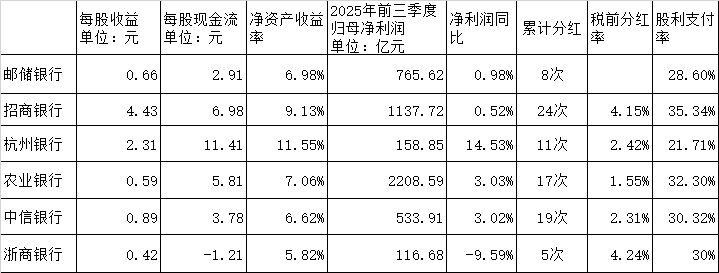
Core Viewpoint - Insurance capital's stake in listed companies has significantly increased, with over 30 instances of stake acquisitions in 2025, marking a new high in recent years [1][10]. Group 1: Stake Acquisition Trends - In 2025, insurance companies made 35 stake acquisitions, up from 20 in 2024, indicating a growing trend in equity market participation [2][11]. - The financial sector is the primary focus for insurance capital, with 15 stake acquisitions involving 6 banks and 2 insurance companies [1][4]. - The H-share market is the main venue for these acquisitions, as it offers better valuation opportunities compared to A-shares [1][4]. Group 2: Active Participants - A total of 14 insurance institutions participated in stake acquisitions in 2025, with Ping An Life leading with 12 acquisitions [2][11]. - Other notable participants include Great Wall Life and China Post Life, each with 4 acquisitions, and several others with fewer [2][11]. - August 2025 was particularly active, with 7 acquisitions, including Ping An Life's significant stake in Postal Savings Bank [2][11]. Group 3: Investment Characteristics - Insurance capital favors low-valuation, high-dividend stocks with stable performance, particularly in the banking sector [4][13]. - The new accounting standards encourage insurance companies to increase stake acquisitions to stabilize profit and loss fluctuations [3][12]. - Financial stocks, especially H-shares, are preferred due to their higher dividend yields compared to long-term bond yields [4][13]. Group 4: Financial Performance of Target Companies - Six banks targeted by insurance capital showed a range of return on equity (ROE) from approximately 6% to 11.55% [5][14]. - The banks reported stable dividend distributions, with China Merchants Bank having the highest number of cumulative dividends at 24 [5][14]. - In the first three quarters of 2025, five banks reported year-on-year profit increases, with Postal Savings Bank achieving a net profit of 765.62 billion yuan, up 0.98% [5][14]. Group 5: Market Reactions and Future Outlook - Stake acquisitions by insurance capital have positively influenced stock prices, often leading to short-term price surges [6][16]. - Insurance stocks have outperformed other sectors, with significant annual increases in stock prices for major insurance companies [8][18]. - The trend of insurance capital acquisitions is expected to continue into 2026, driven by considerations of dividend yield and return on equity [9][19].

