高水平开放

Search documents
从流动型开放到制度型开放的战略升级
Sou Hu Cai Jing· 2026-01-05 23:15
Core Viewpoint - The article emphasizes the transition of China's foreign opening strategy from a focus on the flow of goods and factors to a new paradigm centered on the quality and rules of flow, reflecting the need for high-level opening strategies in response to changing domestic and international environments [2][3]. Group 1: Historical Context and Challenges - Historically, China's foreign opening has been characterized by "commodity and factor flow," which was a necessary choice during a specific historical phase, showcasing China's endowment advantages [2]. - The traditional model faces new challenges in breaking international rule barriers, enhancing the value chain position, and maintaining economic security [2]. Group 2: High-Level Opening Strategy - The core of high-level opening lies in comprehensively promoting institutional opening, optimizing the business environment at ports, and strengthening the legal protection of intellectual property [3]. - China is actively participating in the formulation of international trade rules and aligning domestic regulations with high-standard international agreements like CPTPP and DEPA [3]. Group 3: Strategic Vision and Global Contribution - The strategic vision of high-level opening aims to solidify the institutional foundation for Chinese-style modernization and provide a Chinese solution for a more just and reasonable global economic governance system [3]. - By engaging in the formulation of international rules in emerging fields such as digital economy and green trade, China is creating conditions for domestic industrial upgrading and contributing to a more inclusive international economic order [3]. Group 4: Responsible Global Role - High-level opening represents an upgrade of the opening strategy, reflecting China's role as a responsible major power that integrates its development with global progress through institutional civilization and dialogue [4]. - Under the guidance of institutional opening, China's new round of foreign opening is providing solid support and lasting momentum for constructing a mutually beneficial international cooperation framework [4].


聚焦高水平开放!广东18条激活数字与服务贸易新动能
Nan Fang Du Shi Bao· 2026-01-05 04:57
Group 1: Core Insights - The Guangdong Provincial Government has officially released the "Implementation Opinions on Promoting High-Quality Development of Digital Trade and Service Trade through High-Level Opening" which includes 18 significant measures to boost the province's trade strength [2] Group 2: Digital Trade Development - Guangdong has identified four key areas for digital trade development: promoting digital product trade, enhancing the quality of digital content production, facilitating the import of high-quality life services in sectors like healthcare and cultural entertainment, and organizing international film exhibitions and cultural exchange activities [3] - The province aims to optimize digital service trade by developing digital manufacturing outsourcing and supporting the establishment of trade digitalization empowerment centers in the Greater Bay Area [3] - There is a focus on accelerating foreign trade in digital technologies such as IoT and AI, with plans to establish international advanced technology application promotion centers [3] - Support for cross-border data flow includes the creation of one-stop service portals for data export declaration and the establishment of data service pilot zones in regions like Nansha [3] Group 3: Service Trade Innovation - The Opinions emphasize institutional openness in service trade, with plans to implement negative lists for cross-border service trade and expand market access in sectors like healthcare, tourism, and telecommunications [4] - There will be efforts to enhance international transport services by improving port facilities and promoting the development of international hub ports in Guangzhou and Shenzhen [4] - The initiative includes fostering international arbitration institutions and law firms, and enhancing the competitiveness of service trade in cultural and intellectual property sectors [4] Group 4: International Market Expansion - The strategy aims to diversify international market layouts by establishing outbound service platforms and supporting the formation of outbound alliances [5] - There will be a focus on collaboration with countries involved in the Belt and Road Initiative and the establishment of international cooperation parks for service trade [5] - The plan includes promoting the "going out" strategy for lawyers and law firms, leveraging Guangdong's overseas offices to enhance service trade [5]
广东:深化广州市服务业扩大开放综合试点、深圳市增值电信业务扩大对外开放试点
Zheng Quan Shi Bao Wang· 2026-01-05 03:23
Core Viewpoint - The Guangdong Provincial Government has issued implementation opinions to promote high-quality development of digital trade and service trade through high-level openness, focusing on relaxing market access in the service trade sector [1] Group 1: Market Access and Open Policies - The implementation opinions propose to relax market access in the service trade sector [1] - The plan includes deepening the comprehensive pilot for expanding service industry openness in Guangzhou and expanding foreign investment access in Shenzhen's value-added telecommunications services [1] - Support is provided for Shenzhen to conduct a new round of comprehensive pilot projects for expanding service industry openness [1] Group 2: Foreign Investment and Sectoral Focus - The policy aims to accelerate the implementation of foreign investment access and operational policies in sectors such as healthcare, elderly care, tourism, telecommunications, and culture [1] - There is encouragement for foreign investors to establish both profit-making and non-profit elderly care institutions in Guangdong [1] - The plan supports the expansion of pilot projects in biotechnology within the Nansha, Qianhai, and Hengqin free trade zones [1] Group 3: Educational and Collaborative Initiatives - The implementation opinions emphasize strengthening cooperation between domestic and foreign universities, as well as the establishment of schools for foreign personnel's children and schools for Hong Kong and Macau students [1]
成都以高水平开放引领高质量发展
Xin Lang Cai Jing· 2026-01-04 20:03
Core Viewpoint - Chengdu is leveraging high-level openness to drive high-quality development, enhancing its international connectivity through the expansion of air and rail routes, and fostering a robust open economy [1][3][5]. Group 1: International Connectivity - Chengdu has launched over 10 new international passenger and cargo routes, connecting to major global hubs, with a total of 83 international and regional routes, ranking fourth nationally and first in the Midwest [1]. - The city has established a comprehensive intercontinental route network, allowing travelers to reach major hubs within 10 hours and facilitating efficient cargo flow, with high-end manufacturing products delivered globally within 72 hours [1]. - Chengdu's international rail freight network has been developed, with over 36,000 international trains operating, linking to more than 130 cities abroad, thus stabilizing global supply chains [2]. Group 2: Economic Development and Foreign Investment - Chengdu has attracted over 5,000 foreign enterprises, enhancing its open economy and stimulating industrial growth, with a notable increase in cross-border e-commerce logistics solutions [3][4]. - The Chengdu High-tech Comprehensive Bonded Zone has been recognized as the top performer among 154 national zones, with an import-export value exceeding 500 billion yuan, marking a year-on-year growth of over 20% [4]. - The city has established trade relations with 235 countries and regions, hosting 315 Fortune 500 companies, and maintaining a steady growth in foreign trade, achieving an import-export value of 775 billion yuan in the first 11 months of the year, a 2.6% increase year-on-year [4]. Group 3: Cultural and Economic Integration - Chengdu is fostering cultural exchange and international relations, expanding its global "friend circle" and enhancing its engagement with diverse markets along the Belt and Road Initiative [5].
芜湖:全国50强,中部非省会城市第1位!
Sou Hu Cai Jing· 2026-01-04 09:12
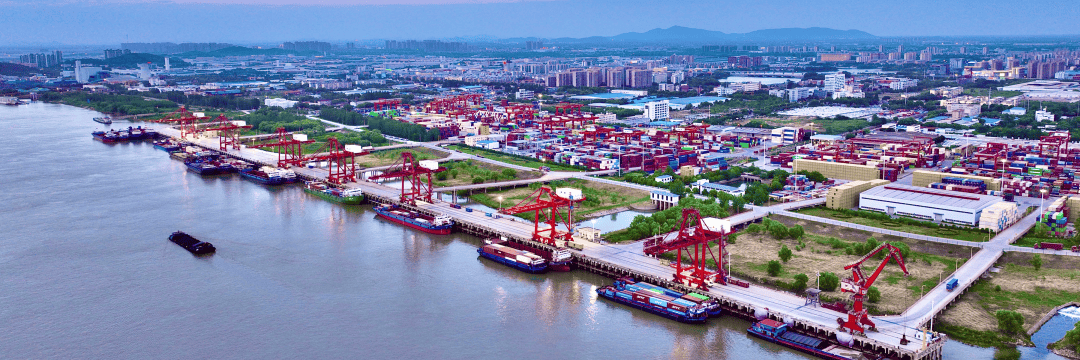
近日,大江资讯记者从芜湖商务经济发展情况新闻发布会上获悉,2025年1-11月,全市进出口额1712.6亿元、同比增长28.3%,总量、增速分别居全省第2 位、第1位;实际到位外资23.2亿元、同比增长15.8%;实际对外投资9.66亿美元,总量居全省第1位。 开放能级持续提升,以高水平开放促进高质量发展。我市坚持提升开放发展能级,持续扩大开放通道、建强开放平台、优化发展环境,以高水平开放促进 高质量发展。"十四五"期间,芜湖口岸开放不断扩大,芜宣机场获批临时开放货运功能,我市成为全省唯一兼具水运、航空开放功能的城市。芜湖港口岸 扩大开放三山港区通过国家验收,并实现国际船舶首航;朱家桥港区扩大开放获国务院批复并通过省级验收,争取2026年上半年通过国家验收。 不断优化开放平台,芜湖综合保税区成功落地全国首单汽车变速箱保税维修业务、全省首笔综保区货物质押融资业务。芜湖港朱家桥外贸综合物流园区一 期项目等一批重点项目相继完工。芜湖港获批国家智慧口岸建设试点,是全省唯一获批的水运口岸。 2025年,我市组织开展徽动消费·金秋购物季等640余场促消费活动,发放消费券3.4亿元,带动消费超60亿元。消费品以旧换新累计交 ...

成都向“亿级”国际航空枢纽进发
Xin Lang Cai Jing· 2025-12-31 19:00
Core Viewpoint - Chengdu's annual passenger throughput has surpassed 90 million, marking a significant milestone in its development as an international aviation hub, with plans to further enhance its capabilities through the upcoming second phase of Tianfu International Airport [1][8]. Group 1: Passenger Throughput Growth - Chengdu's annual passenger throughput has achieved a remarkable growth trajectory, moving from 70 million in 2023 to 80 million in 2024, and now exceeding 90 million in 2025, demonstrating a rapid increase in aviation traffic [1][4]. - The city has established itself as the "third aviation city" in mainland China, with a continuous increase in international flight routes, now totaling 83, covering all five continents [3][4]. Group 2: Economic and Industrial Impact - The growth in passenger traffic is closely linked to urban development, enhancing economic cooperation and international exchanges, which in turn drives industrial collaboration and high-quality development [5][6]. - Chengdu's international air routes have facilitated the establishment of a comprehensive bonded zone, enhancing logistics and supply chain efficiency for the aviation industry [5][6]. Group 3: Future Developments - The second phase of Tianfu International Airport is set to commence, aimed at further solidifying Chengdu's position as a comprehensive international aviation hub [7][9]. - The provincial government is actively supporting the enhancement of Chengdu's aviation capabilities, with plans to achieve an annual passenger throughput of over 100 million by 2027 [8][9].
年度报告 | 于613篇推文,见动能之变
Mei Ri Jing Ji Xin Wen· 2025-12-31 12:40
Group 1: Economic Trends and Developments - The year 2025 is characterized as "extraordinary" by the Central Economic Work Conference, highlighting significant economic transformations and developments [1] - China’s exports have shown resilience despite a complex external environment, with ASEAN, EU, and Belt and Road countries becoming key growth engines for foreign trade [2] - The "14th Five-Year Plan" is nearing completion, with new development strategies focusing on expanding domestic demand, high-level openness, and innovation-driven growth [2] Group 2: Artificial Intelligence and Innovation - The term "Hangzhou Six Dragons" has emerged as a key phrase in the artificial intelligence sector, marking a significant development in AI applications across various industries [3][4] - The introduction of local regulations for the embodied intelligent robot industry in Hangzhou signifies a growing focus on AI, with predictions indicating that the AI industry will grow from 486.2 billion yuan in 2026 to 1 trillion yuan by 2030, with a compound annual growth rate of 19.8% [4] - The Central Economic Work Conference has emphasized the establishment of international technology innovation centers in major regions, aiming to integrate innovation resources across broader areas [5] Group 3: Investment in Human Capital - The government has explicitly stated the importance of "investing in people," with initiatives such as childcare subsidies and free preschool education reflecting a shift towards prioritizing human development [6][7] - This focus on human capital is seen as a strategic adjustment to stimulate domestic demand and enhance economic growth, especially as the country transitions from a "demographic dividend" to a "talent dividend" [7] Group 4: Trade Connectivity and Foreign Trade - Trade is identified as a crucial mechanism for connecting domestic and international economic cycles, with traditional foreign trade provinces continuing to play a significant role [9] - The central government has initiated measures to enhance the integration of domestic and foreign trade, with a focus on diversifying markets and fostering new competitive advantages [10] Group 5: Infrastructure and Logistics - The revival of inland river shipping is highlighted as a strategic focus, with plans to increase the share of inland cargo transport in the overall transportation system by 2030 [11][12] - The development of inland shipping is seen as a means to lower logistics costs and enhance the efficiency of resource allocation across the country [12] Group 6: Economic Powerhouses - Economic powerhouses such as Guangdong, Jiangsu, and Zhejiang are expected to contribute significantly to national GDP, with the central government reiterating the importance of these provinces in driving economic growth [13][14] - The "15th Five-Year Plan" emphasizes the need for these provinces to lead development efforts, with specific targets set for GDP growth and modernization [14] Group 7: Hainan Free Trade Port - The establishment of the Hainan Free Trade Port is marked as a significant step in China's openness, with the port being the largest and most diverse in the world [15] - The operationalization of the free trade port is seen as a systemic experiment in opening up various sectors, including trade, finance, and talent [15][16]
二〇二五年中国经济关键词
Xin Lang Cai Jing· 2025-12-29 22:22
Group 1: New Quality Productive Forces - In 2025, China focuses on technological innovation and industrial upgrading to cultivate new quality productive forces, enhancing the foundation for high-quality development [2] - Traditional industries are crucial for accelerating the development of new quality productive forces, with the Ministry of Industry and Information Technology releasing action plans for ten key industries [2] - Strategic emerging industries and future industries are the main battlegrounds for cultivating new quality productive forces, with significant growth in sectors like new energy vehicles, photovoltaics, and quantum technology [2][3] Group 2: Expanding Domestic Demand - Expanding domestic demand is a strategic choice for China to respond to economic changes and promote high-quality development, with policies implemented to stimulate consumption and investment [4] - Consumer markets are recovering, with significant growth in retail sales of home appliances and communication equipment, with year-on-year increases of 14.8%, 18.2%, and 20.9% respectively [6] - Investment in emerging sectors is also strong, with notable increases in manufacturing and renewable energy investments, such as a 15.3% growth in automotive manufacturing [6] Group 3: High-Level Opening Up - Expanding high-level opening up is essential for China's high-quality development, providing stability to the uncertain global economy [7] - China's foreign trade resilience is improving, with policies promoting service exports and green trade, reflecting a commitment to innovative leadership [7][8] - Trade with major partners like ASEAN has seen growth, with a year-on-year increase of 8.5% in trade volume [8] Group 4: Risk Mitigation - In 2025, China continues to address key risk areas to ensure high-quality development, with measures in place to manage local government debt and mitigate financial risks [9] - The real estate sector has seen successful completion of housing delivery tasks, with policies aimed at stabilizing the market and supporting housing supply [9] Group 5: Appropriate Monetary Easing - Since 2025, a moderately loose monetary policy has been in effect, with social financing scale increasing significantly, reaching 33.39 trillion yuan in the first eleven months [10] - The structure of credit has improved, supporting key sectors and strategic economic transformations, with notable growth in technology and green loans [11] Group 6: Green Transition - China has introduced numerous policies for green low-carbon transition and ecological civilization construction, achieving significant progress in various fields [14] - The energy structure is shifting towards non-fossil sources, with ambitious targets for renewable energy installations [14][15] - The green economy is thriving, with over 218.7 million existing green economy-related enterprises, indicating sustained vitality in the sector [14]
海南省委经济工作会议召开
Hai Nan Ri Bao· 2025-12-29 10:00
Core Insights - The Hainan Provincial Economic Work Conference emphasized the importance of implementing the spirit of the Central Economic Work Conference and the significant speeches by General Secretary Xi Jinping, focusing on economic work for 2026 and beyond [1][2] Group 1: Economic Development Goals - 2025 is highlighted as a milestone year for Hainan's development, with a focus on high-quality economic growth and the successful operation of the Hainan Free Trade Port [2] - The overall requirement for economic work in the coming year is to adhere to Xi Jinping's thoughts, implement the new development concept, and promote high-quality development while ensuring stability [3] Group 2: Free Trade Port Construction - The conference called for solid progress in the construction of the Free Trade Port, aiming for a successful first year of operation and the effective implementation of closure policies [4] - Emphasis was placed on optimizing regulatory models and ensuring smooth operations while prioritizing risk prevention [4] Group 3: Industrial and Economic Strategies - The need to build a modern industrial system that enhances the collaborative effects of the Free Trade Port's operations was stressed, with a focus on developing key industries and fostering innovation [4] - Strategies to expand effective demand and enhance domestic consumption were outlined, including initiatives to boost tourism and improve the investment environment [4] Group 4: Social and Environmental Initiatives - The conference highlighted the importance of ecological civilization and environmental protection, with plans for sustainable development and green transformation [5] - Measures to enhance public welfare, including employment, education, healthcare, and social security, were discussed to improve the quality of life for residents [5] Group 5: Governance and Leadership - The need for strong leadership in economic work was emphasized, with a call to implement the decisions of the Central Committee and improve the capabilities of the workforce [6] - The conference also focused on promoting integrity and accountability within governance structures to ensure effective implementation of policies [6]
未来五年,世界期待与中国继续同行(2025年终特别报道)
Ren Min Ri Bao Hai Wai Ban· 2025-12-28 22:48
Core Viewpoint - The article discusses China's "15th Five-Year Plan" (2021-2025) and its focus on high-quality development, innovation, and green transformation, highlighting the international community's expectations for China's future growth and cooperation with the world [10][11][12]. Group 1: High-Quality Development - The "15th Five-Year Plan" emphasizes prioritizing economic quality over mere growth speed, with innovation, modern services, artificial intelligence, and green transformation identified as new growth engines [10][11]. - The plan aims to modernize traditional industries and foster new and future industries, ultimately establishing an advanced modern industrial system [11][12]. Group 2: New Quality Productivity - The concept of "new quality productivity" is highlighted as crucial for China's development, focusing on high-level technological self-reliance and advancements in sectors like artificial intelligence and biotechnology [12][13]. - The plan outlines a roadmap towards becoming a technological and digital powerhouse by 2030, with an emphasis on fostering new industries such as renewable energy and advanced manufacturing [13][14]. Group 3: Comprehensive Green Transformation - The plan includes initiatives for pollution prevention, ecosystem optimization, and the establishment of a new energy system, aiming for a "beautiful China" and contributing to global green transformation [14][15]. - It sets ambitious environmental goals, indicating a shift towards low-carbon development and ecological technology innovation [15]. Group 4: High-Level Openness - The "15th Five-Year Plan" proposes expanding institutional openness and maintaining a multilateral trade system, aiming to share opportunities and promote joint development with the global community [16][17]. - The plan signals China's commitment to high-level openness despite rising protectionism, emphasizing the benefits of its growth for global economic development [17][18]. Group 5: Policy Continuity - The article notes the long-term strategic planning reflected in the "15th Five-Year Plan," which provides stability and predictability in governance amid global uncertainties [18][19]. - The plan is seen as a tool for enhancing resilience against external shocks, showcasing China's confidence in its political and economic model [19].