
AI叙事

Search documents
有色贵金属-银河期货2026年投资策略会
2026-01-08 02:07
Summary of Key Points from Conference Call Records Industry Overview - **Industry**: Precious Metals and Base Metals - **Key Focus**: The impact of macroeconomic factors, particularly U.S. monetary and fiscal policies, on precious metals prices, including gold and silver, as well as base metals like copper and zinc. Core Insights and Arguments Precious Metals Market - **Gold Price Dynamics**: The gold market in 2026 will be influenced by U.S. and major economies' monetary policies, with expectations of continued demand for gold ETFs due to a prolonged interest rate cut cycle by the Federal Reserve [1][12]. - **Central Bank Gold Purchases**: Central banks, particularly in emerging markets like China, Turkey, Poland, and India, are expected to continue increasing gold reserves, which will support gold prices in the long term [8][9]. - **Silver Demand**: Silver is anticipated to benefit from improved macro liquidity and tight supply-demand fundamentals, with new demand growth from sectors like photovoltaics, electric vehicles, and AI data centers [1][15]. - **Geopolitical Factors**: Geopolitical tensions and the AI narrative will also play significant roles in shaping market sentiment and prices [4][5]. Base Metals Market - **Copper Supply and Demand**: The copper market is expected to see a slight increase in refined copper production in 2026, but overall growth will remain low due to various disruptions, including political instability in Peru and aging mines [24][25]. - **Emerging Demand**: New sectors such as AI and energy storage are projected to drive copper demand, particularly in the U.S. [30]. However, demand from the Chinese electric vehicle sector is expected to decline [33]. - **Zinc Market Outlook**: Zinc supply is expected to improve in 2026, but the overall increase may be limited due to declining ore grades and weak demand from the real estate and home appliance sectors [34][35]. Economic Context - **U.S. Economic Conditions**: The U.S. economy is currently in a recovery phase, with expectations of continued interest rate cuts, which are favorable for precious metals [10][11]. - **Fiscal Concerns**: The deteriorating fiscal situation in the U.S. is weakening the dollar and U.S. debt credit, prompting a search for more reliable safe-haven assets like gold [14]. Market Sentiment and Future Trends - **AI Narrative**: The AI narrative, while potentially creating a bubble, is seen as a significant driver of economic growth, which could positively impact precious metals if it does not burst [7]. - **Price Adjustments**: Recent adjustments in gold and silver prices after reaching historical highs are viewed as a normal market correction rather than a sign of a market peak [17]. Additional Important Insights - **Platinum Group Metals**: The supply of platinum and palladium is highly concentrated, with South Africa and Russia being the main suppliers. Any disruptions in these regions could significantly impact prices [18][19]. - **Market Volatility**: The concentration of supply in the platinum group metals and the potential for geopolitical disruptions highlight the volatility and risks associated with these markets [18][21]. - **Long-term Projections**: The overall sentiment for precious metals remains optimistic for 2026, driven by ongoing central bank purchases and macroeconomic conditions favoring gold and silver [12][17]. This summary encapsulates the key points discussed in the conference call records, providing a comprehensive overview of the current state and future outlook of the precious metals and base metals markets.
Robotaxi 出行帝国,能再造特斯拉?
3 6 Ke· 2026-01-08 00:21
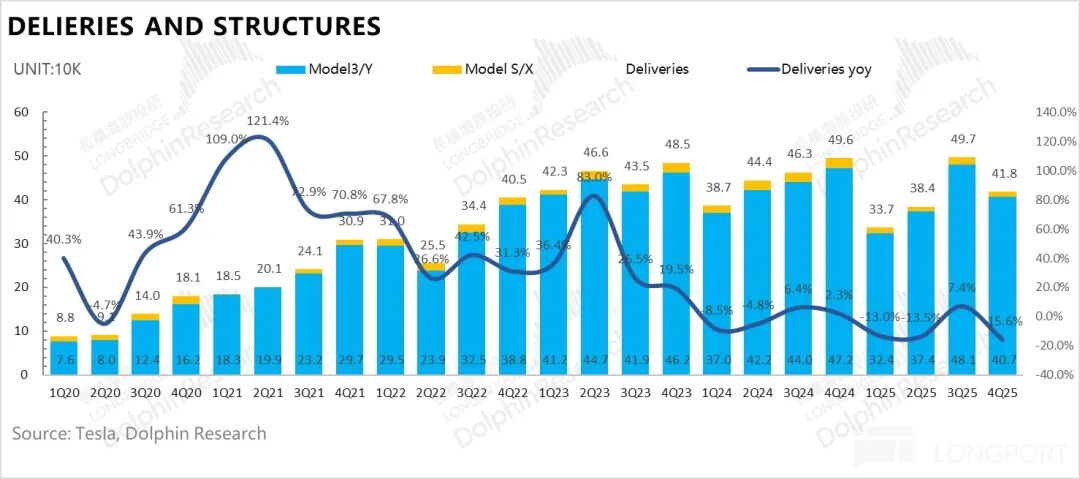
Group 1 - Tesla's Q4 2026 delivery data showed a disappointing result, with only 418,000 vehicles delivered, a 16% decrease quarter-over-quarter, and a total of 1.64 million vehicles for 2025, an 8.6% year-over-year decline, marking the second consecutive fiscal year of declining sales [1][3] - Despite the weak fundamentals, Tesla's stock price surged, nearing $500 before the Q4 delivery data release, indicating a disconnect between sales performance and stock valuation, driven by a shift in market perception from "automobile manufacturing" to "AI narrative" [3][5] - The Robotaxi business has transitioned from "concept validation" to "commercial rollout," with significant milestones achieved, including the removal of safety drivers from the Austin test fleet, which is seen as a key catalyst for stock price growth [5][6] Group 2 - Traditional ride-hailing platforms face a market cap ceiling due to limited growth potential in the shared mobility market, with Uber and Didi's combined market cap at $200 billion, representing only 14% of Tesla's current $1.5 trillion market cap [7][10] - The shared mobility market in China is constrained, with private car usage dominating the transportation landscape, accounting for approximately 85% of the market, while shared mobility's growth remains limited [10][11] - In the U.S., private cars also dominate, with ride-hailing and traditional taxi services comprising less than 2% of the total commuting market, indicating a low penetration rate for shared mobility [14][16] Group 3 - The cost structure of ride-hailing services does not provide a significant advantage over private car ownership, with costs being comparable in both China and the U.S., limiting the appeal of ride-hailing services [21][24] - The profitability of ride-hailing platforms is constrained by high driver payouts, with Uber retaining only about 30% of gross transaction value (GTV) after paying drivers, leading to low profit margins [27][30] - The introduction of Robotaxi could potentially transform the ride-hailing business model by eliminating driver costs, thus significantly lowering operational costs and improving profitability [31][33] Group 4 - Robotaxi's market growth is expected to be driven by cost advantages that could convert private car ownership into service consumption, although it may not significantly increase overall travel demand [33][34] - The operational cost of Robotaxi is projected to drop significantly, potentially reaching as low as $0.4-$0.6 per mile, which would be competitive against private car ownership costs [49][51] - The market potential for Robotaxi is substantial, with projections indicating that if pricing can undercut private car costs, it could capture a significant share of the transportation market, potentially reaching a market size of $420-485 billion by 2035 under optimistic scenarios [54][55] Group 5 - Revenue contributions from Robotaxi could vary significantly based on market penetration and pricing strategies, with estimates ranging from $58 billion under pessimistic assumptions to $2.2-2.6 trillion under more favorable conditions by 2035 [58][60]


多头趋势未改 黄金震荡上行仍是主旋律
Jin Tou Wang· 2026-01-07 06:00
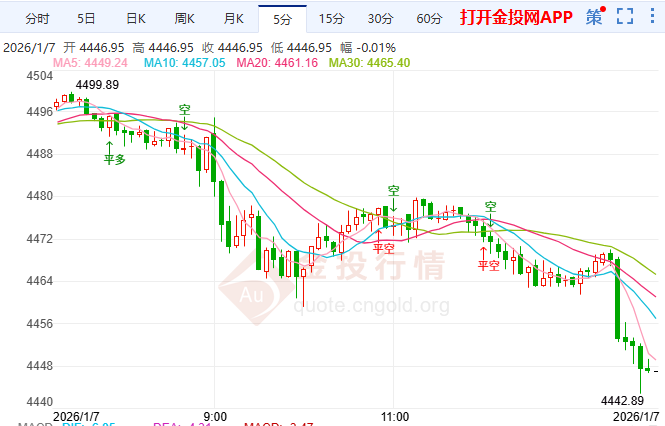
Group 1 - The core viewpoint is that gold enters 2026 with strong historical upward momentum, despite being labeled "overbought" in 2024-2025, and the market's positioning remains reasonable, with gold showing the smallest pullback among precious metals [1][3] - The primary driving logic for gold's rise in 2024-2025 is the low real yields caused by political uncertainty in the U.S., which is expected to continue into 2026 due to high government spending pushing inflation expectations and a dovish interest rate environment [3] - Central bank purchases are a long-term key support for gold prices, with global reserve allocation imbalances leading to accelerated buying from central banks in 2024-2025, particularly from countries like China and Turkey [3] Group 2 - Geopolitical tensions, such as the Russia-Ukraine conflict and recent events in Venezuela, are significant catalysts for gold prices, as risk aversion drives funds towards gold [3] - The emergence of AI narratives has injected industrial demand into the precious metals sector, potentially offsetting weak jewelry consumption and reinforcing the trend of gold prices moving in tandem with the Nasdaq index [3] - Potential risks include unexpected hawkish moves from the Federal Reserve or a surge in long-term yields, but current market expectations lean towards easing, providing a buffer for gold prices [3] Group 3 - Monthly gold prices maintain a bullish channel, but the RSI is at historical highs, indicating a need for time correction; weekly analysis shows fluctuations around the 10-week moving average [4] - Key resistance levels are identified at 4516-4544, while support levels are at 4230-4274 and 4115, with an extreme level at 4000 [4] - The strategy suggests high selling and low buying within the range, with a breakout above 4400 targeting 4516-4544, and a drop below 4230 indicating weakness [4]
宝城期货贵金属有色早报(2026年1月7日)-20260107
Bao Cheng Qi Huo· 2026-01-07 01:59
Report Summary 1. Report Industry Investment Ratings The report does not explicitly provide an overall industry investment rating. However, it gives specific ratings for gold and copper futures: - **Gold**: Short - term:震荡 (fluctuating); Medium - term: 强势 (strong); Intraday: 震荡偏强 (slightly bullish in intraday trading) [1] - **Copper**: Short - term: 震荡 (fluctuating); Medium - term: 强势 (strong); Intraday: 震荡偏弱 (slightly bearish in intraday trading) [1] 2. Core Views - **Gold**: It is recommended to take a wait - and - see approach. The recovery of liquidity and geopolitical conflicts are favorable for the gold price. Although the market panic did not spread, the high post - holiday risk appetite and liquidity in the market are the main reasons for pushing up the gold price. Attention should be paid to the technical pressure at the high position in late December [1][3] - **Copper**: It is recommended to take a long - term bullish view. The recovery of liquidity and strong industrial expectations push up the copper price. The core drivers of the copper price increase since December are macro - liquidity easing, mine - end disturbances, and the long - term AI narrative [1][4] 3. Summary by Related Catalogs Gold - **Price Performance**: Yesterday, the gold price fluctuated upwards, and it maintained a strong operation at night. New York gold reached above the $4500 mark, and Shanghai gold was approaching the 1010 - yuan mark [3] - **Driving Factors**: On January 3, the US military carried out an air strike on Venezuela and captured the Venezuelan president, which increased the market's risk - aversion sentiment and led to a higher opening of the gold price. The high post - holiday risk appetite and liquidity in the market are the main reasons for pushing up the gold price [3] Copper - **Price Performance**: Yesterday, Shanghai copper continued to increase positions and rise, standing above the 105,000 - yuan mark during the day, and LME copper stood above the $13,300 mark. After the Asian session, LME copper once erased the intraday gain of more than $200, while the copper price recovered again before the domestic night session. There was a large divergence in short - term internal and external funds [4] - **Driving Factors**: Since December, the core drivers of the copper price increase are macro - liquidity easing, mine - end disturbances, and the long - term AI narrative. The easing of US and Japanese central bank monetary policies has restored market liquidity, and the market expects the Fed to continue to cut interest rates in 2026. The delay in the commissioning of the second - phase project of Tongling Nonferrous' Mirador Copper Mine in Ecuador due to political instability and administrative issues has led to the expectation of lower - than - expected new global copper mine supply [4]
未来几年,不可忽视的股市“隐形助推器”
雪球· 2026-01-06 08:46
Group 1 - The article highlights the potential return of approximately $2.5 trillion in foreign exchange reserves held by companies abroad, which could significantly impact liquidity in the A-share market in the coming years [4][8]. - The phenomenon of "hiding foreign exchange in the public" is discussed, where Chinese companies have retained a large amount of foreign exchange earnings abroad due to the inverted interest rate differential between China and the U.S. and expectations of RMB depreciation [6][7]. - The article notes that the accumulated trade surplus over the past five years has exceeded $2.8 trillion, yet foreign exchange reserves have remained stable, indicating a significant amount of funds are being held overseas [6][8]. Group 2 - A turning point is anticipated as the interest rate differential between China and the U.S. narrows, with the potential for the Federal Reserve's policy rate to drop to around 3% by 2026, making RMB assets more attractive [10]. - The return of these funds could lead to passive liquidity expansion, as the central bank may need to issue an equivalent amount of RMB to hedge against exchange rate fluctuations, thereby providing a boost to the stock market [12]. - The article emphasizes that while the return of funds is a significant factor, it is not the sole determinant of market direction, and maintaining a balanced equity position, particularly in sectors benefiting from liquidity easing and economic recovery, is advisable [15].

宝城期货贵金属有色早报(2026年1月6日)-20260106
Bao Cheng Qi Huo· 2026-01-06 01:31
Group 1: Report Industry Investment Ratings - There is no specific report industry investment rating provided in the content [1] Group 2: Report's Core Views - For gold, the short - term view is oscillating, the medium - term view is strong, the intraday view is oscillating and slightly strong, and the reference view is to wait and see. The core logic is that the recovery of liquidity and geopolitical conflicts are beneficial to the gold price [1][3] - For copper, the short - term view is oscillating, the medium - term view is strong, the intraday view is rising, and the reference view is to be bullish in the long run. The core drivers are macro - liquidity easing, mine - end disturbances, and long - term AI narrative [1][4] Group 3: Summary by Variety Gold (AU) - The intraday view is oscillating and slightly strong, the medium - term view is strong, and the reference view is to wait and see. Yesterday, the gold price oscillated after reaching a high during the day and continued to strengthen at night. The US military's air strike on Venezuela on January 3rd and the capture of the Venezuelan president increased market risk - aversion, causing the gold price to open higher. The high post - holiday market risk preference and liquidity are also factors pushing up the gold price. Keep an eye on the long - short game at the 1000 - yuan mark of Shanghai gold [3] Copper (CU) - The intraday view is rising, the medium - term view is strong, and the reference view is to be bullish in the long run. After the New Year's Day holiday, Shanghai copper increased positions and rose, becoming strong again and standing above the 100,000 - yuan mark, while LME copper stood above the $13,000 mark. The core drivers are macro - liquidity relaxation, mine - end disturbances, and long - term AI narrative. Macro and financial factors provide "fuel" for the rise of copper prices. The supply - side (mine - end) constraints build a solid "floor", as the delay of the second - phase project of Tongling Nonferrous' Mirador Copper Mine in Ecuador and production interruptions in other large copper mines lead to less - than - expected new supply of global copper mines. The demand - side new narrative forms a long - term support [4]
沪银期价维持高位运行
Zheng Quan Ri Bao· 2026-01-05 22:49
Group 1 - The core viewpoint of the articles indicates that silver prices are experiencing a significant upward trend driven by a fundamental shift in demand structure, with industrial demand becoming the dominant force [1][2] - As of January 5, 2026, the main contract for silver futures on the Shanghai Futures Exchange closed at 18,247 yuan per kilogram, reflecting a 1.16% increase, supported by high international silver prices during the New Year holiday [1] - Analysts predict that silver prices will continue to benefit from loose liquidity, long-term supply-demand gaps, and increased industrial demand driven by AI narratives, with expectations for international silver prices to potentially reach 100 USD per ounce [2] Group 2 - The silver market is expected to face a supply gap by 2025, while demand in sectors such as photovoltaics, electric vehicles, and AI infrastructure is showing sustained growth [1] - The relationship between silver price fluctuations and global manufacturing activity, as well as the energy transition process, is becoming more significant than its correlation with monetary policy [2] - The price dynamics of silver are being restructured as it transitions from a "supporting role" in financial markets to a "strategic metal" crucial for the development of green energy and digital infrastructure [1]
沪银期价维持高位运行 机构预测今年国际银价或冲击100美元/盎司关口
Zheng Quan Ri Bao· 2026-01-05 17:15
Group 1 - The core viewpoint of the articles highlights that silver prices are experiencing a significant upward trend driven by industrial demand and the global energy transition narrative, marking a shift from being a secondary asset to a strategic metal essential for green energy and digital infrastructure development [1][2] - As of January 5, 2026, the main silver futures contract on the Shanghai Futures Exchange closed at 18,247 yuan per kilogram, reflecting a 1.16% increase, while the COMEX silver futures for March remained above $70 per ounce, providing strong support for domestic silver prices [1] - Analysts indicate that the fundamental restructuring of demand, with industrial applications becoming the dominant force, suggests that silver price fluctuations are now more closely tied to global manufacturing activities and energy transition processes rather than monetary policy [2] Group 2 - The silver market is expected to face a supply gap by 2025, with continuous growth in demand from sectors such as photovoltaics, electric vehicles, and AI infrastructure [1] - Analysts predict that silver prices will continue to benefit from favorable liquidity conditions, long-term supply-demand gaps, and increased industrial demand driven by narratives around AI, with expectations that international silver prices may reach $100 per ounce [2] - The overall price center for silver is anticipated to rise in 2026, with increased volatility expected, while caution is advised regarding potential price corrections [2]
钴镍锂新变化
2026-01-05 15:42
Summary of Key Points from the Conference Call Industry Overview - The conference call primarily discusses the non-ferrous metals industry, focusing on cobalt, nickel, lithium, and their market dynamics in 2026 [2][3][4]. Core Insights and Arguments - **Geopolitical Events Impact**: Recent geopolitical events, such as U.S. actions in Venezuela and unrest in Iran, have short-term benefits for non-ferrous metals, but long-term impacts remain uncertain. The ongoing Russia-Ukraine conflict has increased market volatility, with metals like silver, nickel, and aluminum performing strongly during the holiday period [2][4]. - **South America Resource Risks**: South American mineral resources face risks including resource concentration, political and environmental policy challenges. Companies like Zijin Mining and Minmetals have significant copper resources in South America, necessitating a diversified approach to mitigate political and military risks [2][6]. - **Bloomberg Commodity Index Adjustment**: The upcoming adjustment of the Bloomberg Commodity Index is expected to have a more significant short-term impact on silver than on gold, but such adjustments typically only cause temporary fluctuations without altering the long-term bullish trend for precious metals [2][7]. - **Investment Themes for 2026**: Key investment themes include focusing on metals with inelastic supply and strong demand narratives, particularly in the context of AI (copper, aluminum, tin), and energy metals like lithium, which are expected to see a turnaround due to strong storage demand [2][8]. Market Performance and Predictions - **Energy Metals Outlook**: The energy metals market is anticipated to be a high-return sector in 2026, with cobalt showing strong growth, lithium poised for a turning point due to unexpected storage demand, and nickel expected to recover due to government controls in Indonesia [3][4][17]. - **Price Trends**: Lithium prices have recently adjusted to around 110,000 CNY, with expectations of a rebound to over 130,000 CNY post-holiday as demand remains robust. Nickel prices are also expected to show significant elasticity due to supply tightening [4][10][15]. Company-Specific Insights - **Salt Lake Potash**: The company’s lithium project is projected to produce 40,000 tons in 2026, significantly increasing its output and supporting overall performance. The acquisition of resources in Qinghai is seen as a strategic move [12][13]. - **Mengtai Lithium and Other Companies**: Companies like Mengtai Lithium and Ganfeng Lithium are highlighted as strong performers in the energy metals sector, with Mengtai expected to exceed 100,000 tons of production capacity [14][17]. - **Nickel Market Beneficiaries**: Huayou Cobalt and Liqin Resources are identified as major beneficiaries in the nickel-cobalt market, with both companies expected to see profit increases as nickel prices rise [16][17]. Additional Important Points - **Equity Asset Ranking**: The ranking of equity assets places energy metals (nickel, cobalt) at the top, followed by gold, high-probability metals (copper, aluminum), and finally strategic minor metals and new materials [2][9]. - **Market Sentiment**: The overall sentiment indicates a bullish outlook for energy metals, with expectations of these sectors outperforming the broader non-ferrous metals market over the next two years [18].


年度策略报告姊妹篇:2026年策略组风险排雷手册-20251231
ZHESHANG SECURITIES· 2025-12-31 12:32
Group 1 - The core viewpoint of the report is that the A-share market in 2026 will revolve around "structural transformation and confidence restoration," with a focus on technology investments and external demand recovery [3][4] - The report emphasizes a "systematic slow bull" market phase, suggesting a gradual upward trend in the market, with the Shanghai Composite Index expected to oscillate between the high point of February 2021 and the 0.809 quantile of 5178-2440 [9] - Investment strategies include focusing on four main lines: consumer services, sectors with growth potential like automotive and pharmaceuticals, traditional industries, and dividend-paying stocks such as banks and transportation [9] Group 2 - Policy risks are highlighted, particularly the impact of new public fund regulations on asset allocation, which may lead to a reallocation of equity fund performance benchmarks in the second half of 2026 [10][12] - Geopolitical risks are identified, with potential impacts from U.S. actions in Venezuela and Japan's political stance affecting market sentiment and inflation expectations [13][14] - Other risks include the pace of U.S. interest rate cuts, domestic economic recovery, and the performance of U.S. tech stocks, all of which could influence market dynamics in the second half of 2026 [15][17][20]