
双碳目标

Search documents
电煤消费规模是否已经达峰?
ZHONGTAI SECURITIES· 2026-02-02 00:45
Investment Rating - The report maintains a rating of "Buy" for key companies in the coal industry, including China Shenhua, Yanzhou Coal, Shaanxi Coal, and others, while some companies like Huayang Co. and Shanmei International are rated as "Overweight" [4]. Core Insights - The coal consumption scale has reached a peak plateau, with the demand for electricity generated from coal expected to stabilize in the coming years. The report suggests that the traditional growth model of coal-fired power generation may face a turning point due to the increasing share of clean energy [6][7]. - The transition of coal-fired power from a primary energy source to a supporting role in the new energy system is emphasized, with a significant expansion in installed capacity expected in the next few years [6][11]. Summary by Sections 1. Coal-fired Power: Transitioning to Peak Regulation and Support - The role of coal-fired power is shifting towards providing peak regulation and support, with its share in the energy mix declining but still remaining a core component of energy security [6][11]. - Installed capacity of coal-fired power is expected to continue expanding, with projections of new installations reaching 87 GW, 86 GW, and 43 GW from 2026 to 2028, respectively [6][29]. 2. Clean Energy: Becoming the Main Source of New Installations - Hydropower is expected to play a dual role in stable supply and peak regulation, with new installations projected to reach 17 GW, 18 GW, and 33 GW from 2026 to 2028 [7][39]. - Wind power is anticipated to see significant growth, with new installations expected to reach 109 GW, 161 GW, and 193 GW during the same period, reflecting its transition to a primary energy source [7][52]. - Solar energy is entering a stable development phase, with new installations projected at 192 GW, 139 GW, and 153 GW from 2026 to 2028, despite recent challenges in energy consumption and bidding processes [7][59]. 3. Investment Recommendations: Focus on Dividend and Flexibility - The report recommends focusing on companies with strong cash flow stability and dividend potential, such as China Shenhua and Shaanxi Coal, while also highlighting companies like Yanzhou Coal and Huayang Co. as having potential benefits from high coal demand [6][7][8].






经济日报金观平:推进固废资源化利用
Jin Rong Jie· 2026-02-02 00:21
Core Viewpoint - The State Council's "Comprehensive Action Plan for Solid Waste Management" sets a clear roadmap and timeline for the utilization of solid waste resources, aiming for an annual comprehensive utilization of 4.5 billion tons of major solid waste and 510 million tons of main recycled resources by 2030 [1] Group 1 - The solid waste resource utilization is increasingly recognized as a key support for ensuring resource security in China, driven by the "dual carbon" goals [1] - The plan emphasizes the need for innovation to drive the advancement of solid waste resource utilization [1] - There is a focus on enhancing demand adaptation and steadily promoting related work in solid waste resource utilization [1]
推进固废资源化利用
Jing Ji Ri Bao· 2026-02-01 21:59
Core Insights - The State Council has issued the "Solid Waste Comprehensive Management Action Plan," aiming for an annual comprehensive utilization of 4.5 billion tons of major solid waste and 510 million tons of main recycled resources by 2030, providing a clear roadmap and timeline for solid waste resource utilization [1] - China generates over 11 billion tons of various solid waste annually, with historical industrial solid waste storage exceeding 33 billion tons, occupying over 3,500 square kilometers, highlighting the urgency of solid waste management and the potential for resource utilization [1] - Under the "dual carbon" goals, solid waste resource utilization is evolving beyond environmental management to become a key support for resource security in China, with the action plan focusing on resource conservation and efficient utilization [1] Group 1 - The action plan emphasizes three specific tasks: strengthening the comprehensive utilization of major solid waste, enhancing the recycling level of renewable resources, and promoting the application of recycled materials [1] - The plan calls for the use of new technologies, processes, and methods to expand the depth and breadth of solid waste comprehensive utilization [2] - It aims to create a dynamic balance between demand-driven supply and supply-creating demand, enhancing the level of solid waste resource utilization [2] Group 2 - The action plan includes initiatives such as efficient extraction of valuable components, diversified utilization of coal gangue, and upgrading "urban mineral" demonstration bases [2] - It encourages enterprises to increase the proportion of recycled materials used and to include more eligible recycled materials and products in government green procurement [2] - A cautious approach is recommended for solid waste types that are currently difficult to utilize economically, suggesting alternative ecological disposal methods until conditions for resource recycling are met [2]
数碳融合,有“迹”可循
Xin Lang Cai Jing· 2026-02-01 21:21
Core Viewpoint - The establishment of the Carbon Footprint Professional Committee by the China Environmental Science Society aims to enhance carbon management and support the green transformation of industries in Jiangsu province, particularly in Nanjing's Xuanwu District, which is positioning itself as a hub for green low-carbon services [1][4]. Group 1: Carbon Footprint Committee and Strategic Collaborations - The Carbon Footprint Professional Committee was officially established in Xuanwu District, with the first leadership team elected and strategic cooperation agreements signed with China Energy Conservation and Environmental Protection Group and the China-Shanghai Cooperation Organization Green Industry Development Cooperation Zone [1]. - The committee will coordinate research, standards, and applications related to carbon footprint management, serving as a neutral platform to support national carbon footprint management systems [4]. Group 2: Green Development Initiatives - Xuanwu District has been recognized for its ecological quality, ranking second in Jiangsu province, with a green coverage rate of 63.4%, and has been designated as a national ecological civilization demonstration zone [3]. - The Jiangsu Product Carbon Footprint Public Service Platform is a key project in the green low-carbon service industry cluster, helping over 60 local enterprises achieve product carbon footprint certification [3]. Group 3: Integration of Digital and Carbon Management - The integration of digital technology and carbon management is a distinctive feature of Xuanwu's green transformation, with initiatives like the Jiangsu International Data Port facilitating high-quality data services for enterprises [8]. - The establishment of the Battery Product Digital Passport (B-DPP) project aims to enhance the competitiveness of the battery industry through improved data management and international collaboration [9][10]. Group 4: Future Development Plans - The "14th Five-Year Plan" emphasizes the establishment of a comprehensive green low-carbon standard system and the alignment with international standards, leveraging the Carbon Footprint Committee's establishment to accelerate the development of a digital ecological civilization demonstration area [10]. - Xuanwu aims to create a full-chain service ecosystem covering carbon management, certification, trading, financial services, and training, positioning green development as a core competitive advantage [10].
绿证交易活跃度提升 专家提醒别患上“依赖症”
Zhong Guo Zheng Quan Bao· 2026-02-01 21:02
Core Insights - The trading volume of renewable energy green power certificates (green certificates) in China is expected to double in 2025 compared to 2024, driven by improved mechanisms for green power consumption and market demand [1][2] - There is a price differentiation trend among green certificates issued in different years, reflecting varying market expectations [2][3] - The green certificate market is anticipated to remain robust in 2026, with an emphasis on avoiding reliance on certificates to offset carbon emissions [1][4] Trading Activity and Price Differentiation - In 2025, a total of 2.947 billion green certificates were issued, with 1.893 billion being tradable; the total trading volume reached 930 million, a significant increase from 446 million in 2024 [2] - The average trading price for 2025-issued green certificates fluctuated, starting at 4.12 yuan in April, peaking at 8.10 yuan in August, and dropping to 5.15 yuan by December; 2024-issued certificates maintained a price above 2 yuan until December, when it fell to 1.12 yuan [2] - The price differentiation indicates a market preference for newly issued certificates due to declining policy applicability of older certificates [2][3] Benefits to Companies - The active trading of green certificates has become a direct revenue source for renewable energy projects, helping to offset declining electricity prices and enhancing overall project profitability [3] - Inner Mongolia Energy Group reported over 800,000 tradable green certificates issued in 2025, a 330% increase from 2024, generating sales exceeding 16 million yuan [3] - Other companies, such as Huayin Power and Yunnan Energy Investment, have also reported significant revenues from green certificate trading, indicating a growing trend among firms to leverage these certificates for financial gains [3] Market Outlook and Strategic Considerations - The green certificate market is expected to see increased supply and demand in 2026, with a broader range of industries targeted for green power consumption [4] - High energy-consuming companies may face rising procurement costs for green certificates, which could pressure them to accelerate their green transformation efforts [4] - Companies are advised to prioritize optimizing their energy structure and improving energy efficiency rather than relying solely on green certificates for carbon neutrality [4]


绿证交易活跃度提升专家提醒别患上“依赖症”
Zhong Guo Zheng Quan Bao· 2026-02-01 20:53
Group 1 - The trading volume of renewable energy green power certificates (green certificates) in China is expected to double in 2025 compared to 2024, with a total of 9.30 billion certificates traded [1] - The average trading price of green certificates issued in 2025 showed significant fluctuations, starting at 4.12 yuan in April, peaking at 8.10 yuan in August, and then dropping to 5.15 yuan by December [1] - The price of green certificates issued in 2024 remained above 2 yuan after April 2025, eventually falling to 1.12 yuan by December [1] Group 2 - The increase in green certificate trading activity and the rise in prices are driven by policy support and market supply-demand dynamics, as highlighted by the recent government policies aimed at promoting green electricity consumption [2] - Some companies, such as Inner Mongolia Energy Group, reported significant growth in green certificate issuance and sales, with over 800,000 certificates issued in 2025, representing a growth of over 330% from 2024 [3] - The green certificate market is expected to see increased demand and supply in 2026, with a focus on expanding the coverage of industries required to meet green electricity consumption targets [3] Group 3 - High energy-consuming enterprises are expected to face increased procurement costs for green certificates due to rising prices, which may pressure them in the short term but encourage long-term green transformation [3] - The active green certificate market is anticipated to provide stable market demand and revenue assurance for the development of renewable energy in China, facilitating the transition of high-energy-consuming industries [4] - The synergy between the green electricity consumption mechanism and the national carbon market is expected to create a dual incentive system for carbon pricing and green certificate trading, supporting the achievement of carbon neutrality goals [4]
草原“绿”动 电启新程
Xin Lang Cai Jing· 2026-02-01 19:21
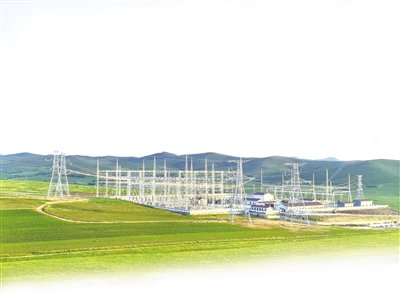
Core Viewpoint - The news highlights the strategic initiatives and developments of State Grid Inner Mongolia Electric Power Company in promoting energy transition and ensuring energy security in Inner Mongolia, emphasizing the construction of high-voltage transmission lines and the integration of renewable energy sources into the grid [4][6][9]. Group 1: Energy Infrastructure Development - The commencement of the Mengxi–Beijing-Tianjin-Hebei ±800 kV UHVDC project on December 30, 2025, marks a significant step in enhancing energy supply from Inner Mongolia to major load centers [5]. - By the end of 2025, the company plans to have constructed 12 UHV transmission lines, with a total new line length exceeding 4,400 kilometers, aiming for a total transmission capacity of 96.7 million kW [8]. - The company has successfully built and put into operation eight UHV transmission corridors, delivering over 830 billion kWh of electricity, thus supporting national energy supply security [6][8]. Group 2: Renewable Energy Integration - The company is actively supporting the development of the "Shage Desert" large-scale wind and solar base, with a planned total installed capacity of 72 million kW [9]. - The 500 kV renewable energy gathering and transmission project in Hulunbuir is expected to deliver 4.488 billion kWh of green electricity annually, significantly contributing to regional economic development [9]. - The company has implemented 24 measures to enhance the efficient utilization of renewable energy, facilitating the integration of renewable sources into the power market [11]. Group 3: Service and Support for Economic Development - The company has introduced 20 measures to support the development of private enterprises and 10 initiatives for large customers, enhancing the electricity supply service [13]. - The company has saved customers 2.24 billion yuan in electricity connection costs during the 14th Five-Year Plan period, improving the overall electricity access experience [13]. - The company is committed to improving living standards by ensuring reliable electricity supply for residential heating and supporting rural revitalization through enhanced electricity services [15][16].

新能源重卡月度渗透率突破50% 创下行业新纪录
Zheng Quan Ri Bao· 2026-02-01 16:12
Group 1 - The core viewpoint of the articles highlights the accelerated transition of China's heavy truck market towards electrification, driven by the "dual carbon" goals and green transformation of road freight by 2025 [1][2]. - In 2025, cumulative sales of new energy heavy trucks in China are projected to reach 231,100 units, representing a year-on-year growth of 182% [1]. - By December 2025, the terminal sales of new energy heavy trucks are expected to surge to 45,300 units, with a monthly penetration rate exceeding 50%, reaching 53.89%, setting a new industry record [1]. Group 2 - The development of new energy heavy trucks in China can be divided into two phases: the initial phase from 2021 to 2023, with penetration rates of 0.7%, 4.7%, and 5%, and a rapid development phase starting in 2024, with projected penetration rates of 12.9% and 28.9% [2]. - The market share structure of power types is undergoing a fundamental shift, with fuel heavy trucks' share dropping from 91% in 2020 to 46% by 2025, while new energy heavy trucks' share rises from nearly zero to 29% [2]. - By 2025, the gas heavy truck market share is expected to reach 25%, indicating that both new energy and gas heavy trucks will collectively account for a significant portion of the market [2]. Group 3 - Companies in the industry are accelerating their layout to seize opportunities in the electrification of heavy trucks, as evidenced by the strategic cooperation agreement between Kandi Technologies Group and CATL to focus on the mass production of heavy truck battery swap stations [3]. - The heavy truck industry is currently in a high-growth phase driven by both policy support and technological innovation, with companies aiming to enhance product competitiveness and market responsiveness [3]. - The unique ecological development path of the new energy heavy truck market involves interlinked elements of "people-vehicle-cargo-money-energy," with battery companies playing a crucial role beyond being mere component suppliers [4].



解锁新型储能装机规模爆发式增长的能量密码
Zheng Quan Ri Bao· 2026-02-01 16:11
Core Insights - The new energy storage capacity in China is projected to grow by 84% by the end of 2025 compared to the end of 2024, reaching 136 million kilowatts and 351 million kilowatt-hours, marking a more than 40-fold increase since the end of the 13th Five-Year Plan [1][2] - New energy storage is transitioning from a supplementary role in renewable energy to a core hub in the energy revolution, driven by dual goals of carbon neutrality and the construction of a new power system [1][3] Policy Support - The top-level design has set clear directions for the industry, with strategic goals established since the 14th Five-Year Plan, including a target of over 30 million kilowatts of installed capacity by 2025 [1][2] - A series of supportive policies covering construction management, market mechanisms, and technological innovation have been introduced to lay a solid foundation for the high-quality development of the new energy storage industry [1] Market Demand - By the end of 2025, the cumulative installed capacity of solar and wind energy in China is expected to reach 1.84 billion kilowatts, accounting for 47.3% of the total installed capacity, which intensifies the demand for new energy storage [2] - New energy storage systems can effectively smooth out the volatility of renewable energy generation, enhancing stability and predictability, thereby significantly improving the grid's capacity to absorb renewable energy [2] Technological Advancements - The current landscape of new energy storage in China features a leading role for lithium-ion battery storage, alongside the collaborative development of compressed air storage, flow battery storage, and flywheel storage technologies [2] - The continuous improvement in the domestic production rate of core equipment has led to a reasonable decline in storage system prices, making large-scale commercial applications feasible [2] Industry Growth - Over the past five years, the installed capacity of new energy storage has experienced a more than 40-fold increase, reflecting both the industry's growth miracle and China's commitment to energy transition [3] - As the country aims to establish a new energy system by 2030, with renewable energy generation accounting for over 50% of total power generation, new energy storage is expected to further facilitate the transition of renewable energy from a supplementary to a primary energy source [3]
新能源重卡月度渗透率突破50%创下行业新纪录
Zheng Quan Ri Bao· 2026-02-01 15:44
Group 1 - The core viewpoint is that the Chinese heavy truck market is accelerating its transition to new energy vehicles (NEVs) by 2025, with significant growth in sales and market penetration rates for new energy heavy trucks [1][2] - By December 2025, the cumulative sales of new energy heavy trucks in China are expected to reach 231,100 units, representing a year-on-year increase of 182% [1] - The market penetration rate for new energy heavy trucks is projected to exceed 50%, reaching 53.89% in December 2025, marking a historic milestone for the industry [1] Group 2 - The development of new energy heavy trucks in China can be divided into two phases: the initial phase from 2021 to 2023, and the rapid development phase starting in 2024, with penetration rates expected to rise from 5% in 2023 to 28.9% in 2024 [2] - The market share of fuel heavy trucks is expected to decline from 91% in 2020 to 46% by 2025, while the share of new energy heavy trucks will increase from nearly zero to 29% [2] - The transition to new energy heavy trucks signifies a shift from policy-driven growth to a dual-driven model of policy and market demand, indicating a new phase in the market [2] Group 3 - Companies in the industry are rapidly positioning themselves to capitalize on the electrification of heavy trucks, as evidenced by a strategic partnership between Kandi Technologies Group and CATL to focus on the mass production of heavy truck battery swap stations [3] - The heavy truck industry is currently experiencing a high-growth phase driven by both policy support and technological innovation, with companies aiming to enhance product competitiveness and market responsiveness [3] - The ecosystem of the new energy heavy truck market is characterized by interlinked elements such as people, vehicles, goods, finance, and energy, with battery manufacturers playing a crucial role in value creation [4]