
电动化

Search documents
机械行业2026年度投资策略:新复苏周期、新科技成长
Zhongyuan Securities· 2025-11-21 09:06
Key Points - The mechanical sector has seen a significant increase of 30.12% as of November 20, 2025, outperforming the CSI 300 index by 14.11 percentage points, ranking 6th among 30 sectors [5][14]. - The lithium battery equipment, basic components, and semiconductor equipment sub-sectors have shown strong growth, with increases of 103.2%, 58.93%, and 48.05% respectively [5][14]. - The report maintains a "stronger than market" investment rating for the mechanical industry, highlighting a new investment cycle and growth opportunities [5][6]. Mechanical Sector Performance - As of November 20, 2025, the mechanical sector's price-to-earnings ratio stands at 36.1, placing it in the 70.5 percentile of its 10-year historical range, indicating a higher valuation compared to historical averages [19][20]. - Among 632 listed companies in the mechanical sector, 549 have seen stock price increases in 2025, with a median increase of 30.23% [21][24]. New Recovery Cycle: Traditional Machinery Upgrading - The engineering machinery sector is entering a new equipment renewal cycle starting in 2025, driven by the aging of existing equipment and export expansion [25][28]. - Major products in the engineering machinery sector, such as excavators and loaders, have shown positive sales growth, with excavator sales reaching 192,135 units in the first ten months of 2025, a 17% year-on-year increase [28][29]. - The internationalization of engineering machinery is accelerating, with exports becoming a significant growth driver, as evidenced by excavator exports accounting for 53.21% of total sales in October 2025 [40][43]. New Technology Growth: Emerging Industries - The humanoid robot sector is experiencing a recovery, with mass production expected to drive significant market expansion [7][20]. - The AIDC (Automatic Identification and Data Capture) equipment sector is poised for rapid growth, benefiting from the fast development of the artificial intelligence industry [9][27]. - The lithium battery equipment sector is witnessing a rebound, with leading companies like Xian Dao Intelligent expected to benefit from the growing demand for solid-state battery equipment [9][35]. Investment Ratings and Key Targets - The report recommends key companies in the engineering machinery sector, including SANY Heavy Industry and XCMG, as primary investment targets due to their strong performance and growth potential [5][54]. - The focus on core components such as pumps, valves, and hydraulic cylinders is also emphasized as part of the investment strategy [54].



售价16.98万元起,第六代全新荣放正式接受预订
Zhong Guo Qi Che Bao Wang· 2025-11-21 08:18
Core Insights - The sixth generation of the Toyota RAV4, referred to as the "global star," has officially started accepting reservations, offering three powertrain options: 2.0L gasoline, 2.0L hybrid, and 2.5L hybrid, with a price range of 169,800 to 228,800 yuan [1][6][14] Pricing and Promotions - The new RAV4 features a significant enhancement in product value, estimated at 15,000 yuan, while the pricing has been reduced by 12,000 yuan compared to the previous generation, resulting in a total value increase of approximately 27,000 yuan [3][5] - During the limited-time reservation period from November 21 to January 9, 2026, customers can receive up to 18,000 yuan in cash incentives, a 6,000 yuan purchase tax subsidy, and an additional 6,000 yuan in after-sales service benefits [3][5] Product Features and Variants - The RAV4 is available in six configurations, catering to diverse consumer needs, including practicality, performance, and advanced technology [6][10] - The 2.0L gasoline version targets practical users, with prices set at 179,800 yuan for the luxury version and 189,800 yuan for the four-wheel-drive luxury version [8] - The 2.0L hybrid series is designed for tech-savvy consumers, with prices starting at 169,800 yuan for the elite version and 187,800 yuan for the luxury version [10] - The 2.5L hybrid series is aimed at performance-oriented users, priced at 212,800 yuan for the four-wheel-drive luxury version and 228,800 yuan for the flagship version [10] Technological Advancements - The new RAV4 incorporates advanced technology, including a 15.6-inch 2.5K display and a Qualcomm 8155 chip, enhancing user experience with features like AI voice assistance and a spacious 591-liter trunk [12][14] - The vehicle boasts a fuel consumption of only 3.99L per 100 km for the 2.0L hybrid, translating to a cost of approximately 0.27 yuan per kilometer, emphasizing its efficiency [14] Safety Features - The RAV4 is equipped with the TSS 4.0 intelligent driving assistance system, featuring 24 high-precision sensors for enhanced safety in various driving conditions [14] - The vehicle's body structure has been redesigned with 80% new materials, utilizing ultra-high-strength steel to ensure passenger safety [14] Market Positioning - The RAV4 has a strong market presence, having sold over 15 million units globally since its launch in 1994, and remains a trusted choice for over 2 million families in China [6][12] - The launch of the new RAV4 aligns with Toyota's commitment to innovation in smart, electric, and high-end vehicle segments, as demonstrated by the recent introduction of the IT'S TiME 3.0 technology brand [17]


龙珠王新宇拆解下一个“时代品类”:我们为何重注具身智能?
创业邦· 2025-11-21 06:05
美团龙珠合伙人王新宇 整理编辑丨小龙 "我们不是钱投得太多,而是远远不够。" 在资本对具身智能赛道"估值泡沫"的争议声中,美团龙珠合伙人王新宇——这位兼具技术功底与投资 视野的 投资人,用一句掷地有声的判断,展现出了穿越周期的定力与长期主义。 2021年,王新宇牵头组建美团龙珠科技投资团队,围绕电动化与智能化两大核心主线,在新能源 车、AI大模型、具身智能等关键赛道 频频 落子。他主导投资了月之暗面、宇树科技、星海图、自变 量等一批代表未来的科技企业,持续捕捉属于这个时代的"时代品类"。 | | | | 龙珠在具身智能领域的布局 (据创业邦不完全统计) | | | | --- | --- | --- | --- | --- | --- | | 公司名称 | 成立时间 | 一句话简介 | 龙珠参与投资轮次 | 此轮次投资时间 | 融资金额 | | 宇树科技 | 2016/8/26 | 高运动性能四足机 器人研发商 | B3轮 | 2024年9月 | 1亿美元 | | 法奥机器人 | 2019/4/2 | 协作机器人研发生 产商 | B轮 | 2022年3月 | 5000万美元 | | | | | C轮 | 20 ...

博雷顿发布无人驾驶专用矿卡 零碳矿山智能化进入“效率赶超人工”关键阶
Zhong Guo Jing Ji Wang· 2025-11-21 05:39
Core Viewpoint - The launch of the Boreton 9M145E, a new generation of unmanned electric mining trucks, marks a significant shift towards fully autonomous mining operations, representing a key milestone in the transition from traditional manual driving to large-scale implementation of unmanned systems [1][6]. Group 1: Unmanned Driving Capabilities - The new model features Boreton's self-developed E2E end-to-end intelligent driving system, which enhances operational efficiency and stability through multi-dimensional perception integration, intelligent path planning, and real-time decision-making based on a multi-modal mining model [3]. - Compared to traditional manual driving, unmanned vehicles demonstrate improved performance in night shifts, long distances, and complex road conditions, significantly reducing operational fluctuations and increasing effective production per unit time [3][7]. Group 2: Dedicated Unmanned Platform - Unlike traditional vehicles modified for unmanned operation, the new model is designed from the ground up as a dedicated unmanned platform, optimizing structure, safety, and maintenance by removing the driver's cabin [4]. - This design allows for systematic reconstruction of the vehicle's layout, control systems, sensor placements, and energy management, enabling immediate deployment in mining operations and significantly reducing deployment costs [4][8]. Group 3: Systematic Green Mining Solutions - Alongside the new model, Boreton introduced a comprehensive green mining solution that integrates photovoltaic networks, energy storage, charging/replacement systems, electric mining trucks, unmanned driving systems, and smart mining scheduling platforms [6]. - This integrated approach allows mining companies to achieve quantifiable and replicable optimization in energy costs, safety, production rhythm, and emission reduction, driving the green transformation of mining operations [6][10]. Group 4: Industry and Technology Outlook - The global mining industry is undergoing a digital, electric, and automated transformation, with unmanned electric mining trucks entering a phase of accelerated adoption from demonstration projects to widespread application [7]. - Market research indicates that the unmanned mining truck market will experience rapid growth in the coming years, driven by cost reductions from electrification and efficiency improvements from automation [7]. - The increasing penetration of photovoltaic and energy storage solutions in mining will further enhance the cost advantages of electric mining trucks, while advancements in intelligent sensing and multi-modal models will improve the stability and operational capabilities of unmanned systems [7]. Group 5: Long-term Value of Boreton's Approach - Boreton's strategy is considered to have stronger long-term sustainability and competitiveness due to its dedicated unmanned platform, which addresses structural limitations of traditional modification routes [8]. - The deep self-research in the three-electric system, thermal management, and energy replenishment allows for a synergistic relationship between electrification and unmanned driving, creating a more favorable cost curve compared to traditional fuel vehicles [8]. - Boreton's end-to-end algorithm system enhances responsiveness and adaptability to extreme mining conditions, while the comprehensive solution encompassing energy, equipment, and scheduling improves overall operational efficiency and investment returns for mining companies [8][10].
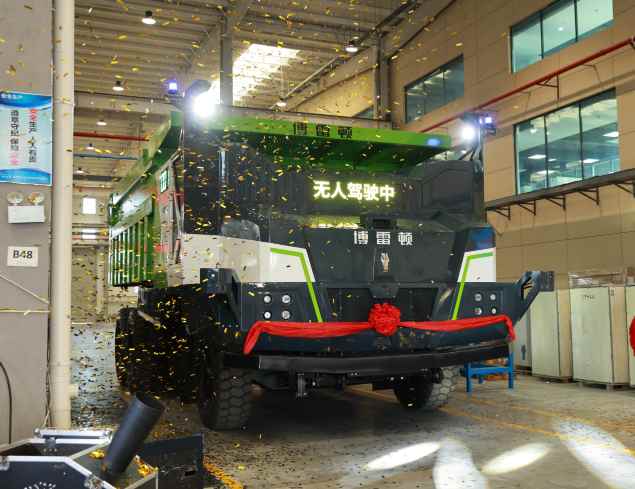
博雷顿9M145E发布 无人驾驶进入效率赶超人工时代
Zhi Tong Cai Jing· 2025-11-21 02:32
Core Viewpoint - The launch of the Boreton 9M145E marks a significant advancement in the mining industry, transitioning from traditional manual driving to a fully autonomous system, representing a pivotal moment in the transformation of mining operations towards a zero-carbon future [1][6]. Group 1: Autonomous Driving Capabilities - The new model features Boreton's self-developed E2E end-to-end intelligent driving system, enhancing operational efficiency and stability across loading, transportation, and discharge processes, particularly in challenging conditions [3]. - Compared to traditional manual driving, autonomous vehicles demonstrate improved performance in night shifts, long distances, and complex terrains, leading to reduced operational fluctuations and increased effective production [3]. Group 2: Dedicated Platform for Autonomous Driving - Unlike traditional vehicles modified for autonomous use, the new model is designed from the ground up as a driverless platform, optimizing structure, safety, and maintenance [4]. - The removal of the driver's cabin reduces operational redundancy and enhances reliability, allowing for immediate deployment in mining operations and significantly lowering deployment costs [4]. Group 3: Systematic Green Mining Solutions - Alongside the new vehicle, Boreton introduced a comprehensive green mining solution that integrates photovoltaic networks, energy storage, charging systems, electric mining trucks, and intelligent scheduling platforms [6]. - This integrated approach enables quantifiable and replicable optimization in energy costs, safety, production rhythm, and emission reduction, driving the green transformation of mining enterprises [6]. Group 4: Industry and Technology Outlook - The global mining industry is undergoing a digital, electric, and automated transformation, with autonomous electric mining trucks poised for rapid growth as they transition from pilot projects to widespread application [7]. - The increasing penetration of photovoltaic and energy storage solutions will enhance the cost advantages of electric mining trucks, while advancements in intelligent perception and multi-modal models will improve the stability and operational capabilities of autonomous systems [7]. Group 5: Long-term Value of Boreton's Approach - Boreton's strategy is seen as more sustainable and competitive due to its dedicated driverless platform, which addresses structural limitations of traditional modifications and enhances operational scalability [8]. - The company's deep self-research in the three-electric system, thermal management, and energy replenishment allows for better synergy between electrification and automation, creating a more favorable cost curve compared to traditional fuel vehicles [8]. - Boreton's end-to-end algorithm system shortens perception and decision-making paths, improving responsiveness in extreme mining conditions, while its comprehensive solutions across energy, equipment, and scheduling enhance overall mining efficiency [8][10].
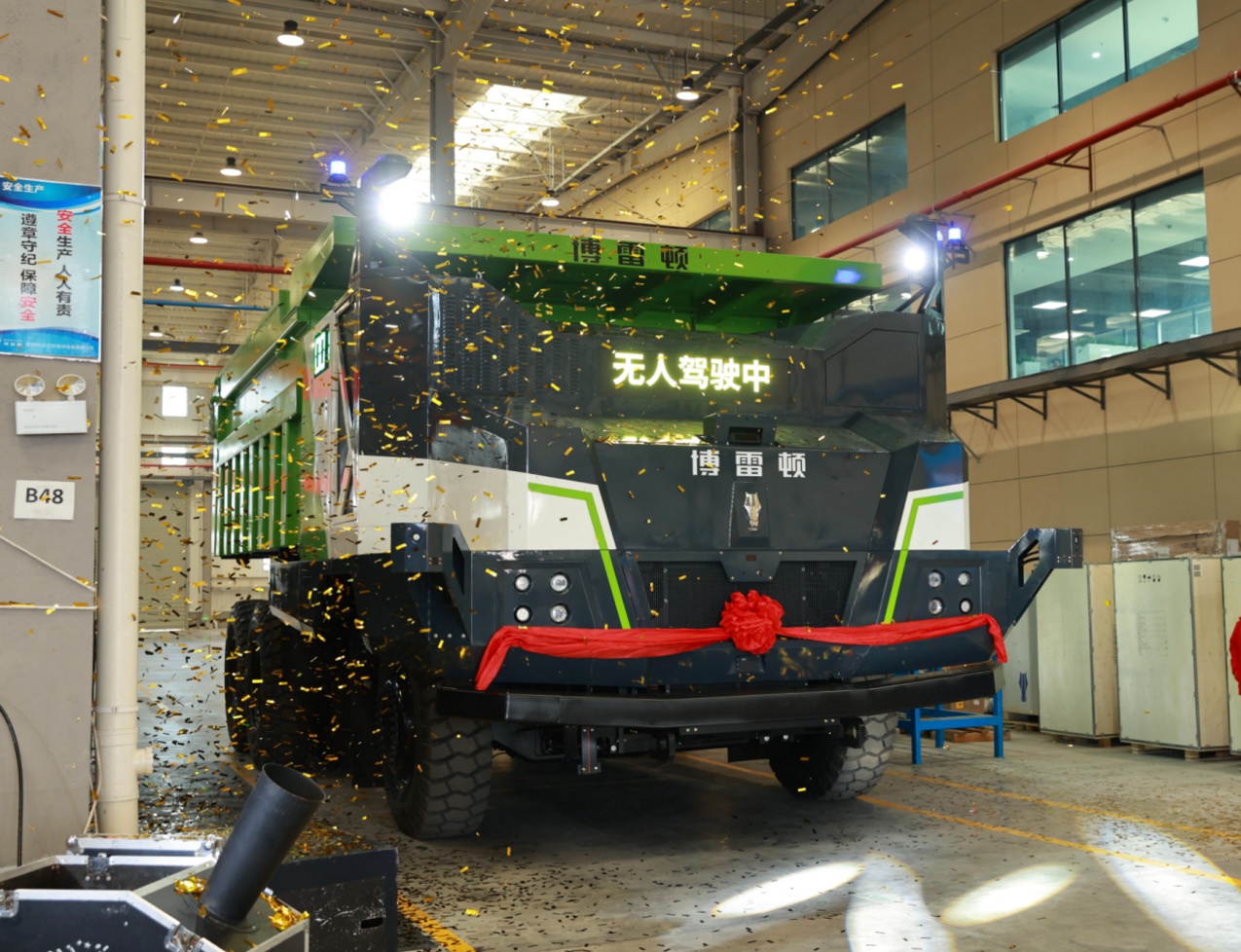
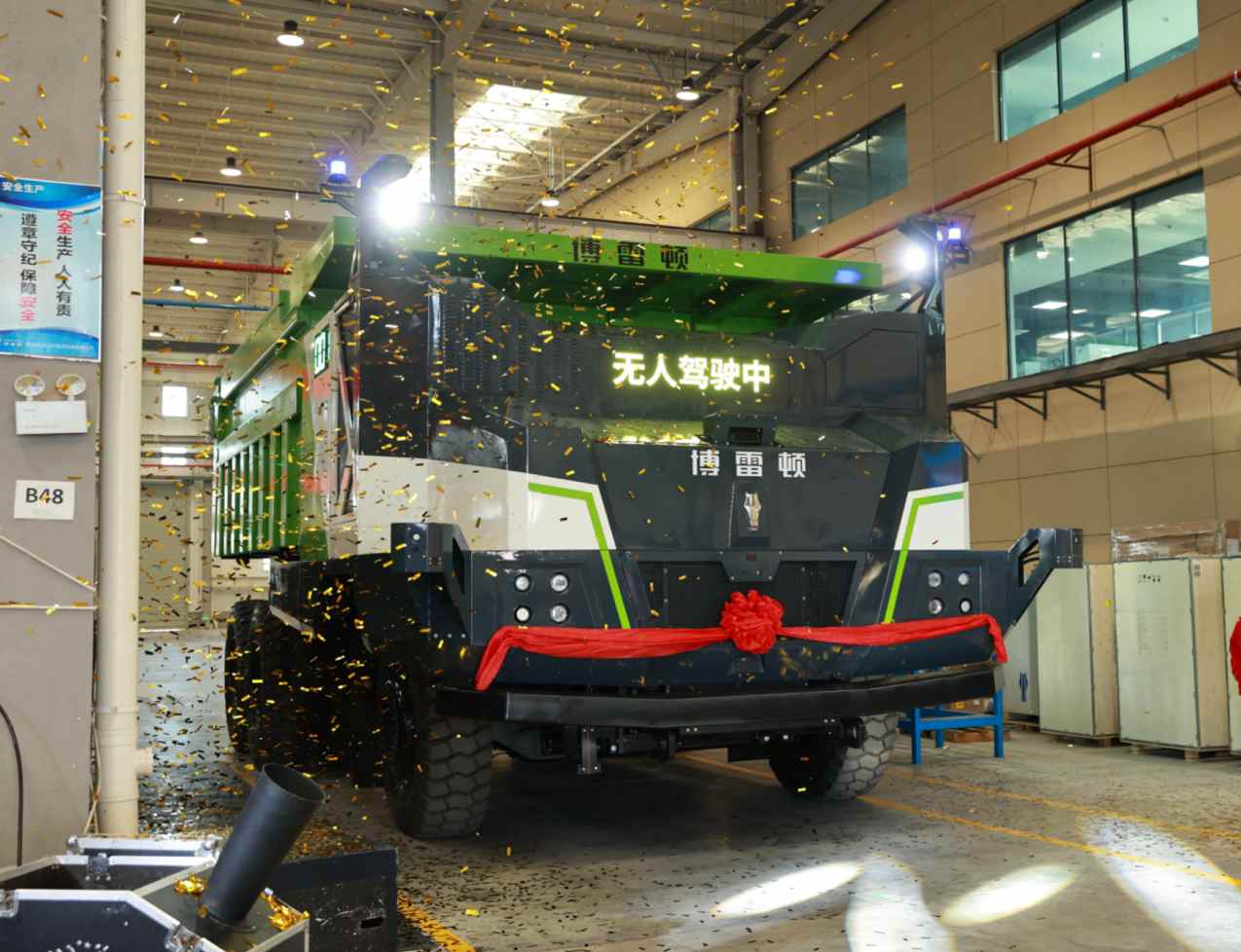
博雷顿(01333)9M145E发布 无人驾驶进入效率赶超人工时代
智通财经网· 2025-11-21 02:29
Core Insights - Boreton Technology Co., Ltd. launched the new generation of unmanned electric mining truck, Boreton 9M145E, marking a significant shift towards fully autonomous mining operations [1][3] - The introduction of this model is seen as a pivotal moment in the transformation of mining production methods, moving from traditional manual driving to large-scale implementation of unmanned systems [1][6] Group 1: Unmanned Driving Capabilities - The new model features Boreton's self-developed E2E end-to-end intelligent driving system, enhancing operational efficiency and stability across loading, transportation, and unloading processes [3][4] - Compared to traditional manual driving, unmanned vehicles demonstrate improved performance in night shifts, long distances, and complex road conditions, significantly reducing operational fluctuations and increasing effective production [3][6] Group 2: Dedicated Platform for Unmanned Driving - Unlike traditional vehicles retrofitted for unmanned operation, Boreton's new model is designed from the ground up as a dedicated unmanned platform, optimizing structure, safety, and maintenance [4][8] - The removal of the driver's cabin allows for a comprehensive optimization of the vehicle's design, enhancing reliability and reducing deployment costs in mining areas [4][8] Group 3: Systematic Green Mining Solutions - Alongside the new model, Boreton presented a systematic green mining solution that integrates photovoltaic networks, energy storage, charging systems, electric mining trucks, and intelligent scheduling platforms [6][10] - This integrated approach enables mining companies to achieve quantifiable and replicable improvements in energy costs, safety, production rhythm, and emission reduction [6][10] Group 4: Industry and Technological Outlook - The global mining industry is undergoing a digital, electric, and automated transformation, with unmanned electric mining trucks entering a phase of accelerated growth [7][10] - Research indicates that the unmanned mining truck market will experience rapid growth in the coming years, driven by cost reductions from electrification and efficiency gains from automation [7][10] Group 5: Long-term Value of Boreton's Approach - Boreton's strategy is considered to have stronger long-term sustainability and competitiveness due to its dedicated unmanned platform, which addresses structural limitations of traditional retrofitting [8][10] - The company's deep self-research in the three-electric system, thermal management, and energy replenishment allows for a synergistic relationship between electrification and unmanned driving [8][10]
广州车展一年巨变:油电之争结局已分!新势力排位赛还在打
Nan Fang Du Shi Bao· 2025-11-21 02:20
Core Insights - The 2025 Guangzhou International Auto Show highlights significant changes in the Chinese automotive market, particularly in the areas of electric vehicles (EVs), competition among brands, and technological advancements [2] Group 1: Changes in Market Dynamics - The proportion of new energy vehicles (NEVs) at the auto show increased from 43.7% to 58%, indicating a shift towards electric vehicles as the majority [3] - In the first ten months of 2025, the domestic passenger car market saw a total sales volume of 19.256 million units, a year-on-year increase of 8.0%, with NEVs selling 10.15 million units, up 21.9% [6] - The penetration rate of NEVs reached 40.9% in 2024, with October 2025 marking the first month where the penetration rate exceeded 50% [6] Group 2: Absence of Foreign Brands - Over ten mainstream foreign brands were absent from the auto show, reflecting a decline in their market share and competitiveness in the face of rising domestic brands [7] - Import car sales dropped by 32% in the first nine months of 2025, with total imports expected to be only 700,000 units for the year, a 12% decrease [8] Group 3: Rise of Domestic Brands and New Players - Domestic brands and new entrants like BYD and Leap Motor are gaining significant market share, with Leap Motor's sales increasing by 105.3% year-on-year [9][13] - Huawei has established itself as a key player in the automotive sector, with over 100,000 units sold in collaboration with various car manufacturers [12] Group 4: Technological Advancements and Consumer Trends - The competition among new energy vehicles has intensified, with advanced driving technologies becoming more accessible to consumers, as seen in the pricing of high-end features [16] - Hybrid technology is gaining traction as a practical choice for many brands, reflecting a shift in consumer preferences towards cost-effective and advanced technology [16]



首个完成五代进化的自主轿车 吉利帝豪坚守燃油市场
Jing Ji Guan Cha Wang· 2025-11-21 01:38
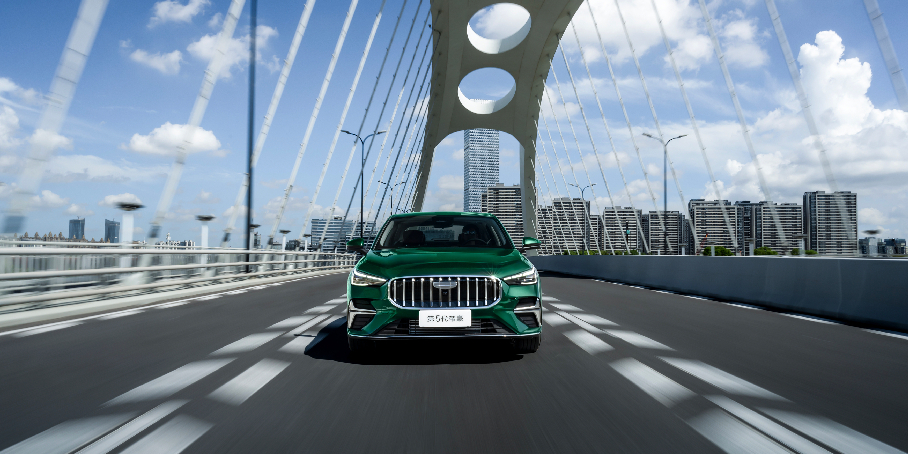
Core Insights - The launch of the fifth-generation Emgrand marks a new development stage for Geely's classic model, showcasing advancements in both design and technology [3][5] - The Emgrand family has achieved cumulative sales of over 4 million units in 16 years, reflecting the rise and evolution of Chinese independent brands in the sedan market [2][5] Product Development - The fifth-generation Emgrand is available in four configurations, priced between 65,900 to 82,900 yuan, and features a new design with a front face consisting of 12 vertical grille bars [3] - The vehicle dimensions are 4815×1885×1480 mm with a wheelbase of 2755 mm, offering a high cabin space utilization rate of 85.1% and the largest rear headroom in its class at 970 mm [3] - It offers two powertrain options: a 1.5TD engine with 133 kW and 290 N·m torque, achieving 0-100 km/h in 7.9 seconds and a fuel consumption of 5.95 L/100 km [3] Technological Advancements - The fifth-generation Emgrand is equipped with the Flyme Auto intelligent cockpit system and a 14.6-inch central control screen, with high-end models optionally featuring L2-level assisted driving capabilities [3][4] - Geely has positioned the Emgrand as a technology pioneer within its lineup, having introduced features like 4G connectivity and advanced driver assistance systems in previous generations [4] Market Positioning - The Emgrand faces significant competition from both traditional joint venture brands like Nissan and Volkswagen, as well as emerging players in the new energy vehicle sector, such as BYD [3][4] - The A-segment sedan market is shifting from price competition to a comprehensive evaluation of space, safety, intelligence, and operating costs, necessitating the Emgrand to maintain its existing customer base while exploring new market opportunities [4] Global Perspective - Despite the rise of electric vehicles, fuel-powered cars still hold a 70% market share globally, with the Emgrand being sold in 25 countries and achieving top sales in markets like Saudi Arabia and the Philippines [4]

调研速递|比亚迪接待摩根士丹利等240家机构 海外销量同比增135% 在手现金超1752亿元
Xin Lang Cai Jing· 2025-11-20 15:57
Core Viewpoint - BYD is actively expanding its global presence in the electric vehicle market, showcasing significant sales growth and robust financial performance while addressing challenges in international trade and local market adaptation [2][5]. Group 1: Overseas Market - BYD reported a 135% year-on-year increase in overseas passenger car and pickup sales, totaling 785,000 units from January to October [2] - The global passenger car market is valued at 80 million units, with an electric vehicle penetration rate of only 20% expected in 2024, indicating substantial market potential [2] - The company is focusing on understanding local cultures and consumer demands to enhance its international market strategy [2] Group 2: Overseas Production Capacity - BYD has established production facilities in Thailand, Uzbekistan, and Brazil, with a combined design capacity exceeding 300,000 units per year [3] - The company is planning additional factories in Hungary, Malaysia, and Cambodia, continuing its global production expansion [3] - The strategy emphasizes a blend of internationalization and localization to support the green transformation of the automotive industry [3] Group 3: R&D Strength - BYD is enhancing its core technology capabilities in electrification, including advancements in blade batteries, CTB body integration, and megawatt fast-charging technology [4] - The "Heavenly Eye" intelligent driving system, launched in February, aims to democratize advanced driving features, leveraging over 130 million kilometers of driving data for rapid iteration [4] - The company positions itself as a leader in the global electrification process through continuous technological innovation [4] Group 4: Financial Performance - In the first three quarters of 2025, BYD reported total revenue of approximately 566.3 billion yuan, with a net profit attributable to shareholders of 23.3 billion yuan [5] - The company achieved cumulative sales of 3.26 million new energy vehicles, marking an 18.6% year-on-year increase and solidifying its position as the global sales leader [5] - As of the end of Q3, BYD's cash and cash equivalents exceeded 175.2 billion yuan, indicating strong cash flow management to support rapid business growth [5]
比亚迪(002594) - 2025年11月19日投资者关系活动记录表
2025-11-20 15:44
Market Expansion and Performance - BYD has significantly increased its market share in key overseas markets such as Europe, Southeast Asia, and Latin America, with notable sales growth in Singapore and Hong Kong, and a substantial increase in the UK market [1] - In the first ten months of this year, BYD's overseas sales of passenger cars and pickups reached 785,000 units, representing a year-on-year growth of 135% [2] - The global passenger car market is approximately 80 million units annually, with an electric vehicle penetration rate of only 20% in 2024, indicating vast market potential [1] Production Capacity and Global Strategy - BYD has established a presence in over 110 countries and regions across six continents, with announced production facilities in Thailand, Uzbekistan, and Brazil, totaling a designed capacity of over 300,000 units per year [3] - Future production plans include facilities in Hungary, Malaysia, and Cambodia, as part of BYD's strategy to integrate internationalization and localization [3] Technological Advancements - BYD is a leader in electric vehicle technology, focusing on core technologies such as battery systems and intelligent driving, with significant investments in R&D [4] - The company has developed advanced technologies like the blade battery and CTB (cell-to-body) integration, enhancing battery safety and energy density [4] Financial Performance - For the first three quarters of 2025, BYD reported total revenue of approximately 566.3 billion yuan and a net profit attributable to shareholders of 23.3 billion yuan, with cumulative sales of 3.26 million electric vehicles, a year-on-year increase of 18.6% [6] - As of September 30, 2025, BYD's cash and cash equivalents exceeded 175.2 billion yuan, providing strong financial support for business expansion [7] Cash Flow Management - BYD emphasizes effective cash flow management and collaboration with supply chain partners, maintaining a low turnover period for accounts payable and enhancing operational efficiency [8]