
碳中和

Search documents
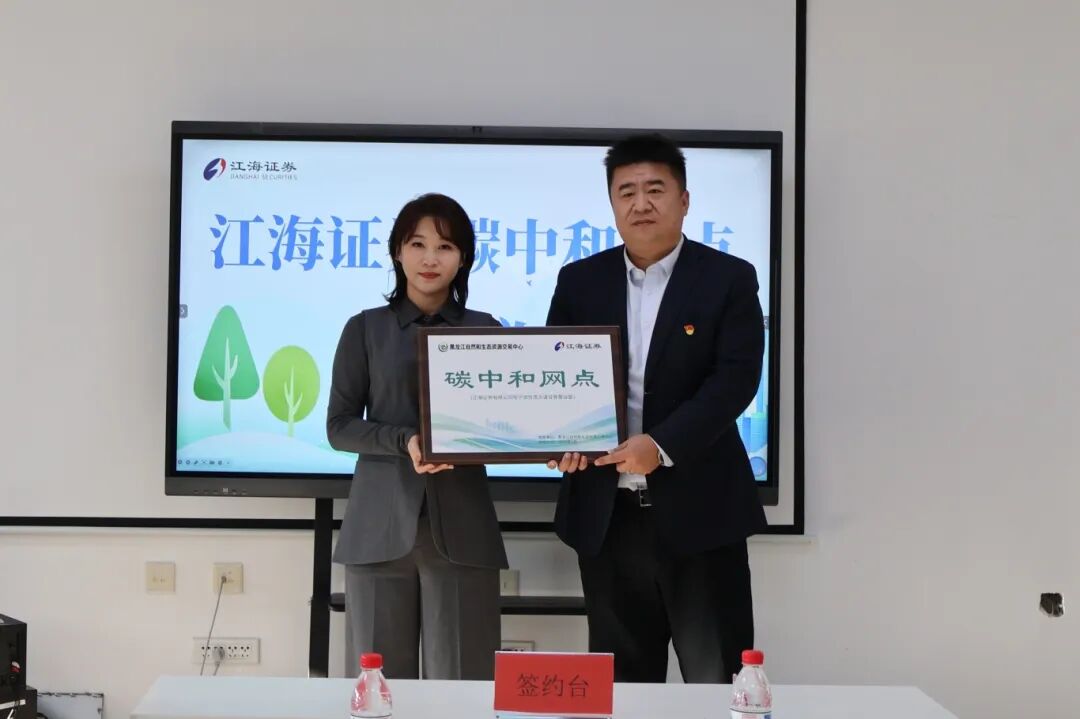
黑龙江省首家“碳中和网点”授牌仪式在哈举行
Xin Lang Cai Jing· 2026-01-24 07:17
Core Viewpoint - The establishment of the first "carbon neutral outlet" in Heilongjiang Province by Jianghai Securities aims to contribute to green and low-carbon development in the region, aligning with Xi Jinping's ecological civilization thought [1][2]. Group 1: Carbon Neutral Outlet Initiative - Jianghai Securities was awarded the "carbon neutral outlet" certification during a ceremony in Harbin, marking a significant step in promoting carbon neutrality in the province [1]. - The initiative is supported by the Heilongjiang Provincial Forestry and Grassland Bureau and involves collaboration with various local organizations to create a carbon trading platform [1][5]. Group 2: Carbon Trading and Green Operations - The signing of the "Longjiang Green Carbon" transfer agreement allows Jianghai Securities to achieve carbon neutrality for its office operations by 2025 through the cancellation of sufficient carbon credits [2]. - The Natural Ecology Trading Center provides comprehensive support for Jianghai Securities, including carbon emission calculations and the purchase of "Longjiang Green Carbon" products to offset emissions [5]. Group 3: Future Developments and Services - Since the launch of the "Longjiang Green Carbon" trading market in 2024, the Natural Ecology Trading Center has developed a carbon trading service system that includes four models: "carbon sink + neutrality," "carbon sink + judiciary," "carbon sink + finance," and "carbon sink + storage" [7]. - The center aims to continue optimizing service models and innovating green financial products to support various entities in achieving green and low-carbon development, contributing to the construction of a "green Longjiang" [7].

醇氢电动从技术验证走向产业落地 吉利跑通绿色甲醇全生态
Zheng Quan Shi Bao Wang· 2026-01-24 07:14
Core Viewpoint - Geely Holding has announced its "One Geely, Comprehensive Leadership" 2030 strategic goal, aiming to achieve a global strategic layout through enhanced top-level coordination and global collaboration, establishing a core capability system to lead key indicators at a global level and become a leader in high-quality globalization for Chinese enterprises [1] Group 1: Development of Methanol Hydrogen Electric Technology - The methanol hydrogen electric technology has reached a critical development opportunity, supported by over 70 policy documents from national ministries and local governments, demonstrating economic viability, reliability, and safety for commercial operation [1] - Geely has been deeply involved in the green methanol sector for over 20 years, establishing a competitive advantage across the entire industry chain from methanol preparation, transportation, refueling, to vehicle manufacturing [1] - The company plans to expand the application of methanol hydrogen electric technology in various sectors, including automotive, shipping, mining machinery, engineering machinery, and generator sets, while accelerating the construction of methanol refueling networks in key areas [1] Group 2: Comprehensive Green Industry Chain - Geely has built a rare global full-stack green industry chain covering "preparation-transportation-refueling-vehicle manufacturing," with over 50,000 vehicles and 23 billion kilometers of commercial operation data, along with more than 400 core patents, proving the technology's maturity for commercial viability [2] - The methanol hydrogen technology is being promoted in multi-modal transport and non-road machinery sectors, showcasing its broad applicability and potential for ecological development [2] - The economic advantages of methanol hydrogen electric vehicles are significant, with fuel costs reduced by 32%-52% compared to diesel vehicles, and lower purchase costs with no range anxiety and quick refueling capabilities compared to pure electric and hydrogen fuel heavy trucks [2] Group 3: Ecological Development and Strategic Partnerships - Geely's methanol hydrogen ecosystem has expanded from a single product to a closed-loop industry chain encompassing "methanol, transport, stations, vehicles, and capture," facilitating replicable and scalable ecological co-construction capabilities [2] - Strategic collaborations with leading companies such as Bosch, ZF, and Shanghai Port Group are enhancing Geely's ability to implement ecological development [2]

地球密码 | 氢氦合采:未来能源勘探的新范式
Zhong Guo Zi Ran Zi Yuan Bao· 2026-01-24 02:16
Group 1: Core Insights - Hydrogen and helium are emerging as strategic resources in the context of the global energy transition and technological advancements, shifting from being viewed as by-products to key targets for exploration and development [1] - The geological studies indicate significant synergies in the formation mechanisms and storage conditions of hydrogen and helium, suggesting that their co-exploration and integrated development can enhance resource discovery efficiency and optimize economic viability [1][4] Group 2: Hydrogen Insights - Hydrogen is considered a crucial component of future clean energy systems, producing only water upon combustion and thus being ideal for achieving carbon neutrality [2] - Currently, 96% of global hydrogen production comes from fossil fuel conversion, known as "gray hydrogen," which is associated with substantial CO2 emissions; extracting naturally occurring hydrogen ("white hydrogen" or "gold hydrogen") could provide a near-zero carbon emission pathway [2] Group 3: Helium Insights - Helium is an essential strategic gas in high-tech industries due to its unique physical and chemical properties, being used to maintain extreme low-temperature environments [3] - Helium is a non-renewable resource primarily sourced from natural gas deposits containing radioactive elements, making the establishment of independent and stable helium resources a key issue for resource security in many countries [3] Group 4: Co-Exploration Dynamics - The co-existence of hydrogen and helium is evident in specific geological units where tectonic activity and fluid movement create environments conducive to the generation of both gases [4] - The shared physical properties of hydrogen and helium lead to similar migration patterns, allowing for potential co-storage in geological traps, which supports the theoretical basis for their co-exploration [4] Group 5: Current Developments and Future Directions - Collaborative extraction of hydrogen and helium has progressed from theory to practice, with significant advancements in exploration projects in countries like the USA, Australia, and Finland [5] - In China, the Weihe Basin is identified as a promising helium-rich area, with ongoing deep drilling efforts aimed at exploring deep hydrogen and helium resources [6] - The international landscape is witnessing a surge in pioneering projects, with major energy companies investing in overcoming extraction and separation technology challenges, indicating a growing interest in this sector as a new investment hotspot [6]
《分布式能源规划员》(综合能源服务方向)培训通知丨系列培训
中国能源报· 2026-01-24 00:35
Core Viewpoint - The article emphasizes the importance of developing distributed energy and integrated energy services as a crucial path towards carbon neutrality, highlighting the need for interdisciplinary talent in energy planning and management [1] Group 1: Training Overview - The training titled "Distributed Energy Planner (Integrated Energy Services Direction)" is organized to address the shortage of professionals skilled in energy planning, conversion, and intelligent control [1] - The training will be conducted online from February 10 to February 13, 2026 [2] - The training is hosted by the Human Resources and Social Security Ministry's Social Security Capacity Building Center and organized by China Energy News Co., Ltd. [2] Group 2: Target Audience - The training targets various stakeholders including provincial and municipal power companies, energy groups, and enterprises in the oil and gas sector [2] - It also includes new energy companies (wind, solar, storage), energy service companies, equipment manufacturers, and research institutions [2] - Individuals interested in the fields of new energy, distributed energy, and integrated energy services are encouraged to participate [2] Group 3: Course Outline - The course covers an overview of integrated energy services, including its driving forces and current development status both domestically and internationally [3] - It includes modules on planning comprehensive energy solutions, distributed photovoltaic projects, natural gas distributed energy applications, and smart microgrids [4] - Additional topics include hydrogen energy applications, new energy storage projects, and zero-carbon factory assessments [4] Group 4: Training Fees - The training fee is set at 3600 yuan per person, which includes training, materials, and certification costs [5] Group 5: Contact Information - For inquiries, contact Yang at 15801248899 or Wang at 15201547047 [6]

新能源板块本周走强,关注光伏ETF易方达(562970)、新能源ETF易方达(516090)等产品投资价值
Sou Hu Cai Jing· 2026-01-23 12:38
Market Performance - The China Securities Photovoltaic Industry Index increased by 6.9%, the China Securities New Energy Index rose by 4.2%, the National Securities New Energy Battery Index grew by 2.1%, and the China Securities Shanghai Carbon Neutrality Index went up by 1.6% this week [1][2]. Industry Trends - The National Energy Administration highlighted in an article that the commercial aerospace industry is on the rise, with space photovoltaics potentially becoming the next growth area. The demand for satellites, in-orbit data, and space-based computing capabilities is rapidly increasing, revealing continuous opportunities in the space photovoltaic sector [1]. - Market consensus suggests that P-type ultra-thin HJT and perovskite photovoltaic products, due to their technological advantages, have significant growth potential and are expected to capture a larger market share during the expansion of commercial aerospace [1]. Index Valuation - The rolling price-to-earnings (P/E) ratio for the China Securities New Energy Index is 49.3 times, while the National Securities New Energy Battery Index has a rolling P/E ratio of 30.2 times. The China Securities Photovoltaic Industry Index has a price-to-book (P/B) ratio of 2.7 times, and the China Securities Shanghai Carbon Neutrality Index has a rolling P/E ratio of 25.8 times [2][4]. - The valuation percentiles indicate that the China Securities New Energy Index is at the 80.3rd percentile, the National Securities New Energy Battery Index at the 80.6th percentile, the China Securities Photovoltaic Industry Index at the 52.1st percentile, and the China Securities Shanghai Carbon Neutrality Index at the 90.3rd percentile [2][4]. ETF Tracking - There are currently five ETFs tracking the China Securities New Energy Index, two ETFs for the National Securities New Energy Battery Index, twelve ETFs for the China Securities Photovoltaic Industry Index, and eight ETFs for the China Securities Shanghai Carbon Neutrality Index. The management fee for low-cost products is 0.15% per year, with a custody fee of 0.05% per year [5].

加拿大总理因何盯上中国能源“三巨头”
Guan Cha Zhe Wang· 2026-01-23 10:16
Core Viewpoint - The article discusses the rising global recognition of China's renewable energy sector as a vital contributor to energy transition, countering criticisms from the U.S. regarding unfair competition and overcapacity [1][2]. Group 1: China's Renewable Energy Position - Zhang Lei, Chairman of Envision Group, asserts that Chinese renewable energy represents a "civilizational output," akin to the steam engine during the Industrial Revolution, establishing a new energy infrastructure globally [1]. - Al Gore supports this view, highlighting that by 2025, the total value of green technology exported by China will exceed that of all fossil fuels exported by the U.S. by 50% [1]. - Countries like Nigeria, Kenya, and Zambia are experiencing a surge in solar installations, indicating a global shift towards renewable energy solutions [1]. Group 2: Canada-China Energy Cooperation - Canadian Prime Minister's recent visit to China marks a significant thaw in relations, focusing on cooperation in key areas such as energy and agriculture, which is crucial for both nations [2]. - Meetings between Canadian officials and major Chinese energy companies, including China National Petroleum Corporation, Envision Group, and CATL, are pivotal for reshaping the global energy landscape [2][5]. - The collaboration is seen as a strategic response to Canada's energy transition challenges, showcasing China's renewable energy capabilities [2][11]. Group 3: Challenges in Canada's Energy Sector - Canada faces a dilemma with over 95% of its oil and most natural gas reliant on the U.S. market, posing strategic security risks amid politicized U.S. energy policies [9]. - The aging electrical grid in Canada struggles to integrate renewable energy, falling short of the 2030 and 2035 renewable energy targets [10]. - A weak green industrial base and incomplete supply chains hinder Canada's ability to leverage its resource advantages, necessitating external technological support [11]. Group 4: Technological and Systemic Advantages of China - China's renewable energy industry has developed a comprehensive "scale-technology-system" model, providing a robust foundation for international cooperation [12]. - Envision Group's AI-powered energy systems exemplify this systemic advantage, addressing the complexities of renewable energy management and enhancing operational efficiency [13][15]. - The AI energy system's capabilities align with Canada's long-term energy system upgrade plans, indicating a deepening of technological collaboration [14][19]. Group 5: Future Implications of Cooperation - The partnership between Canada and China transcends mere product trade, evolving into a collaborative model for technology standards and industrial practices [14][20]. - This cooperation is expected to reshape global energy collaboration, allowing Chinese renewable technology standards to influence international markets and contribute to global carbon neutrality efforts [20].



议题更新!2026锂电关键材料及应用市场高峰论坛 3月19-20日 常州
鑫椤锂电· 2026-01-23 08:11
Core Viewpoint - The lithium battery industry is poised for a significant growth cycle starting in 2026, characterized by strong demand recovery, accelerated global expansion, and disruptive technological advancements, leading to a "spiral rise" in both volume and price [3]. Group 1: Market Predictions - By 2025, global lithium battery production is expected to reach 2250 GWh, with a growth rate of 30% in 2026, and the energy storage sector projected to grow at an impressive 48.3% [5]. - The demand surge will create substantial pressure on the supply of battery cells and four key upstream materials, highlighting a potential supply gap [5]. Group 2: Conference Details - The 2026 Lithium Key Materials and Applications Market Summit will be held on March 19-20, 2026, in Changzhou, Jiangsu, organized by Xinluo Information [4]. - The summit will focus on three core topics: in-depth discussions on cutting-edge technologies and market supply-demand dynamics, B2B procurement matching, and strategic insights for high-quality development in the lithium battery industry [5][6]. Group 3: Key Discussion Topics - The conference will feature discussions on lithium carbonate futures and options, market volatility responses from lithium battery companies, and the potential of global lithium resources in 2026 [7]. - Other topics include the opportunities presented by solid-state battery development for lithium salt companies and the practical aspects of lithium carbonate futures and supply-demand outlooks [7][8]. Group 4: Industry Collaboration - The summit aims to facilitate B2B procurement connections among top battery manufacturers like CATL, BYD, and LGES, as well as material suppliers covering the entire supply chain [6]. - The event will provide authoritative data releases, benchmark company rankings, and deep industry connections to help businesses seize growth opportunities in the lithium battery sector [6].

陈茂波:香港正坚定稳步迈向碳中和目标
Zhong Guo Xin Wen Wang· 2026-01-23 07:56
Group 1 - The Hong Kong government is steadily moving towards its carbon neutrality goal by 2050, as stated by Financial Secretary Paul Chan at the World Economic Forum in Davos [1][2] - Strategies to achieve carbon neutrality include tax incentives for electric vehicles, incentives for green buildings, and financial support for sustainable hydrogen transportation trials [2] - Hong Kong aims to leverage its position as an international financial center by promoting green financial products such as green bonds and ESG funds to attract private capital for carbon reduction efforts [2] Group 2 - The government encourages financial innovation, including the issuance of tokenized green bonds and the securitization of infrastructure project loans to free up funds for reinvestment [2] - Public support and trust are deemed crucial for achieving a green transition, with the government ensuring that funds are genuinely used for green projects through internationally aligned standards [2] - High-emission companies, including domestic and international mining firms, can benefit from listing in Hong Kong by gaining market funding, improving governance, transparency, and acceptance in global markets [2]
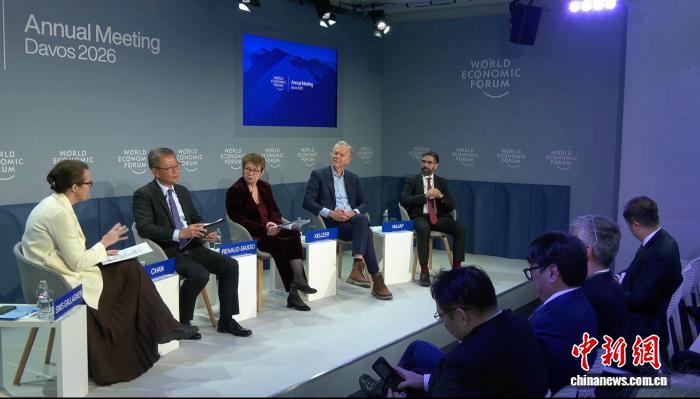
陈茂波:政策引导叠加金融创新 港府多管齐下推进2050碳中和目标
智通财经网· 2026-01-23 07:21
Core Viewpoint - Hong Kong is steadily progressing towards its carbon neutrality goal by 2050, with strategies including government policies to incentivize behavioral changes among businesses and consumers [1] Group 1: Carbon Neutrality Goals - The Hong Kong government aims to achieve carbon neutrality by 2050, supported by various strategies [1] - Incentives for electric vehicles and green buildings are part of the government's approach to encourage sustainable practices [1] Group 2: Financial Support and Innovation - Financial support is being provided for trials of sustainable hydrogen transportation and other innovative solutions [1] - Hong Kong is leveraging its status as an international financial center to promote green finance products, such as green bonds and ESG funds, to attract private capital for carbon reduction efforts [1] Group 3: Public Trust and Standards - Public support and trust are deemed crucial for the success of the green transition, with the government establishing standards aligned with international practices [1] - The government is implementing sustainable classification and disclosure standards to ensure that funds are effectively utilized for green projects [1] Group 4: Market Opportunities for High Emission Companies - High-emission companies, including mining firms, can benefit from listing in Hong Kong, gaining market funding while improving governance and transparency [1]
中法碳中和中心第二届战略委员会会议顺利召开
Xin Lang Cai Jing· 2026-01-23 07:03
2026年1月22日,中法碳中和中心第二届战略委员会会议以线上线下相结合的形式召开。中国科学技术 部,中国驻法使馆,法国欧洲和外交部,法国高等教育、科研与空间部及法国驻华使馆等相关单位代表 出席会议。会上,中法双方回顾了中法碳中和中心2025年度的重点工作进展与成果,并围绕2026年重点 工作、合作方式等议题进行充分研讨,商定将稳步推进中心框架下各项交流活动。 ...