
价格战

Search documents
6月乘用车卖了208万辆,乘联会称价格战硝烟渐散
3 6 Ke· 2025-07-10 10:38
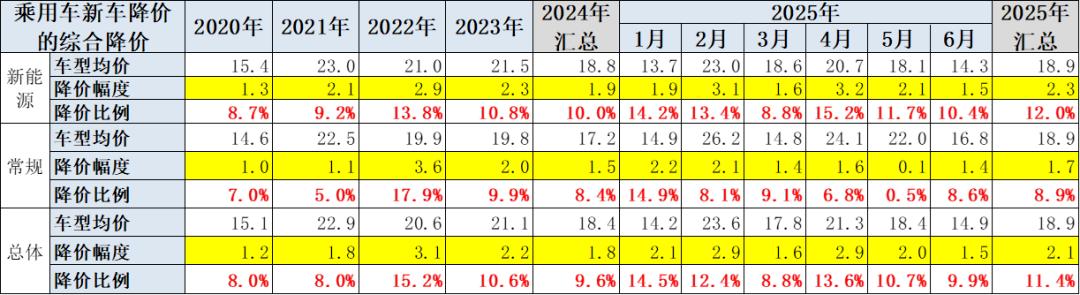
Group 1 - The core viewpoint of the article indicates that the intense price war in the Chinese automotive market is subsiding, with a shift from price-driven competition to value-driven competition as consumer demand evolves [1][2][4] - The number of models experiencing price cuts has decreased significantly, with only 7 models in January and 14 models in June, compared to a higher number in previous months [2][3] - The average price reduction for new energy vehicles has narrowed from 2.3 million yuan (12%) in the first half of the year to 1.5 million yuan (10.4%) in June, indicating a trend towards price stabilization [2][3] Group 2 - In June 2025, retail sales of passenger vehicles reached 2.084 million units, marking an 18.1% year-on-year increase and a 7.6% month-on-month increase, reflecting a significant recovery in market demand [4][5] - The "trade-in" policy has effectively stimulated consumer purchasing intentions, with 1.23 million applications for trade-in subsidies in June, accounting for nearly 70% of private car purchases [4][5] Group 3 - Domestic brands are performing strongly in both new energy and export markets, with retail sales of domestic brands reaching 1.34 million units in June, a 30% year-on-year increase, and market share rising to 64.2% [6] - The export of vehicles reached 480,000 units in June, a 23.8% year-on-year increase, with new energy vehicles accounting for over 41% of exports [6] Group 4 - Chinese plug-in hybrid vehicles are increasingly gaining traction in the global market, with a market share of 80% globally, and companies like BYD and Geely leading in technology and exports [7][8] - The focus has shifted from merely exporting low-cost vehicles to providing high-quality, high-tech solutions, emphasizing technology, adaptability, and brand strength as key competitive factors in international markets [8]




汽车行业跟踪报告:6月需求仍保持两位数增长
Huachuang Securities· 2025-07-10 09:11
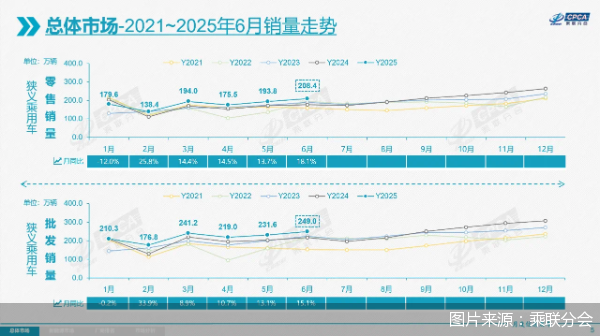
Investment Rating - The industry investment rating is "Recommended," indicating an expected increase in the industry index by more than 5% over the next 3-6 months compared to the benchmark index [4][65]. Core Insights - June saw a strong performance in the automotive industry, with narrow passenger car production reaching 2.42 million units, a year-on-year increase of 13% and a month-on-month increase of 6%. Wholesale figures were 2.49 million units, up 14% year-on-year and 7% month-on-month [3][7]. - The report anticipates that the terminal market will remain robust in the second half of the year, with reduced risks from price wars due to a dual backdrop of "anti-involution" and strong sales. However, there are concerns about potential fluctuations in sales due to subsidy policy changes next year, which may suppress investment sentiment in the sector [3][7]. - Recommendations include Jianghuai Automobile for complete vehicles, with a relatively optimistic outlook for the second half of the year. Other companies to watch include Li Auto, BAIC Blue Valley, SAIC Motor, Seres, and Xiaomi Group, particularly focusing on Li Auto's i8 launch and management reforms at BAIC and SAIC [3][7]. - For auto parts, the report suggests a low-position layout due to significant industry beta influence and recent weak performance in the robotics supply chain. Recommended companies include Xinquan, Xingyu, Aikodi, Haoneng, and Horizon, with a focus on New Tai Ge [3][7]. Sales, Inventory, and Pricing Sales - In June, wholesale sales of passenger cars reached 2.49 million units, with a year-on-year increase of 14% and a month-on-month increase of 7%. The estimated retail sales for June were approximately 2.1 million units, reflecting a year-on-year increase of 23% and a month-on-month increase of 14% [7][8]. - The report estimates that the total retail sales for 2025 will be 24 million units, representing a year-on-year growth of 5.7%, while wholesale sales are projected to reach 29.48 million units, up 8.1% year-on-year [7][8]. Inventory - The report notes that June exports were 480,000 units, a year-on-year increase of 20% and a month-on-month increase of 4%, leading to a channel destocking of approximately 100,000 units [7][8]. - The overall inventory situation is influenced by a higher stocking intensity in 2025 compared to the same period in 2024, with a cumulative increase of 300,000 units in the first half of the year [7][8]. Pricing - The report indicates that the risk of a severe price war in the industry is low, with expected stable profitability for enterprises. The average discount rate in early June was 10.6%, reflecting a month-on-month increase of 0.4 percentage points [7][8]. - The report highlights that the trend of price wars may be mitigated by government policies aimed at regulating low-price competition and promoting product quality [7][8].
N+3赔偿!沃尔沃中国区裁员
Xi Niu Cai Jing· 2025-07-10 07:40
Group 1 - Volvo has announced layoffs in its China division, following a global reduction of 3,000 jobs, primarily affecting the Shanghai R&D center [2] - The layoffs are part of a strategic restructuring plan aimed at cutting costs by 18 billion Swedish Krona (approximately 13.59 billion RMB) [2] - In Q1, Volvo's revenue decreased from 93.9 billion Swedish Krona to 82.9 billion Swedish Krona, a year-on-year decline of 11.7%, with operating profit dropping nearly 60% [2] Group 2 - The sales forecast for Volvo in China for 2024 is projected at 156,400 units, representing an 8% year-on-year decline, with Q1 sales down 12% [3] - The challenges faced by Volvo in the Chinese market include price wars among luxury brands, slow product updates, and quality complaints affecting its safety reputation [3] Group 3 - Volvo has adjusted its strategic goals, abandoning a full electrification plan by 2030, now aiming for 90% of sales to come from electrified models by that year [4] - The company introduced a new hybrid architecture, SMA, which includes pure electric, fuel, and hybrid powertrains [4] - The success of the layoffs in helping Volvo recover and improve its market position remains to be seen [4]
2025上半年车市风云录
Mei Ri Shang Bao· 2025-07-09 22:44
Core Insights - The domestic automotive market is experiencing significant changes, with BYD and SAIC leading traditional automakers with over 2 million units sold, while Geely shows a remarkable growth rate of 47% [1][2] - New energy vehicle (NEV) sales are driving growth, with companies like Leap Motor and Xiaomi making notable gains, while NIO and Lantu face sales pressures [1][2][3] - The second half of the year is expected to see intensified competition across various dimensions, including product offerings, technology, cost control, and supply chain resilience [1] Group 1: Traditional Automakers - BYD leads the market with 2.146 million units sold in the first half of 2025, with 470,000 units coming from overseas, marking a 132% year-on-year increase [2] - SAIC follows closely with 2.053 million units sold, achieving a 21.1% year-on-year growth in its domestic brand sales [2] - Geely's total sales reached 1.409 million units, with NEV sales contributing significantly, totaling 725,200 units, a 126% increase year-on-year [2] Group 2: New Energy Vehicle Makers - Leap Motor emerged as a dark horse with a 221.6% year-on-year increase, delivering 221,700 units in the first half of 2025 [1][3] - Xiaomi's SU7 achieved over 150,000 deliveries, with the new YU7 model receiving over 200,000 orders within three minutes of its launch [3] - NIO's sales were only 114,000 units, with Lantu and other brands struggling to meet sales targets, indicating a growing divide in the new energy vehicle sector [3] Group 3: Market Trends and Future Outlook - The automotive market is benefiting from government subsidies, with over 4.12 million applications for vehicle trade-in subsidies, of which over 53% are for NEVs [4] - A total of 138 billion yuan in central funding will be distributed in the second half of the year to support the market [4] - New models are set to launch in July, including vehicles from XPeng, Chery, and others, as companies aim to meet their annual sales targets [4] - The industry forecast for 2025 has been revised upward, predicting retail sales of 24.05 million passenger vehicles, a 5% year-on-year increase [5]

人民日报评论“外卖大战”:向下卷价格没有赢家 向上卷创新才有未来
news flash· 2025-07-09 10:52
Core Viewpoint - The recent subsidy war in the food delivery market is essentially a disguised price war, which may benefit consumers and increase orders temporarily, but ultimately leads to irrational consumption and diluted profits for merchants, as well as fatigue for delivery personnel. The focus should shift from downward price competition to upward innovation for a sustainable future [1] Group 1: Market Dynamics - The current competition in the food delivery market is characterized by a struggle for market share among platforms, involving supply chain management, technology, and operational capabilities [1] - The "explosive order" effect from low prices results in negative consequences such as reduced service quality and increased pressure on delivery personnel [1] Group 2: Innovation vs. Price Competition - Companies should prioritize technological and management innovations to lower production costs and provide consumers with higher quality and more cost-effective products [1] - Internet companies, which inherently possess innovative capabilities, are encouraged to broaden their vision and pursue higher goals beyond mere price competition [1]
人民日报评论:“外卖大战”——价格战没有赢家,创新才有未来
Ren Min Ri Bao· 2025-07-09 10:46
Core Viewpoint - The recent subsidy war in the food delivery market is essentially a disguised price war, despite appearing as a competition for market share, supply chain management, and operational capabilities [1] Group 1: Market Dynamics - The low prices may temporarily benefit consumers, increase orders for merchants, and boost earnings for delivery personnel, but it leads to irrational consumption and diluted profit margins [1] - The "explosive order" effect results in delivery personnel being overworked, which negatively impacts product and service quality [1] - Price wars ultimately lead to market instability, with each round of cash-burning battles typically followed by price increases, indicating that there is no such thing as a free lunch [1] Group 2: Industry Response - The China Association of Automobile Manufacturers has advocated against chaotic price wars, and the Ministry of Industry and Information Technology has expressed intentions to regulate "involution" competition in the automotive sector [1] - Such price wars disrupt normal production and operations for companies, hinder sustainable R&D investments, and ultimately harm consumer rights and industry development [1] Group 3: Future Directions - Companies should focus on innovation rather than engaging in price wars, as technological and management innovations can lower production costs and provide consumers with better quality products [2] - The instant delivery sector holds significant demand and opportunities beyond just food delivery, suggesting that delivery personnel could also connect with public service markets [2] - Businesses should aim to create greater value by aligning what users want with efficient delivery, thus opening new avenues for growth and development [2]
价格打到9.9元,千亿鲜花市场是一门好生意吗?
Di Yi Cai Jing· 2025-07-09 08:56
Core Insights - The flower market is a promising new blue ocean, characterized by emotional consumption and a lack of standardized pricing and quality [1][4] - The flower industry is still in its early stages of development, with significant potential for growth and innovation [4][12] Market Overview - The flower market in China is projected to reach a retail market size of 220 billion yuan by 2024 [3] - The majority of flower consumers are women (74.2%), with over 60% earning between 5,001 and 15,000 yuan monthly, primarily located in second-tier cities and above [3] Pricing Dynamics - Prices for flowers can vary significantly within the same market, with a single type of lily priced between 15 and 30 yuan depending on the vendor [2] - The entry of e-commerce and fresh food supermarkets has led to a decrease in flower prices, with online sales expected to reach 120 billion yuan in 2024, surpassing offline channels [5][6] Consumer Behavior - The demand for affordable flowers has increased, with many consumers seeking prices comparable to vegetables, leading to a rise in entry-level flower buyers [9] - The expansion of the consumer base is seen as a key growth driver, but there are challenges in moving consumers to higher-quality products [9][12] Innovation and Challenges - The flower industry faces challenges in establishing transparent standards and improving quality control, which are essential for stimulating market vitality [4][10] - The introduction of new flower varieties and improved planting techniques are critical for enhancing market pricing power and profitability [10][11] E-commerce Impact - E-commerce platforms like Hema are reshaping the flower market by providing insights into consumer preferences, which influences what flowers are grown [11] - Despite the benefits of lower prices and increased accessibility, the industry still struggles with a lack of unified standards for product quality and classification [12]
油价不跌反涨!OPEC+放弃“精准控价”,转而开打市场份额战
Jin Shi Shu Ju· 2025-07-09 05:23
Group 1 - OPEC+ plans to increase oil production in August, yet oil prices have risen to a two-week high, indicating a complex market dynamic [1][2] - Internal disagreements within OPEC+ regarding production quotas are intensifying, leading to a global market share competition [1][2] - The increase in production for August is significantly larger at 54.8 thousand barrels per day compared to previous months' increases of 41.1 thousand barrels per day [1] Group 2 - The U.S. has seen a slowdown in drilling activities, with the number of active rigs dropping to 425, the lowest since October 2021 [3] - OPEC+ is leveraging this situation to increase production, aiming to force marginal producers out of the market [2][3] - The geopolitical tensions surrounding Iran have also influenced oil prices, with Brent crude experiencing a significant rise and subsequent fall due to military actions and ceasefire agreements [4] Group 3 - Despite recent increases, WTI crude prices have still fallen by 4.7% year-to-date, reflecting ongoing volatility in the oil market [4] - The easing of trade and inflation concerns since April has provided support for oil prices, as global economic outlooks improve [4]
“两新”政策强势拉动,上半年车市销量增长超一成
Bei Jing Shang Bao· 2025-07-08 12:31
Core Viewpoint - The Chinese passenger car market has shown significant growth in the first half of the year, driven by government policies and the increasing popularity of new energy vehicles (NEVs) [1][3][5]. Group 1: Market Performance - In the first half of the year, retail sales of passenger cars reached 10.9 million units, a year-on-year increase of 10.8% [3]. - In June alone, retail sales were 2.084 million units, marking an 18.1% year-on-year increase and a 7.6% month-on-month increase [4]. - The "Two New" policies (trade-in and replacement) have significantly boosted market demand, with nearly 70% of private car buyers benefiting from these policies [3][4]. Group 2: New Energy Vehicles - NEV retail sales reached 5.468 million units in the first half of the year, representing a growth of 33.3% [5]. - The penetration rate of NEVs in June reached 53.3%, indicating strong market acceptance [5]. - Domestic brands dominate the NEV market, with a retail share of 71% in June, led by BYD, Geely, and Chery [6]. Group 3: Industry Challenges - Despite increased sales, the automotive industry faces profitability challenges, with profits declining by 11.9% year-on-year in the first five months of the year [8]. - The average price reduction for new cars in the first half of the year was 21,000 yuan, with a reduction rate of 11.4% [8][9]. - The ongoing price war among car manufacturers has raised concerns about the long-term health of the industry, with calls for a shift towards value-based competition rather than price competition [9].
沙特带头增产一举两得:短期抢份额,长期巩固石油霸权!
Jin Shi Shu Ju· 2025-07-08 11:25
Core Viewpoint - Saudi Arabia's push for rapid production increase within OPEC+ aims to regain market share in the short term and solidify its dominance in the long term [2][3] Group 1: OPEC+ Production Increase - OPEC+ decided to increase production by 548,000 barrels per day in August, accelerating the unwinding of a 2.17 million barrels per day cut that began in April [2] - The new production targets could raise OPEC+'s output by 2.5 million barrels per day this year, although many member countries are already producing at or above their quotas [2] - Kazakhstan's production has been a concern, with June output reaching 1.88 million barrels per day, significantly exceeding the August target of 1.53 million barrels per day [2] Group 2: Saudi Arabia's Production Capacity - Saudi Arabia's oil production share has decreased from an average of 13% over the past 30 years to an estimated 11% in 2024 [3] - The International Monetary Fund (IMF) projects that oil and gas revenues will account for 22.3% of Saudi GDP in 2024, making the maintenance of its global dominance crucial [3] - Saudi Arabia has approximately 3 million barrels per day of spare capacity that can be activated within 90 days, positioning it as the only OPEC+ member capable of significantly increasing production in the coming quarters [3] Group 3: Price Dynamics and Market Impact - The additional production from OPEC+ is expected to further depress benchmark crude prices, with Brent crude already down 15% to below $70 per barrel this year [4] - Lower oil prices may benefit Saudi Arabia as both OPEC+ and non-OPEC+ producers are likely to cut investments, while Saudi Arabia's ample spare capacity and low production costs allow it to meet future demand more easily [5] - The U.S. Energy Information Administration (EIA) forecasts a decline in U.S. crude production from a peak of 13.5 million barrels per day in Q2 2024 to 13.3 million barrels per day by Q4 2026, marking the first decrease after a previous production surge [5] Group 4: Long-term Strategy - Saudi Arabia's strategy represents a long-term gamble, as the impact of its actions on the industry will take time to manifest, particularly in terms of new offshore oil field investments [6] - The International Energy Agency (IEA) predicts global oil supply will increase by 1.6 million barrels per day by 2025, primarily from non-OPEC+ countries, which necessitates Saudi action to maintain its market position [6] - Current market conditions, characterized by weak oil prices and uncertainty in global demand during the energy transition, discourage significant investments in new capacity, making Saudi Arabia's strategy potentially effective in the long run [6]