自由贸易

Search documents
商务部回应中英经贸合作:每天有3.6亿美元的货物和服务贸易在两国之间发生
Sou Hu Cai Jing· 2025-08-26 10:15
Group 1 - The 25th China International Investment and Trade Fair will be held from September 8 to 11 in Xiamen, Fujian Province, with the theme "Join Hands with China, Invest in the Future," and the UK as the guest country [1] - The UK is China's second-largest direct investment destination in Europe and the third-largest source of foreign investment from Europe, highlighting the importance of trade and investment cooperation between China and the UK [1][2] - In 2024, trade in goods and services between China and the UK is expected to exceed $130 billion, equating to approximately $360 million in daily trade [1] Group 2 - The trade and investment cooperation between China and the UK is characterized by its "real," "broad," and "active" nature, with significant mutual investments and a wide range of industries involved [2] - The UK has established over 13,000 enterprises in China, with cumulative actual investment exceeding $35 billion as of July 2025 [1] - Both countries are committed to free trade and support the multilateral trading system, with promising cooperation prospects in areas such as trade investment, clean energy, and financial services [2]
美国国内一片哀嚎!特朗普彻底慌了,美国大豆就算烂在地里,中国也不会买,特朗普求情也没用
Sou Hu Cai Jing· 2025-08-24 16:31
Core Viewpoint - Recent calls by Trump for China to increase soybean imports from the U.S. highlight the potential mutual benefits, yet there has been no response from China [1] Group 1: Historical Context of U.S.-China Soybean Trade - In 2016, China imported 36 million tons of soybeans from the U.S., accounting for 42% of total U.S. soybean exports [3] - The imposition of tariffs by the Trump administration in 2018 led to a significant decline in U.S. soybean exports to China, dropping to 16.64 million tons in the following year, a decrease of over 50% [3] - By 2023, U.S. soybean inventories reached a record high of 1.5 billion bushels, and soybean futures prices fell by 28% compared to 2018 [3] Group 2: Current Trade Dynamics and Policies - Trump has expressed willingness to negotiate lower soybean tariffs with China, emphasizing the simplicity of the trade relationship [5] - China's stance is based on principles of trade equality, asserting that procurement decisions are driven by market forces rather than political pressure [5] - The U.S. agricultural sector has faced significant challenges, with an average annual reduction of $12 billion in soybean export revenue due to lost market share in China [5] Group 3: China's Import Strategy and Market Stability - China is diversifying its soybean import sources, signing long-term agreements with Brazil and increasing imports from Argentina by 70% over five years [6][8] - In 2023, China's total soybean imports reached 108 million tons, fulfilling over 90% of domestic processing needs [8] - The stability of soybean supply has been maintained, with fluctuations in soybean meal prices kept within 5%, supporting the livestock industry [8] Group 4: Future Outlook and Global Trade Implications - The U.S. soybean industry is facing severe challenges, with 12,000 farmers going bankrupt and over 30,000 layoffs in related processing companies [8] - There is potential for cooperation in the soybean trade, as China's stable demand could alleviate U.S. farmers' surplus issues, while U.S. soybeans can enhance China's food supply [8] - The global trade landscape is shifting, with emerging soybean-exporting countries like Brazil and Argentina gaining prominence, emphasizing the need for a commitment to free trade principles [8]

美国贸易战的思想根源
Hu Xiu· 2025-08-24 03:02
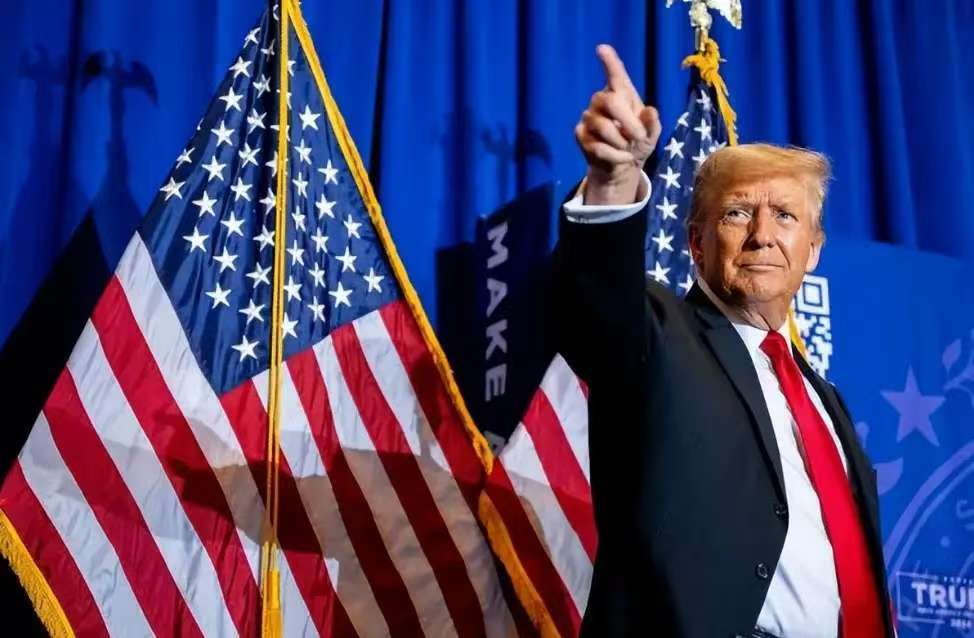
Group 1 - The article discusses the insights of Robert Lighthizer, the former U.S. Trade Representative, on the trade war and its implications for American workers [3][4][10] - Lighthizer criticizes the previous U.S. trade policies that overly emphasized free trade and efficiency, leading to significant job losses in the manufacturing sector [25][29][33] - The article highlights the negative impact of outsourcing manufacturing jobs, which resulted in a loss of 5 million manufacturing jobs in the U.S. from 2000 to 2016 [29][33] Group 2 - Lighthizer argues that the U.S. has been too lenient in trade negotiations with countries like India and China, leading to unfavorable outcomes for American workers [18][19] - The article points out that the U.S. has a long-standing trade deficit, which Lighthizer believes is unsustainable and must be addressed [38][40] - The COVID-19 pandemic exposed the risks of over-reliance on foreign manufacturing, particularly in critical sectors like medical supplies [41][42] Group 3 - The article emphasizes the importance of stable, high-paying jobs for maintaining personal dignity and societal stability [44][46] - Lighthizer advocates for trade policies that prioritize job creation and support for American workers, rather than solely focusing on efficiency [43][45] - The new U.S.-Mexico-Canada Agreement (USMCA) is presented as a model for future trade agreements, aiming to increase domestic job creation in the automotive sector [48][55] Group 4 - The article discusses the historical context of U.S. trade policies and their consequences, including the impact of the North American Free Trade Agreement (NAFTA) on job losses [50][52] - Lighthizer's perspective suggests that trade can be used as both a tool for economic growth and a means of exerting pressure on other nations [68][70] - The article concludes that internal reforms are necessary for the U.S. to address its economic challenges, rather than relying solely on external trade conflicts [86][90]
关税,突发!刚刚宣布:取消!特朗普,再度出手!
券商中国· 2025-08-23 06:13
Core Viewpoint - The trade tensions between the United States and Canada are easing, with Canada announcing the cancellation of several retaliatory tariffs on U.S. goods in response to the U.S. lowering tariffs on Canadian products [1][2]. Group 1: Canada-U.S. Trade Relations - Canadian Prime Minister Carney announced the cancellation of multiple retaliatory tariffs on U.S. goods, effective September 1, while maintaining tariffs on U.S. automobiles, steel, and aluminum temporarily [2][3]. - Carney emphasized that the measures are a response to the U.S. lowering tariffs on Canadian goods and highlighted the restoration of free trade for the majority of goods between the two countries [3][4]. - The average tariff rate imposed by the U.S. on Canadian goods is approximately 5.6%, which is relatively low compared to other trading partners [3][4]. Group 2: U.S. Tariff Investigations - President Trump announced a significant tariff investigation on imported furniture, stating that the investigation will be completed within 50 days, with unspecified tariffs to be applied to furniture from other countries [6][7]. - This investigation aims to revitalize the U.S. domestic furniture manufacturing industry, which has seen price increases due to previous tariff hikes on major furniture importing countries, including Vietnam [7][8]. - The consumer price index (CPI) for furniture and bedding has shown significant price increases, with June and July seeing rises of 0.4% and 0.9%, respectively, following a period of deflation [7].

加拿大宣布取消多项针对美国的报复性关税,将于9月1日生效
Feng Huang Wang· 2025-08-22 23:17
Core Points - Canada has decided to cancel several retaliatory tariffs on U.S. goods effective September 1, while temporarily maintaining tariffs on U.S. automobiles, steel, and aluminum [1] - The decision is a response to the U.S. lowering tariffs on Canadian goods, with Canada aiming to strengthen trade and security relations with the U.S. [1] - Canadian Prime Minister Carney emphasized that the U.S. has indicated it will not impose tariffs on Canadian goods that fall under the USMCA, marking a positive development [1] Group 1 - The Canadian government will align with the U.S. by removing all retaliatory tariffs on goods covered by the USMCA [1] - Carney stated that the average tariff rate imposed by the U.S. on Canadian goods is approximately 5.6% [1] - Carney compared the current situation to a hockey game, suggesting a more cautious strategy rather than an aggressive stance [1] Group 2 - A White House official welcomed Canada's decision, indicating it was overdue and expressing a desire to continue discussions on trade and national security [1] - Earlier in the month, Carney hinted at the possibility of canceling some retaliatory tariffs to help Canadian industries amid the tariff conflict with the U.S. [2] - Carney's approach has shifted from a more aggressive stance during the election campaign to a more moderate position, including the cancellation of the digital services tax proposal [2]
李克强抵达金边出席东亚合作领导人系列会议并对柬埔寨进行正式访问
Xin Hua She· 2025-08-22 08:44
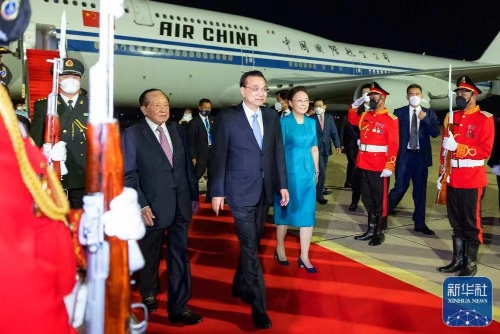
Group 1 - Chinese Premier Li Keqiang arrived in Phnom Penh on November 8 to attend the East Asia Cooperation Leaders' Series Meetings and conduct an official visit to Cambodia, invited by Prime Minister Hun Sen [1][3] - Li emphasized the importance of China-ASEAN relations, highlighting that they are comprehensive strategic partners and the largest trading partners, amidst a complex international landscape with increasing uncertainties [1] - The Chinese side aims to focus on development and cooperation during the meetings, advocating for multilateralism, free trade, and the security of global supply chains, while addressing global challenges to promote regional economic integration and stability [1] Group 2 - During the visit, Li will participate in the 25th China-ASEAN (10+1) Leaders' Meeting, the 25th ASEAN Plus Three (10+3) Leaders' Meeting, and the 17th East Asia Summit [2] - Li is scheduled to meet with King Norodom Sihamoni and hold talks with Prime Minister Hun Sen, witnessing the signing of cooperation documents and attending the opening of the highway from Phnom Penh to Sihanoukville, as well as the handover of the Angkor Wat Temple restoration project [2]
吃饭又砸锅?欧洲可不干!美国财长威胁对华加税200%,G7无人响应
Sou Hu Cai Jing· 2025-08-19 09:16
Group 1 - The core viewpoint of the articles revolves around the increasing tensions between the U.S. and its allies regarding tariffs on countries purchasing Russian energy, with U.S. Treasury Secretary Besant threatening higher tariffs as a negotiation tactic [1][2] - The silence from G7 leaders during Besant's proposal for a 200% tariff on China indicates their reluctance to support U.S. measures that could jeopardize their own economic interests, particularly in relation to their trade ties with China [2][3] - The articles highlight a shift in global economic dynamics, where countries are less reliant on the U.S. and more focused on their own interests and relationships with China, reflecting a decline in U.S. influence within the G7 [3][6] Group 2 - The U.S. strategy of imposing tariffs to suppress China's economic growth is seen as a way to deflect attention from domestic economic issues, such as job shortages and industrial decline [2][4] - The potential for retaliatory measures from China could pose significant risks to U.S. companies that depend on the Chinese market, suggesting that U.S. policies may backfire and harm its own economy [4][6] - The articles argue for a return to principles of free and fair trade, emphasizing that unilateral actions by the U.S. could disrupt global supply chains and lead to increased costs for consumers [3][6]
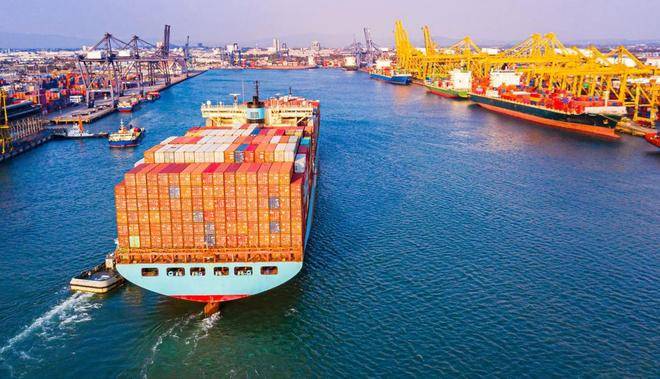
加快共建RCEP区域共同大市场(观象台)
Ren Min Ri Bao Hai Wai Ban· 2025-08-15 21:29
Core Viewpoint - The article discusses the profound changes in the global geopolitical and economic landscape, emphasizing the shift towards regional economic integration in Asia as a response to challenges posed by the "America First" policy and the need for a unified market under the RCEP framework [1]. Group 1: Regional Economic Integration - The dependency of Asian economies on intra-regional trade reached 57.4% in 2022, with Asian service trade achieving a surplus of $40.55 billion [1]. - By 2024, the GDP of Asian economies is projected to account for nearly half of the global economy, highlighting the significance of regional economic integration for sustainable development [1]. Group 2: RCEP Development - The RCEP is at a critical juncture, facing challenges such as low utilization rates and weak governance mechanisms since its signing in November 2020 [2]. - Upgrading RCEP from version 1.0 to 2.0 is essential for creating a more competitive and unified market, which could potentially increase global trade by $500 billion [1][2]. Group 3: RCEP 2.0 Objectives - RCEP 2.0 aims to transform from a traditional tariff reduction agreement to a platform for deep economic integration, enhancing the flow of regional resources and better connecting supply chains [3]. - The initiative includes facilitating cross-border movement of people, particularly in sectors like healthcare and education, and strengthening the use of local currencies in financial markets [3]. Group 4: Expansion and Cooperation - RCEP should pursue expansion by inviting new members such as Hong Kong, Chile, and Sri Lanka, and establishing high-level coordination mechanisms to ensure mutual benefits for ASEAN countries [4]. - The signing of a free trade agreement between China, Japan, and South Korea is expected to play a pivotal role in advancing RCEP from 1.0 to 2.0, fostering a "RCEP+" effect that enhances regional cooperation [4].
特朗普将把全球“自由贸易”变为“准入贸易”
Sou Hu Cai Jing· 2025-08-15 13:55
Core Viewpoint - The Trump administration's "reciprocal tariff" policy signifies a fundamental restructuring of global power dynamics, capital flow logic, and trade philosophy, transitioning the U.S. from a proponent of free trade to a gatekeeper of market access through high tariffs [2][17]. Trade Policy Shift - The U.S. trade policy has shifted from "free trade" to "access trade," where market entry requires high fees, redefining trade relationships as a "pay-to-enter" mechanism [2][4]. - The "America First" and "fair trade" paradox highlights the contradiction in Trump's protectionist approach aimed at achieving "fair trade" while claiming to rectify perceived unfair treatment in globalization [3][9]. Unilateralism vs. Multilateralism - Trump's skepticism towards multilateral trade systems like the WTO has driven the shift to "access trade," advocating for bilateral negotiations to maximize unilateral benefits [3][6]. - The strategy employs economic pressure to force compliance from trade partners, effectively turning trade negotiations into a form of economic coercion [6][9]. Tariff Mechanism - The "reciprocal tariff" policy has evolved from punitive tariffs targeting specific economies to a universal market access mechanism, with an average tariff rate rising to 15.2%, the highest since the Smoot-Hawley Tariff Act of 1934 [4][5]. - Tariffs are now standardized and categorized based on trade deficits and geopolitical stances, with countries facing differentiated rates [5][6]. Geopolitical Implications - Tariffs are increasingly used as tools for geopolitical leverage, with the U.S. applying pressure on countries like India and Canada to align with its strategic interests [6][9]. - The policy has prompted multinational corporations to reassess their global supply chains, leading to a "re-anchoring" of production closer to the U.S. or in low-tariff regions [7][9]. Dollar Dominance and Economic Coercion - The "access trade" strategy leverages the U.S. market and dollar dominance, transforming trade negotiations into a form of economic extortion, where countries must accumulate dollar reserves to pay tariffs [8][9]. - This approach effectively upgrades the concept of "seigniorage" into a "storage tax," embedding the U.S. fee-collecting power into global capital flows [8][9]. Global Trade Dynamics - The "reciprocal tariff" policy is reshaping global trade dynamics, with countries either accelerating their integration into the U.S. market or diversifying away from it, leading to a potential "de-Americanization" of trade [13][14]. - The policy has resulted in a significant decline in U.S. exports to China, while trade with other regions like ASEAN and the EU has seen growth, indicating a shift towards a more diversified trade network [13][14]. Long-term Economic Consequences - The long-term economic costs of the "reciprocal tariff" policy include slowed global growth and increased inflationary pressures, with the IMF predicting a global growth rate of 3% for 2025, down from earlier forecasts [11][12]. - The policy's impact on consumer prices is significant, with average effective tariff rates reaching 18.3%, leading to increased costs for American households [12][13]. Domestic Political Landscape - The "reciprocal tariff" policy creates a conflict between short-term political gains and long-term economic risks, as it may win support from manufacturing voters while imposing costs on consumers and small businesses [16][17]. - The protectionist measures may ultimately lead to economic imbalances, as the burden of increased costs is disproportionately felt by lower-income households [16][17].

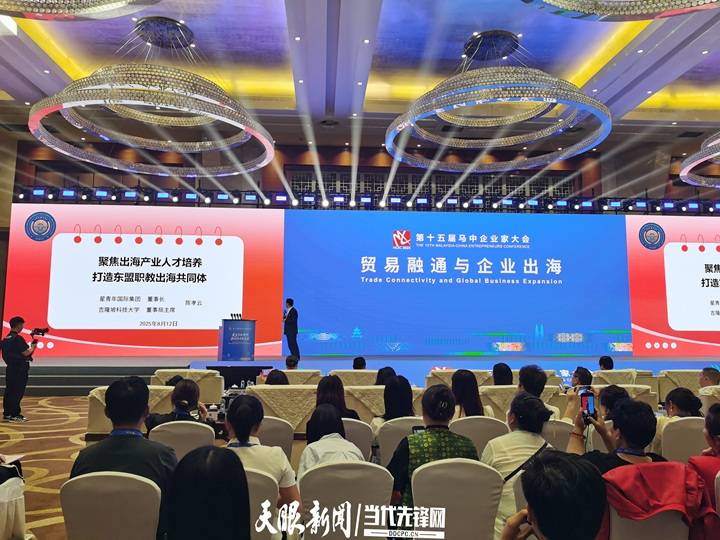
马中企业家大会 | “贸易融通与企业出海”论坛在贵阳举行
Sou Hu Cai Jing· 2025-08-12 15:17
Group 1 - The forum "Trade Connectivity and Enterprises Going Global" held at the 15th Malaysia-China Entrepreneurs Conference aims to activate the collaborative development of the industrial chain between China and Malaysia, driven by the Belt and Road Initiative and the Regional Comprehensive Economic Partnership (RCEP) [2] - The forum featured six leaders from various fields discussing new growth points such as green manufacturing, smart parks, and industry going global, while exploring innovative paths like e-commerce platforms, supply chain finance, and AI empowerment in traditional manufacturing [2] - Malaysia has been China's largest trading partner for 14 consecutive years, with bilateral trade reaching USD 203.6 billion in 2023, indicating a strong economic tie between the two countries [2] Group 2 - The chairman of Star Youth International Group emphasized the importance of international vocational education cooperation in meeting the global market's demand for high-quality technical talent, which is crucial for economic development [3] - The internationalization of vocational education is seen as a key factor in promoting economic growth and enhancing cultural exchange and understanding between countries [3] Group 3 - The secretary of Guiyang University highlighted the role of cultural exchange in fostering trade connectivity and enterprise globalization, aiming to create a favorable cultural atmosphere for cooperation between China and Malaysia [4] - The focus is on deepening educational cooperation with Malaysia and seeking more collaboration opportunities in both education and commerce [4]