高性能计算

Search documents
玻璃基板,更近了
半导体行业观察· 2025-04-21 00:58
Core Viewpoint - The article discusses the emerging significance of glass substrates in advanced semiconductor packaging, highlighting their advantages over traditional resin substrates, particularly in high-density and high-performance applications for AI and data centers [2][4]. Group 1: Industry Developments - Samsung Electro-Mechanics is building a semiconductor glass substrate ecosystem to commercialize glass substrates and address technical challenges, planning to form alliances with multiple suppliers and technology partners [4]. - Samsung plans to initiate trial production of glass substrates at its Sejong factory in the second quarter, with mass production targeted for after 2027 [4][8]. - SKC has seen a significant stock price increase of 44.4% due to investor expectations regarding the commercialization of glass substrates, indicating a competitive landscape for early leadership in this market [6][8]. Group 2: Technical Advantages - Glass substrates offer superior thermal stability and mechanical stability, allowing for higher interconnect density and reduced power consumption, with potential performance improvements of up to 40% in semiconductor speed [5][7]. - The ability to create numerous copper channels on glass substrates enhances power efficiency, making them a preferred choice for next-generation semiconductor applications [5][7]. Group 3: Competitive Landscape - Major companies like Intel, AMD, and Broadcom are planning to adopt glass substrates in their next-generation chips, with Intel investing $1 billion in glass substrate development aiming for commercialization by 2030 [7]. - SKC's joint venture, Absolics, is positioned as a leading player in glass substrate technology, with plans for large-scale production by the end of the year [8]. Group 4: Challenges - The lack of standardized sizes, thicknesses, and characteristics for glass substrates poses significant challenges for manufacturers and semiconductor plants seeking compatibility with existing processes [10]. - Compatibility issues between different batches of glass substrates and their semiconductor devices must be addressed to ensure successful integration into advanced applications [10][11].

三星否认泰勒工厂投产延迟
半导体行业观察· 2025-04-20 03:50
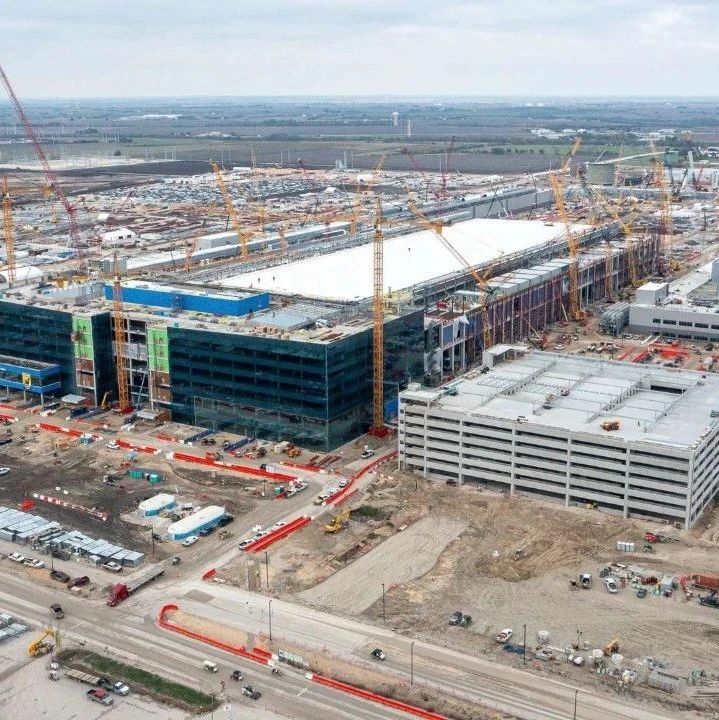
Core Viewpoint - Samsung has denied reports of delays in the production timeline for its Taylor, Texas plant, reaffirming its commitment to a 2026 launch despite challenges in ramping up production of next-generation wafers [1][2]. Group 1: Production Plans and Employment - Samsung has paused its production plans at the Taylor plant, initially set for 2026, now pushed to 2027 due to various obstacles [1]. - The company aims to create 10,000 jobs in the Austin and Taylor areas, highlighting the significance of the plant for local employment opportunities [1][2]. - The Taylor project is expected to enhance semiconductor production capabilities, supporting next-generation technologies such as 5G, AI, and high-performance computing [1]. Group 2: Technical Challenges - Samsung has faced difficulties in improving the yield of its 2nm process technology, which may have contributed to the limited staffing at the Taylor facility [2]. - The company has withdrawn personnel from the plant due to challenges in achieving production targets for the next-generation process nodes [2].
H20芯片禁令落地!英伟达自曝损失超400亿元
Sou Hu Cai Jing· 2025-04-16 15:14
编译 | 王涵 编辑 | 漠影 智东西4月16日消息,全球人工智能芯片巨头英伟达(Nvidia)官方在15日早些时候表示,在美国政府限制其H20人工智能芯片对中国的出口 后,公司或将承担55亿美元(约合人民币403亿元)的损失。 看来英伟达CEO黄仁勋在海湖庄园的斡旋,只给他争取了7天时间。 ▲英伟达公布文件部分截图 本周二的英伟达向美国证券交易委员会(SEC)提交8-k文件中详细披露了事件经过: 4月9日,美国政府通知英伟达,要求公司在向中国(包括香港和澳门)以及D:5国家出口其H20集成电路芯片时,必须申请许可。即便是向总 部或母公司位于上述地区的企业出售此类芯片,也同样需获得美方特别许可。 本周一(4月14日),美国政府进一步通知英伟达,这一出口许可要求将"在未来无限期内有效"。 美国特朗普政府给出的理由是:许可要求是为了应对相关产品可能被用于或转用于中国超级计算机的风险。 外媒评论这是华盛顿与中国的科技之战的升级。 美国一直试图在全球科技竞争中保持绝对领先,尤其是在人工智能、高性能计算等前沿领域。 而中国近年来在超级计算机技术方面的突飞猛进,已然引起了美国的警惕。 无党派智库进步研究所(Institu ...


华天科技披露2024年年报,这一细节值得关注
Mei Ri Jing Ji Xin Wen· 2025-04-01 15:12
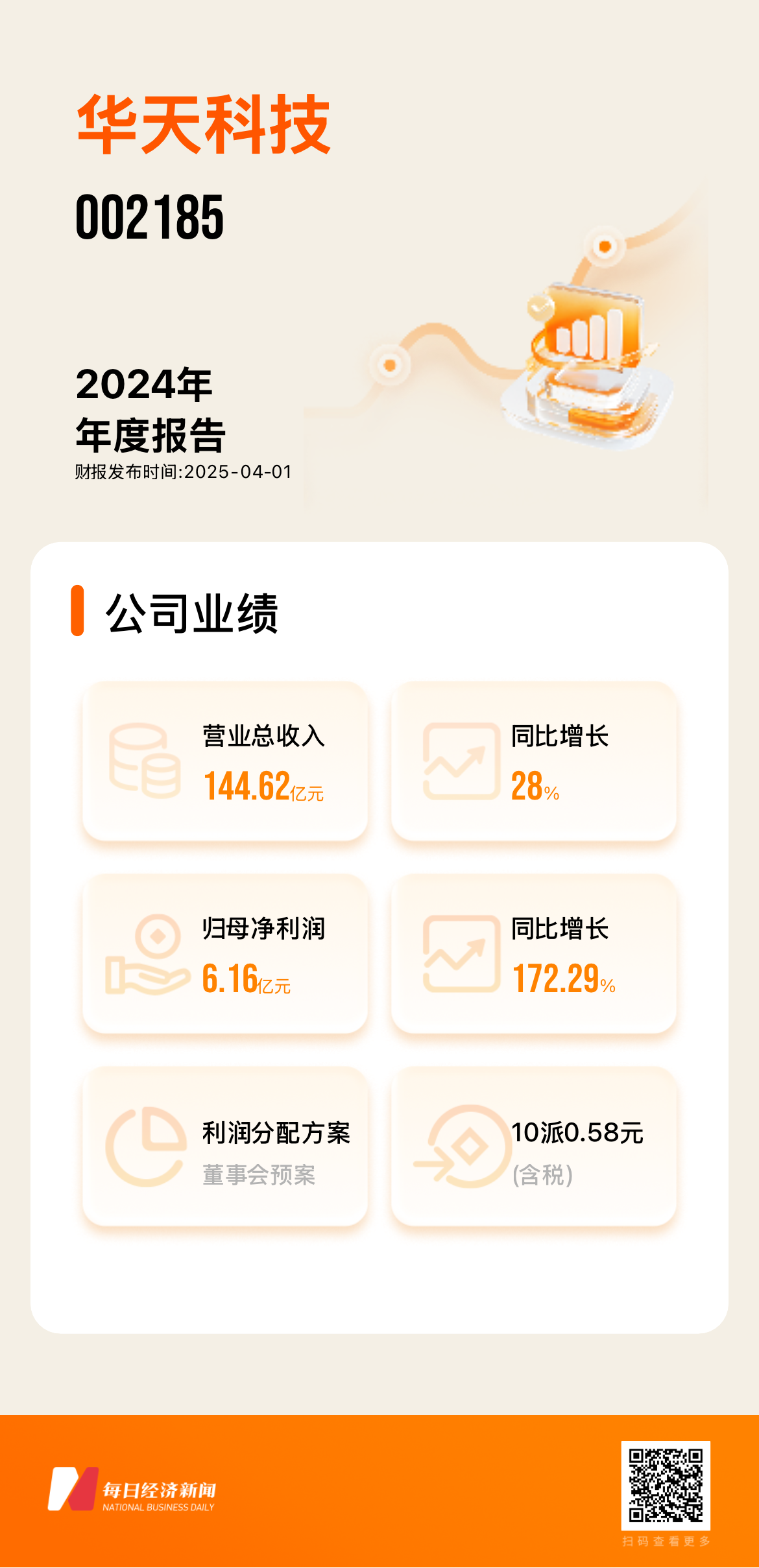
Group 1: Company Developments - Huatian Technology (华天科技) reported its 2024 annual report, highlighting ongoing research and development in advanced packaging technologies, particularly focusing on Chiplet, automotive electronics, and board-level packaging [1] - The company has completed the construction and equipment debugging of its 2.5D production line, which is crucial for mainstream computing chips [1] - Huatian's R&D investment aims to develop 2.5D packaging technology for applications in AI, big data, and high-performance computing, with a goal to increase market share [1] Group 2: Industry Trends - Changdian Technology (长电科技) is also investing in 2.5D packaging technology, with its XDFOI®Chiplet series entering stable mass production [2] - This technology focuses on high-density heterogeneous integration solutions, covering 2D, 2.5D, and 3D integration technologies, indicating a trend towards collaborative design and integrated testing [2] - Both Huatian and Changdian are prioritizing R&D in high-performance computing 2.5D advanced packaging, while Tongfu Microelectronics (通富微电) has not reported similar projects in its 2023 annual report [3] Group 3: Competitive Landscape - Tongfu Microelectronics is upgrading its large-size multi-chip Chiplet packaging technology, developing new processes to enhance chip reliability, although it lacks a focus on 2.5D packaging [3] - The competitive landscape shows a clear focus among leading companies on advanced packaging technologies, particularly in the context of high-performance computing and AI applications [2][3]

HBM销量,暴增15倍
半导体行业观察· 2025-04-01 01:24
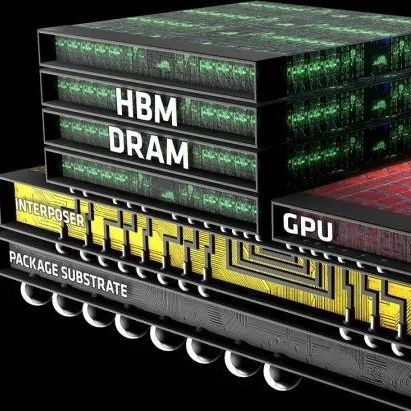
如果您希望可以时常见面,欢迎标星收藏哦~ 来源:内容 编译自 eetjp ,谢谢。 HBM(高带宽内存)再次成为人们关注的焦点。 SK海力士在2025年3月17日至21日(美国时间) 在美国加利福尼亚州圣何塞举办的GTC(GPU技术大会)2025活动上,展出了用于AI服务器的12层 HBM3E设备。该公司还发布了目前正在开发的12层HBM4,并透露已完成2025年下半年量产的准备 工作。 HBM 本质上是一种 3D 结构,它将 DRAM 芯片垂直堆叠在逻辑芯片顶部,利用先进的封装技术 (例如硅通孔 (TSV))并使用硅中介层与处理器互连。事实证明,它非常适合 HPC/AI 工作负载等 并行计算环境。 这是因为 HBM 可以同时处理 GPU 或 AI 加速器中各个核心的多个内存需求,支持工作负载的并行 处理。事实上,HBM 已经成为消除数据密集型 HPC 和 AI 工作负载中内存瓶颈的主要手段。如果 没有 HBM,AI 处理器就会因内存瓶颈而无法得到充分利用。 SK 海力士HBM,接近售罄 韩国芯片制造商 SK 海力士日前向投资者表示,由于其内存产品的强劲需求以及首批 HBM4 样品的 提前交付,其前景光明。 ...

中国首款全自研高性能RISC-V服务器芯片发布,专为DeepSeek等模型推理优化|钛媒体AGI
Tai Mei Ti A P P· 2025-04-01 01:06
Core Insights - The article highlights the launch of the Lingyu CPU processor by Ruisi Semiconductor, marking it as China's first fully self-developed high-performance RISC-V architecture server chip, aimed at high-performance computing and applications like DeepSeek [2][4]. Company Overview - Ruisi Semiconductor, established in 2018, focuses on developing processors based on the open-source RISC-V architecture, providing chip solutions for various sectors from edge computing to data centers [4]. - The company has secured 37 invention patents, 19 software copyrights, and 6 integrated circuit layout designs related to the Lingyu processor [4]. Product Details - The Lingyu processor features a "one chip, dual-core" design architecture, consisting of 32 high-performance general computing cores (CPU) and 8 dedicated intelligent computing cores (LPU), optimized for tasks like inference for open-source large language models [2]. - The performance of the Lingyu processor is claimed to be on par with mainstream server chips from Intel and AMD [2]. Market Potential - The global intelligent computing market is projected to reach $39 billion in 2024 and grow to $89 billion by 2029, with a CAGR of 17.8%. The Chinese intelligent computing market is expected to exceed 150 billion RMB by 2028, with an annual growth rate of 21% [2]. - The global high-performance computing (HPC) market is anticipated to surpass $40 billion and potentially double by 2032 [2]. Ecosystem and Partnerships - The Lingyu processor ecosystem includes over 50 partners, covering key component manufacturers, OEMs, system software, and industry solutions, with successful software adaptations for various operating systems [4]. - Notable partners include Lenovo, SenseTime, Jiangbolong, and XSKY, supporting mainstream databases, machine learning frameworks, and complex deployment scenarios [4]. Future Plans - The company aims to expand its product matrix and accelerate the large-scale deployment of RISC-V server chips, contributing to a secure and efficient domestic computing ecosystem [5].

速递|孙正义复刻ARM,软银65亿美元现金吞并Ampere,凯雷单笔套现40亿美元
Z Finance· 2025-03-21 07:11
图片来源: Ampere 软银集团 3 月 19 日宣布,将通过一笔全现金交易,以 65 亿美元收购由前英特尔高管 Renee James 创立的芯片设计公司 Ampere Computing , 此举旨在扩大其在人工智能基础设施领域的投资。交易 完成后, Ampere 将作为软银的全资子公司运营,预计交易将在 2025 年下半年完成。 凯雷集团和甲骨文公司,作为 Ampere 的主要投资者,将出售他们在加州圣克拉拉这家初创公司的股 份。 根据软银的声明,凯雷持有 59.65% 的股份,而甲骨文持有 32.27% 。 这家初创公司雇佣了 1000 名 半导体工程师。 据彭博社报道, 2021 年,软银曾考虑收购 Ampere 的少数股权,当时其估值达 80 亿美元。 软银是 Arm Holdings 的最大股东,而 Ampere 基于 ARM 计算平台开发了服务器芯片,这使两家公司 成为强有力的合作伙伴。 图片来源:软银 软银于 2016 年以 320 亿美元收购了英国芯片设计公司 Arm ,该公司于 2023 年上市。 Ampere 的客 户包括 Google Cloud 、 Microsoft Azure ...


英伟达对机器人下手了
远川研究所· 2025-03-20 12:35
Core Viewpoint - The article discusses the advancements in humanoid robotics and the role of NVIDIA in developing the necessary technologies, particularly focusing on the concept of "Physical AI" and the importance of simulation data for training robots [1][7][41]. Group 1: NVIDIA's Role in Robotics - NVIDIA is positioning itself as a key player in the humanoid robotics industry by developing a series of platforms and models, including the Cosmos training platform and the Isaac GR00T N1 humanoid robot model [3][4][19]. - The company has created a comprehensive ecosystem for humanoid robot development, including high-performance computing (DGX), simulation platforms (Omniverse), and inference chips (Jetson Thor) [19][31]. - NVIDIA's strategy involves not only selling hardware but also providing software tools and services to enhance the capabilities of humanoid robots [41][42]. Group 2: The Concept of Physical AI - The term "Physical AI" refers to the next wave of AI development, where robots are expected to understand physical laws and interact with the real world autonomously [8][41]. - Unlike traditional industrial robots that perform specific tasks, humanoid robots aim to understand and make decisions based on their environment, showcasing a significant leap in intelligence [10][13]. - The training of these robots requires vast amounts of simulation data that mimic real-world physics, filling the gap where real-world data is scarce [16][17][18]. Group 3: Simulation Data and Its Importance - Simulation data is crucial for training humanoid robots, as it allows for the creation of realistic scenarios that adhere to physical laws, which is essential for effective learning [16][18]. - The article compares real data to "real exam questions" and simulation data to "mock exams," emphasizing the need for high-quality simulation data to ensure effective training [18]. - NVIDIA's experience in gaming and simulation technologies positions it well to provide the necessary tools for creating this simulation data [23][30]. Group 4: Historical Context and Future Directions - NVIDIA's journey in high-performance computing has evolved from gaming to various high-value applications, including mobile devices, autonomous driving, and now humanoid robotics [32][39]. - The company has learned from past ventures, such as its experience with mobile processors, to focus on more promising markets like AI and robotics [36][38]. - As the demand for "Physical AI" grows, NVIDIA aims to solidify its position by offering integrated solutions that combine hardware and software for the robotics industry [41][43].

2025年面向智算场景的高性能网络白皮书
中兴· 2025-03-17 09:35
Investment Rating - The report does not explicitly state an investment rating for the industry Core Insights - The white paper discusses the urgent need for high-performance networks to support the growing demands of AI and HPC, particularly in terms of scalability, stability, and performance [5][6] - It highlights the challenges faced by high-performance data center networks (HP-DCN) and high-performance wide area networks (HP-WAN) in meeting the requirements of large-scale AI model training and high-performance computing [11][23] - The report emphasizes the importance of a multi-dimensional automated operation and maintenance system to ensure network reliability and performance [17][19] - It outlines the necessity for scalable security mechanisms to protect sensitive data in increasingly large and complex network environments [21][22] Summary by Sections 1. Introduction - The introduction outlines the transformative impact of AI and HPC on network technology, emphasizing the need for enhanced network performance to support large-scale AI model training [5][6] 2. Terminology and Abbreviations - A list of relevant abbreviations and their meanings is provided, which aids in understanding the technical content of the report [7][9] 3. Key Requirements and Challenges of High-Performance Networks - **High-Performance Data Center Networks (HP-DCN)**: The report discusses the need for ultra-large-scale networking capabilities, highlighting challenges such as switch access capacity limitations and network topology constraints [11][12] - **Ultra-High Stability**: Stability is crucial for distributed systems like AI and HPC, with metrics for network availability and performance consistency being essential [13][14] - **Extreme Performance**: The report details the need for ultra-low latency, minimal jitter, and effective high throughput to maximize cluster computing efficiency [15][16] - **Multi-Dimensional Automated Operation and Maintenance**: A comprehensive monitoring system is necessary to address the complexities of AI model training networks [17][18] - **Scalable Security Mechanisms**: The report stresses the importance of integrating security into network operations to protect sensitive data [21][22] 4. High-Performance Network Technology Architecture - **Current Status and Trends**: The architecture of intelligent computing center networks is evolving, with a focus on end-to-end integration to enhance performance [26][27] - **ZTE's High-Performance Network Architecture**: ZTE's architecture aims to support ultra-large-scale, high-throughput, and low-latency networks while ensuring operational efficiency [30][31] 5. Key Technologies for High-Performance Data Center Networks - **Ultra-Large-Scale Networking Technologies**: The report discusses the need for high-capacity switches and scalable routing protocols to support large GPU clusters [36][39] - **Routing Protocols**: Various routing protocols are evaluated for their effectiveness in large-scale intelligent computing centers, with BGP and RIFT being highlighted [48][50]

ASMPT(00522) - 二零二四年第三季度业绩新闻稿
2024-10-29 22:28
香港交易及結算所有限公司及香港聯合交易所有限公司對本公告的內容概不負 責,對其準確性或完整性亦不發表任何聲明,並明確表示,概不對因本公告全 部或任何部份內容而產生或因倚賴該等內容而引致的任何損失承擔任何責任。 ASMPT LIMITED (於開曼群島註冊成立之有限公司) (股份代號:0522) 二零二四年第三季度業績新聞稿 有關 ASMPT Limited 及其附屬公司截至二零二四年九月三十日止九個月業績的 新聞稿附載於本公告。 承董事會命 董事 黃梓达 香港,二零二四年十月三十日 於本公告日期,本公司董事會成員包括獨立非執行董事: Orasa Livasiri 小姐(主 席)、樂錦壯先生、黃漢儀先生、鄧冠雄先生、張仰學先生及蕭潔雲女士;非 執行董事: Hichem M'Saad 博士及 Paulus Antonius Henricus Verhagen 先生;執行 董事:黃梓达先生及 Guenter Walter Lauber 先生。 ASMPT 的董事對本公告所載資料的準確性共同及個別地承擔全部責任,並在作 出一切合理查詢後確認,據其所知,本公告所表達之意見乃經審慎周詳考慮後 始行發表。本公告並無遺漏其他 ...