地缘政治风险

Search documents
大规模空袭 乌30万人停水断电!特朗普威胁!美原油库存远超预期 油价下跌 银价暴跌
Qi Huo Ri Bao· 2026-02-13 00:23
Group 1: Market Performance - COMEX gold futures fell by 3.08% to $4941.4 per ounce, while COMEX silver futures dropped by 10.62% to $75.01 per ounce [1] - The three major U.S. stock indices closed lower, with the Dow down 1.33%, Nasdaq down 2.02%, and S&P down 1.57% [2] - International oil prices declined, with light crude oil futures for March delivery falling by $1.79 to $62.84 per barrel, a decrease of 2.77%, and Brent crude oil futures for April delivery down by $1.88 to $67.52 per barrel, a drop of 2.71% [2] Group 2: U.S. Tariff Impact - A report from the New York Federal Reserve indicated that U.S. consumers and businesses bore approximately 90% of the costs from tariffs imposed by the Trump administration, contradicting the government's claim that foreign entities would absorb these costs [2] - The average tariff rate in the U.S. rose from 2.6% to 13% over the past year, with U.S. entities absorbing 94% of tariff impacts from January to August, 92% from September to October, and 86% in November [2] Group 3: U.S. Oil Inventory and Market Dynamics - The U.S. crude oil inventory surged by 8.53 million barrels, marking the largest weekly increase since January of the previous year, which exceeded market expectations [4] - Despite the significant inventory increase, oil prices rebounded quickly due to geopolitical factors overshadowing traditional supply-demand indicators [4] - Analysts noted that the increase in inventory was primarily driven by fluctuations in import and export volumes, with U.S. crude oil production rising to 13.71 million barrels per day, an increase of approximately 500,000 barrels from the previous week [5] Group 4: Geopolitical Risks and Oil Pricing - Geopolitical tensions, particularly regarding U.S.-Iran relations, are currently influencing oil pricing more than fundamental supply-demand factors [5][8] - The potential for military action against Iran could significantly disrupt oil supplies, with analysts estimating that geopolitical risk premiums could add $3 to $5 per barrel to oil prices [5] - If a military strike occurs, it could lead to severe retaliatory actions from Iran, impacting the stability of oil supply routes, particularly in the Strait of Hormuz [5] Group 5: Seasonal Trends and Future Outlook - As the cold weather subsides, U.S. oil production is returning to normal levels, and refineries are beginning seasonal maintenance, leading to a typical seasonal inventory build-up [6] - Current U.S. commercial crude oil inventory levels are close to historical averages, and refinery processing rates are at their highest in five years, indicating no significant signs of weakened demand [7] - Analysts caution that if refined product inventories remain high, it could lead to reduced refinery processing rates and increased crude oil inventory levels in the future [7]
大规模空袭,乌30万人停水断电!特朗普威胁!美原油库存远超预期,油价下跌,银价暴跌
Qi Huo Ri Bao· 2026-02-12 23:48
先来看海外市场表现。截至收盘,COMEX黄金期货价格收跌3.08%,报4941.4美元/盎司;COMEX白银 期货价格收跌10.62%,报75.01美元/盎司。 截至收盘,美股三大股指收盘普跌,道指跌1.33%,纳指跌2.02%,标普跌1.57%。 国际油价12日下跌。截至收盘,纽约商品交易所3月交货的轻质原油期货价格下跌1.79美元/桶,收于 62.84美元/桶,跌幅为2.77%;4月交货的伦敦布伦特原油期货价格下跌1.88美元/桶,收于67.52美元/ 桶,跌幅为2.71%。 消息面上,当地时间2月12日,纽约联邦储备银行发布报告称,美国消费者和企业承担了特朗普政府加 征关税的大部分成本,比例约为90%,与政府此前"由外国承担关税"的说法形成对比。 报告评估显示,去年美国平均关税水平从2.6%升至13%。其中,1月至8月期间,美国承担了94%的关税 冲击;9月至10月为92%;11月为86%。研究指出,在特朗普首个任期内的经验显示,外国出口商并未 显著降价,关税成本几乎"100%转嫁至美国进口价格"。 对当前的美伊局势,赵若晨认为,其为原油注入的溢价中枢在3~5美元/桶。她表示,当前地缘的定价权 重大于基 ...
供应激增、需求增长放缓,2025年全球原油库存增幅创2020年以来新高
Sou Hu Cai Jing· 2026-02-12 19:15
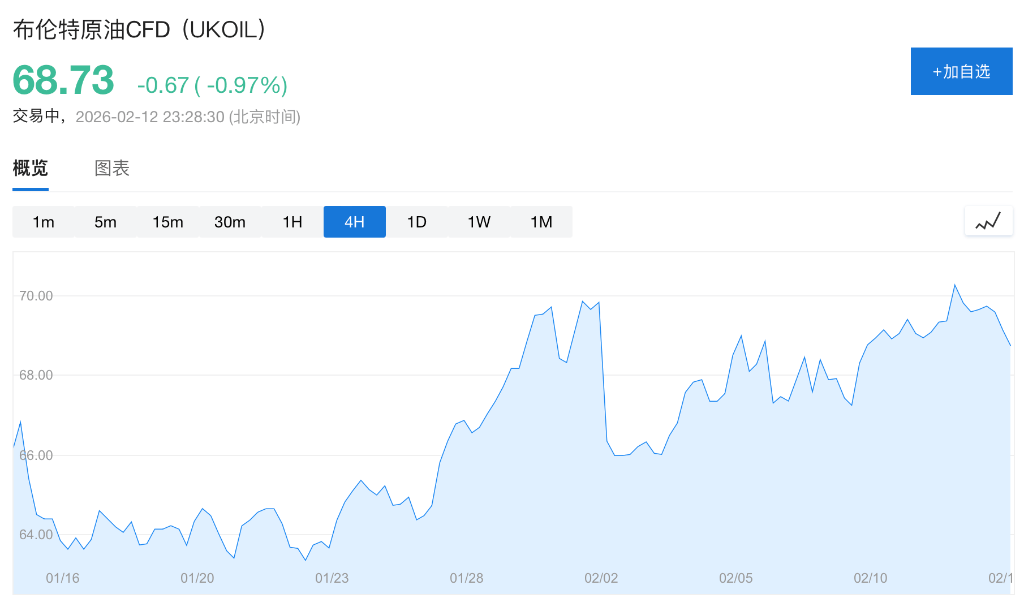
2月12日,国际能源署(IEA)最新月报显示,随着供应激增、需求增长放缓,2025年全球原油库存积累速度为2020年以来最快。全年库存增加 4.77亿桶,OECD国家库存四年来首次超过五年均值。 IEA同步下调今年石油需求增长预期,经济前景不明与油价高位持续压制消费。预计2026年全球日均供应过剩将超370万桶,或创年度过剩水平历 史新高。 油价却未随基本面走弱。本周布伦特原油一度突破70美元/桶,地缘风险成为主要推手。IEA表示,"定价中心库存相对吃紧"为市场提供短期支 撑。 交易员当前关注过剩是否向大西洋盆地扩散。IEA表示,过剩原油何时抵达关键消费区仍是影响后续价格路径的核心变量。 供需失衡推动库存激增 2025年全球原油库存大幅增加4.77亿桶,核心驱动来自供需两端的同步逆转。供应侧方面,OPEC+在沙特主导下恢复此前暂停的产量,与此同 时,美洲产油国美国、巴西、加拿大及圭亚那持续扩产,形成双重供给压力。 需求侧则显疲态。IEA估算,2025年全球石油需求增长放缓至日均76.9万桶。该机构预计2026年需求日均增长84.9万桶,总量达1.0487亿桶/日,低 于高盛等华尔街机构的预测。 进入2026年 ...

欧盟通过900亿欧元援乌贷款,俄罗斯上调增值税
Xin Lang Cai Jing· 2026-02-12 18:31
Group 1 - The European Parliament has approved a total of €90 billion in aid loans for Ukraine, with €30 billion allocated for macro-financial assistance and €60 billion for strengthening defense capabilities. The EU Council has reached an agreement on the loan framework, aiming to disburse the first tranche by early Q2 2026 [1] - Russia will increase its basic VAT rate from 20% to 22% starting in 2026, which economists predict may exacerbate inflation risks. The country's investment growth has stagnated, facing challenges from declining liquidity and geopolitical uncertainties [1] - European stock funds have seen strong inflows, attracting approximately $14 billion in net investments as of the week ending February 9, 2026, marking a new high in several months. This shift is partly due to investors reducing reliance on U.S. tech stocks and diversifying into markets including Eastern Europe [1] Group 2 - Alpha Bank's chief economist, Natalia Orlova, analyzes that the resource allocation in Russia remains imbalanced between military and civilian sectors, with reduced investment and economic slowdown being a natural phenomenon [2] - The Kiel Institute report indicates that as the U.S. withdraws funding, military aid to Ukraine will drop to its lowest level in 2025, with Europe bearing most of the related costs. Future tensions in U.S.-European relations may accelerate European defense expansion plans [2] - If the European Central Bank does not restart bond purchases, upward pressure on long-term interest rates may affect the valuations of military and security-related industries [2]
金价临界点:大家做好准备,明后两天,金价可能更大变盘?
Sou Hu Cai Jing· 2026-02-12 17:48
今天买一件30克的金手镯,如果你去的是某家知名品牌金店,你要付的钱,足够你在银行买45克投资金条。 这不是夸张的对比,而是2026年2月12日国内黄 金市场赤裸裸的现实。 国际金价一夜之间重新站上5100美元,而国内各大金店的价格却仿佛"焊死"在高位,不同渠道之间,一克黄金的价格竟然能相差400 元以上。 农历腊月二十五,春节前的最后一个交易窗口,黄金市场并未因节日氛围而沉睡,反而走出了令人屏息的"高位横盘"行情。 美联储的货币政策成为首要推手。 市场对2026年降息的预期升至78%,尽管官员表态偏谨慎,但美债收益率已开始下跌,美元指数软态毕现。 芝加哥商品 交易所美联储观察工具显示,6月降息25个基点的概率虽从72%降至61%,但资金仍持续流向黄金。 美元指数从2025年初的108跌至98附近,创下八年来最差 表现。 全球央行购金潮构筑了坚实底座。 中国人民银行实现连续15个月增持,1月末黄金储备达7419万盎司。 波兰央行在2025年购入150吨黄金,俄罗斯仅2026年1 月就增持100吨。 世界黄金协会数据显示,2025年全球央行购金量达863吨,95%的央行表示未来一年将继续增持。 新兴市场央行黄金储 ...

在华日企投资意愿达近两年最高,日本商会:企业看重商务环境
Sou Hu Cai Jing· 2026-02-12 14:25
日企对在华营商环境的满意度保持高位,62%的企业对营商环境满意;76%的日企认为与中国国内企业 受到同等对待。日企主要的评论有"没有特别大的不方便,基本上没有问题地进行了事业运营""物流、 交通等事业活动所需的基础设施完备""与当地政府关系较好,可获得必要的支持"等。 中国日本商会会长本间哲朗表示,不少日本企业对当前的日中关系表达了担忧。中国是日本最大的贸易 伙伴,日本企业几十年来深度投资中国并取得成功,也使日本国内受益。中国是日本不可忽视的邻居, 双方各领域联系十分深厚,彼此利益交织。希望双方能够加强沟通,减少企业的忧虑。 中国国际问题研究院亚太研究所助理研究员姚泽宇对北京日报客户端记者表示,从中国日本商会近几年 的营商环境调查结果看,多数日企对中国市场抱有积极预期。日企最不愿意看到的就是地缘政治风险给 企业在华投资和业务造成负面影响。日本经济界有不少声音批评高市早苗的涉台错误言论,要求她谨言 慎行,切实维护好中日关系尤其是经贸关系。 中国日本商会近日在北京发布第八次会员企业景气·营商环境认识问卷调查结果。这份今年1月面向约 8000家日本企业进行的调查显示,尽管对中日关系恶化感到担忧,仍有59%的在华日企 ...

银河期货航运日报-20260212
Yin He Qi Huo· 2026-02-12 11:32
Group 1: Report Overview - The report is a shipping research report released on February 12, 2026, focusing on container shipping, specifically the Container Shipping Index (European Line) [1][2] Group 2: Market Data Futures Market - EC2604 closed at 1,258.9 points on February 12, up 6.88% from the previous day's close, with a trading volume of 36,394 lots (up 111.54%) and an open interest of 31,021 lots (down 6.07%) [4] - Other contracts also showed varying degrees of price increases, trading volume changes, and open interest adjustments [4] Spread Structure - The spread between different contract months showed fluctuations, such as the EC04 - EC06 spread being -307, up 15.9 [4] Container Freight Rates - SCFIS European Line was reported at 1,657.94 points on February 6, down 1.06% month - on - month, and the EC2602 delivery settlement price was 1,769.8 points [6] - Most container freight rates showed a downward trend week - on - week and year - on - year, with some exceptions like the SCFIS US West Line showing a 4.93% week - on - week increase [4] Fuel Costs - WTI crude oil near - month price was $64.79 per barrel, up 1.12% month - on - month and down 10.16% year - on - year; Brent crude oil near - month price was $68.95 per barrel, up 0.79% month - on - month and down 9.0% year - on - year [4] Group 3: Market Analysis and Strategy Recommendations Market Analysis - The risk of the escalation of the Iranian situation remains. Short - selling funds left the market for risk - avoidance before the holiday, driving the market up [6] - Spot freight rates may remain weak. Some shipping companies' price increase expectations have loosened, and the post - holiday period is still in the off - season [7] - In terms of fundamentals, the demand side is seeing a decline after reaching a peak, and the supply side's weekly average capacity deployment has little change compared to the previous period [7] - Geopolitical factors are volatile, and it is still difficult for a large - scale resumption of European routes in the first half of the year [7] Strategy Recommendations - Unilateral: Do not hold positions during the holiday and maintain a short - term wait - and - see attitude as the off - season in April does not warrant high expectations [8] - Arbitrage: Conduct rolling operations on the 6 - 10 positive spread [9] Group 4: Industry News - According to Wall Street Journal, the US Department of Defense has instructed a second aircraft carrier strike group to prepare for deployment to the Middle East, and the deployment order may be issued within hours [12] - Trump's meeting with Israeli Prime Minister Netanyahu has begun according to the AXIOS website [13] Group 5: Related Attachments - The report includes several figures, such as the SCFIS European Line Index and SCFIS US West Line Index, SCFI Composite Index, and container freight rates for different routes [15][20][26]
ATFX:非农压不住金价:CPI前多头窗口开启,通道上轨或成突破关键
Sou Hu Cai Jing· 2026-02-12 09:28
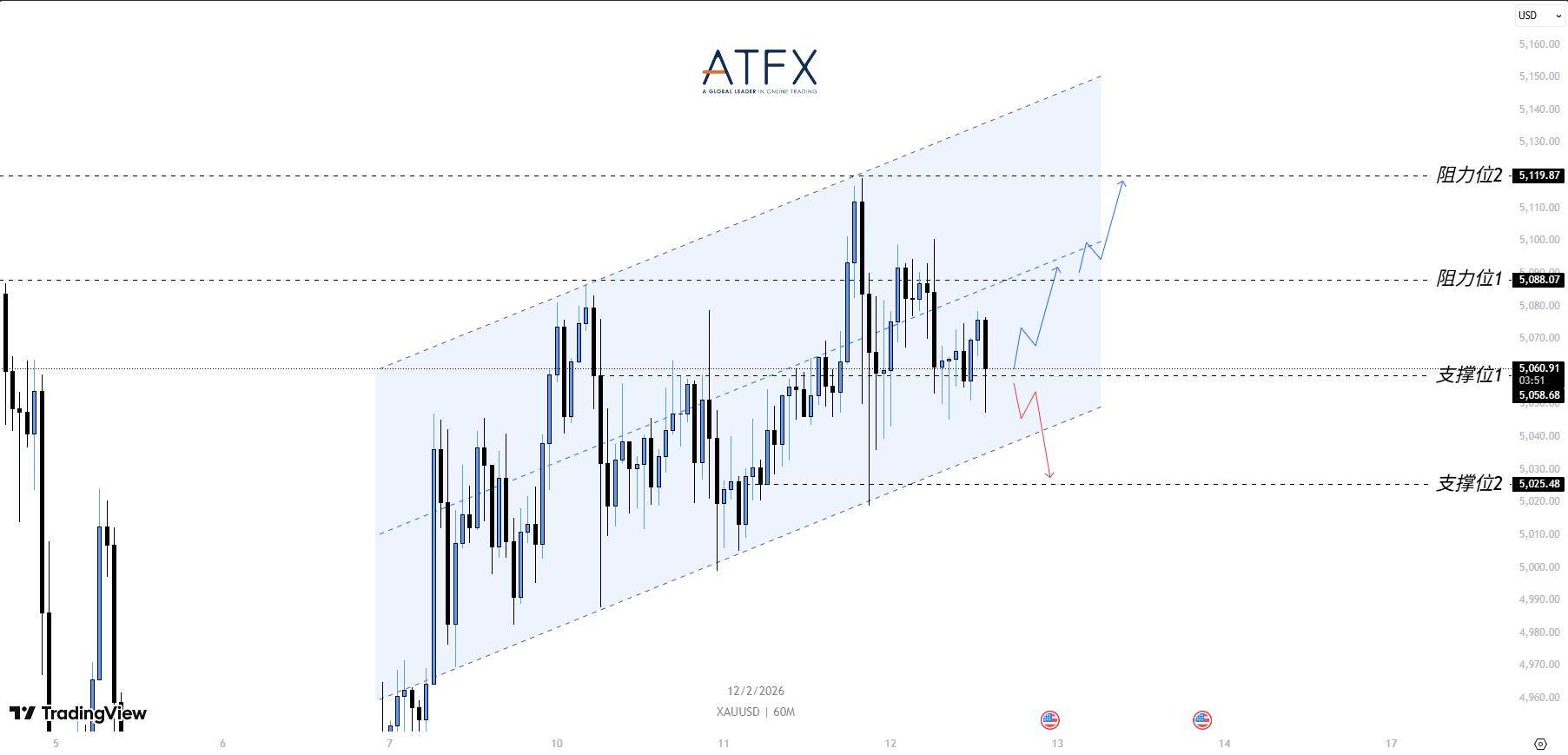
Core Viewpoint - Despite strong non-farm payroll data that typically suppresses gold prices, gold has shown resilience, rising over 1% and maintaining levels above $5,080, indicating a structural shift in the gold market logic [1][2][6]. Economic Data Impact - The U.S. added 130,000 jobs in January, with the unemployment rate dropping to 4.3%, which traditionally would suggest prolonged high interest rates, negatively impacting gold [2][3]. - Market expectations for a cumulative rate cut of about 50 basis points this year remain intact, despite the non-farm data suggesting otherwise [3]. Market Dynamics - The limited rise in the U.S. dollar index post-data release indicates a lack of sustained momentum for the "long-term high rates" narrative [3]. - Geopolitical tensions, uncertainties surrounding the Federal Reserve's leadership, and ongoing global central bank gold purchases are contributing to a long-term support for gold [3]. Upcoming Data Focus - The market's attention is shifting to the upcoming U.S. January CPI data, which will directly influence the probability of a rate cut in June [3]. - A further slowdown in inflation could provide more upward space for gold, while higher inflation may cause short-term volatility, but deep corrections are deemed unlikely under current conditions [3]. Technical Analysis - Gold is currently in a clear upward channel, with a structure of "higher lows and higher highs" since the low on the 7th [5]. - Key resistance levels are at $5,088 and $5,119, while support levels are at $5,058 and $5,025 [5]. - As long as gold remains within the channel and maintains the upward momentum, the bullish outlook is intact, indicating a consolidation phase rather than a trend reversal [6]. Market Sentiment - The current market sentiment suggests that the focus is not on whether gold can rise further, but rather on the effectiveness of bearish pressures [6]. - The upcoming CPI data will be a critical test for gold; if it can hold its channel structure, the upward trend may continue [7].
独家专访德银全球CIO:AI不是泡沫,中国资产吸引力上升
第一财经· 2026-02-12 09:03
Core Viewpoint - The investment environment in 2026 is characterized by significant global market uncertainty, with a focus on the principle that "discipline beats drama" in asset allocation [3][5]. Group 1: Artificial Intelligence (AI) Investment - AI remains a central theme for investment decisions in 2026, with a shift from merely focusing on chips to considering the entire AI value chain, including data centers and utilities [6][7]. - The current discussions around whether AI represents a bubble are deemed unfounded, as the sector is viewed as undergoing a structural transformation rather than a speculative bubble [7]. Group 2: Emerging Markets and China - Emerging markets, particularly Asia, South America, and Eastern Europe, are expected to perform well in 2026, supported by a weaker dollar and a global economic environment that has not entered recession [8]. - China's attractiveness as an investment destination is increasing, with rising interest from European and American investors, particularly outside the real estate sector [8]. Group 3: Currency and Dollar Outlook - Despite discussions about reevaluating dollar asset exposure, the U.S. market, especially AI-related companies, remains attractive, with equity returns exceeding 20% [9]. - The dollar is expected to maintain its importance in investment strategies, although diversification in currency exposure is anticipated [9]. Group 4: Inflation Risks - Inflation risk is highlighted as a significant concern for 2026, with potential implications for central banks' ability to lower interest rates if inflation exceeds expectations [10][11]. - Geopolitical factors, tariffs, and wage increases due to low unemployment rates are identified as drivers of inflation that should not be overlooked [11]. Group 5: Geopolitical Risks and Market Volatility - Geopolitical events are acknowledged as potential sources of market volatility, with a focus on their impact on energy prices and inflation [12]. - The need for reforms in the European Union to boost growth is emphasized, with optimism regarding economic growth in Europe, particularly driven by fiscal spending [12].


黄金交易提醒:金价无视非农续涨1.2%,CPI公布前多头窗口已打开
Sou Hu Cai Jing· 2026-02-12 06:18
Core Viewpoint - The recent surge in gold prices, despite strong U.S. non-farm payroll data, indicates a robust demand for gold as a long-term investment, driven by various macroeconomic and geopolitical factors [1][3][5]. Group 1: Gold Price Movement - On February 11, spot gold prices peaked at $5,118 per ounce, closing at approximately $5,083 per ounce, reflecting a gain of over 1% [1]. - U.S. gold futures for April rose by 1.3%, settling at $5,098.50 per ounce, despite strong employment data that typically supports higher interest rates [1]. - Following the initial surge, gold prices slightly weakened to around $5,055 per ounce, with a decline of about 0.5% [1]. Group 2: Employment Data Impact - The strong U.S. labor market, with 130,000 new jobs added in January and a drop in the unemployment rate from 4.4% to 4.3%, initially caused a shift in market expectations regarding Federal Reserve interest rate cuts [3][4]. - Despite this, the underlying demand for gold remained strong, as market participants view gold purchases as a long-term strategy based on fundamental factors [3]. Group 3: Geopolitical and Monetary Policy Factors - Geopolitical tensions, particularly regarding U.S. military deployments in the Middle East, have reinforced gold's appeal as a safe-haven asset [4][5]. - The uncertainty surrounding the Federal Reserve's leadership transition, particularly with Kevin Warsh potentially taking over, adds to the market's cautious outlook on future monetary policy [5]. - Central banks globally continue to increase their gold reserves, driven by a long-term strategy of diversifying away from the U.S. dollar, which supports ongoing demand for gold [5]. Group 4: Future Outlook - The upcoming U.S. Consumer Price Index (CPI) report is critical for assessing inflation trends, which will influence market expectations for interest rate cuts [6]. - Technical analysis indicates that gold prices have formed a pattern of higher lows and higher highs, with resistance levels projected between $5,150 and $5,200 per ounce [6]. - Long-term forecasts for gold prices have been significantly raised, with some predictions suggesting prices could approach $6,000 by the end of 2026, reflecting a strong consensus on a structural bull market for gold [6][7]. Group 5: Investment Sentiment - The current market environment suggests that traditional macroeconomic indicators are being overshadowed by deeper structural changes, leading to a new phase where buying gold at high prices is considered reasonable [7]. - Factors such as risk aversion, geopolitical uncertainties, and the ongoing trend of de-dollarization are contributing to gold's status as a core asset in global investment portfolios [7].