国产替代

Search documents
MLCC专家交流
2026-02-25 04:13
Summary of the Conference Call on MLCC Industry Industry Overview - The conference focused on the MLCC (Multi-layer Ceramic Capacitor) industry, particularly the impact of AI and inflation on pricing and demand dynamics in the sector [2][3]. Key Points and Arguments 1. **Price Changes in MLCC Market**: - There was a notable shift in pricing from late last year to the Spring Festival, with major manufacturers like Murata and Samsung Electro-Mechanics indicating a change in their pricing stance [2][3]. - The current market has seen a price increase of 15-20% in the spot market for MLCCs, driven by supply chain disruptions due to natural disasters affecting production in Thailand, the Philippines, and Malaysia [3][4]. 2. **Impact of AI Demand**: - The demand for high-end MLCCs, particularly for AI applications, remains robust throughout the year, which is expected to squeeze the supply of mid to low-end products [2][3][11]. - AI-related applications, including high-performance servers and autonomous driving technologies, are significantly increasing the demand for high-capacity MLCCs [12][18]. 3. **Manufacturers' Pricing Strategies**: - Major manufacturers are expected to announce price increases through formal communications to distributors and direct customers, with anticipated increases of 20-30% for high-end products and 15-20% for mid-range products [9][10]. - Taiwanese manufacturers have expressed a strong desire to raise prices, influenced by rising raw material costs and increased demand for high-capacity products [11][12]. 4. **Market Dynamics and Competition**: - The competitive landscape includes major players like Samsung Electro-Mechanics, Murata, and TDK, with TDK expanding its production capacity for high-end MLCCs [23][24]. - Domestic manufacturers in China, such as Sanan Optoelectronics and Wuxi Huada, are also increasing their production of high-capacity MLCCs to meet rising demand [24][42]. 5. **Production Challenges**: - Transitioning production lines from mid to high-end MLCCs involves significant challenges, including the need for specialized equipment and materials, which are often tightly controlled by leading manufacturers [28][29]. - The production of high-capacity MLCCs requires advanced technology and materials with high purity levels, which are not easily accessible to all manufacturers [28][30]. 6. **Future Outlook**: - The current pricing trend is expected to persist for one to two years due to the slow pace of capacity expansion among manufacturers [39]. - The demand for high-capacity MLCCs is projected to grow, driven by advancements in AI applications and the increasing complexity of electronic devices [56][57]. Other Important Insights - The integration of AI in various sectors, including healthcare and automotive, is anticipated to further drive the demand for MLCCs, with projections indicating that over 50% of PCs may utilize AI technology by next year [55][56]. - The relationship between the pricing of resistors and MLCCs suggests that as resistor prices rise, there may be a corresponding increase in MLCC demand as manufacturers bundle purchases [49][50]. This summary encapsulates the key discussions and insights from the conference call regarding the MLCC industry, highlighting the interplay between pricing, demand, and technological advancements.
通富微电(002156):AMD获Meta大单,公司间接受益
CSC SECURITIES (HK) LTD· 2026-02-25 02:59
Investment Rating - The report assigns a "Buy" rating to the company, indicating a potential upside of 15% to 35% [7]. Core Insights - The collaboration between Meta and AMD is expected to generate over $100 billion in revenue, benefiting the company as a core packaging manufacturer for AMD [7][10]. - The net profit forecast for the company has been raised by 5% for 2027, with projected net profits of 1.28 billion RMB, 1.88 billion RMB, and 2.85 billion RMB for 2025, 2026, and 2027 respectively, reflecting year-on-year growth rates of 89%, 47%, and 51% [7][10]. - The current price-to-earnings (P/E) ratios for 2026 and 2027 are 40 times and 26 times, respectively [10]. Financial Summary - The company is projected to achieve net profits of 1.28 billion RMB in 2025, 1.88 billion RMB in 2026, and 2.85 billion RMB in 2027, with corresponding year-on-year growth rates of 89%, 47%, and 51% [9][10]. - Earnings per share (EPS) are expected to be 0.84 RMB, 1.24 RMB, and 1.88 RMB for 2025, 2026, and 2027, respectively [9][10]. - The company's revenue is forecasted to grow from 29.28 billion RMB in 2025 to 51.49 billion RMB in 2027 [9][10].

未知机构:国信电子TDK日东等被列入实体清单电子元件材料迎国产替代大窗口-20260225
未知机构· 2026-02-25 02:50
【国信电子】TDK、日东等被列入实体清单,电子元件、材料迎国产替代大窗口 2月24日,中华人民共和国商务部官网连续发布两份重磅公告,分别将共计40家日本实体列入出口管制管控名单和 关注名单,严格措施即日起正式实施。 以TDK为例,TDK株式公社被商务部列入两用物品出口关注名单,意味着其被禁止通用许可获取稀土,需逐单严 格审查。 这将精准打击TDK在AI服务器、车规、5G等高端领域mlcc的生产能力。 TDK与日本村田垄断全球高端MLCC市场,两者在车规级领域市占率超70%,高端整体份额超60%。 材料供应方面,三菱材料、日东电工等企业供应的半导体材料(如高纯度金属、溅射靶材、封装材料)、消费电 子上游材料可能面临更严格的出口审查。 国内晶圆制造、封装测试企业等下游厂商需评估现有库存,寻找替代供应商或提前申请特殊许可。 此次管制为中国本土高端元件、上游材料厂商打开了极其罕见的市场窗口。 下游终端为规避实体清单公司潜在的断供风险,必须构建"非日系"供应链。 以TDK为例,TDK株式公社被商务部列入两用物品出口关注名单,意味着其被禁止通用许可获取稀土,需逐单严 格审查。 这将精准打击TDK在AI服务器、车规、5G等 ...
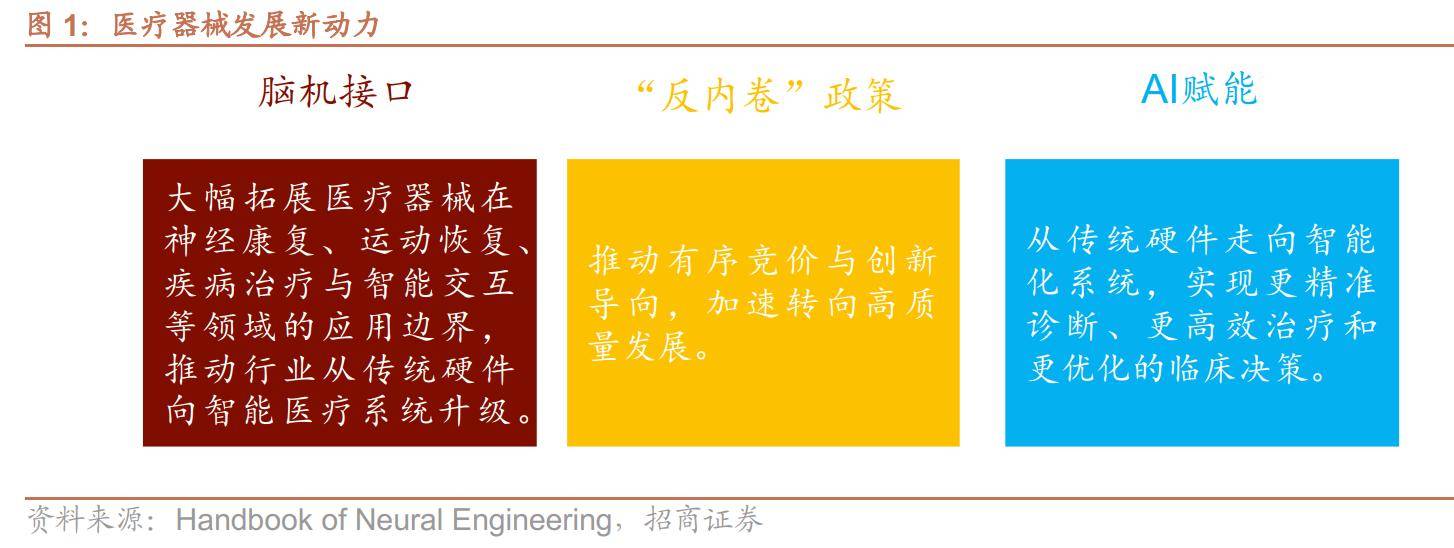
低位反弹!医疗器械指数ETF(159898)开盘拉升0.90%,出口韧性与脑机接口双轮驱动
Sou Hu Cai Jing· 2026-02-25 02:35
Core Viewpoint - The medical device sector is experiencing a rebound, driven by policy support, technological advancements, and a shift towards domestic innovation and global competition [1][4]. Group 1: Medical Device Sector Performance - On February 25, the medical device sector saw a rebound with the medical device index ETF (159898) rising by 0.90%, following a net subscription of 1.67 million yuan the previous trading day [1]. - Key stocks such as Aidi Te, Zhend Medical, and Lepu Medical saw significant gains, with Aidi Te rising over 5% and others like Hualan Biological and Yuyue Medical also showing strong performance [1]. Group 2: Brain-Computer Interface Developments - The brain-computer interface (BCI) sector is accelerating, with significant policy backing and capital investment. A semi-invasive BCI company, Borui Kang, is preparing for a listing on the Sci-Tech Innovation Board [4]. - The global BCI market is projected to grow from approximately $2.62 billion in 2024 to $12.4 billion by 2034, with a compound annual growth rate (CAGR) of 17.35% [4]. - In China, the BCI market is expected to reach 3.2 billion yuan in 2024 and grow to 6.14 billion yuan by 2028 [4]. Group 3: Export Resilience and Growth - China's medical device exports demonstrated strong resilience, with a total export value of $45.542 billion in the first 11 months of 2025, marking a year-on-year increase of 3.82% [5]. - The export structure is evolving, with significant growth in high-end products such as hospital diagnostic and treatment equipment, which increased by 8.36% [5]. Group 4: Domestic Market and Innovation - The implementation of the fifth batch of national high-value medical consumables procurement has significantly reduced prices, such as the cost of cochlear implants dropping from over 200,000 yuan to around 50,000 yuan [7]. - The domestic medical device market is projected to reach 1,017.4 billion yuan by 2026, with a CAGR of approximately 5.9% to 6.6% from 2020 to 2035, driven by aging population, equipment upgrades, and technological innovation [7]. - In 2025, a total of 3,402 medical device products were approved, including 76 innovative devices, maintaining a high approval rate for three consecutive years [7]. Group 5: ETF Performance - The medical device index ETF (159898) tracks the CSI All Medical Device Index, focusing on the medical equipment, consumables, and in vitro diagnostics sectors, with a notable exposure to the BCI concept at 23.79% [9]. - Since its inception, the ETF has achieved a total return of 1,015.07%, with an annualized return of 12.52% and a one-year annualized return of 20.86% [9]. - The revenue and net profit of the ETF's constituent stocks have shown a year-on-year recovery, indicating a gradual improvement in the industry's fundamentals [9].

瑞承:千亿存储市场,国产化正加速破局
Jin Tou Wang· 2026-02-25 02:24
Core Insights - The storage chip market is experiencing growth driven by AI computing demands, with higher requirements for data throughput and capacity impacting the demand for DRAM and NAND Flash storage chips [2] - Domestic storage chip manufacturers are rising, leading to collaborative development within the industry chain, highlighting the increasing value of testing equipment as a critical component [2] - The successful completion of nearly 100 million yuan in Series B financing by Luanqi Technology will be used to expand production scale, enhance R&D investment, and develop new product lines [1] Company Overview - Luanqi Technology focuses on the research and sales of storage semiconductor testing equipment, covering the entire process from R&D testing to mass production verification [1] - The founding team consists of seasoned experts in the storage industry with extensive experience in leading global semiconductor companies, ensuring a strong technical foundation [1] - Luanqi Technology's testing equipment has been validated by multiple module manufacturers, demonstrating reliability and precision comparable to international products [1] Industry Dynamics - The storage testing equipment industry has high barriers to entry and strong risk attributes, requiring strict validation before equipment can enter production lines [2] - The technological breakthroughs by Luanqi Technology fill a domestic gap, accelerating the localization process and reducing reliance on imported equipment [2] - The maturation of domestic testing equipment manufacturers is expected to enhance the market competitiveness of chip products and promote overall industry chain upgrades [2]
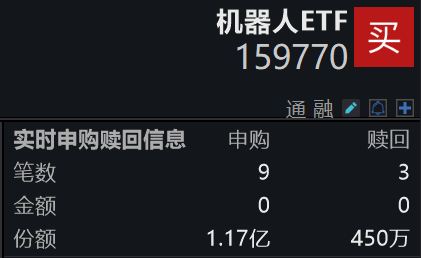
宇树科技发布新款机器人,机器人ETF(159770)标的指数拉升翻红,实时净申购已超1亿份
Xin Lang Cai Jing· 2026-02-25 02:24
Core Viewpoint - The Robot ETF (159770) has seen significant inflows and performance, indicating strong investor interest in the robotics sector, particularly following recent product launches and market trends [1][2][3]. Group 1: ETF Performance - As of February 25, 2026, the Robot ETF (159770) recorded a transaction volume of 49.02 million yuan, with the underlying index, the CSI Robot Index (H30590), rising by 0.22% [1]. - The latest scale of the Robot ETF reached 10.55 billion yuan, with a total of 9.477 billion shares, both marking new highs for the past month [2]. - The ETF experienced a net inflow of 237 million yuan recently, with a total of 577 million yuan in net inflows over the last 10 trading days [2]. Group 2: Sector Highlights - The Robot ETF covers various segments of the robotics industry, including humanoid robots, industrial robots, and service robots, allowing investors to easily access the entire robotics supply chain [2]. - Notably, the recent launch of the Unitree As2 quadruped robot by Yushu Technology, which boasts performance metrics significantly exceeding its predecessor, has garnered attention in the robotics field [3]. - According to Huatai Securities, the robotics sector has shown strong performance, particularly with increased public exposure during the Spring Festival, which is expected to accelerate commercialization and attract more capital [3].

国泰海通晨报-20260225
GUOTAI HAITONG SECURITIES· 2026-02-25 02:11
Macro Research - In 2026, approximately 77 trillion yuan of residents' fixed deposits will mature, with about 25 trillion yuan facing repricing due to high-interest deposits [1] - The maturity pressure for 2026 is expected to be less severe compared to 2025, with a year-on-year increase of 9.6-10.8 trillion yuan, corresponding to a growth rate of 14.4%-16.3% [2][3] Strategy Research - Kevin Warsh's potential leadership at the Federal Reserve may lead to a "moderate rate cut + limited balance sheet reduction" policy, which could increase asset volatility and reshape asset pricing paradigms [1][5] Basic Chemical Research - Sanmei Co., Ltd. is a leading player in the third-generation refrigerants market, with prices expected to continue rising due to increasing downstream demand [1][8] - The company has a significant share of the HFCs production quota in China, with HFC-134a, HFC-125, HFC-32, and HFC-143a accounting for 23.97%, 18.43%, 11.81%, and 15.48% of the national production quota, respectively [9][27] - The average market price of R32 has surged from 13,472 yuan/ton at the beginning of 2023 to 63,000 yuan/ton at the beginning of 2026, a staggering increase of 368% [11][28] - The company is actively enhancing its integrated layout across the fluorine industry chain, with several projects in various stages of development [12][28]

长城基金杨维维:存储板块景气高企,持续性或超预期
Xin Lang Cai Jing· 2026-02-25 01:48
Core Viewpoint - The semiconductor industry is currently experiencing a strong performance driven by multiple factors, including the demand from AI technologies and the ongoing push for domestic substitution in China [1][6]. Group 1: Industry Dynamics - The semiconductor industry is benefiting from AI's influence, with sectors such as GPU, CPU, ASIC, storage, and advanced processes directly gaining, while supporting equipment, materials, components, and packaging are benefiting indirectly [1][6]. - The current state of the semiconductor industry is not aligned with traditional macroeconomic frameworks, as it is more influenced by AI demand and the deepening of domestic substitution [2][7]. Group 2: Market Conditions - The storage segment is at a relative high point in terms of industry prosperity, with potential for continued unexpected growth, while consumer chip segments like SOC and analog chips are at low points [2][7]. - The Chinese semiconductor industry is in an early stage of benefiting from AI, indicating significant growth potential across the entire industry chain [2][7]. Group 3: Investment Opportunities - Key investment areas include domestic computing power, semiconductor equipment, materials, and components benefiting from the expansion of domestic wafer fabs, as well as military semiconductors [3][8]. - The expansion of wafer fabs is driven by AI's demand for advanced processes, storage shortages, and the "China for China" outsourcing needs, suggesting upward potential for related equipment, materials, and components [3][8]. Group 4: Investment Strategy - The core investment strategy focuses on "odds + industry trends + selective stocks," aiming to identify high-potential stocks within major industry trends such as AI and domestic substitution [4][9]. - The strategy emphasizes quantitative assessment of growth potential based on the understanding of industry trends and individual stocks, with a preference for positioning before market turning points [4][9]. Group 5: Market Outlook - The overall trend for the semiconductor industry is expected to be upward, although the sector's valuation is currently considered high following significant increases since September 2024 [10]. - The primary risk in the sector is liquidity risk, which is crucial for supporting high valuations, and investors are advised to adopt a long-term perspective based on the high potential and long cycle of China's semiconductor industry [10].
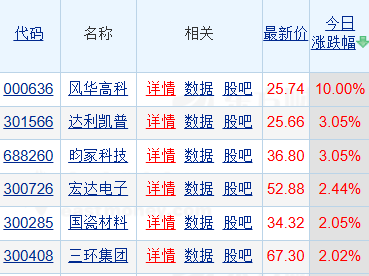
AI服务器需求爆发!MLCC龙头村田产能告急,概念股风华高科两连板
Jin Rong Jie· 2026-02-25 01:43
Industry Overview - The MLCC sector is experiencing a significant surge, driven by the explosive demand for AI servers, leading to a substantial increase in industry demand [2][3] - Major global MLCC manufacturers, such as Murata Manufacturing and Samsung Electro-Mechanics, are considering price hikes due to capacity constraints, with Murata's order volume reaching double its current capacity [3] - The demand for high-end MLCCs is expected to continue rising, benefiting both upstream and downstream companies in the industry [3] Market Dynamics - The demand for high-capacity, high-temperature resistant high-end MLCCs is increasing in downstream sectors like AI servers and automotive electronics, with overseas giants' price increases pushing the overall price level higher [4] - Domestic manufacturers with high-end MLCC R&D capabilities are positioned to capture more market share due to their cost-performance advantages as the domestic substitution process accelerates [4] Raw Materials and Equipment - The expansion of MLCC production is driving the demand for key raw materials such as nickel powder and dielectric powder, with a notable increase in market demand for high-performance nickel powder and high-end dielectric powder [4] - Companies that possess advanced production technology for high-end raw materials are expected to benefit significantly from the industry's growth [4] Key Companies - Fenghua Advanced Technology is a leading domestic MLCC manufacturer, with a diverse product range including MLCCs and chip resistors, set to benefit from industry demand growth and the domestic substitution process [5] - Guocera Materials is a global leader in MLCC dielectric powder production, supplying raw materials to numerous well-known MLCC manufacturers, and will see performance growth due to the industry's upward trend [5] - Boqian New Materials focuses on high-end metal powder R&D and production, with its nickel powder products meeting the technical upgrade needs of high-end MLCCs, expected to see increased sales and profitability due to the surge in AI server demand [6] - SanHuan Group is a leading domestic electronic ceramics company, with its MLCC products experiencing a gradual recovery in market demand, benefiting from industry growth and accelerated domestic substitution [6]

趋势研判!2026年中国钛锭行业生产方法、政策、产业链、产销量、进出口贸易、竞争格局及发展趋势:受下游领域钛材需求拉动,钛锭需求量提升[图]
Chan Ye Xin Xi Wang· 2026-02-25 01:33
Core Viewpoint - Titanium ingots are essential materials with high strength, corrosion resistance, and biocompatibility, widely used in various industries such as aerospace, military, and medical, reflecting a country's economic and defense capabilities [1][3] Industry Definition and Production Methods - Titanium ingots are metal blocks formed from sponge titanium through melting, with production methods including vacuum self-consumption melting and vacuum non-self-consumption melting [2][3] - The main production process involves mining, chlorination, reduction refining, and purification, typically requiring 2-3 melting cycles [2] Industry Development Status - China's titanium ingot production is projected to reach 190,000 tons in 2024 and 235,000 tons in 2025, with demand expected to be 181,900 tons and 226,900 tons respectively [4] - China accounts for over 60% of global titanium ingot production, but still relies on imports for high-end applications due to limited core technologies [4] Industry Chain - The upstream of the titanium ingot industry involves sponge titanium production from titanium iron ore, while the midstream focuses on titanium ingot processing, and the downstream applications span aerospace, electronics, and medical fields [5] Development Environment and Policies - The titanium industry is a key focus of national development, with policies promoting green transformation and supporting high-end titanium production [5] Competitive Landscape - Major companies in the domestic titanium ingot industry include Baoji Titanium Industry Co., Anning Iron Titanium Co., and Western Superconducting Technologies Co., with significant market shares and production capabilities [8] - Anning Iron Titanium is a leader in titanium concentrate mining, while Western Superconducting specializes in high-end titanium alloy materials [8] Industry Development Trends - The focus of the titanium ingot industry is shifting from capacity expansion to product structure optimization, with increasing demand for high-purity and high-performance titanium ingots in aerospace and medical applications [9][10] - Companies are expected to invest more in R&D for high-end alloys, enhancing competitiveness through innovation and cost control [10]