
AI服务器

Search documents
胜宏科技:未来聚焦高端PCB,拓展前沿领域提升竞争力
Xin Lang Cai Jing· 2025-11-03 04:17
Core Viewpoint - The company is focusing on high-end PCB products for advanced sectors such as aerospace and medical devices, aiming to enhance its core competitiveness in emerging technologies like AI and new energy vehicles [1] Group 1: Industry Focus - PCB products serve as critical components in aerospace and medical equipment, providing essential support for related devices and control systems [1] - The company plans to actively expand its customer base in cutting-edge fields including AI servers, AI computing cards, AI phones, AIPC, smart driving, new energy vehicles, and next-generation communication technologies [1] Group 2: Future Plans - Despite the current low revenue contribution from high-end sectors, the company intends to prioritize the development and expansion of its high-end PCB product offerings in the future [1]

有色金属日报-20251103
Wu Kuang Qi Huo· 2025-11-03 03:31
Report Industry Investment Rating No relevant information provided. Core Viewpoints of the Report - The short - term optimistic sentiment from the Sino - US leaders' meeting and the Fed's interest rate cut has been realized, but the easing of trade situation and the loose direction of the Fed's monetary policy remain unchanged. Copper prices are expected to be supported by the tight supply of refined copper [3]. - The global trade situation has eased, and with disturbances in the overseas supply side, aluminum prices have reached a new high for the year. Aluminum prices are likely to maintain a strong and volatile trend in the short term [5][7]. - The cost of cast aluminum alloy remains high, and due to policy adjustments in production, supply is tight, providing strong support for prices [10]. - The overall sentiment in the commodity market is still positive. Lead and zinc prices are expected to be strong in the short term, but the upward space for zinc prices is limited in the surplus cycle [14][16]. - Tin supply and demand are in a tight balance in the short term, and with the recovery of peak - season demand, tin prices may rise in a volatile manner [19]. - The inventory pressure of refined nickel remains significant, dragging down nickel prices in the short term. However, in the long - term, global fiscal and monetary easing will support nickel prices [21]. - The supply of lithium carbonate has been in short supply since August, and the futures price has rebounded. Market games may focus on mine - end disturbances and demand expectations [24]. - The alumina smelting capacity is in surplus, and the inventory accumulation trend continues. However, as the price is approaching the cost line, the expectation of production cuts is increasing [27]. - The stainless - steel market fundamentals have not improved substantially, and prices are expected to continue the weak trend [30]. Summary by Metal Copper - **Market Information**: Domestic October official manufacturing PMI was weaker than expected, and the offshore RMB depreciated, causing copper prices to fluctuate weakly. LME copper inventory decreased by 325 tons to 134,625 tons, and SHFE weekly inventory increased by 11,000 tons [2]. - **Strategy Viewpoint**: The approval of copper exports by an Indonesian mining company has alleviated the tight supply expectation to some extent, but the tight pattern remains. Refined copper supply is expected to tighten marginally, providing strong support for copper prices. The reference range for SHFE copper is 86,500 - 88,000 yuan/ton, and for LME copper 3M is 10,750 - 11,000 dollars/ton [3]. Aluminum - **Market Information**: The easing of trade situation pushed up aluminum prices. LME aluminum rose 0.63% to 2,888 dollars/ton, and SHFE aluminum closed at 21,415 yuan/ton. Domestic aluminum ingot and aluminum rod inventories decreased, while LME aluminum inventory increased by 99,000 tons to 458,000 tons [4]. - **Strategy Viewpoint**: With the easing of the global trade situation and overseas supply disturbances, aluminum prices reached a new high for the year. Aluminum prices are likely to maintain a strong and volatile trend in the short term. The reference range for SHFE aluminum is 21,100 - 21,700 yuan/ton, and for LME aluminum 3M is 2,850 - 2,920 dollars/ton [5][7]. Cast Aluminum Alloy - **Market Information**: On Friday, the price of cast aluminum alloy rose. The main AD2512 contract increased by 0.61% to 20,745 yuan/ton. Domestic three - region recycled aluminum alloy ingot inventory increased by 130 tons to 5,010 tons [9]. - **Strategy Viewpoint**: The cost of cast aluminum alloy remains high, and due to policy adjustments in production, supply is tight, providing strong support for prices, despite the large delivery pressure of the 2511 contract [10]. Lead - **Market Information**: Last Friday, SHFE lead index rose 0.22% to 17,391 yuan/ton, and LME lead 3S fell 3.5 dollars to 2,018.5 dollars/ton. Domestic social inventory slightly increased to 2,790 tons [12]. - **Strategy Viewpoint**: The visible inventory of lead ore continues to decline, and the production of primary and recycled lead has different trends. The overall inventory reduction of domestic lead ingots has slowed down, but the absolute level is still low. SHFE lead is expected to be strong in the short term [13][14]. Zinc - **Market Information**: Last Friday, SHFE zinc index fell 0.05% to 22,372 yuan/ton, and LME zinc 3S fell 22 dollars to 3,029 dollars/ton. Domestic social inventory slightly decreased to 16,150 tons [15]. - **Strategy Viewpoint**: The visible inventory of domestic zinc ore continues to decline, and the processing fee of zinc concentrate has decreased again. Domestic zinc smelting profit has declined. SHFE zinc is expected to be strong in the short term, but the upward space is limited in the surplus cycle [16]. Tin - **Market Information**: On November 2, 2025, SHFE tin main contract closed at 283,910 yuan/ton, up 0.11%. The supply of tin ore is still tight, and the demand in emerging fields provides support for tin prices. The national main tin ingot social inventory decreased by 45 tons to 7,698 tons [17][18]. - **Strategy Viewpoint**: Tin supply and demand are in a tight balance in the short term, and with the recovery of peak - season demand, tin prices may rise in a volatile manner. It is recommended to go long on dips. The reference range for domestic main contract is 270,000 - 295,000 yuan/ton, and for overseas LME tin is 35,500 - 37,500 dollars/ton [19]. Nickel - **Market Information**: On Friday, nickel prices fluctuated narrowly. SHFE nickel main contract closed at 120,590 yuan/ton, down 0.32%. The price of nickel ore was stable and slightly strong, and the price of nickel iron remained stable [20]. - **Strategy Viewpoint**: The inventory pressure of refined nickel remains significant, dragging down nickel prices in the short term. However, in the long - term, global fiscal and monetary easing will support nickel prices. It is recommended to wait and see in the short term, and consider building long positions if the price drops enough. The reference range for SHFE nickel main contract is 115,000 - 128,000 yuan/ton, and for LME nickel 3M is 14,500 - 16,500 dollars/ton [21]. Lithium Carbonate - **Market Information**: On October 31, the MMLC spot index of lithium carbonate closed at 81,869 yuan, down 1.44% from the previous trading day. The price of Australian imported lithium concentrate increased [23][24]. - **Strategy Viewpoint**: The supply of lithium carbonate has been in short supply since August, and the futures price has rebounded. Market games may focus on mine - end disturbances and demand expectations. The reference range for the main contract of Guangzhou Futures Exchange is 79,500 - 83,500 yuan/ton [24]. Alumina - **Market Information**: On October 31, 2025, the alumina index fell 0.78% to 2,809 yuan/ton. The overseas FOB price of Australia decreased, and the futures inventory increased [26]. - **Strategy Viewpoint**: The alumina smelting capacity is in surplus, and the inventory accumulation trend continues. However, as the price is approaching the cost line, the expectation of production cuts is increasing. It is recommended to wait and see in the short term. The reference range for the domestic main contract AO2601 is 2,600 - 2,900 yuan/ton [27]. Stainless Steel - **Market Information**: On Friday, the stainless - steel main contract closed at 12,655 yuan/ton, down 0.55%. The spot price of stainless steel decreased slightly, and the social inventory increased [29][30]. - **Strategy Viewpoint**: The stainless - steel market fundamentals have not improved substantially, and prices are expected to continue the weak trend [30].
蓝箭电子:部分产品已直接或间接应用于无人机、AI服务器及机器人等新兴领域
Mei Ri Jing Ji Xin Wen· 2025-11-03 01:00
Core Viewpoint - Blue Arrow Electronics (301348.SZ) has indicated that some of its products are directly or indirectly applied in emerging fields such as 5G communication base stations, security electronics, rail transit, automotive electronics, drones, AI servers, and robotics [1] Group 1 - The company is involved in multiple high-growth sectors, showcasing its diverse application of technology [1] - The mention of 5G communication base stations highlights the company's engagement in cutting-edge telecommunications technology [1] - The inclusion of AI servers and robotics indicates the company's alignment with trends in artificial intelligence and automation [1]

安世中国否认违约 声讨荷兰方面停供、欠付10亿元货款
Zheng Quan Shi Bao Wang· 2025-11-02 12:03
Core Viewpoint - The ongoing dispute between Anshi Semiconductor China and its Dutch counterpart regarding supply issues has significant implications for the semiconductor supply chain and the operations of the companies involved [1][3]. Group 1: Supply Chain Issues - Anshi Semiconductor China announced that the Dutch parent company decided to stop supplying wafers to its Dongguan packaging and testing factory (ATGD) starting October 26, 2025, citing non-compliance with contract payment terms by local management [1]. - Anshi China strongly refuted the claims of breach, stating that the Dutch company owes ATGD approximately 1 billion RMB in unpaid invoices [1]. - Anshi China has sufficient finished and in-process inventory to meet customer demand until the end of the year and has initiated multiple contingency plans to ensure long-term supply resilience [1]. Group 2: Business Operations and Financials - The ATGD factory is critical for Anshi Semiconductor, accounting for 70% of the company's global packaging and testing capacity [1]. - In addition to ATGD, the domestic wafer manufacturing is handled by the Shanghai Lingang Dingtai Jiangxin Wafer Factory, which is part of a project with a total contract value of 6.8 billion RMB over four years [2]. - The new generation of MOS products from the Lingang factory has successfully entered the supply chain of leading domestic electric vehicle manufacturers, with plans for mass production of the next generation of IGBT products by the end of 2025 [2]. Group 3: Regulatory and Geopolitical Context - Anshi Semiconductor was placed on the U.S. Entity List, leading to export controls that affected its operations, including a global operational freeze imposed by the Dutch government [3]. - The Chinese Ministry of Commerce criticized the Dutch government's interference in corporate affairs, which has contributed to global supply chain disruptions [3]. - Recent negotiations between U.S. and Chinese trade teams resulted in a temporary suspension of certain export control measures, which may impact the operational landscape for companies like Anshi Semiconductor [4].

圣泉集团(605589):Q3业绩环比承压,先进电子及电池材料未来可期
Shenwan Hongyuan Securities· 2025-11-02 05:12
Investment Rating - The investment rating for the company is "Outperform" (maintained) [2] Core Insights - The company reported Q3 results with revenue of 8.072 billion yuan, a year-on-year increase of 13%, and a net profit attributable to shareholders of 760 million yuan, up 31% year-on-year. The performance is generally in line with expectations [7] - The company is focusing on expanding its production capacity in advanced electronic materials and battery materials, which are expected to benefit from the growing demand in AI servers and increased penetration of battery materials [7] - The company plans to issue convertible bonds totaling up to 2.5 billion yuan to invest in green energy battery material projects, which will significantly enhance its production capacity in silicon-carbon anode materials [7] Financial Data and Profit Forecast - Total revenue forecast for 2025 is 11.179 billion yuan, with a year-on-year growth rate of 11.6% [6] - The net profit attributable to shareholders is projected to be 1.068 billion yuan in 2025, reflecting a year-on-year growth of 23% [6] - The company’s gross margin for Q3 was 24.95%, with a year-on-year increase of 1.81 percentage points [7]

比亚迪电子(285.HK):手机、汽车、服务器业务将推动2026年成长
Ge Long Hui· 2025-11-01 13:15
Core Viewpoint - BYD Electronics has experienced a decline in revenue and profit in Q3 2023, but is expected to see seasonal growth in Q4. The company maintains strong growth potential in its three business segments: consumer electronics, automotive, and servers, leading to an optimistic outlook for 2026 [1][2]. Financial Performance - In Q3 2023, BYD Electronics reported revenue of RMB 42.7 billion, a decrease of 2% year-on-year and quarter-on-quarter. The gross margin was 6.9%, down by 1.6 percentage points year-on-year and 0.5 percentage points quarter-on-quarter [2]. - The net profit for Q3 was RMB 1.407 billion, reflecting a 9% year-on-year decline but a 27% increase quarter-on-quarter [2]. Future Outlook - The company anticipates seasonal revenue growth in Q4 2023, driven by new models from major clients and an expansion in CNC capacity [2]. - For 2026, growth is expected to be supported by components for major clients, automotive electronics, and liquid cooling and power components for AI servers [2]. Valuation - The target price for BYD Electronics has been adjusted to HKD 43.7, reflecting a potential upside of 17%. The company is currently trading at a price-to-earnings ratio of 11.5x, which has absorbed pessimistic expectations [1][2]. - A sum-of-the-parts valuation method has been used, assigning target P/E ratios of 15x, 16x, 10x, 18x, 25x, and 35x to various business segments, resulting in a target P/E of 20.7x for 2025 [2].

苹果报喜 大立光、鸿海追单可期
Jing Ji Ri Bao· 2025-10-31 23:10
Core Insights - Apple Inc. reported strong financial results and anticipates that iPhone sales will benefit from the holiday season, despite a decline in demand for components from Largan Precision in November [1] - The performance of Apple's MacBook series has positively impacted its main suppliers, including Hon Hai and Quanta, with a notable increase in shipments [1] - The year-end sales peak is expected to drive performance for computer manufacturers, with Quanta's notebook shipments reaching 4.6 million units in September, a month-on-month increase of 500,000 units [1] Group 1: Apple and Suppliers - Apple’s strong quarterly performance is expected to continue into the holiday season, with a positive outlook for component suppliers like Largan and Yujingguang [1] - Hon Hai and Quanta are projected to see operational growth this quarter, driven by increased demand for MacBook products [1] Group 2: Market Trends - The notebook computer market is expected to grow at a single-digit percentage rate in 2025, with AI server shipments aligned with customer plans [1] - Hon Hai noted that the performance of computer terminal products in September was stable compared to August, with expectations for continued growth in the fourth quarter due to increased AI cabinet shipments [1] Group 3: Supply Chain Dynamics - Largan's chairman expressed a cautious outlook for operations this season, indicating that October's demand will be similar to September's, with a decline expected in November [1] - Despite Largan's conservative view, analysts remain optimistic about Apple's sales during the holiday season, anticipating a positive impact from supply chain order effects [1]

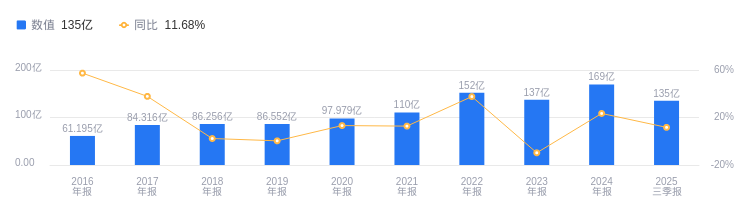
长盈精密的前世今生:2025年三季度营收135.1亿行业第九,净利润5.24亿行业第十一
Xin Lang Cai Jing· 2025-10-31 16:54
Core Viewpoint - Changying Precision is a leading manufacturer of precision electronic components in China, with strong technical capabilities and market competitiveness in consumer electronics and new energy vehicles [1] Financial Performance - In Q3 2025, Changying Precision reported revenue of 13.51 billion yuan, ranking 9th in the industry, while net profit was 524 million yuan, ranking 11th [2] - The industry leader, Industrial Fulian, had revenue of 603.93 billion yuan and net profit of 22.52 billion yuan [2] Financial Ratios - As of Q3 2025, the company's debt-to-asset ratio was 61.30%, higher than the industry average of 44.84% [3] - The gross profit margin was 19.10%, slightly above the previous year's 18.70% but below the industry average of 19.47% [3] Executive Compensation - The chairman, Chen Qixing, received a salary of 840,000 yuan in 2024, unchanged from 2023, while the general manager, Chen Xiaoshuo, received 1.2156 million yuan, an increase of 205,600 yuan from the previous year [4] Shareholder Information - As of September 30, 2025, the number of A-share shareholders increased by 10.34% to 172,400, with an average holding of 7,871.35 shares, a decrease of 9.29% [5] Research Insights - Minsheng Securities noted that the company's Q3 2025 report showed improved profitability and a growing contribution from new energy business, exceeding 30% of total revenue [6] - The company is accelerating R&D investments in AI and humanoid robots, with significant revenue growth in overseas humanoid robot parts [6] - Huaxi Securities highlighted that the company's performance met expectations, with stable gross margins and increased R&D expenses by 15.01% year-on-year [7] Future Projections - Minsheng Securities forecasts revenues of 18.742 billion, 21.306 billion, and 24.149 billion yuan for 2025 to 2027, with net profits of 564 million, 786 million, and 1.124 billion yuan respectively [6] - Huaxi Securities adjusted its revenue projections to 18.701 billion, 23.108 billion, and 26.233 billion yuan for the same period, with net profits of 698 million, 1.034 billion, and 1.232 billion yuan [8]


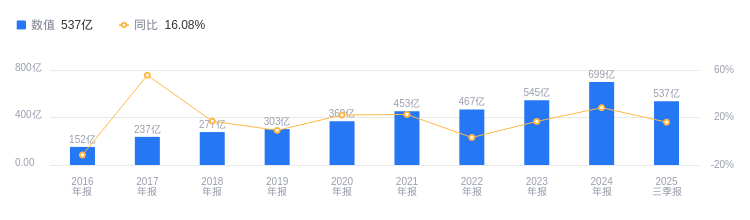
蓝思科技的前世今生:2025年三季度营收536.63亿行业第五,净利润27.92亿行业第四
Xin Lang Cai Jing· 2025-10-31 14:13
Core Viewpoint - Lens Technology is a leading global enterprise in the protective glass sector for consumer electronics, showcasing technological leadership and a full industry chain advantage [1] Group 1: Business Performance - In Q3 2025, Lens Technology reported revenue of 53.663 billion RMB, ranking 5th in the industry, surpassing the industry average of 15.493 billion RMB and median of 1.415 billion RMB [2] - The net profit for the same period was 2.792 billion RMB, ranking 4th in the industry, above the industry average of 635 million RMB and median of 54.758 million RMB [2] Group 2: Financial Ratios - As of Q3 2025, Lens Technology's debt-to-asset ratio was 35.47%, lower than the previous year's 41.34% and below the industry average of 44.84% [3] - The gross profit margin for the same period was 16.10%, a decrease from 17.00% year-on-year and below the industry average of 19.47% [3] Group 3: Shareholder Information - As of September 30, 2025, the number of A-share shareholders increased by 8.15% to 159,900, while the average number of circulating A-shares held per shareholder decreased by 7.52% to 31,100 [5] - Notable changes among the top ten circulating shareholders include an increase of 15.5922 million shares held by Hong Kong Central Clearing Limited and a decrease of 6.9574 million shares held by E Fund's ChiNext ETF [5] Group 4: Analyst Ratings and Business Highlights - Ping An International reiterated a "Buy" rating for Lens Technology, adjusting the A-share target price to 34.7 RMB, indicating a potential upside of 16.9% [6] - Key business highlights include benefiting from new product cycles with major clients, a well-established robotics sector, significant growth in automotive glass, and contributions from AI server layouts [6] - Zheshang Securities noted strong performance in Q3 2025, driven by increased iPhone 17 sales and growth in AI smart terminals and foldable screens, with a comprehensive patent portfolio [6]

比亚迪电子(00285):手机、汽车、服务器业务将推动2026年成长
SPDB International· 2025-10-31 13:59
Investment Rating - The report maintains a "Buy" rating for BYD Electronics with a target price of HKD 43.7, indicating a potential upside of 17% from the current price of HKD 37.4 [1][3]. Core Insights - Despite a decline in revenue and profit in Q3, BYD Electronics is expected to see seasonal growth in Q4. The company is projected to maintain strong growth momentum in its consumer electronics, automotive, and server segments through 2026 [8]. - The report adjusts the 2025 profit forecast but largely maintains the 2026 profit outlook, reflecting confidence in the company's growth drivers [8]. Financial Performance and Forecast - Revenue for 2023 is projected at RMB 129,957 million, with a year-on-year growth rate of 21%. By 2026, revenue is expected to reach RMB 196,524 million, growing at a rate of 10% [2]. - The net profit for 2023 is estimated at RMB 4,041 million, with a significant increase of 29% expected in 2026, reaching RMB 5,618 million [2]. - The gross margin is forecasted to improve from 6.6% in 2025 to 7.3% in 2026, indicating a positive trend in profitability [2]. Business Segments and Growth Drivers - Key growth drivers include new models from major clients, expansion of CNC production capacity, and strong demand for liquid cooling and power components in AI servers [8]. - The automotive segment is expected to see both volume growth and an increase in the value per vehicle due to advancements in smart driving and suspension products [8]. Valuation - The report employs a sum-of-the-parts valuation method, assigning target P/E ratios to various business segments, resulting in a target price of HKD 43.7, corresponding to a P/E of 20.7x for 2025 [12].