
人民币汇率

Search documents
国联民生:人民币涨多了吗?
Xin Lang Cai Jing· 2025-12-26 01:00
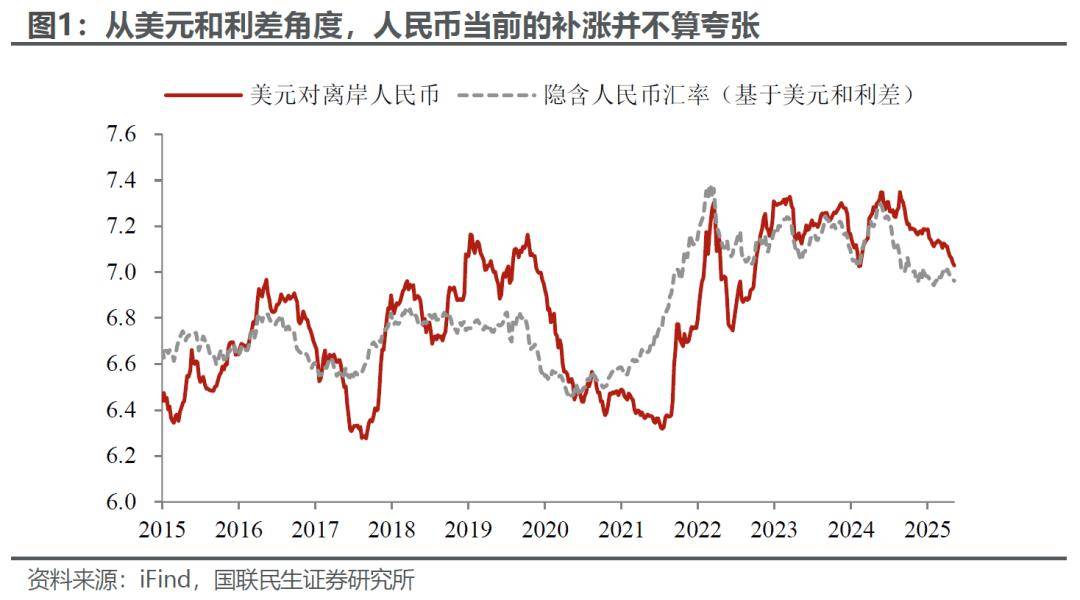
Core Viewpoint - The recent appreciation of the Renminbi (RMB) against the US dollar, breaking the 7 mark for the first time in 14 months, is attributed to a combination of factors including a weaker dollar, changing market expectations, and seasonal trends in currency settlement [3][22]. Financial Market and Asset Prices - The current appreciation of the RMB is viewed as a corrective move rather than excessive, with the increase being justified from the perspectives of the dollar and interest rate differentials [3][22]. Trade Perspective - China's trade surplus has reached historical highs, suggesting that the RMB may have been undervalued prior to its recent appreciation [6][24]. Inflation Considerations - The widening gap between nominal and real RMB exchange rates indicates that the currency has depreciated less than expected, with domestic low inflation compensating for this [9][27]. Short-term Market Dynamics - The influence of trade and inflation on the economy is considered less significant in the short term, with the need for further observation of the RMB's impact on economic variables [10][28]. Risks of Panic Settlement - There is concern regarding the potential for "panic settlement" leading to excessive appreciation of the RMB, which could create self-reinforcing market expectations [10][28]. Future Outlook on Exchange Rate - Projections suggest that a reasonable level for the USD/RMB exchange rate in the coming year could be around 6.8, factoring in more flexible central bank controls [12][30]. Central Bank Management - The recent adjustments to the RMB's midpoint rate indicate the central bank's intention to temper appreciation, with tools available for managing exchange rate stability [15][33]. Additional Monetary Tools - The central bank may also consider necessary measures such as reserve requirement ratio cuts or interest rate reductions to counterbalance appreciation pressures [16][34].



人民币汇率:近期升值,后续或围绕7.0双向波动
Sou Hu Cai Jing· 2025-12-26 00:37
【12月26日消息:人民币升值受多因素影响,后续或双向波动】近期人民币出现升值行情,这是外部压 力趋缓、内部韧性增强、政策精准调控与市场预期转向等多种因素共同作用的结果。国家金融与发展实 验室特聘专家认为,尽管近期人民币汇率持续走强,但后续预计仍将围绕7.0双向波动,单边快速升值 概率较低。实体企业,尤其是有涉外业务的企业,需构建系统性汇率风险管理能力,将汇率波动纳入日 常经营决策。中央工作会议指出,要保持人民币汇率在合理均衡水平上的基本稳定。专家称,这体现了 防范汇率过度涨跌的政策取向。下一步需继续增强外汇市场韧性,稳定市场预期,防范汇率超调风险。 和讯财经 # UF hexun.com 和而不同 迅达天下 扫码查看原文 本文由 AI算法生成,仅作参考,不涉投资建议,使用风险自担 ...
人民币汇率重回“6”时代
吴晓波频道· 2025-12-26 00:29
Core Viewpoint - The article discusses the recent appreciation of the Chinese yuan against the US dollar, highlighting its implications for the economy and investment landscape, particularly in relation to A-shares and various industries [3][9][32]. Group 1: Yuan Appreciation Context - Goldman Sachs' analysis indicates that the yuan is undervalued by nearly 30% against the US dollar, suggesting a potential for appreciation [3][4]. - The yuan's recent rise has been attributed to seasonal demand from export companies needing to settle accounts before year-end, leading to a technical appreciation [14][16]. - China's trade surplus has exceeded $1 trillion for the first time in 2025, providing a strong foundation for the yuan's value [17][29]. Group 2: Economic Factors Influencing Yuan Strength - The Federal Reserve's interest rate cuts in 2025 have contributed to a weaker US dollar, indirectly causing the yuan to appreciate [20][22]. - The global economic landscape, including trade tensions and shifts in investment flows, has also played a role in the yuan's valuation [24][26]. - The World Bank and IMF have raised their GDP growth forecasts for China, reflecting confidence in the country's economic stability and growth potential [26][27]. Group 3: Impact on A-shares and Investment Strategies - Historical data shows a positive correlation between yuan appreciation and A-share performance, suggesting that the current trend may stimulate further growth in the stock market [33][34]. - The article notes that while yuan appreciation can benefit certain sectors, such as imports, it may negatively impact export-oriented industries due to increased pricing for foreign buyers [39][41]. - Investors are advised to consider the implications of yuan strength on their portfolios, particularly in terms of currency exposure and sector performance [42][44]. Group 4: Future Outlook and Trends - Analysts predict that the yuan's appreciation will be gradual and managed, with expectations of continued strength against the dollar in the coming years [48][50]. - The article emphasizes the importance of understanding broader trends rather than focusing solely on precise exchange rate predictions, encouraging investors to adapt to changing market conditions [50].

人民币涨多了吗?
Sou Hu Cai Jing· 2025-12-26 00:14
Core Viewpoint - The recent appreciation of the Renminbi (RMB) against the US dollar, breaking the 7 mark for the first time in 14 months, is seen as a reasonable adjustment influenced by a weaker dollar and changing market expectations, despite concerns about potential overvaluation [1][6]. Financial Market and Asset Prices - The current appreciation of the RMB is viewed as a corrective move rather than excessive, with the rise in value being justified from the perspectives of the dollar and interest rate differentials [1]. Trade Perspective - China's trade surplus has reached a historical high, suggesting that the RMB may have been undervalued prior to its recent appreciation [3]. Inflation Perspective - There is an increasing gap between the nominal and real exchange rates of the RMB, indicating that the currency has depreciated less than expected, with the shortfall being compensated by low domestic inflation [5]. Factors Influencing RMB Appreciation - The RMB's recent appreciation is attributed to three main factors: the weakening of the dollar, changes in market expectations following a trade easing period between China and the US, and seasonal patterns of net settlement at year-end [6]. Short-term Market Dynamics - While the exchange rate is a significant macroeconomic variable, its impact on the economy takes time to materialize, and policy responses may adjust accordingly to manage the effects of exchange rate fluctuations [8]. Concerns about Overvaluation - There is a concern regarding the risk of "panic settlement" leading to excessive appreciation of the RMB, which could create a self-reinforcing cycle of expectations and market behavior [8]. Future Outlook on Exchange Rate - The potential reasonable level for the USD/RMB exchange rate is estimated to be around 6.8, considering the central bank's more flexible management of the currency [12]. Central Bank's Management Approach - The recent adjustments in the RMB's midpoint rate indicate the central bank's intention to cool down the appreciation, with tools available for managing exchange rate stability, including market interventions and monetary policy adjustments [15].
离岸人民币强势升破“7”关口
Sou Hu Cai Jing· 2025-12-25 21:02
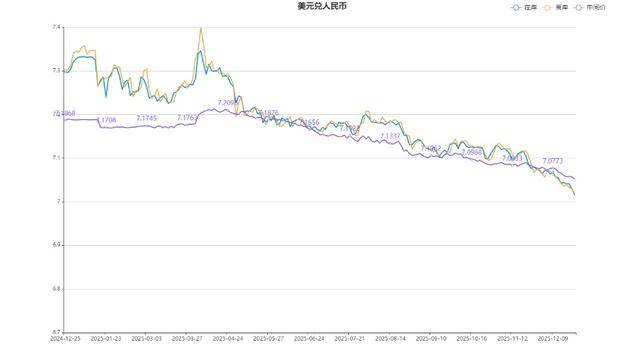
Group 1 - The offshore RMB to USD exchange rate has recently strengthened, breaking the 7.0 mark for the first time since September 2024, with a peak of 6.9960 [1] - The onshore RMB also showed an upward trend, reaching a high of 7.0053 and closing at 7.0066, an increase of 95 points from the previous trading day [1] - The People's Bank of China announced a significant adjustment in the central parity rate, setting it at 7.0392, which is the highest since September 30, 2024, with an increase of 79 basis points [1] Group 2 - Financial regulatory authorities have a clear strategy for stabilizing the exchange rate, emphasizing a market-oriented approach without excessive liquidity, aiming to maintain the RMB at a reasonable and balanced level [2] - There is a general expectation in the market for the RMB to continue approaching the 7.0 mark in the short term, with potential for temporary breaks below this level, but long-term trends are expected to exhibit "two-way fluctuations" [2] - In the context of a weak USD index, there is still room for RMB appreciation, with regulatory support likely to keep the exchange rate fluctuating between 6.9 and 7.3 [2]
人民币汇率创15个月新高 双向波动或成常态
Sou Hu Cai Jing· 2025-12-25 17:38
管涛认为,近期人民币升值缘于短期利多因素占据上风,并非意味着升值新周期的开启。综合来看,明 年人民币汇率大概率不会出现单边走势,更可能围绕7反复波动。人民币汇率最终走势将主要取决于三 大因素:中美经济恢复的相对强度、美元利率与汇率的变化趋势、中国对外经贸关系的演进及国内经济 恢复情况。市场不应过度执着于对具体点位的猜测,也不应形成单边升值或贬值的线性预期,双向波动 将成常态。 短期利多因素驱动人民币走强 本轮人民币升值的直接推动力,来自美元环境的转变。 管涛表示,美元指数11月曾升至100以上,随后持续回落并跌破98,"美元走弱为人民币升值提供了外部 支撑"。 汇管信息科技研究院副院长赵庆明也表示,自11月下旬以来,美元指数跌幅约3%,非美货币普遍走 高,人民币涨幅与美元贬值幅度基本对应,充分体现汇率"跷跷板效应"。 12月25日,外汇市场迎来标志性时刻——离岸人民币对美元汇率开盘升破"7"关口,2024年10月以来首 次收复这一重要整数关口,盘中最高触及6.9985,创15个月以来新高。与此同时,在岸人民币对美元汇 率同步走强,逼近"7"关口,报7.0066,创2024年9月以来新高。 2025年以来,伴随 ...
专访鲁政委:结构性货币政策工具有望“加量降价”
Xin Lang Cai Jing· 2025-12-25 16:21
Group 1 - In 2026, China's economic development will focus on using domestic circulation stability to counter international circulation uncertainties, emphasizing the need for coordinated efforts in both supply and demand to solidify consumption growth [1][12] - The transition from "incremental pull" to "structural optimization" in consumption policies is necessary to better align supply with the evolving demand for upgraded consumption, addressing both supply shortages and oversupply issues [3][4] - Monetary policy tools have ample room for action, with expectations for continued reductions in reserve requirements and interest rates, alongside innovative structural monetary policy tools to stimulate credit without causing fund "idle" [5][6] Group 2 - The core constraint on consumer spending is the need for stable income expectations, which can be addressed through policies that enhance income stability and reduce precautionary savings pressures in housing, education, and healthcare [4][5] - The RMB is expected to experience a "strong first, weak later" trend against the USD in 2026, influenced by both domestic monetary easing and external factors such as US interest rate changes and geopolitical dynamics [6][7] - The "Five Major Articles" in financial services for the real economy are anticipated to make significant progress in areas such as technology finance, green finance, inclusive finance, pension finance, and digital finance, contingent on regulatory support and policy breakthroughs [8][9][10][11]

离岸人民币冲破7.0关键水平,三大因素带动后市
Sou Hu Cai Jing· 2025-12-25 15:45
Core Viewpoint - The recent strengthening of the Renminbi (RMB) is attributed to multiple factors, including expectations of interest rate cuts by the Federal Reserve, a weakening US dollar index, and increased demand for currency exchange from domestic enterprises as the year-end approaches [3][5]. Group 1: Factors Driving RMB Appreciation - Federal Reserve Rate Cut Expectations: The Federal Reserve is anticipated to cut rates by 25 basis points in December, with inflation cooling and signs of a slowing labor market, leading investors to bet on two potential rate cuts in 2026. The 10-year US Treasury yield has stabilized between 3.9% and 4.2% since September, reflecting market expectations for a shift towards a more accommodative monetary policy [3]. - Weakening US Dollar Index: The US dollar index has fallen to around 97.80, marking a 9.8% decline for the year, the worst annual performance since 2017, which has contributed to the appreciation of non-US currencies, including the RMB [3]. - Increased Corporate Currency Exchange Demand: As the year-end approaches, domestic foreign trade enterprises are increasing their currency exchange needs for financial settlements and cash flow, leading to a seasonal strengthening of the RMB. Although November's exchange rate did not show significant increases, the overall trade surplus for the year has prompted enterprises to exchange dollars for RMB earlier than usual [5]. Group 2: Implications of RMB Strengthening - Positive Impact on Domestic Capital Markets: The strengthening of the RMB is expected to benefit Chinese assets significantly, enhancing the attractiveness of RMB-denominated assets and potentially allowing for more accommodative monetary policy [5]. - Increased Cross-Border Investment Costs: The appreciation of the RMB may lead to higher currency exchange costs for cross-border investments, which could affect the final returns for investors in instruments like Hong Kong Stock Connect and mutual funds [5]. Group 3: Future Outlook - RMB Exchange Rate Projections: Analysts predict that the RMB will hover around the 7.0 mark against the US dollar through 2026, with potential appreciation towards the 6.7 to 6.8 range if the US dollar index remains weak [6][7]. - Policy Stability and Market Expectations: The central economic work conference emphasizes maintaining the RMB exchange rate's stability, aiming to guide market expectations and prevent one-sided trends in the currency market [6][7]. - Long-Term Trends: Analysts suggest that the RMB may decouple from the US dollar index in the future, with fundamental and policy support for the RMB's strength, while also noting that the underlying economic fundamentals will be crucial for sustained appreciation [7].
人民币汇率创15个月新高!管涛:双向波动或是常态
Sou Hu Cai Jing· 2025-12-25 15:17
Core Viewpoint - The offshore RMB has broken the "7" threshold against the USD for the first time since October 2024, reaching a high of 6.9985, while the onshore RMB also strengthened, nearing the "7" mark at 7.0066, marking a new high since September 2024 [1] Group 1: Factors Driving RMB Strength - The recent appreciation of the RMB is primarily driven by a weakening USD, with the dollar index dropping from above 100 to below 98 since November [2] - China's robust economic fundamentals, including a trade surplus of $1.0758 trillion for the first 11 months of 2025, have bolstered confidence in the RMB [2] - Increased demand for currency settlement by enterprises at year-end has contributed to the seasonal strengthening of the RMB, although this "settlement wave" is not the main driver of the current appreciation [2][3] Group 2: Outlook on RMB Exchange Rate - Experts caution against expecting a new cycle of sustained RMB appreciation, predicting that the exchange rate will likely exhibit two-way fluctuations rather than a unilateral trend [4] - The future trajectory of the USD is uncertain, with expectations of a potential rebound after a period of decline, which could diminish the RMB's appreciation momentum [4][5] - The complexity of China's foreign trade environment and potential geopolitical tensions may also introduce volatility in the RMB exchange rate [5][6] Group 3: Implications for Enterprises - The appreciation of the RMB presents both opportunities and challenges for businesses, benefiting capital markets and importers while exerting pressure on exporters [9][10] - Exporters are experiencing exchange losses due to the rapid appreciation, affecting their competitiveness and order flow [10][11] - Companies are advised to adopt systematic risk management strategies to mitigate the impacts of exchange rate fluctuations, focusing on maintaining a neutral stance towards currency risk [11][12]
“十五五”首席观察|专访鲁政委:结构性货币政策工具有望“加量降价”
Bei Jing Shang Bao· 2025-12-25 14:41
2025年,站在"十四五"收官与"十五五"规划谋篇的历史衔接点上,中国经济在多重变局中展现出韧性,金融市 场在政策合力下保持稳健运行。 步入2026年,"十五五"启幕之际,如何进一步释放消费潜能?货币政策如何从总量宽松转向结构优化?人民币 汇率如何在内外挑战中保持基本稳定?债市供需结构将如何演化?"内循环"与"高水平对外开放"又该如何协同 发力? 针对多个热点话题,北京商报记者专访了兴业银行首席经济学家,兴业研究学术评审委员会主席鲁政委,在他 看来,2026年"以国内循环的稳定性对冲国际循环的不确定性"将成为我国经济发展的必然选择,应从供需两端 协同发力稳固消费增长根基;步入"十五五"后,传统货币政策工具与创新货币政策工具均有发力空间,预计人 民银行将继续降准降息;在结构性货币政策工具方面,可对当前效果较好的工具进行"加量降价";同时,金融 服务实体经济的"五篇大文章"有望在基于全国碳排放权交易市场的碳金融相关业务等领域迎来进展;而"内循 环"提质升级与"高水平对外开放"的双向赋能,将进一步筑牢中国经济韧性。 加大消费补贴与信贷支持力度 北京商报:2025年内,一系列消费补贴政策陆续出台,各项促消费政策也呈现 ...
