
量化宽松

Search documents
美股前瞻 | 三大股指期货齐涨 英特尔(INTC.US)绩后大跌
智通财经网· 2025-07-25 11:48
Market Overview - US stock index futures are all up ahead of the market opening, with Dow futures rising by 0.13%, S&P 500 futures up by 0.13%, and Nasdaq futures increasing by 0.05% [1] - European indices show a decline, with Germany's DAX down by 0.78%, UK's FTSE 100 down by 0.38%, France's CAC40 down by 0.03%, and the Euro Stoxx 50 down by 0.40% [2][3] - WTI crude oil prices increased by 0.35% to $66.26 per barrel, while Brent crude oil also rose by 0.35% to $69.42 per barrel [4] Earnings Season Insights - The Q2 earnings season for US stocks has started strong, with approximately 83% of S&P 500 companies reporting earnings above analyst expectations, potentially marking the highest "surprise" ratio since Q2 2021 [5] - The S&P 500 index has risen by 28% since its low on April 8, and the equal-weighted S&P 500 index has also reached a record high [5] Institutional Investor Sentiment - A Goldman Sachs survey indicates a surge in institutional confidence towards US stocks, particularly the "Magnificent Seven" tech giants, while bearish sentiment towards the US dollar is at a ten-year high [6] - Key factors driving optimism include the Federal Reserve's dovish stance, the rising AI sector, and a decrease in geopolitical risk perceptions [6] Economic Concerns - Raghuram Rajan warns of potential economic turmoil despite current stability, citing delayed impacts of tariffs and aggressive fiscal policies as risks [7] - Concerns are raised about the sustainability of high stock valuations driven by excessive liquidity from the Federal Reserve and the Treasury [8] Company-Specific Developments - Intel's Q2 revenue was $12.86 billion, meeting expectations, but the company faces challenges with a declining gross margin of 27.5% and ongoing layoffs [9] - Newmont Corporation reported Q2 revenue of $5.32 billion, a 20.9% year-over-year increase, driven by rising gold prices, with net profit soaring from $838 million to $2.06 billion [10] - Google Cloud secured a $12 billion deal with ServiceNow, enhancing its position in the cloud computing market amid rising AI demand [11] - Goldman Sachs has decided against a second round of layoffs for 46,000 employees due to better-than-expected recovery in its investment banking business [12] - Charles Schwab announced a new $20 billion stock buyback plan, reflecting confidence in its growth prospects [13]



低利率下的日本商业银行债券投资交易业务
Sou Hu Cai Jing· 2025-07-24 06:17
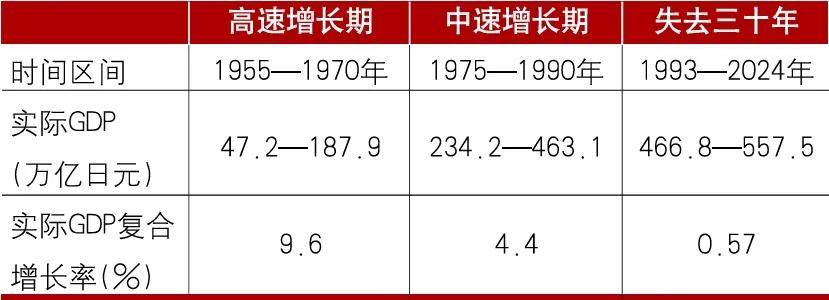
Core Viewpoint - Japan has been in a prolonged low-interest-rate environment since the early 1990s, significantly impacting its economic growth and financial policies [1][2][3]. Economic Growth Phases - Japan experienced rapid economic growth from 1955 to 1970, with a real GDP compound annual growth rate (CAGR) of 9.6%, followed by moderate growth from 1975 to 1990 with a CAGR of 4.4%. However, from 1993 to 2024, the CAGR dropped to 0.57%, indicating stagnation [2][3][4]. Monetary Policy and Market Response - The Bank of Japan has implemented various monetary easing policies, including quantitative easing and negative interest rates, to stimulate the economy since the bubble burst in the 1990s, but the overall effectiveness has been limited [3][4][5]. - The yield on Japan's 10-year government bonds has been on a downward trend, even dipping below 0% after the introduction of negative interest rates in 2016, making Japan the first G7 country to experience negative yields [4][5]. Stock Market Performance - The Nikkei 225 index saw a recovery post-2013 due to quantitative easing, with significant contributions from the depreciation of the yen, which boosted profits for export-oriented companies. However, it only surpassed pre-bubble levels in 2024 [5][6]. Economic Structure and Challenges - Consumption remains the largest contributor to Japan's GDP, accounting for about three-quarters, while net exports have increasingly contributed less due to structural issues and reliance on imported resources [8][10]. - Despite low interest rates reducing corporate financing costs, they have also led to lower capital returns, limiting wage growth and consumer spending, resulting in persistent low inflation [10][12]. Historical Context of Low Interest Rates - Japan's transition to a low-interest-rate environment began in response to the economic bubble burst in the early 1990s, with the Bank of Japan gradually lowering rates to combat economic stagnation and deflation [13][15][16]. - The introduction of negative interest rates in 2016 was an unprecedented move aimed at achieving a 2% inflation target, but it has faced challenges in delivering sustainable economic growth [16][18]. Banking Sector Adjustments - Japanese banks have shifted their asset structures in response to the prolonged low-interest-rate environment, increasing investments in cash and securities while traditional lending has seen slower growth [19][20][25]. - Regional banks have focused on local economies, while larger city banks have diversified into foreign bonds to enhance returns amid competitive pressures in the domestic lending market [30][31]. Investment Strategies and Innovations - Japanese banks are increasingly optimizing their bond investment portfolios to balance liquidity and profitability, with a notable shift towards foreign securities and corporate bonds [30][39]. - Innovations in structured products are being developed to meet the investment needs of smaller financial institutions and investors, allowing them to access higher-yield foreign bonds while managing currency risks [38][45]. Lessons for Other Markets - The experience of Japan's banking sector in navigating a low-interest-rate environment offers valuable insights for other markets, particularly in terms of risk management and investment diversification strategies [39][50].
被市场“绑架”!英国央行政策或上演大逆转
Jin Shi Shu Ju· 2025-07-21 07:37
Core Viewpoint - The Bank of England is under pressure to hold a significant portion of its long-term government bonds, potentially for decades, due to market volatility and changing buyer dynamics [1][2]. Group 1: Market Dynamics - Forecasting institutions, including Oxford Economics and HSBC, predict that the Bank of England will limit the sale of its remaining £163 billion (approximately $219 billion) of government bonds with maturities over 20 years, marking a shift in its approach to reducing its crisis-era balance sheet [1]. - The market for long-term UK government bonds is increasingly reliant on more volatile hedge funds and foreign investors, as traditional stable buyers like pension funds reduce their demand [1]. - Recent market events, such as the sell-off of 30-year bonds due to rumors of the Chancellor's dismissal, highlight the fragility of the current market environment [1]. Group 2: Quantitative Tightening Strategy - The Bank of England is currently reducing its bond holdings at a rate of approximately £100 billion per year, with plans for £13 billion in active sales and £87 billion in natural maturities [2]. - There is a potential slowdown in the quantitative tightening process, with expectations of only £26 billion in active sales next year, which could pose market risks [2]. - The Bank of England's Governor has indicated changes in the liquidity of the long-end yield curve, suggesting future sales may be lower than previously anticipated [2]. Group 3: Policy Recommendations - Michael Saunders, a former rate setter at the Bank of England, advocates for a new strategy where a significant portion of long-term debt will not be sold, aiming to reduce risks to market stability [2][5]. - Saunders' proposal includes retaining £163 billion of long-term bonds while continuing to reduce holdings of bonds with maturities between 3 to 20 years, which could mitigate the risk of market disruption [5]. - The plan involves recognizing losses on certain bonds, which would be offset by the Bank's cash holdings, making the arrangement financially beneficial [5]. Group 4: Historical Context - The Bank of England has purchased more long-term government bonds than other central banks following the financial crisis, Brexit, and the pandemic, necessitating active debt sales while other central banks can allow their balance sheets to shrink naturally [6].
低利率时代资管机构之美国公募篇:与周期和创新共舞
GOLDEN SUN SECURITIES· 2025-07-18 13:22
Report Industry Investment Rating No relevant content provided. Core Viewpoints of the Report - The report focuses on the strategies of various US funds in response to interest rate declines and low - interest periods. US asset management institutions adapt to cycles and innovate to deal with changes. In the post - financial crisis interest rate decline period, they developed bond ETFs, increased overseas investment, and reduced management fees. In the interest rate increase period after 2021, they increased inflation - linked bond investments [3][87]. - The US has experienced two low - interest periods in the 21st century. The first was from the end of 2008 to the end of 2015, and the second was from March 2020 to March 2022. Different types of funds showed different performance and asset allocation changes during these periods [11]. Summary by Directory 1. US Low - Interest Period Review - 21st - century US low - interest periods: There were two periods when the policy rate was maintained in the 0 - 0.25% range. The first was from the end of 2008 to the end of 2015 due to the 2008 global financial crisis, and the second was from March 2020 to March 2022 because of the global public health event [11]. - 2008 - 2016 interest rate situation: After the sub - prime mortgage crisis, the Fed took measures such as conventional interest rate cuts and quantitative easing. The interest rate showed a "step - by - step decline + periodic shock" feature. The 10Y US Treasury yield dropped sharply in 2008 and then fluctuated [12][21]. - 2020 - 2022 interest rate situation: The global public health event led to a sharp economic downturn. The Fed took aggressive measures. The interest rate cycle turned earlier, and the low - interest period was shorter. The 10 - year US Treasury yield started to rise in September 2020 [25][26]. 2. Evolution of US Mutual Fund Asset Allocation 2.1 Structure Evolution of Mutual Funds - Fund types and scale relationship: US mutual funds include stock, hybrid, bond, and money market funds. Stock funds dominate, so the total scale is highly correlated with the stock market. There is a rotation relationship between bond and money market funds [31]. - 2008 - 2016 asset rotation: In 2008, the financial crisis made money market funds grow. From 2009 - 2012, funds flowed from money market funds to bond funds. After 2012, funds returned from low - risk assets to equity assets [32][37]. - 2020 - 2022 situation: Interest rate trends had no significant impact on the portfolio structure. Investors increased inflation - linked bonds to hedge inflation risks [41]. 2.2 Asset Allocation Changes of Bond Funds - Types of bond funds: Include investment - grade corporate bond funds, high - yield bond funds, global bond funds, government bond funds, etc. [42]. - Asset allocation in different periods: In the interest rate decline and early low - interest periods, low - risk bond funds increased. In the later low - interest period (2013 - 2016), bond funds increased returns through credit downgrading. They also increased overseas bond investments and the proportion of multi - allocation and alternative strategy bond funds [45][52][56]. 2.3 Asset Allocation Changes of Money Market Funds - Types of money market funds: Divided into taxable and tax - exempt. Taxable funds include government and non - government money market funds. - Low - interest period performance: In low - interest periods, the proportion of government money market funds increased, and money market funds increased returns by extending duration [60][64]. 2.4 ETF Structure Changes - ETF composition: Composed of stock, hybrid, bond, and commodity ETFs, with stock ETFs dominant. - Low - interest period performance: In the first low - interest period, the proportion of bond and commodity ETFs increased. Active - management ETFs emerged, and increasing overseas assets became a strategy to increase returns [72][74][75]. 3. Fee Optimization and Operational Innovation of US Mutual Funds - Fee structure: Consists of one - time fees (front - end and back - end sales fees) and continuous fees (management fees, 12b - 1 fees, etc.). - Fee reduction trend: Over the past 20 years, management fees have decreased. Index funds' proportion increased due to their fee advantages. Low - interest rates promoted fee reduction through multiple paths [77]. - Fee - related innovation: Low - interest rates promoted the popularity of no - load shares and zero - commission platforms, and the independence of consulting fees, which reduced the overall industry fee level [84]. 4. Implications of US Fund Asset Allocation in Low - Interest Periods - Interest rate decline strategy: Increase low - risk government and investment - grade bonds during rapid interest rate declines and use credit downgrading after a long - term low - interest period [87]. - Overseas investment: Increase overseas bond investments to balance risks and increase returns [88]. - Fee strategy: With the trend of fee reduction, the proportion of index funds continues to expand [88]. - Financial innovation: Use financial innovation such as multi - allocation and alternative strategies to resist cycle fluctuations and buy inflation - protection bonds to hedge inflation risks [89].
欧央行内部分歧显现,未来危机应对或将告别量化宽松时代
Hua Er Jie Jian Wen· 2025-07-18 12:41
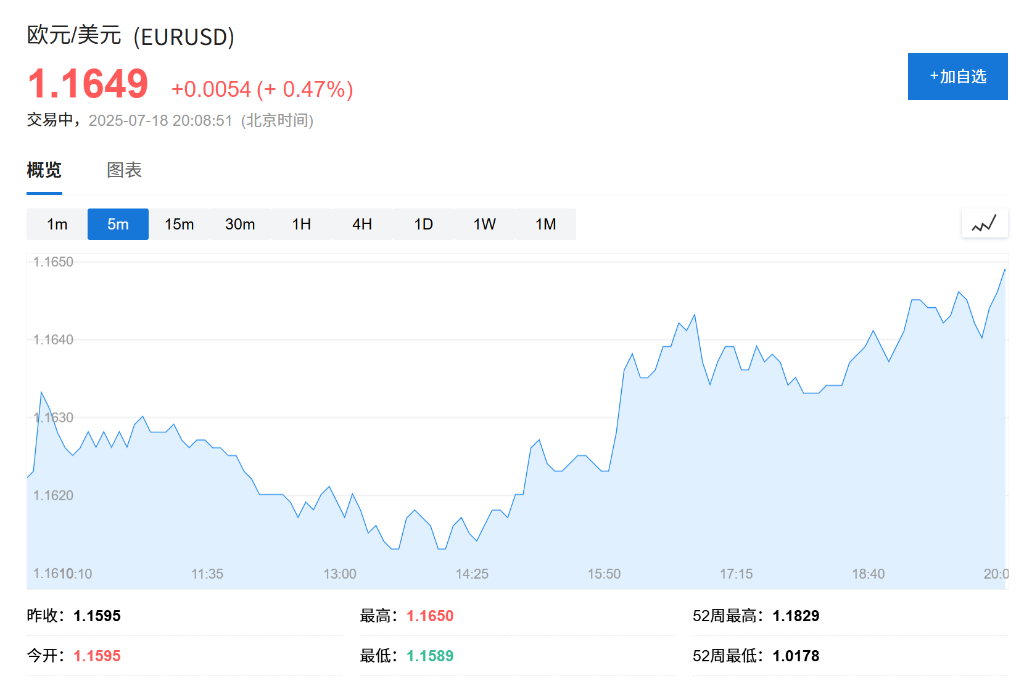
Core Viewpoint - The European Central Bank (ECB) is at a critical juncture, with economists suggesting a shift towards targeted loan tools rather than large-scale quantitative easing (QE) in response to future economic shocks [1][2]. Group 1: Future Policy Tools - A fundamental debate is ongoing regarding the ECB's future policy tools, with a survey indicating that the ECB is likely to prefer providing loans (such as Long-Term Refinancing Operations, LTROs) over bond purchases in crisis situations [2]. - The shift in preference reflects concerns over the health of the central bank's balance sheet and policy credibility, as past QE policies have led to significant losses for some regional central banks [2][3]. - ECB Executive Board member Isabel Schnabel warned that central bank losses could "damage credibility," emphasizing that while asset purchases stabilize markets, they are costlier when used for economic stimulus [3]. Group 2: Interest Rate Outlook - There is increasing uncertainty regarding the timing of the next interest rate cut, with a split among economists on whether the ECB's rate-cutting cycle has ended or if a final cut will occur later this year [4]. - Approximately 25% of surveyed economists believe the rate-cutting cycle has concluded, while nearly half predict the last cut will happen in September, and 21% expect it in December [4]. - External factors, particularly trade negotiations between the EU and the US, are seen as critical variables influencing the ECB's decision-making process [4]. Group 3: Currency and Inflation Challenges - The strengthening euro and complex inflation outlook present challenges for ECB decision-makers, with the euro rising nearly 12% against the dollar this year [5][8]. - ECB Vice President Luis de Guindos indicated that a euro exchange rate of 1.20 against the dollar could signal economic trouble, although only about 25% of economists agree with this threshold [5][8]. - Analysts express a balanced view on inflation risks, with opinions nearly evenly split on the likelihood of inflation exceeding or falling below the ECB's target [8].
QE成本显现:德央行亏损200亿欧元创纪录 欧央行未来刺激政策面临“亏损评估”
智通财经网· 2025-07-16 13:53
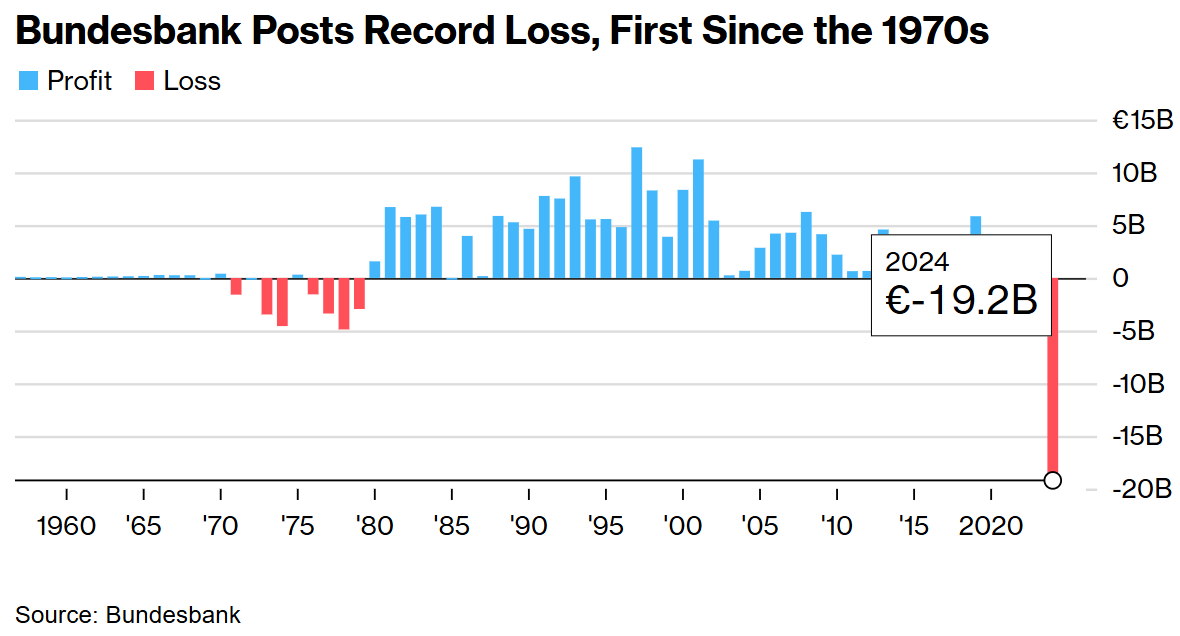
Group 1 - The German central bank reported a record loss of nearly 20 billion euros (approximately 23 billion USD) for 2024, marking the first annual loss since the 1970s, with indications of potential small-scale losses in the coming years [1][3] - The European Central Bank (ECB) also recorded a historic loss of 8 billion euros, raising concerns about the implications of such losses on the credibility of central banks [1][3] - The ECB's recent strategic review, which lasted nearly a year, aims to prepare for more frequent economic shocks and inflation fluctuations, while retaining all policy tools, including quantitative easing, without specifying their future usage [3] Group 2 - The German central bank emphasized the need to consider potential balance sheet risks when evaluating large-scale asset purchase tools in a low-interest-rate environment [1][3] - ECB decision-makers agreed to conduct a "comprehensive proportional assessment" before deploying unconventional tools, highlighting the importance of assessing the potential impact on the central bank's balance sheet [3] - Concerns were raised by officials and economists regarding the potential changes in the situation, despite the German central bank stating that current and foreseeable losses would not jeopardize the euro area's ability to maintain price stability [3]
英国国债风雨欲来:稳定买家退场,短线资金主导市场波动
智通财经网· 2025-07-11 13:15
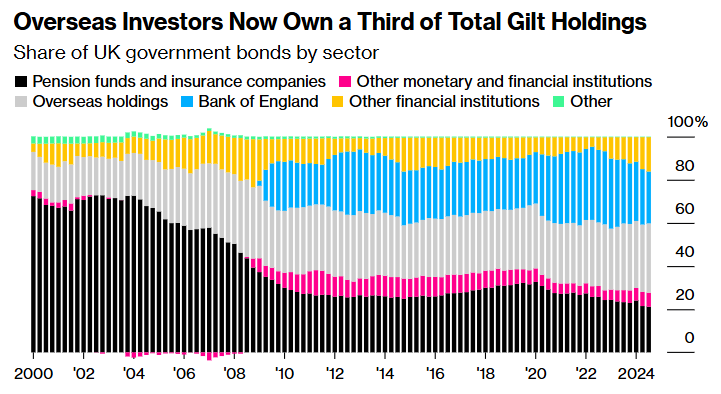
Group 1 - The UK bond market is undergoing significant changes, making UK government bonds a weak link during a time when stability is crucial for the government [1][4] - The shift in demand structure poses potential risks, leading to greater volatility in bond prices and the possibility of a sell-off, influenced by unpredictable participants like hedge funds and foreign investors [1][4] - The reliance on historically stable buyers, such as pension funds and the Bank of England, is diminishing, creating a fragile market environment [5][8] Group 2 - The UK government has linked its economic policies directly to the movements of UK bond yields, making its plans highly dependent on the volatile market [4][9] - The withdrawal of major buyers has resulted in a need for other investors to fill the gap, but the willingness of global funds to invest is contingent on price due to past market volatility [8][12] - The UK faces a challenging fiscal situation, with a projected deficit potentially reaching billions of pounds, exacerbated by slow economic growth and reduced tax revenues [8][9] Group 3 - The Budget Responsibility Office has warned that declining pension demand makes the government increasingly susceptible to foreign investors, potentially raising government debt interest rates by 0.8 percentage points [12] - Hedge fund strategies have contributed to increased market volatility, with their trading activity in UK bonds rising significantly [12] - The Bank of England has expressed concerns that rapid liquidation of trades could threaten financial stability, highlighting the current heightened market volatility [12]
通胀是央行的一种选择——“美联储主席热门人选”沃什对话实录
Hua Er Jie Jian Wen· 2025-07-10 10:28
Core Viewpoint - Inflation is not inevitable; it is a choice made by central banks, particularly the Federal Reserve, which has deviated from its core mission of maintaining price stability [1][2][20]. Group 1: Federal Reserve's Role and Responsibility - Kevin Warsh emphasizes that the Federal Reserve has the ability to control inflation and that its performance has been inadequate, as evidenced by current inflation levels [1][2][20]. - The central bank's actions, particularly during non-crisis periods, have contributed to fiscal irresponsibility by Congress and the presidency, leading to significant inflation [1][2][37]. - Warsh calls for a thorough post-mortem evaluation of the current inflation crisis, highlighting the erosion of the Federal Reserve's independence and its implications for economic challenges [1][2][45]. Group 2: Historical Context and Economic Perspectives - Warsh draws on the wisdom of economic giants like Milton Friedman, Paul Volcker, and Alan Greenspan, warning against complacency within the Federal Reserve [2][4]. - He believes the U.S. is on the brink of an unprecedented "productivity boom," driven by innovation and the enduring vitality of the American people [2][4]. - The Federal Reserve's historical performance has been criticized, with past failures leading to significant economic downturns, including the Great Depression and the 2008 financial crisis [4][14][27]. Group 3: Quantitative Easing and Its Consequences - The practice of quantitative easing (QE) has led to a significant increase in the Federal Reserve's balance sheet, from $1 trillion to nearly $9 trillion during various crises, raising concerns about long-term consequences [36][41]. - Warsh argues that the continuous use of QE, especially during stable economic periods, has set a dangerous precedent and has blurred the lines of responsibility between fiscal and monetary policy [37][39][41]. - The Federal Reserve's actions during the COVID-19 pandemic further exacerbated fiscal irresponsibility, as Congress felt emboldened to increase spending without accountability [41][43][45]. Group 4: Future Outlook and Recommendations - Warsh advocates for self-reform within the Federal Reserve to restore its credibility and effectiveness, emphasizing the need for accountability in both fiscal and monetary policies [2][51][52]. - He warns that the current trajectory of the Federal Reserve could undermine its status as a leading institution, urging a return to a more traditional role focused on price stability [2][51][52]. - The global perception of the U.S. and its institutions is at stake, and a failure to address these issues could diminish the Federal Reserve's influence and effectiveness in the future [52].

欧洲央行管委:经济不确定性高企 不应承诺也不应排除进一步降息
Zhi Tong Cai Jing· 2025-07-09 13:32
Group 1 - The European Central Bank (ECB) must keep all options open regarding interest rate decisions due to high economic uncertainty, as stated by Joachim Nagel, a member of the ECB's governing council and the head of the German central bank [1] - Nagel emphasized that committing to a specific interest rate path or ruling out future actions would be unwise, highlighting the need for caution and data-driven decisions at each meeting [1] - With inflation having returned to the target level of 2% and the eurozone economy showing resilience against external challenges, ECB officials suggest that the series of rate cuts may be nearing an end, although some officials remain open to further easing [1] Group 2 - Concerns have been raised by several policymakers, including the head of the French central bank, about inflation potentially remaining below the ECB's 2% target, especially with a stronger euro [2] - The ECB's latest forecasts indicate that consumer price growth will remain below 2% for the next 18 months, with a return to the target level expected only by 2027 [2] - Nagel noted that while current inflation is around 2%, there is cautious optimism about maintaining this level in the medium term, despite ongoing high service sector inflation [2] Group 3 - Nagel reiterated that large-scale asset purchases should always be an absolute exception due to the risks they pose to the central bank's balance sheet [3] - Although ECB policymakers retain all tools, including quantitative easing, for future use, there is no clear indication of the conditions under which these tools would be employed [3] - Future use of quantitative easing may be approached with greater caution due to potential consequences such as central bank losses and asset bubbles [3]
欧央行管委Villeroy力挺量化宽松:非常规政策首选工具
智通财经网· 2025-07-08 02:34
Core Viewpoint - The European Central Bank (ECB) considers large-scale asset purchases as the best unconventional monetary policy tool for managing monetary policy, especially when interest rates are at zero [1][2]. Group 1: Monetary Policy Tools - Francois Villeroy de Galhau, a member of the ECB's governing council, emphasizes that quantitative easing (QE) should be the preferred option for achieving lasting changes in monetary policy [1]. - Villeroy expresses a preference for QE over negative interest rate policies, despite past criticisms regarding potential side effects such as asset bubbles and increased inequality [1]. - The ECB's evaluation report suggests a possible future reactivation of QE, although some officials indicate that its use may be more restrained [1]. Group 2: Policy Effectiveness - Isabel Schnabel, a member of the ECB's executive board, notes that the cost-benefit ratio of QE for stimulating the economy is no longer ideal, while long-term refinancing operations have shown significant effectiveness in restoring bank lending [1]. - Philip Lane, the ECB's chief economist, states that the intensity of any policy response will depend on the severity of the underlying issues [1]. Group 3: Risk Management - Villeroy asserts that the ECB's recent evaluation clarifies the principle of "moderate" use of such tools and suggests that negative impacts can be mitigated [2]. - He mentions that there are various ways to control the potential risks associated with the composition of the central bank's balance sheet due to QE [2].