
AI泡沫

Search documents
券商首席分析师热议“AI泡沫”:产业全面泡沫化言之过早 下游应用环节投资机会最多
Zheng Quan Shi Bao Wang· 2025-12-03 23:17
Core Viewpoint - The AI industry is not yet in a state of comprehensive bubble, despite recent market concerns and significant stock sell-offs by major investors [1][4][6]. Investment Sentiment - Recent market sentiment has shifted, with notable figures like Michael Burry expressing skepticism about AI valuations and some institutional investors reducing their positions in AI stocks [2][3]. - Concerns have arisen regarding the disconnect between capital market performance and actual value, as many companies deploying AI have yet to see profit increases [3][4]. Market Dynamics - The AI capital expenditure (CAPEX) by leading companies is projected to reach $1.4 trillion from 2025 to 2027, with over $400 billion expected in 2025 alone [3]. - Despite high spending, nearly 80% of companies implementing AI have not yet achieved net profit growth, raising questions about the return on investment [3]. Structural Concerns - The AI market is heavily reliant on a few leading companies, creating a risk of valuation corrections if these companies underperform [3]. - There are worries about macroeconomic conditions and policy uncertainties, particularly regarding the Federal Reserve's actions and high-interest rates impacting corporate financing [3]. Positive Indicators - Analysts believe that the current AI industry lacks clear signs of bubble formation, with major players like Google, Meta, Microsoft, and Amazon funding their CAPEX primarily from their profits [4][5]. - The AI business model for B2B applications is forming a closed loop, with significant revenue growth expected from companies like OpenAI, which is projected to reach $13 billion in annual revenue [5][6]. Future Investment Opportunities - The downstream application segment is seen as the most undervalued yet potentially high-return area, especially as AI technology matures and costs decrease [7][8]. - Industries such as finance, manufacturing, and healthcare are expected to benefit significantly from AI solutions, enhancing operational efficiency and risk management [7][8]. Long-term Outlook - The AI sector is anticipated to continue evolving, with potential breakthroughs in technology and increased integration across various industries, which could lead to substantial growth opportunities [8][9]. - Maintaining a positive outlook and structured investment in specific segments of the AI industry may yield significant long-term returns during this technological dividend cycle [9].
券商首席分析师热议“AI泡沫”: 产业全面泡沫化言之过早下游应用环节投资机会最多
Zheng Quan Shi Bao· 2025-12-03 17:38
Core Viewpoint - The AI sector is experiencing a shift in market sentiment, with concerns about potential "AI bubble" emerging as prominent investors express skepticism about the profitability of AI investments [1][2][3] Group 1: Market Sentiment and Concerns - Michael Burry has accused major U.S. tech companies of inflating profits through accounting maneuvers and has taken short positions on popular AI stocks [1] - Bridgewater Associates has significantly reduced its holdings in AI stocks like Nvidia, contributing to market anxiety [1][2] - The discussion around "AI bubble" has intensified, with some investors believing that current valuations reflect future growth expectations [2][3] Group 2: Investment and Growth Potential - Analysts believe the AI industry has not yet reached a full bubble stage, citing strong cash flow and profitability among major players like Google, Meta, Microsoft, and Amazon [4][5] - The capital expenditure (CAPEX) for AI infrastructure by leading companies is projected to reach $1.4 trillion from 2025 to 2027, with over $400 billion expected in 2025 [3] - Despite high spending, nearly 80% of companies deploying AI have not yet seen net profit increases, raising questions about investment returns [3] Group 3: Structural Concerns and Market Dynamics - There are concerns about the market's reliance on a few leading companies, which could lead to valuation corrections if their earnings disappoint [3] - The macroeconomic environment, including high interest rates, poses additional risks to corporate financing [3] - The sustainability of AI investments hinges on the ability to create a complete industrial chain that can generate consistent revenue and cash flow [3] Group 4: Downstream Application Opportunities - Downstream applications are viewed as the most undervalued segment with the highest potential returns, particularly in sectors like finance, manufacturing, and healthcare [7][8] - As AI technology matures, its integration into various industries is expected to create new demand scenarios, enhancing profitability for application-layer companies [8] - The potential for transformative innovations in AI technology could lead to explosive growth for companies providing industry-specific solutions [8] Group 5: Overall Industry Outlook - The AI industry is not currently experiencing a systemic bubble, with key sectors showing strong fundamental support [5][6] - The ongoing development of AI models and applications is expected to continue driving growth, with significant revenue potential for companies like OpenAI [5] - The current investment climate is more stable compared to the internet bubble era, with a focus on sustainable growth and innovation [6]
快讯!三大重大利好加持!A股战术性回撤后将迎来快速反扑!
Sou Hu Cai Jing· 2025-12-03 17:03
Market Overview - A-shares experienced a week-long rebound but showed signs of adjustment today, with the index briefly surpassing 3900 points before retreating, yet remaining above the five-day moving average [1] - Trading volume decreased from 290 billion to approximately 280 billion, returning to a low level of 1.6 trillion [1] - Over 3700 stocks declined, indicating a growing loss effect in the market [1] Sector Performance - The strongest performing sectors today included pharmaceutical retail, local stocks from Fujian, and defensive consumer sectors like tourism and prepared dishes, which are not the recent focus of institutional investors [3] - The lithium battery sector led declines, indicating a potential weakening trend as it broke below the 30-day moving average, affecting cyclical theme stocks negatively [3] - Technology stocks, particularly those related to artificial intelligence, also showed weakness, suggesting a lack of clear market direction [3] Economic Indicators - Recent PMI data indicated economic weakness, which is a significant concern for the capital market, necessitating strong economic stabilization measures from policymakers [5] - The absence of policy intervention following the PMI release suggests a potential waiting strategy from authorities before implementing new measures [5][7] Future Expectations - Upcoming meetings, including the Central Political Bureau and Central Economic Work Conference, are expected to release favorable policies aimed at stabilizing the economy [7][14] - Market sentiment may remain bullish leading up to these meetings, with expectations that any positive news could further support stock prices [7][14] Global Influences - The anticipation of a potential interest rate cut by the Federal Reserve has increased, with predictions of a 25 basis point reduction due to a weak labor market [9][10] - A Fed rate cut could enhance the attractiveness of Chinese assets, as evidenced by recent rebounds in Chinese concept stocks and the Nasdaq Golden Dragon Index [10] - The Fed's actions may also provide the People's Bank of China with more room for monetary policy adjustments, potentially leading to further easing measures [10][11] Conclusion - The current market adjustment may be a temporary setback, with expectations of a rebound as the market prepares for upcoming policy announcements and potential global monetary easing [14]

Strategy正与MSCI洽谈潜在的指数剔除事宜
Ge Long Hui· 2025-12-03 13:16
Core Insights - Strategy, the largest holder of Bitcoin, is in discussions with MSCI regarding a potential removal from the MSCI USA and MSCI World indices, with a decision expected by January 15, 2026 [1] - If the removal occurs, it could lead to an outflow of up to $8.8 billion, particularly affecting funds held through passive investment vehicles like ETFs [1] - Michael Saylor, Executive Chairman of Strategy, expressed uncertainty about the scale of the predicted outflow by JPMorgan and noted a significant drop in Bitcoin prices from the historical high of $120,000 in October, alongside pressures from the AI bubble and economic uncertainty [1]
AI泡沫有多大?
3 6 Ke· 2025-12-03 10:33
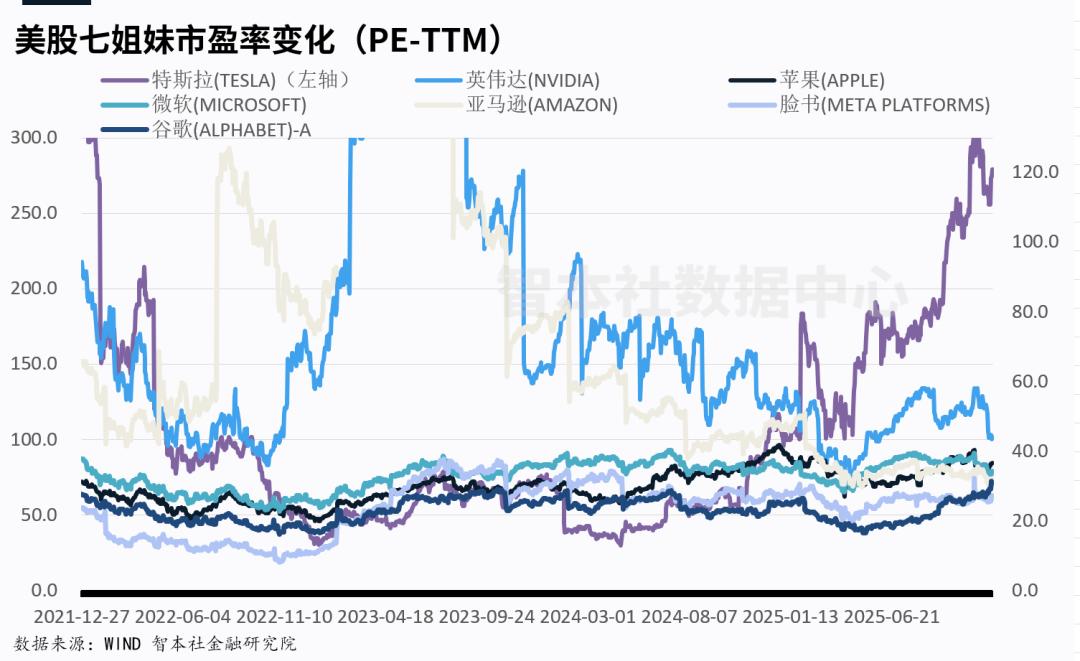
Group 1 - Since the release of ChatGPT on November 30, 2022, major US stock indices have experienced significant increases, with the Dow Jones, S&P 500, and Nasdaq rising by 40%, 73%, and 112% respectively by December 2, 2025 [1] - The AI sector has contributed significantly to the profits and gains in the US stock market, with the "Magnificent Seven" stocks rising approximately 280%, while other S&P components showed limited growth [2] - Concerns about an AI bubble have increased as US stocks reach historical highs, prompting discussions on how to identify and invest in potential bubbles [3][4] Group 2 - Bubbles can be categorized into two types: industrial investment bubbles and secondary market bubbles, each with distinct characteristics and identification methods [5] - The current investment in computer equipment and software in the US has increased from 2.9% to 3.3% of nominal GDP since 2023, contributing significantly to economic growth [6] - Historical trends indicate that while over-investment occurs during technological revolutions, it often lays the groundwork for long-term industry growth [7] Group 3 - Secondary market bubbles are characterized by significant deviations in asset prices from earnings, with historical experience guiding the identification of such bubbles [9] - Key indicators for identifying secondary market bubbles include profitability and debt levels, with the "Magnificent Seven" currently having a dynamic P/E ratio around 30, compared to 40-60 during the internet bubble [10][13] - The AI sector has driven substantial returns in the S&P 500, contributing 75% of total returns and 79% of profit growth since the release of ChatGPT [13] Group 4 - The current AI investment phase is characterized by large-scale investments and rising stock prices, with the commercialization of AI applications expected to occur in the next five years [15][21] - The US economy is experiencing a combination of AI innovation cycles, physical investment cycles, and a Federal Reserve easing cycle, which are expected to drive growth [20][25] - The focus on AI is driven by the need for efficiency in high-cost knowledge work, with AI poised to replace many traditional roles [23][24] Group 5 - Investors are encouraged to participate in the AI wave, as both US and Chinese tech companies are heavily investing in AI, making it a necessity for survival in the market [27] - Strategies for participating in the market include long-term investments in index ETFs and multinational companies, particularly in the tech sector [30] - The concentration of capital in tech stocks is attributed to the transition to a post-industrial economy, where time assets become increasingly valuable [31][32]





特朗普摊牌,黄金却不稳了!
Jin Tou Wang· 2025-12-03 09:34
Group 1: Gold Market - Gold experienced a typical profit-taking process, hitting a low of approximately $4164, a decline of about 1.5%, before rebounding to above $4200, closing at $4205.57, with a narrowed decline of 0.6% [1] - Currently, gold is fluctuating around the $4200 mark during the European trading session [1] Group 2: U.S. Stock Market - U.S. stock indices closed higher, with the Dow Jones up 0.39%, Nasdaq up 0.59%, and S&P 500 up 0.25% [2] - Historically, December is typically a strong month for U.S. stocks, with the S&P 500 averaging over 1% gain since 1950, making it the third-best month of the year [8] Group 3: Federal Reserve and Interest Rates - Michael Burry, known as the "Big Short," criticized the Federal Reserve, suggesting that the U.S. does not need it and warning of potential damage caused by the Fed over the past century [3] - The probability of a 25 basis point rate cut by the Federal Reserve in December has risen to 89.2% according to CME "FedWatch" [8] - Major investment banks, including Bank of America, Goldman Sachs, and JPMorgan, predict a 25 basis point rate cut in December, while a few, like Morgan Stanley and Standard Chartered, expect rates to remain unchanged [7] Group 4: Federal Reserve Chair Nomination - President Trump plans to announce the new Federal Reserve chair nominee in early 2026, with speculation that Kevin Hassett may be the choice [5][6] - The probability of not announcing a new chair by the end of December surged from around 31% to nearly 87% following Trump's comments [5] Group 5: International Affairs - Russian President Putin stated that Russia cannot accept modifications to the U.S. proposed peace plan regarding Ukraine, emphasizing readiness for any sudden conflict [11] - Ukrainian President Zelensky remarked that there are no simple solutions to the Ukraine-Russia peace plan and that Ukraine must be involved in any discussions regarding its future [12]
贝莱德智库:不会出现AI泡沫
Jin Rong Jie· 2025-12-03 09:24
智通财经获悉,贝莱德智库中东及亚太区首席投资策略师庞文博(Ben Powell)表示,不认为会出现AI泡 沫,泡沫意味着供应太多,价格下调,就像上世纪90年代情况那样。而现在对于硬件及AI的需求,问 题是供应不足,因此并不算是泡沫。 贝莱德固定收益投资亚太区主管Navin Saigal表示,目前美元比以往而言更是一项风险资产,因此会减 少持有。 本文源自:智通财经网 他还表示,大家都增持(overweight)美国股票,认为AI公司股票便宜,因此他不认为这是泡沫,而是便 宜的股票,这主要因为收入、现金流等。 贝莱德智库发表的2026年全球展望报告表示,仍然对美国在AI方面的股票维持增持,风险偏好受惠于 美联储减息。 如果将美国GDP细分一下,就可以发现科技的投资超过消费,而消费传统上来说驱动美国经济。这一点 非常重要,说明投资可以继续驱动整体(aggregate) GDP增长,驱动整体收入(headline)水平增长。 ...


2026年美国AI泡沫破灭?
Hua Er Jie Jian Wen· 2025-12-03 04:50
Core Insights - Ruchir Sharma predicts a potential end to the AI technology bubble, influenced by rising interest rates and persistent inflation pressures, with inflation expected to remain close to 3% next year [1][3] - He outlines three major investment trends for 2026: the possible end of the AI bubble, a renewed preference for quality stocks, and the continuation of international markets outperforming the U.S. market [1][4][6] Group 1: Economic Conditions and Interest Rates - Sharma emphasizes that rising interest rates will trigger skepticism in the market, which has been overly confident in AI investments [3] - Historical patterns indicate that every market bubble has been burst by rising interest rates, suggesting that current inflation trends could lead to such an outcome [3] - The Federal Reserve's inability to meet the 2% inflation target for five consecutive years raises concerns about future monetary policy adjustments [3] Group 2: Investment Strategies for 2026 - The first recommendation is to "buy quality stocks," characterized by high return on equity (ROE) and low leverage, which have underperformed recently, presenting a buying opportunity [5] - The second trend is the potential end of the AI bubble, which is closely tied to interest rate movements, although the exact timing remains uncertain [6] - Lastly, the trend of international markets outperforming the U.S. market is expected to continue, marking the beginning of a multi-year cycle that offers diversification and growth opportunities outside the U.S. [6]

GUM:强积金V型反弹追平亏损 人均回报坚守4.4万港元
智通财经网· 2025-12-03 03:16
Group 1 - The GUM Mandatory Provident Fund (MPF) Composite Index slightly decreased by 0.02% in November, closing at 284.8 points, with an average loss of HKD 64 per member for the month, while year-to-date average gains reached HKD 44,133 [1] - The Chief Investment Officer of GUM, Liu Jia-hong, noted that the U.S. stock market faced pressure due to ongoing government shutdowns and renewed concerns over the AI bubble, leading to an average loss of HKD 4,000 per member in mid-November. However, following the end of the shutdown and strong earnings reports from tech giants, market confidence rebounded, resulting in a rise in the MPF Composite Index during the last trading week [1] - Looking ahead to December, the market is expected to perform positively due to easing panic and rising expectations of interest rate cuts by the Federal Reserve, although volatility in virtual assets may pose risks to mainstream investment markets [1] Group 2 - In terms of asset allocation, GUM's Strategy and Investment Analysis Director, Yun Tianhui, indicated that the performance of the MPF in October and November was similar, characterized by mid-month declines followed by recoveries at the end of the month. Funds with a higher allocation to technology experienced significant volatility due to their higher valuations being more susceptible to news impacts [2] - Despite concerns over the AI bubble spreading to Asia, the Hong Kong stock market demonstrated relative resilience, with the Hang Seng Index maintaining above 25,000 points throughout the month. The current price-to-earnings ratio is only 12-13 times, indicating attractive valuations [2] - Members are advised to regularly review their risk tolerance and investment objectives to avoid impulsive buying and selling based on short-term news [2]