去美元化

Search documents
看着金价涨就追、跌就抛,我们的盲目跟风,全是机构的获利机会
Sou Hu Cai Jing· 2026-02-11 04:56
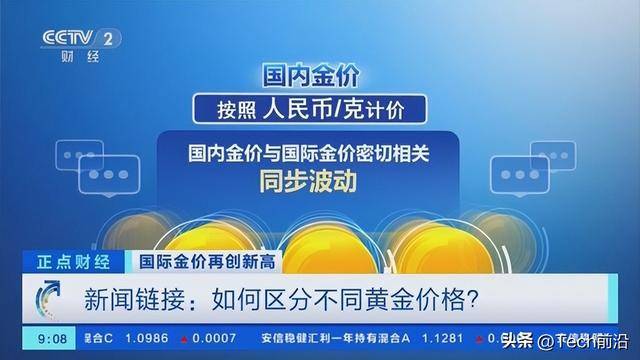
Core Viewpoint - Gold, recognized as a global hard currency, is significantly influenced by price volatility driven by international capital, which affects global financial markets and retail investors seeking wealth appreciation [1][2]. Group 1: Market Dynamics - The pricing of gold is heavily controlled by international capital, with major institutions holding over 40% of positions in key markets like the New York Commodity Exchange [2]. - Speculative tactics such as futures leverage traps and geopolitical event-driven trading are employed by major players to manipulate prices, creating signals that trigger market reactions [3]. - The global gold market operates as a cohesive unit, where fluctuations in domestic and international markets can transmit effects to one another [4]. Group 2: Retail Investor Behavior - Retail investors are highly sensitive to gold price fluctuations, often viewing gold as a key asset for wealth preservation, especially during economic uncertainty [6]. - Retail investors face challenges such as delayed information access and emotional trading, making them vulnerable to price manipulation by institutions [7]. - The investment focus of many retail investors is on small, easily tradable gold products, which can exacerbate their exposure to market volatility [9]. Group 3: Economic Influences - Multiple factors, including macroeconomic conditions and geopolitical events, significantly impact gold prices, with the strength of the US dollar and real interest rates being primary drivers [8]. - Central bank gold purchases provide long-term support for gold prices, with expectations of continued high levels of purchases through 2025 [8]. - Geopolitical tensions and global economic pressures can enhance gold's appeal as a safe-haven asset, leading to price increases [8][12]. Group 4: Regulatory and Policy Implications - The permissive attitude of regulatory bodies has amplified price manipulation, detaching gold prices from traditional supply-demand dynamics and increasing market volatility [5]. - Gold price fluctuations directly influence central banks' foreign exchange reserve strategies, with rising prices prompting increased gold holdings to reduce reliance on US dollar assets [11]. - The collective purchasing behavior of global central banks represents a challenge to the US dollar credit system, influencing global monetary policy dynamics [13]. Group 5: Investment Strategy Recommendations - There is a need for improved regulatory frameworks to curb capital manipulation and reduce abnormal price volatility in the gold market [14]. - Central banks should understand gold price fluctuation patterns to balance reserve structures and monetary policy effectively [14]. - Retail investors are advised to adopt a long-term perspective on gold as an asset allocation tool rather than a short-term profit mechanism, emphasizing risk management and avoiding leveraged trading [14].

机构看金市:2月11日
Xin Hua Cai Jing· 2026-02-11 04:05
Core Viewpoint - The short-term uncertainty in the market remains high, but the medium to long-term outlook for precious metals prices still has upward potential due to various supportive factors [1][2][3]. Group 1: Market Analysis - Recent market liquidity recovery, a weaker US dollar, and ongoing geopolitical uncertainties in the Middle East have contributed to the stabilization and rebound of precious metal prices [1]. - The Chinese central bank has increased its gold reserves for the 15th consecutive month, with a slight acceleration in the pace of accumulation in January, which positively impacts gold sentiment [1]. - The most panic-driven selling phase in the precious metals market appears to be over, but caution remains due to upcoming macroeconomic data releases, including US non-farm payroll and CPI data [1][2]. Group 2: Institutional Insights - CIBC forecasts a bullish outlook for gold, predicting prices to reach $6,000 per ounce by 2026 and $6,500 by 2027, driven by geopolitical uncertainties, safe-haven demand, and ongoing dollar depreciation [3]. - WisdomTree's analysis indicates that the significant sell-off in gold at the end of January was a reset of positions and volatility, not a reassessment of gold's long-term investment value [4]. - The recent drop in gold prices aligns with historical patterns where extreme declines are linked to shifts in monetary policy credibility and expectations regarding real interest rates and the dollar [4].
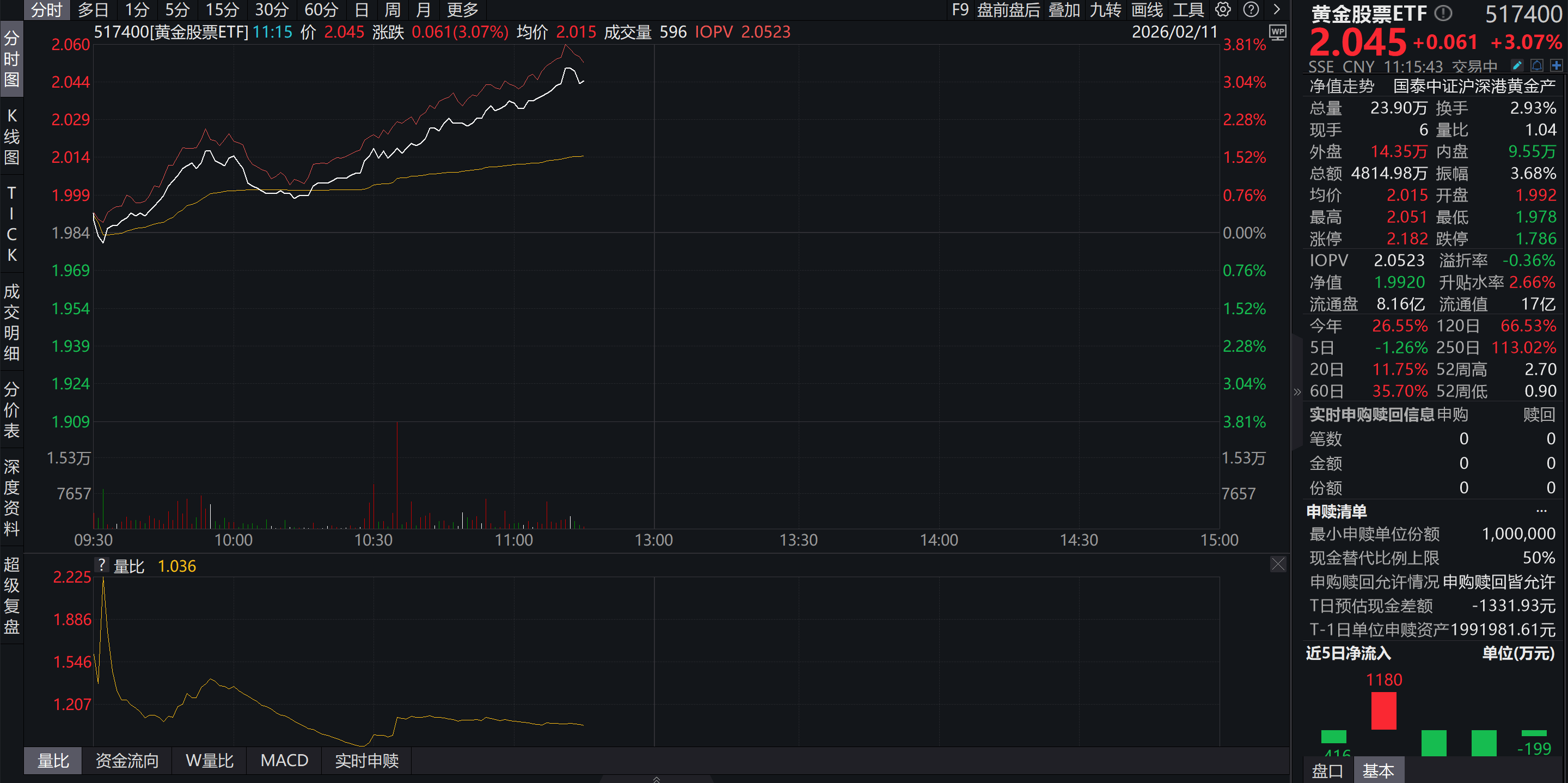
金价震荡反弹,黄金股票ETF(517400)涨超2%
Sou Hu Cai Jing· 2026-02-11 03:54
Group 1 - The core viewpoint is that gold prices are experiencing a rebound, supported by macroeconomic data and ongoing trends in de-dollarization and central bank gold purchases [1][2] - In January, both the ISM manufacturing and services PMIs in the U.S. exceeded expectations, indicating a recovery, although employment data showed signs of weakness with ADP employment numbers falling short and JOLTs job openings declining [1] - The People's Bank of China has increased its gold reserves for the 15th consecutive month, and there has been a significant single-day increase in global large silver ETFs, indicating a strategic shift towards precious metals by sovereign and institutional funds [1] Group 2 - The long-term trend for gold remains strong, driven by monetary expansion and challenges to the U.S. dollar credit system, alongside increasing demand for gold as a safe asset due to global geopolitical instability [2] - The logic supporting gold prices includes the Federal Reserve's potential interest rate cuts, heightened overseas uncertainties, and the ongoing trend of de-dollarization, which may position gold as a new pricing anchor [2] - Investors are encouraged to monitor investment opportunities in gold ETFs, specifically the Cathay Gold ETF (518800) and the Gold Stock ETF (517400) [2]
强势反弹!易方达黄金矿ETF(2824)涨超5%
Sou Hu Cai Jing· 2026-02-11 03:54
Core Insights - The E Fund Gold Mining ETF (2824) has seen a daily increase of over 5%, leading the Hong Kong market in precious metals, highlighting the high elasticity advantage of the gold mining sector [1] - Since 2026, the London gold spot price has risen by 17.15%, while the Solactive Global Gold Mining Select Index, which the ETF tracks, has increased by 23.46% during the same period [1] Group 1: ETF Overview - The E Fund Gold Mining ETF (2824) is the only gold mining ETF in Hong Kong, aiming to closely track the Solactive Global Gold Mining Select Index [1] - The index covers 30 leading stocks from four major gold-producing regions: China, Canada, the United States, and Australia, including domestic giants like Zijin Mining and Zhaojin Mining, as well as quality overseas targets like Newmont and Barrick Gold [1] Group 2: Market Analysis - Institutions believe that after a significant rise in 2025, gold is currently facing a short-term emotional adjustment and a tug-of-war over safe-haven demand, leading to notable volatility risks [1] - In the medium to long term, factors such as central bank gold purchases, de-dollarization, and sovereign credit crises continue to support the strong outlook for gold [1] - A new cycle of interest rate cuts and risk premiums is expected to enhance gold allocation demand temporarily [1] - If the global economy unexpectedly thrives or if AI or policy drives capital back to high-risk assets, gold may exhibit relative weakness; however, as long as credit risks and geopolitical tensions exist, gold's strategic allocation value remains significant [1]
金价震荡上行,长期配置价值凸显——聚焦黄金股票ETF(517400)
Sou Hu Cai Jing· 2026-02-11 03:30
Group 1 - The core viewpoint is that international gold prices are experiencing high volatility while gradually establishing mid-term support, with gold stock ETFs showing recovery alongside rising gold prices [1][3] - The macroeconomic environment, including expectations of interest rate cuts, de-dollarization, and central bank gold purchases, provides long-term support for gold prices [2] - Historical patterns indicate that gold tends to perform well during the transition from high interest rates to expectations of rate cuts, especially in the context of rising fiscal deficits and challenges to the dollar's credit system [2][3] Group 2 - Recent technical analysis shows that gold prices have undergone a typical deleveraging process, suggesting a mid-term low has been established, which may lead to a new upward trend as volatility decreases [3] - Gold mining companies' profitability is highly correlated with gold prices, and when prices stabilize at high levels, profit margins expand significantly, leading to dual recovery in valuation and performance [3] - The ongoing trends of expected Fed rate cuts, global uncertainty, continuous central bank gold purchases, and de-dollarization indicate that the core narrative of a gold bull market remains intact [3]
中辉有色观点-20260211
Zhong Hui Qi Huo· 2026-02-11 03:09
1. Report Industry Investment Ratings - Gold: Long - term strategic allocation, pay attention to adjustment range [1] - Silver: Wait for volatility reduction, short - term participation is difficult [1] - Copper: Long - term holding, short - term pay attention to risk [1] - Zinc: Pressure, short - term empty - position holiday, medium - long - term callback to try long [1] - Lead: Rebound under pressure [1] - Tin: Rebound under pressure [1] - Aluminum: Rebound under pressure [1] - Nickel: Rebound under pressure [1] - Industrial Silicon: Wide - range shock, empty - position holiday [1] - Polysilicon: Under pressure, cautious participation [1] - Lithium Carbonate: Rebound, wait for stabilization and then go long [1] 2. Core Views of the Report - The US data is declining, and the Fed officials emphasize the Fed's independence. The long - term strategic allocation value of gold remains unchanged due to geopolitical reshaping, central bank gold purchases, etc [1]. - The trading game of silver is intense, with short - term adjustment and long - term supply - demand gap [1]. - Copper is an important strategic resource in the Sino - US game, with long - term optimism but short - term macro risks [1]. - Zinc speculation cools down, and the inventory accumulates in the off - season [1]. - The prices of lead, tin, aluminum, and nickel are under pressure in the short term due to various supply - demand factors [1]. - Industrial silicon has slightly improved supply - demand, and the trading volume is light before the Spring Festival [1]. - Polysilicon has inventory accumulation pressure, and the market is mainly affected by policy expectations [1]. - Lithium carbonate inventory is decreasing, and it is expected to stabilize and rebound [1]. 3. Summary by Related Catalogs Gold and Silver - **Market Performance**: The market is in consolidation, with gold and silver in narrow - range fluctuations. COMEX gold futures fell 0.62%, COMEX silver futures fell 2.01%. Spot gold once fell more than 1% and broke through $5000, and silver futures once fell more than 3% [2]. - **Industry Logic**: The US December retail sales were stagnant, and consumer spending was weak. China's central bank continued to buy gold. The three pillars supporting the gold price are still stable, but the market needs time to digest volatility [3][4]. - **Strategy Recommendation**: Domestic gold pays attention to the support around 1060, and silver pays attention to the support around 19000. Continue to pay attention to volatility reduction [4]. Copper - **Market Performance**: The market is waiting for non - farm data, and copper is in high - level consolidation. The prices of Shanghai copper, LME copper, and COMEX copper have different degrees of decline [5]. - **Industry Logic**: The global copper mine is in short supply, and the growth of copper smelting capacity has been curbed. The inventory is at a high level in the same period, and the demand is weak in the off - season [6]. - **Strategy Recommendation**: Short - term: Take profit on long positions and hold cash and empty positions for the holiday. Medium - long - term: Bullish on copper. Short - term Shanghai copper pays attention to the range of [100000, 105000] yuan/ton, and LME copper pays attention to the range of [12800, 13500] US dollars/ton [7]. Zinc - **Market Performance**: Shanghai zinc is under pressure. The prices of Shanghai zinc and LME zinc have small fluctuations [8]. - **Industry Logic**: The global zinc ore supply may shrink in 2026. As the Spring Festival approaches, the demand is weak, and the inventory is accumulating [9]. - **Strategy Recommendation**: Short - term: Reduce positions, control risks, and hold cash and empty positions for the holiday. Medium - long - term: Try long on dips. Shanghai zinc pays attention to the range of [24000, 25000], and LME zinc pays attention to the range of [3300, 3400] US dollars/ton [10]. Aluminum - **Market Performance**: The aluminum price rebounds under pressure, and alumina falls under pressure [11]. - **Industry Logic**: The Fed's interest - rate cut expectation continues in 2026. The electrolytic aluminum inventory is increasing, and the demand is in the off - season. The alumina market's over - supply situation has slightly improved [13]. - **Strategy Recommendation**: Short - term: Take profit and wait and see. Pay attention to the accumulation of aluminum ingot social inventory. The main operation range is [22000 - 24500] [14]. Nickel - **Market Performance**: The nickel price rebounds slightly, and stainless steel rebounds [15]. - **Industry Logic**: The Fed's interest - rate cut expectation continues in 2026. Indonesia will reduce the nickel ore production quota in 2026. The domestic pure nickel inventory is accumulating, and the stainless steel inventory is slightly increasing in the off - season [17]. - **Strategy Recommendation**: Take profit and wait and see. Pay attention to Indonesia's policy and the change of downstream stainless steel inventory. The main operation range of nickel is [120000 - 145000] [18]. Lithium Carbonate - **Market Performance**: The main contract LC2605 opens low and goes high, but fails to stand firm at the 140,000 - yuan mark [19]. - **Industry Logic**: The peripheral precious metal and non - ferrous metal sectors are warming up, and lithium carbonate follows the market to rebound. The inventory is decreasing in the off - season, but the market is worried about inventory accumulation in the peak season [20]. - **Strategy Recommendation**: After stabilization, lightly build long positions in the range of [135000 - 145000] [21].
黄金时代!四大推手合力,铸就全球顶流资产
Nan Fang Du Shi Bao· 2026-02-11 03:08
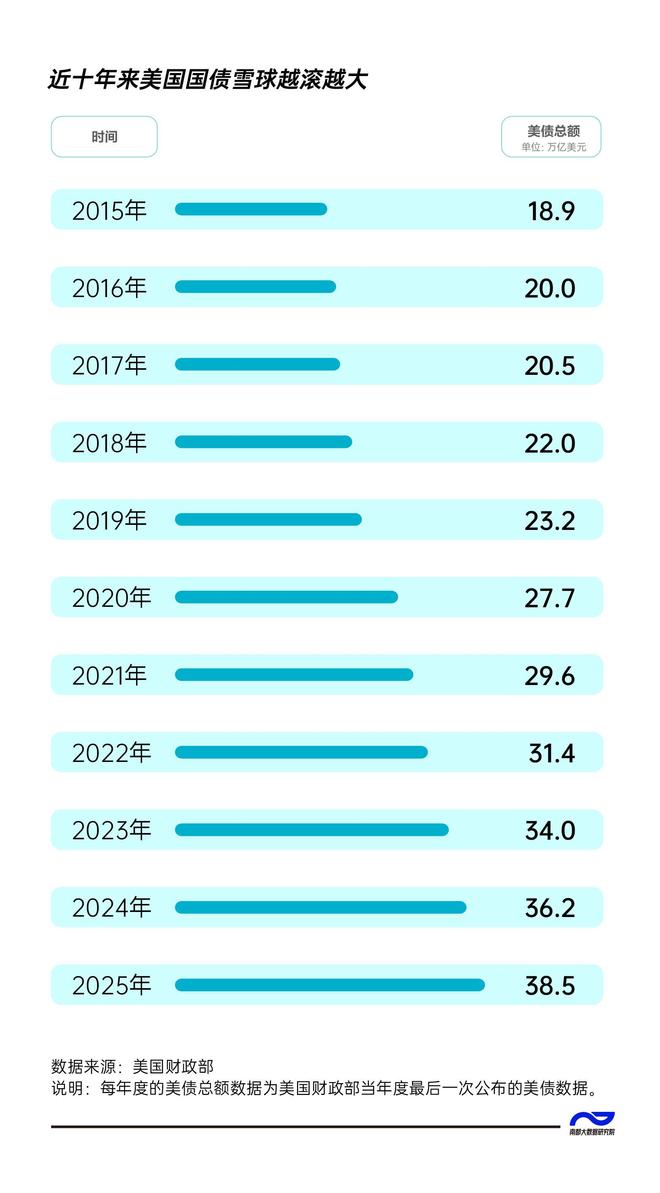
疯狂黄金 黄金的狂飙时代——从十年前每克不足250元,到如今突破千元大关,金价曲线背后,是一场持续十年 的价值重估。近两年的急速攀升,不仅映射全球格局的动荡与重组,也深刻照见我们共同面对的财富焦 虑、代际选择与情感寄托。 《疯狂黄金》系列报道试图穿透市场的喧嚣与数字的波动。我们将回溯十年间每个关键节点下的市场叙 事,探寻黄金涨跌背后的多重逻辑;也将深入金店与人群,观察从传统购金者到年轻人"攒金豆"现象背 后的理财观念变迁。 在热浪之外,我们更希望探讨:黄金在财富配置中,何为理性的位置?在不确定的环境中,如何构筑稳 健的财富观?这不仅是黄金的十年,也是我们共同经历的时代切面。 第二篇,揭秘金价暴涨背后的四大推手。 2026年开年,黄金市场便上演了一轮惊心动魄的"过山车"行情:金价从4600美元一路冲高、逼近5600美 元/盎司,又于1月30日突现单日暴跌超10%,创下近40年最大跌幅。这场剧烈震荡,再次将黄金推至全 球投资视野的焦点。 美元的走弱也不断助推金价的积极表现。黄金和美元之间存在负相关性:当美元信用下降时,持有其他 货币的投资者购买黄金的成本相对降低,从而提升黄金的吸引力,推动其价格上涨;反之,美元信 ...
现货黄金反弹,黄金ETF国泰(518800)涨超0.4%,资金抢筹,近20日资金净流入超77亿元
Mei Ri Jing Ji Xin Wen· 2026-02-11 02:44
Core Viewpoint - Short-term decline in precious metal prices is attributed to previous rapid increases, technical overbought conditions, and the hawkish nomination of Kevin Walsh as the next Federal Reserve head. Long-term trends indicate a reshaping of monetary credit dynamics, with an expected rise in the U.S. fiscal deficit rate following the passage of the "Big and Beautiful" bill. [1] Group 1: Precious Metals Market Analysis - Current low gold reserves in China suggest a long-term trend of central bank gold purchases, leading to an upward movement in gold prices. [1] - A decrease in real interest rates post-rate cuts is expected to attract inflows into gold ETFs. [1] - The gold-silver ratio is currently high, and expectations of marginal demand recovery may lead to a convergence of this ratio. [1] Group 2: Valuation and Investment Opportunities - The valuation of the precious metals sector is at the lower end of its historical range, indicating potential for sustained recovery. [1] - The long-term trend for gold remains strong, supported by monetary expansion and the monetization of fiscal deficits, which challenge the U.S. dollar credit system. [1] - Increased global geopolitical instability is driving diversification in asset reserves, enhancing the demand for gold as a safe asset. [1] - The trend of "de-dollarization" globally positions gold as a potential new pricing anchor, providing upward momentum for precious metals. [1] - The logic supporting gold prices remains intact with the combination of a Federal Reserve rate cut cycle, increasing overseas uncertainties, and the global de-dollarization trend. [1] - Investors are encouraged to monitor investment opportunities in gold ETFs such as Guotai (518800) and gold stock ETFs (517400). [1]
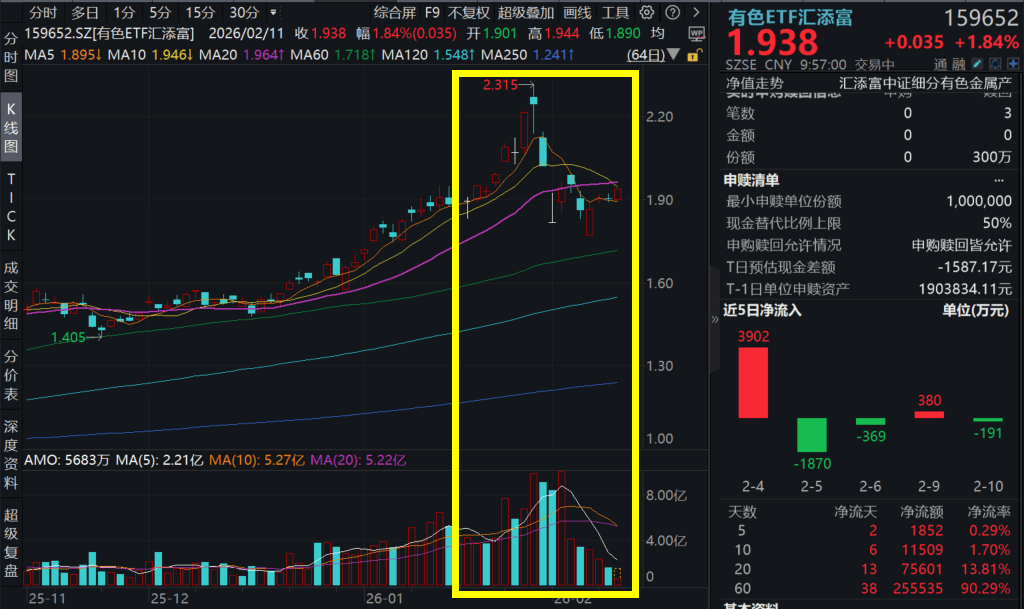
贵金属价格再度走高!有色金属仍然是资金最好的去处?有色ETF汇添富(159652)震荡上涨1.84%!抢滩上游矿产,洛阳钼业、厦门钨业接连收购!
Sou Hu Cai Jing· 2026-02-11 02:38
Core Viewpoint - The A-share market experienced fluctuations on February 11, with the non-ferrous sector showing resilience, particularly the ETF Huatai-PineBridge (159652), which rose by 1.84% [1]. Non-Ferrous Sector Performance - The ETF Huatai-PineBridge (159652) saw most of its constituent stocks rise, with Huayou Cobalt increasing over 3%, Luoyang Molybdenum up over 2%, and Zijin Mining and Northern Rare Earth both rising over 1% [2][3]. - The top ten constituent stocks of the ETF include Zijin Mining, Luoyang Molybdenum, and Huayou Cobalt, with respective weightings of 15.07%, 7.81%, and 4.38% [4]. International Precious Metals Market - On February 11, international precious metal prices increased, with spot gold reaching $5,050 per ounce and silver rising over 1% [5]. - The unexpected stagnation in U.S. retail sales data has fueled bets on potential interest rate cuts by the Federal Reserve, leading to a decline in U.S. Treasury yields [5]. Company Developments - Xiamen Tungsten announced plans to acquire a 39% stake in Jiujiang Dadi Mining, aiming to enhance its tungsten and molybdenum resource security [5]. - Luoyang Molybdenum completed the acquisition of a Brazilian gold mine for $1.015 billion, with plans to increase gold production significantly by 2030 [6]. Long-term Trends in Precious Metals - The trend of central banks purchasing gold is strengthening, with gold surpassing U.S. Treasuries as the largest reserve asset globally for the first time in 30 years [8]. - The expansion of fiscal policies and sovereign debt is injecting new momentum into the precious metals market, with gold's monetary properties expected to strengthen further [9]. Copper Market Outlook - The long-term outlook for copper prices remains optimistic due to supply constraints and increasing demand from AI data centers and energy storage [10][11]. - The anticipated supply disruptions in global copper mines could support a long-term upward trend in copper prices [11]. Investment Opportunities - The non-ferrous sector is highlighted as having significant investment value, driven by monetary easing, supply rigidity, and new demand dynamics [11]. - The ETF Huatai-PineBridge (159652) is positioned to benefit from the super cycle in non-ferrous metals, with a high gold and copper content of 49% [13].






金价飙升至5100美元!伊朗进入最高战备,春节还能买黄金吗?|大宗风云
Hua Xia Shi Bao· 2026-02-11 02:21
Group 1: Gold Market Dynamics - COMEX gold futures experienced a strong trend of "bottoming out and rebounding, high-level fluctuations" from February 2 to February 10, with prices significantly rising and stabilizing above the key level of $5000 per ounce [2] - Gold prices reached a low of $4400 per ounce on February 2 before quickly rebounding, driven by heightened geopolitical risk and a weakening dollar [2] - As of February 10, gold prices peaked at $5100 per ounce, closing at $5085 per ounce, with geopolitical risk being the primary driver of the price rebound [2] Group 2: Geopolitical Tensions - Iranian Air Force Commander Amir Vahidi announced that the Iranian Air Force is on high alert, ready to respond decisively to any acts of aggression, following the "Twelve-Day War" which provided valuable experience [3] - Israeli Prime Minister Netanyahu is set to meet with U.S. President Trump on February 11 to discuss negotiations regarding Iran, moving the date up by at least a week [3] - Ongoing negotiations between Russia, Ukraine, and the U.S. in Abu Dhabi have not resolved core issues, with both sides remaining divided on territorial and post-war arrangements [4][5] Group 3: Market Reactions and Predictions - Analysts indicate that the recent rise in gold and silver futures is driven by multiple factors, including expectations of a Federal Reserve rate cut, a weakening dollar, and geopolitical risks [5][6] - The CME's repeated margin increases have drawn criticism, as they aim to curb excessive speculation and stabilize price fluctuations, impacting both long and short positions [7][8] - The upcoming U.S. non-farm employment data is seen as a critical variable that could influence market expectations regarding the Federal Reserve's monetary policy [10] Group 4: Investment Strategies - For those considering purchasing physical gold, it is suggested to assess the purpose of the purchase, with immediate needs for gifting or personal use being acceptable reasons to buy [10][11] - Investors are advised to maintain a rational approach to gold investments, considering options like investment gold bars or gold ETFs, and to avoid heavy single purchases [11] - Predictions indicate that gold prices may experience high volatility during the Spring Festival period, but significant declines are unlikely due to ongoing physical demand and expectations of interest rate cuts [12]