
双碳

Search documents
坚持“双碳”引领,推动全面绿色转型(稳中求进、提质增效 实现“十五五”良好开局)
Ren Min Wang· 2026-01-11 22:25
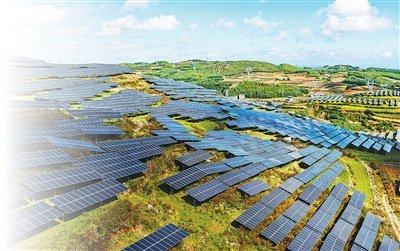
本报记者 董丝雨 蒋雪鸿 高山村,光伏板遍布山头。 罗喜贵摄 广西梧州市苍梧县六堡镇六堡村的智慧农业茶园气象监测设备。 颜桂海摄 贵州毕节市威宁彝族回族苗族自治县双龙镇 甘肃张掖市临泽县的"三北"防护林网。 王 将摄 数据来源:自然资源部、生 态环境部、水利部等 推动经济社会发展绿色化、低碳化是实现高质量发展的关键环节。 "十五五"规划建议提出,"加快经济社会发展全面绿色转型,建设美丽中国。"中央经济工作会议部 署"坚持'双碳'引领,推动全面绿色转型"的重点任务。 落实中央经济工作会议精神,各地各部门坚定不移走生态优先、节约集约、绿色低碳高质量发展道路, 协同推进降碳、减污、扩绿、增长,实现高水平保护、高品质环境、高质量发展良性互动、相得益彰。 有计划分步骤实施碳达峰行动 中央经济工作会议提出,"深入推进重点行业节能降碳改造。制定能源强国建设规划纲要,加快新型能 源体系建设,扩大绿电应用。加强全国碳排放权交易市场建设。" 在"双碳"目标引领下,我国经济社会发展绿色转型驶入快车道。 重点行业节能降碳改造进程提速。 辽宁本溪市的鞍钢集团本钢板材公司,通过"电炉+转炉"短流程低碳冶金工艺生产出的汽车钢,可实现 综合 ...

匠心筑港机 精工创未来
Xin Lang Cai Jing· 2026-01-11 21:22
Core Viewpoint - Nanjing Port Machinery Heavy Industry Co., Ltd. is a state-owned enterprise established in 1958, specializing in the design, manufacturing, installation, and maintenance of large port machinery, recognized as a leader in innovation and quality in the industry [1] Group 1: Company Overview - Nanjing Port Machinery Heavy Industry has established itself as a benchmark for innovation in the port machinery sector, holding multiple national and provincial qualifications and awards [1] - The company has built various research and development platforms, including provincial engineering research centers and technology centers, contributing to its recognition as a "little giant" enterprise [1] Group 2: Craftsmanship and Talent Development - The company integrates craftsmanship into its operations, establishing a three-tier talent cultivation system that includes mentorship, skill competitions, and innovation studios [2] - It has successfully trained a national model worker and several young skilled workers, showcasing its commitment to skill development [2] Group 3: Quality Control and Production Process - Nanjing Port Machinery has implemented a comprehensive quality control system with 128 quality inspection points throughout the production process, ensuring high standards are met [3] - The company has achieved significant breakthroughs in equipment performance, receiving positive customer feedback for its durable products [3] Group 4: Technological Innovation - The company invests over 5% of its revenue annually in R&D, collaborating with universities to develop key technologies such as automated cranes and lifecycle management platforms [4] - Its self-developed fully automated gantry crane has set industry standards for intelligent operations and has been recognized for its advanced automation technology [4] Group 5: Environmental Commitment - Nanjing Port Machinery has developed a pure electric container gantry crane that significantly reduces carbon emissions, aligning with China's dual carbon goals [4] - The company has received over 200 patents, contributing to the advancement of China's port machinery industry [4] Group 6: Global Market Presence - The company has a strong domestic market presence, supplying over 2,000 port machinery units to major national ports and maintaining a leading market share for ten consecutive years [6] - Internationally, its products are exported to 17 countries, playing a significant role in the Belt and Road Initiative [6] Group 7: Brand Development and Customer Service - Nanjing Port Machinery aims to establish a century-old brand, enhancing its global reputation through quality products and services [5] - The company has set up 11 after-sales service centers worldwide, providing 24/7 support and utilizing IoT technology for equipment monitoring [7]
抓实重点工作推动兵团经济提质增效
Xin Lang Cai Jing· 2026-01-11 18:13
Core Viewpoint - The article emphasizes the importance of focusing on key tasks to drive economic development in the Xinjiang Production and Construction Corps, aligning with the central government's strategic positioning and promoting high-quality economic growth. Group 1: Economic Development Strategies - The Corps aims to focus on eight key tasks to enhance economic work and provide clear action guidelines [1] - Emphasis on maintaining social stability and implementing a comprehensive risk management system to prevent major accidents and ensure economic safety [1] - The strategy includes optimizing the consumption environment and enhancing urban-rural commercial networks to stimulate consumer activity [2] Group 2: Investment and Infrastructure - The Corps promotes a "project-first" approach to direct investments towards infrastructure, public welfare, and industrial upgrades [2] - There is a focus on utilizing central budget investments and special bonds to support key projects [2] Group 3: Innovation and Industry - The article highlights the need for innovation-driven development to build a modern industrial system, with a focus on digital and intelligent transformation of traditional industries [4] - Support for collaboration between enterprises and research institutions to overcome technological bottlenecks and enhance competitiveness [4] Group 4: Reform and Governance - Continuous reform efforts are necessary to address development challenges and enhance market vitality, including streamlining administrative processes [5] - The article stresses the importance of supporting private enterprises and improving communication between government and businesses [5] Group 5: Open Economy - The Corps aims to expand high-level openness by leveraging various trade platforms and enhancing infrastructure connectivity with surrounding regions [6] - Focus on optimizing export structures and increasing the scale of key product exports [6] Group 6: Social and Environmental Responsibility - The article emphasizes the importance of green development, promoting clean energy and sustainable agricultural practices [8] - There is a commitment to improving public services and ensuring that development benefits the population, particularly in employment and healthcare [9]
双碳研究 | 电网瓶颈加剧:欧洲2024年弃电逾10太瓦时
Sou Hu Cai Jing· 2026-01-11 14:13
Core Insights - The issue of renewable energy curtailment in Europe is worsening, with over 10 terawatt-hours (TWh) of electricity expected to be curtailed in 2024, and projections indicate that by 2030, the curtailment in the UK, Spain, and Italy alone could approach 22 TWh [4][5] - The European renewable energy market has seen over 150% growth in installed capacity over the past decade, and to support this expansion, an estimated investment of approximately €1.5 trillion will be required by 2050 [4] - The development risks remain a key constraint on the growth of renewable energy in Europe, with over 1,000 gigawatts (GW) of renewable projects currently awaiting grid connection approval [5] Investment Needs - By 2030, Europe will require around €600 billion in new investments to meet climate goals and replace aging fossil fuel power generation facilities [6] - Power Purchase Agreements (PPAs) are expected to remain the primary market entry path for renewable energy projects, although their attractiveness varies significantly across different countries and technologies [6] Market Mechanisms - Two-sided Contracts for Difference (CfDs) will continue to be the main support mechanism in most European markets, with 162 GW of renewable capacity planned for procurement through auctions by 2030 [7] - Recent auction challenges in offshore wind sectors in Germany, the Netherlands, and Denmark have raised concerns about investor confidence due to supply chain pressures and political uncertainties [7] Price Pressures - The increasing frequency of negative electricity prices poses a systemic risk, with many markets expected to exceed 2024 levels of negative pricing hours by 2025 [8] - The expectation is that negative price pressures may ease after 2035 as electricity demand rises and the flexibility of the power system improves [8] Policy and Regulatory Framework - The European Grids Package is seen as a step in the right direction to accelerate approval processes and unlock stalled projects, which is crucial for realizing the potential of the upcoming investment wave in renewable energy [8]

【吉刻早报】“东北超”5月启动
Xin Lang Cai Jing· 2026-01-10 23:42
★1月10日,吉林省物流集团与长春兴隆综合保税区(简称兴隆综保区)共建吉林国际道路运输集结中心 合作框架协议签约仪式,在兴隆综保区举行。作为全国首个国际道路运输集结中心,该项目的落地标志着 长春市乃至吉林省深度融入"一带一路"建设、打造向北开放战略支点迈出关键步伐。 ★近日,"吉星"高分07系列卫星采用夜光成像模式成功获取了国内首张甚高分辨率彩色夜光遥感卫星影 像。 【天气】今天白天到夜间,全省多云转阴,部分地区有小雪。最高气温:全省大部-16~-12℃,最低气 温:白山-26℃,其他大部-23~-19℃。 【有礼】吉刻新闻"签到有礼"计划已启动。从2026年1月8日起至2027年1月8日,只需每日打开"吉刻新 闻"完成签到,即自动加入幸运池。每月8日,从上月签到满勤的用户中,抽取幸运读者赠送"吉林一号"宇 宙科普绘本。签到流程:1.手机安装"吉刻";2.注册登录后,点击"我的"页面找到"签到"按钮;3.点击"签 到"按钮。活动参与温馨提示:请确保您的吉刻新闻APP已更新至最新版本,方可顺利参与签到活动。 【招聘】吉林大学附属中学2026年公开招聘编制外合同制(劳务派遣)教师5名。每位应聘人员只可申请 一个岗 ...

我们为什么还在拼命“造车”?
汽车商业评论· 2026-01-10 23:05
Core Viewpoint - The automotive industry is undergoing significant transformation driven by electrification, intelligence, and globalization, with new energy vehicles (NEVs) being a key focus in the Chinese market. [5][6] Group 1: Industry Trends - From January to November 2023, domestic sales of NEVs reached 12.466 million units, a year-on-year increase of 23.2%, with passenger vehicles at 11.715 million units (up 21.3%) and commercial vehicles at 750,000 units (up 62.4%) [5] - The penetration rate of NEVs in China is expected to exceed 40% by 2024, with some months reaching 50%, indicating rapid growth and opportunity in the sector [15] - The competition among domestic NEV manufacturers has intensified, leading to a prolonged price war that has lasted nearly four years, with companies employing price cuts and limited-time offers to capture market share [5][6] Group 2: Supply Chain Transformation - The traditional linear supply chain model is being replaced by a networked ecosystem that emphasizes co-creation among manufacturers, technology companies, and suppliers to enhance product quality and cost control [6][20] - Long-term strategies are being developed to address compliance pressures from EU battery regulations and carbon emissions, necessitating improvements in supply chain resilience and green compliance [6][20] - Changan Automobile has implemented a systematic supplier certification process and expanded its supplier base to over 1,500, including 100 overseas suppliers, to build a global supply chain resource system [25][27] Group 3: Technological Advancements - The integration of advanced technologies such as AI and smart driving systems is reshaping the automotive landscape, with a focus on enhancing user experience while maintaining safety standards [17][20] - Changan is pursuing a modular and platform-based approach to vehicle design, allowing for greater flexibility and adaptability in production processes [28][29] - The company is also focusing on digital transformation, improving procurement and supply chain systems to enhance efficiency and connectivity [43] Group 4: Strategic Partnerships - Collaborative efforts with suppliers and technology partners are being emphasized to create a win-win ecosystem, fostering transparency and mutual support in the supply chain [36][40] - Changan is exploring diverse cooperation models with traditional Tier 1 suppliers and ICT giants, aiming for strategic alliances that address technological challenges [35][36] - The company is committed to building a shared, open, and win-win networked ecosystem, transitioning from short-term transactional relationships to strategic collaborations [21][36]


盘面波动加剧,短期延续宽幅震荡,注意市场短期情绪冲击:锰硅周报-20260110
Wu Kuang Qi Huo· 2026-01-10 13:24
1. Report Industry Investment Rating No relevant content provided. 2. Core Views of the Report - The commodity market has been volatile since the first week after the New Year, with the bullish sentiment likely to continue, especially in the non - ferrous and precious metals sectors. However, there is a need to be vigilant about the short - term high - volatility risks caused by sentiment "leaders" such as silver and lithium carbonate [15][97]. - The supply - demand pattern of ferromanganese remains unfavorable, with a loose structure, high inventory, and weak downstream building materials industry demand. But these factors are mostly priced in and are not the main contradictions for future market trends. The supply - demand structure of ferrosilicon is basically balanced, with marginal improvement due to some factory maintenance and production conversion [15][97]. - The future market trends of ferromanganese and ferrosilicon will be influenced by two main factors: the direction of the black sector or the overall market sentiment, and the cost - push problem from manganese ore in the ferromanganese sector and the supply contraction (or contraction expectation) problem in the ferrosilicon sector due to losses or the "dual - carbon" policy. Special attention should be paid to potential emergencies in the manganese ore sector and the progress of the "dual - carbon" policy [15][97]. 3. Summaries According to the Catalog Manganese Silicon 3.1.1. Weekly Assessment and Strategy Recommendation - **Weekly Key Points Summary**: Tianjin 6517 ferromanganese spot price was 5740 yuan/ton, up 10 yuan/ton week - on - week; the futures main contract (SM603) closed at 59040 yuan/ton, down 16 yuan/ton week - on - week; the basis was 26 yuan/ton, up 26 yuan/ton week - on - week, with a basis rate of 0.44%, at a relatively low level in historical statistics. The estimated immediate profit of ferromanganese remained low, with Inner Mongolia at - 414 yuan/ton (up 22 yuan/ton week - on - week), Ningxia at - 541 yuan/ton (up 90 yuan/ton week - on - week), and Guangxi at - 438 yuan/ton (up 46 yuan/ton week - on - week). The estimated immediate cost of ferromanganese in Inner Mongolia was 6114 yuan/ton (up 28 yuan/ton week - on - week), Ningxia at 6171 yuan/ton (down 30 yuan/ton week - on - week), and Guangxi at 6188 yuan/ton (down 46 yuan/ton week - on - week). The weekly output of ferromanganese was 19.10 tons, down 0.27 tons week - on - week. The weekly output of rebar was 191.04 tons, up 2.82 tons week - on - week, and the daily average hot - metal output was 229.5 tons, up 2.07 tons week - on - week. The estimated visible inventory of ferromanganese was 55.03 tons, up 0.54 tons week - on - week, still at a high level compared to the same period [14]. - **Fundamental Assessment**: The basis was at a low level and decreased slightly week - on - week. The production profit continued to be in the red. The output decreased slightly, while the rebar and hot - metal output increased slightly. The inventory remained at a high level. The tender volume and price of Hebei Iron and Steel Group decreased month - on - month. The ferromanganese futures price fluctuated sharply last week, and there was no obvious short - term trend. Future market trends will be affected by the overall market sentiment and cost - related factors [15]. 3.1.2. Spot - Futures Market As of January 9, 2026, Tianjin 6517 ferromanganese spot price was 5740 yuan/ton, up 10 yuan/ton week - on - week; the futures main contract (SM603) closed at 59040 yuan/ton, down 16 yuan/ton week - on - week; the basis was 26 yuan/ton, up 26 yuan/ton week - on - week, with a basis rate of 0.44%, at a relatively low level in historical statistics [20]. 3.1.3. Profit and Cost - **Production Profit**: As of January 9, 2026, the estimated immediate profit of ferromanganese remained low, with Inner Mongolia at - 414 yuan/ton (up 22 yuan/ton week - on - week), Ningxia at - 541 yuan/ton (up 90 yuan/ton week - on - week), and Guangxi at - 438 yuan/ton (up 46 yuan/ton week - on - week) [25]. - **Production Cost**: As of January 9, 2026, the prices of South African, Australian, and Gabonese manganese ores increased, while the price of off - grade metallurgical coke decreased. The electricity prices in Inner Mongolia and Guangxi remained stable, while that in Ningxia decreased by 0.015 yuan/kWh. The estimated immediate cost of ferromanganese in Inner Mongolia was 6114 yuan/ton (up 28 yuan/ton week - on - week), Ningxia at 6171 yuan/ton (down 30 yuan/ton week - on - week), and Guangxi at 6188 yuan/ton (down 46 yuan/ton week - on - week) [27][30]. - **Manganese Ore Import**: In November, the manganese ore import volume was 269.4 tons, down 40.6 tons month - on - month and up 49.4 tons year - on - year. From January to November, the cumulative import volume was 2956.8 tons, up 284 tons or 10.63% year - on - year [33]. - **Manganese Ore Inventory**: As of January 2, 2026, the manganese ore port inventory continued to decline, reaching 438.9 tons, down 7.9 tons week - on - week. Among them, the Australian manganese ore port inventory was 65.7 tons, down 2.3 tons week - on - week, and the high - grade manganese ore port inventory was 117.5 tons, down 7.4 tons week - on - week [36][39]. 3.1.4. Supply and Demand - **Total Output**: As of January 9, 2026, the weekly output of ferromanganese was 19.10 tons, down 0.27 tons week - on - week, with a cumulative year - on - year decrease of about 4.40%. In December 2025, the output was 84.35 tons, down 0.53 tons month - on - month, and the cumulative output from January to December decreased by 2.21 tons or 0.22% year - on - year [44]. - **Output in Main Production Areas**: No specific summary information provided other than data presentation. - **Steel Tendering**: Hebei Iron and Steel Group's ferromanganese tender volume in December 2025 was 14700 tons, down 1300 tons month - on - month and up 1100 tons year - on - year; the tender price was 5770 yuan/ton, down 50 yuan/ton month - on - month [56]. - **Consumption**: As of January 9, 2026, the weekly apparent consumption of ferromanganese was 11.59 tons, up 0.08 tons week - on - week. The weekly output of rebar was 191.04 tons, up 2.82 tons week - on - week. The daily average hot - metal output was 229.5 tons, up 2.07 tons week - on - week. In November 2025, the national crude steel output was 6990 tons, down 210 tons month - on - month and 850 tons year - on - year. From January to November, the cumulative crude steel output was 8.82 billion tons, down 3340 tons or 3.65% year - on - year. The steel mill profitability rate was 37.66%, down 0.44 percentage points week - on - week [59][62][63]. 3.1.5. Inventory - **Visible Inventory**: As of January 9, 2026, the estimated visible inventory of ferromanganese was 55.03 tons, up 0.54 tons week - on - week, still at a high level compared to the same period [70]. - **Visible Inventory (Bi - weekly)**: The inventory of sample enterprises was 38.25 tons, down 1.1 tons week - on - week. - **Steel Mill Inventory**: In December, the average available days of ferromanganese inventory in steel mills was 15.52 days, down 0.32 days month - on - month, still at a relatively low level compared to historical data [76]. 3.1.6. Graphical Trends Last week, the ferromanganese futures price fluctuated sharply, with no obvious short - term trend. Future attention should be paid to the resistance levels at 6000 yuan/ton and 6250 yuan/ton and the support level at around 5800 yuan/ton [79]. Ferrosilicon 3.2.1. Weekly Assessment and Strategy Recommendation - **Weekly Key Points Summary**: The daily average hot - metal output was 229.5 tons, up 2.07 tons week - on - week. From January to December 2025, the cumulative output of magnesium metal was 87.31 tons, down 0.36 tons year - on - year. From January to November 2025, the cumulative export volume of ferrosilicon was 36.79 tons, down 2.77 tons or 7.01% year - on - year. The estimated visible inventory of ferrosilicon was 12.73 tons, up 0.46 tons week - on - week, remaining at a relatively neutral level compared to the same period. The spot price of Tianjin 72 ferrosilicon was 5800 yuan/ton, up 50 yuan/ton week - on - week; the futures main contract (SF603) closed at 5632 yuan/ton, down 40 yuan/ton week - on - week; the basis was 168 yuan/ton, up 90 yuan/ton week - on - week, with a basis rate of 2.90%, at a relatively neutral level in historical statistics. The estimated immediate profit of ferrosilicon in Inner Mongolia was - 393 yuan/ton (down 20 yuan/ton week - on - week), Ningxia at - 270 yuan/ton (up 140 yuan/ton week - on - week), and Qinghai at - 797 yuan/ton (up 50 yuan/ton week - on - week). The estimated production cost in Inner Mongolia was 5693 yuan/ton (remaining stable week - on - week), Ningxia at 5590 yuan/ton (down 120 yuan/ton week - on - week), and Qinghai at 6097 yuan/ton (remaining stable week - on - week). The weekly output of ferrosilicon was 9.91 tons, up 0.01 tons week - on - week, remaining at a relatively low level compared to the same period [95][96]. - **Fundamental Assessment**: The basis decreased slightly week - on - week, remaining at a relatively neutral level. The production profit continued to be in the red. The hot - metal output continued to rise, and the demand for magnesium metal improved. The inventory increased slightly, remaining at a relatively neutral level compared to the same period. The steel tender volume and price decreased month - on - month. The ferrosilicon futures price fluctuated sharply last week, and future market trends will be affected by the overall market sentiment and cost - related factors [97]. 3.2.2. Spot - Futures Market As of January 9, 2026, the spot price of Tianjin 72 ferrosilicon was 5800 yuan/ton, up 50 yuan/ton week - on - week; the futures main contract (SF603) closed at 5632 yuan/ton, down 40 yuan/ton week - on - week; the basis was 168 yuan/ton, up 90 yuan/ton week - on - week, with a basis rate of 2.90%, at a relatively neutral level in historical statistics [102]. 3.2.3. Profit and Cost - **Production Profit**: As of January 9, 2026, the estimated immediate profit of ferrosilicon in Inner Mongolia was - 393 yuan/ton (down 20 yuan/ton week - on - week), Ningxia at - 270 yuan/ton (up 140 yuan/ton week - on - week), and Qinghai at - 797 yuan/ton (up 50 yuan/ton week - on - week) [107]. - **Production Cost**: As of January 9, 2026, the prices of silica in the northwest region and semi - coke small materials remained stable. The electricity prices in Inner Mongolia, Qinghai, Shaanxi, and Gansu remained stable, while that in Ningxia decreased by 0.015 yuan/kWh. The estimated production cost in Inner Mongolia was 5693 yuan/ton (remaining stable week - on - week), Ningxia at 5590 yuan/ton (down 120 yuan/ton week - on - week), and Qinghai at 6097 yuan/ton (remaining stable week - on - week) [110][113]. 3.2.4. Supply and Demand - **Total Output**: As of January 9, 2026, the weekly output of ferrosilicon was 9.91 tons, up 0.01 tons week - on - week, remaining at a relatively low level compared to the same period. In December 2025, the output was 45.42 tons, down 1.69 tons month - on - month, and the cumulative output from January to December decreased by 3.77 tons or 0.67% year - on - year [118]. - **Output in Main Production Areas**: No specific summary information provided other than data presentation. - **Steel Tendering**: Hebei Iron and Steel Group's 75B ferrosilicon alloy tender volume in December 2025 was 2750 tons, up 34 tons month - on - month and up 609 tons year - on - year; the tender price was 5660 yuan/ton, down 20 yuan/ton month - on - month [124]. - **Steel Consumption**: As of January 9, 2026, the daily average hot - metal output was 229.5 tons, up 2.07 tons week - on - week. In November 2025, the national crude steel output was 6990 tons, down 210 tons month - on - month and 850 tons year - on - year. From January to November, the cumulative crude steel output was 8.82 billion tons, down 3340 tons or 3.65% year - on - year [127]. - **Non - steel Consumption**: From January to December 2025, the cumulative output of magnesium metal was 87.31 tons, down 0.36 tons year - on - year. As of January 9, 2026, the price of magnesium metal in Fugu area was 16950 yuan/ton, up 1150 yuan/ton week - on - week. From January to November 2025, the cumulative export volume of ferrosilicon was 36.79 tons, down 2.77 tons or 7.01% year - on - year. The estimated export profit of ferrosilicon was - 101 yuan/ton, still at a low level compared to the same period. From January to November 2025, the cumulative overseas crude steel output was 7.67 billion tons, up 170 tons or 0.22% year - on - year [130][133][134]. 3.2.5. Inventory - **Visible Inventory**: As of January 9, 2026, the estimated visible inventory of ferrosilicon was 12.73 tons, up 0.46 tons week - on - week, remaining at a relatively neutral level compared to the same period [141]. - **Steel Mill Inventory**: In December, the average available days of ferrosilicon inventory in steel mills was 15.41 days, down 0.39 days month - on - month, still at a relatively low level compared to historical data [144]. 3.2.6. Graphical Trends Last week, the ferrosilicon futures price fluctuated sharply, with the short - term price returning to range - bound trading. Future attention should be paid to the resistance levels at 5850 yuan/ton and 6000 yuan/ton and the support level at around 5500 yuan/ton [1
央地加紧布局 清洁能源建设迎“开门红”丨“十五五”开局新气象
证券时报· 2026-01-10 00:40
Core Viewpoint - The article highlights the significant progress made in China's clean energy projects, emphasizing the role of central enterprises in leading the "dual carbon" initiative and promoting energy transition [1]. Group 1: Major Clean Energy Projects - The Huaneng Shandong Peninsula North L offshore wind power project, the deepest offshore wind project in China, has begun operation, generating approximately 1.7 billion kilowatt-hours annually and saving about 500,000 tons of standard coal each year [3]. - Two large wind power projects by Huaneng Group in Inner Mongolia have achieved full capacity operation, including a 2 million kilowatt integrated wind-solar-storage project and a 1 million kilowatt base project that has been fully connected to the grid [3]. - The China National Nuclear Corporation's Zhangzhou Nuclear Power Unit 2 has commenced commercial operation, marking the first operational unit of the "Hualong One" technology in the new five-year plan [3]. Group 2: Central-Local Cooperation - Central enterprises are actively engaging with local governments to advance the development of "shale gas" new energy bases and green transformation initiatives [5]. - China Huadian Group is collaborating with Jiangxi Province to accelerate the development of the "shale gas" new energy base, which will support high-quality economic development in the region [5]. - The State-owned Assets Supervision and Administration Commission has emphasized the need for central enterprises to plan and implement significant projects and landmark projects [6]. Group 3: Pathways for Green Transition and Energy Security - The energy supply system in China has been continuously improving, with the National Energy Administration reporting that the proportion of non-fossil energy consumption will exceed 20% by 2025 [8]. - By 2030, the target is to achieve a 25% share of non-fossil energy consumption and over 50% for new energy power generation capacity [8]. - The article stresses the importance of focusing on major project layouts and enhancing the stability and reliability of clean energy supply [8]. - It also highlights the need for innovation in financing models and the use of green financial tools to attract social capital for clean energy projects [8].

央地加紧布局 清洁能源建设迎“开门红”
Zheng Quan Shi Bao· 2026-01-09 17:36
Core Insights - The article highlights the significant progress made in China's clean energy projects, particularly in the context of the "dual carbon" goals and energy transition initiatives [1][4]. Group 1: Major Clean Energy Projects - The Huaneng Shandong Peninsula North L offshore wind power project, the deepest offshore wind project in China, has commenced operations, generating approximately 1.7 billion kilowatt-hours annually and saving about 500,000 tons of standard coal each year [2]. - Two large wind power projects by Huaneng Group in Inner Mongolia have achieved full capacity and grid connection, including a 2 million kilowatt integrated wind-solar-storage project and a 300,000 kilowatt wind power project [2]. - The CNNC Zhangzhou Nuclear Power Unit 2 has begun commercial operation, marking the first operational unit of the "Hualong One" technology in the new five-year plan [2]. Group 2: Central-Local Cooperation - Central enterprises are actively engaging with local governments to advance clean energy projects, with "Shagao Desert" renewable energy bases and green transformation being key discussion points [4]. - China Huadian Group is collaborating with Jiangxi Province to expedite the development of the "Shagao Desert" renewable energy base, while the Three Gorges Group is enhancing cooperation with Gansu Province on renewable energy projects [4]. - The State-owned Assets Supervision and Administration Commission emphasizes the need for central enterprises to plan and implement significant projects and collaborations [4]. Group 3: Energy Transition and Policy Framework - The energy supply system in China is diversifying, with a target for non-fossil energy consumption to exceed 20% by 2025, and a goal of 25% by 2030 [5]. - The upcoming five years will focus on accelerating comprehensive green transformation and building a beautiful China, with renewable energy generation capacity expected to exceed 50% [5]. - The National Energy Administration is working on standards and policies to support energy project planning, safety management, and the development of new technologies and industries [6].

济阳高质量发展画卷再展新颜
Qi Lu Wan Bao· 2026-01-09 15:37
Core Viewpoint - The year 2025 is pivotal for the Jiyang District, marking the completion of the "14th Five-Year Plan" and the planning of the "15th Five-Year Plan," with a focus on high-quality development and project enhancement [1] Group 1: Development Strategy - Jiyang District emphasizes project-driven development, with over 100 in-depth analysis reports produced throughout the year, showcasing a strong commitment to project management [2] - The district ranks 6th in the city for key project construction, achieving a historical best performance and maintaining a high opening rate for provincial and municipal key projects [2] - Fixed asset investment growth is among the top in the city, serving as a solid foundation for economic growth [2] Group 2: Regional Collaboration - Jiyang District is actively integrating into the national strategy along the Yellow River, establishing a new development pattern through collaboration with the Jinan new and old kinetic energy conversion pilot zone [3] - The signing of a cooperation agreement has led to a mechanized and project-based collaboration, with significant projects like the BYD auto parts industrial park being established [3] - The district is working closely with Lixia District to enhance industrial interaction and resource sharing, fostering a collaborative development environment [3] Group 3: Infrastructure and Economic Support - Major infrastructure projects, including the opening of the Jiyang Line, have significantly improved connectivity with the central urban area, enhancing the district's development capacity [4] - The number of large-scale service enterprises has doubled since the end of the 13th Five-Year Plan, indicating a robust growth in the modern service sector [4] - The district has successfully secured substantial funding from various sources, achieving a record high in investment support for key projects [4] Group 4: Green Energy Initiatives - Jiyang District is committed to ecological and green development, with significant advancements in clean coal utilization and the establishment of a green energy system [6] - The completion of the 345MW wind power project has increased the district's green electricity share to 80%, contributing to the "dual carbon" goals [6] - The district's energy projects have received recognition for their innovative approaches, enhancing the local economy and energy security [6]