数智化转型

Search documents
直击进博会|毕马威:59%的中国CEO坚定地将AI视为企业优先投资项
Zhong Guo Jing Ying Bao· 2025-11-05 12:24
Core Insights - The 8th China International Import Expo and Hongqiao International Economic Forum opened in Shanghai, with a report by KPMG revealing that 88% of surveyed Chinese CEOs are confident in domestic economic growth over the next three years, marking a significant increase from the previous year and reaching a recent high [1] - Concerns regarding disruptive technologies like AI and supply chain risks are rising among respondents, attributed to the rapid pace of the current AI wave and increased global industrial chain uncertainties due to international political and economic conflicts [1] - Despite economic uncertainties, 59% of Chinese CEOs prioritize AI as a key investment area, with 86% expecting returns on AI investments within three years, a substantial increase from 18% last year, indicating strong confidence in digital transformation [1]
《中国金融》|推动我国银行业供应链金融高质量发展
Sou Hu Cai Jing· 2025-11-05 10:35
Core Viewpoint - Supply chain finance plays a crucial role in enhancing financial services for the real economy and alleviating financing difficulties for small and medium-sized enterprises (SMEs) in China. The banking sector, as a key participant, reflects the transformation of industrial structure and the innovative vitality of financial technology. The development of supply chain finance in China's banking industry is progressing towards a more standardized, intelligent, green, and inclusive high-quality development direction [1] Development Stages of Supply Chain Finance in China's Banking Industry - Initial Development Stage (2001-2009): The emergence of inventory pledge loans and factoring services in the late 19th century laid the groundwork for supply chain finance in China. The first pilot practices began in 2001, leading to a systematic development of supply chain finance services by banks, with financing scales ranging from hundreds of millions to billions [2] - Rapid Development Stage (2010-2017): Following several risk events, banks began to shift their focus from front-end to back-end operations, collaborating with core enterprises to provide financing for their upstream and downstream suppliers. The trend of platformization emerged, integrating information, goods, funds, and logistics to mitigate risks [3][4] - High-Speed Development Stage (2018-2024): The issuance of various national policies and the rapid advancement of financial technology have propelled the growth of supply chain finance. By 2023, the industry scale reached approximately 41.3 trillion yuan, with a year-on-year growth of 11.9% and a five-year compound annual growth rate of 20.88% [5][6] Challenges Facing Supply Chain Finance in China's Banking Industry - The precision of supply chain finance services needs improvement, as banks often lack in-depth research on the characteristics of different industrial chains, leading to homogenized financial products [9] - Customer acquisition and marketing strategies require enhancement, as traditional supply chain finance heavily relies on the credit endorsement of core enterprises, limiting service scope and increasing customer acquisition costs [9] - The overall level of digital application in supply chain finance needs to be elevated, with many banks facing challenges in data integration and application [9] - Cross-departmental and cross-regional cooperation, as well as the development of specialized talent, need strengthening to improve service efficiency and effectiveness [9] Policy Guidance for High-Quality Development - Recent policies emphasize the need for standardized development of supply chain finance, promoting collaboration among enterprises along the industrial chain. The focus is on enhancing the resilience and security of supply chains, aligning with national strategies for long-term development [10][11] Future Directions for Supply Chain Finance - The industry should innovate financial products tailored to the characteristics of technology-driven SMEs, support green transformation, and enhance accessibility for micro and small enterprises [13] - Exploring decentralized models and leveraging data credit and asset value can broaden financing channels for SMEs [14] - Strengthening technical empowerment and optimizing organizational structures will enhance service quality and accelerate the digital transformation of supply chain finance [15][16] - Promoting internationalization of supply chain finance will better serve China's advantageous industries and enterprises expanding abroad, necessitating compliance with cross-border regulations and the development of diverse financial products [17]
山东:一根纱线“织出”17亿元海外市场
Yang Shi Wang· 2025-11-05 07:02
Core Viewpoint - The article highlights the transformation of the traditional textile industry in Shandong, China, through technological upgrades and innovations, leading to significant market expansion and environmental benefits. Group 1: Market Expansion - A textile company in Shandong secured a contract worth 130 million yuan for wax cloth exports to Africa, achieving a market share of over 70% in the high-end wax cloth segment after entering the Nigerian market in 2008 [1][2] - The company invested 50 million yuan to improve wax dyeing technology, resulting in the development of a preferred wax pattern for African customers, leading to annual sales of 1.7 billion yuan for wax cloth products across 23 African countries [2][3] Group 2: Environmental Sustainability - The company utilizes waste textile materials to produce logistics pallets, contributing to a circular economy and reducing waste [3][4] - By recycling 1 ton of waste textiles, the company saves 0.5 tons of standard coal and reduces carbon dioxide emissions by 1.6 tons, aligning with global trends in emission control [4] Group 3: Technological Innovation - The introduction of smart digital color spinning technology allows for the production of colorful fabrics without traditional dyeing processes, achieving a 67% reduction in water usage [5] - The company has established a generative AI technology platform for design, producing nearly 100,000 original design patterns within a year [5][6] - Over 90% of textile companies in Shandong have undergone digital transformation, creating several national-level design demonstration parks and industrial clusters [6]
酷特智能(300840.SZ):已链接、赋能、驱动了化工、医疗器械等50多个行业,为150多家企业提供了赋能
Ge Long Hui· 2025-11-05 06:41
Core Viewpoint - The company aims to enhance its operational management and profitability while increasing intrinsic investment value to shareholders through strategic development initiatives [1] Group 1: Strategic Partnerships and Collaborations - In 2024, the company signed a comprehensive cooperation agreement with Huawei Cloud to develop a digital enterprise-level operating system based on "Cool AIAgent" [1] - The collaboration focuses on providing digital transformation consulting and engineering services in "light management" and "intelligent manufacturing" sectors [1] Group 2: Industry Impact and Client Engagement - The company has empowered over 50 industries, including chemicals and medical devices, and provided services to more than 150 enterprises [1] - In June 2025, the company will launch three new enterprise-level general AI applications: Cool Xiaozhi, Cool Xiaogong, and Cool Xiaoyi, which serve as "enterprise AI brain agent," "demand AI analysis agent," and "enterprise AI assistant agent," respectively [1] Group 3: Research and Development Focus - The company has consistently invested in research and development, with the aforementioned applications already implemented successfully, and is expected to gradually release and realize their value [1]

酷特智能:已链接、赋能、驱动了化工、医疗器械等50多个行业,为150多家企业提供了赋能
Ge Long Hui· 2025-11-05 06:37
Core Viewpoint - The company aims to enhance its operational management and profitability while increasing intrinsic investment value to shareholders through strategic development and partnerships [1] Group 1: Strategic Partnerships and Collaborations - In 2024, the company signed a comprehensive cooperation agreement with Huawei Cloud to develop a digital enterprise-level operating system based on "Cool AI Agent" [1] - The collaboration focuses on providing digital transformation consulting and engineering services in "light management" and "intelligent manufacturing" sectors [1] Group 2: Industry Impact and Client Engagement - The company has empowered over 150 enterprises across more than 50 industries, including chemicals and medical devices [1] - The introduction of three new enterprise-level AI applications—Cool Xiaozhi, Cool Xiaogong, and Cool Xiaoyi—aims to facilitate the final steps of digital transformation for businesses [1] Group 3: Research and Development Commitment - The company has consistently invested in research and development, leading to successful implementation of its innovations, which are expected to gradually release and realize their value [1]
刘科军:以文化铸魂、科技赋能、全球布局撬动产业变革
Ren Min Wang· 2025-11-05 05:58
Group 1 - The core viewpoint emphasizes the structural transformation in the gold and jewelry industry, highlighting the shift from material price competition to cultural value competition [1] - The industry is encouraged to build a cultural value coordinate system centered on intangible cultural heritage skills, national treasure IP, and contemporary design, transitioning from "selling materials" to "selling value" [1] - The integration of "digital + cultural relics + gold" is proposed to develop interactive cultural products, transforming static culture into dynamic experiences [1] Group 2 - The key to the transformation of the gold and jewelry industry lies in reconstructing the entire chain of research and development, production, consumption, and service through digital intelligence [2] - The company is creating an AI design platform to promote personalized customization and flexible production, allowing consumers to become designers and co-create value with brands [2] - A global resource allocation strategy is being implemented, with plans to establish a "bridgehead" for overseas expansion based on the Hainan Free Trade Port policy, collaborating with Hong Kong and Macau central enterprises [2]

一线调研 | 一根纱线“织出”17亿元海外市场
Yang Shi Wang· 2025-11-05 03:38
Core Viewpoint - The article emphasizes the transformation and modernization of the traditional textile industry in China, particularly in Shandong, through technological upgrades and digitalization, which have opened new markets and opportunities for growth [1]. Group 1: Market Expansion - A textile company in Shandong secured a contract worth 130 million yuan for wax cloth exports to Africa, achieving a market share of over 70% in the high-end wax cloth segment since entering Nigeria in 2008 [3][5]. - The company invested 50 million yuan to improve wax dyeing technology, leading to the development of preferred wax patterns for African consumers, resulting in annual sales of 1.7 billion yuan for wax cloth products across 23 African countries [9][11]. Group 2: Sustainability and Innovation - The company has repurposed waste textiles into logistics pallets, demonstrating a commitment to recycling and sustainability, with plans to add a new production line due to increasing sales [11][13]. - Utilizing recycled textiles not only reduces costs but also contributes to environmental goals, saving 0.5 tons of standard coal and 1.6 tons of CO2 emissions per ton of recycled material [13][15]. Group 3: Technological Advancements - The introduction of smart digital color spinning technology allows for the production of colorful fabrics without traditional dyeing processes, achieving a 67% reduction in water usage [19][21]. - The establishment of a generative AI technology platform has enabled the creation of nearly 100,000 original design patterns in less than a year, enhancing design efficiency and creativity in the textile sector [24][25].

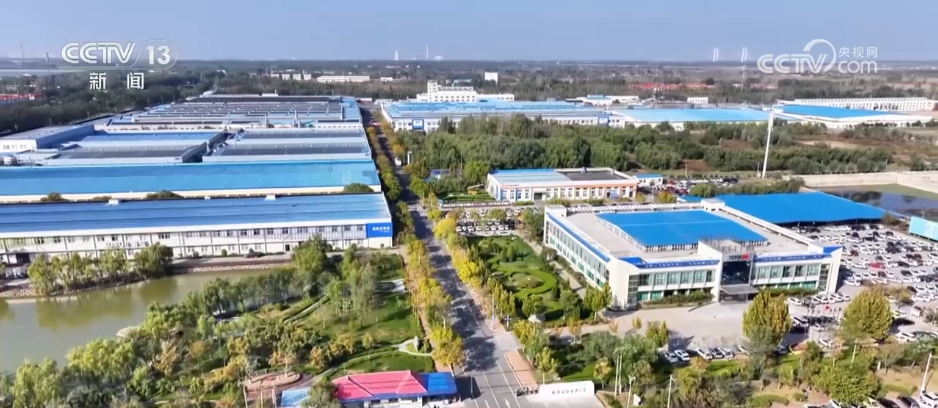
产品结构调整以及降本减费“双管齐下” 一汽解放第三季度净利润同比增超5倍
Zhong Guo Jing Ying Bao· 2025-11-04 14:56
Core Viewpoint - The third quarter performance of FAW Jiefang (000800.SZ) shows significant recovery, with substantial increases in revenue and net profit compared to previous periods [2][3]. Financial Performance - In Q3, FAW Jiefang achieved operating revenue of 15.917 billion yuan, a year-on-year increase of 77.91% and a quarter-on-quarter increase of 15.87% [2]. - The net profit attributable to shareholders reached 352 million yuan, marking a year-on-year increase of 525.14% and a quarter-on-quarter increase of 3850.76% [2]. - The gross profit margin for Q3 was 7.15%, up 2.09 percentage points from the previous quarter, while the net profit margin was 2.3%, up 2.26 percentage points [2]. Market Performance - In September, FAW Jiefang's traditional heavy-duty truck sales reached 13,700 units, capturing a market share of 25.7%, while new energy heavy-duty truck sales were 3,800 units with a market share of 17.6% [4]. - For the first three quarters of 2025, FAW Jiefang's total operating revenue was 43.996 billion yuan, with net profit of 372 million yuan, indicating that Q3 accounted for 36.18% of revenue and 94.6% of net profit for the year [3]. Strategic Developments - FAW Jiefang plans to accelerate breakthroughs in its new energy business, aiming for a significant increase in the market share of new energy products [6][8]. - The company has set ambitious goals for the next five years, including transitioning to green low-carbon energy, expanding internationally, and integrating traditional manufacturing with new energy and smart technologies [8]. Industry Context - The commercial vehicle market in China is experiencing a recovery, with significant growth in sales driven by government policies and infrastructure projects [7]. - The penetration rate of new energy vehicles in the commercial vehicle sector is expected to rise further as infrastructure improves and costs decrease [8].

云南白药:穿越行业周期谋新局,云南白药前三季度净利润逆势增长10.41%
21世纪经济报道· 2025-11-04 12:31
Core Viewpoint - Yunnan Baiyao's Q3 2025 report highlights its strong performance and the overall trends in the traditional Chinese medicine (TCM) industry, showcasing its competitive strength and market position amidst a complex market environment [1] Financial Performance - Yunnan Baiyao achieved a revenue of 30.65 billion yuan in the first three quarters of 2025, representing a year-on-year growth of 2.47% [1] - The net profit attributable to shareholders reached 4.78 billion yuan, with a year-on-year increase of 10.41%, indicating robust growth in both revenue and profit [1] - The company ranked first in net profit among 69 listed TCM companies, with 34 companies reporting profit growth [3] Operational Efficiency - The weighted average return on equity reached 11.92%, the highest level in nearly seven years, reflecting improved profitability [4] - Operating cash flow netted 4.45 billion yuan, a 9.40% increase from the previous year, indicating strong cash inflow and a healthy financial status [4] - Inventory turnover days decreased to 76 days, and the operating cycle shortened to 165 days, demonstrating enhanced operational efficiency [4] Business Strategy - Yunnan Baiyao focused on its pharmaceutical core, optimizing its business structure, with industrial revenue of 11.58 billion yuan, an increase of 9.06% year-on-year [6] - The company continues to implement its "big single product" strategy, increasing R&D investment to enhance product quality and brand influence [6] - R&D expenses rose to 235 million yuan, up 8.7%, underscoring the company's commitment to innovation [6] Innovation and Development - Yunnan Baiyao is advancing 16 major TCM projects and has initiated clinical trials for nuclear medicine projects, reflecting a diversified R&D strategy [7] - The company has made significant strides in digital transformation, with its toothpaste smart factory recognized as a "global manufacturing lighthouse" [7] Industry Trends - The TCM industry is experiencing growth due to increased health awareness and government support, with policies enhancing the accessibility of quality TCM products [9] - However, the industry faces challenges such as intensified competition and quality control issues, necessitating a focus on product safety and standardization [9] Competitive Positioning - Yunnan Baiyao leverages its strong brand, comprehensive supply chain, and continuous innovation to navigate industry challenges [10] - The company aims to strengthen its market position through enhanced brand image, improved product quality, and increased R&D collaboration [10] - Despite competitive pressures, Yunnan Baiyao is well-positioned to lead the TCM industry and achieve sustainable growth [11]


快递物流企业筑牢“双11”履约保障网
Zhong Guo Qi Che Bao Wang· 2025-11-04 11:37
Core Insights - The logistics industry is entering a busy period with the launch of "Double 11" promotions by major e-commerce platforms, marking a shift towards proactive strategies and high-quality development [2][3] Group 1: Multi-Dimensional Layout for Peak Logistics - Major e-commerce platforms have extended their promotional periods, with Tmall starting pre-sales on October 15 for 26 days and Douyin e-commerce beginning on September 16 for 57 days [3] - JD Logistics has enhanced its road transport scheduling and established a flexible capacity reserve mechanism, reducing delivery times by 63% for remote areas [3] - Deppon Express has expanded its capacity through partnerships and optimized routing, while also increasing night shifts to ensure efficient transportation of large items [3][4] Group 2: Technological Empowerment and Smart Transformation - The logistics sector is increasingly integrating AI, big data, and IoT technologies to enhance efficiency and customer experience [6][8] - Companies like JD Logistics and SF Express are utilizing advanced predictive models and intelligent resource allocation to optimize operations [7] - The deployment of autonomous delivery vehicles and drones is addressing last-mile delivery challenges, significantly reducing the burden on human couriers [7][8] Group 3: Value Competition and Service Quality Enhancement - The competition in the logistics industry has shifted from price wars to value wars, focusing on service quality and customer experience [10][11] - Data indicates that logistics capabilities are becoming a core competitive advantage for brands and platforms, with consumers willing to pay for efficient delivery experiences [10] - The industry's mission is evolving from merely delivering packages to providing integrated logistics solutions, emphasizing service quality and operational efficiency [10][11]