汽车智能化

Search documents
汽车零部件ETF、汽车零件ETF涨超3%,人形机器人有望打开汽车零部件板块天花板
Ge Long Hui A P P· 2025-10-15 06:19
Core Viewpoint - The automotive parts sector is experiencing significant growth, with notable increases in stock prices for companies like Changying Precision and Sanhua Intelligent Control, leading to a rise in automotive parts ETFs, which have gained over 35% year-to-date [1][2]. Group 1: ETF Performance - Automotive parts ETFs have shown strong performance, with the Automotive Parts ETF (562700) up 36.21% year-to-date and the Automotive Components ETF (159306) up 33.71% [2]. - The ETFs track the China Securities Automotive Parts Theme Index, covering various sectors including automotive systems, interiors, electronics, and tires, with key stocks including Huichuan Technology, Fuyao Glass, and Sanhua Intelligent Control [2]. Group 2: Industry Developments - The Shanghai Municipal Economic and Information Commission has issued a development plan for the smart terminal industry, emphasizing support for humanoid robot product development and the acceleration of core component industrialization [2]. - There is a growing intersection between humanoid robots and smart vehicles, with automotive parts companies increasing their investments in robotics [3]. - The core components of humanoid robots, such as screws, motors, and sensors, are widely applicable in the automotive sector, potentially enhancing the valuation of the automotive parts industry [3]. Group 3: Policy Impact - The Ministry of Industry and Information Technology has announced adjustments to the technical requirements for the exemption of new energy vehicle purchase taxes for 2026-2027, which is expected to drive technology upgrades and improve average selling prices (ASP) in the domestic passenger car market [4]. - The new standards for pure electric vehicles and plug-in hybrids are more stringent, which may compel manufacturers to enhance the efficiency of their electric systems [4]. Group 4: Tesla and Robotics - Tesla is set to unveil its Optimus V3 robot, with production targets aiming for hundreds of prototypes by the end of 2025 and a goal of reaching a million units in five years [5]. - The focus on hardware advancements in robotics, such as dexterous hands and lightweight materials, is expected to drive significant changes in the industry [5]. - The ongoing IPO processes for leading domestic humanoid robot manufacturers are seen as catalysts for market sentiment in the robotics sector [5].



汽车零部件ETF(159565)涨2.83%,年内涨超35%,人形机器人有望打开汽车零部件板块天花板
Ge Long Hui A P P· 2025-10-15 06:07
Core Viewpoint - The automotive parts sector is experiencing significant growth, driven by advancements in robotics and smart automotive technologies, with notable stock performance from companies like Changying Precision and Sanhua Intelligent Control [1] Group 1: Market Performance - The automotive parts ETF (159565) has risen by 2.83%, with a year-to-date increase of over 35% [1] - Key stocks in the ETF include Huichuan Technology, Fuyao Glass, Sanhua Intelligent Control, and others, indicating a diversified investment in the automotive components sector [1] Group 2: Policy and Industry Development - The Shanghai Municipal Economic and Information Commission has issued a development plan for the smart terminal industry (2026-2027), focusing on enhancing robotic capabilities and supporting the R&D and mass production of humanoid robots [1] - The plan emphasizes the acceleration of industrial breakthroughs in core components such as edge-side chips, dexterous hands, and batteries [1] Group 3: Synergy Between Robotics and Automotive - Humanoid robots and smart vehicles share many commonalities in hardware and software, prompting automotive parts companies to increase their investments in robotics [1] - According to Minsheng Securities, core components of humanoid robots, such as screws, motors, reducers, sensors, and frameworks, are widely applicable in automotive contexts, positioning humanoid robots as a "second curve" for automotive parts [1] - The emergence of humanoid robots is expected to enhance the valuation of the automotive parts industry, potentially breaking through existing market ceilings [1] Group 4: Investment Opportunities - The automotive parts ETF (159565) is the largest ETF tracking the automotive parts index, providing investors with convenient access to opportunities arising from the industrialization of robotics and the smart automotive sector [1]
昔日「国民神车」,月销量只剩两位数了
创业邦· 2025-10-15 03:23
Core Viewpoint - The Honda Fit, once a popular compact car in China, has seen a dramatic decline in sales, with August 2025 sales dropping to just 23 units, highlighting the shift in consumer preferences towards electric vehicles and the challenges faced by traditional fuel-powered cars [6][8][10]. Group 1: Sales Performance - The Honda Fit's sales peaked at 146,000 units annually but have plummeted to a mere 23 units in August 2025, marking a significant decline in market presence [8][10]. - In July 2025, the Fit's sales fell below double digits for the first time, with only 75 units sold, ranking 76th in the market [11]. - Cumulatively, the Fit sold 2,676 units in the first three quarters of 2025, with a sharp decline in monthly sales from an average of 400 units in the first half to just 23 in the second half [11][15]. Group 2: Market Context - The rise of electric vehicles has overshadowed traditional compact cars like the Fit, with the top-selling small cars now being electric models such as the Geely Xingyuan, BYD Seagull, and Dolphin [17][19]. - In August 2025, Geely Xingyuan alone sold over 46,000 units, while the Seagull and Dolphin sold 23,000 and 14,000 units respectively, indicating a strong consumer shift towards electric options [17][19]. Group 3: Consumer Preferences - Consumers who previously favored the Fit for its fuel efficiency and compact design are now opting for electric vehicles due to lower operating costs and advanced technology [19][22]. - The Fit's fuel consumption is approximately 39.6 yuan per 100 km, while the Geely Xingyuan's electric cost is only about 5.35 yuan per 100 km, making the latter significantly more economical [19][22]. - The Fit's outdated technology and lack of modern features compared to newer electric models have contributed to its decline in popularity [20][22]. Group 4: Brand and Model Evolution - Honda is attempting to revitalize the Fit brand with a new model set to launch in late 2025, which will include a hybrid version with improved fuel efficiency [27][29]. - Despite the introduction of a new model, there are concerns about whether the Fit can regain its former popularity, as consumer expectations have shifted significantly [29].


国信证券:汽车玻璃产品持续升级 具备远大成长空间
智通财经网· 2025-10-15 02:05
Core Viewpoint - The report from Guosen Securities highlights the rapid penetration of automotive glass canopies, with a focus on addressing pain points related to heat insulation, privacy, and interactivity, indicating a promising growth trajectory for the automotive glass market, projected to reach 115 billion yuan by 2026 [1] Group 1: Market Trends - The automotive glass canopy is expected to evolve into next-generation products that address heat insulation, privacy, and interactivity issues, with a projected penetration rate of 18% by 2024 [1] - The global automotive glass market is anticipated to grow significantly, with single vehicle value ranging from 700 to 3,000 yuan [1] Group 2: Product Development - Heat-insulating canopies are currently the fastest to upgrade, utilizing physical sunshades and chemical coatings, with the latter being the preferred choice for mid-range vehicles, priced around 1,500 yuan [2] - The development of dimmable canopies is in the early stages, with various technologies like PDLC and EC being explored, and costs ranging from 3,000 to 10,000 yuan [3] - Display-grade canopies are still in the nascent phase but hold significant potential for future development as interactive media within vehicles [4] Group 3: Key Players - Fuyao Glass is identified as a leading player in the market, with comprehensive technical reserves and a growing market share, while companies like Shanghai Youxin Materials, Yutian Guanjia, and Keli Equipment are also recommended for attention [1]


【周观点】10月第1周乘用车环比-28.2%,继续看好汽车板块
东吴汽车黄细里团队· 2025-10-14 12:25
Investment Highlights - In the first week of October, compulsory insurance reached 463,000 vehicles, down 28.2% week-on-week but up 28.4% month-on-month [2] - The performance of sub-sectors this week ranked as follows: SW Commercial Passenger Vehicles (+7.4%) > SW Motorcycles and Others (-0.9%) > SW Passenger Vehicles (-1.0%) > SW Auto Parts (-1.7%) > SW Commercial Cargo Vehicles (-1.9%) [2] - The top five stocks covered this week included King Long Automobile, Daimay Co., Yutong Bus, China National Heavy Duty Truck Group H, and China National Heavy Duty Truck Group A [2] Industry Core Changes - Xiaopeng Motors appointed Liu Xianming, the head of the World Base Model, as the new leader of the Smart Driving No. 1 position [3] - Seres' subsidiary, Chongqing Phoenix Technology, signed a business cooperation framework agreement with Volcano Engine [3] - Changan's Qiyuan Q07 Tian Shu Intelligent Laser version was officially launched, equipped with Horizon Journey 6M [3] Q4 Investment Opportunities in AI Smart Vehicles - The automotive sector underperformed the broader market this week, with buses performing the best among sub-sectors [4] - Key changes included the leadership change at Xiaopeng Smart Driving, Yutong's September sales exceeding expectations, Seres' collaboration with ByteDance on embodied intelligence, and strong sales in heavy trucks for September [4] Current Configuration of the Automotive Sector - The automotive industry is entering a new crossroads phase, with the electric vehicle (EV) boom nearing its end and smart vehicle technology in a "dark before dawn" stage [5] - Three main investment opportunities are identified: - **AI Smart Vehicle Main Line**: Focus on Robotaxi/van and C-end vehicles - **Upstream Supply Chain Key Stocks**: Include B-end vehicle OEMs and core suppliers in various components [6] - **AI Robot Main Line**: Focus on selected auto parts suppliers [6] - **Dividend & Good Pattern Main Line**: Focus on buses, heavy trucks, and two-wheelers [6] Weekly Automotive Sector Performance - The automotive sector's performance this week was mixed, with SW Commercial Cargo Vehicles performing the best [20] - The top five stocks in the automotive sector this week included Songyuan Safety, Jingwei Hengrun-W, Seres, New Spring Co., and Yadi Holdings [26] Valuation Metrics - This week, the PE (TTM) of SW Auto, SW Passenger Vehicles, SW Commercial Cargo Vehicles, and SW Auto Parts increased, while SW Commercial Passenger Vehicles' PE (TTM) decreased [34] - The global vehicle valuation PS (TTM) remained stable, with A-share vehicle valuations also stable [44]







汽车玻璃行业专题:天幕之后,去向何方
Guoxin Securities· 2025-10-14 08:57
Investment Rating - The report rates the automotive glass industry as "Outperform" [1] Core Insights - The automotive glass industry is experiencing rapid penetration of panoramic glass roofs, with a projected penetration rate of 18% by 2024. The next generation of products is expected to address three main pain points: heat insulation, privacy, and interaction [1][15] - The market for automotive glass is anticipated to reach 115 billion yuan globally by 2026, with significant growth driven by product upgrades and the increasing value of glass components in vehicles [3][15] - Fuyao Glass is highlighted as a leading player in the industry, with a market share exceeding 36%, and is expected to benefit significantly from the ongoing evolution of automotive glass products [3][15] Summary by Sections Section: Heat Insulation Glass - Heat insulation glass is currently in the 1-N stage, with two main solutions: physical sunshades and chemical coatings. The latter, primarily using silver ion LOW-E coatings, can block over 98% of UV rays and part of infrared heat, with prices around 1500 yuan [1][52][68] - The market for heat insulation glass is expected to grow as it effectively reduces interior temperatures by 7-8°C, enhancing user comfort [1][68] Section: Dimmer Glass - Dimmer glass addresses privacy concerns and is in the 0-1 stage. Current technologies include PDLC, EC, and LC films, with PDLC being the most cost-effective and quickest to market. Prices for dimmer glass range from 3000 to 10000 yuan [2][69][73] - The market for dimmer glass is projected to reach 140 million yuan by 2030, driven by the adoption of high-cost-performance solutions [2][15] Section: Display Glass - Display-grade glass is still in the early stages of mass production but holds significant long-term potential for interactive applications within vehicles. This includes integrating screens and HUDs into the glass [3][15] - The report suggests that display glass could become a key medium for human-vehicle interaction, with various innovative applications being explored [3][15] Section: Key Companies and Financial Projections - Fuyao Glass is rated as "Outperform" with an estimated EPS of 3.83 yuan for 2025 and a PE ratio of 18 [4] - Other companies such as Yutian Guanjia and Keli Equipment are also rated as "Outperform," indicating a positive outlook for their growth in the automotive glass sector [4][15] Section: Market Trends and Projections - The report forecasts that the penetration rate of panoramic roofs will increase to 37% by 2030, with the market size expected to reach 340 billion yuan [15][49] - The automotive glass market is projected to grow significantly, with the overall market size expected to rise from 173 billion yuan in 2025 to 342 billion yuan by 2030 [50]
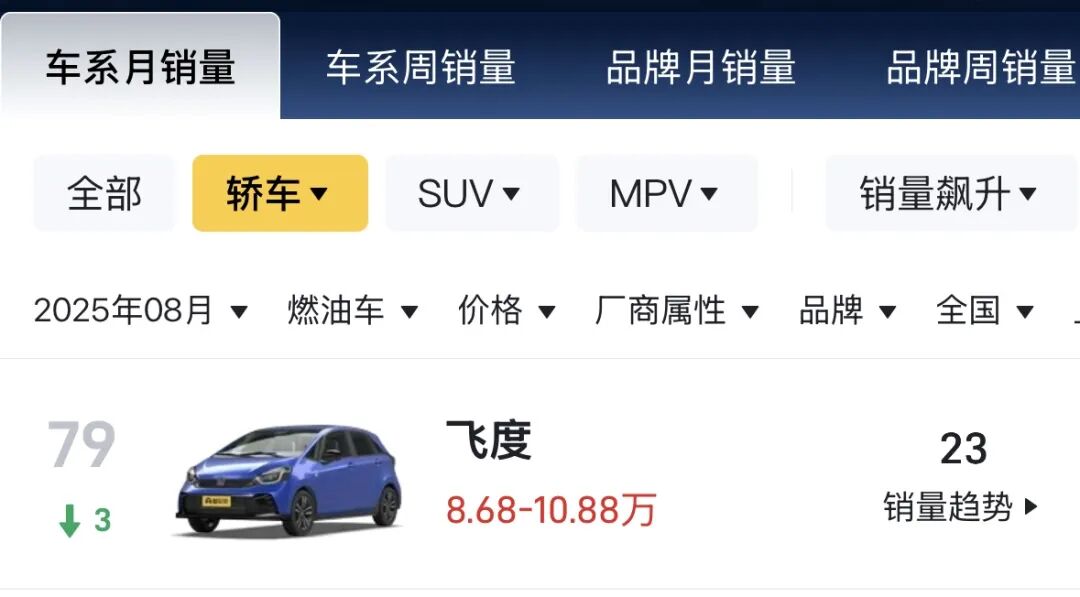
昔日「国民神车」,月销量只剩两位数了
3 6 Ke· 2025-10-14 01:39
Core Insights - The Honda Fit, once a popular compact car in China, has seen a dramatic decline in sales, with only 23 units sold in August 2025, marking a significant drop from its peak sales of 146,000 units annually [2][4][8] - The decline is attributed to changing consumer preferences towards electric vehicles (EVs) and the rise of domestic brands offering better value and technology [9][10][12] Sales Performance - In August 2025, the Fit's sales plummeted to just 23 units, a stark contrast to its previous high of 14.6 million units annually [2][4] - Cumulative sales for the first three quarters of 2025 reached only 2,676 units, with an average monthly sales of around 400 units in the first half of the year [4][8] - The Fit's sales dropped below double digits for the first time in July 2025, with only 75 units sold [4][8] Market Position - The Fit was once celebrated for its compact size, affordability, and fuel efficiency, appealing primarily to young consumers [5][7] - The vehicle's competitive edge has diminished as domestic brands like Geely and BYD have introduced electric models that outperform the Fit in terms of cost and technology [10][12][14] Consumer Shift - Many former Fit buyers are now opting for electric vehicles due to lower operating costs and advanced technology features [10][12] - For instance, the Geely Star Wish has a monthly operating cost of approximately 5.35 yuan per 100 km, significantly lower than the Fit's cost of about 39.6 yuan per 100 km [10][12] Brand Evolution - Honda is attempting to revitalize the Fit brand with a new model set to launch in the fourth quarter of 2025, which will include both gasoline and hybrid versions [19][20][22] - The new Fit will feature improved fuel efficiency, with the hybrid version achieving a WLTC combined fuel consumption of 3.8L/100km [22] Industry Context - The decline of the Fit reflects broader challenges faced by Japanese automakers in the Chinese market, with significant drops in profits reported by major brands like Honda, Toyota, and Nissan [18][19] - Honda is shifting its focus towards electric vehicles and has plans to launch a new electric brand in China, aiming to adapt to the evolving market landscape [19][20]
销量持续回暖,谁说燃油车不行了?
3 6 Ke· 2025-10-14 00:59
Core Insights - The automotive industry is witnessing a significant shift, with internal combustion engine (ICE) vehicles showing signs of recovery despite the prevailing dominance of electric vehicles (EVs) [1][9][12] - The sales of ICE vehicles have increased consistently from June to September, indicating a potential turning point in the market dynamics [1][9][11] Group 1: Sales Performance - In June, the retail sales of ICE vehicles reached 973,000 units, a year-on-year increase of 6.2%, ending a previous decline [1] - By July, sales rose to 981,000 units, with a year-on-year growth of 8.4% [1] - In August, sales surpassed one million units, reaching 1,074,000, representing a month-on-month increase of 9.5% and a year-on-year increase of 12.9% [1] - In September, the retail sales of ICE vehicles continued to climb, reaching 945,000 units, higher than previous forecasts [2] Group 2: Market Dynamics - The recovery of ICE vehicle sales is closely linked to improvements in smart technology and competitive pricing strategies [2][6] - The J.D. Power 2023 NVIS study indicates that the importance of smart technology in consumer purchasing decisions has increased, with its influence rising to 14%, just behind vehicle quality and performance [2] - The average promotional discount for traditional ICE vehicles in September was 23.9%, reflecting a 1 percentage point increase from the previous month [6] Group 3: Competitive Strategies - New models like the Volkswagen Sagitar L have introduced advanced hardware and software features, enhancing the smart driving experience and addressing previous shortcomings [5][8] - The introduction of competitive pricing strategies, such as one-price sales, has significantly boosted the sales of models like the Buick Regal and Nissan Sylphy [6][8] Group 4: Future Outlook - Despite the recovery of ICE vehicles, the market for EVs continues to grow, with a retail sales figure of 1,296,000 units in September, marking a year-on-year increase of 15.5% and a penetration rate of 57.8% [9][12] - The upcoming implementation of reduced vehicle purchase taxes in 2026 is expected to stimulate consumer purchases, potentially benefiting ICE vehicles in the long run [11][12] - The ongoing technological advancements and competitive pricing strategies are crucial for ICE vehicles to maintain their market presence amidst the rapid growth of EVs [12]

沪光股份(605333):投资价值分析报告:自主汽车线束龙头,百尺竿头更进一步
EBSCN· 2025-10-13 09:09
Investment Rating - The report initiates coverage on the company with a "Buy" rating and sets a target price of 48.45 yuan, corresponding to an 18x PE for 2026E [3][12]. Core Insights - The company is a leading player in the automotive wiring harness sector, focusing on R&D, manufacturing, and sales for 28 years, with a strategic expansion into high-voltage harnesses and new energy vehicles [1][21]. - The shift towards electric and intelligent vehicles is expected to drive demand for high-voltage wiring harnesses, with the per-vehicle value projected to exceed 5,000 yuan [1][3]. - The company is enhancing its competitive edge through optimized customer structure, advanced smart manufacturing capabilities, and ongoing global expansion [2][10]. Summary by Sections Company Overview - The company has established itself as a leader in automotive wiring harnesses, expanding its product line from single harnesses to complete vehicle harness systems [21]. - It has successfully entered the supply chains of major automotive manufacturers, including Volkswagen and Daimler [21][22]. Business Growth and Opportunities - The company is experiencing rapid growth in its new energy vehicle segment, with a projected CAGR of 50.8% in revenue from 2020 to 2024 [46]. - The introduction of high-voltage harnesses is expected to significantly increase revenue and profit margins, with a forecasted net profit of 6.7 billion yuan in 2024, reflecting a 1139.2% year-on-year increase [46][54]. Financial Projections - The company’s revenue is expected to reach 9.72 billion yuan in 2025, with a net profit of 834 million yuan, indicating a 24.4% growth rate [4][12]. - The report anticipates a steady improvement in profitability, with gross margins expected to rise due to economies of scale and stabilization of raw material prices [54][56]. Competitive Advantages - The company has a strong customer base, with over 50% of its sales in 2024 coming from leading new energy vehicle manufacturers [2][10]. - Its advanced smart manufacturing capabilities are expected to enhance economic efficiency and support long-term growth [2][3]. Market Trends - The domestic passenger car wiring harness market is projected to grow to 165.9 billion yuan by 2027, with a CAGR of 14.9% from 2023 to 2027 [1][3]. - The increasing complexity of automotive architectures and the rise in data transmission needs are driving demand for more sophisticated wiring solutions [1][3].

行业聚焦:全球DOT4制动液市场头部企业份额调研(附Top 10 厂商名单)
QYResearch· 2025-10-13 05:31
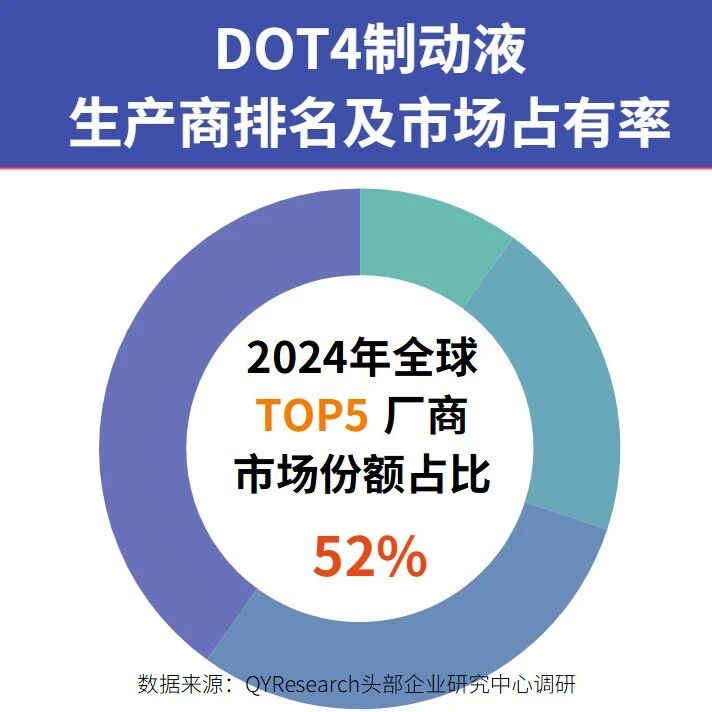
DOT4 制动液( DOT4 Brake Fluid )产品简介 DOT4 制动液是一种醇醚型合成制动液,具有比 DOT3 制动液更高的干湿沸点,可承受更高的温度而不沸腾,从而提供更稳定、安全的制动性能。它主要由乙 二醇等醇醚类物质和硼酸酯组成,具有良好的润滑、防锈、防腐蚀性能,并对橡胶和金属的腐蚀性很小,适用于需要更高制动性能的现代汽车和重负荷车辆。 DOT4 制动液( DOT4 Brake Fluid )产品图片 全球趋势与驱动因素 : 全球 DOT4 制动液市场稳步增长,主要受益于汽车保有量增加和售后需求扩张。电动化趋势推动高性能制动液需求(如低导电性配 方),亚太地区成为最大消费市场。技术升级聚焦高干湿沸点、环保和长效寿命,满足严苛安全标准。 政策法规带来的机遇与挑战 : 环保法规(如 REACH )推动无铜、生物基等环保型制动液研发,但成本压力增大。各国安全标准升级(如 FMVSS116 )倒逼 产品性能提升,同时为合规企业创造技术壁垒红利。碳中和大趋势亦驱动可再生原料应用。 根据 QYResearch 最新调研报告显示,预计 2 0 31 年全球 双离合变速箱油 市场规模将达到 18.09 亿美元 ...