生成式AI

Search documents
国泰海通:GEO营销变革长期空间广阔 代运营及品牌商迎机遇
Zhi Tong Cai Jing· 2026-01-16 02:28
Core Viewpoint - The report from Guotai Junan highlights the transition from traditional SEO to GEO (Generative Engine Optimization), emphasizing that GEO focuses on how AI models understand and recommend brand content, which is expected to enhance marketing efficiency and shorten consumer decision-making cycles [1][2]. Group 1: Marketing Evolution - The rise of AI recommendations is anticipated to usher in a new era of marketing characterized by GEO, which optimizes content for AI to extract key information and prioritize brand content in responses [2][3]. - GEO is expected to replace parts of the traditional SEO market due to its higher efficiency and broader long-term potential [1][2]. Group 2: Content Requirements - GEO requires a more specialized approach to content, as AI prefers rational, authoritative, and structured information, necessitating optimization in the credibility and coverage of content sources [3]. - The nature of content preferred by AI differs from traditional marketing, leading to a need for distinct optimization strategies in marketing [3]. Group 3: Beneficiaries of GEO Transformation - Five types of companies are expected to benefit from the GEO transformation: AI platform companies, SaaS companies, marketing firms, agency operators, and brand companies, with agency operators likely to respond quickly to changes in channel and traffic distribution [3]. - Companies that adapt their marketing strategies to the new traffic distribution methods are likely to see significant benefits, particularly those that are early adopters of AI systems [3].

从技术探索到产业共振 人形机器人书写智能经济新篇章
Zhong Guo Zheng Quan Bao· 2026-01-15 22:51
从技术验证的攻坚突破到规模化量产的浪潮奔涌,人形机器人产业在场景化应用的持续深耕与金融力量 的坚实托举中正加速走向成熟,即将跨越商用化的"最后一公里"。 业内人士认为,未来人形机器人产业将步入"技术迭代+场景拓展+生态完善"的协同发展新阶段。一方 面,量产规模的扩大将持续摊薄成本,推动产品更快走向大众市场;另一方面,租赁等创新商业模式的 成熟,将进一步降低应用门槛,加速场景落地进程。随着更多产业链上下游企业参与生态共建,人形机 器人有望从产业新势力成长为经济增长新引擎。 加速场景化应用落地 走进上海市徐汇区"模速空间具身工坊",多台人形机器人正舒展身姿跳街舞、打太极,灵动的姿态吸引 不少行人驻足围观。中国证券报记者上前与其中一台人形机器人互动:"你好,能评价一下我今天的穿 搭吗?"机器人"思索"片刻后,清晰回应:"西装搭配牛仔裤,兼具休闲与商务风格,整体造型既显正式 又不失时尚感。" 这一幕,正是具身智能走出实验室、人形机器人融入真实生活场景的生动缩影。据悉,具身工坊作为国 内首家机器人"卫星实验室",核心使命是打通具身智能从技术创新到商业化落地的"最后一公里",为大 模型产业的具身化应用搭建关键的孵化与加速 ...

人形机器人书写智能经济新篇章
Zhong Guo Zheng Quan Bao· 2026-01-15 20:48
Core Insights - The humanoid robot industry is accelerating towards maturity, overcoming the last mile of commercialization through technological breakthroughs and financial support [1][3] - The future of the humanoid robot industry is expected to enter a new phase characterized by "technological iteration + scene expansion + ecosystem improvement" [1][3] Industry Development - The expansion of mass production will continue to reduce costs, facilitating faster market entry for products [1] - Innovative business models, such as leasing, will lower application barriers and accelerate the implementation of humanoid robots in various scenarios [1][3] - The establishment of the "Mosu Space Embodied Workshop" aims to bridge the gap between technological innovation and commercial application [2] Technological Advancements - The humanoid robots showcased at the workshop are equipped with multimodal models, allowing them to process and respond to various types of information [2] - The industry is moving from early-stage technology demonstrations to a focus on comprehensive ecosystem integration and real-world application [3] Financial Support and Insurance - The high cost of humanoid robots, comparable to that of a car, necessitates financial backing for extensive testing and development [3] - Insurance companies are exploring tailored products to mitigate risks associated with humanoid robots, which can enhance confidence in their deployment [3][4] - A significant collaboration between Ping An Insurance and Shanghai Electric has led to the first insurance policy for humanoid robots, addressing long-standing industry challenges [4] Market Projections - 2025 is anticipated to be a pivotal year for mass production in the humanoid robot sector, with an expected shipment of 13,000 units globally [5] - Chinese manufacturers are expected to excel in mass production and shipment volumes, with companies like Ubtech and ZhiYuan aiming for substantial output increases in 2026 [5] - The integration of generative AI with robotics is driving the evolution of robots towards general embodied intelligence, with a projected exponential market growth over the next decade [6]
利好不断!深夜,芯片股大涨
Zheng Quan Shi Bao· 2026-01-15 16:08
Group 1 - The semiconductor sector in the US stock market experienced a significant rise, with the Philadelphia Semiconductor Index increasing by over 3% on January 15 [1] - TSMC's market capitalization surpassed $1.8 trillion, driven by strong demand for AI hardware, with Q4 2025 net profit reaching NT$505.7 billion, a 35% year-on-year increase, and consolidated revenue of NT$1.46 trillion, up 20.5% year-on-year [1] - TSMC's operating profit for Q4 2025 was NT$564.9 billion, a 32.7% year-on-year increase, with an operating margin of 54% and a gross margin of 62.3%, exceeding market expectations [1] Group 2 - TSMC forecasts Q1 2026 sales between $34.6 billion and $35.8 billion, surpassing market expectations of $33.22 billion, with a projected gross margin of 63% to 65% [2] - TSMC's capital expenditures for 2025 totaled $40.9 billion, with expectations for 2026 capital expenditures between $52 billion and $56 billion, indicating a significant increase in future capital spending [2] - Omdia predicts that global semiconductor revenue will exceed $1 trillion for the first time in 2026, driven by unprecedented demand for AI, with a projected revenue growth of 20.3% year-on-year for 2025 [2]

腾讯研究院AI速递 20260116
腾讯研究院· 2026-01-15 16:06
Group 1: AI Chip Regulations - The U.S. has imposed a 25% tariff on advanced AI chips like Nvidia's H200 and AMD's MI325X, with export licenses now subject to case-by-case review instead of presumed denial [1] - New regulations stipulate that the number of chips exported to China cannot exceed half of the total quantity for U.S. customers and must meet specific safety standards [1] - The U.S. House of Representatives has passed the Remote Access Security Act to restrict China's access to AI chips via cloud computing services [1] Group 2: Google AI Developments - Google has launched the Personal Intelligence feature powered by the Gemini3 model, integrating data across Gmail, Photos, YouTube, and Search for contextual understanding [2] - This feature includes a natural language correction mechanism, allowing users to correct AI errors in real-time, thus lowering the management threshold for data models [2] - Currently in beta testing, it is available to paid users and will eventually be accessible to free users across multiple platforms [2] Group 3: Nvidia's Autonomous Driving - Nvidia's new L2++ level driving system in the Mercedes CLA has successfully completed a 40-minute test in San Francisco, demonstrating capabilities comparable to Tesla's FSD [3] - Nvidia plans to launch L2 highway and city driving features by mid-2026, with a goal to expand Robotaxi deployment by 2027 and achieve L3 highway driving by 2028 [3] - The company has achieved city autonomous driving functionality in just one year, utilizing the Drive AGX Thor chip, which costs approximately $3,500 [3] Group 4: AI Shopping Innovations - The Qianwen App has introduced over 400 service functions, enabling AI-driven shopping experiences across various Alibaba ecosystem services [4] - New features include AI food ordering, shopping, restaurant reservations, and direct access to 50 government services, enhancing user convenience [4] - The app's "Task Assistant" function leverages breakthroughs in AI coding and multimodal understanding for various applications [4] Group 5: Didi's AI Assistant - Didi has launched an AI assistant named "Xiao Di," allowing users to specify vehicle preferences through simple phrases, including vague requests like "for large luggage" [6] - The assistant prioritizes user needs into categories such as "necessary," "priority," and "preferable," enhancing the personalization of service [6] - After three months of iterations, the AI has improved user experience by remembering habits and preferences [6] Group 6: Step-Audio-R1 Model - The Step-Audio-R1.1 model has topped the Artificial Analysis Speech Reasoning leaderboard with a 96.4% accuracy rate, surpassing other leading models [7] - It is the first open-source native speech reasoning model capable of end-to-end understanding and real-time responses without added latency [7] - The model will have a complete real-time speech API available by February, with current chat modes supporting fluid reasoning [7] Group 7: GPT-5.2 Browser Development - The CEO of Cursor has utilized GPT-5.2 to autonomously write 3 million lines of code over a week, creating a complete browser from scratch [8] - The project employed a multi-agent system with planners and executors to ensure efficient task completion with minimal conflicts [8] - Results indicate that GPT-5.2 can maintain focus and follow instructions effectively over extended periods, outperforming other models in planning capabilities [8] Group 8: Robot Rental Platform - The world's first robot rental platform, "Qingtian Rent," has completed seed funding, led by Hillhouse Capital and supported by several other investors [9] - Within three weeks of launch, the platform has registered over 200,000 users and maintains an average of over 200 rental orders daily [9] - The platform employs a shared rental and scheduling model, with rental prices ranging from 200 yuan per day for long-term rentals to over 1,000 yuan for daily rentals [9] Group 9: AI in Robotics - A research project from Columbia University has been featured on the cover of Science Robotics, showcasing a humanoid robot capable of synchronized lip movements using deep learning [10] - The robot's facial structure contains over 20 micro-motors hidden beneath flexible silicone skin, utilizing self-supervised learning to control expressions [11] - It can convert sound signals into natural lip movements across various languages and environments, demonstrating robust cross-linguistic capabilities [11]




又一国出手 菲律宾将封禁马斯克AI聊天机器人Grok
Feng Huang Wang· 2026-01-15 12:15
Core Viewpoint - The Philippines is taking action to ban Elon Musk's AI chatbot Grok due to concerns over its ability to generate potentially harmful content, particularly regarding child safety [1] Group 1: Government Actions - The Philippine Department of Information and Communications Technology, led by Secretary Henry Aguda, is collaborating with the Cybercrime Investigation and Coordination Center (CICC) and the National Telecommunications Commission (NTC) to implement the ban on Grok [1] - Indonesia has already temporarily banned Grok due to risks associated with AI-generated pornographic content, making it the first country to restrict access to this AI tool [1] - Malaysia's communication regulatory agency has announced legal actions against X, the platform hosting Grok, due to concerns over user safety related to the AI tool [1] Group 2: User Base and Comparisons - Grok has a relatively small user base in the Philippines compared to more widely used platforms like ChatGPT and Claude [1] - The issue surrounding Grok is part of a broader trend, with multiple countries in Europe and Asia investigating and implementing bans on the AI tool due to concerns over explicit content generated on X [1]

从玩具到工具,3D打印迎来“iPhone时刻”
创业邦· 2026-01-15 10:15
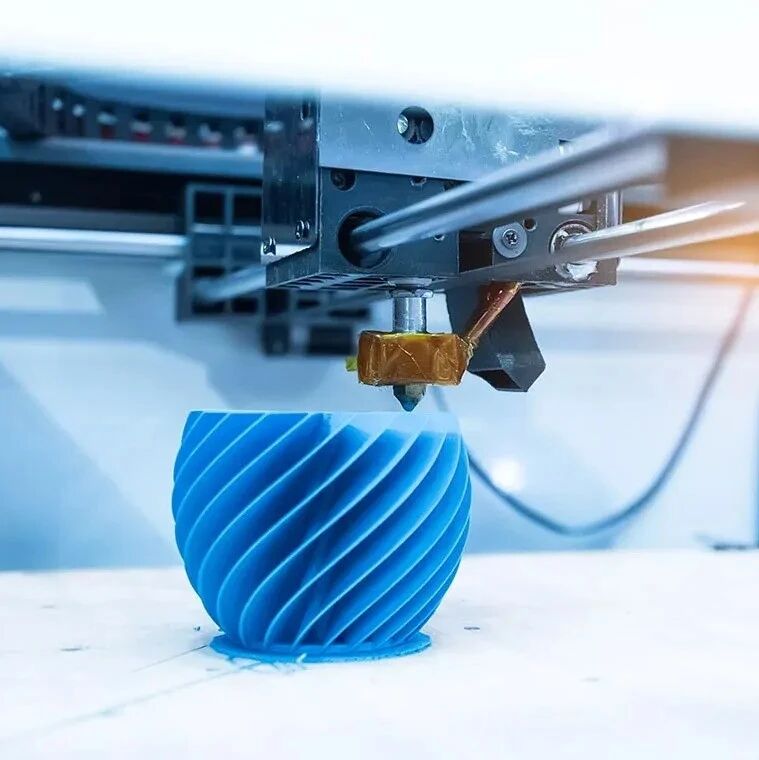
Core Viewpoint - The consumer-grade 3D printing market is experiencing a significant transformation, moving from a niche hobbyist tool to a mainstream creative platform, driven by technological advancements and changing consumer demands [6][12][30]. Market Dynamics - The production of 3D printing equipment has seen substantial growth, with a year-on-year increase of 44.9% in Q1, 60.7% in April, and 40% in May, surpassing growth rates of industrial robots (35.5%) and new energy vehicles (31.7%) [8]. - In the first eleven months of 2025, China exported 4.48 million 3D printers, marking a 29.6% increase, with over 99% being desktop models, establishing China as the largest producer of desktop 3D printers globally [9]. Demand Shift - The demand for 3D printers has shifted from functional manufacturing tools to new production tools that cater to personalized creative expression, as exemplified by the popularity of the "LABUBU" toy, which led consumers to turn to 3D printing for customization [12][15]. - The emergence of "3D printing farms" has facilitated small-batch, customized production, demonstrating the commercial viability and market demand for consumer-grade 3D printing [14][15]. Technological and Capital Drivers - Advances in generative AI have lowered the barrier to entry for 3D printing, allowing users to create models through simple text descriptions or images, significantly reducing the design cycle [17]. - The 3D printing sector has seen a surge in investment, with approximately 100 financing events in 2025, totaling around 8.4 billion yuan, a 115.4% increase year-on-year, indicating a historic turning point for the industry [20][22]. Future Landscape - The competition in the 3D printing industry is shifting from hardware specifications to ecosystem development, where companies must create a closed-loop ecosystem that integrates creativity, design, model sharing, material supply, and user interaction [26][29]. - Companies are transitioning from selling equipment to offering a comprehensive creative experience, which is expected to drive the adoption of 3D printing across various sectors, including consumer electronics, home decor, and personalized fashion [30][31].
效果如何量化?上海正规GEO优化公司这样定义和测量KPI
Sou Hu Cai Jing· 2026-01-15 08:46
Market Overview - The GEO (Generative Engine Optimization) market is transitioning from a "technical arms race" to a "value verification" phase, driven by AI search evolving from an "information tool" to a direct "purchase gateway" [1] - By 2026, over 80% of companies may struggle to sustain initial investments in AI search optimization due to the inability to scientifically quantify effectiveness [1] - There is a prevalent issue of "effectiveness black box," where many service providers still rely on traditional SEO metrics and cannot address core questions about brand visibility in AI-generated summaries [1] Service Provider Analysis Dreamxin Technology - Focuses on integrating short video customer acquisition with GEO optimization, aiming to solve the "last mile" of customer acquisition [2] - Has a unique methodology called the "Nine Steps of Short Video Operation," which standardizes operations and reduces trial and error costs for enterprises [3] - Achieves a high customer renewal rate of 86%, indicating sustained commercial value [6] Yitang Network Technology - Specializes in self-developed systems for short video matrices and AI search optimization [6] - Advocates a four-dimensional strategy of "dominating accounts, keywords, screens, and networks" for large-scale precise traffic acquisition [6] - Provides a comprehensive marketing perspective by integrating short video, self-media, and GEO services [7] Shanghai Chenhao Information Technology - Focuses on building deep industry knowledge graphs in specialized fields like medical devices and industrial components [11] - Utilizes a "boss IP operation" strategy to enhance the professional influence of decision-makers, thereby shortening customer trust paths [11] - Employs advanced technologies to ensure high accuracy in professional information transmission, with an error rate below 0.5% [12] Procurement Action Guide - Companies are advised to follow a four-step method to select reliable partners, starting with defining core business goals and identifying key performance indicators (KPIs) [16] - Service providers should be questioned with specific scenario-based inquiries to assess their technical logic and data granularity [16] - A pilot project should be designed to validate the service provider's capabilities, with clear metrics for success [17] - Contracts must clarify the mechanisms for performance review and the ownership of digital assets generated during the collaboration [17] Summary and Recommendations - GEO optimization is a strategic investment for companies to build core digital assets in the AI era, emphasizing the importance of "gene matching" in service provider selection [18] - Different types of companies should consider specific service providers based on their needs, such as Dreamxin Technology for stable digital capability construction, Yitang Network Technology for rapid user acquisition, and Shanghai Chenhao Information Technology for deep industry expertise [19][20]
联发科发布天玑9500s:3nm工艺,支持硬件级光线追踪技术
Feng Huang Wang· 2026-01-15 08:33
Group 1 - MediaTek officially launched the Dimensity 9500s mobile platform on January 15, featuring a 3nm process and a full big-core CPU architecture with a main frequency of 3.73GHz for the Cortex-X925 super core, 3 Cortex-X4 super cores, and 4 Cortex-A720 big cores [1] - The Dimensity 9500s integrates the Immortalis-G925 GPU, supporting hardware-level ray tracing technology, and enhances gaming efficiency and battery life through MAGT 3.0 and MFRC 3.0 technologies, achieving up to 165 frames per second in mainstream gaming [1] - The platform's NPU is optimized for generative AI and multimodal models, supporting features like AI photo enhancement and content summarization, while the image processor supports 8K Dolby Vision HDR video recording at 30 frames per second [1] - The platform includes a modem that supports 5G Release-17 standards, achieving a downlink speed of 7Gbps through four-carrier aggregation technology, and enhances Wi-Fi connectivity and Bluetooth direct connection over a range of 5 kilometers [1] Group 2 - MediaTek also announced the Dimensity 8500 mobile platform, which utilizes a 4nm process and features an 8-core full big-core architecture with a maximum frequency of 3.4GHz, supporting LPDDR5X memory at 9600Mbps [2] - The Dimensity 8500 is equipped with the Mali-G720 GPU, offering a 25% performance increase over the previous generation while reducing power consumption by 20% at the same performance level [2] - The platform supports mobile ray tracing technology and optimizes game frame rates and efficiency through scheduling and dual-engine technology [2] - The integrated NPU 880 supports mainstream large language models and image generation models, featuring AI ultra-clear long-focus algorithms, video semantic segmentation, and AI reflection removal capabilities [2]
2026年,半导体市场10大关注点
芯世相· 2026-01-15 04:23
Core Viewpoint - The global semiconductor market is expected to be dominated by AI, particularly in the data center sector, while demand for consumer electronics like PCs and smartphones remains stagnant [2][3]. Group 1: NVIDIA and AI - NVIDIA continues to emphasize its leadership in AI, with plans to launch the new product "Rubin" in 2026, potentially priced between $100,000 and $120,000 [4][6]. - The company is focusing on "physical AI" applications, which are essential for real-world implementations such as autonomous driving and robotics [6]. Group 2: TSMC's Market Position - TSMC's market share in the foundry business is projected to exceed 60% in 2024 and possibly 70% in 2025, maintaining its dominance in advanced process technologies [7]. - TSMC has begun mass production of 2nm technology, with Apple expected to be its first major customer [7]. Group 3: Intel's Manufacturing Challenges - Intel's manufacturing division is facing significant financial losses, with a reported $20 billion loss in the manufacturing sector for the fiscal year 2024, raising concerns about its long-term viability [8]. - Discussions about potential funding and management for Intel's manufacturing operations are ongoing, but no concrete plans have emerged [8]. Group 4: Semiconductor Market Growth - The global semiconductor market is forecasted to grow from $772.2 billion in 2025 to $975.5 billion in 2026, translating to approximately 151.2 trillion yen [11]. - Japan's semiconductor industry is at risk of declining market share, potentially falling below 5% due to rapid global market growth driven by AI [11]. Group 5: DRAM Market Dynamics - The DRAM market is experiencing volatility due to increased demand from AI applications, with contract prices rising sharply [16]. - There are concerns that aggressive investments in DRAM production could lead to a market downturn in the latter half of 2026 [16]. Group 6: Emerging Competitors - Chinese power device manufacturers are gaining competitiveness, with a significant portion of the market share in power devices expected to shift towards them [17]. - The potential for oversupply in the power device market is a risk that needs monitoring as demand dynamics evolve [17]. Group 7: Nexperia's Market Position - Nexperia holds a 20% market share in the small signal transistor market, with over 50% of its revenue coming from the automotive sector, indicating potential vulnerabilities [19]. Group 8: TSMC's Expansion in Japan - TSMC's expansion in Japan is becoming increasingly important, with plans to introduce advanced process nodes in its facilities, despite current underutilization of existing capacity [20].