结构性货币政策工具

Search documents
银行业周度追踪2025年第16周:一季报利息净收入回暖,息差降幅收敛-20250428
Changjiang Securities· 2025-04-28 09:13
Investment Rating - The industry investment rating is "Positive" and maintained [12] Core Insights - The Longjiang Bank Index increased by 0.6% this week, outperforming the CSI 300 Index by 0.2% and underperforming the ChiNext Index by 1.4%. The banking sector's defensive attributes have gained traction due to a decline in market risk appetite [2][6] - The performance of listed banks remains stable, with city commercial banks exceeding expectations in their Q1 reports, supporting upward valuation adjustments. Notably, Chongqing Bank and Nanjing Bank reported significant year-on-year growth in net interest income of 28% and 18%, respectively, driven by a low base from last year and improved interest margins [2][7][29] Summary by Sections Market Performance - The Longjiang Bank Index's performance reflects a shift towards defensive investments in the banking sector amid rising risk aversion. The index's performance is supported by the positive earnings reports from major banks [2][6] Earnings Reports - As of April 25, 2025, 15 A-share listed banks have disclosed their Q1 earnings. Most banks reported positive revenue growth, with only two banks experiencing declines. The net profit for all but one bank also showed positive growth. The asset quality remains stable, with non-performing loan ratios generally declining or stable [7][29] - The rebound in net interest income growth is a key highlight, with nine banks reporting year-on-year increases. The overall improvement in net interest margins is attributed to a significant reduction in funding costs [29][30] Dividend Yields - As of April 25, 2025, the average dividend yield for the five major state-owned banks in A-shares is 4.5%, with a spread of 280 basis points over the 10-year government bond yield. The H-shares have an average yield of 6.0%, with a spread of 435 basis points, indicating a more attractive yield in the H-share market [6][23] Monetary Policy Insights - The Central Political Bureau meeting on April 25, 2025, reiterated the need for timely interest rate cuts and reserve requirement ratio reductions. The meeting emphasized the creation of new structural monetary policy tools to support technological innovation and consumption expansion [35][37]


美债震荡对我国外储影响有限,央行回应货币政策如何护航增长
Di Yi Cai Jing· 2025-04-28 09:11
Core Viewpoint - The People's Bank of China (PBOC) is committed to implementing a moderately loose monetary policy and is exploring additional policy tools to support economic growth and stabilize the market amid global financial volatility and trade tensions with the U.S. [1][8] Monetary Policy and Economic Support - The PBOC plans to maintain ample liquidity to create a favorable financial environment for the development of private enterprises [1][6] - The central bank emphasizes the importance of a diversified investment strategy for foreign exchange reserves, stating that fluctuations in single markets or assets have a limited impact on China's reserves [3][4] - The PBOC aims to enhance financial support for private enterprises, focusing on sectors such as technology, green economy, and consumption [6][9] Financial Market Stability - The PBOC is focused on strengthening the resilience of the foreign exchange market and stabilizing market expectations, while also addressing any disruptive market behaviors [4][5] - Recent data shows that the broad money supply (M2) reached 326 trillion yuan, with a year-on-year growth of 7%, indicating a stable financial system [8] - The PBOC is prepared to adjust monetary policy tools, including potential interest rate cuts and reserve requirement ratio reductions, to ensure liquidity remains sufficient [8][9] Support for Private Enterprises - The PBOC has introduced measures to enhance financial services for private enterprises, including the implementation of the "25 measures" to support the private economy [6][7] - As of March 2023, loans to privately held enterprises amounted to approximately 45 trillion yuan, with a year-on-year increase of 2.4 trillion yuan [7] - The PBOC is also working on improving the financing mechanisms for small and medium-sized enterprises, including the establishment of a credit information sharing platform [7]

宏观金融数据日报-20250428
Guo Mao Qi Huo· 2025-04-28 08:48
投资咨询业务资格:证监许可【2012】31号 【C 国贸易所 期货执业证号:F3074875: 投资咨询证号: Z0017779 宏观金融数据日报 国贸期货研究院 宏观金融研究中心 郑雨婷 2025/4/28 | | 品种 | 收盘价 | 较前一日变动 | 品种 | 收盘价 | 较前一日变 | | --- | --- | --- | --- | --- | --- | --- | | | | | (bp) | | | 动(bp) | | | DROO1 | 1.61 | 2.67 | DR007 | 1.71 | 7.72 | | | GC001 | 1.68 | 20.00 | GC007 | 1.78 | 2.50 | | ह | SHBOR 3M | 1.75 | 0.00 | LPR 5年 | 3.60 | 0.00 | | 市 | 1年期国债 | 1.45 | -0.02 | 5年期国债 | 1.55 | -0.28 | | 市 | 10年期国债 | 1.66 | -0.49 | 10年期美债 | 4.29 | -3.00 | | 场 | | | 回顾:上周央行公开市场累计进行了9720亿元逆回购操 ...
冠通期货早盘速递-20250428
Guan Tong Qi Huo· 2025-04-28 05:53
Report Summary 1. Report Industry Investment Rating No relevant information provided. 2. Core Views - The Chinese government will implement more proactive macro - policies, including fiscal and monetary policies, to support the real economy [2]. - China's economy started well in Q1 2025, with GDP growing by 5.4% year - on - year. The financial system remained stable and the financial market showed strong resilience [3]. - From January to March, the profits of industrial enterprises above designated size turned from a decline to an increase, and nearly 60% of industries saw profit growth [3]. 3. Summary by Relevant Catalogs Hot News - The Politburo emphasized proactive macro - policies, including possible reserve requirement ratio and interest rate cuts [2]. - An explosion occurred at a port in Iran, causing 25 deaths [2]. - China is accelerating the pilot reform of automobile circulation and consumption [2]. - China's Q1 GDP grew by 5.4% year - on - year, and the financial system remained stable [3]. - From January to March, industrial enterprise profits turned from decline to growth, and manufacturing profits improved significantly [3]. Plate Performance - Key focus: hot - rolled coil, rebar, rapeseed meal, soybeans, PTA, and Shanghai gold [4]. - Night - session performance: different commodity futures had various price changes, with precious metals rising by 29.89%, coal - coking - steel - ore by 13.58%, and non - metallic building materials by 2.78% [4]. Asset Performance - Different asset classes had different performance. For example, among equities, the S&P 500 rose 0.74% daily, while among commodities, London spot gold rose 6.27% monthly and 26.47% annually [8].
4月28日午间新闻精选
news flash· 2025-04-28 04:05
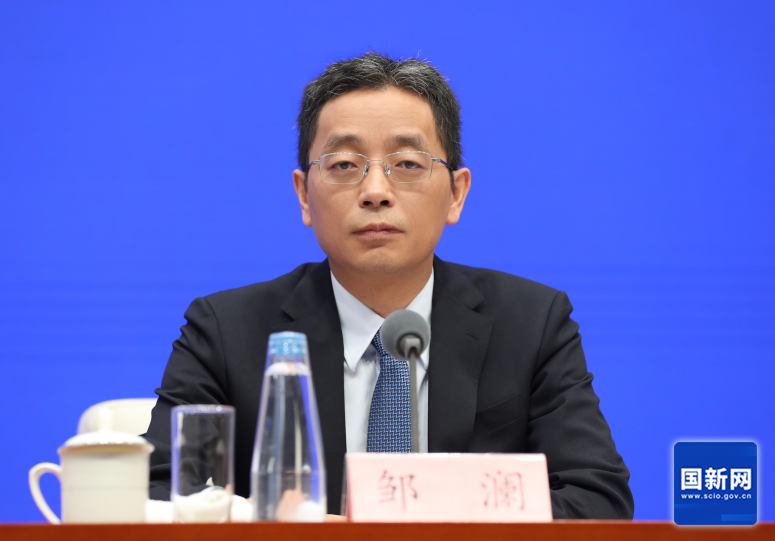
2、国家发展改革委副主任赵辰昕在国新办新闻发布会上表示,我国将出台实施稳就业稳经济推动高质 量发展的若干举措。建立实施育儿补贴制度,创设专项再贷款工具,加大对服务消费、养老产业等支 持。 5、中国黄金协会28日发布的数据显示,2025年1季度,中国国内黄金ETF持仓增长23.47吨,同比增仓 5.49吨同比增长327.73%。一季度全国黄金消费量290.492吨,同比下降5.96%。 1、央行副行长邹澜在国新办新闻发布会上表示,将根据国内外经济形势和金融市场运行情况,适时降 准降息;央行将创设新的结构性货币政策工具。 智通财经4月28日午间新闻精选 3、商务部副部长盛秋平在国新办新闻发布会上表示,将推动减免困难企业的房屋租金、展位费、流量 费,降低外贸企业内销成本。 4、人社部副部长俞家栋4月28日在国新办举行的新闻发布会上介绍,一季度,就业形势保持总体稳定, 全国城镇新增就业308万人,同比增加5万人,快于时序进度。 6、市场早盘震荡分化,沪指偏强,创业板指领跌。沪深两市半日成交额7158亿,较上个交易日缩量 31.7亿。截至收盘,沪指跌0.03%,深成指跌0.43%,创业板指跌0.55%。港股午间收盘,恒 ...
整理:围绕“四稳”工作将出台哪些具体举措?四部门发声
news flash· 2025-04-28 03:47
Group 1 - The National Development and Reform Commission plans to implement measures to stabilize employment and promote high-quality economic development, including targeted issuance of car purchase quotas for key groups and the establishment of a childcare subsidy system [1] - The People's Bank of China will consider timely reductions in reserve requirements and interest rates, and create new structural monetary policy tools, while maintaining that single market fluctuations have a limited impact on foreign exchange reserves [1] - The Ministry of Commerce reports that the implementation of the old-for-new consumption policy has stimulated consumption by over 720 billion yuan [1] - The Ministry of Human Resources and Social Security indicates that 3.08 million new urban jobs were created in the first quarter, with plans to accelerate policies supporting job expansion for enterprises [1]
从“四稳”看货币政策新探索
Zheng Quan Shi Bao· 2025-04-27 17:24
Group 1 - The central political bureau meeting emphasized the need for high-quality development to address the uncertainties arising from external shocks [1] - The meeting reiterated the importance of stabilizing employment, enterprises, markets, and expectations as key points for economic work [1] - Structural monetary policy is expected to play a greater role in guiding financial resources to support the "four stabilizations" [1] Group 2 - Traditional monetary policy tools like interest rate cuts and reserve requirement ratio reductions still hold significance in signaling appropriate monetary easing to stabilize market expectations [1] - The meeting proposed the creation of new structural monetary policy tools to support key areas such as technological innovation, consumption expansion, and foreign trade stability [1] - Existing tools like the technological innovation relending and inclusive elderly care special relending are considered temporary, with expectations for the central bank to enhance support through measures like extending terms and optimizing lending conditions [1][2]
结构性货币政策工具持续发力 精准支持实体经济
Zheng Quan Ri Bao· 2025-04-27 17:11
Group 1 - The core viewpoint of the article emphasizes the establishment of new structural monetary policy tools to support technological innovation, expand consumption, and stabilize foreign trade, which is a detailed deployment of moderately loose monetary policy [1][2] - Structural monetary policy tools have become an important means to support the real economy, combining both total and structural functions, and ensuring the effective allocation of central bank funds to specific sectors [1][2] - As of the end of Q1 2025, there are 10 structural monetary policy tools in existence with a total balance of 5.9 trillion yuan, covering key areas such as real estate and capital markets [1][2] Group 2 - Supporting technological innovation through structural monetary policy tools can provide low-cost funding for enterprises, facilitating R&D activities and enhancing overall economic competitiveness [2] - Consumption plays a fundamental role in economic growth, and expanding consumption can effectively stimulate domestic demand, especially as residents' income levels rise [2] - The meeting highlighted the establishment of "service consumption and elderly re-loans," indicating the potential for service consumption to grow significantly, with current service consumption accounting for 46.1% of per capita consumption expenditure [2] Group 3 - Looking ahead, structural monetary policy tools are expected to continue optimizing and enhancing their effectiveness, working in conjunction with total monetary policy tools to create a favorable monetary and financial environment for high-quality economic development [3]
银河宏观|离降准降息还有多远?
2025-04-27 15:11
Summary of Key Points from the Conference Call Industry Overview - The discussion revolves around the **Chinese macroeconomic environment** and **monetary policy** adjustments in response to internal and external pressures, particularly focusing on the impact of U.S. tariffs and the need for liquidity support. Core Insights and Arguments - **Monetary Policy Framework**: China's monetary policy operates under a flexible framework that balances multiple objectives, including economic growth, full employment, price stability, financial stability, and balance of payments. The prioritization of these goals can shift based on changing internal and external conditions [3][2][1]. - **Economic Challenges**: The second quarter of 2025 is expected to face challenges such as the impact of U.S. tariffs on exports, slowing economic growth, and increased employment pressure. This necessitates a supportive liquidity environment [6][5][1]. - **Liquidity Conditions**: As of March 2025, the People's Bank of China (PBOC) has resumed net injections through Medium-term Lending Facility (MLF) and reverse repos, indicating that liquidity has passed its tightest phase and is gradually becoming more accommodative [9][7][1]. - **Interest Rate Trends**: The market interest rate DR007 has decreased from over 2% in January and February to approximately 1.63% by late April, suggesting improving liquidity but not yet reaching a fully accommodative state [10][1]. - **Future Monetary Policy Direction**: It is anticipated that the PBOC will continue net injections in MLF and reverse repos in the second quarter, with potential interest rate cuts expected to be confirmed after the U.S. Federal Reserve's decisions in June [11][4][1]. Additional Important Content - **Structural Monetary Policy Tools**: The Politburo has proposed new structural monetary policy tools aimed at directing bank credit towards technology, consumption, and foreign trade sectors, addressing capital gaps in major projects, and promoting credit expansion [12][4][1]. - **Historical Context**: Previous similar financial tools introduced in 2022 had significant impacts, with a total scale of 600 billion yuan supporting over 3.5 trillion yuan in credit expansion, indicating the potential effectiveness of new tools [14][1]. - **Potential Policy Adjustments**: If the Federal Reserve does not cut rates in June or if there are significant pressures on the Chinese yuan, the PBOC may still implement rate cuts or guide the Loan Prime Rate (LPR) downwards to support the real economy [16][17][1]. - **Overall Monetary Policy Status**: Currently, China's monetary policy is in a phase of easing, with expectations of a shift towards substantial easing in the second quarter, focusing on supporting economic growth and employment [18][1].
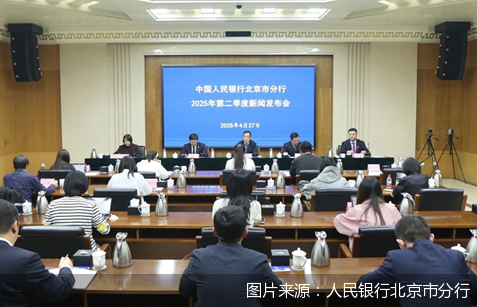
已发放股票回购增持贷款142亿元!北京披露这项工具运用成绩单
Bei Jing Shang Bao· 2025-04-27 14:57
Core Insights - The financial data for the first quarter of 2025 indicates a stabilization and improvement in Beijing's economy, with significant increases in loan balances and social financing [1][3] - The implementation of the stock repurchase and increase loan policy has shown positive results in Beijing, with a notable rise in loan demand from listed companies [8][9] Financial Statistics - As of March 2025, the social financing scale increased by 8.4% year-on-year, with a total of 15.18 trillion yuan in new financing for the first quarter [3] - The balance of RMB loans in Beijing grew by 5.1% year-on-year, with a geometric average growth rate of 8.7% over two years, totaling an increase of 449.97 billion yuan [3][4] - The first quarter saw a social financing increment of 842.55 billion yuan, significantly higher than the 271.23 billion yuan from the same period last year [3] Loan Structure and Trends - Household loans increased by 5% year-on-year, with a quarterly increase of 43.86 billion yuan, while corporate loans grew by 6.9%, adding 407.84 billion yuan [4] - The balance of green loans rose by 1.4 trillion yuan, accounting for 30.6% of the total loan increase [3][5] - The average weighted interest rate for loans in Beijing was 3.49%, down 21 basis points year-on-year, while corporate loans averaged 2.63%, down 34 basis points [5] Policy Implementation and Support - The People's Bank of China (PBOC) is focusing on the development of the "Five Major Articles" in finance, enhancing collaboration among monetary, fiscal, industrial, and regulatory policies to support high-quality economic development [6] - Structural monetary policy tools have been effectively utilized to support various sectors, including technology and green finance, with significant increases in relevant loan balances [6][7] Stock Repurchase and Loan Initiatives - The stock repurchase and increase loan policy has led to 93 listed companies or their major shareholders engaging with banks, resulting in a total loan amount of 18.65 billion yuan, with 5.42 billion yuan already disbursed [8][9] - The Industrial and Commercial Bank of China (ICBC) has been a leader in this initiative, with 10 projects announced and over 10 billion yuan allocated to support key sectors [9][10]