
自主创新

Search documents
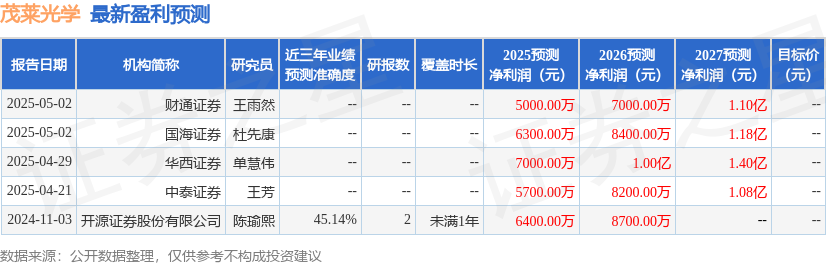
茂莱光学:兴全基金、国金证券等多家机构于7月29日调研我司
Zheng Quan Zhi Xing· 2025-07-30 09:09
Core Viewpoint - The company, Maolai Optics (688502), has shown significant growth in its financial performance and is actively engaging with investors regarding its business developments and market expectations [1][6]. Company Overview - Maolai Optics specializes in the research, design, manufacturing, and sales of precision optical devices, optical lenses, and optical systems [6]. - The company reported a main revenue of 142 million yuan in Q1 2025, representing a year-on-year increase of 28.23% [6]. Financial Performance - The net profit attributable to shareholders for Q1 2025 was 16.64 million yuan, up 288.73% year-on-year [6]. - The net profit after deducting non-recurring gains and losses was 13.27 million yuan, reflecting a substantial increase of 455.51% year-on-year [6]. - The gross margin for Q1 2025 was 50.49%, showing a slight improvement compared to 2024 [2][6]. Research and Development - The company has emphasized self-innovation and has made significant advancements in its core technologies, including polishing, coating, bonding, and optical lens design [3]. - The production capacity for key applications, particularly objective lenses, has significantly improved due to stable production processes [3]. Market Expectations - In the semiconductor sector, the company has achieved notable results in 2024, with some products successfully transitioning from the R&D phase to mass production [4]. - The company is optimistic about its business development and does not solely rely on external market growth [4]. Investor Engagement - The company has been actively communicating with investors while adhering to information disclosure regulations, ensuring that discussions do not involve undisclosed significant information [2]. Analyst Ratings - In the last 90 days, two institutions have provided ratings for the stock, both recommending an increase in holdings [7]. Financing Activity - Recent financing data indicates a net inflow of 93.73 million yuan in the last three months, with an increase in financing balance [8].


刚刚,容桂旁的这家大公司成功上市!
Sou Hu Cai Jing· 2025-07-30 05:10
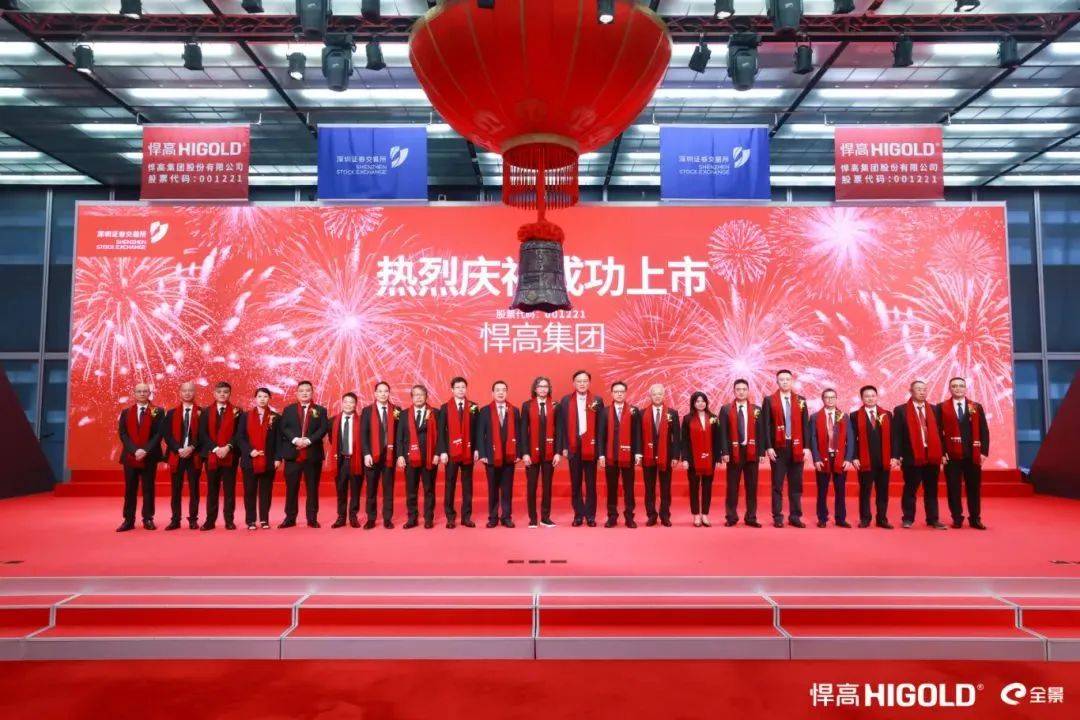
Group 1 - The core viewpoint of the article is that Hanhigh Group Co., Ltd. successfully listed on the Shenzhen Stock Exchange, marking it as the first A-share listed company in Shunde this year [1] - Hanhigh Group, established in 2004 and headquartered in Shunde, focuses on the research, design, production, and sales of home hardware and outdoor furniture, positioning itself as a high-tech enterprise [1] - The company plans to publicly issue 40.01 million shares at a price of 15.43 yuan per share, raising approximately 617 million yuan, which will be used for projects related to smart home hardware automation, research and development center, and information technology construction [1] Group 2 - Hanhigh Group aims to leverage its listing to enhance its core competitiveness in high-end manufacturing and independent innovation, contributing to the high-quality development of the Shunde economy [1] - Following this listing, the total number of listed companies in Shunde has reached 44, accounting for more than half of the total in the city, thereby strengthening the city's competitiveness [1] - Shunde will continue to promote the listing of more enterprises in the future [1]
2nm大混战,最大赢家曝光
半导体行业观察· 2025-07-30 02:18
Core Viewpoint - The semiconductor industry is witnessing significant developments, particularly in advanced process nodes below 2nm, with major players like Intel, Samsung, and Japan's Rapidus making headlines. The competition is intensifying, and TSMC is positioned as a potential major beneficiary of these advancements [3][4][5]. Group 1: Intel and Samsung Developments - Intel's CEO emphasizes that the success of the Intel 14A process node depends on customer commitments and the ability to deliver reliable results for clients [3]. - Tesla has signed a $16.5 billion contract with Samsung for the production of its next-generation Full Self-Driving (FSD) chip, indicating a significant partnership and potential for increased future orders [3][4]. - The Samsung Taylor factory, which has been inactive for over four years, will see its first mass-produced product with the AI6 chip, marking a pivotal moment for the facility [4]. Group 2: Japan's Rapidus and Technological Advancements - Rapidus has announced successful trial production of advanced 2nm chips, aiming for mass production by 2027, which could disrupt the dominance of TSMC and Samsung in the advanced process field [4][5]. - The rapid rise of Rapidus is attributed to its collaboration with IBM, which provided essential patent licenses and technology transfer, enabling Rapidus to achieve breakthroughs in a short time [5]. - The 2nm chip developed by IBM integrates 50 billion transistors in a 150 square millimeter area, offering nearly 45% performance improvement over mainstream 7nm chips at the same power consumption [5]. Group 3: China's Semiconductor Strategy - Chinese companies are focusing on independent research and development in the semiconductor sector, achieving significant milestones such as SMIC's maturation of 14nm process technology [6]. - The strategy of "unauthorized innovation" is seen as a sustainable path for Chinese firms, contrasting with Rapidus's reliance on external technology [6][7]. - The market share gap between SMIC and Samsung has narrowed from 5.8 percentage points in Q2 to 3.3 percentage points in Q3, indicating competitive progress [7]. Group 4: TSMC's Growth Potential - TSMC's current market capitalization is approximately $1.25 trillion, with expectations to reach $3 trillion, requiring a 140% return rate [11]. - The upcoming N2 chip node is anticipated to significantly improve energy efficiency, reducing power consumption by 25% to 30% compared to 3nm chips, which is crucial for the smartphone and AI computing sectors [12]. - TSMC's management forecasts a nearly 20% compound annual growth rate in revenue starting from 2025, suggesting strong growth potential and an upward adjustment in market expectations [12][13].


从轴承和阀门,看中国制造的未来(观象台)
Ren Min Ri Bao· 2025-07-29 22:36
Core Viewpoint - The article emphasizes the transformation of Chinese manufacturing from reliance on imports to self-innovation, highlighting the importance of technology empowerment and high-quality development in the manufacturing sector [1]. Dimension 1: Continuous Innovation and Breakthroughs - Chinese manufacturing is set to reach new heights through persistent innovation and tackling core technology challenges, exemplified by the successful application of domestically developed shield machine main bearings, which are now competitive with international products at a fraction of the cost [2]. - The export of bearings from China has seen an 8.7% year-on-year increase in the first quarter [2]. Dimension 2: Intelligent Upgrading and Efficiency Improvement - The integration of digital technology in traditional manufacturing processes has significantly enhanced production efficiency and product precision, with examples including a 30% reduction in production cycles at a smart factory [3]. - The rapid growth of the artificial intelligence industry in China, with over 4,700 companies and a core industry scale nearing 600 billion yuan, is expected to further boost productivity across various sectors [3]. Dimension 3: Market Orientation and Demand Response - Chinese manufacturing is expanding its market reach by responding to digitalization demands and developing high-end intelligent products, such as smart valves that are exported to 66 countries and regions [4]. - The wind power sector presents significant opportunities, with the annual output value of wind power bearings exceeding 2 billion yuan, marking them as a key revenue driver for companies [4]. - The ongoing new industrialization and urbanization efforts in China are anticipated to create broader market opportunities for the manufacturing sector [4].
“给中国发动机量身定做一把尺”
Zhong Guo Qi Che Bao Wang· 2025-07-29 09:32
Core Viewpoint - The launch of China's first D1 diesel engine oil standard marks a significant advancement in China's lubricant technology, positioning the country as a leader in the global lubricant industry [2][4]. Group 1: Background and Development - The D1 standard was developed by the "Engine Lubricating Oil China Standard Development Innovation Alliance," formed in 2016, consisting of 13 automotive companies, 23 lubricant manufacturers, and several research institutions [3]. - The initiative aimed to address the limitations of existing international standards (API, ACEA) that do not adequately meet the unique conditions of China's automotive environment [3][8]. - Over eight years, the alliance invested nearly 200 million yuan and conducted extensive research and testing to create a standard with complete independent intellectual property rights [3][9]. Group 2: Key Achievements - The D1 standard has led to the establishment of four national lubricant testing bases and the development of a complete independent evaluation capability [4]. - It has fostered a new collaborative model across the automotive, engine, lubricant, and testing sectors, enhancing the industry's overall innovation capacity [4]. - The standard sets a national quality benchmark, aiding regulatory efforts and improving market order [4]. Group 3: Practical Applications and Testing - The D1 standard has been validated through rigorous testing in extreme conditions across various regions in China, demonstrating its reliability and performance [6][8]. - The collaboration between Weichai and Kunlun Lubricants resulted in a new low-viscosity lubricant that meets the D1 standard, significantly extending oil change intervals from 60,000 km to 120,000 km [7]. Group 4: Industry Impact - The D1 standard represents a shift from reliance on foreign standards to a self-sufficient Chinese standard, providing tailored solutions for domestic engine needs [8][9]. - It incorporates specific metrics for cleanliness, dispersibility, wear resistance, and low-temperature pumpability, establishing a foundational benchmark for diesel engine oils in China [9]. - The standard's implementation has led to a reduction in development cycles for domestic lubricants by 40% and a 15% decrease in costs, while also promoting high-end, green, and intelligent manufacturing practices within the industry [9].

中国式现代化建设中的奋楫者——第六届全国非公有制经济人士优秀中国特色社会主义事业建设者事迹巡礼
Xin Hua She· 2025-07-28 12:08
Group 1 - The non-public economy in China is a crucial foundation for economic stability, a significant source of national tax revenue, a key player in technological innovation, and an important force for sustainable economic development [1][2] - Since the 18th National Congress, the Chinese government has emphasized the healthy development of the non-public economy and the growth of non-public economic individuals, providing strong motivation for high-quality development [1][2] - The number of private enterprises accounts for over 92% of the total number of enterprises in China, with more than 420,000 high-tech private enterprises, highlighting the importance of the private economy in promoting modernization and high-quality development [2] Group 2 - Technological innovation is reshaping industry dynamics, with leaders like Wang Jian pioneering distributed cloud computing architectures and enhancing China's global standing in cloud computing [3] - Companies like Changchun Xuyang Industrial Group and LONGi Green Energy are transitioning from traditional manufacturing to intelligent manufacturing and achieving record efficiencies in solar technology through innovation [4] - The commitment to innovation and high-quality development is evident in the efforts of various leaders who are enhancing core competitiveness and integrating into new development paradigms [4] Group 3 - Leaders in the private sector, such as Wang Yu of Spring Airlines, are driven by a vision to make air travel accessible, achieving significant growth in fleet size and expanding services to underserved regions [5] - Zhang Shirong of Wisdom Palace International Cultural Communication Group emphasizes the importance of cultural exchange, establishing Chinese language programs in multiple Arab countries and reaching over 1 million learners [6] - The dedication of non-public economic individuals to national development is reflected in their efforts to align personal growth with the broader goals of the country [6] Group 4 - The 2024 report by the All-China Federation of Industry and Commerce highlights exemplary cases of social responsibility among private enterprises, including initiatives in rural revitalization and green development [7] - Companies like Chongqing Huasen Pharmaceutical are leveraging their expertise to support rural communities through standardized cultivation of traditional Chinese medicine [7] - Ningbo Fubon Holding Group integrates ecological development with business growth, establishing a resource recovery network that has recycled over 500,000 tons of resources in five years [8]
上海湛信科技(鑫高度)获“模块式多孔中空喷丝板”发明专利
Jin Tou Wang· 2025-07-28 08:44
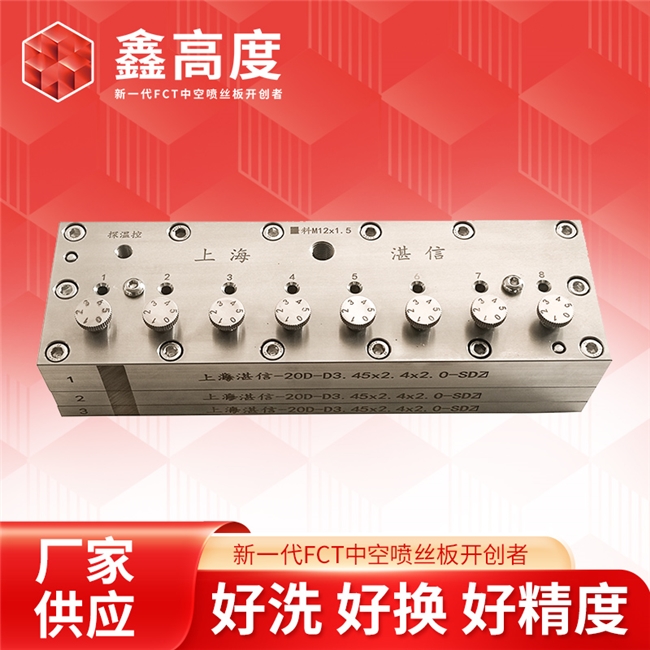
Core Viewpoint - Shanghai Zhanxin Technology's subsidiary, Shanghai Xinda, has achieved a significant milestone by obtaining a national invention patent for its "modular porous hollow fiber membrane spinneret," which injects strong momentum into the industry through its innovative design that emphasizes digitalization, modularity, and flexibility [1][5]. Group 1: Patent and Innovation - The patented technology includes a flow module and a spinneret module, with multiple spinneret modules installed on a single flow module, addressing many pain points of traditional spinnerets through its unique split design [1][3]. - Shanghai Zhanxin Technology has applied for over 40 patents, demonstrating its commitment to continuous innovation in the hollow fiber membrane spinneret sector [1][3]. Group 2: Technical Advancements - The modular spinneret achieves three breakthroughs: it allows for unlimited expansion of spinneret hole numbers without increasing production difficulty, significantly enhancing production efficiency; the modular design reduces production and assembly complexity, enabling independent maintenance and replacement of individual modules, thus saving time and costs; and its flexible characteristics allow a single spinneret to produce various specifications, precisely meeting diverse customer needs [3]. - The company has accumulated deep expertise in ultra-precision processing, achieving processing accuracy of 0.002mm, roughness of Ra0.2-0.4, and concentricity of 0.003mm, supporting multi-hole expansion for various applications [3]. Group 3: Market Position and Impact - The acquisition of this patent further solidifies the company's leading position in the industry, as it serves as the main editor of the "Hollow Fiber Membrane Spinneret" group standard, continuously promoting industry advancement through independent innovation [5]. - The company's products are exported to 39 countries and regions, serving 634 customers, showcasing its extensive market reach and impact [3].
高志凯:今天卖、明天又不卖,那怎么行?我们要敢于给美国立规矩
Sou Hu Cai Jing· 2025-07-26 20:47
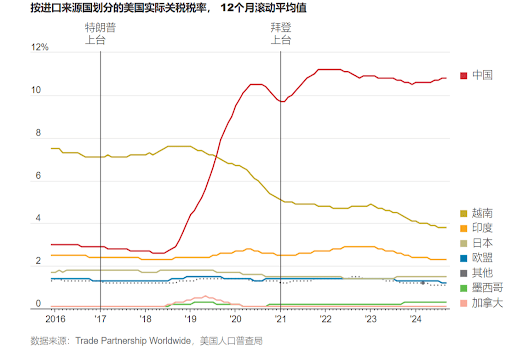
Group 1 - The third round of tariff negotiations between China and the US will take place in Stockholm from July 27 to 30, facing multiple challenges including significant differences in core demands and the inclusion of non-tariff sensitive issues by the US [1] - China has a wealth of experience in responding to strategies from the Trump era and recognizes the importance of independent research and development [1][2] - Huang Renxun stated that China possesses 50% of the world's AI researchers, indicating an unstoppable technological advancement [1] Group 2 - Gao Zhikai emphasized that China's path to independent innovation is a necessary choice as a major power, rather than a passive response to US sanctions [2] - He highlighted the need for China to take market initiative and not view "lifting sanctions" as the core negotiation demand [2] - The construction of an innovation system should include financial restructuring, AI strategy upgrades, and enhanced security measures to create a sustainable independent innovation ecosystem [2] Group 3 - The term "trade war" is deemed inaccurate; it is characterized as a unilateral tariff war initiated by the US against over a hundred countries since April 2, 2025 [3][4] - The US has intensified its trade measures against China during Biden's administration, with increasingly complex restrictions on high-tech products [4] - The extreme measures taken by the US are seen as a push for China to pursue an independent and self-reliant technological development path [6] Group 4 - The US's sanctions and embargoes are viewed as attempts to demonize China, portraying it as a violator of international norms [8] - The recent easing of restrictions on certain products, such as chips, is interpreted as a response to China's advancements in technology, particularly by companies like Huawei [9] - The suggestion is made for China to assert its market power by establishing a principle that if the US refuses to sell, it is their fault, thus prompting China to develop alternatives [11][12] Group 5 - The tariffs imposed by the US have led to a significant increase, with tariffs on Chinese exports reaching 145% and Chinese tariffs on US exports at 125% [12] - The ongoing negotiations have not resulted in a restoration of purchases of US oil and gas products by China, nor a quick resumption of agricultural product purchases [13] - The need for a balanced and constructive relationship between China and the US is emphasized, with a call for mutual respect in trade practices [14]

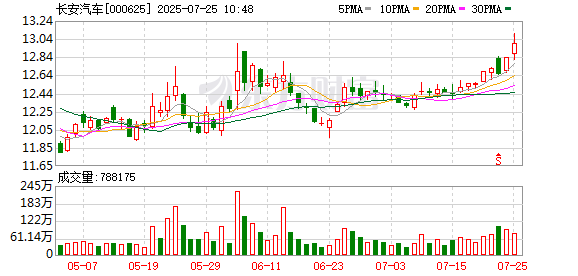
不借东风的长安汽车:“我们必须杀出一条血路”
Nan Fang Du Shi Bao· 2025-07-25 02:47
Core Viewpoint - Changan Automobile is undergoing significant changes, including the announcement of a new central enterprise name and the formation of a new management team, following a tumultuous period marked by a merger with Dongfeng and subsequent independence [2][9]. Historical Context - Changan Automobile has a long history dating back to 1862, evolving from military manufacturing to becoming a key player in the automotive industry, with significant milestones including the production of China's first Jeep in 1958 and entering the microcar market through a partnership with Suzuki in 1983 [3]. Golden Era and Crisis - From 2000 to 2016, Changan experienced a golden era, achieving a peak sales volume of 3.06 million vehicles in 2016, with joint ventures contributing significantly to profits. However, by 2018, reliance on joint ventures began to show cracks, leading to a dramatic decline in sales and profitability [4][6]. Shift to Independent Innovation - In response to declining joint venture performance, Changan began focusing on independent brand development in 2016, resulting in a 72,300-unit increase in self-branded vehicle sales from 2017 to 2024, with self-branded vehicles accounting for 93% of total sales by 2024 [6][7]. New Energy Transition - Changan initiated its transition to new energy vehicles in 2020, launching three new energy brands. By 2024, new energy vehicle sales reached 734,000 units, representing 32.6% of total sales, with significant growth in the Deep Blue brand [7][8]. Merger and Strategic Implications - The proposed merger with Dongfeng aimed to create a new automotive giant with an expected annual sales volume exceeding 5 million vehicles, surpassing BYD. This merger was seen as a strategic move to optimize resource allocation and enhance competitiveness in the new energy sector [9][10]. Challenges of Independence - Following the merger discussions, Changan's transition to an independent central enterprise presents both opportunities and challenges. The independence allows for greater policy support and resource allocation but also requires Changan to navigate market competition and operational pressures alone [19][20]. Financial Performance and Pressures - In 2024, Changan's new energy brands faced significant losses, with a combined loss of 5.59 billion yuan, highlighting the financial pressures associated with the transition to new energy vehicles. The company must balance long-term investments with short-term cash flow health to avoid financial strain [24][25]. Competitive Landscape - The automotive market is becoming increasingly competitive, with Changan facing challenges from private enterprises that have established advantages in the new energy sector. The need for rapid adaptation to market changes and technological advancements is critical for maintaining competitiveness [26][27]. Conclusion - Changan's journey reflects a significant transformation from reliance on joint ventures to a focus on independent innovation and new energy vehicles. The company's future success will depend on its ability to execute strategic initiatives and innovate technologically in a rapidly evolving market [28].

探访中复神鹰青海生产基地 一根碳纤维里的创新密码
Zhong Guo Zheng Quan Bao· 2025-07-24 22:19
Core Viewpoint - The article highlights the advancements and innovations in the carbon fiber industry, particularly focusing on Zhongfu Shenying's production capabilities and its strategic direction towards sustainable and high-performance materials [1][4]. Group 1: Production Capabilities - Zhongfu Shenying's production base in Xining, Qinghai, has an annual capacity of 25,000 tons of high-performance carbon fiber, with over 95% of key equipment being domestically sourced [2]. - The company utilizes a proprietary dry-jet wet spinning technology, showcasing China's innovation in carbon fiber production [2][4]. Group 2: Applications and Market Focus - The carbon fiber products are applied across various sectors, including aerospace, automotive, renewable energy, medical devices, and high-end sports equipment, with 31 customized product series developed for different applications [2][4]. - The company aims to target new markets such as automotive and wind energy, focusing on green and recyclable solutions to address industry challenges [1][4]. Group 3: Strategic Direction and Innovation - Zhongfu Shenying emphasizes innovation driven by customer needs and industry collaboration, aiming to enhance product quality, cost-effectiveness, and service efficiency [3][4]. - The company is committed to supporting national strategic needs and the development of new energy and emerging industries through its advanced materials [3][4]. Group 4: Sustainability and Recycling - The future growth of China's carbon fiber market is expected to focus on automotive transportation, rail transportation, and thermoplastic resin carbon fiber composite materials, with a strong emphasis on recyclable properties [6]. - Xining is developing a leading domestic ecosystem for the thermal cracking and chemical recycling of waste carbon fiber composites, promoting green and low-carbon development in the industry [6].
