中国制造

Search documents
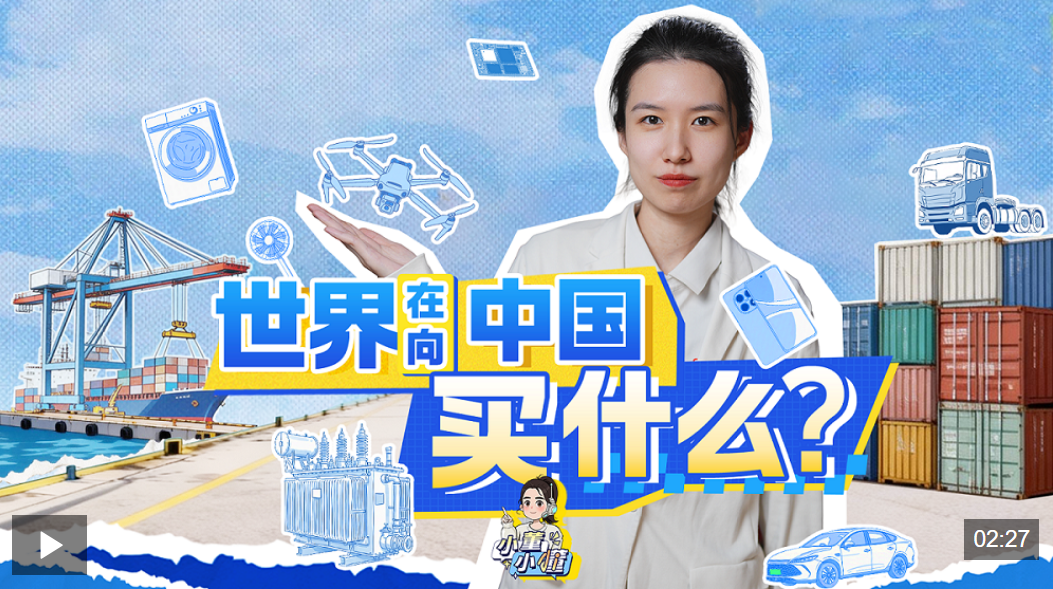
世界在向中国买什么?一组数据分析带你看
Xin Lang Cai Jing· 2026-01-23 08:35
Core Viewpoint - The export data for 2025 shows growth despite a complex external environment, with Asia being the largest contributor to this increase, followed by Africa and Europe [1][3]. Group 1: Export Trends by Region - In Asia, the growth is concentrated in integrated circuits, data processing equipment, and smartphones, which are essential for digitalization, industrial upgrading, and green transformation [3]. - In Europe, there is a notable increase in the sales of air conditioners and tower fans from China, meeting local climate and consumption changes [3]. - In Africa, there is a significant rise in exports of offshore production platforms, container ships, engineering machinery, and energy equipment such as solar and energy storage devices [5]. Group 2: Key Export Products - The export of electromechanical products has surpassed 60% for the first time, with transformers and drones emerging as key products [5]. - Transformers are crucial for the expansion of power grids, data centers, and stable integration of renewable energy, with global demand for grid upgrades increasing [7]. - Drones have evolved beyond aerial photography to serve in public service applications, such as digital modeling in Germany, high-altitude monitoring in Peru, and marine protection in Thailand [10]. Group 3: Reliability of Chinese Manufacturing - The certainty of Chinese manufacturing in terms of timely delivery, stable operation, and the ability to support long-term systems is increasingly valued in uncertain environments [11]. - The capabilities that are repeatedly chosen by the world will ultimately return to the domestic market, resulting in more stable supply, complete industrial chains, and sustained innovation [11].


视频丨世界在向中国买什么?一组数据分析带你看
Yang Shi Xin Wen Ke Hu Duan· 2026-01-23 07:47
Core Insights - The export data for 2025 shows growth despite a complex external environment, with Asia being the largest contributor to this increase [2] - The types of products being exported vary by region, with integrated circuits, data processing equipment, and smartphones leading in Asia, while air conditioners and tower fans are popular in Europe [4] - In Africa, there is a notable rise in exports of offshore production platforms, container ships, engineering machinery, and energy equipment like solar and storage devices [6] Group 1: Regional Export Trends - In Asia, the growth is concentrated in products related to digitalization, industrial upgrading, and green transformation [4] - Europe shows a significant increase in the sales of Chinese air conditioners and tower fans, meeting local climate and consumption changes [4] - Africa's demand for energy equipment, particularly solar energy, is growing, with local adoption increasing rapidly [6] Group 2: Key Export Products - The export of electromechanical products has surpassed 60% for the first time, with transformers and drones being highlighted as key items [6] - Drones are evolving beyond just aerial photography to serve in public service applications, such as digital modeling in Germany and environmental monitoring in Peru [8] - Transformers are critical for the stability of power grids and data centers, with Chinese products favored for their complete supply chain and reliable delivery [9] Group 3: Long-term Solutions - The global market is increasingly purchasing not just individual items but long-term operational solutions from China [11] - The ability of Chinese manufacturing to deliver on time and maintain stable operations is becoming a valuable asset in uncertain environments [11] - This capability contributes to a more stable domestic supply, a complete industrial chain, and sustained innovation [11]
九载淬火,锋芒毕露:达喀尔赛场上零公里润滑油的民族品牌担当
Sou Hu Wang· 2026-01-23 02:40
Core Insights - The 2026 Dakar Rally concluded with significant achievements for the Zero Kilometer Lubricants brand, showcasing the strength of "Made in China" on an international stage [1][15]. Group 1: Performance Highlights - The ZM Buggyra team, with car number 603, achieved third place in two stages and finished 21st overall in the rally [3]. - Driver Karel Posledni completed his second Dakar, securing a best stage finish of 9th and an overall ranking of 18th, embodying the spirit of perseverance [5]. - The rally featured the first-ever father-daughter duo, with Martin Kolok and his daughter Alia competing together, highlighting resilience despite Alia's injury [7]. Group 2: Technological Advancements - Zero Kilometer Lubricants has made significant technological strides over nine years, developing products that withstand extreme conditions, ensuring engine stability and cleanliness [11][12]. - The brand's experience in the Dakar Rally has translated into reliable products for everyday users, showcasing a commitment to quality and innovation [12]. Group 3: Brand and Industry Impact - The Dakar Rally serves as a platform for brands to demonstrate manufacturing capabilities, with Zero Kilometer Lubricants representing the technological advancement of the Chinese lubricants industry [13][15]. - The brand's journey reflects China's transition from manufacturing to intelligent manufacturing, establishing itself as a competitive player in the global market [15]. - As Zero Kilometer Lubricants approaches its 10th year in the Dakar Rally, it symbolizes the growth and recognition of Chinese brands on the world stage [15][17].

小米工厂成科技迪士尼!央视再点名肯定,雷军:中国智造硬实力
Sou Hu Cai Jing· 2026-01-19 21:29
Core Insights - Xiaomi's automotive factory in Beijing has become a significant attraction, with a focus on industrial tourism, showcasing advanced manufacturing capabilities and efficiency [1][2] - The factory's production line can manufacture a car in just 76 seconds, highlighting the effectiveness of automation and technology in the manufacturing process [1] - The factory has received over 130,000 visitors in 2025, serving as an educational platform for students and families, enhancing public perception of Chinese manufacturing [1] Group 1 - The factory features advanced technology such as a 9,100-ton integrated die-casting machine and over 700 robotic arms, demonstrating cutting-edge manufacturing processes [1][2] - Xiaomi has successfully integrated cultural and tourism elements into its operations, with merchandise sales exceeding 200,000 units and catering services attracting 70,000 visitors [2] - Due to high demand, the factory has increased its monthly visitor capacity from 10,000 to 25,000 and plans to add a go-kart experience area [2] Group 2 - The concept of "transparent manufacturing" is being effectively implemented, allowing visitors to witness key processes like AI quality inspection and body casting, countering negative perceptions of new automotive entrants [2] - International visitors, including students from Columbia University, have expressed that the factory experience has changed their views on "Made in China" products, emphasizing the high standards of Chinese manufacturing [2]


贸易顺差近1.2万亿!三线城市干出8000亿,942家中企赴美亮相
Sou Hu Cai Jing· 2026-01-19 09:37
Core Insights - China's foreign trade in 2025 reached a total of 45.47 trillion yuan, with exports at 26.99 trillion yuan and imports at 18.48 trillion yuan, resulting in a record trade surplus of 1.189 trillion USD [4] - The growth in exports is not limited to coastal cities but is widespread across various regions, indicating a systemic rise in China's foreign trade capabilities [6] - The equipment manufacturing sector led exports, accounting for 59.4% of total exports, showcasing a shift from low-end to high-end manufacturing [9] - Automobile exports increased by 21.1% to 7.098 million units, reflecting genuine global demand for Chinese manufacturing [10] - The "Belt and Road" initiative countries now represent 51.9% of China's overall foreign trade, indicating a strategic pivot towards Asia, Europe, Africa, and Latin America for future growth [12] - The participation of 942 Chinese companies at the CES International Consumer Electronics Show highlights China's commitment to defining the next round of technological competition [15] - The future of Chinese manufacturing will focus on high-end breakthroughs and global standard-setting, moving away from merely following existing rules [19][21] - China's globalization strategy emphasizes a win-win model, fostering mutual growth and reducing the likelihood of trade conflicts [21][23] Industry Insights - The significant increase in trade surplus and export figures demonstrates China's robust position in the global supply chain and its ability to dominate industrial standards [4][12] - The rise of cities like Wuxi, with a foreign trade volume comparable to that of small countries, illustrates the decentralized nature of China's trade growth [6] - The shift towards high-end manufacturing and the export of advanced technology products indicate a long-term strategic vision for China's industrial landscape [9][19] - The automotive sector's growth is a key driver of overall export performance, reflecting a competitive edge in global markets [10] - The emphasis on establishing global standards signifies a transition from being a follower to a leader in international trade practices [19][21]
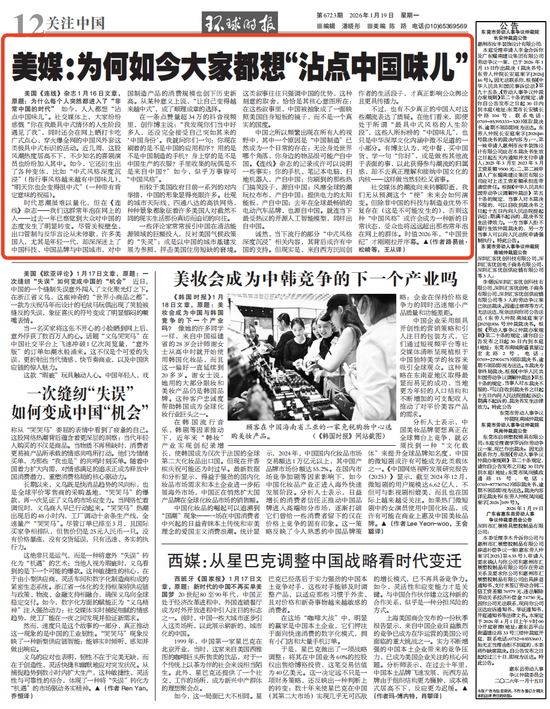
美媒:为何如今大家都想“沾点中国味儿”
Xin Lang Cai Jing· 2026-01-19 03:36
Group 1 - The article discusses a growing trend among Americans, particularly the younger generation, to embrace "Chinese style" in various aspects of life, including fashion and food [1][4] - Despite ongoing trade barriers and anti-China rhetoric, there is a notable increase in American interest in Chinese technology, brands, and urban development, leading to a historic high in consumption of Chinese-made products [1][4] - Social media plays a significant role in this trend, with influencers highlighting the prevalence of Chinese products in daily life, prompting individuals to reflect on their own "Chinese identity" [2][9] Group 2 - The article notes that China's image is increasingly positive compared to the U.S. government's domestic policies, with many Americans expressing admiration for China's infrastructure and advancements in clean energy [2][9] - Critics often use China's achievements as a benchmark to highlight shortcomings in U.S. policies, particularly in areas like climate change and housing shortages, framing China as a mirror reflecting American deficiencies [2][9] - The ubiquity of "Made in China" products is emphasized, with examples ranging from electronics to popular cultural items, indicating that Chinese manufacturing is a daily reality for consumers worldwide [3][9] Group 3 - There is a distinction made between superficial engagement with Chinese culture and a deeper understanding of its rich heritage, with some individuals criticized for only adopting surface-level elements of "Chinese style" [10] - The article suggests that unless China's technological and manufacturing advantages diminish, the trend of embracing "Chinese style" is likely to become a lasting aspect of global culture [4][10] - The concept of a "Chinese century" is introduced, indicating that the current trend is just the beginning of a broader cultural shift [4][10]
“中国制造”又火了!欧美排队等中国发货,订单多到商家接不过来
Sou Hu Cai Jing· 2026-01-18 10:42
Core Insights - The global power sector is experiencing a "equipment scramble," with countries like Germany and the U.S. facing significant supply shortages of transformers, leading to project delays and emergency measures [1][3] - The root cause of the supply crisis lies in aging infrastructure and supply chain bottlenecks, with 70% of U.S. transformers over 25 years old and European countries struggling to meet renewable energy integration demands [3] - China has emerged as a dominant supplier in the transformer market, leveraging its complete industrial chain and technological advancements, with some companies reporting order backlogs of up to three years [1][5] Group 1: Supply Chain and Market Dynamics - The aging infrastructure in the U.S. and Europe has reached a critical point, with frequent failures increasing the risk of grid outages [3] - The global production capacity for core transformer materials is concentrated in a few companies, with local production in Europe and the U.S. meeting only 30% of demand [3] - Geopolitical conflicts have exacerbated logistics delays, further extending delivery times for transformers [3] Group 2: China's Manufacturing Strength - China is the only country capable of mass-producing 0.18mm ultra-thin oriented silicon steel, which has a loss rate 15% lower than international standards, contributing to high-efficiency transformers [5] - The complete industrial chain in China, from raw material processing to assembly, allows for production cycles that are over 50% shorter than those in Europe and the U.S. [5][8] - Chinese companies have developed smart transformers that can adapt to the fluctuating loads of wind and solar power, with response speeds three times faster than traditional models [6] Group 3: Global Market Position and Future Outlook - China's transformer exports are projected to grow by 28% year-on-year by 2025, with the EU and the U.S. as the largest markets [8] - The resilience of China's industrial chain highlights the weaknesses in Western manufacturing, which struggles with capacity expansion due to industrial hollowing [8] - The current demand for transformers reflects not only a temporary supply-demand imbalance but also the strength of China's industrial system and technological innovation [9]

【中国制造新观察】人工智能为何牵手工业互联网
Zhong Guo Jing Ji Wang· 2026-01-15 22:06
Group 1 - The core viewpoint of the article emphasizes the integration of artificial intelligence (AI) and industrial internet as a strategic initiative to enhance innovation and development in both fields, contributing to the construction of a manufacturing and cyber power in China [2][5] - AI is identified as a strategic technology leading a new round of technological revolution and industrial transformation, significantly reshaping production and lifestyle, and serving as a key indicator of national technological strength and industrial competitiveness [2][3] - The industrial internet is described as a crucial infrastructure for promoting new industrialization, having achieved comprehensive coverage across 41 industrial categories and entering a new phase of high-quality development and large-scale promotion [2][4] Group 2 - AI and industrial internet mutually promote each other, with AI's capabilities in self-generation, decision-making, and organization helping to upgrade industrial internet facilities and optimize services [3][4] - Data is highlighted as a vital link between AI and industrial internet, serving as the raw material for AI and determining its capabilities and vision, with high-quality industrial data driving continuous technological iteration and innovation in industrial scenarios [3][4] - The integration of AI and industrial internet aims to address complex industrial challenges that traditional technologies struggle to solve, with current issues including a shortage of high-quality industrial data, difficulties in deploying industrial large models, and high costs associated with these models [4][5] Group 3 - The integration of AI and industrial internet is expected to provide a significant boost to China's manufacturing sector, which has maintained the largest value-added scale globally for 15 consecutive years, supported by a leading information and communication network [5] - The combination of AI and industrial internet is set to reshape new advantages for Chinese manufacturing, injecting new momentum into the construction of a manufacturing powerhouse [5]
光伏、锂电、汽车杀疯了!“新三样”海外狂卖1.3万亿,中国制造无人能挡
Sou Hu Cai Jing· 2026-01-15 10:09
Core Viewpoint - China's manufacturing industry has demonstrated remarkable resilience and growth, solidifying its position as a global manufacturing powerhouse despite challenges such as trade wars [2][3]. Group 1: Trade Performance - By 2025, China's foreign trade imports and exports are projected to reach 45.47 trillion yuan, setting a historical record [1]. - Exports of the "new three items" (new energy vehicles, lithium batteries, and photovoltaic products) are expected to reach 1.3 trillion yuan, reflecting a 27% increase year-on-year [1]. - In the first 11 months of 2025, China's trade surplus surpassed 1 trillion USD, marking a record high [1]. Group 2: Manufacturing Dominance - China possesses the most comprehensive industrial system globally, leading in the production of a vast majority of 504 industrial products [4]. - The country dominates the global market for lithium batteries, producing over 75% of the world's supply, and six of the top ten battery manufacturers are based in China [5]. - China's new energy vehicle production accounts for 60% of the global market share, with two out of every three electric vehicles sold worldwide being manufactured in China [6]. Group 3: Technological Advancements - China has made significant strides in high-tech manufacturing, including breakthroughs in solid-state batteries and high-speed rail technology, which have become symbols of Chinese manufacturing excellence [9]. - The country is also advancing in critical areas such as quantum communication and high-voltage transmission technology, with commercial applications being implemented globally [10]. - Despite existing gaps in high-end chips and key materials, China is actively working to overcome these challenges, with notable progress in domestic production capabilities [8].
中美“分手了”?美元绑定石油又绑定中国制造,如今却反悔了?
Sou Hu Cai Jing· 2026-01-14 11:37
Group 1 - The core of the U.S.-China relationship is characterized by increasing competition across various sectors, yet both nations have refrained from a complete separation despite tensions [1] - The U.S. dollar was established as the dominant currency for global oil transactions in the latter half of the 20th century, which solidified its status as a hard currency and a guarantee for global trade [3] - The late 1990s saw China joining the WTO, leading to a surge in affordable goods flooding the global market, with the U.S. using printed dollars to purchase these goods, creating a closed-loop system where dollars returned to the U.S. through Chinese purchases of U.S. debt [5] Group 2 - Recent years have seen increasing skepticism in the U.S. regarding the costs of its relationship with China, including concerns over deindustrialization, technology outflow, and supply chain concentration, prompting a shift towards higher tariffs and export controls [6] - The U.S. faces challenges in finding an alternative to China for manufacturing, as other countries like India and Vietnam have limitations, and over 70% of industrial intermediate goods still rely on Chinese supply chains [6] - The current global landscape is in a transitional phase, with the old order in decline and a new framework yet to be established, indicating that U.S.-China relations are still in a unique "cooperative" stage despite evolving perceptions [9]