
中国经济增长

Search documents
国际机构密集上调增长预期 中国经济基本面被看好
Zhong Guo Xin Wen Wang· 2025-12-18 11:08
Group 1 - Multiple international institutions have raised their growth forecasts for China's economy, with the IMF increasing its 2025 growth prediction by 0.2 percentage points to 5% and the World Bank raising it by 0.4 percentage points [1] - Major investment banks like Goldman Sachs and Deutsche Bank have also adopted a positive outlook, with Goldman Sachs adjusting its 2025 growth forecast from 4.9% to 5.0% [1] - This upward revision occurs amidst a globally unstable economic environment, where the IMF projects a global growth rate of only 3.2% for 2025 [1] Group 2 - Resilience is a key theme highlighted by various institutions regarding China's economy, with the IMF noting significant resilience despite multiple shocks [2] - The World Bank states that China's economic performance has exceeded initial expectations for the year, particularly in exports [2] Group 3 - The resilience of China's economy is attributed to strong macroeconomic policies and the coordinated efforts of the "three drivers" of growth [3] - The Chinese government has prioritized expanding domestic demand, with policies like the trade-in program for consumer goods contributing to a recovery in consumer spending [3] - In the first three quarters, China's retail sales grew by 4.5% year-on-year, with final consumption contributing 53.5% to economic growth, an increase of 9 percentage points from the previous year [3] Group 4 - China's foreign trade remains robust, with a 4.0% year-on-year increase in total goods imports and exports in the first three quarters, and a 6.2% increase in trade with Belt and Road Initiative countries [3] - The World Bank emphasizes that the diversification of export markets is a crucial support for China's trade resilience [3] Group 5 - China's export competitiveness is no longer primarily reliant on price, as the country has established a strong presence in advanced industries such as electric vehicles and solar panels, allowing it to withstand moderate currency appreciation [4] - The Central Economic Work Conference has outlined a more proactive macroeconomic policy approach, emphasizing the importance of domestic demand and a strong domestic market for 2026 [4] Group 6 - The IMF's managing director expressed confidence in China's potential for stronger economic growth, projecting that China's contribution to global economic growth could remain around 30% in the coming years [6] - China's economic growth is seen as a stabilizing force for the global economy, benefiting not only its own development but also the broader world economy [6]
邱晓华:2026年中国经济有望接近或基本实现5%左右的增长目标
Xin Lang Cai Jing· 2025-12-18 08:57
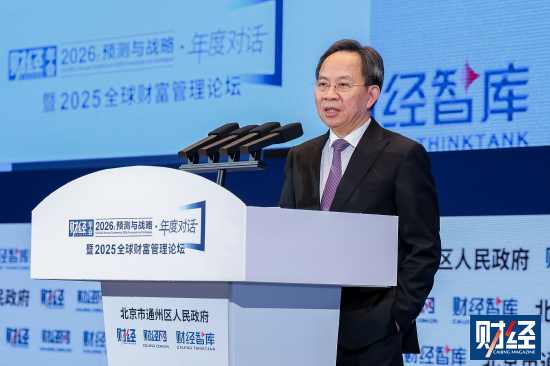
第二,地缘与贸易。总体上比今年还要更加确定、更加平稳,但在确定和平稳下也存在着一些不确定和 不平稳的隐患,需要给予关注。 专题:财经年会2026:预测与战略暨2025全球财富管理论坛 《财经》年会2026:预测与战略暨2025全球财富管理论坛于2025年12月18-20日在北京举行。阳光保险 集团首席经济学家、国家统计局原局长邱晓华表示,展望2026年,华预计国家仍将大概率设定5%左右 的增长目标,这一积极目标的实现将受五大核心因素影响: 第一,海外经济政策。发达经济体将延续宽松财政政策,货币政策呈现分化态势,美国计划降息、欧洲 持观望态度、日本可能加息。尽管美国AI领域存在泡沫争议,但他表示,2026年破裂概率较低。整体 来看,外部环境相对平稳,有利于中国保持外需稳定,为国内宏观政策灵活运用预留空间。 第三,国内的市场供强需弱的演变。当前经济最突出的问题是供强需弱、物价低位运行。2026年推进 的"反内卷2.0版供给侧改革"将呈现双刃剑效应,既可能抑制低效产能、放缓生产速度,也有望抬升物 价、改善企业盈利。 投资方面,近些年地产的深度调整,给60%以上的家庭财富带来的缩水效应是非常明显的因素。他谈 到,从房 ...

我国用电量将首超10万亿千瓦时,意味着什么?
Zhong Guo Dian Li Bao· 2025-12-17 01:01
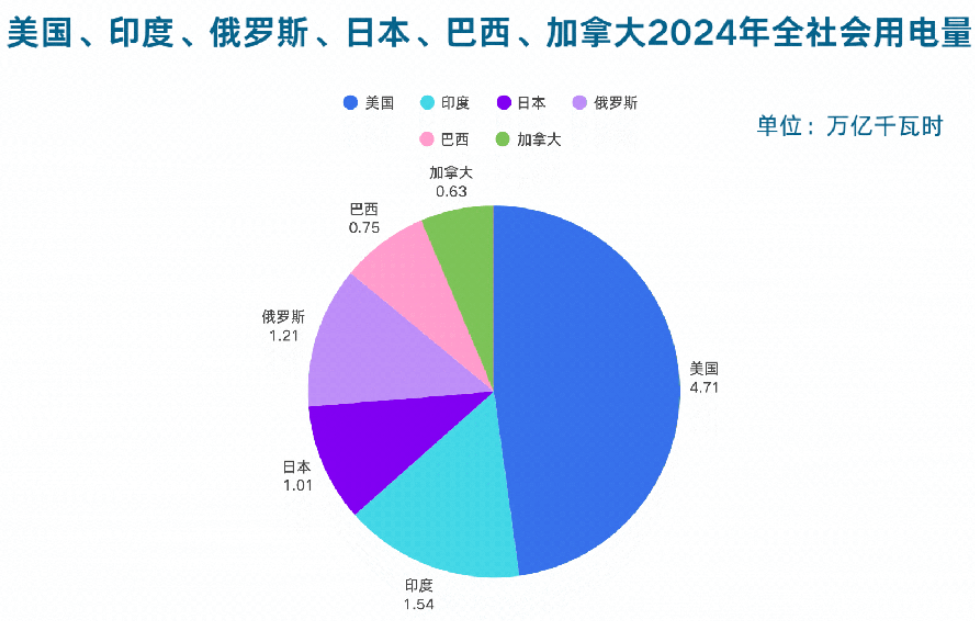
Core Viewpoint - The announcement of China's electricity consumption exceeding 10 trillion kilowatt-hours by 2025 marks a significant milestone, reflecting the robust growth and resilience of the Chinese economy, as well as the transition towards a greener energy structure [1][4][8]. Group 1: Electricity Consumption Milestones - In 2025, China's total electricity consumption is projected to surpass 10 trillion kilowatt-hours, equivalent to the combined annual electricity consumption of the USA, India, Russia, Japan, Brazil, and Canada [1]. - China experienced its first monthly electricity consumption exceeding 1 trillion kilowatt-hours in July and August of this year, showcasing the country's strong economic pulse and transition towards a greener economy [4]. - Historical milestones in electricity consumption include surpassing 1 trillion kilowatt-hours in 1996, 5 trillion in 2011, and 8 trillion in 2021 [4]. Group 2: Economic Growth Indicators - Multiple international institutions have raised their economic growth forecasts for China in 2025, with the World Bank, IMF, and ADB adjusting their predictions upward by 0.4, 0.2, and 0.1 percentage points respectively [8]. - In the first three quarters of this year, China's GDP growth rates were 5.4%, 5.2%, and 4.8%, indicating a sustained economic recovery that has driven an increase in electricity consumption [11]. Group 3: Sectoral Electricity Consumption Trends - The primary industry saw a 10.2% year-on-year increase in electricity consumption in the first three quarters, reflecting trends in agricultural modernization [15]. - The secondary industry contributed 51% to the overall electricity consumption growth, with a 5.1% increase in the third quarter, driven by high-tech and equipment manufacturing sectors [15]. - The internet and related services sector experienced a remarkable 29.8% year-on-year growth in electricity consumption, with specific regions like Guizhou showing a 72.92% increase [17]. Group 4: Power Supply Capacity - This summer, China's power load broke historical highs multiple times, demonstrating the resilience of the electricity supply system [18]. - China's power generation capacity accounts for one-third of the global total, with a projected increase to 3.8 billion kilowatts by 2025, reflecting a 14% year-on-year growth [21]. - The construction of large clean energy bases in western regions and the "West-to-East Power Transmission" initiative have significantly enhanced electricity supply capabilities [26]. Group 5: Energy Transition and Modernization - The electrification ratio of terminal energy use in China has reached approximately 30%, surpassing that of major developed economies [29]. - By the end of October this year, renewable energy capacity exceeded 2.2 billion kilowatts, accounting for nearly 60% of the total installed capacity, with wind and solar power installations surpassing thermal power [33]. - The development of new energy technologies, including advancements in solar and wind power, is accelerating, with significant reductions in costs and improvements in efficiency [39].
中央财办:2025年中国经济总量有望达到140万亿元左右
Zhong Guo Xin Wen Wang· 2025-12-16 14:48
Core Viewpoint - The Central Financial Office projects that China's economy is expected to grow by around 5% in 2025, reaching a total economic volume of approximately 140 trillion yuan [1][2]. Group 1: Economic Performance - The overall economic operation is stable, with major economic indicators meeting expectations, and a projected annual growth rate of around 5%, keeping China among the leading major economies globally [1]. - Employment remains generally stable, with rapid growth in foreign trade and significant diversification in exports [1]. Group 2: Industrial Development - The construction of a modern industrial system is continuously advancing, with steady development of new productive forces and abundant technological innovation achievements [1]. - Research and application in artificial intelligence, biomedicine, and robotics are leading globally [1]. Group 3: Reform and Opening Up - New steps have been taken in reform and opening up, with the construction of a unified national market progressing deeply [1]. - Comprehensive rectification of "involution" competition has shown positive results, and the capital market remains active with orderly self-opening [1]. Group 4: Risk Management - Positive progress has been made in resolving key area risks, including orderly replacement of local government hidden debts and the completion of "guaranteeing housing delivery" tasks [1]. - Significant results have been achieved in the reform of small and medium financial institutions, maintaining a baseline to prevent systemic risks [1]. Group 5: Social Welfare - Strengthened social welfare measures include the implementation of childcare subsidies and one year of free preschool education, contributing to the continuous improvement of social security levels [2]. - The overall social situation remains stable, with economic and social development goals expected to be successfully achieved, aiding in the completion of the "14th Five-Year Plan" [2]. Group 6: Future Outlook - The active flow of factors and innovation is expected to continuously inject new momentum into development, with rapid growth in the flow of people, logistics, information, and capital [2]. - Investment and consumption growth rates are anticipated to recover next year, accelerating industrial transformation and upgrading, with a concentrated outbreak of technological and industrial innovation achievements [2].
国家统计局:国际组织纷纷上调对我国的经济增长预期
Zhong Guo Jing Ji Wang· 2025-12-16 02:33
【免责声明】本文仅代表作者本人观点,与和讯网无关。和讯网站对文中陈述、观点判断保持中立,不对所包含内容 的准确性、可靠性或完整性提供任何明示或暗示的保证。请读者仅作参考,并请自行承担全部责任。邮箱: news_center@staff.hexun.com 12月15日,国新办举行新闻发布会,介绍2025年11月份国民经济运行情况。国家统计局新闻发言 人、总经济师、国民经济综合统计司司长付凌晖在会上表示,今年以来,面对外部环境变化和内部风险 挑战叠加的复杂严峻局面,在党中央坚强领导下,各地区各部门深入实施更加积极有为的宏观政策,纵 深推进全国统一大市场建设,积极做强国内大循环,国民经济保持总体平稳、稳中有进发展态势。从全 年情况看,尽管有困难有压力,但我国经济韧性强,宏观政策支持有力,新动能稳步成长,实现全年预 期目标有较好条件。近期,主要国际组织纷纷上调对中国经济增长预期,也表明国际社会对中国经济发 展的信心。 (责任编辑:王治强 HF013) ...
(经济观察)政策持续显效 中国经济“冲刺”全年发展目标
Zhong Guo Xin Wen Wang· 2025-12-15 09:39
Economic Performance - In November, China's equipment manufacturing industry saw a year-on-year increase in added value of 7.7%, contributing 59.4% to the growth of industrial added value [1] - The production index for information transmission, software, and IT services grew by 12.9%, while leasing and business services increased by 8.4% [1] Consumer Market - The "old-for-new" policy has effectively boosted sales in home appliances and communication products, with retail sales from January to November for home appliances, audio-visual equipment, cultural office supplies, and communication devices increasing by 14.8%, 18.2%, and 20.9% respectively [1] - Service retail sales in cultural, sports, and online entertainment sectors also showed strong growth, with year-on-year increases exceeding 10% [1] Investment Trends - From January to November, investment in equipment and tools rose by 12.2%, contributing 1.8 percentage points to overall investment growth [2] - Investment in the electricity and heat production and supply industry increased by 12.5%, while internet and related services, and water transportation investments grew by 20.7% and 8.9% respectively [2] Price Trends - The Consumer Price Index (CPI) rose by 0.7% year-on-year in November, marking a 0.5 percentage point increase from the previous month, with core CPI also showing a continuous upward trend since May [2] Corporate Performance - From January to October, the operating income of large-scale industrial enterprises grew by 1.8%, with profits increasing by 1.9%, marking three consecutive months of growth [2] - Profits in the equipment manufacturing and high-tech manufacturing sectors rose by 7.8% and 8% respectively, while the service sector saw a 7.6% increase in operating income and a 7.8% rise in profits [2] Economic Outlook - Despite challenges, China's economy is resilient, supported by strong macro policies, with international organizations raising growth forecasts for China [3] - The chief economist of China Minmetals Bank anticipates that the economic and social development goals for the year will be successfully achieved, with policies expected to become more proactive in 2026 [3]
中国国家统计局:实现全年经济增长预期目标有较好条件
Zhong Guo Xin Wen Wang· 2025-12-15 08:11
中新社北京12月15日电 (记者 陈溯)中国国家统计局新闻发言人付凌晖15日在北京表示,尽管有困 难有压力,但中国经济韧性强,宏观政策支持有力,新动能稳步成长,实现全年预期目标有较好条件。 三是宏观政策继续显效。近期,有关部门积极推动落实进一步促进消费、扩大有效投资、推动新场 景大规模应用的政策措施,将有利于增强经济增长动能,助力实体经济发展。 "近期,主要国际组织纷纷上调对中国经济增长预期,也表明国际社会对中国经济发展的信心。"付 凌晖说。 付凌晖在国务院新闻办公室当天举行的发布会上作如上表述。他从三个方面解读支持中国经济增长 的有利条件。 展望2026年,付凌晖表示,国际环境不稳定不确定因素较多,保护主义和单边主义负面影响持续显 现,地缘政治冲突变数犹存,国内加快构建新发展格局,做强国内大循环,促进国内国际双循环仍需持 续用力。在看到风险挑战的同时,也要看到,中国经济基础稳、优势多、韧性强、潜能大,长期向好的 支撑条件和基本趋势没有变,创新驱动作用增强,改革开放不断深化,现代化产业体系加快建设,将有 力支撑经济向好发展。 一是市场需求稳步扩大。1至11月,社会消费品零售总额同比增长4%,快于上年全年。外贸 ...
主要国际组织纷纷上调对中国经济增长预期
Zhong Guo Jing Ying Bao· 2025-12-15 08:02
Core Viewpoint - The Chinese economy is showing signs of recovery, supported by effective macro policies and an increase in consumer demand, as indicated by rising retail sales and investment growth [1][3]. Group 1: Consumer Sector - The implementation of the "old-for-new" policy has effectively boosted sales in consumer goods, particularly in home appliances and communication devices, with retail sales for these categories increasing by 14.8% and 20.9% year-on-year from January to November [1]. - Service consumption is also experiencing rapid growth, indicating a shift in consumer behavior towards services [1]. Group 2: Investment Sector - There is a noticeable increase in corporate willingness to upgrade equipment and technology, with investment in machinery and tools rising by 12.2% year-on-year, contributing 1.8 percentage points to overall investment growth [1]. - Investment in sectors such as electricity and the internet is maintaining a high growth rate, reflecting confidence in these industries [1]. Group 3: Production Sector - The implementation of policies categorized as "two heavies" and "two news" is effectively stimulating market demand, leading to a 9.3% year-on-year increase in the value added of the equipment manufacturing industry from January to November [1]. - Key industrial products, including automobiles and integrated circuits, have seen production increases of 10.8% and 10.6% respectively, indicating a continued pace of industrial upgrading [1]. Group 4: Future Outlook - The "two heavies" and "two news" policies are expected to continue supporting domestic demand and consumer confidence through 2026, with a focus on expanding service consumption and integrating new technologies [2]. - The international community has raised its growth expectations for the Chinese economy, reflecting increased confidence, although uncertainties from global geopolitical tensions and protectionism remain [3].

国家统计局:中国经济实现全年增长预期目标有较好的条件
Mei Ri Jing Ji Xin Wen· 2025-12-15 06:39
(文章来源:每日经济新闻) 每经讯:12月15日,国家统计局举行新闻发布会。国家统计局新闻发言人、总经济师、国民经济综合统 计司司长付凌晖在回答《每日经济新闻》记者提问时表示,从2025全年来看,尽管有困难有压力,但我 国经济韧性强,宏观政策支持有力,新动能稳步成长,实现全年经济增长的预期目标有较好的条件。付 凌晖强调,今年1~11月我国社会消费零售总额同比增长4%。消费新场景新业态不断涌现和迭代升级, 服务零售额较快增长。与此同时,经济发展的新动能持续壮大。科技创新和产业创新深度融合,新质生 产力不断壮大,新业态、新模式快速发展,为经济发展注入新的活力和动力。 ...
多家机构上调中国经济增速预期:“稳”与“进”的双重肯定
Jing Ji Guan Cha Wang· 2025-12-15 05:10
日前,国际货币基金组织(IMF)与世界银行等机构纷纷上调对2025年中国经济增速的预期。IMF预计, 2025年中国经济增速将达5%,较今年10月发布的《世界经济展望报告》上调0.2个百分点;而世界银行 则将预期上调0.4个百分点,显示出对中国经济更为乐观的态度。 IMF总裁格奥尔基耶娃近日在北京表示,尽管面临多重冲击,中国经济仍展现出显著韧性。这种韧性来 源于中国政府推出的一系列宏观政策举措,这些政策为经济增长提供了有力支撑。 格奥尔基耶娃特别指出,中国政府认识到提振消费对带动经济增长的重要性,并采取了一系列有力举 措,激发经济增长潜力。从"十四五"规划的实施情况来看,成效显著,面向"十五五",中国将持续推动 高质量发展,并进一步转向消费驱动的经济增长模式。 世界银行在中国经济简报中也表达了类似观点。世行认为,中国积极的财政政策和适度宽松的货币政策 支撑了国内消费和投资,而来自其他发展中国家的需求也有助于维持中国出口增长。近期出台的财政政 策,以及全球相对稳定的贸易环境,有望继续为投资和出口提供支撑。 世界银行中国局局长华玛雅表示,未来几年中国的经济增长将更加依赖内需,中国更加积极的财政政 策、持续深化的结 ...