
技术性回调

Search documents
大家要有心理准备,这周起,新一轮风暴正在形成
Sou Hu Cai Jing· 2025-11-03 17:08
Core Viewpoint - The international gold market experienced significant volatility in October, with prices reaching a historical high of $4,381 per ounce before plummeting nearly $600 to around $3,950 within two weeks. As of November 3, spot gold prices had declined for the second consecutive week, settling at $4,002.2 per ounce, yet 50% of retail investors remained bullish on the upcoming week [1][3]. Group 1: Market Reactions and Influences - The Federal Reserve's decision to cut interest rates by 25 basis points to a target range of 3.75%-4.00% was expected to benefit gold prices, but subsequent hawkish comments from Chairman Powell dampened market expectations for further easing [3]. - Historical data shows that since 2000, gold prices have risen on the first trading day after 20 out of 32 rate cuts, but this time the market reacted differently due to concerns over the independence of monetary policy and the sustainability of U.S. fiscal deficits [3]. - The ongoing U.S. government shutdown and escalating Middle Eastern conflicts were anticipated to enhance gold's safe-haven appeal, yet the market response was contrary, with prices declining during a period of heightened geopolitical risk [5]. Group 2: Institutional Perspectives and Central Bank Actions - Bridgewater's founder Ray Dalio suggested that investors allocate about 15% of their assets to gold, indicating a reassessment of gold's value as a wealth preservation tool [5]. - Central bank purchases have become a stable support for the gold market, with global central banks net buying 800 tons of gold in the first three quarters of 2025, and the People's Bank of China increasing its gold holdings for 11 consecutive months [5]. - The World Gold Council projected that global central bank gold purchases would reach a record 1,045 tons in 2024, with emerging market central banks continuing to increase gold's share in their reserves to reduce reliance on the U.S. dollar [5]. Group 3: Technical Analysis and Market Sentiment - From a technical analysis perspective, gold prices are at a critical juncture, having broken below the 5-day and 10-day moving averages, with support around $3,930 and resistance between $3,990 and $4,000 [7]. - Market sentiment is divided, with 50% of retail investors predicting a rise in gold prices next week, contrasting with institutional behavior that saw a record outflow of $7.5 billion from gold funds in a single week [7]. - Recent price movements have been characterized as a "technical correction," with the market having been overbought following a parabolic rise, leading to a sharp decline in prices [7]. Group 4: Gold's Evolving Role - Gold's traditional role is being redefined, serving as a hedge against declines in other assets, with a suggested allocation of 50% in portfolios to enhance risk resilience [7]. - The correlation between gold price increases and the cumulative rise in U.S. CPI over the past 20 years stands at 0.72, indicating gold's effectiveness as an inflation hedge [7]. - However, increased volatility in gold prices since 2025, with weekly fluctuations exceeding $80, suggests that while gold remains a safe-haven asset, it also poses volatility risks for ordinary investors [9].

黄金短期技术性修正 长期投资逻辑未改
Zhong Guo Zheng Quan Bao· 2025-10-30 21:12
Core Viewpoint - The Federal Reserve's recent interest rate cut of 25 basis points has led to a cooling of market expectations for future rate cuts, which may put pressure on gold prices [1][2] Market Dynamics - Gold prices have experienced significant volatility in October, with a drop of over 8% from historical highs, reflecting a technical correction rather than a trend reversal [1][2] - The increase in gold ETF holdings and net long positions in futures has provided crucial support for gold prices amid declining risk aversion [2] Investment Strategy - Gold is recommended as a long-term hedge and a means of preserving value, with suggested allocation in a portfolio of 5%-10% of total assets for ordinary investors [1][5] Factors Influencing Gold Prices - The rapid increase in gold prices this year, exceeding 50%, has led to a technical correction due to overbought conditions and a temporary rise in risk appetite [1][3] - The shift in gold's role in asset allocation is noted, as it increasingly replaces some functions of sovereign debt, particularly in a high inflation and high government debt environment [2][3] Central Bank Actions - The ongoing trend of global central banks purchasing gold is providing structural support for gold prices, reflecting a strategic move towards diversifying foreign exchange reserves [3][4] Risks to Gold Prices - Potential risks include changes in Federal Reserve monetary policy, geopolitical stability, unexpected strength in the US dollar, and technical breakdowns that could trigger forced selling [5]
黄金价格,还有机会反弹吗?
大胡子说房· 2025-10-30 11:07
Core Viewpoint - The recent rapid decline in gold prices is attributed to a typical technical correction after a significant increase of over 30% in the past month, with prices dropping from a high of $4300/oz to a low of $3900/oz [3][4][5]. Market Analysis - The sell-off in gold is primarily driven by speculative funds that entered the market during the recent price surge. These funds are taking profits due to overbought conditions and a reduction in geopolitical tensions, particularly regarding tariff issues between major countries [6][7][8]. - Despite the recent price drop, the holdings in gold ETFs remain stable, indicating a long-term positive outlook on gold fundamentals by most market participants [10][11]. - Central banks and private purchases of physical gold have not significantly decreased, suggesting that the purchasing power support for gold remains intact [12][13]. Future Outlook - The current price drop is likely a temporary correction, setting the stage for a potential future increase in gold prices [15]. - The direction of gold prices will largely depend on the Federal Reserve's actions regarding the dollar, particularly the likelihood of interest rate cuts and potential balance sheet expansion [16][17][19]. - Market expectations indicate a high probability of interest rate cuts this month, with a 100% bet on a cut by December, but the immediate impact on gold prices may be limited [18]. - A potential expansion of the Fed's balance sheet could have a more substantial impact on the dollar and, consequently, on gold prices [20][21]. Price Range Expectations - The price of gold is expected to fluctuate between $3800 and $4200/oz in the near term, with $3800 likely serving as a relative low point during this technical correction [22][25]. - Current observations show that gold prices have rebounded to $4000/oz, but the momentum for further increases to $4300/oz appears limited until significant positive developments occur [23][24].

历史上的黄金牛市:10%的回调并不稀奇,但牛市是如何终结的?
华尔街见闻· 2025-10-29 09:58
Core Viewpoint - The recent pullback in gold prices is a common occurrence in historical bull markets, and such corrections often precede further price increases, providing opportunities for investors who have not yet allocated to gold [4][6][10]. Historical Bull Market Analysis - Since 1970, significant monthly pullbacks of over 10% have been observed during major gold bull markets, which include those starting in 1970, 1976, 1982, 1985, 2001, and 2018 [6][8]. - For instance, during the 1976 bull market, there was a nearly 12% drop in a single month, yet these corrections did not end the bull market [8][9]. - After such substantial pullbacks, gold prices have historically rebounded, with cumulative increases ranging from 50% to 200% [10][11]. Drivers of Bull Market Termination - The end of a gold bull market is typically linked to fundamental changes in macroeconomic drivers rather than technical corrections [3][14]. - Key historical drivers that led to the termination of previous bull markets include: - 1970 Bull Market: Ended as geopolitical stability reduced inflation concerns [15]. - 1976 Bull Market: Concluded due to aggressive interest rate hikes by the Federal Reserve to combat inflation [16]. - 1982 Bull Market: Ended as the rebound from prior price drops reached its limit amid an economic recession [17]. - 2001 Bull Market: Stalled as the market perceived diminishing returns from quantitative easing [18]. - 2018 Bull Market: Concluded as post-pandemic economic reopening reduced safe-haven demand [19]. Current Market Outlook - The current bull market, which began in 2022, is driven by unconventional economic policies, including high fiscal deficits and growing debt concerns [19]. - As long as the U.S. does not revert to traditional economic policies or the Federal Reserve does not adopt a hawkish stance, the macroeconomic foundations supporting gold prices remain intact [20]. - Therefore, short-term price corrections are viewed as strategic buying opportunities rather than signals of a trend reversal [21].
多空拉锯考验关键支撑,宏观背景决定金价走势
Mei Ri Jing Ji Xin Wen· 2025-10-29 01:24
Core Viewpoint - Gold futures prices have rebounded after hitting a low, with COMEX gold futures maintaining around 3990 points, influenced by easing US-China trade negotiations and fluctuations in US Treasury yields, which have suppressed short-term safe-haven demand while supporting long-term value due to expectations of Federal Reserve easing [1] Market Performance - Gold ETF Huaxia (518850) declined by 3.5%, while gold stock ETF (159562) fell by 3.62% [1] - Gold prices are expected to fluctuate between 900-945 yuan per gram, and silver between 10,700-11,800 yuan per kilogram [1] Price Predictions - The London Bullion Market Association (LBMA) predicts gold prices will rise to $4,980 per ounce, silver to $59 per ounce, platinum to $1,816, and palladium to $1,709 within the next 12 months [1] Market Drivers - Current gold prices are driven by geopolitical tensions, uncertainty regarding US tariffs, and a "fear of missing out" sentiment [1] - Anlin Futures views the recent price correction as a healthy "technical correction" rather than a trend reversal, with a solid long-term macro backdrop supporting gold price increases [1] Central Bank Actions - The Federal Reserve's interest rate cut cycle has begun, with expectations of further cuts this week, and a continuous trend of global central banks purchasing gold provides a strong demand foundation for the market [1] - The global uncertainty environment, including concerns over US dollar credit and debt issues, has not fundamentally changed [1]
金价暴跌引发套现潮,深圳水贝市场收回量激增五成
Sou Hu Cai Jing· 2025-10-25 08:34
Core Viewpoint - International gold prices experienced a significant correction after a nine-week rally, marking the largest single-day drop since April 2013, with prices falling below $4,100 per ounce [1][4]. Price Trends - The COMEX gold futures fell by 2.25% this week, ending the nine-week consecutive rise and recording a weekly decline for the first time since August 22 [4]. - On October 16, COMEX gold prices surpassed $4,300 per ounce, reaching a historical high, but subsequently dropped over 6% on October 21, marking the largest single-day decline since April 2013 [4]. - Domestic gold prices also fell, with the price of gold jewelry in China dropping to 1,222 yuan per gram, a total decline of 72 yuan over four days [4]. Market Reactions - In Shenzhen's Shui Bei market, a noticeable trend of cashing out emerged, with retail gold merchants reporting a 50% increase in the volume of gold bars and jewelry being sold back due to fears of further price declines [8]. - Some investors opted to sell their gold jewelry, with one shop recovering 500 grams of gold items, although they incurred a loss of approximately 5,000 yuan [8]. Underlying Reasons - The market experienced a technical correction due to overbuying, as gold prices had been on a parabolic rise, leading to significant sell-offs [12]. - William Pulpra, chairman of the New York Commodity Exchange, indicated that the recent price drop was a typical "technical correction" after a period of excessive buying [12]. - Despite high inflation pressures, the market has fully priced in expectations of a 25 basis point rate cut by the Federal Reserve next week, while the fundamental outlook for gold as a store of value remains positive due to increasing global uncertainties and shifts in Fed policy [13].
黄金“妖股式崩盘”:四大指标早已预警,14次历史大跌预示什么
Mei Ri Jing Ji Xin Wen· 2025-10-25 05:52
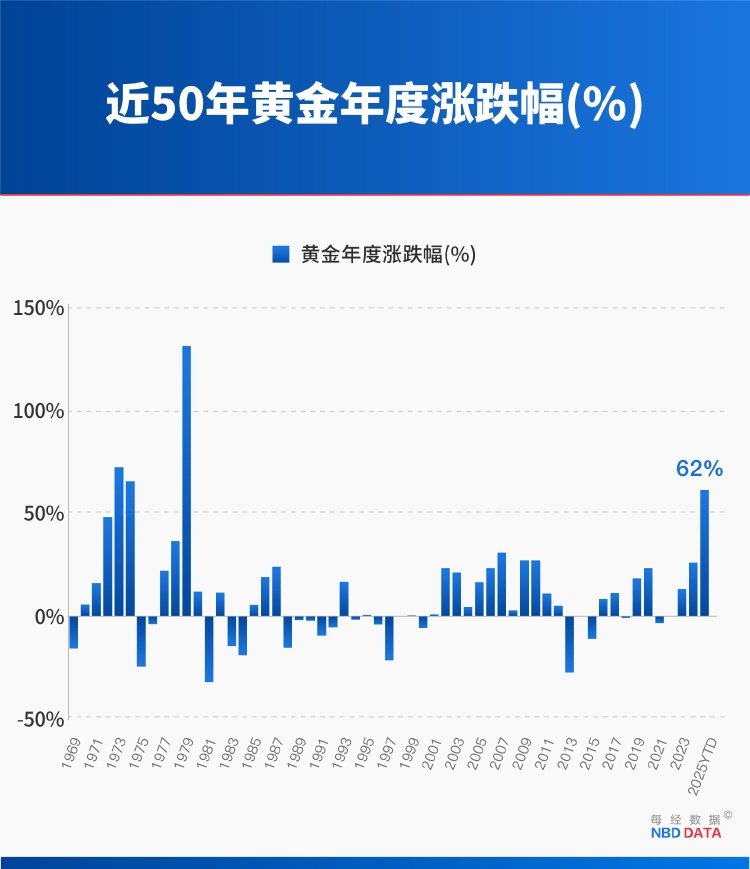
Core Viewpoint - The recent sharp decline in gold prices, described as a "meme stock-style crash," has raised questions about whether this is a healthy correction in a long-term bull market or a sign of a complete reversal of enthusiasm for gold [1][20]. Group 1: Market Dynamics - On October 21, gold prices fell by 5.31%, marking the largest single-day drop in 12 years and the 15th largest in recorded history [1]. - The price of gold dropped nearly $268 per ounce from its peak of $4375.59 per ounce, ending a nine-week streak of increases [1]. - The market experienced an unusual combination of rising U.S. stocks, gold, silver, and the dollar prior to the drop, which is considered unsustainable [2]. Group 2: Technical Indicators - Multiple technical indicators had signaled an impending correction, including extreme overbought conditions in the gold market [2][5]. - Historical data shows that gold prices typically experience a pullback after rapid increases, with an average decline of 4% following a 30% rise [5]. - The implied volatility of gold ETFs surged, indicating a potential turning point and upcoming volatility [7]. Group 3: Historical Context - A review of 14 previous instances of significant gold price drops reveals a mixed bag of outcomes, with some leading to rebounds and others resulting in further declines [12][15]. - Notably, in 1980, a similar situation occurred where gold prices fell sharply after a substantial increase, leading to a significant decline over the following months [15]. Group 4: Market Sentiment - There is a divide among analysts regarding the future of gold; some view the recent drop as a healthy correction, while others express concerns about speculative bubbles [20][21]. - Morgan Stanley maintains a bullish outlook, suggesting that the recent pullback is merely a market adjustment to rapid price increases [20]. - Long-term factors such as global monetary restructuring and central bank gold purchases continue to support the bullish narrative for gold [21].
黄金的巨震时刻
Xin Lang Ji Jin· 2025-10-23 08:10
Core Viewpoint - The recent sharp decline in gold prices, dropping over 6% on October 21, is attributed to a combination of technical corrections and profit-taking after a significant rise of 65% year-to-date, with gold reaching a historical high of $4,381 per ounce just before the drop [1][2]. Group 1: Market Dynamics - The immediate causes of the gold price drop include technical corrections and profit-taking, as the market was in an overbought condition [1]. - Recent geopolitical developments, including statements from Ukrainian President Zelensky about readiness to end the Russia-Ukraine conflict and signals from the Trump administration regarding tariff relief, have reduced market risk aversion, further pressuring gold prices [1][2]. - The strengthening of the US dollar and the end of seasonal gold buying in India have also contributed to short-term selling pressure in the gold market [1]. Group 2: Long-term Outlook - The underlying logic for the current gold price increase remains intact, driven by a challenge to the US dollar credit system and a trend of "de-dollarization," with central banks and sovereign funds increasing gold holdings as a strategic alternative to US dollar assets [2][4]. - Global monetary authorities are expected to purchase over 1,000 tons of gold annually from 2022 to 2024, indicating a sustained demand for gold as a reserve asset [2]. - The trend of private sector investment in gold is strengthening, with continued inflows into gold ETFs, suggesting a shift in demand from central banks to private investors [4]. Group 3: Investment Considerations - Investors looking to invest in gold without the hassle of physical storage can consider gold ETFs, which directly correspond to physical gold held in storage [8]. - As of October 21, the gold ETF (518800) has a scale of 29.7 billion yuan, with a year-to-date growth of over 20 billion yuan, indicating active trading and interest in gold investments [8].
环球财经国际金价波动加剧
Zhong Guo Jin Rong Xin Xi Wang· 2025-10-23 06:37
Core Viewpoint - Recent significant drop in international gold prices, approximately 8% decline over two days, attributed to profit-taking after a prolonged period of price increases and market overbought conditions [1][2] Group 1: Price Movements - International gold prices reached a historical high of $4014.60 per ounce on October 7, with a peak close to $4390 per ounce on October 16, marking a nearly 60% increase year-to-date [1] - The market capitalization of gold has evaporated by over $2.5 trillion due to the recent price drop [1] Group 2: Factors Influencing Price Changes - Key drivers for the recent surge in gold prices include increasing economic and geopolitical uncertainties, U.S. government shutdown concerns, rising inflation fears, significant central bank gold purchases, ongoing trade policy uncertainties, and heightened expectations for Federal Reserve interest rate cuts [1][2] - The recent strong performance of the U.S. dollar, easing geopolitical tensions, and optimistic expectations regarding trade disputes have contributed to the profit-taking behavior among investors [2] Group 3: Market Analysis and Predictions - Analysts describe the recent price drop as a "technical correction" following an unprecedented price increase, indicating that the market has been overbought for some time [2] - Most market institutions predict that gold prices will likely remain high in the short term, with a potential for consolidation, while the long-term upward trend remains intact [2] - Citigroup anticipates a bearish outlook in the short term if the U.S. government shutdown is resolved and trade tensions ease, while Goldman Sachs views the drop as a technical correction without altering the long-term macroeconomic backdrop [2] - Morgan Stanley believes the recent decline is a short-term adjustment rather than the end of a bull market, supported by ongoing central bank gold purchases and persistent geopolitical risks [2] Group 4: Future Price Expectations - Standard Chartered has raised its average gold price forecast for 2026 from $3875 to $4488 per ounce, citing factors such as increasing global uncertainty, shifts in Federal Reserve policy, and strong demand for gold investments [3]

【环球财经】国际金价波动加剧
Zhong Guo Jin Rong Xin Xi Wang· 2025-10-23 06:36
Core Viewpoint - Recent significant drop in international gold prices, following a period of record highs, attributed to profit-taking by investors and a technical correction after a prolonged overbought market [1][2] Group 1: Price Movements - International gold prices fell approximately 8% over two days, resulting in a market value loss exceeding $2.5 trillion [1] - Gold futures reached a historic high of $4014.60 per ounce on October 7, with prices nearing $4390 per ounce on October 16, marking a nearly 60% increase year-to-date [1] Group 2: Factors Influencing Price Changes - Key drivers for the recent surge in gold prices include rising economic and geopolitical uncertainties, U.S. government shutdown concerns, inflation fears, significant central bank gold purchases, and expectations of Federal Reserve interest rate cuts [1][2] - The strong U.S. dollar, easing geopolitical tensions, and optimistic views on trade disputes have contributed to the recent profit-taking by investors [2] Group 3: Market Analysis and Predictions - Analysts describe the recent price drop as a typical "technical correction" after an unprecedented price increase, indicating that the market had been overbought for some time [2] - Most market institutions predict that gold prices will likely remain high in the short term, with a continued upward trend in the medium to long term [2] - Citibank forecasts a potential consolidation phase for gold prices if U.S. government shutdown issues are resolved and trade tensions ease, while Goldman Sachs views the drop as a technical correction without altering the long-term macroeconomic backdrop [2] - Standard Chartered has raised its 2026 average gold price forecast from $3875 to $4488 per ounce, citing increasing global uncertainties and strong investment demand for gold [3]