消费结构升级

Search documents
从“适配需求”到“创造需求” 机构投资消费逻辑生变
Shang Hai Zheng Quan Bao· 2025-11-13 17:55
Group 1 - The consumer sector is showing signs of stabilization and rebound, with significant capital inflow through ETFs, indicating a potential turning point for the sector [1][2] - Fund companies are shifting their investment logic from "adapting to demand" to "creating demand," focusing on companies that emphasize innovation and consumer experience [1][4] - Several consumer-themed ETFs have reached new highs in terms of shares, reflecting increased investor interest and confidence in the sector [2] Group 2 - The recent performance of the consumer sector is supported by a combination of policy, capital, industry fundamentals, and consumption trends, suggesting a structural recovery after a deep adjustment [1][3] - The third-quarter earnings reports indicate that many segments within the consumer sector are still struggling, with net profits not yet turning positive, highlighting a potential mismatch between valuation and earnings [3] - New consumption trends are emerging, where consumption is seen as a form of self-expression, prompting supply-side upgrades that align with the core demands of the new generation of consumers [4]
安井食品20251028
2025-10-28 15:31
Summary of Anjoy Foods Conference Call Company Overview - **Company**: Anjoy Foods - **Industry**: Frozen Food and Prepared Dishes Key Points Sales Strategy and Channel Performance - Anjoy Foods has established a robust channel barrier through an omnichannel sales strategy, with the distribution channel accounting for 76% of revenue in the first half of 2022, indicating the effectiveness of its channel strategy [2][4][5] - The company maintains a stable network of distributors, providing flexible policy support to enhance distributor loyalty, ensuring that distributor revenue remains above 75%, which forms a significant competitive advantage [2][4][5] Production Capacity and Market Position - Anjoy Foods is the leading producer in the industry, with a capacity utilization rate consistently exceeding 100%. The company has expanded production bases and upgraded old facilities to alleviate supply shortages during peak seasons and reduce transportation costs [2][5] - The company operates 11 production bases and has over 30 projects under construction, continuously building new bases and upgrading existing ones to support production capacity [5] Industry Growth and Market Potential - The Chinese frozen food market is experiencing rapid growth, expected to reach a market size of 330 billion yuan by 2025, driven by improvements in cold chain logistics and changes in consumer structure [2][6] - There is significant room for growth in per capita consumption of frozen foods in China, which was 9 kg in 2019 compared to 65 kg in the U.S. and 35 kg in Europe [6] Prepared Dishes Business Development - Anjoy Foods is actively expanding its prepared dishes segment through self-production, private labeling, and acquisitions, launching several market-recognized flagship products [2][7][11] - The prepared dishes market is projected to reach a trillion yuan by 2025, with significant growth potential as per capita consumption in China is currently low compared to other countries [9][10] Financial Performance - In the first half of 2023, Anjoy Foods reported revenue of 7.6 billion yuan, a year-on-year increase of 0.8%, while net profit attributable to shareholders was 676 million yuan, a decline of 15.79% [3][12] - The gross margin was 20.52%, down 3.39 percentage points year-on-year, primarily due to rising raw material prices [3][12] Channel Performance Insights - Revenue from the distributor channel was 6 billion yuan, a slight decline of 1.15%, while the retail and e-commerce channels showed strong performance with a revenue increase of 20.92% [3][13] - The company collaborates with new retail platforms like Hema and Dingdong Maicai to enhance supply capabilities in emerging markets, although demand remains under pressure [3][13] Management and Strategic Direction - The management team, led by Chairman Liu Liming and General Manager Zhang Qingnian, has shown high professionalism and loyalty since the company's inception, effectively implementing the omnichannel sales strategy [4] Product Innovation and Market Strategy - Anjoy Foods focuses on product innovation, launching regional new products based on local dietary habits, which are then promoted nationwide to ensure sustainable growth [8] Recent Acquisitions - The company completed the acquisition of Jiangsu Dingwei Tai Foods, entering the frozen baking sector and enhancing its capabilities in high-end cod fish paste and frozen baking products [12][11] This summary encapsulates the key insights from the conference call, highlighting Anjoy Foods' strategic initiatives, market positioning, financial performance, and growth potential in the frozen food and prepared dishes industry.

消费驱动增长成效显著,仍需优化结构释放内需潜力
2 1 Shi Ji Jing Ji Bao Dao· 2025-10-21 22:11
Core Viewpoint - During the "14th Five-Year Plan" period, consumption has become a crucial driver of China's economic growth, contributing over 50% to GDP growth, with expectations for final consumption expenditure to account for approximately 55% of GDP in 2024 [1][2] Consumption Contribution to Economic Growth - Final consumption expenditure's contribution to GDP growth has stabilized between 55% and 60%, significantly surpassing investment and net exports, establishing it as the primary driving force of the economy [2] - In 2024, the total retail sales of consumer goods are projected to reach 48.8 trillion yuan, reflecting a 3.5% increase from the previous year, with service retail sales growing at a remarkable rate of 6.2% [2] - The shift from "material consumption" to "service consumption" indicates a profound transformation in consumption structure, with service consumption becoming a key marker of consumption upgrading [2] Changes in Consumption Structure - Service consumption has seen a notable increase, with significant growth in expenditures on education, healthcare, culture, and tourism [3] - Health and safety expenditures are rising, with per capita healthcare spending increasing by 1.3% in 2024 [3] - The emergence of intelligent and green consumption is evident, with new energy vehicle production increasing by 38.7% in 2024 [3] - There is a growing awareness of long-term value in consumption, with per capita service consumption expenditure reaching 46.1% of total consumption in 2024 [3] Consumer Behavior and Expectations - Consumers are increasingly seeking higher quality of life and personal development, shifting from short-term satisfaction to long-term value [4] - There is a heightened demand for transparency, fairness, and safety in transactions, with consumers expecting better protection of their rights [4][5] Policy Recommendations for Future Consumption Growth - The government should focus on solidifying employment and income foundations, enhancing social security systems, and optimizing the business environment to stabilize expectations and boost consumer confidence [6][7] - Policies should aim to break down structural barriers, enhance consumer rights protection, and improve regulatory efficiency to facilitate consumption [8][9] - Emphasis on expanding service consumption and optimizing supply-demand coordination is essential for future growth [9][10] Overall Economic Outlook - The consumption market in China has significant potential for growth, but structural challenges remain, such as high savings rates and the need to enhance consumer motivation [6][10] - The transition from high savings to high consumption is crucial for creating a virtuous cycle that supports long-term economic stability [10]


21评论丨消费驱动增长成效显著,仍需优化结构释放内需潜力
2 1 Shi Ji Jing Ji Bao Dao· 2025-10-21 22:11
Core Insights - During the "14th Five-Year Plan" period, China's economy demonstrated strong resilience amid complex domestic and international environments, with consumption becoming a key driver of GDP growth, contributing over 50% [2][3] - The contribution of final consumption expenditure to GDP growth has stabilized between 55% and 60%, significantly surpassing investment and net exports, marking it as the primary driving force of the economy [3] - The shift in consumer behavior from material consumption to service-oriented and experiential consumption is evident, indicating a transformation in the consumption structure [4][5] Consumption Trends - Retail sales of social consumer goods are projected to reach 48.8 trillion yuan in 2024, growing by 3.5% year-on-year, with service retail sales increasing by 6.2%, outpacing goods consumption [3] - The proportion of service consumption is rising, with significant increases in expenditures on education, healthcare, culture, and tourism [4] - Health and safety expenditures are becoming more prominent, with per capita healthcare spending increasing by 1.3% in 2024 [5] Consumer Behavior Changes - There is a notable rise in demand for intelligent and green consumption, with new energy vehicle production increasing by 38.7% in 2024 [5] - Consumers are increasingly focused on long-term value, with per capita service consumption accounting for 46.1% of total consumption in 2024 [5] - The shift from immediate satisfaction to long-term value reflects a growing pursuit of quality of life and personal development among consumers [5] Consumer Experience and Rights Protection - As consumption structures upgrade, consumers are demanding better experiences and protections, emphasizing transparency, fairness, and safety in transactions [6] - The demand for effective legal channels for rights protection and increased information transparency is rising, indicating a shift in consumer expectations [6] Future Consumption Strategies - The "15th Five-Year Plan" should focus on enhancing consumer confidence and addressing structural challenges, such as high savings rates and the need for improved purchasing power [7][8] - Policies should aim to solidify employment and income foundations, enhance social security, and optimize the consumption environment to stimulate demand [7][8] - The government is encouraged to support service consumption growth and improve supply-side capabilities in sectors like healthcare and elderly care [10] Economic Transformation - The transition from high savings to high consumption is essential for creating a virtuous cycle in the economy, with a focus on institutional reforms to eliminate barriers and enhance the quality of goods and services [11] - The goal is to convert savings potential into consumption momentum, thereby supporting long-term stable economic growth through robust domestic demand [11]

马云预言说中了?今明两年或迎来4大变局,建议大家早知早准备
Sou Hu Cai Jing· 2025-10-17 00:55
Group 1: Economic Changes and Consumer Behavior - The Chinese economy has undergone significant changes in recent years, including real estate cooling, internet regulation, consumption upgrades, and industrial restructuring, which have impacted both macroeconomics and individual lifestyles [1] - By mid-2025, the consumer goods market in China is expected to show a structural shift, with high-quality, green, and smart products seeing a sales growth of 15.3%, significantly outpacing the overall retail growth of 6.2% [2] - The rise of middle-income groups, projected to exceed 500 million by 2026, will continue to drive the demand for quality products and services [2] Group 2: Digital Economy Integration - The digital economy in China has reached a scale of 58.3 trillion yuan, accounting for over 40% of GDP, with unprecedented integration of digital technology into traditional industries [5] - New job opportunities are emerging, with over 15 million new positions related to the digital economy expected to be created between 2024 and 2025 [5] - Continuous learning and digital skills acquisition will be essential for maintaining competitiveness in the evolving job market [5][6] Group 3: New Energy Industry Growth - By mid-2025, China's renewable energy generation capacity is projected to exceed 1.4 billion kilowatts, making up 50.2% of total capacity, with the penetration rate of new energy vehicles reaching 35% [7] - The complete energy industry chain is maturing, and by 2026, the total output value of the new energy sector and related industries is expected to surpass 15 trillion yuan [7][9] - Investment in high-quality companies within the new energy sector is recommended for long-term growth potential [7] Group 4: Demographic Shifts and Economic Opportunities - By 2025, the proportion of the population aged 65 and older is expected to reach 20.3%, marking the entry into a "super-aged society," while the birth rate is showing a slight increase [11] - The "silver economy" and "childcare economy" are anticipated to grow significantly, with market sizes projected to exceed 8 trillion yuan and 4 trillion yuan, respectively, by 2026 [11] - Companies should focus on developing specialized products and services for the elderly and infants to meet the growing demand in these sectors [12] Group 5: Strategic Recommendations - Individuals are encouraged to enhance their professional skills and digital literacy to adapt to the changing economic landscape [12] - Investment strategies should be adjusted to include a higher proportion of income-generating assets, such as quality stocks and industry funds, while maintaining liquidity [13] - Emphasizing health management and preventive care is becoming increasingly important as healthcare costs rise [13]
抓住文化消费增长新机遇
Jing Ji Ri Bao· 2025-10-11 05:53
Core Insights - The strong cultural consumption trend indicates a shift in China's consumption structure from basic survival needs to a focus on quality and experience-driven spending, supported by rising disposable income and improved social security [2][3] Group 1: Cultural Consumption Trends - During the "Golden Week" of 2024, per capita cultural and entertainment spending reached 955 yuan, a 67.8% increase from 2020, outpacing overall consumption growth [1] - Cultural consumption is characterized as "high-income elastic" spending, reflecting a willingness to pay for enriching experiences beyond basic needs [2] Group 2: Economic Impact - Cultural consumption is driving growth in various service industries such as film, performing arts, tourism, and sports, which are typically green, low-carbon, and high value-added sectors [2][3] - The diversification of cultural consumption is providing sustained momentum for expanding overall consumer spending, especially as traditional commodity consumption growth slows [2] Group 3: Innovation and New Business Models - The integration of cultural IP with modern manufacturing is leading to new business models and industries, such as "Guochao" fashion and cultural creative products, enhancing the value chain from manufacturing to creation [3] - Emerging technologies and new business models like membership and subscription services are flourishing due to the vibrant market demand for cultural experiences [3] Group 4: Strategic Significance - Cultural consumption is becoming a direct representation of national cultural soft power, with successful cultural products gaining international recognition and contributing to a modern national image [3] - The growth of cultural consumption signifies a transition towards a high-quality development stage focused on spiritual enrichment, emphasizing the need to leverage cultural resources and enhance cultural experiences [4]
【文体市场面面观】抓住文化消费增长新机遇
Jing Ji Ri Bao· 2025-10-11 00:38
Core Insights - The strong cultural consumption trend in China indicates a shift towards higher quality and experience-driven spending, moving from basic survival needs to more luxurious and fulfilling experiences [3][4] Economic Impact - Cultural consumption is contributing to economic growth by enhancing individual happiness and urban belonging, while also driving demand in various service sectors such as film, performing arts, tourism, and publishing [3][4] - The growth in cultural consumption is providing a sustainable boost to overall consumer spending, especially as traditional commodity consumption slows down [3][4] Industry Transformation - The integration of cultural IP with modern manufacturing is leading to new business models and industries, such as "Guochao" fashion and cultural creative products, which elevate traditional industries from mere manufacturing to value creation [4] - Innovative technologies are being rapidly adopted in cultural applications, driven by diverse market demands, leading to new commercial ecosystems [4] Strategic Significance - Cultural consumption is becoming a direct representation of national cultural soft power, with successful cultural products gaining international recognition and contributing to a modern national image [4][5] - The ongoing growth in cultural consumption signifies China's transition from material wealth to a phase of high-quality development focused on spiritual enrichment [5]

国庆中秋假期国内出游高达8.88亿人次 四季度消费有望平稳增长
Zhong Guo Jing Ying Bao· 2025-10-10 14:05
Group 1 - The overall cultural and tourism market in China during the 2025 National Day and Mid-Autumn Festival holiday was stable and orderly, with 888 million domestic trips taken, an increase of 123 million trips compared to the 2024 holiday [1] - Total domestic travel expenditure reached 809 billion yuan, an increase of 108.19 billion yuan compared to the 2024 holiday [1] - The transportation sector saw a record high in cross-regional personnel flow, with a cumulative total of 2.433 billion trips during the holiday, averaging 304 million trips per day, a year-on-year increase of 6.3% [1] Group 2 - The film market remained robust, with box office revenue surpassing 1.7 billion yuan during the National Day holiday, and total nationwide box office revenue for the year exceeding that of 2024 [1] - The shift in consumer behavior is noted, moving from survival-based consumption to a focus on quality, experience, and self-fulfillment, indicating an upgrade in consumption structure [1] - Various local cultural and tourism initiatives, such as Guizhou's "Village Super" and Jiangsu's "Su Super," have contributed to the vibrancy of the overall consumption market [2] Group 3 - Data from January to August shows double-digit growth in retail sales for cultural, sports, leisure services, and travel consulting sectors [3] - The total retail sales of consumer goods reached 32.39 trillion yuan, with a year-on-year growth of 4.6% [3] - The outlook for consumer spending in the fourth quarter is positive, with expectations for steady growth, particularly in service consumption [3]
出行旅游、观影购物、外出就餐升温 消费活力释放多行业受益
Yang Shi Wang· 2025-10-03 07:06
Core Insights - The National Day and Mid-Autumn Festival holiday has seen a surge in tourism across China, with diverse attractions drawing large crowds of visitors [1][19][28] Group 1: Tourism Trends - Various scenic spots in China are experiencing peak visitor numbers, leveraging unique natural landscapes and rich cultural heritage to create diverse tourism experiences [1][19] - The Huashan Temple in Shanxi Province has become a popular destination, receiving 46,804 visitors in the first two days of the holiday, marking a year-on-year increase of approximately 23.2% [6] - The Qiyun Mountain scenic area in Anhui is attracting tourists with its unique "sun-drying" activities, creating vibrant harvest displays that have become popular photo spots [9] Group 2: Visitor Statistics - The first day of the holiday saw over 23 million passengers transported by rail, setting a new single-day record for passenger volume [21] - In Xinjiang's Luobuman Village, tourists are enjoying immersive experiences in the desert and lakes, highlighting the area's ecological and historical appeal [4] - The Fanjing Mountain scenic area in Guizhou welcomed around 18,000 visitors in the first two days of the holiday [12] Group 3: Economic Impact - The holiday period is expected to ignite consumer enthusiasm, with an estimated 2.36 billion people traveling across regions, showcasing China's economic vitality [18][19] - The tourism market is experiencing a revival, with a notable increase in inbound tourism, particularly from South Korea, Japan, and Southeast Asia, reflecting China's growing appeal in the global tourism market [19][25] - The government is actively promoting service consumption, with measures such as extended museum hours and support for the tourism sector, which is expected to benefit industries like aviation, tourism, film, and dining [28]

“十四五”社会民生“成绩单”出炉 “数”看经济社会高质量发展基础性支撑更稳
Yang Shi Wang· 2025-09-29 06:30
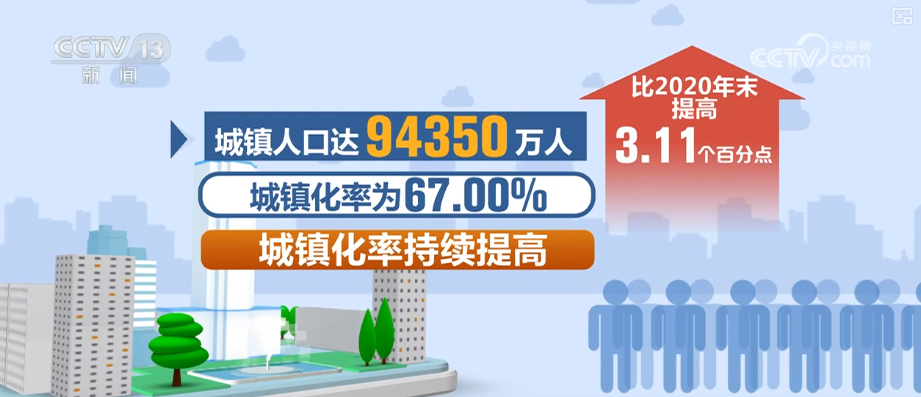
Group 1 - The core viewpoint of the report indicates that since the beginning of the 14th Five-Year Plan, China's population has remained stable, with improvements in population quality, stable employment, and steady growth in residents' income, providing foundational support for high-quality economic and social development [1] Group 2 - As of the end of 2024, the total population of China is projected to be 1,408.28 million, ranking among the highest in the world. The urban population is expected to reach 943.50 million, with an urbanization rate of 67.00%, an increase of 3.11 percentage points since the end of 2020 [3] Group 3 - The employment situation is generally stable, with continued growth in urban employment. The average urban survey unemployment rate is expected to be 5.1% by the end of 2024, a decrease of 0.5 percentage points from 2020. The third industry has shown enhanced employment absorption capacity, with an increase of 600,000 jobs since 2020, raising its share of total employment by 1.1 percentage points [6] Group 4 - Residents' income has shown stable growth, with the per capita disposable income expected to reach 41,314 yuan in 2024, an increase of 9,125 yuan since 2020. After adjusting for price factors, the average annual real growth rate from 2021 to 2024 is projected to be 5.5%, in line with GDP growth [9] Group 5 - In terms of expenditure, development-oriented consumption in education, culture, entertainment, transportation, communication, and healthcare is expected to grow rapidly, with an average annual growth rate of 10.0% from 2021 to 2024. Service consumption expenditure is projected to grow at an average annual rate of 9.5%, outpacing goods consumption expenditure by 3.8 percentage points [11]