碳排放

Search documents
微软花17亿美元“埋粪”!把人类粪便和污水转化成“生物泥浆”,注入地壳1500米深处,一科技初创公司靠这项业务接到微软大单
Mei Ri Jing Ji Xin Wen· 2025-08-04 13:19
Core Insights - The article discusses the environmental costs associated with the rapid development of artificial intelligence (AI), highlighting Microsoft's significant investment in carbon removal initiatives as a response to its increasing carbon footprint [2][7]. Group 1: Microsoft's Investment in Carbon Removal - Microsoft has signed a deal with Vaulted Deep to achieve a carbon removal target of 4.9 million tons by 2038, with the total value of the contract reportedly exceeding $1 billion, potentially costing Microsoft up to $1.7 billion based on a fee of $350 per ton [3][5]. - The investment is part of Microsoft's strategy to purchase "emission rights" as its carbon emissions have increased by 23.4% since 2020 due to the expansion of its cloud computing and AI businesses [7]. Group 2: Environmental Impact of AI - The AI industry is facing growing scrutiny over its environmental impact, with reports indicating that the indirect carbon emissions from major tech companies like Amazon, Microsoft, Alphabet, and Meta have increased by an average of 150% from 2020 to 2023 [9][10]. - A specific AI model, Mistral Large 2, produced 20.4 tons of CO2 over 18 months, equivalent to the annual emissions of 5,000 average cars, and consumed 281,000 cubic meters of water [10]. Group 3: Criticism of Carbon Offset Strategies - Experts criticize Microsoft's approach of "buying offsets," arguing that it distracts from the need for genuine emission reductions at the source [8][14]. - The current carbon accounting mechanisms are seen as flawed, allowing companies to claim zero emissions through market-based accounting, which may not reflect actual environmental impacts [9][10]. Group 4: Future Projections and Industry Actions - By 2027, AI is projected to consume up to 6.6 billion cubic meters of water annually, and data center energy consumption could double by 2030, surpassing the total energy consumption of countries like Japan [13][14]. - Major tech companies are making commitments to achieve net-zero emissions by 2030 or 2040, but experts emphasize the need for a focus on renewable energy and reducing emissions at the source rather than relying solely on carbon credits [14][15].



炮轰电动化、年薪19亿!公司利润暴跌,董事长凭啥涨薪20%?
电动车公社· 2025-07-28 15:14
Core Viewpoint - Toyota maintains its position as the top-selling automaker in FY2024, but its operating profit has declined by 10% to 4.8 trillion yen (approximately 232 billion RMB) [1]. Group 1: Financial Performance and Leadership Compensation - Toyota's internal estimates suggest a potential 34.9% drop in net profit by FY2025, reducing it to 3.1 trillion yen [2]. - Despite the declining profits, Chairman Akio Toyoda received a salary of 1.949 billion yen (approximately 94.25 million RMB), marking an increase of over 20% [3]. - In FY2023, Toyoda's salary reached a record high of 1.622 billion yen, with a staggering 62% increase, sparking controversy [5]. Group 2: Leadership and Governance - Akio Toyoda's leadership is characterized by a high approval rating of 97%, raising questions about the value he brings to Toyota [7]. - The governance structure at Toyota has historically involved cross-shareholding, limiting Toyoda's ownership to less than 1% [10]. - Toyoda's rise to power involved a long journey through various roles within the company, showcasing a deep understanding of its operations [13][14]. Group 3: Strategic Direction and Electric Vehicle Transition - Under Toyoda's leadership, Toyota has focused on revitalizing the brand and expanding its product offerings, including sports and luxury vehicles [28]. - The company has engaged in international collaborations, investing in companies like Uber and Didi, while also partnering with competitors like BYD [42]. - Toyoda has been vocal against a rapid shift to electric vehicles, citing concerns over job losses and carbon emissions, while also committing to a 4 trillion yen investment in electrification [46][47]. Group 4: Organizational Changes and Future Outlook - Toyota has begun restructuring its employment practices, moving away from lifetime employment to a performance-based pay system [73]. - Recent strategic moves include the acquisition of its parent company, Toyota Industries, to streamline operations and enhance its transition to new technologies [82]. - The upcoming Lexus localization project aims to establish a manufacturing facility in China, set to begin production in 2027, indicating a significant shift in production strategy [85].


ESG信披观察丨A股水电行业九成公司ESG评级为A级 但无企业公布范围三
Mei Ri Jing Ji Xin Wen· 2025-07-23 05:16
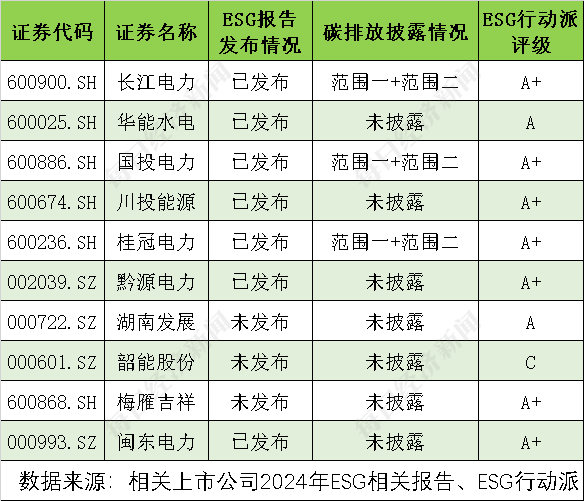
Core Viewpoint - The commencement of the Yarlung Tsangpo River downstream hydropower project, with a total investment of approximately 1.2 trillion yuan, is expected to significantly reshape China's energy landscape, positively impacting the hydropower sector in the A-share market [1] ESG Reporting and Ratings - Among the 10 listed companies in the A-share hydropower industry, 7 have disclosed their 2024 ESG reports, resulting in a disclosure rate of 70% [1][2] - 9 out of 10 companies in the hydropower sector have received an A rating (including A and A+), while only 1 company is rated C [2] - Only 3 companies have disclosed Scope 1 and Scope 2 carbon emissions data, with no companies reporting Scope 3 emissions [2][4] Environmental and Social Dimensions - The protection of biodiversity is crucial for sustainable operations in hydropower projects, as highlighted by Guotou Power, which emphasizes ecological restoration and monitoring [5] - Jiangsu Power focuses on community relations and resettlement management to minimize the impact on local residents, ensuring long-term harmony [5] - The assessment of both environmental and social impacts is essential for determining the "green" status of hydropower projects, as improper management can lead to new environmental and social liabilities [6] International Expansion and Compliance - Leading hydropower companies are exploring overseas projects, such as Yangtze Power's clean energy initiatives in Peru and Huaneng Hydropower's first overseas large-scale hydropower BOT project in Myanmar [7][8] - The global shift away from coal has created a strong demand for clean energy, making countries with abundant water resources attractive for investment [8] - Compliance with local laws and regulations is critical for the success of offshore projects, as they face more complex risks compared to domestic projects [8]



绿色能源难阻全球碳排放再创新高
Zhong Guo Hua Gong Bao· 2025-07-14 02:08
Core Insights - The report from the UK Energy Research Institute highlights a concerning trend where, despite record investments in renewable energy and net-zero commitments from major economies, global carbon emissions are projected to reach a new high in 2024, totaling 4.08 billion tons, an increase of 0.5 billion tons from 2023 [2][4] Group 1: Global Carbon Emissions Trends - Global carbon emissions have been on an upward trajectory since 2021, with an average annual increase of nearly 1% over the past decade, despite increasing international climate commitments [2][3] - The report indicates that while renewable energy sources like wind and solar are expanding, they are not keeping pace with the growth in global energy demand, leading to continued increases in carbon emissions [4] Group 2: Regional Emission Patterns - Over the past decade, carbon emissions have increased by 25% in Africa, 15% in the Middle East, and over 9% in the Asia-Pacific region, while Europe has seen an average annual decrease of 1.4% [3] - The EU's carbon emissions in 2024 are projected to be 3.7 billion tons, a 15% reduction compared to a decade ago, with countries like Germany and the UK making significant progress through policy initiatives [3] Group 3: Energy Transition Challenges - The energy transition is progressing slowly, with renewable energy sources being added to the energy mix without a corresponding reduction in fossil fuel use, which is a key reason for the ongoing rise in global emissions [4] - The report emphasizes that unless global energy demand growth slows or renewable energy begins to significantly replace fossil fuels, emissions are likely to continue to rise [4]
ESG解读|海底捞服务员挂打赏码惹争议,去年单店员工精简11%;有门店因食安问题受罚
Sou Hu Cai Jing· 2025-07-11 06:19
Core Viewpoint - The article discusses the current operational challenges and ESG performance of Haidilao, highlighting its innovative service strategies, employee management issues, food safety incidents, and environmental sustainability goals. Group 1: Service Innovation and Customer Engagement - Haidilao is known for its diverse services, including nail care, photo printing, and birthday celebrations, which attract significant customer traffic, with over 415 million customers served in 2024 and an average table turnover rate of 4.1 times per day [3] - The introduction of a dedicated customer manager role aims to enhance employee-customer interaction, further improving service quality [3] Group 2: Employee Management and Retention - The total number of full-time and part-time employees at Haidilao decreased to 137,200 in 2024, a reduction of 10.78% compared to 2023, with average store staffing dropping from 109 to 97 employees [4] - The employee turnover rate for 2024 was reported at 67%, which is significantly lower than the average turnover rates of competitors in the hot pot industry [4] - However, the calculation of turnover rates may be skewed as it only includes full-time employees and does not account for the approximately 40% of part-time staff [4] Group 3: Food Safety Issues - Haidilao has implemented a comprehensive food safety management system, conducting over 5,562 quality checks in 2024 [5] - Despite these efforts, the company faced several food safety violations, including incidents involving foreign objects in food and a significant refund due to a hygiene issue [5] Group 4: Environmental Sustainability Goals - Haidilao's MSCI ESG rating is B, which is lower than its competitor, with a focus on reducing carbon intensity rather than total emissions [6] - The company aims to reduce greenhouse gas emissions per unit of revenue by 12% annually from 2022 to 2026, achieving a 16.7% reduction in 2024 compared to the baseline year [6] - However, total carbon emissions increased by 1.42% in 2024, totaling 946,400 tons of CO2 equivalent, with electricity usage being the primary source of emissions [6][7] Group 5: Challenges in Green Operations - Haidilao aims to reduce average waste generation and electricity usage by 10% by the end of 2025, but has faced challenges in achieving these targets [8] - In 2024, average electricity consumption per store increased by approximately 19.06%, and water usage per million yuan of revenue rose by about 12.71% compared to 2018 [8] - The company has successfully reduced waste generation by 21.47% since 2018, with an average of 181.88 tons of waste produced per store [8]

外媒:中国正加快推动可再生能源使用
Huan Qiu Wang· 2025-07-10 09:14
Group 1 - China is accelerating its renewable energy development, with new wind and solar power capacity expected to reach 1.5 times last year's levels, accounting for three-quarters of the global capacity under construction [1][2] - The report from Global Energy Monitor indicates that China will add 510 GW of utility-scale wind and solar capacity this year, a 57% increase compared to the previous year [1][2] - China's carbon emissions have decreased for the first time during a period of rapid economic growth, with a reported decline of 1.6% compared to last year [2][3] Group 2 - China leads the world in the manufacturing of green technology, producing approximately 60% of global wind turbines and 80% of solar panels [3] - The share of wind and solar power in China's energy mix has surpassed 25% for the first time, while fossil fuel generation has decreased by 3.6% in the first four months of this year [2][3] - The pursuit of energy security may drive China to further invest in renewable energy, improving national energy security and focusing on low-emission industries such as IT, biotechnology, electric vehicles, and clean energy technologies [4]
ESG信披观察 | A股零售行业ESG相关报告披露率33.8%,市值TOP10企业仅3家公布贪腐相关数据
Mei Ri Jing Ji Xin Wen· 2025-07-10 05:25
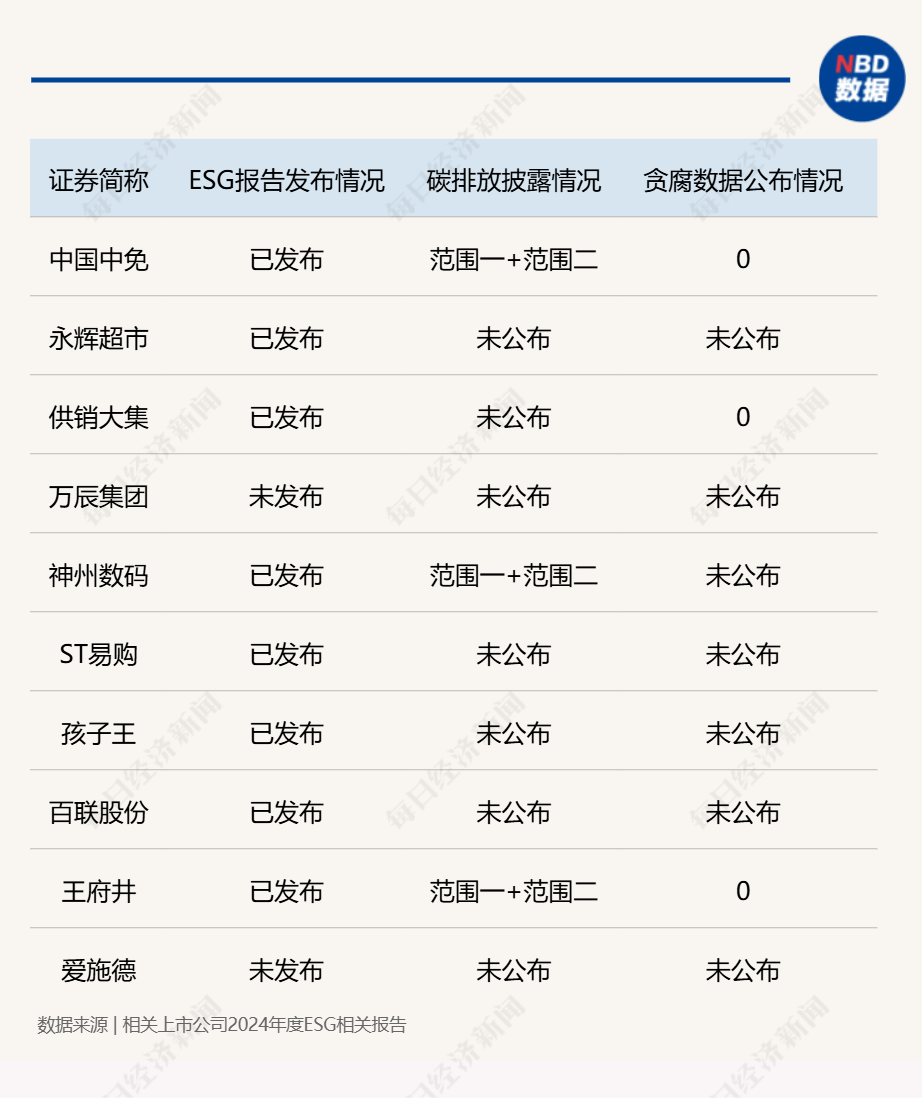
Core Viewpoint - Yonghui Supermarket (SH601933) has issued an open letter to suppliers advocating for a transparent supply chain and a zero-tolerance policy against corruption and hidden rules, emphasizing the importance of integrity in business practices [1][6]. Group 1: ESG Reporting and Practices - In the A-share retail sector, there are 71 listed companies, with only 24 (33.8%) having published ESG reports, which is below the overall A-share disclosure rate of 46% [2][11]. - The main ESG topics addressed by these companies include climate change, supply chain security, and product safety [2]. - Experts suggest that retail companies have significant room for improvement in ESG practices, which can enhance brand value and sustainable development [2][11]. Group 2: Corruption and Governance - Yonghui Supermarket has established a comprehensive supervision mechanism to combat corruption, including multiple reporting channels for whistleblowers [6][11]. - Among the top 10 retail companies by market value, only 3 have disclosed corruption-related data, all reporting zero incidents [6][11]. - Companies like China Duty Free Group have implemented training programs to prevent corruption, achieving 100% coverage among employees [6]. Group 3: Supplier Management and Rights Protection - Yonghui Supermarket's open letter states a commitment to rejecting "backdoor" dealings and hidden rules in supplier onboarding, ensuring all applications go through official channels [1][8]. - The company emphasizes timely financial settlements with suppliers, aiming to avoid delays and complications [1][8]. - The retail industry generally employs a tiered supplier management system, but there is a lack of focus on supplier rights protection [8][11].

观车 · 论势 || 丰田章男的电车污染论站得住脚吗?
Zhong Guo Qi Che Bao Wang· 2025-07-03 01:08
Core Viewpoint - The debate over the carbon reduction impact of pure electric vehicles (EVs) has been reignited by comments from Toyota's chairman, who claims that 9 million pure EVs produce carbon emissions equivalent to 27 million hybrid vehicles, suggesting that one pure EV's pollution equals that of three hybrids [1] Group 1: Production Emissions - The production phase of pure EVs generates significant carbon emissions, with studies indicating that battery manufacturing accounts for approximately 40% of the total lifecycle emissions of pure EVs [1] - Manufacturing a hybrid vehicle produces 6 to 9 tons of carbon emissions, while a pure EV with a larger battery generates 11 to 14 tons [1] - Advances in battery technology, such as lithium iron phosphate, are reducing reliance on rare metals and decreasing production emissions over time [1] Group 2: Usage Emissions - Research from Argonne National Laboratory shows that pure EVs can offset their manufacturing emissions after driving approximately 19,500 miles (about 31,400 kilometers), which is roughly equivalent to one year of driving for an average car [2] - Another study indicates that the carbon emission advantage of pure EVs becomes evident after about 28,000 miles (approximately 45,100 kilometers) of driving [2] - The International Council on Clean Transportation (ICCT) reports that the lifecycle carbon emissions of pure EVs in Europe are 66% to 69% lower than those of gasoline vehicles, with the U.S. at 60% to 68% and India at 19% to 34% [2] Group 3: Technological and Structural Advances - Technological advancements and optimization of energy structures are crucial for reducing upstream emissions associated with electric vehicles [3] - China is actively promoting its "dual carbon" goals, with renewable energy installations expected to account for over 60% of global additions in 2024, reflecting a 23% year-on-year growth [3] - Companies like Geely and Xpeng are reporting significant reductions in lifecycle carbon emissions, with Geely aiming for an 18% reduction by 2024 compared to 2020 [3] Group 4: Industry Trends - The development of pure electric passenger vehicles is seen as a key pillar for energy conservation and emissions reduction, with current models being the lowest emission vehicles available to consumers [4] - Despite the ongoing exploration of various technological pathways in the electric vehicle sector, the ultimate goal remains "zero emissions," indicating a long-term comparative advantage for pure electric vehicles [4]
今日新闻丨智己LS9谍照曝光!印度车企反对印度碳排放法案!特朗普对美日汽车贸易不满,考虑对日本汽车加征25%关税!
电动车公社· 2025-07-02 15:59
Group 1: Zhiji LS9 SUV - Zhiji's new flagship SUV, likely named LS9, is set to be unveiled in Q4 of this year, with spy photos recently leaked [2][5] - The LS9 features a new family design language, shifting from a sporty style to a more stable appearance, aligning with its six-seat family SUV positioning [4] - The vehicle is expected to incorporate range-extended powertrains, showcasing the latest technologies developed by SAIC Group [10] Group 2: Indian Automotive Industry - Indian car manufacturers oppose the proposed carbon emission regulations, deeming them "too aggressive," as the country aims to cut automotive emissions by one-third by 2027 and phase out gasoline vehicles by 2040 [11][12] - The implementation of these new regulations could result in significant fines for Indian car companies, potentially undermining foreign investment confidence in the Indian automotive sector [12] - The Indian automotive industry is encouraged to learn from China's transition to electric vehicles as a solution to these challenges [12] Group 3: US-Japan Automotive Trade Relations - President Trump has expressed dissatisfaction with the automotive trade imbalance between the US and Japan, considering imposing a 25% tariff on Japanese cars [13] - In 2024, Japan's trade surplus with the US is projected to reach $59.3 billion, with approximately 82% attributed to automobiles and parts [14] - Trump's actions aim to address the high trade surplus and encourage domestic manufacturing, although the effectiveness of such trade measures remains uncertain [14]

五大电力上市公司碳排放量发布,大唐发电、中国电力上升 | ESG信披洞察
Xin Lang Cai Jing· 2025-06-23 06:05
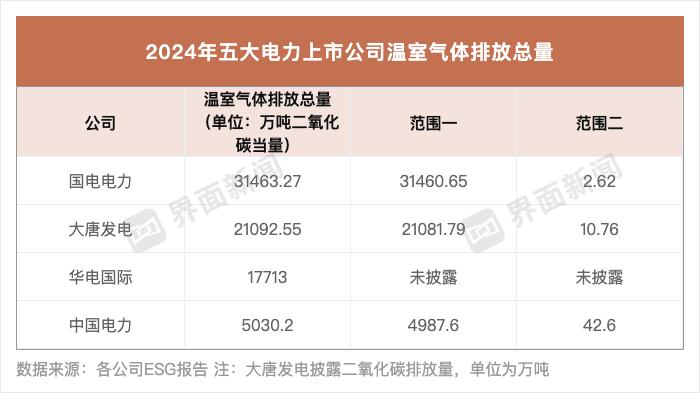
Core Viewpoint - The power industry plays a crucial role in the global energy system, with significant impacts on climate change, energy transition, and environmental quality. Major Chinese power companies have released their 2024 ESG reports, highlighting their greenhouse gas emissions and sustainability efforts [1]. Group 1: Greenhouse Gas Emissions - Three companies disclosed their total greenhouse gas emissions, with China Guodian Power leading at 31,463.27 thousand tons of CO2 equivalent, showing an 11.7% decrease from the previous year [2][3]. - Datang Power reported total emissions of 21,092.55 thousand tons of CO2 equivalent, a 7% increase year-on-year, primarily due to a rise in Scope 1 emissions [5]. - China Power's total emissions were the lowest at 5,030.2 thousand tons of CO2 equivalent, reflecting a 2.4% increase, with a significant 43% rise in Scope 2 emissions attributed to increased electricity purchases [3][5]. Group 2: Clean Energy Capacity - China Power has the highest clean energy capacity ratio at 80.12%, while Datang Power, Huaneng International, and Guodian Power have ratios of 40.37%, 35.82%, and 33.19% respectively [7][8]. - Huaneng International's total installed capacity is 14,512.5 million kW, followed by Guodian Power at 11,170 million kW, Datang Power at 7,911 million kW, and China Power at 4,939 million kW [8]. Group 3: Environmental Investments - Huaneng International invested the most in environmental protection at 1.78 billion yuan, followed by Huaneng International at 1.087 billion yuan, Datang Power at 747.9 million yuan, and Guodian Power at 730 million yuan [10]. - China Power had the lowest investment in environmental protection at 594 million yuan [10]. Group 4: Research and Development Investments - Datang Power led in R&D investments with 2.436 billion yuan, followed by Huaneng International at 2.389 billion yuan, and Guodian Power at 977 million yuan [12]. Group 5: Waste Management - China Power reported the highest hazardous waste generation at 128,000 tons, while Guodian Power significantly reduced its hazardous waste to 860 tons from 551,700 tons the previous year [14]. - Huaneng International reported hazardous waste generation of 610 tons, while Datang Power did not disclose this data [14]. Group 6: Green Power Trading - China Power sold 13.6119 million green certificates and participated in green electricity trading generating 5.198 billion kWh, resulting in revenue of 325 million yuan [15]. - Guodian Power achieved a historical high in green electricity trading volume at 3.51 billion kWh, with over 2.91 million green certificates obtained [15]. - Datang Power's new renewable energy project is expected to produce over 4.1 billion kWh of green electricity annually, significantly reducing CO2 emissions [15].