
碳足迹

Search documents
信能低碳(00145)附属信能工程与Key Action订立协议备忘录
Zhi Tong Cai Jing· 2025-09-04 14:24
Group 1 - The company, 信能低碳, has entered into a memorandum of understanding with Key Action Limited to establish a business partnership for assembling electric bicycles in Asia [1] - The partnership involves a well-known Chinese company that will authorize Key Action to import electric bicycle components and charging components for assembly and resale in Asia [1] - 信能工程 will provide capital expenditure, technical expertise, and technology transfer to support product charging and maintenance in the Asian region [1] Group 2 - The company aims to enhance energy efficiency and reduce carbon footprint through innovative and sustainable solutions, having received a patent for floating platform electric vehicle charging stations [2] - The collaboration is expected to create synergies in electric bicycle sales and the application of the company's charging technology, expanding market reach beyond current bases in China and Hong Kong to other Asian countries [2] - The memorandum outlines key commercial terms in a non-binding manner, with both parties agreeing to negotiate in good faith to reach a binding final agreement [2]
建好零碳园区破解绿色壁垒
Jing Ji Ri Bao· 2025-08-26 21:57
Core Viewpoint - The establishment of zero-carbon parks is a significant strategic initiative for China to achieve its "dual carbon" goals and respond to international green trade barriers, aiming to enhance foreign trade competitiveness [1][2]. Group 1: Zero-Carbon Park Development - The National Development and Reform Commission, Ministry of Industry and Information Technology, and National Energy Administration have issued a notice to support the construction of zero-carbon parks in qualified regions, outlining eight key tasks [1]. - The construction of zero-carbon parks is seen as a critical measure to adapt to the EU's carbon border adjustment mechanism, which will be implemented in 2026 and may extend to downstream manufactured products [2]. Group 2: Challenges and Shortcomings - Despite the initiation of zero-carbon park construction, there are shortcomings in adapting to green trade, such as an inadequate carbon emission statistical accounting system and a lack of international recognition for green certifications [2][3]. - The need for a unified carbon data management platform is emphasized to enhance carbon data management and application levels, ensuring compatibility with international carbon accounting and reporting rules [3]. Group 3: Green Certification and Standards - Establishing an internationally recognized "green label" system is proposed, with zero-carbon parks as pilot projects to promote green certification cooperation with major trading partners [4]. - The introduction of international third-party certification agencies into parks is suggested to provide green certification and carbon footprint auditing services [4]. Group 4: Financial Support and Energy Structure - The development of a green trade financial support system is crucial, with a focus on aligning energy and product low-carbon attributes [5]. - Encouragement for regions to develop industries that meet international green demands based on local resources is highlighted, along with the need for differentiated green export advantages [5].
双重驱动下企业碳管理提速
Jin Rong Shi Bao· 2025-08-11 01:00
Core Viewpoint - Companies are facing dual changes in policy and market environments regarding carbon emission management, leading to significant differences in carbon management practices across industries and scales [1][2]. Group 1: Policy and Market Influences - The intensity of policy constraints directly affects the progress of corporate carbon management, with raw material industries like metallurgy, non-ferrous metals, building materials, and petrochemicals being core to national carbon market management [2][3]. - The "1+N" dual carbon policy framework has established specific carbon peak plans for major industrial sectors, emphasizing monitoring, reporting, and verification (MRV) requirements [2]. - Market factors, such as external pressures from green trade barriers like the EU carbon tariff and ESG evaluations, are driving companies, especially in the new energy equipment manufacturing sector, to enhance their carbon management capabilities [3][4]. Group 2: Challenges in Carbon Management - Companies face multiple challenges in carbon emission management, including fragmented systems and increasing compliance burdens due to differing standards across regions and industries [5][6]. - The lack of unified carbon management standards and the need for multiple certifications for export-oriented companies complicate compliance and increase management costs [6][7]. - Data management issues, such as incomplete data collection and low willingness of suppliers to share data, hinder accurate carbon footprint tracking and identification of reduction potential [8][9]. Group 3: Support and Solutions for Companies - There is a need for a unified national carbon management regulation and detailed implementation guidelines at the industry level to address the challenges faced by companies [7]. - Specialized support systems and training programs are essential for effective carbon management, particularly for small and medium-sized enterprises (SMEs) that struggle with resource limitations [8][9]. - Establishing shared platforms and simplified processes for SMEs can enhance their carbon management capabilities and encourage proactive emission reduction efforts [9].
2025光伏企业绿色低碳评价报告
公众环境研究中心· 2025-08-03 09:17
Investment Rating - The report does not explicitly provide an investment rating for the solar photovoltaic industry Core Insights - The photovoltaic industry in China has seen significant growth, with a total installed capacity exceeding 1.48 billion kilowatts, surpassing thermal power for the first time [7][22] - The report highlights the need for the photovoltaic industry to enhance its low-carbon transformation and environmental performance, as it still faces challenges related to carbon emissions and resource consumption [7][11][17] Summary by Sections Background - China leads global renewable energy growth, contributing nearly 64% of the world's new capacity in 2024, with a total installed capacity reaching 1.889 billion kilowatts [18][22] - The renewable energy sector is expected to grow at an annual rate of 16.6% to meet global climate goals by 2030 [25] Evaluation of Photovoltaic Industry - The evaluation project initiated by IPE and PECC includes 55 photovoltaic-related companies, assessing their environmental performance and carbon emissions [7][31] - The evaluation uses the CITI and CATI indices to quantify the companies' green supply chain management and climate action [8][35] Key Findings - Renewable energy utilization among photovoltaic companies has significantly increased, with 40 companies reporting a total of 57.1 million megawatt-hours of renewable energy used in 2024, leading to a reduction of over 32.55 million tons of CO2 equivalent [10][54] - Despite improvements, carbon emissions remain high, with 44 companies reporting a total of 105 million tons of CO2 equivalent emissions from their operations [11][54] - The report indicates that while many companies are setting renewable energy targets, the overall progress in decarbonizing the supply chain is still limited [12][54] Recommendations - The report suggests that photovoltaic companies should focus on enhancing their green competitiveness and accelerating their low-carbon transformation to contribute to global energy transition efforts [17][28]





你了解碳足迹吗?地球的“热量账单”如何才能减少?
Zhong Guo Huan Jing Bao· 2025-07-23 00:21
Group 1 - The concept of "carbon footprint" measures the impact of human activities on the environment through greenhouse gas emissions, quantified in "tons of CO2 equivalent" [1] - A management system for carbon footprints is being established in China, with a preliminary framework expected by 2027 and a more comprehensive system by 2030, allowing for better comparison of products and strategies to reduce emissions [1] - The carbon footprint can serve as a "heat bill," enabling consumers to choose low-emission products and encouraging industries to innovate and upgrade their technologies [2] Group 2 - Quantifying carbon footprints can drive traditional industries towards high-value, high-tech green sectors, creating job opportunities in research, production, and management [3] - The transition to a low-carbon economy can break the cycle of pollution accompanying growth, demonstrating that technological innovation can enhance living standards while reducing environmental impact [3] - As carbon footprint reduction becomes a cost-effective choice, green development will be integrated into economic operations, leading to lower energy consumption in daily life [3]
10亿元砸向环保,“茅五洋”借ESG闯海外
2 1 Shi Ji Jing Ji Bao Dao· 2025-07-22 12:10
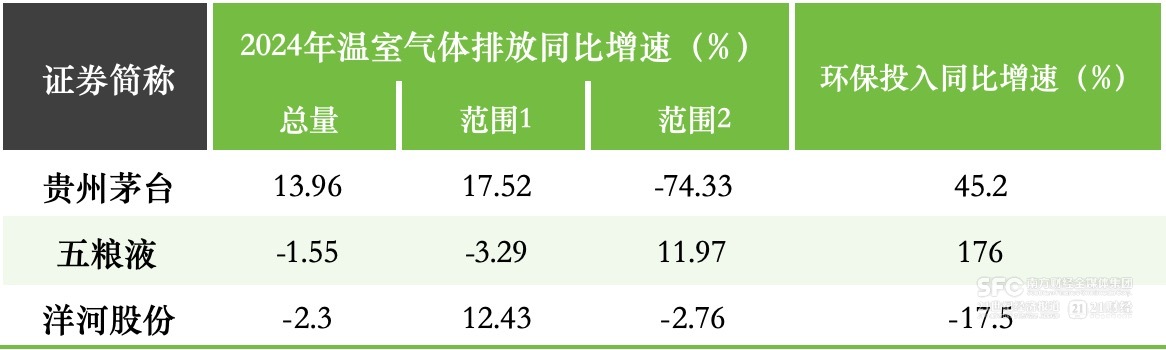
Core Viewpoint - The Chinese liquor industry, particularly the baijiu sector, is facing intensified competition and is increasingly looking to international markets for growth opportunities amid domestic market pressures [1]. Group 1: Market Trends - The Wind baijiu index has shown a downward trend since May, with a cumulative decline of 8.01%, and Kweichow Moutai's stock price has decreased by 3.45% [1]. - Kweichow Moutai is focusing on East Asia and South Asia for international expansion, with operations in 64 countries and regions [1]. - Wuliangye plans to establish brand cultural experience spaces in over 50 cities worldwide to enhance cultural recognition of Chinese baijiu among overseas consumers [1]. Group 2: Environmental, Social, and Governance (ESG) Practices - ESG management is becoming a key focus for baijiu companies as they expand internationally, with a complete ESG management system seen as beneficial for overseas operations [1]. - Kweichow Moutai's environmental investment reached 302 million yuan in 2024, a 45.20% increase year-on-year, significantly outpacing its revenue growth of 15.71% [3]. - Wuliangye's environmental investment surged by 176% to 690 million yuan, while its revenue grew by 7.09% [3]. Group 3: Carbon Emissions and Reporting - Kweichow Moutai's greenhouse gas emissions increased by 13.96% overall, with scope 1 emissions rising by 17.52% and scope 2 emissions decreasing by 74.33% [5]. - Wuliangye and Yanghe's carbon emissions decreased by 1.55% and 2.3%, respectively, with Wuliangye significantly increasing its scope 3 emissions reporting from 0.78 million tons to 12.08 million tons due to expanded reporting categories [6][7]. - Kweichow Moutai did not disclose specific scope 3 emissions but indicated that purchased goods and services accounted for 76.43% of its carbon emissions [7]. Group 4: Industry Challenges and Opportunities - The baijiu industry faces challenges in international markets, including strict environmental regulations and diverse consumer demands [1][13]. - The establishment of a robust ESG framework is seen as essential for enhancing international competitiveness and compliance [14]. - The need for standardized reporting and clear regulatory requirements for scope 3 emissions is emphasized to improve comparability and operational feasibility for companies [10][12].



经济领跑与低碳发展协同的广东实践
Zhong Guo Huan Jing Bao· 2025-07-22 01:19
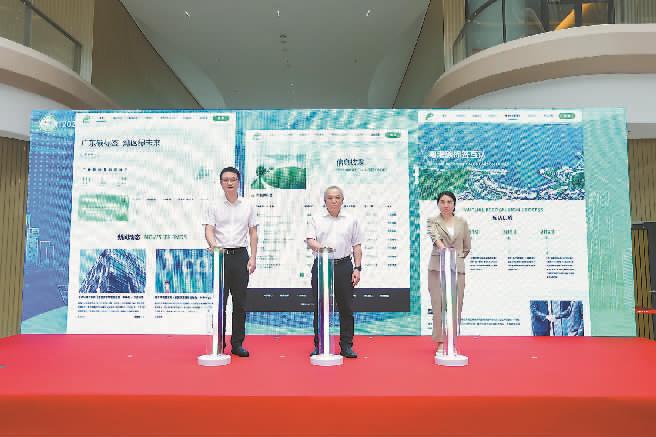
Group 1 - The core viewpoint of the article emphasizes the role of carbon reduction market mechanisms in promoting ecological product value transformation and supporting high-quality rural revitalization in Guangdong Province [1][4] - The measures propose to enhance the carbon reduction market mechanism's support for ecological product value transformation by expanding the carbon inclusive methodology system and exploring region-specific carbon inclusive methodologies [1][3] - The development and reserve of carbon inclusive certified emission reductions (PHCER) in the agricultural and forestry sectors will be strengthened, encouraging projects to purchase provincial ecological carbon fixation PHCER and national certified voluntary emission reductions (CCER) [1][2] Group 2 - The measures highlight the importance of carbon footprint management in supporting high-quality rural revitalization, including the establishment of a carbon footprint database and management rules for agricultural and forestry ecological products [2][3] - Innovative financing support will be provided for agricultural and forestry ecological products with carbon labels, and government procurement standards will incorporate carbon footprint requirements [2][4] - The article discusses the establishment of a climate investment and financing project management system to support green low-carbon development in urban and rural areas, including the creation of a project library and recommendation mechanism [3][4] Group 3 - The launch of the "Guangdong Carbon Label Information Management Platform" aims to assist consumers in querying product carbon footprints and allows manufacturers to apply for their carbon labels online [3][6] - The platform serves both consumer and industrial product sectors, providing tools for better carbon emission management during production processes [3][4] - Guangdong's commitment to green development is reflected in its achievements in environmental quality improvement and the establishment of a comprehensive climate change management system [4]
湖北启动产品碳足迹公共服务平台
Di Yi Cai Jing· 2025-07-16 09:41
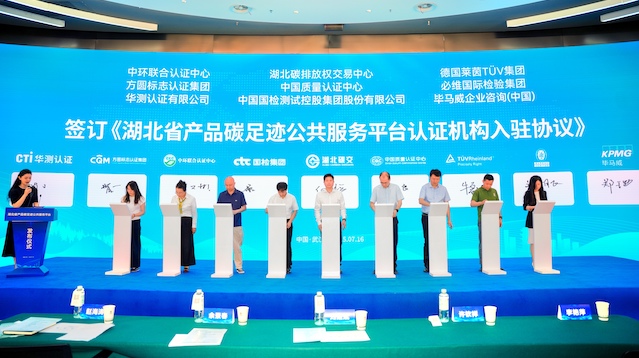
Core Viewpoint - The establishment of the "Hubei Province Product Carbon Footprint Public Service Platform" marks a significant step in carbon footprint management, providing a comprehensive service for enterprises in carbon accounting, certification, labeling, and disclosure [1][3]. Group 1: Platform Services - The platform serves as a data aggregation center, management platform, and service hub for carbon footprint data in Hubei, offering a one-stop service for enterprises [1]. - The accounting module allows enterprises to create custom models or use embedded industry models to quickly build accounting frameworks, with 15 types of accounting models for key products like chemicals, batteries, and optical fibers [1][3]. - The certification module provides online application for report certification, audit tracking, and electronic certificate issuance, complying with IS014067 and GB/T24067 standards [3]. Group 2: Consumer Engagement and Data Analysis - The labeling module enables certified products to apply for exclusive QR code carbon labels, allowing consumers to trace the carbon emissions throughout the product's lifecycle [3]. - The disclosure module creates a multi-dimensional data dashboard for real-time analysis of regional and industry-specific carbon footprint distribution, aiding enterprises in benchmarking and supporting government policy-making [3]. Group 3: Future Development and Strategic Goals - The platform aims to leverage Hubei's carbon market and carbon finance center to promote green and low-carbon transformation in key industries, fostering strategic emerging industries such as automotive, telecommunications, lithium batteries, and recycling resources [4]. - The focus is on establishing a robust carbon footprint management system, enhancing international trust in carbon footprint rules, and continuously improving carbon footprint capabilities [3].
广东上线碳标签信息管理平台,大湾区产品实现碳足迹互认
Nan Fang Du Shi Bao· 2025-07-11 16:17
Core Viewpoint - Guangdong Province is actively promoting low-carbon development through various initiatives, including the launch of a carbon label information management platform and the issuance of carbon labels for products related to the upcoming 15th National Games and the Special Olympics [2][4]. Group 1: Event Overview - The main event for the 2025 "National Low Carbon Day" in Guangdong was held in Guangzhou, themed "Carbon Road Pioneer, Green Beautiful Guangdong," showcasing the province's achievements in green low-carbon development [1]. - Key officials from the Guangdong Provincial Ecological Environment Department and the Sports Bureau attended the event, emphasizing the importance of low-carbon initiatives in sports [1]. Group 2: Climate Change Management - Guangdong has established a comprehensive management system to address climate change, including mechanisms for greenhouse gas inventory, carbon intensity targets, and a carbon footprint labeling system [2]. - The province has shown effective results in climate change response, maintaining a leading economic position while improving environmental quality, with major environmental indicators ranking high nationally [2]. Group 3: Product Carbon Footprint - Over 1,032 approved products related to the 15th National Games have been developed, with more than 300 products adopting basic carbon accounting standards to ensure green and low-carbon attributes [3]. - The products incorporate green concepts in material selection, production processes, and packaging design, balancing practicality, aesthetics, and commemorative value [3]. Group 4: Carbon Label Information Management Platform - The newly launched "Guangdong Carbon Label Information Management Platform" allows consumers to query product carbon footprints and enables manufacturers to apply for carbon labels online [4]. - The platform aims to enhance the environmental performance management of products, benefiting both consumer goods and industrial sectors, particularly upstream raw material producers [4]. - The first batch of six products has achieved mutual recognition of carbon footprints between Hong Kong and Guangdong, facilitating product circulation and enhancing technical standards [4].
2025中国汽车论坛召开,话里话外都是要“团结”!
Zhong Guo Qi Che Bao Wang· 2025-07-11 10:34
Group 1 - The core theme of the 2025 China Automotive Forum is "Quality Improvement and Innovation for a Smart Future," focusing on industry transformation and international market expansion [2] - The Chinese automotive industry is urged to unite and collaborate for transformation, emphasizing electrification, intelligence, and low-carbon development as key directions [4][5] - The industry is experiencing a historic shift with new energy vehicles becoming the dominant market force, laying a solid foundation for becoming a strong automotive nation [9] Group 2 - The need for innovation in the automotive industry is highlighted, particularly in key technologies related to new energy and intelligent connected vehicles [7] - The establishment of a green low-carbon public service platform aims to standardize carbon footprint disclosure and promote green technologies [13] - The global automotive industry is undergoing unprecedented changes, with a focus on electric, automated, and smart mobility, creating both challenges and opportunities for cooperation between Europe and China [15] Group 3 - Companies are encouraged to build a unified front in the automotive industry, emphasizing quality and innovation over sales volume [17][18] - The importance of maintaining a balance between adhering to core values and adapting to changing consumer demands is stressed [20] - The role of artificial intelligence in various aspects of the automotive industry, including marketing and sales, is recognized as a significant trend for future development [26]
