
通胀控制

Search documents
Bullard Expects Fed to Cut Rates at Next Two Meetings
Youtube· 2025-09-26 14:16
Economic Outlook - The U.S. economy is expected to remain strong through the end of this year and into 2026, supported by new administration policies [3][4] - The core Personal Consumption Expenditures (PCE) index is currently at 2.9%, with expectations it may decrease to 2.8%, still above the Fed's target of 2% [5][6] Federal Reserve Policy - The Federal Reserve is likely to implement further rate cuts in the next two meetings, aligning with market expectations [4][5] - The Fed aims to gradually reduce inflation to 2% over the next two years, avoiding rapid changes that could destabilize the economy [6][9] Inflation Management - The Fed is expected to look through temporary inflationary effects from tariffs, which are anticipated to be smaller and delayed compared to previous expectations [8][9] - There is a discussion about potentially adopting a range for inflation targeting (2% to 3%) instead of a strict 2% target, although the current preference remains for a single target for clearer communication [10][11] Data Dependency and Challenges - The upcoming nonfarm payrolls report may be affected by a government shutdown, raising concerns about data availability for the Fed's decision-making [11][12] - The Fed has previously managed through similar situations, but the lack of data is not ideal for assessing the economy's state [12][13] Review of Economic Models - There is a call for a thorough review of the Fed's operational models, especially in light of the post-pandemic economic landscape [15][16] - The idea of running a new model in parallel with the existing one is suggested to improve future economic assessments [16]
阿根廷比索:重挫突破交易区间,干预或耗外汇储备
Sou Hu Cai Jing· 2025-09-18 02:02
Core Viewpoint - The Argentine peso has significantly depreciated, breaching the government-set trading band, which may disrupt the government's policies aimed at controlling inflation and accumulating foreign reserves [1] Group 1: Currency Performance - The Argentine peso fell nearly 0.4% against the US dollar, reaching 1,474.50 pesos per dollar, surpassing the upper limit of the trading band set at 1,474.345 pesos per dollar [1] - This trading band is part of a $20 billion agreement reached between Argentina and the International Monetary Fund in April [1] Group 2: Government Response - The government, led by President Javier Milei, has attempted to prevent peso depreciation through measures such as tightening liquidity, selling dollars in the futures market, and restricting dollar purchases [1] - With the trading band breached, the central bank is now allowed to intervene directly in the spot market, which will deplete valuable foreign reserves [1] Group 3: Expert Opinions - Thierry Larose, a portfolio manager at Vontobel Asset Management, warned that defending the trading band could be costly [1] - Larose suggested that it may be better for the government to raise the trading band and lower local interest rates to avoid recession while maintaining fiscal sustainability [1] - He emphasized the importance of conducting these changes in an orderly manner to prevent exhausting foreign reserves in a battle that is unlikely to be won [1]
FXGT:美联储人事变动引关注
Sou Hu Cai Jing· 2025-09-16 15:55
Core Viewpoint - The recent appointment of economist Stephen Miran to the Federal Reserve Board is generating significant market attention, particularly as it coincides with an upcoming monetary policy meeting, adding complexity to interest rate expectations [1][4]. Group 1: Appointment and Implications - Miran's confirmation allows him to fill a vacancy and immediately participate in monetary policy decisions, which could influence future interest rate policies, inflation control, and employment targets [1][4]. - His extensive experience in economic policy and commitment to independence and compliance may help stabilize market confidence and alleviate concerns regarding policy independence [4][10]. Group 2: Economic Context - The U.S. economy is currently facing a delicate situation, with signs of weakness in the job market and persistent price pressures in certain areas, posing a challenge for the Federal Reserve to balance price stability and employment promotion [4]. Group 3: Market Reactions - Investors are particularly focused on Miran's stance on interest rate policy; a dovish position could lead to increased bets on further rate cuts, potentially boosting stock markets and risk assets, while a cautious or hawkish stance may temper expectations for easing [8]. - Miran emphasized the importance of the Federal Reserve's independence for the health of the economy and financial system, aligning with market expectations for transparency and reduced policy uncertainty [10]. Group 4: Long-term Outlook - The confirmation of Miran is viewed as a key variable in the future policy direction of the Federal Reserve, suggesting that while short-term market volatility may occur, the long-term outlook could benefit from a more diversified perspective and policy approach [10].


欧央行连续第二次“按兵不动”,认为通胀压力得到控制
Sou Hu Cai Jing· 2025-09-11 12:51
Group 1 - The European Central Bank (ECB) decided to keep interest rates unchanged, maintaining the deposit facility rate at 2%, aligning with market expectations, while the main refinancing rate and marginal lending rate remain at 2.15% and 2.40% respectively [1] - ECB officials believe that current interest rates are appropriate to address the impacts of U.S. trade tariffs, geopolitical tensions, and recent political unrest in France, with the Eurozone's economic expansion remaining strong and inflation slightly above the 2% target being under control [1] - The ECB reiterated that it has not committed to a specific interest rate path and will adopt a data-dependent approach to determine the appropriate monetary policy stance [1] Group 2 - The latest quarterly forecasts indicate that consumer prices are expected to rise by 1.7% next year, closer to the target, but will grow by 1.9% by 2027, which is lower than previous expectations [2] - The ECB adjusted its inflation forecasts, lowering the overall inflation rate to 1.9% for 2027 and core inflation to 1.8%, which has heightened market speculation regarding potential interest rate cuts by year-end [3] - Economic growth projections have been revised, with GDP growth expected to be 1.2% in 2023, 1.0% in 2026, and 1.3% in 2027, reflecting an increase from earlier forecasts [3] Group 3 - Following the ECB's announcement, the euro continued its downward trend, falling by 0.3% to 1.1664 USD, while the German bond market stabilized after minor declines [4] - The money market has shifted slightly towards a dovish stance, with expectations for a rate cut of approximately 7 basis points by year-end, indicating that policymakers have left room for a final rate cut [5]
欧央行下周按兵不动?官员放风:通胀受控 维持利率是合理之举
Zhi Tong Cai Jing· 2025-09-02 23:24
Group 1 - The European Central Bank (ECB) is likely to maintain stable interest rates next week due to inflation levels nearing targets and resilient economic performance [1] - ECB officials, including Madis Muller, suggest a patient approach, closely monitoring upcoming economic data before making adjustments [1] - There is a diminishing willingness for further easing of policies after eight rate cuts, with current inflation in the Eurozone being well-controlled [1][2] Group 2 - Finnish and Lithuanian central bank leaders express concerns about downside risks to inflation, indicating a cautious outlook [2] - Muller notes that the new economic forecasts from the ECB will not show significant changes compared to the previous predictions made in June [2] - The recent political situation in France is highlighted, with the economy showing resilience but facing challenges related to high deficits and debt levels [2][3] Group 3 - The French government is on the brink of collapse, with a vote on a significant budget deficit reduction plan scheduled [3] - Villeroy emphasizes the importance of meeting the government's commitment to reduce the deficit to 3% of GDP by 2029 for debt stability [3] - The longer France delays addressing its fiscal issues, the more severe the future consequences will be [3]
奥地利新任央行行长Kocher:欧元区应采取“增长思维”来克服挑战
Zhi Tong Cai Jing· 2025-09-01 12:55
Core Viewpoint - The new Austrian central bank governor Martin Kocher advocates for a "growth mindset" in the Eurozone to address current economic challenges [1] Group 1: Economic Growth and Inflation - Kocher highlights that sluggish economic growth in some European countries may lead businesses to pass inflation costs onto consumers, posing risks to price stability [1] - He suggests that raising benchmark interest rates could be a measure to control inflation, but it may also dampen economic growth momentum [1] Group 2: Monetary Policy Stance - Kocher, who replaces hawkish Robert Holzmann, has not provided detailed comments on monetary policy and identifies himself as neither a hawk nor a dove [1] - He emphasizes the importance of making decisions based on facts and timing [1] Group 3: Broader Economic Challenges - The "growth mindset" Kocher refers to encompasses not only economic output but also addressing labor shortages, energy transition, and geopolitical uncertainties [1] - He plans to propose productivity-enhancing suggestions in future blog posts [1] Group 4: Policy Coordination - Kocher indicates that fine-tuning monetary policy and achieving intelligent coordination between monetary and fiscal policies may play a more crucial role than in the past [1] - He notes that the limited effectiveness of such coordination has been a weak point in Eurozone economic policy over recent decades [1]
特朗普新关税即将生效!市场狂欢后,才意识到鲍威尔讲话另有含义
Sou Hu Cai Jing· 2025-08-26 03:33
Group 1: Trade Relations and Tariffs - The U.S. has announced a 50% tariff on India, with a 21-day negotiation period in place, which could have significant economic implications for India if no agreement is reached [1] - Negotiations between the U.S. and India have been ongoing, with initial optimism from U.S. officials, but have stalled due to India's retaliatory measures against U.S. tariffs on steel and aluminum [3] - Key points of contention include India's continued import of Russian oil, which the U.S. opposes, and India's protectionist agricultural policies that complicate trade negotiations [5] Group 2: Domestic Economic Measures in India - In response to economic pressures, the Indian government has announced a reduction in the Goods and Services Tax (GST) on daily consumer goods, aiming to alleviate tax burdens and stimulate domestic demand [7] - India's strong stance in tariff negotiations indicates a reluctance to quickly reach an agreement, contrasting with previous agreements made with other countries [7] Group 3: U.S. Monetary Policy and Market Reactions - Recent comments from Federal Reserve Chairman Jerome Powell have led to significant market reactions, with major indices experiencing substantial gains, driven by speculation about potential interest rate cuts [9] - Powell's remarks suggest a complex balancing act for the Federal Reserve between addressing employment and controlling inflation, indicating that future rate decisions will depend on economic data [10] Group 4: Federal Reserve Independence - Concerns have been raised regarding the independence of the Federal Reserve amid ongoing pressure from President Trump, with implications for economic stability highlighted by European Central Bank President Christine Lagarde [11] - The ability of the Federal Reserve to maintain independent decision-making is crucial for controlling inflation and ensuring stability in both the U.S. and global financial markets [13]

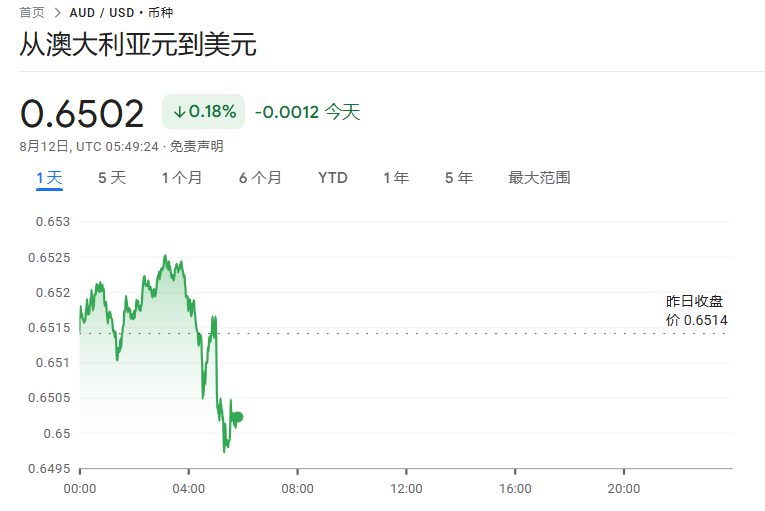
宽松周期远未结束?澳洲联储年内第三次降息,大幅下调经济预期
Hua Er Jie Jian Wen· 2025-08-12 06:24
Core Viewpoint - The Reserve Bank of Australia (RBA) has continued its dovish stance by cutting the cash rate to 3.6%, marking the third rate cut of the year amid a bleak economic growth outlook [1][4]. Economic Outlook - The RBA has significantly downgraded its GDP growth forecast for 2025 from 2.1% to 1.7%, reflecting a more severe economic landscape [5]. - The long-term productivity growth assumption has been reduced from 1.0% to 0.7%, indicating a potential slowdown in the economy's growth capacity from 2.25% to 2.0% [5]. - The report attributes the lowered growth expectations to weaker-than-expected public demand growth at the beginning of 2025 [5]. Inflation and Labor Market - Core inflation has eased to 2.7%, nearing the RBA's target range of 2%-3%, providing room for monetary policy easing [7]. - The unemployment rate has risen to 4.3%, the highest level in four years, indicating initial signs of market cooling [7]. - Despite the rising unemployment, the RBA forecasts that the rate will remain stable at 4.3% until the end of 2027, suggesting a complex labor market scenario [7]. Monetary Policy Direction - The RBA's current monetary policy is perceived as still restrictive, with expectations of further easing in the future [8]. - Market predictions suggest a total rate cut of 80 basis points over the next year, bringing the cash rate down to a range of 2.85% to 3.1% [8]. - Some analysts predict a more aggressive approach, forecasting a potential 100 basis points cut within the next 12 months [8].
英国央行降息或为时过早 分析师警示信誉受损风险
Jin Tou Wang· 2025-08-12 04:08
Group 1 - The core viewpoint of the articles highlights concerns regarding the credibility of the Bank of England's recent interest rate cut amidst persistent inflation pressures, particularly in the services sector and wage growth [1] - Analyst Lale Akoner suggests that the current economic slowdown and weak labor market do not justify the rapid rate cut, advocating for a more gradual approach to monetary policy [1] - There is significant uncertainty regarding whether the Bank of England will continue to lower rates in November, with potential risks of exacerbating inflation if the central bank is perceived as softening its stance on inflation control [1] Group 2 - Key support levels for GBP/USD include the dense trading area at 1.2938 and the April low along with the 61.8% Fibonacci retracement level slightly above 1.2700 [2] - The GBP/USD is currently testing resistance near the June low and the 50% Fibonacci retracement level around 1.3370, with critical resistance zones formed by the 20-day EMA (1.3392) and the 61.8% Fibonacci retracement level (1.3420) [2]
非农后已有3位美联储官员表达忧虑,9月降息概率大增
Hua Er Jie Jian Wen· 2025-08-07 00:36
Core Viewpoint - Recent comments from three Federal Reserve officials indicate growing concerns about the latest signs of weakness in the U.S. labor market, significantly increasing market expectations for a potential interest rate cut as early as September [1][2]. Group 1: Labor Market Concerns - San Francisco Fed President Mary Daly stated that the labor market is showing signs of weakness, and any further slowdown in employment would be concerning [3]. - Minneapolis Fed President Neel Kashkari echoed these concerns, suggesting that a rate cut may be appropriate in the short term [4]. - Fed Governor Lisa Cook described the significant downward revisions in employment data as indicative of a potential economic turning point, intensifying rate cut speculation [5]. Group 2: Policy Adjustments - The recent dovish signals from Fed officials provide the clearest indication yet of a potential policy shift [2]. - Daly mentioned that adjustments to policy may be necessary in the coming months to prevent further deterioration in the labor market [4]. - The officials are weighing the dual mandate of controlling inflation and achieving full employment, with Daly noting that both objectives are currently "roughly balanced" [6]. Group 3: Inflation Considerations - Despite the increasing clarity of rate cut signals, officials remain cautious about balancing inflation risks [6]. - Daly emphasized that more work is needed to bring inflation down to the 2% target, indicating that the Fed is not yet ready to respond to short-term price increases driven by tariffs [7][8]. - Earlier in the week, Daly suggested that two rate cuts this year might be appropriate, leaving room for more aggressive easing if necessary [9].